Want tips like this every Thursday?
One recipe worth heating the oven for, one tip, and one deal from the shop. Nothing else.
Mulled Wine and Christmas Punch: Which Wine, How Much Spice, and How Hot to Heat It
Updated Nov 3, 2026
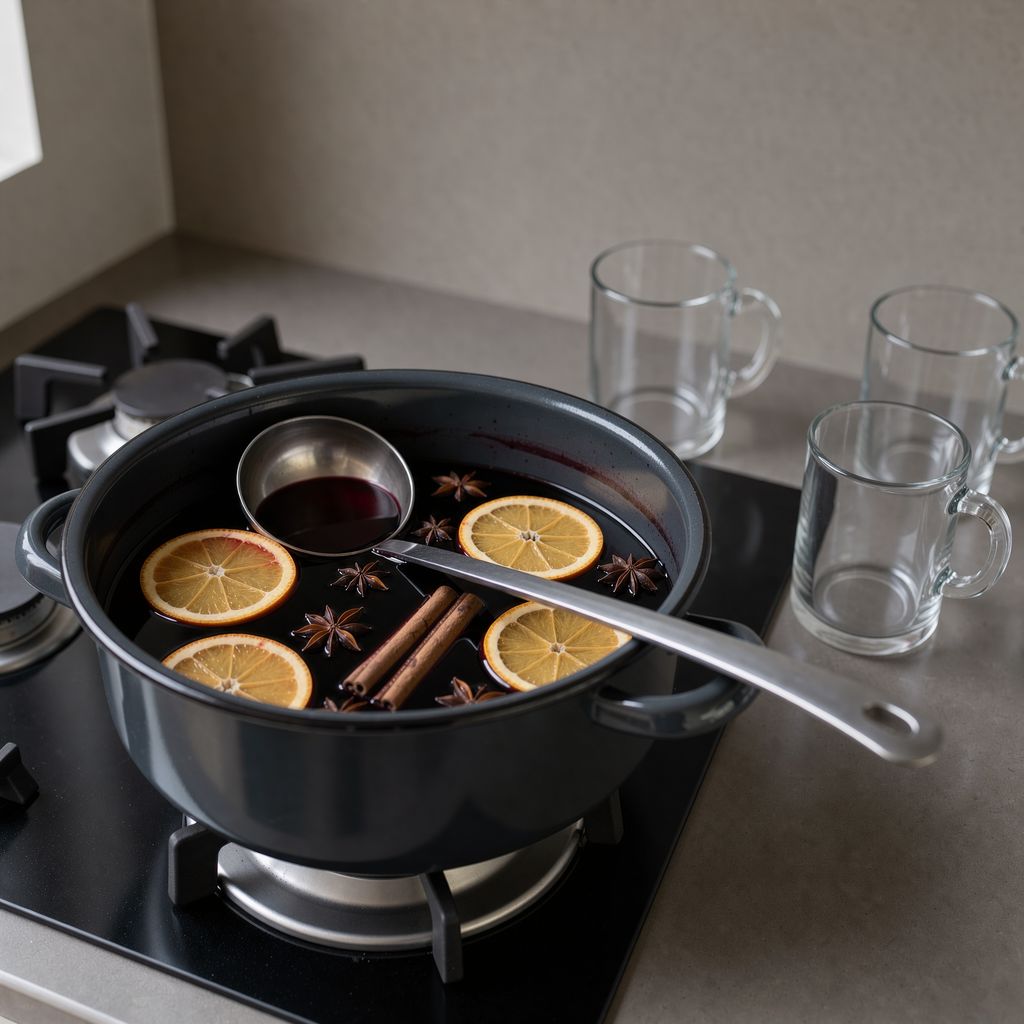
For mulled wine, use a dry or off-dry red wine with medium body. Per liter (about 4 cups), add 1–2 cinnamon sticks, 4–6 cloves, 1–2 star anise, a few orange slices, and 50–100 g sugar or honey. Heat it slowly to 70–80 °C (160–175 °F) and never let it boil. Boiling drives off aroma and alcohol, and the spices turn bitter. Christmas punch works much the same way, except it's usually built on strong tea with rum, or on wine topped up with fruit juice.
The best choice for mulled wine is a dry or off-dry red wine with medium body, fruity and without pronounced tannins. You don't need an expensive bottle, but don't use a faulty one – heat and spices won't hide its flaws, they'll bring them out.
Red: a young, fruity wine with lower tannins. Very tannic wines and those aged for a long time in oak turn bitter and mouth-puckering once spices and sugar are added.
White: for white mulled wine, pick an aromatic, fresh wine. It takes fewer spices and more citrus – lemon, a little ginger, vanilla.
Sweet wine: if you use an off-sweet or sweet wine, leave out the sugar at the start and sweeten at the end instead.
For each liter (about 4 cups) of mulled wine, use 1–2 cinnamon sticks, 4–6 cloves, 1–2 star anise, and 3–4 orange slices. Whole spices give a cleaner flavor than ground ones, which cloud the wine and settle at the bottom of the mug.
Cinnamon: 1–2 sticks. Whole cinnamon steeps slowly and won't overpower the other spices.
Cloves: 4–6. They're the strongest spice and the easiest to overdo – more cloves means bitterness.
Star anise: 1–2 stars, for a gentle anise note.
Citrus: orange slices, or lemon if you like. The peel starts to turn bitter in the wine after half an hour, so fish the slices out after 20–30 minutes.
To taste: a few slices of fresh ginger, 2–3 allspice berries, a split vanilla pod, or 2–3 cardamom pods.
You can first simmer the spices for 5 minutes in a small amount of water with sugar, and only then pour in the wine. The flavor comes out of the spices faster, so you don't have to keep the wine warm for as long.
Heat mulled wine to 70–80 °C (160–175 °F), then keep it warm on the lowest flame. It must not boil. Alcohol (ethanol) boils at around 78 °C (172 °F), so the hotter you heat the wine and the longer you keep it warm, the more alcohol and aroma escape.
Without a thermometer: the first gentle steam appears on the surface and tiny bubbles form at the edge of the pot. That's when to take it off the heat.
Steeping: leave the wine with the spices under a lid for 20–30 minutes on the lowest flame. The lid returns the steam to the pot.
Keeping warm: for a big crowd, a slow cooker on its lowest setting works well. Taste the wine every hour to check the spices aren't turning bitter, and fish them out if needed.
Bringing it back to a boil again and again won't improve the flavor, it just flattens the wine. When you reheat it, do it slowly and only as much as you're about to pour.
For each liter (about 4 cups) of mulled wine, add 50–100 g sugar, depending on how dry the wine is and how sweet you like it. Start at the lower end and sweeten to taste.
Sugar: dissolve it right at the start with the spices.
Honey: stir it into the warm wine at the end. Heating would cost it its aroma.
Brown or cane sugar adds a caramel note that suits red wine.
You can also sweeten mulled wine with a ready-made spiced syrup. Make it ahead and keep it in stock using the mulled wine syrup recipe by flo – then 30 ml of syrup per 200 ml of hot wine is enough for one serving.
Christmas punch is a warm spiced drink based on strong tea with rum, or on wine with fruit juice. Both follow the same logic as mulled wine: the spices steep in gentle heat, the rum goes in last, and nothing boils.
Tea punch with rum is built on strong black tea. For each liter of tea, use the juice of one orange and one lemon, 80–120 g sugar or honey, 1 cinnamon stick, 3–4 cloves, a slice of ginger, and 100–200 ml rum. Sweeten the tea, add the juice and spices, and let it steep for 10 minutes under a lid. Pour in the rum only at the end, once the punch is finished and slightly off the heat.
Wine punch: roughly 3 parts red wine to 1 part orange or apple juice, with the same spices as for mulled wine. The juice softens the strength and adds fruity sweetness, so use less sugar.
Make alcohol-free mulled wine with 100% grape or apple juice, and punch with strong fruit or black tea and juice. The spices and citrus stay the same, but use less sugar, since juice is sweet on its own.
You'll find more ideas for alcohol-free New Year's Eve drinks in the article Non-alcoholic New Year's Eve drinks: punch, mocktails, and sparkling bubbles for everyone. And if you want to make cold New Year's Eve drinks shine, the article Edible glitter for drinks will show you how.
Mulled wine usually turns bitter because it was boiled, because it has too many cloves, or because the citrus peel steeped for more than half an hour. A very tannic wine can add bitterness too. Next time, just warm the wine to 70–80 °C (160–175 °F), use 4–6 cloves per liter, and fish out the orange slices after 20–30 minutes.
Yes, you can reheat leftover mulled wine the next day. First remove the spices and fruit, then keep it in the fridge overnight in a sealed bottle or container. Reheat it slowly, only to 70–80 °C (160–175 °F), and don't boil it. Each reheating costs it some of its aroma, so it's better to make smaller batches.
For a crowd, make mulled wine in the widest pot you have, or in a slow cooker on its lowest setting. Put the spices in a cloth bag or tea strainer so they're easy to lift out. Heat the wine to 70–80 °C (160–175 °F), then simply keep it warm. Take the spices out after an hour so the wine doesn't turn bitter.
Mulled wine is wine warmed with spices and sugar. Punch is a warm spiced drink, usually based on tea with rum, or on wine topped up with fruit juice. That makes punch generally lighter and fruitier, and mulled wine fuller-bodied. Both are steeped gently in the warmth and never boiled.
One recipe worth heating the oven for, one tip, and one deal from the shop. Nothing else.