Homemade plum butter
What to Bake with Povidla and Jam: Linzer Cookies, Koláče, Doughnuts, Buchty, Easter Lamb Cake and Layer Cakes
What can you bake with povidla (Czech plum butter) and jam? Povidla go into yeast-raised koláče, družbáky and buchty, because thick povidla hold their shape in the oven. Jam goes into Linzer cookies, doughnuts, the Easter lamb cake and layer cakes, where you add it after baking or between the layers. And if you have a spare jar, cook a savory chilli jam to serve with cheese. Below, each treat gets a few sentences on how to make it, a link to the full recipe and, above all, an explanation of why one filling stays put in the oven and another runs out onto the baking sheet.
From povidla and jam you can bake six tried-and-true things and cook one savory one:
Linzer cookies sandwiched with jam.
Yeast-raised koláče and družbáky with povidla, quark and poppy seed.
Buchty with povidla.
Doughnuts filled with jam or povidla.
An Easter lamb cake layered with jam.
A chocolate cake with a layer of apricot jam.
And a savory chilli jam to serve with cheese.
What matters most is when the filling goes in. Thick plum povidla can be baked right inside the dough, so they belong in koláče and buchty. Jam has more water and thins out in the oven, so you add it to the finished bake: between Linzer cookies, into fried doughnuts or between cake layers.
All the recipes we link to come from our sweet baking and desserts collection. Each one gets a few sentences on the method here, so you know right away what you're getting into and how much time to set aside.
How to soften gingerbread that’s gone hard, when to fill Linzer cookies and how to tell the carp is done. One recipe and one tip a week. Unsubscribe in one click.
In the oven, povidla hold, smooth jam thins and jam with pieces of fruit runs out first. The reason is water, and how the filling was thickened.
Povidla are fruit cooked or baked until most of its water has evaporated. They thicken from the fruit pulp itself, with no gelling agent. When heated they have no water left to release, so they stay put. You'll find how to cook them at home, step by step, in the article on how to make povidla at home.
In Czech kitchens, "marmeláda" usually means a smooth, strained spread set with pectin and sugar. The pectin gel loosens with heat, so the jam turns liquid in the oven and sets again as it cools. If you put it in a koláč before baking, part of it soaks into the dough and part of it runs out.
By "džem" we usually mean a spread with pieces of fruit, which tends to hold more water. In the oven the fruit pieces release juice and the filling spreads across the baking sheet. You'll typically see this with strawberry jam, which is tasty but too thin for baking.
A note on names. From 14 June 2026, under an amendment to the Czech decree that transposes the EU breakfast directive, Czech producers may also call džem "marmeláda". A product made from citrus fruit has the legal name citrus marmalade. On a label, marmeláda and džem therefore often mean the same thing, so for baking look at the consistency rather than the name.
How to thicken a thin filling so it holds in the oven:
Simmer it. Put the jam in a wide saucepan and cook over low heat, stirring constantly, until some of the water evaporates. Test: drop a teaspoon onto a cold saucer, and if a clean trail stays when you drag a finger through it, it's done.
Add something dry. For every 100 g of filling, about a tablespoon of breadcrumbs, ground nuts or crushed ladyfingers is enough. They soak up the juice that would otherwise leak into the dough.
Thicken with starch. Stir a teaspoon of potato starch into a tablespoon of cold water, pour it into the hot filling and simmer for a minute. Starch only thickens once it has been cooked, not when cold.
Build a dam. On koláče, make a raised rim of dough; on buchty, seal the seams carefully. The filling then has nowhere to escape.
If you have a choice, reach for povidla in koláče and save the jam for filling after baking. That spares you most of the disappointment.
With povidla you mostly bake yeast-raised things: koláče, družbáky, buchty and doughnuts. Yeast dough is soft and moist, the povidla add tartness and spice, and they don't budge in the oven. Homemade povidla are even better than store-bought, because you can season them yourself.
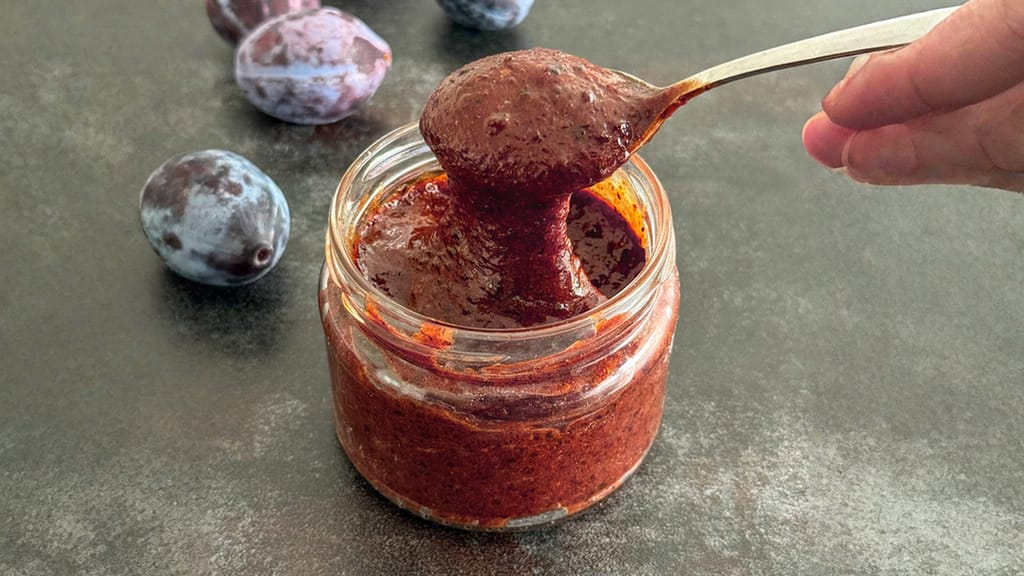
The easiest way to make your own is in the oven. Following the recipe for homemade plum povidla, you pit 1 kg of plums, toss them with 250 g sugar, sprinkle with two tablespoons of vinegar and leave them covered at room temperature overnight. Then you bake them in a roasting pan at 150 to 180°C (300–355°F) for roughly 1.5 to 2.5 hours, without stirring, until the water evaporates and the juice thickens to a syrup. Finally, stir in cinnamon, cloves and rum and spoon the hot povidla into clean jars.
Homemade plum butter
Homemade plum povidla baked in the oven without stirring
Družbáky are yeast-raised koláče traditionally baked for the fourth Sunday of Lent, and povidla play the lead role in them alongside quark and poppy seed. The recipe for družbáky, koláče for the fourth Sunday of Lent starts with a yeast sponge of lukewarm milk, yeast, a spoonful of flour and sugar. From semi-coarse flour (Czech polohrubá, slightly grittier than all-purpose), milk, sugar and eggs you then mix a smooth dough, leave it to rise for about three quarters of an hour, divide it into twelve to fourteen balls and let them rise for another half hour.
Roll the balls into rounds with a raised rim, brush the rims with beaten egg and put the filling in the middle. The povidla only need stirring with a little rum, the vanilla-sweetened quark (tvaroh, a Czech fresh curd cheese) is topped up with raisins soaked in rum, and the poppy seed is simmered in milk with sugar and a little butter. Sprinkle the koláče with sliced almonds and bake at 180°C (355°F) for about 15 minutes, until the edges turn golden.
That raised rim is exactly the dam mentioned above. It keeps the povidla in the middle and stops the quark from spreading to the edge. You can combine fillings on a single koláč or bake each separately.
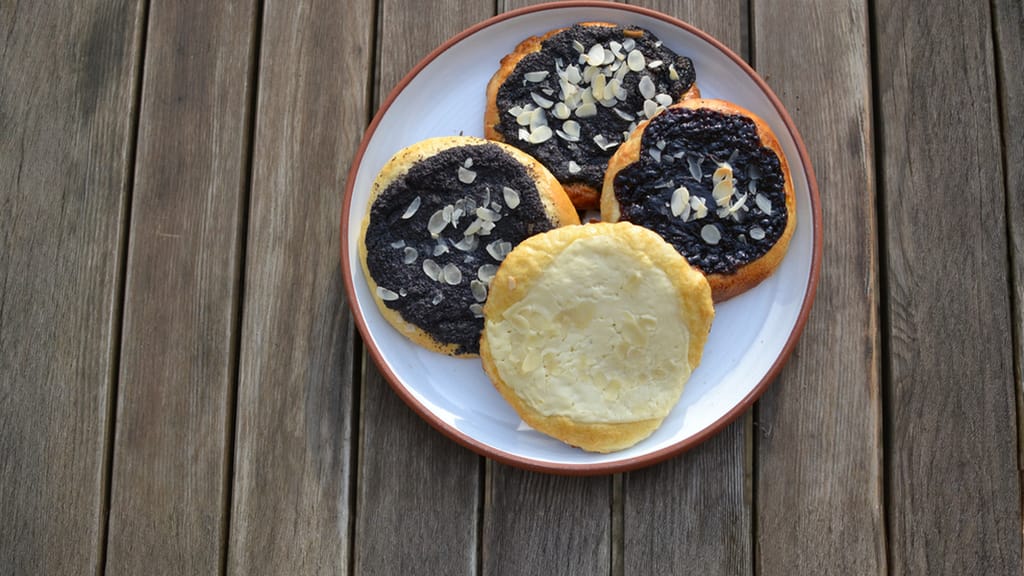
Družbáky – sweet buns for the fourth sunday of lent
Družbáky with povidla, quark and poppy seed
With quark and povidla you mostly bake koláče where the two fillings meet on one round. Quark is mild and milky-tart, povidla are dark and spiced, and together they work better than either filling alone.
On družbáky it's simple: spread a spoonful of quark on the round, press a dimple in the middle with the spoon and put a teaspoon of povidla in the dimple. The dimple holds the povidla in place, so they don't spread during baking. Then bake the koláče as above.
In this pairing, the quark is the one that can escape. If it's very wet, drain it in a sieve beforehand, and if you mix it with an egg, beat only until combined. Unnecessary air would puff up the filling in the oven and it would sink after baking. Full-fat quark holds better than low-fat.
Buchty (Czech filled sweet yeast buns) with povidla are a yeast-dough classic: put a heaping teaspoon of povidla in each square of dough, pull the edges up and press them together carefully so the seams hold. Arrange the buchty seam side down, snug against one another, in a greased baking dish, brush each with melted butter so they don't stick together for good, and leave them to rise a little more. Bake at 170 to 180°C (340–355°F) for about 25 to 35 minutes until golden, and dust with powdered sugar when they come out.
Use really thick povidla for buchty. Thin jam would push out through the seam while rising and baking and burn on the bottom of the dish. If you only have a thin filling, thicken it one of the ways above. Ratios and rising times are covered in the article yeast dough for buchty and dumplings.
With pear povidla you can bake the same things as with plum: koláče, buchty, Linzer cookies and filled doughnuts. The pear flavor is gentler and sweeter, though, so it suits quark, vanilla and nut dough best.
Three things set cooking pear povidla apart from plum:
Pears have little acidity. For 1 kg of pears add the juice of 1 lemon (about 30 to 40 ml), otherwise the povidla will be bland and won't hold their shape as well.
They release a lot of water. Cook the chopped pears covered at first so they soften, and only then uncover and let the water evaporate until a spoon leaves a clean trail on the bottom of the pot.
They scorch easily. Stir the thickening pear purée more often and cook it in a heavy-bottomed pot, or finish it in a roasting pan in the oven, where the heat is spread more evenly.
You can flavor them with cinnamon, ginger or vanilla. Ripe, soft pears make smoother povidla than hard ones, which cook down into a grainy mass.
Use apple povidla in koláče, buchty and doughnuts like plum, or spread them on crêpes and small pancakes (lívance). They have a pleasant tartness and are lighter in color, so cinnamon and raisins suit them, as in strudel.
Apples are naturally high in pectin, so apple povidla thicken faster than pear. They cook best from tart, aromatic varieties that break down into a mush. Which varieties suit this is covered in the article apple varieties: which for strudel, which for povidla and how to tell them apart.
The technique is simple: chop the apples with the peel, stew them covered until soft, press them through a sieve, then reduce the purée in a wide pot or in a roasting pan in the oven until a spoon leaves a clean trail on the bottom. The peels and cores provide pectin, which is why you strain only after cooking.
With jam you bake Linzer cookies, doughnuts, the Easter lamb cake and layer cakes, that is, everything where the filling goes in after baking. Jam stays glossy and smooth in the finished bake, and if you warm it briefly first, it spreads in a thin, even layer.
Apricot and red currant are the most common choices. Apricot jam is sweeter and suits chocolate and cocoa dough, while red currant has a pronounced tartness that balances sweet butter dough.
Jam can also go into a filling, if you cook it in properly. In the recipe for poppy seed koláč with plums and almonds, you stir poppy seed and sugar into boiling milk and add rum and 40 g of red currant jam, which brightens the poppy seed filling with a little acidity. Once cooled, you spread it over a crumb-style dough, top with plum halves, sprinkle with crumble and, after 20 minutes at 180°C (355°F), finish the koláč under a meringue of egg whites.
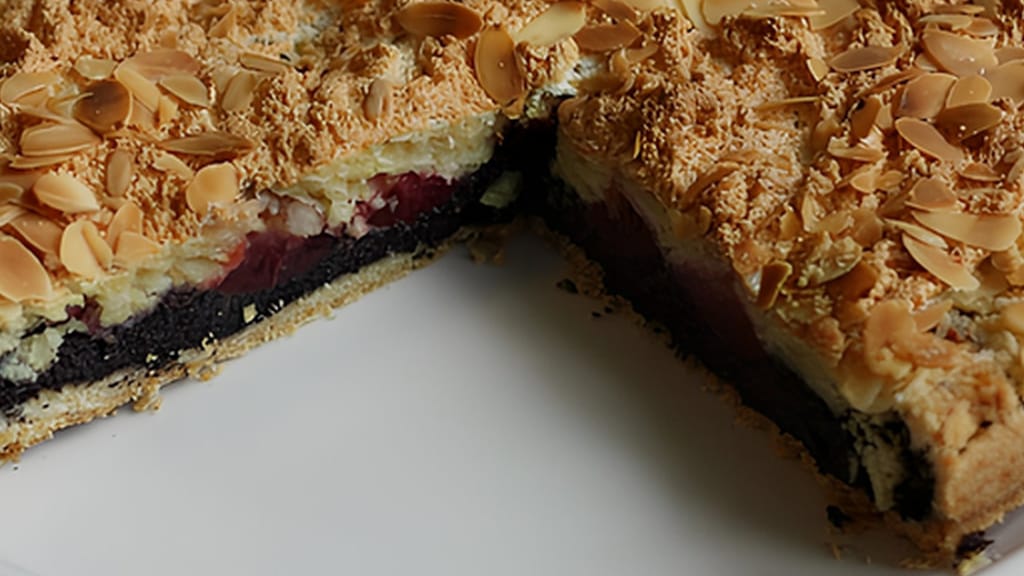
Poppy seed cake with plums and almonds
Poppy seed koláč with plums, almonds and red currant jam in the filling
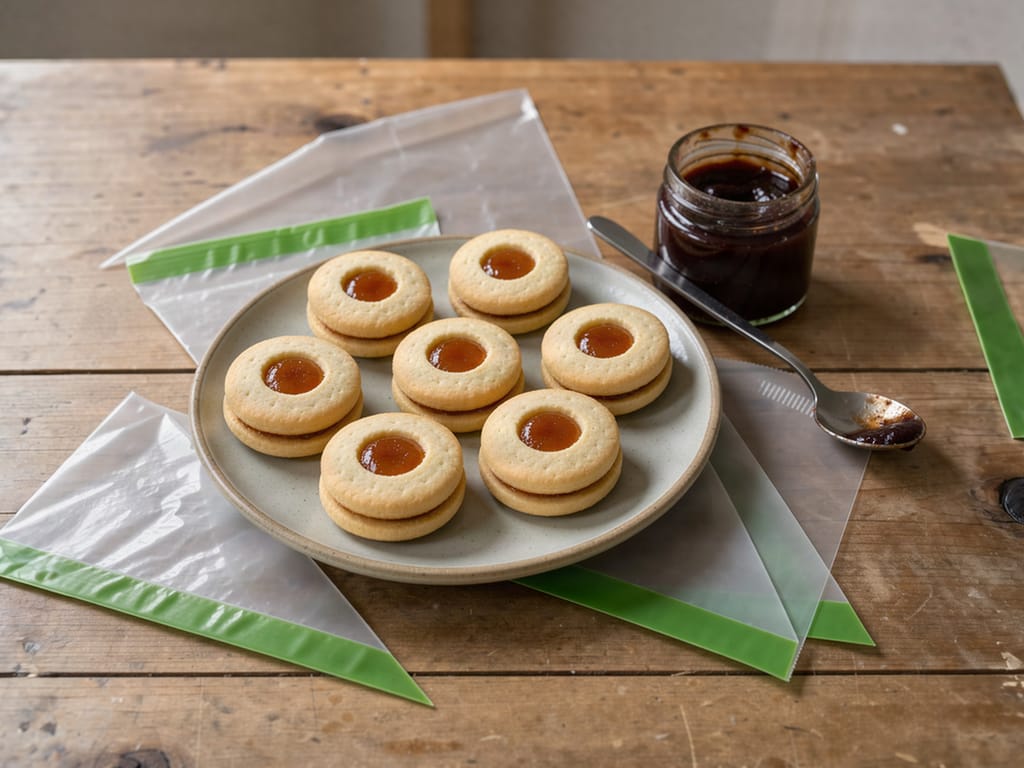
Linzer cookies with jam are baked plain and sandwiched only once cool, which is why the jam doesn't run. The recipe for classic Linzer cookies (linecké, Czech Linzer-style jam cookies) with red currant jam relies on cold butter: cut it into cubes and rub it into flour sifted with potato starch and salt, add powdered sugar with lemon zest and vanilla and bring it together with an egg yolk only until the dough holds. Roll the chilled dough between two sheets of paper to 3 mm, cut out the bases and the tops with a window, and put the cut shapes in the freezer for 10 minutes so they stay sharp.
Bake at 175°C (350°F) for about 8 to 10 minutes, only until the edges start to turn golden. Warm the jam just enough to loosen it, and if it has seeds, strain it. Dust the tops with powdered sugar mixed with starch, which binds moisture, spread half a teaspoon of jam on the bases and sandwich. Then let the cookies rest for at least three days in a tin in a cool room: in the meantime the dough draws moisture from the jam and softens.
The cocoa version works on the same principle. In the recipe for cocoa Linzer cookies with apricot jam and chocolate, you sift flour with cocoa, cinnamon and salt, flavor the dough with orange zest and vanilla and bake at 165°C (330°F) for about 8 to 10 minutes. With dark dough you can't see the browning, so go by the timer and the aroma. Dip the sandwiched cookies halfway into tempered milk chocolate: melt it to 45 to 50°C (113–122°F), cool it to 26 to 27°C (79–81°F) by stirring in chopped chocolate, and warm it briefly to 29 to 30°C (84–86°F). Measure the temperatures with a probe thermometer, because you can't hit them by guesswork.
What else to put in Linzer cookies instead of jam, from caramel to creams, is covered in the article what to fill Linzer cookies with.

Classic linzer cookies with redcurrant jam
Classic Linzer cookies with red currant jam
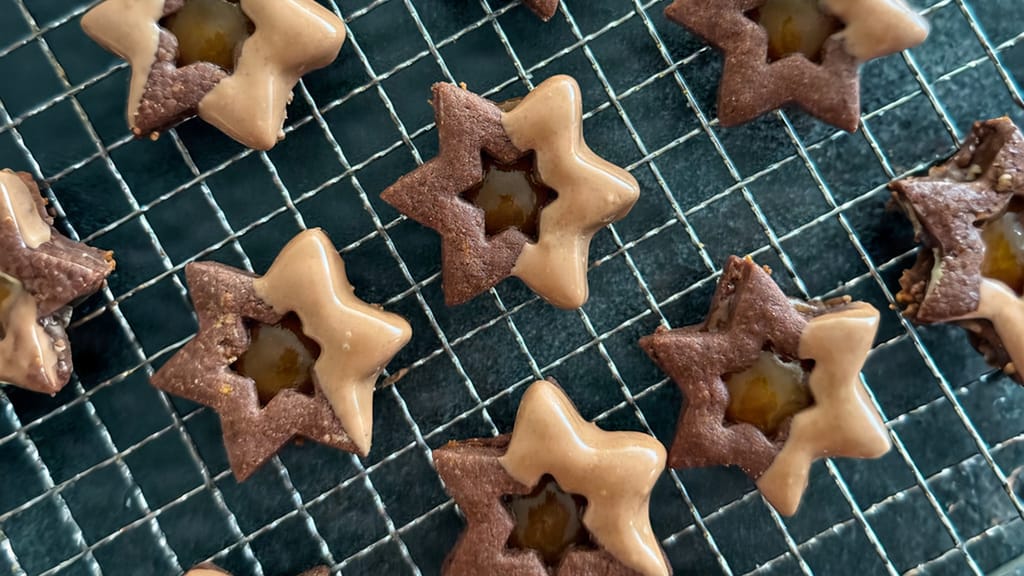
Chocolate linzer cookies with apricot jam and chocolate dip
Cocoa Linzer cookies with apricot jam and chocolate
You fill doughnuts with jam only after frying, so the filling stays juicy and doesn't leak into the oil. The recipe for golden-fried doughnuts with jam is, despite the name, fried: make a yeast sponge from lukewarm milk, yeast, sugar and flour, add egg yolks, rum, lemon juice, salt and melted vegetable fat and leave the dough to rise. Roll it out to 1.5 cm, cut out rounds and leave them covered to rise for another half hour.
Fry them in a pot with a layer of oil at least 2 to 3 cm deep, heated to 160 to 170°C (320–340°F), until golden on both sides. Watch the temperature with a thermometer: in cooler oil the doughnuts soak up fat, and in hotter oil they brown before they cook through inside. Fill the finished doughnuts with apricot jam or povidla, to taste. Filling works best with a piping bag and a tip that you push into the side of the doughnut.
If you don't want to fry, see the article on how to bake doughnuts in the oven. They're filled the same way, just with a softer crust.
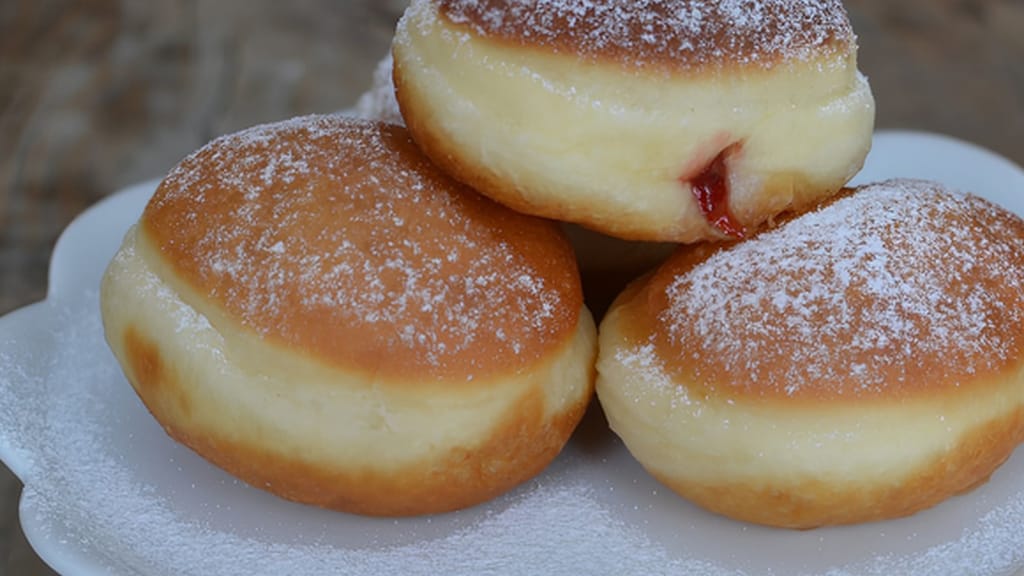
Golden fried doughnuts with jam
Doughnuts filled with apricot jam or povidla
You layer the Easter lamb cake between sponge layers with raspberry jam or thick jam, and use it to bind together the crumbs that you shape into the body. The recipe for the lamb cake without a mold needs no special mold, just an ovenproof pot 25 cm in diameter.
First bake a thin sponge for a roll, 9 minutes at 180°C (355°F), roll it up right away and, once cool, spread it with a third of the jam and a third of the pudding cream. Then bake a large sponge in the pot, about 50 minutes at 180°C (355°F) with a fan, and next to it on a baking sheet the head, which is done sooner. Cut the cooled sponge into five layers, trim each successive one a little, brush them with jam and stack them into a dome.
Crumble the trimmings with two tablespoons of cream and two tablespoons of jam and shape the top of the body from them. Coat the whole lamb with cream and cover it with slices of the roll, which make the curly fleece. Decorate the head with melted chocolate. The recipe calls for raspberry jam, which not only tastes good but also holds the whole structure together, so it should be on the thick side.
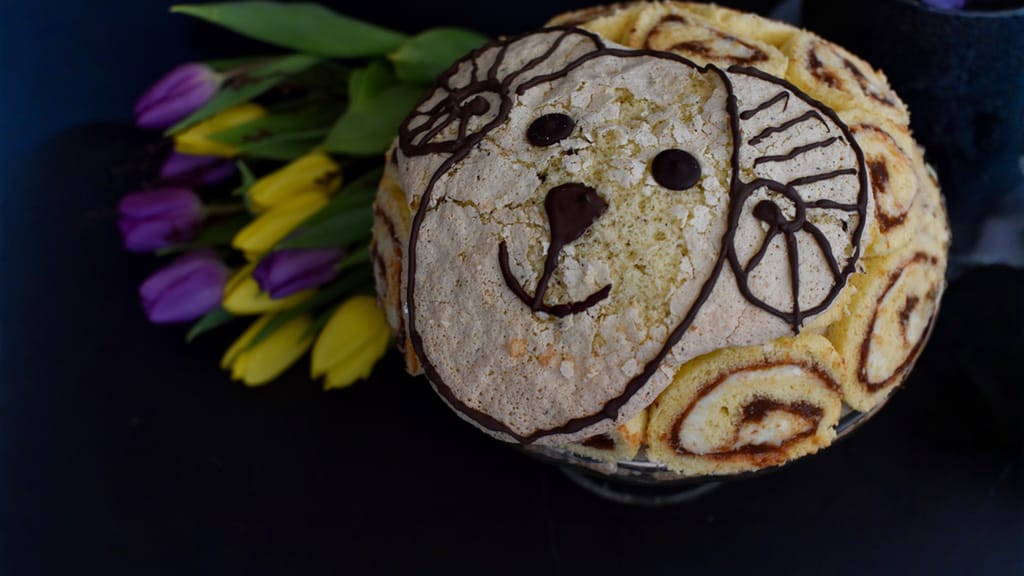
No-mold easter lamb cake
Easter lamb cake without a mold, with jam and pudding cream
In a cake you put jam between the layers or under the glaze, where it moistens the sponge and adds tartness against the sweet cream. The classic combination is chocolate with apricot.
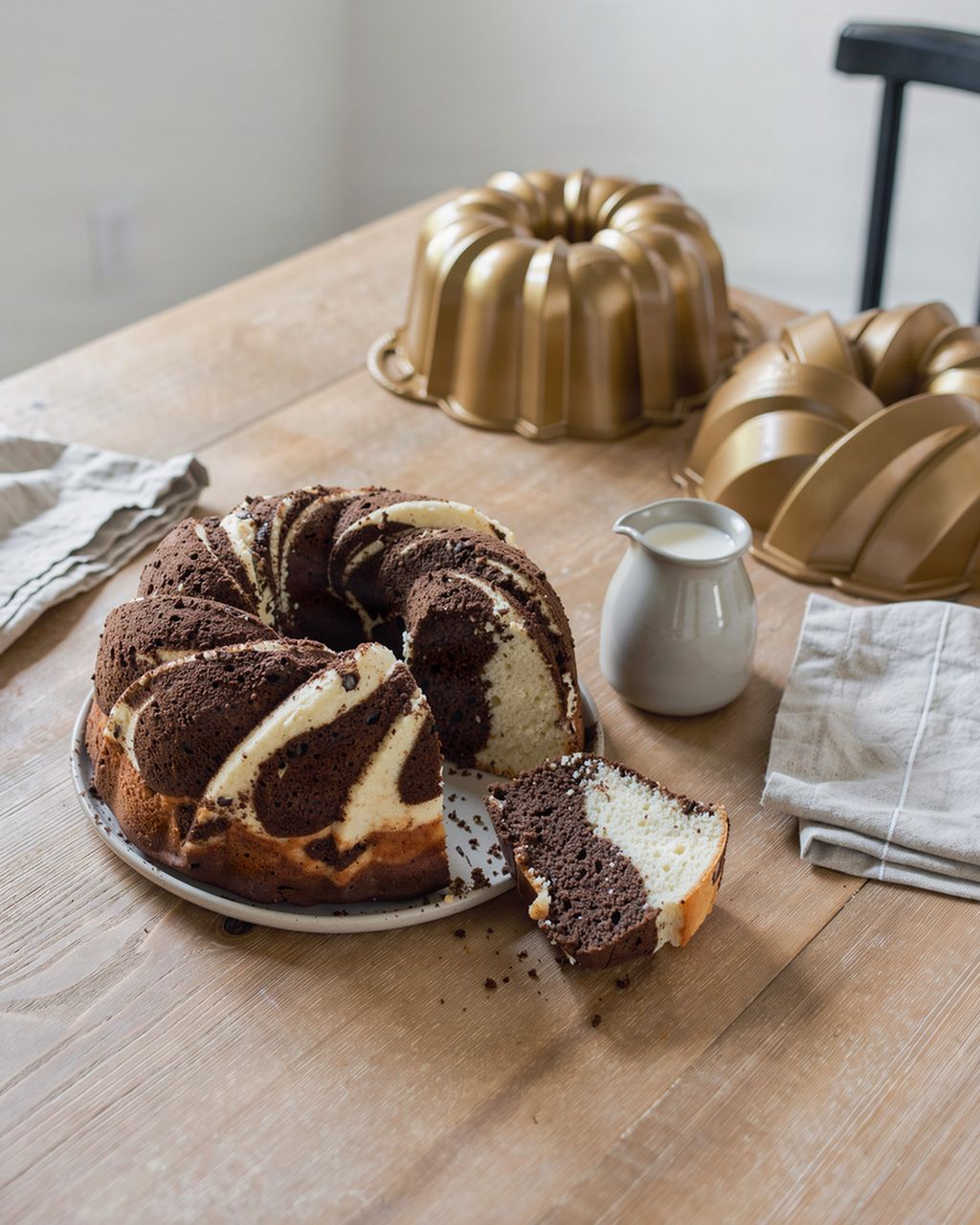
The recipe for chocolate cake with apricot jam starts by melting dark chocolate with butter. Mix sugar with eggs, add the chocolate, coffee and yogurt and finally fold in the flour with baking powder just briefly. Bake the cake at 160°C (320°F) for about 40 minutes, until a skewer comes out without raw batter. Cut the cooled cake in half horizontally, spread it with apricot jam and pour over chocolate melted with whipping cream.
A thin layer of jam under the glaze has another advantage: it seals the surface of the sponge, so the glaze stays smooth and glossy and doesn't soak in.
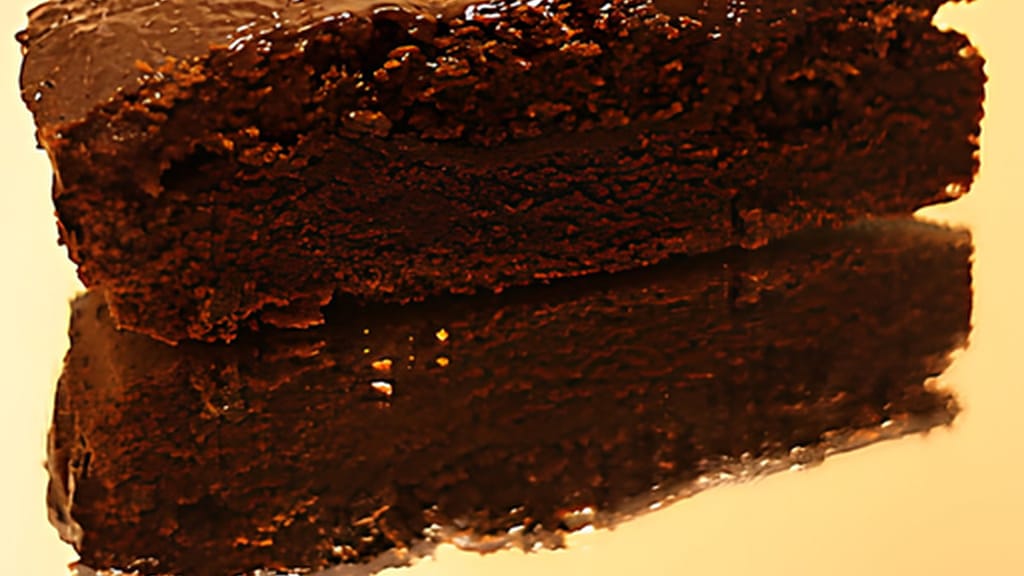
Chocolate cake with apricot jam
Chocolate cake with apricot jam
Chilli jam is a sweet-hot pepper spread that you serve with cheese, in sandwiches or as a dip. You can cook it in twenty minutes, and on a cheese board it makes more of a show than many a sweet one.
Following the recipe for chilli jam, wash 150 g of red bell pepper and 150 g of chilli peppers, remove the seeds and chop them in a food processor to a coarse mash. In a saucepan combine 500 g sugar, 500 g jam sugar (with pectin) and 600 ml apple cider vinegar, add the pepper mash, bring to a boil and cook for about 10 minutes. Then pour the jam into prepared screw-top jars.
You control the heat by the ratio of chilli to sweet pepper. Wearing gloves when cleaning chillies spares your eyes and fingers. It goes best with hard and aged cheeses, fresh goat cheese and cheese bakes from the oven.
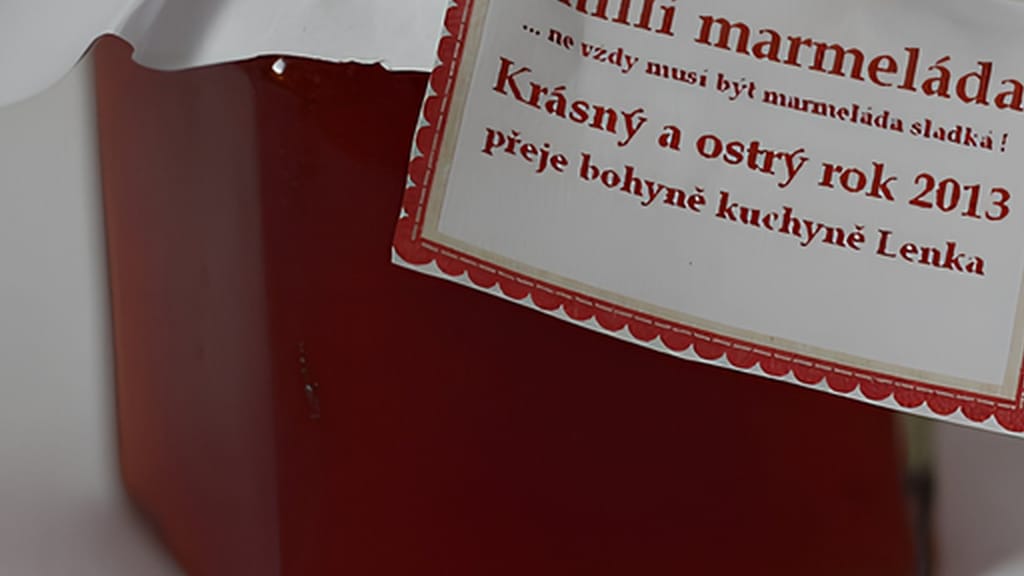
Chilli marmalade
Chilli jam from bell peppers and chilli peppers
You can cook with povidla and jam without an oven too: fill crêpes with them, spread them on small pancakes, sweeten porridge or add them to quark. A few tried-and-true ideas:
Crêpes and small pancakes (lívance). Povidla stirred with a little rum, or jam loosened in a saucepan, are the quickest filling. You'll find tips for lívance, waffles and other sweet mornings in the article on sweet breakfast.
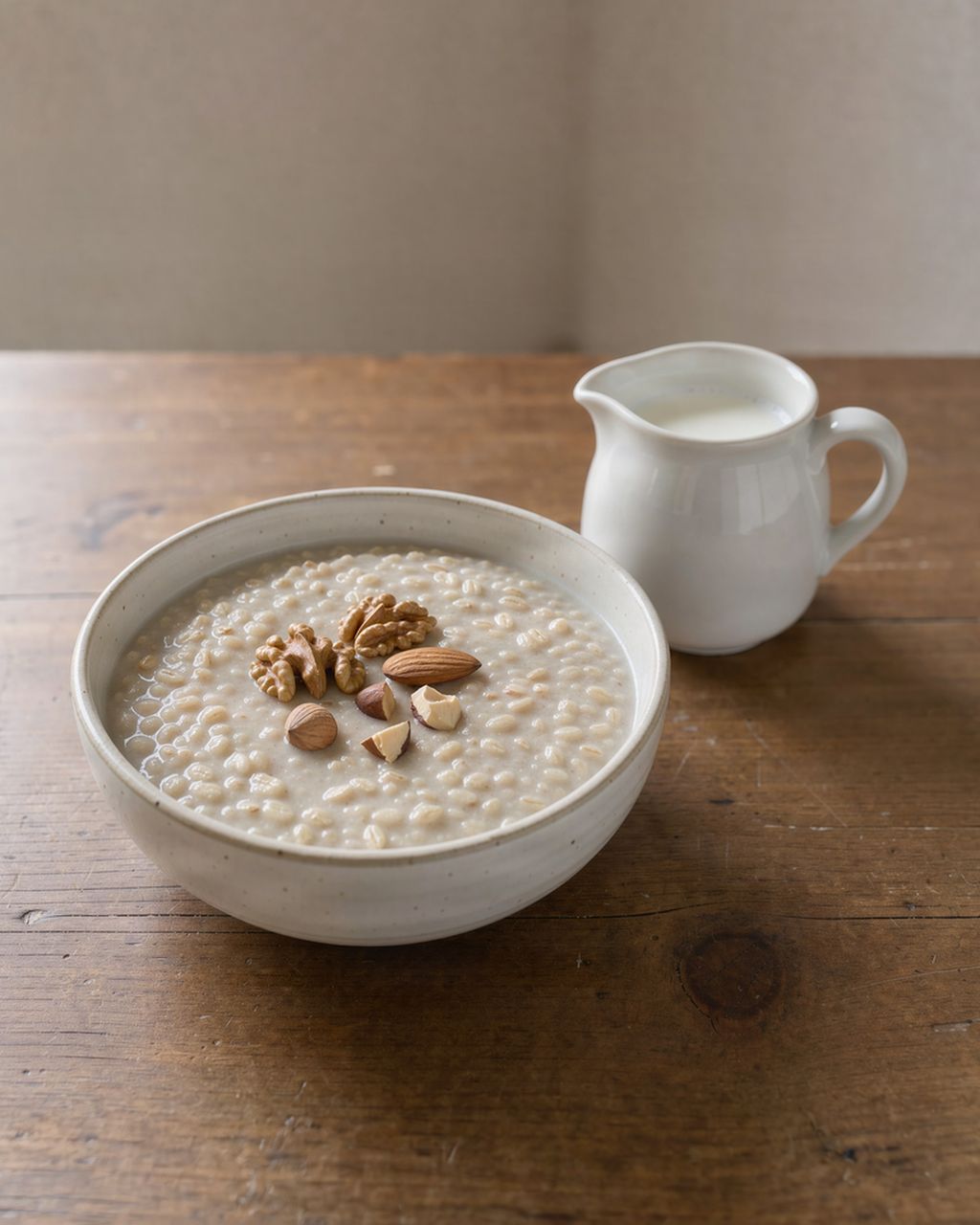
Semolina and oat porridge. A spoonful of povidla in hot porridge replaces both sugar and cinnamon at once. How to cook the porridge is covered in the article how to cook oatmeal.
Quark cream. Quark whipped with a little milk and a spoonful of povidla is a ready dessert for a glass.
Yeast dumplings. Following the recipe for yeast dumplings with fruit, you wrap strawberries in dough, but you can just as well wrap a teaspoon of thick povidla in a round of dough. Serve them with quark, powdered sugar and melted butter, or with poppy seed and sugar.
Glazes. Apricot jam loosened with a few drops of water, brushed over a fruit tart, makes the fruit shine and keeps it from drying out.
If you have more povidla than you can eat, you don't have to bake right away. Store the rest of the open jar in the fridge and come back to it when you feel like družbáky.
Keep an open jar of homemade jam or povidla in the fridge and always scoop from it with a clean, dry spoon. At room temperature mold can take hold quickly in an open jar, and homemade jam with less sugar is more susceptible than store-bought.
Store sealed jars in a cool, dark place, in a pantry or cellar. How long each jam keeps and how to tell is covered in detail in the article how long homemade jam lasts.

One Way
Piping Bags 30x17 cm, 100 PackYes, you can freeze both povidla and jam in a sealed container or jar, leaving room for expansion. After thawing in the fridge, jam is often a little thinner, so boil it briefly before filling Linzer cookies to thicken it again. Povidla barely change in the freezer.
Yes, store-bought povidla work well in koláče and buchty as long as they're thick enough for a spoon to stand up in. They are often sweeter and less spiced than homemade, so stir in a little rum, cinnamon or lemon zest. Thin povidla should first be thickened by simmering or with a spoonful of breadcrumbs.
Reduced-sugar jam isn't suitable for putting in dough before baking, because it contains more water and runs even faster in the oven than regular jam. You can use it as a filling after baking, for example in Linzer cookies or doughnuts. Less sugar does mean a shorter shelf life, so store such bakes in a cool place and eat them within a few days.
The best substitute for povidla in koláče is a thick jam, thickened by simmering or with a spoonful of breadcrumbs so it doesn't run out in the oven. A poppy seed or quark filling also works, as do dried plums (prunes) simmered with a little water and blended into a thick purée. Don't put thin, unthickened jam into koláče.
Yes, plum povidla suit Linzer cookies well, though they are darker and more heavily spiced. Before sandwiching, stir them with a teaspoon of rum or a little water so they spread thinly. They taste best with nut or cocoa dough.
One recipe worth heating the oven for, one tip, and one deal from the shop. Nothing else.