Honey spelt gingerbread cake with plum jam and raspberries
Updated Aug 23, 2026
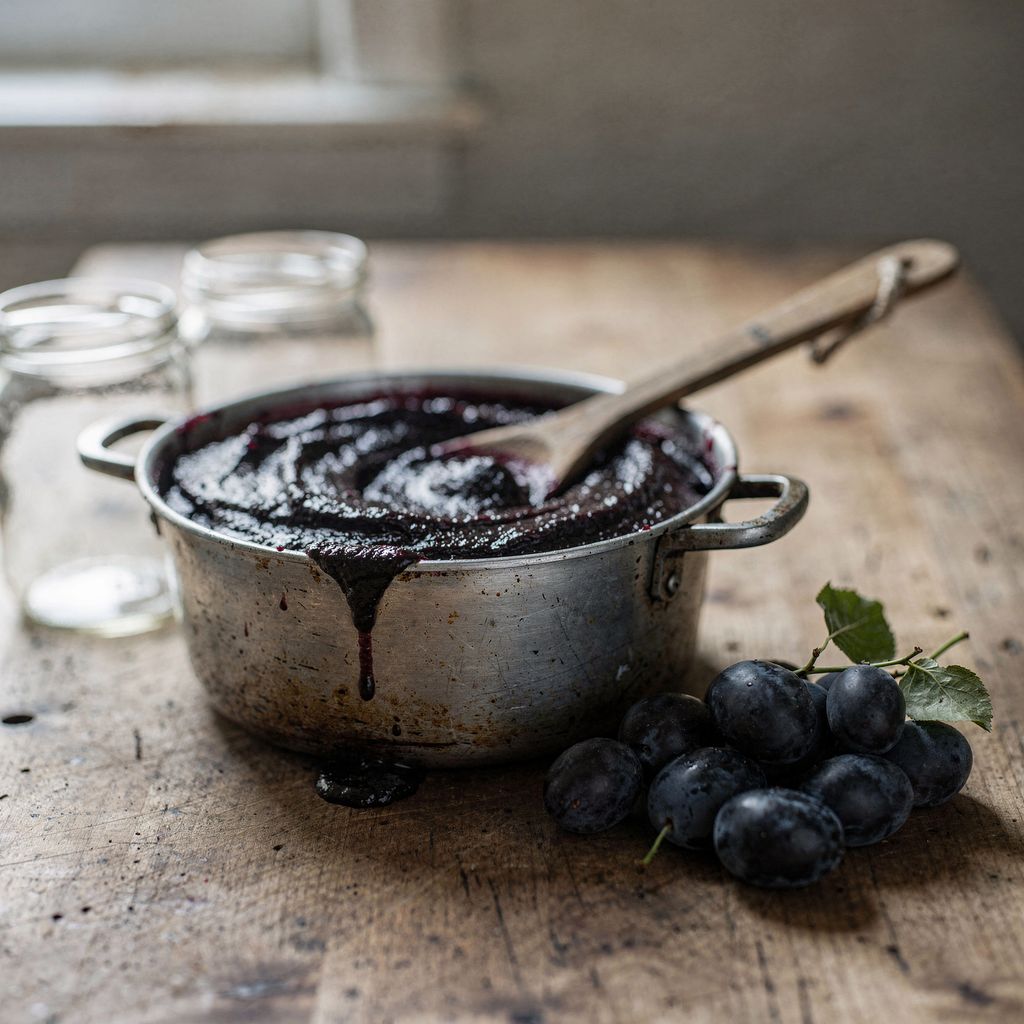
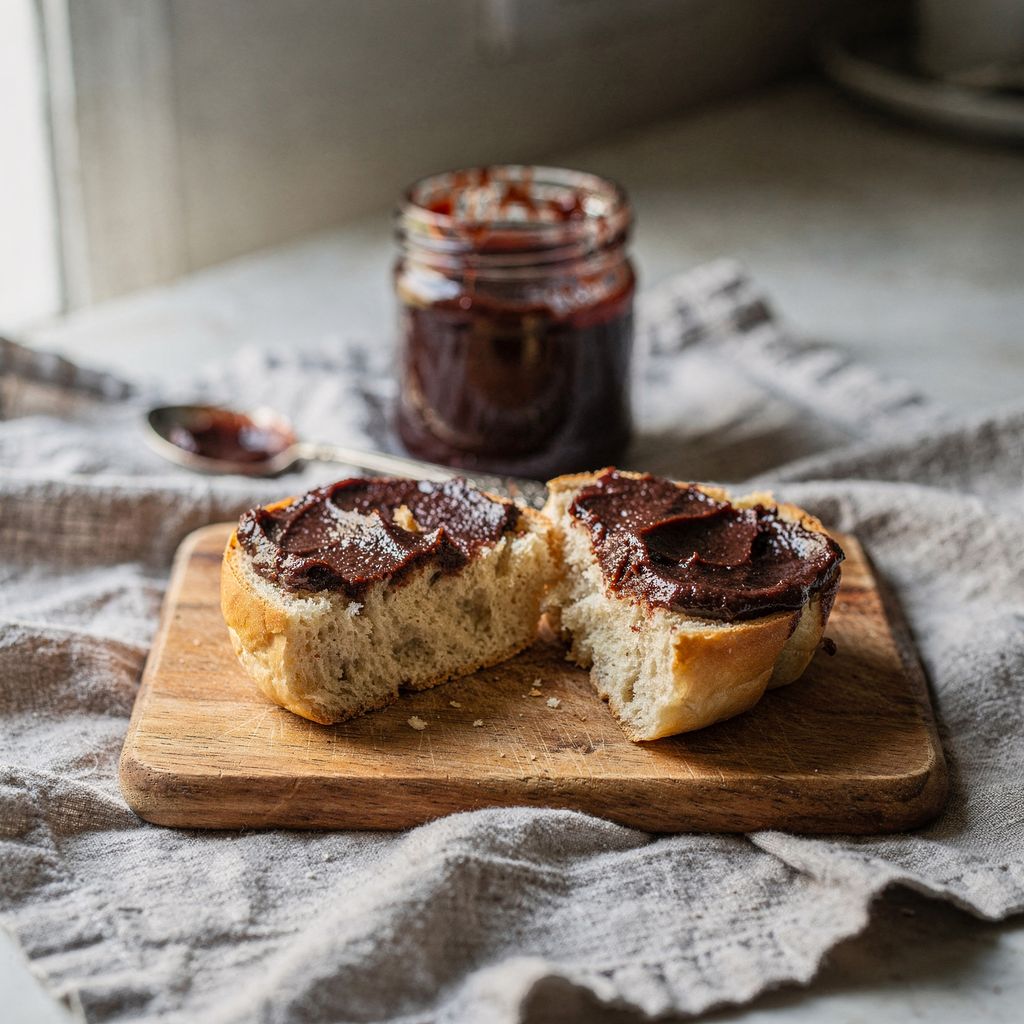
Plum butter (povidla) is thick fruit pulp cooked for hours until dark — no added sugar, no pectin, just fruit and time (it contains naturally occurring sugars). That's exactly what sets it apart from jam, and it's also why ten kilos of plums shrink down to just two or three kilos of finished plum butter. Late August through October is the best time to make it, since plums are at their sweetest and most abundant then. Here's the full method: how to pick the right fruit, how to cook plum butter in the oven or on the stovetop, how to tell when it's done, how to jar it — and what to do with it afterwards, from gingerbread to a sauce for roast duck.
Plum butter, jam and preserves differ in three ways: how much fruit they contain, whether sugar is added, and how long they're cooked.
Plum butter (povidla) — fruit pulp thickened by long cooking, traditionally made from plums, though food regulations also recognise versions made from apricots, apples, and fruit blends — plums with apples, or apples with pears; pear butter on its own doesn't count as a separate category. The rules require significantly more fruit per jar than for jam — 1,700 g per kilo for the plum version — and at least 60% dry matter by refractometer. They distinguish between sweetened and unsweetened versions, so added sugar is technically allowed; home tradition, however, doesn't use it.
Jam — fruit cooked briefly with sugar and often added pectin, giving a set, chunky result. Standard jam only needs 45 g of fruit per 100 g of finished product under the rules — a fraction of what plum butter requires, which needs 170 g of fruit per 100 g, i.e. 1,700 g per kilo.
Marmalade/preserves — from June 2026, the term "marmalade" will be reserved specifically for citrus preserves. Czech regulations still allow non-citrus jam to be labelled "marmeláda" too, so "plum marmalade" can legally appear on a label — but it's still classed as jam, not plum butter.
The difference shows up in the pot: jam is done in twenty minutes, plum butter takes five hours. And you can taste it too — jam tastes of raw fruit, plum butter tastes of roasted fruit.
Long cooking does two things at once: it evaporates water and it transforms the flavour. That's why pectin and jam sugar have no place in plum butter.
Evaporation. Ripe plums are roughly four-fifths water. As it evaporates, the sugars and fibre in the pulp concentrate and the mixture thickens on its own. From 10 kg of plums you'll end up with roughly 2–3 kg of plum butter — so plan on a ratio of about 4:1.
Natural pectin. Plums contain their own pectin, and long cooking releases it from the cell walls. Combined with the concentrated pulp, that's more than enough to give plum butter the thickness you're after.
Colour and flavour. Hours of gentle simmering achieve what jam can't manage in twenty minutes — the sugars concentrate and slowly caramelise. That's where the deep brown colour and roasted, almost plum-caramel flavour come from.
This is exactly why sugar isn't added to homemade plum butter: ripe plums already contain roughly 10–15% natural sugars, even more in overripe damsons, and evaporation concentrates that further still. Adding sugar wouldn't improve the flavour — it would just add bulk.
For plum butter you want overripe blue plums — damsons or small home-grown plum varieties — picked from late August to early October, depending on the variety, when they're at their sweetest and least watery.
Overripe, not rotten. A soft, slightly shrivelled fruit with wrinkled skin is ideal. Mouldy or fermenting fruit has no place in the pot — a single spoiled plum can ruin the flavour of the whole batch.
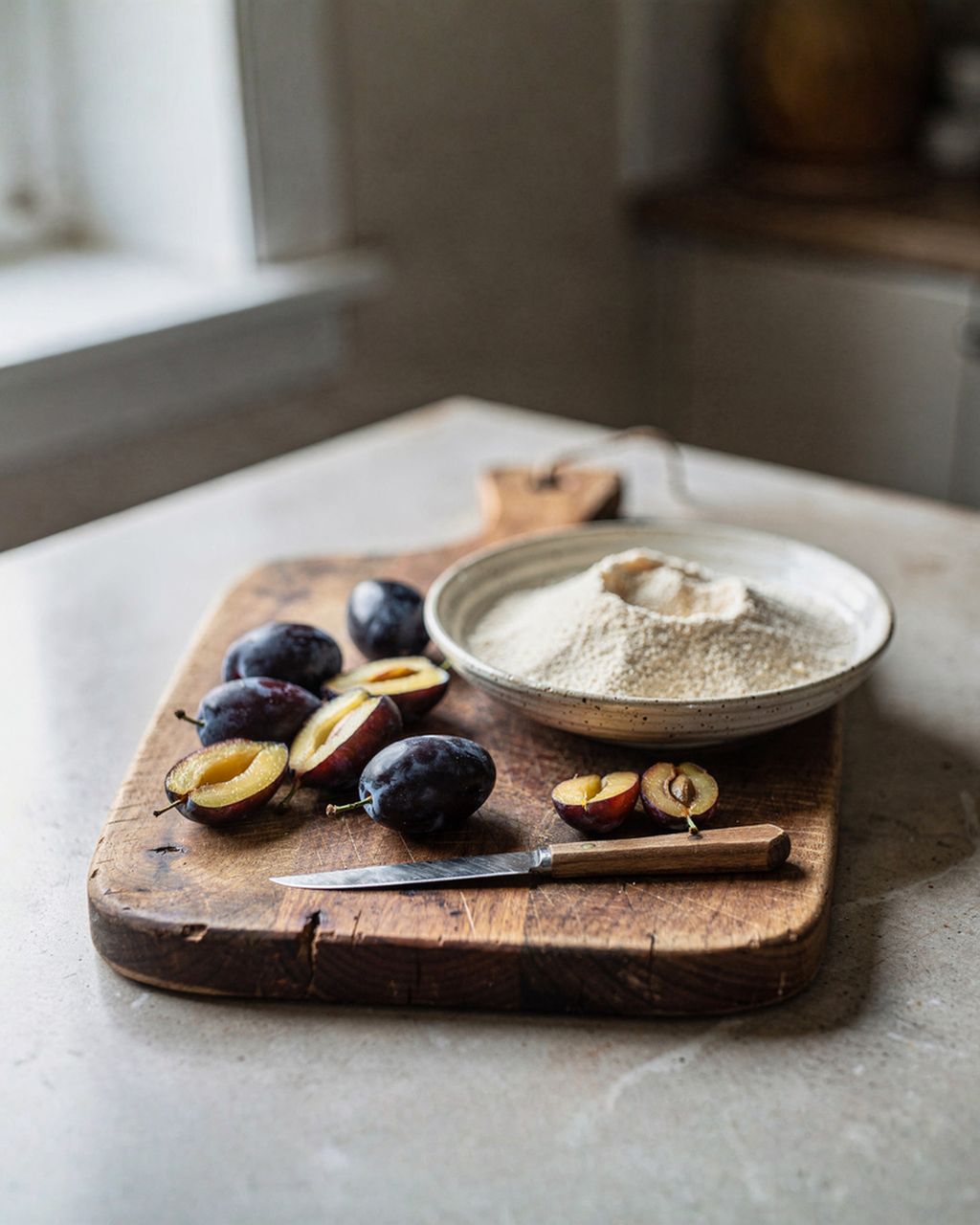
The stone needs to come out. Or maybe not. With true home-grown plums, the stone pops out easily once you halve the fruit. Damsons and small plum varieties hold onto their stones stubbornly — don't waste time pitting them; just cook them whole and pass the pulp through a sieve afterwards to catch stones and skins.
Early, juicier varieties can be used too — just expect a longer cooking time and a smaller yield.
Leave the skins on. They contain pectin, colour and some of the flavour. Once blended or sieved, you won't notice them anyway.
If you've got more plums than you can get through, they don't all have to end up in plum butter — they're also great in plum dumplings made with potato dough or in a quick plum mug cake.
The process has four stages: breaking down the fruit, reducing it, flavouring, and jarring. The oven is the easiest route, since it needs almost no stirring and there's no risk of scorching the bottom.
Oven-baked plum butter takes 4–6 hours at 150–160°C, uncovered and with no added water; stirring once an hour is enough.
Wash the plums, halve them and remove the stones. No need to peel.
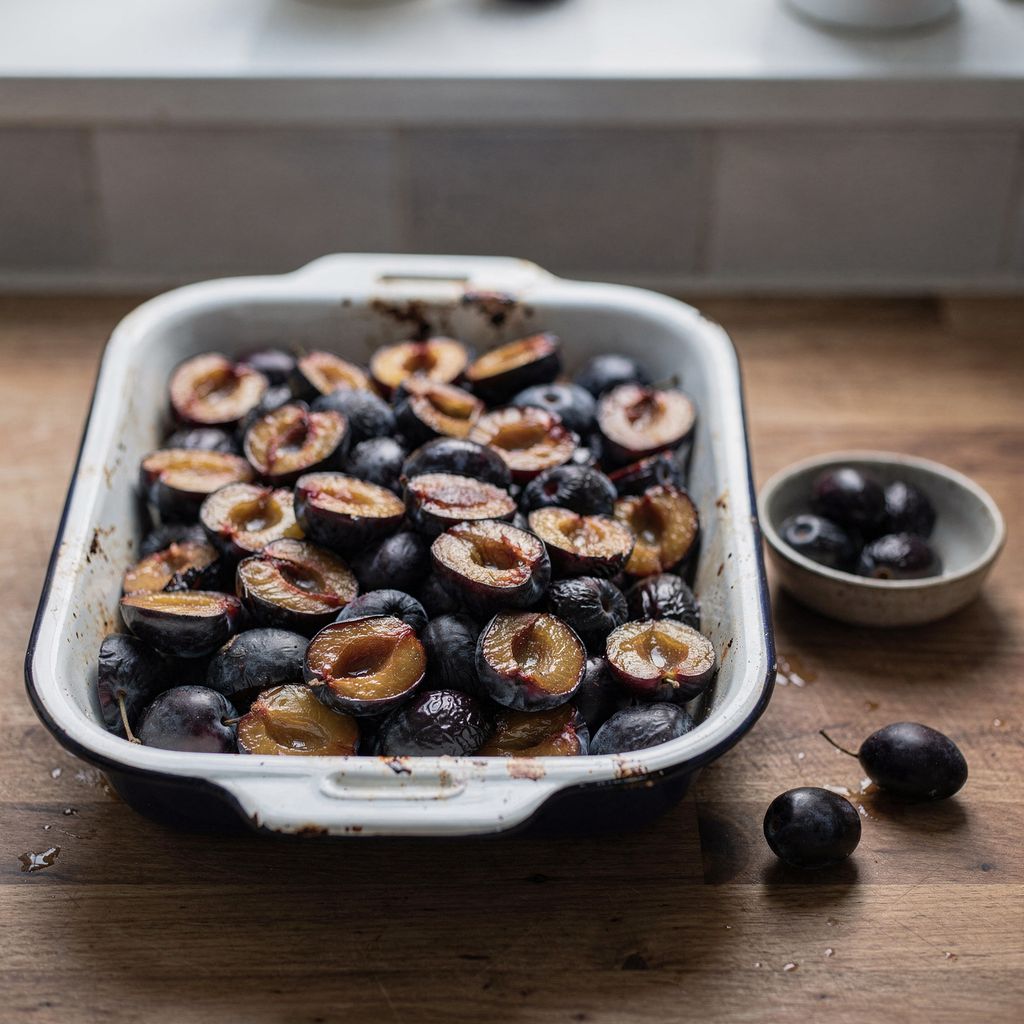
Arrange them cut-side up in a deep roasting pan or a large cast-iron pot. Don't add anything — no water, no sugar.
Bake at 150–160°C, uncovered. In the first hour the juices will release; after that, they'll start to reduce.
After 2–3 hours, blend the mixture right in the pan with a stick blender, or pass it through a sieve, then return it to the oven.
Keep baking until the mixture thickens. Plan on 4–6 hours total. Run a wooden spoon along the bottom once an hour so nothing catches.
On the stovetop, plum butter takes 4–5 hours in a wide, thick-bottomed pot, uncovered, stirring along the bottom every 10–15 minutes.
Use a wide, thick-bottomed pot, not a tall one. A larger surface area evaporates faster, and the difference is measured in hours.
Simmer gently, uncovered, stirring along the bottom with a wooden spoon every 10–15 minutes. The thicker it gets, the more often you'll need to stir.
Plan on 4–5 hours. The last hour is the critical one — thick plum butter catches on the bottom instantly, so don't step away from the pot once you're there.
Add flavourings only at the very end, once the mixture is thick — otherwise the aromas would simply evaporate over the hours of cooking.
A pinch of salt per kilo of finished plum butter. It brings out the sweetness without being noticeable itself.
Cinnamon, star anise, cloves or homemade gingerbread spice mix, added a pinch at a time, tasting as you go.
Zest of half a lemon per kilo of plum butter, to lift a flat flavour.
A spoonful of slivovitz (plum brandy) into the jar right at the end — for flavour, and a little extra preservation too.
Only add sugar if the plums were underripe and the finished butter tastes too tart. Fifty to one hundred grams per kilo of finished mixture is enough; any more and you're really making jam. Just bear in mind that this technically makes it a sweetened plum butter — regulations do recognise that category, but the "no added sugar" claim from the intro no longer applies to that batch.
Plum butter is ready when a wooden spoon dragged along the bottom leaves a trail that closes slowly — count two to three seconds before it fills back in.
Two extra checks, just to be sure:
The cold plate test. Drop a teaspoon of the mixture onto a small plate straight from the freezer. After a minute, tilt it: the mixture should hold its shape and shouldn't release a watery ring around the edge.
Refractometer. If you have one, aim for at least 60% dry matter by refractometer — exactly the figure the regulations require for this category.
Two things people often forget. Plum butter firms up noticeably more as it cools, so don't cook it to the exact consistency you want in the jar — stop a bit short of that. And if it does end up too thin, it's not a disaster: just put it back in the oven at 150°C and let it reduce further, even for another hour if needed.
Ladle the plum butter in boiling hot into hot, sterilised jars, seal immediately, and leave to cool upside down. For a mixture above 60% dry matter, this is usually enough on its own — the density and concentrated sugars act as their own preservative.
If you want extra peace of mind, or your batch came out thinner than usual, sterilise the jars further:
Stand the jars in a pot of water reaching three-quarters up their sides and hold at 85°C for 15–25 minutes. Check the temperature with a thermometer, not by guesswork — above 90°C the plum butter keeps cooking inside the jar and can push the lids up.
Or arrange the jars in a roasting pan with a little water and place in an oven preheated to 100°C for 20 minutes.
Storage:
A dark, dry pantry or cellar, 8–20°C. Not above a radiator, and out of direct light — plum butter would darken and lose flavour.
A sealed jar keeps for a year or more. Once opened, refrigerate and use within 4–6 weeks.
Always scoop it out with a clean spoon. A stray crumb of butter or dough in the jar is the most common cause of mould.
Check the lid before use. A bulging lid, a hiss when opening, or bubbling contents mean the whole jar goes in the bin — don't just scoop off the top and eat the rest.
Plum butter is great for five things: yeasted dough (buns, filled pastries, fried doughnuts), gingerbread, pancakes and drop scones, as a topping for fruit dumplings, and as the base for a sweet-and-sour sauce for rich, dark meat.
Its advantage over jam is always the same: it's thick, so it doesn't leak, doesn't turn the dough soggy, and won't boil over in the oven.
In yeasted dough, plum butter makes the ideal filling precisely because it's so thick — unlike jam, it won't leak through the base or leave a hollow in the bun. Use a heaped teaspoon per bun; more than that and they'll split open as they rise.
Warm the plum butter slightly and stir it before filling, so it spreads easily. Yeasted dough with plum butter also works well as a sweet lunch in its own right — try it as the filling in soft steamed buns with chaudeau sauce.
Plum butter belongs in gingerbread dough for two reasons: it keeps the crumb moist for days, and its tartness balances the sweetness of the honey. In most recipes it can replace part of the fat and liquid too.
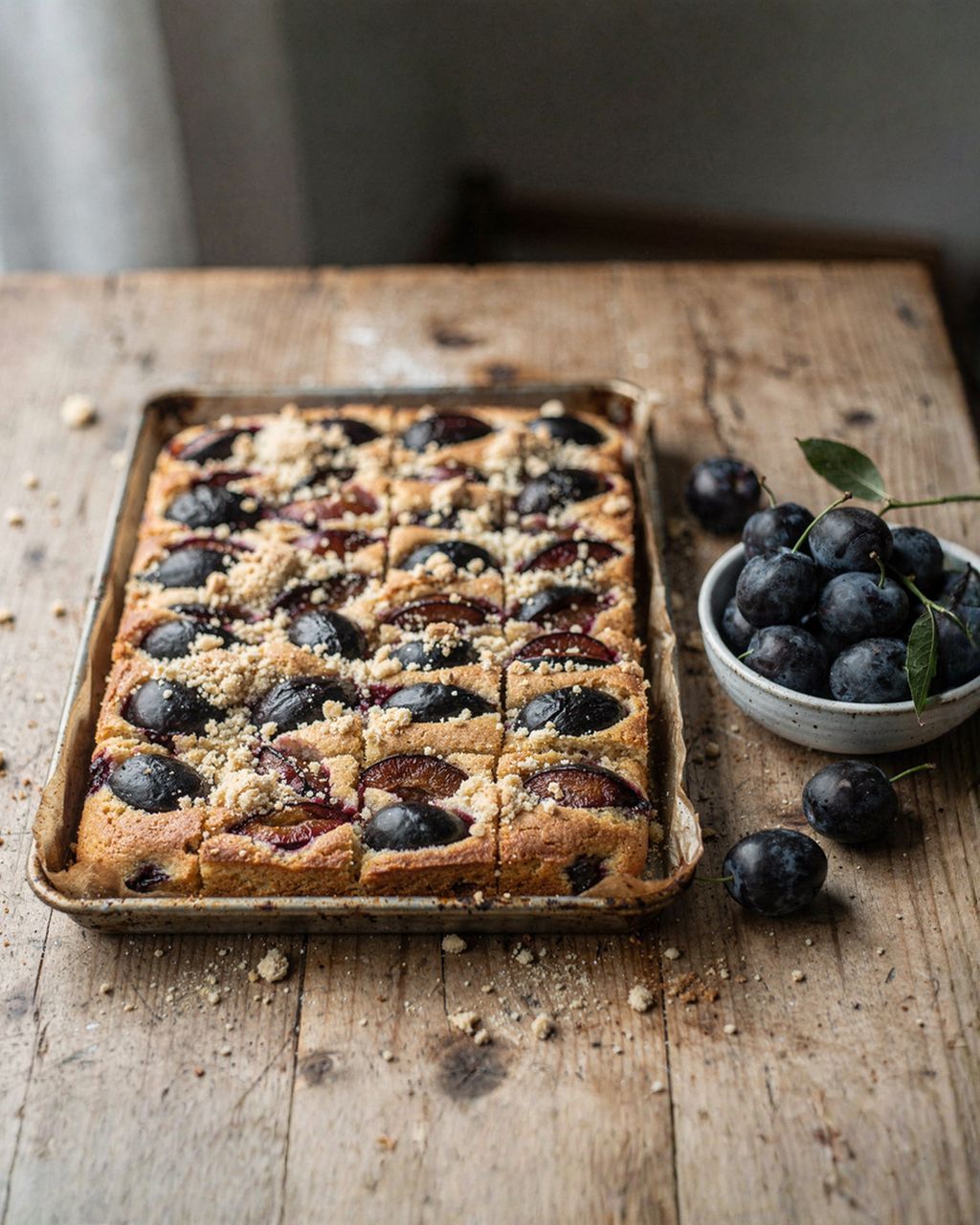
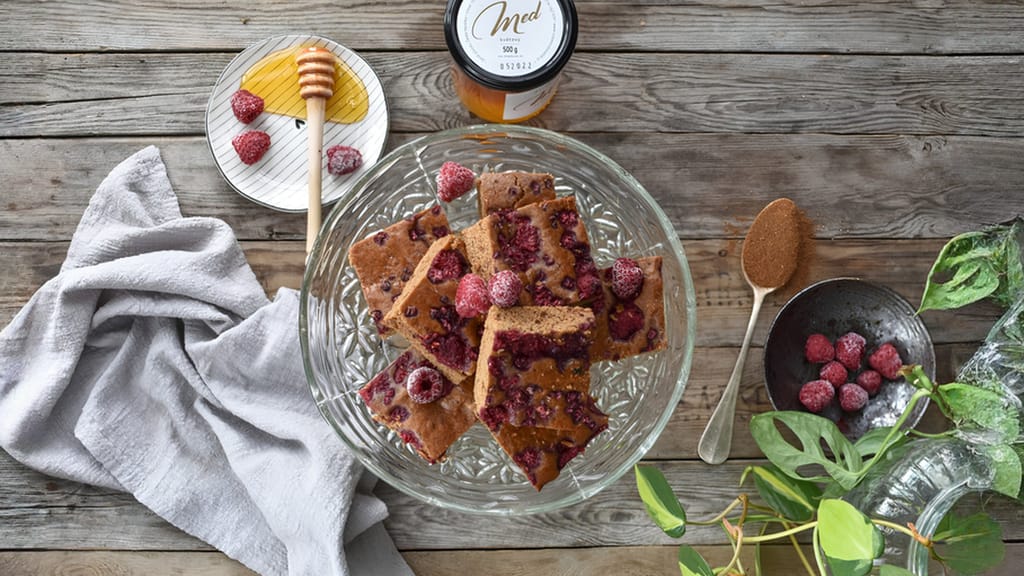
Honey spelt gingerbread cake with plum jam and raspberries
Honey gingerbread made with spelt flour, plum butter and raspberries — a moist gingerbread where the plum butter does most of the work
Cold plum butter won't spread on a pancake — it just tears it. Loosen it up first: a spoonful of hot water or a splash of cream per two tablespoons of plum butter gives you a spreadable mixture. Add a squeeze of lemon and a sprinkle of poppy seeds or curd cheese.
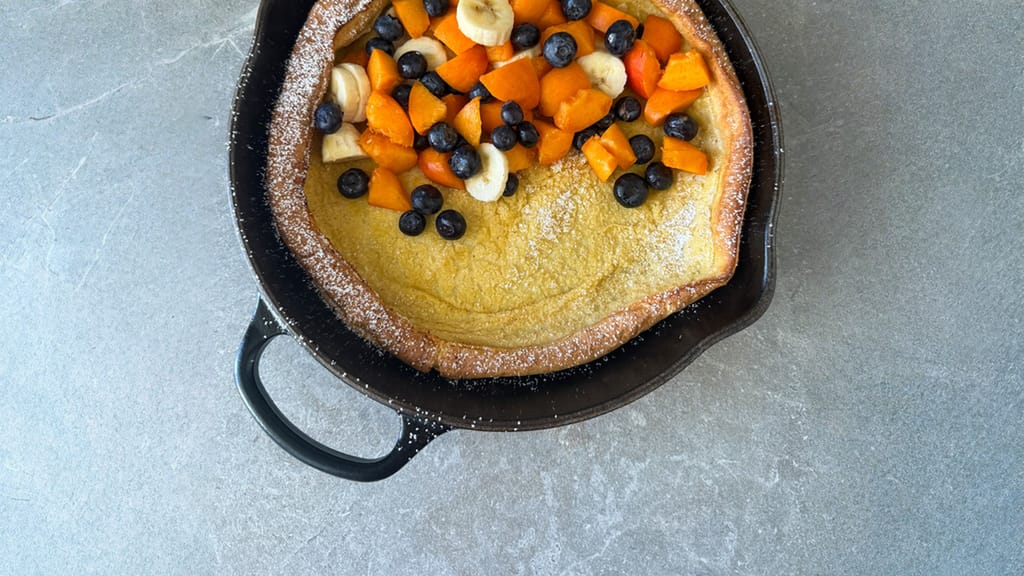
Fluffy oven-baked dutch baby pancake
Fluffy Dutch Baby pancake from the oven — a great base that plum butter spreads over beautifully
For fruit dumplings, warm the plum butter and pour it over the hot dumplings, along with grated curd cheese and melted butter. It works just as well with yeasted dumplings filled with fruit, where plum butter can stand in for the usual sugar and poppy seed topping.
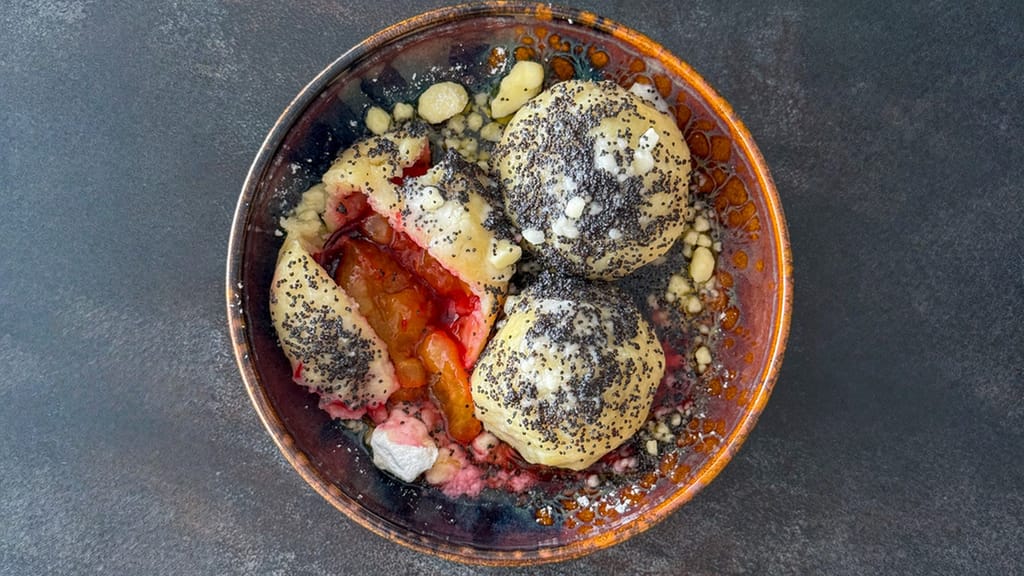
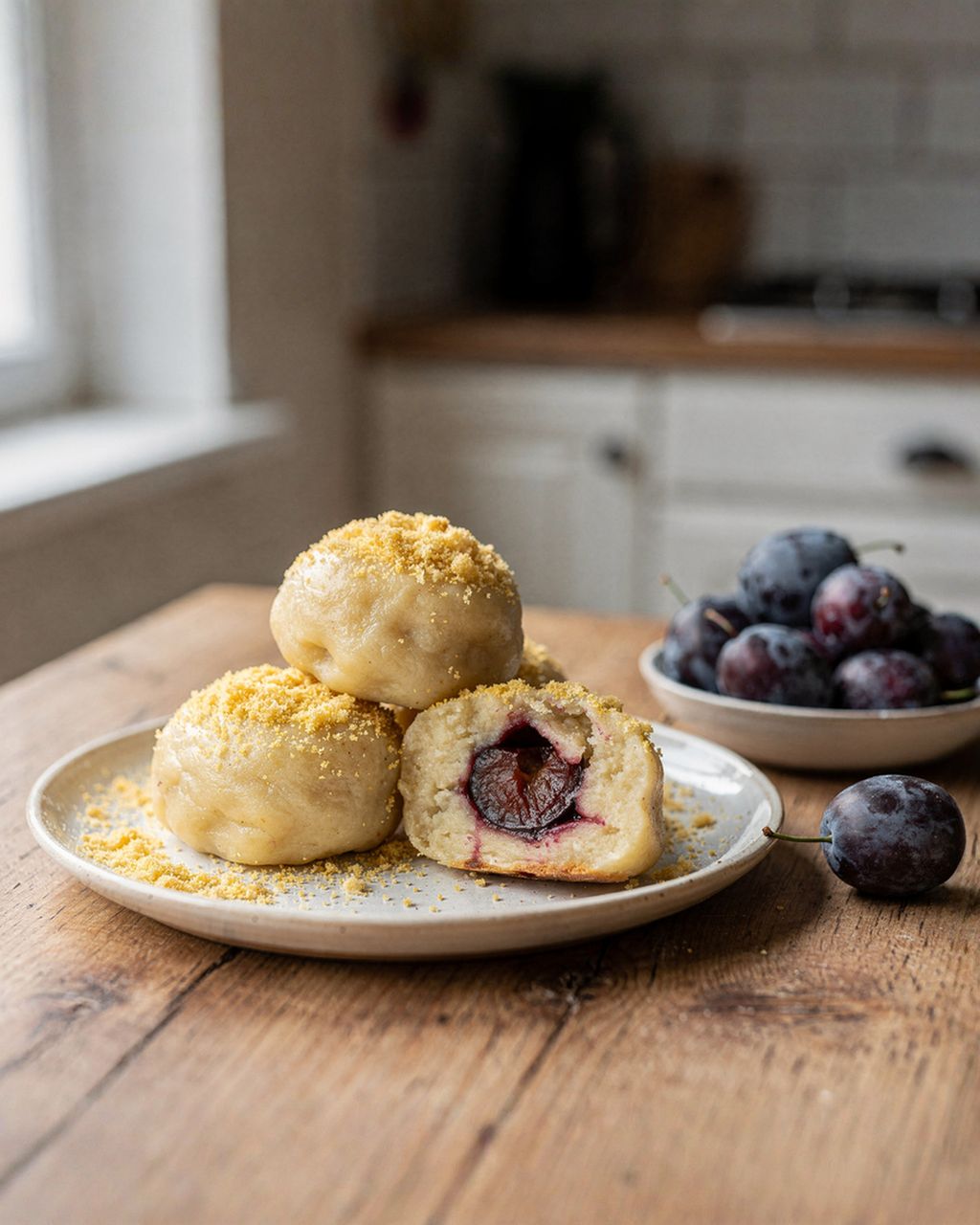
Plum dumplings with potato dough
Plum dumplings made with potato dough — the seasonal companion to plum butter, made from the very same crate of plums
Plum butter makes a sweet-and-sour counterpart to rich, dark meat — stirred into the pan drippings from a roast and sharpened with vinegar and pepper, it turns into a thick, dark sauce within minutes. It plays a similar role to English Cumberland sauce, just using a homemade staple you already have in the pantry.
It goes well with slow-roasted duck, goose, game and roast pork shoulder. Along the same lines, plum butter also works as the base for a rib glaze.
Yes — besides plums, this kind of fruit butter is traditionally made from apples, pears and apricots, and food regulations explicitly recognise these fruits for the category. The method is the same, just allow more time: apples and pears have a similar water content to plums, but you need almost twice as much of them per kilo of finished butter (regulations require 3,000 g of apples per kilo), so it takes longer to reduce. The result also tends to be blander and benefits from extra lemon or cinnamon. Apricots break down fastest of all, though the reduction time is roughly the same as for plums — just the result is tangier. You can also mix fruits — the rules allow for plum-and-apple or apple-and-pear butters, though they require even more fruit per kilo for those blends.
Yes, and frozen plums are actually a bit more convenient for plum butter than fresh ones. Freezing breaks down the cell walls, so the fruit collapses faster and releases its juice right away. Don't thaw them first — put them straight into the roasting pan or pot; just expect the first stage to be wetter and the overall cooking time to run a little longer. The yield ends up much the same as with fresh plums.
You can make plum butter in a slow cooker or bread maker, but neither fully replaces the oven. A slow cooker breaks the fruit down reliably with no risk of scorching, but it has a lid and barely lets any liquid evaporate — run it uncovered for the last few hours, or finish reducing it in the oven. A bread maker with a jam setting controls temperature and stirring, but it usually only holds around a kilo of fruit, and the mixture doesn't spend enough hours in it to darken into that deep roasted flavour. Fine for a small batch, not for a big August harvest.
You can freeze plum butter instead of canning it, and it's the simplest option if you'd rather skip sterilising jars. Let it cool completely, spoon it into small lidded containers, and leave about a centimetre of headspace for expansion. It keeps in the freezer for roughly a year without losing colour or flavour. It's handy to freeze some in two-tablespoon portions — exactly enough for one batch of pancakes or a meat sauce. Don't put glass preserving jars in the freezer unless they're specifically rated for it.
There's no added sugar, but as the mixture reduces, the natural sugars in the plums become concentrated — finished plum butter, like jam, ends up at least 60% dry matter. The real difference is in the fruit content: regulations for shop-bought plum butter require at least 1,700 g of fruit per kilo, but homemade versions typically use more like three to five kilos of plums per kilo of finished product. Either way, it contains far more actual fruit pulp than jam, and needs no pectin or preservatives. Think of plum butter as a sweet treat in its own right — after hours of reduction, the fruit's natural sugars are nicely concentrated, even though none have been added.
One recipe worth heating the oven for, one tip, and one deal from the shop. Nothing else.