At a glance
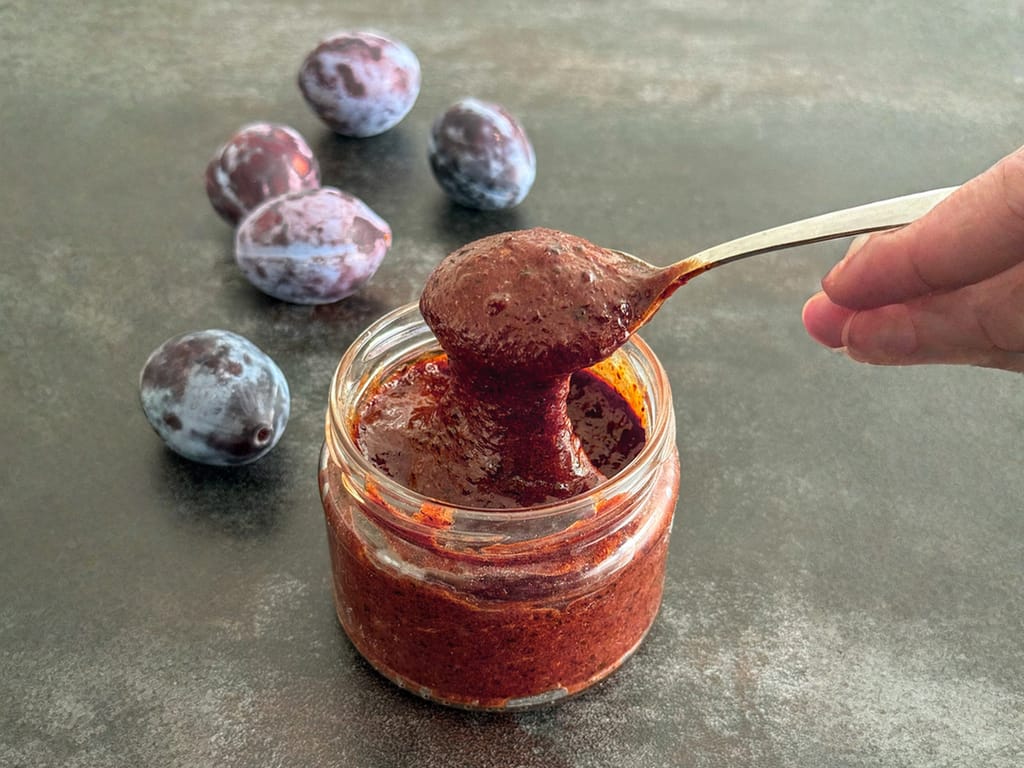
You'll be making a hands-off plum butter in the oven that requires minimal stirring and delivers silky-smooth results with warm cinnamon and rum notes. The key to success is patience: plums need to rest overnight to release their juices, then the oven handles the cooking while you stay free from constant stirring, followed by simple seasoning and jarring for preservation.
1/5
Prepping and macerating the plums
Wash the plums, remove the pits and cut them in half. Place them in a roasting pan, sprinkle with sugar, add the vinegar and mix everything together. Cover the pan and let the plums rest at room temperature overnight (12 to 24 hours) so they release plenty of juice.
For this step
0/32/5
Baking the plum butter with no stirring
The next day, place the pan with the plums and their released juice into an oven preheated to 150–180 °C. Bake for about 1.5 to 2.5 hours, until the liquid has evaporated. Don't stir the mixture at all while it bakes – just check on it visually from time to time.
3/5
Preparing the preserving jars
While the plum butter bakes, get your jars and lids ready. Wash them thoroughly in hot water and rinse well. For extra cleanliness, you can also boil them or sterilize them in a hot oven for a few minutes. Make sure they're completely dry.
How it went
Nobody has tried this recipe yet
Be the first to say how it went.
Anyone can answer, without signing in or buying. Answers aren't verified. The percentage is the share of “Worked out” answers, shown from 5 answers.
Tips from the Yumsto kitchen
Why it works
The oven heats from all sides, so the plums reduce evenly instead of catching on the bottom like a pot on the stovetop. That's why you don't need to stir. Overnight the sugared plums release juice to bake in, and the sugar dissolves. The vinegar adds acidity that brightens the fruit.
Tips
Late-season prune plums work best: they're fleshy and less watery. A wider, shallower roasting pan means more surface area and faster reduction. To check doneness, drop a little on a cold plate: no liquid should seep out around it and it should hold its shape.
If something goes wrong
Too runny: put the pan back in the oven until the juice thickens. Edges are burning: lower the heat to the bottom of the range in the method. Too sweet or flat: after blending, stir in a little more vinegar or cinnamon to taste.
Storage
Turning the jars upside down is a common Czech method, but it doesn't guarantee every lid seals. Once cool, check the lids: the center should be pulled down and shouldn't flex when pressed. Put any jar that hasn't sealed in the fridge and use it within 2 weeks. Store sealed jars somewhere cool and dark; keep an opened jar in the fridge and finish it within about 2 weeks. If mold appears, throw away the whole jar.
Common questions
Do I need to peel the plums?
No. The skins break down as they bake and disappear once blended.
Can I use less sugar?
Yes, but the plum butter will be tarter and keep less well. Store a less sweet batch in the fridge and finish it within 2 weeks.
How much does a kilo of plums make?
About 400–500 g, according to the recipe. It depends on how juicy the plums are and how long you bake them.
Can I make a double batch?
Yes, but split it between two pans. In a deeper layer the water evaporates much more slowly.
Want a recipe like this every Thursday?
One recipe worth heating the oven for, and one tip that saves you time. Nothing else.