Apple strudel with homemade stretched pastry
Apple Varieties: Which Ones for Strudel, Which for Apple Butter
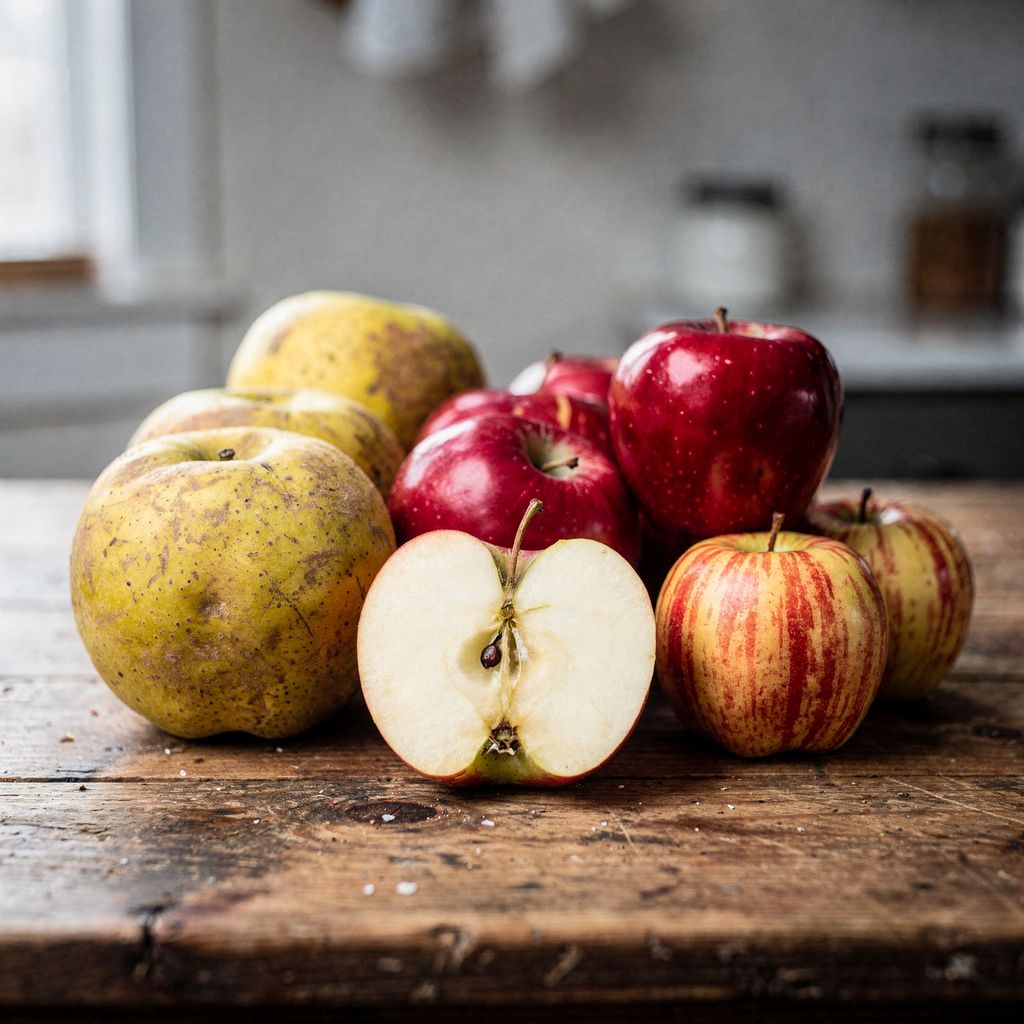
Updated Oct 6, 2026
Apple varieties differ in the kitchen mainly in three ways: how firm the flesh is (whether it falls apart when baked or holds its shape), how tart it is, and how strongly it smells. For strudel you want tart, firm apples (Boskoop, Idared, Topaz, Jonagold); for apple butter, fragrant apples that readily cook down (Golden Delicious, Šampion, Matčino, Gdaňský hranáč, with Jonathan added for aroma). Below you'll find out why that's the case, an overview of varieties you can actually buy in the shop or pick in the garden, and a quick test for sorting an apple when you have no idea what it is.
With apples for cooking and baking, three traits matter: firmness of the flesh, tartness and aroma. Skin colour and size tell you almost nothing.
Firmness of the flesh determines whether a slice of apple stays a slice after 30-40 minutes in the oven, or turns to mush. Firm, juicy, crisp apples hold their shape; mealy, soft ones fall apart.
Tartness gives a baked apple its flavour. Heat and sugar mellow tartness, so an apple that's just right raw often tastes flat and merely sweet once baked. That's why apples chosen for baking are ones that taste a touch too tart when raw.
Aroma is the least obvious trait, but it matters most in long-cooked dishes. Fragrant varieties (Jonathan, Matčino, Cox's Orange Pippin) give apple butter and compote a depth that sugar and cinnamon can't match.
Based on these three traits, you can sort any apple into one of three boxes: for baking (firm + tart), for cooking down (soft + fragrant) and for eating raw (crisp + sweet). Some varieties, like Jonagold, can fill two boxes at once.
The best apples for strudel are Boskoop, Idared, Topaz, Jonagold and Granny Smith — firm, distinctly tart apples that aren't overly juicy.
Here's why:
Tartness balances the sugar and raisins. Strudel filling tends to be sweet, and a sweet apple gets lost in it. A tart apple keeps it fresh and lively.
Firm flesh keeps the slices intact. You want to see soft but whole pieces of apple in the cross-section, not jam.
Less juice means crisper pastry. Very juicy apples release so much liquid in the oven that the pastry turns soggy underneath. That's why apples for strudel are sprinkled over a layer of breadcrumbs or toasted nuts that soak up the juice.
For one strudel on a large baking tray, allow roughly 1-1.2 kg of apples before peeling. Slice them 2-3 mm thick or grate them coarsely. Sliced apples hold their structure better; grated apples release more juice, so they need more breadcrumbs.
A blend of two varieties works best, say in a 2:1 ratio: two parts tart Boskoop or Idared for firmness and flavour, one part fragrant Jonagold for aroma.
Overripe Golden Delicious, Gala, or mealy apples from the tail end of winter storage aren't a good fit for strudel — they'll cook down and leave the filling bland. You'll find everything about the pastry, filling and baking in our guide to apple strudel step by step.
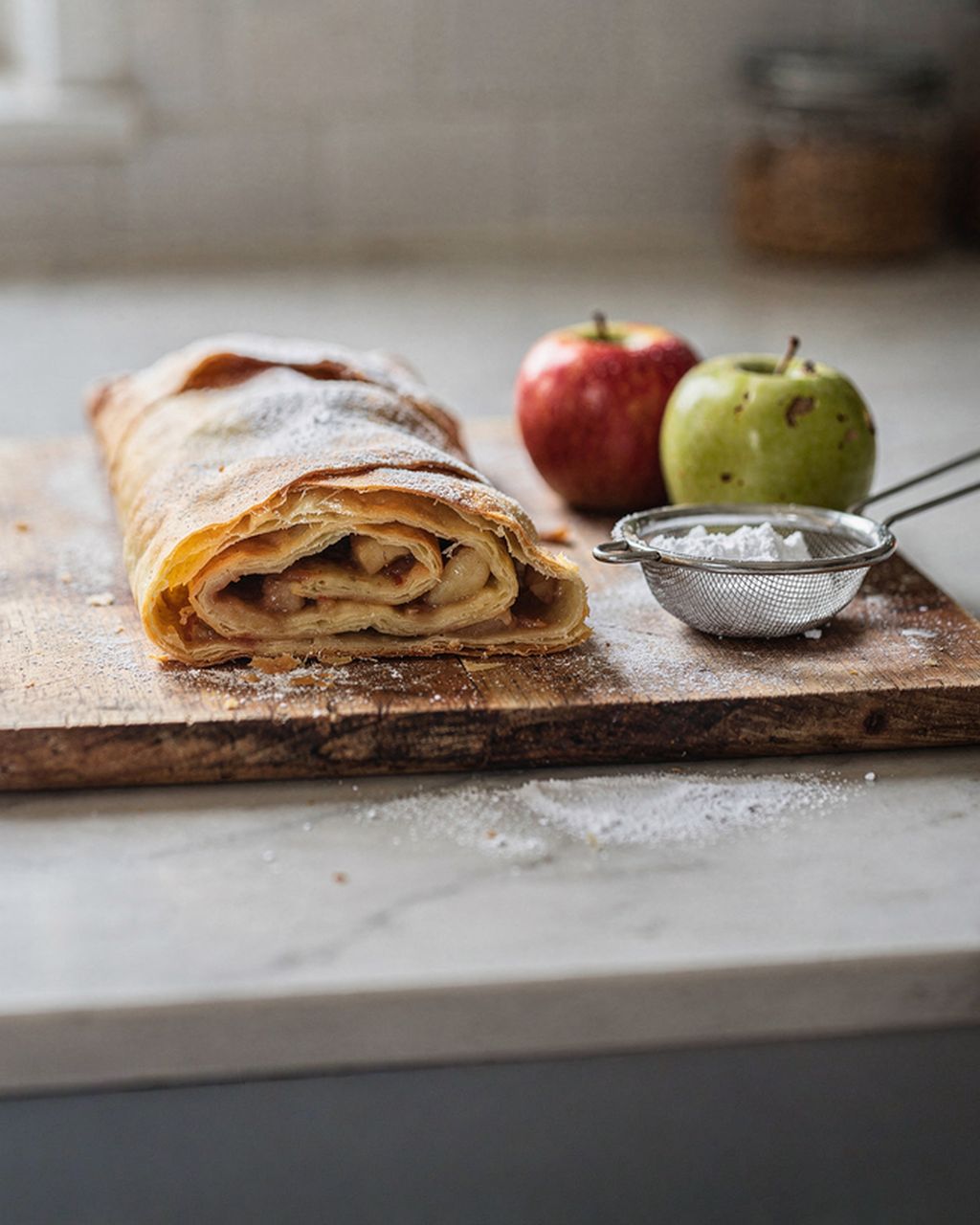
Apple strudel with homemade stretched pastry
Apple strudel made with homemade stretched pastry — ideal for Boskoop or Idared
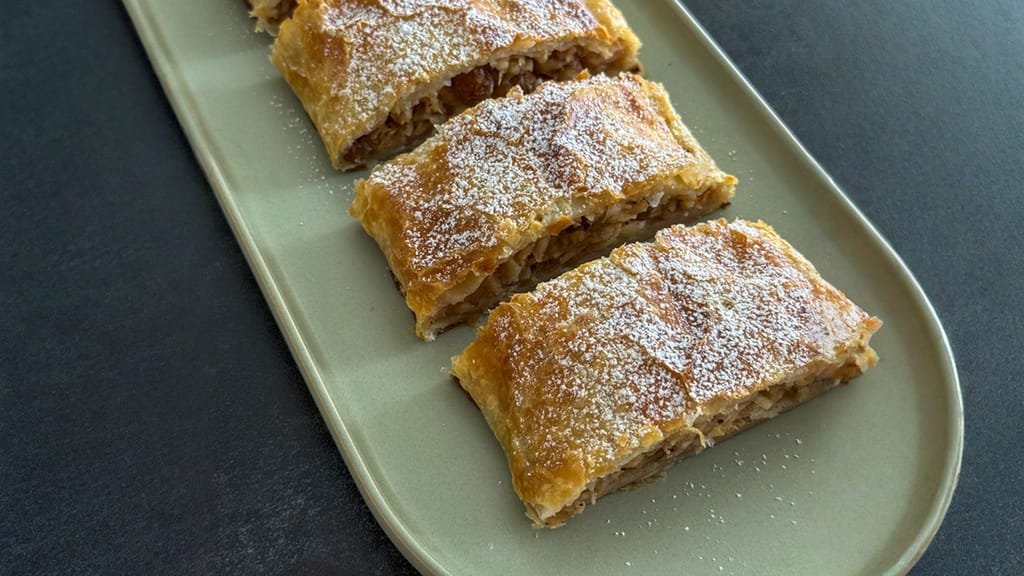
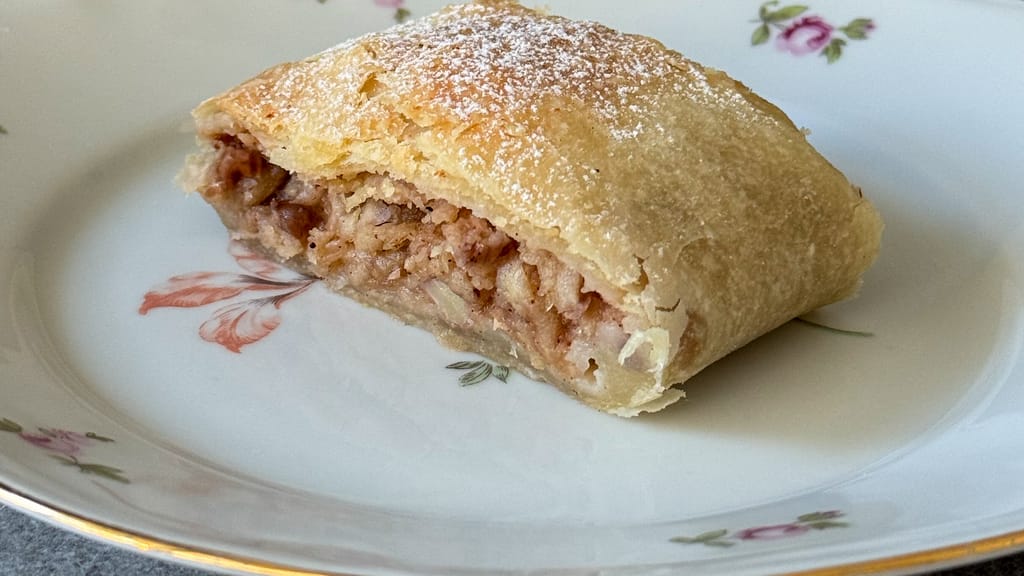
Apple strudel from puff pastry (quick version)
Apple strudel made with puff pastry — a quick version with firm, tart apples
The best choice for apple butter is fragrant apples that readily cook down: Golden Delicious, Šampion, Matčino and Gdaňský hranáč, topped up with about a quarter of tarter apples for flavour (a 3:1 ratio). Jonathan cooks down more slowly, since its flesh is firm and tart, but as an addition it gives the apple butter a strong aroma and a pleasant tartness.
For apple butter you want exactly the opposite of strudel:
Soft flesh breaks down quickly, so you don't have to fuss over blending and stirring for as long.
Long cooking concentrates the aroma. Apple butter is simmered or baked for several hours, the water evaporates, and what's left is the apple's own fragrance. A bland apple makes bland apple butter.
Tarter apples add flavour and pectin. Pectin is a natural substance that helps apple butter thicken. It's concentrated in the skin and around the core, which is why apples for apple butter are often cooked with the skin on and only sieved afterwards. A reliable ratio is roughly 3 parts sweet, fragrant apples to 1 part tart ones (Boskoop, Ontario, Granny Smith, or fragrant Jonathan).
Expect a big reduction in volume: 3 kg of apples yields roughly 0.6-1 kg of apple butter, depending on thickness and how much sugar you add. It's ready when a spoonful on a plate doesn't weep water and the groove left by the spoon doesn't fill back in.
Bruised and fallen apples work great here too — just cut out the damaged bits. The principle of long, slow evaporation is the same as in homemade plum butter.
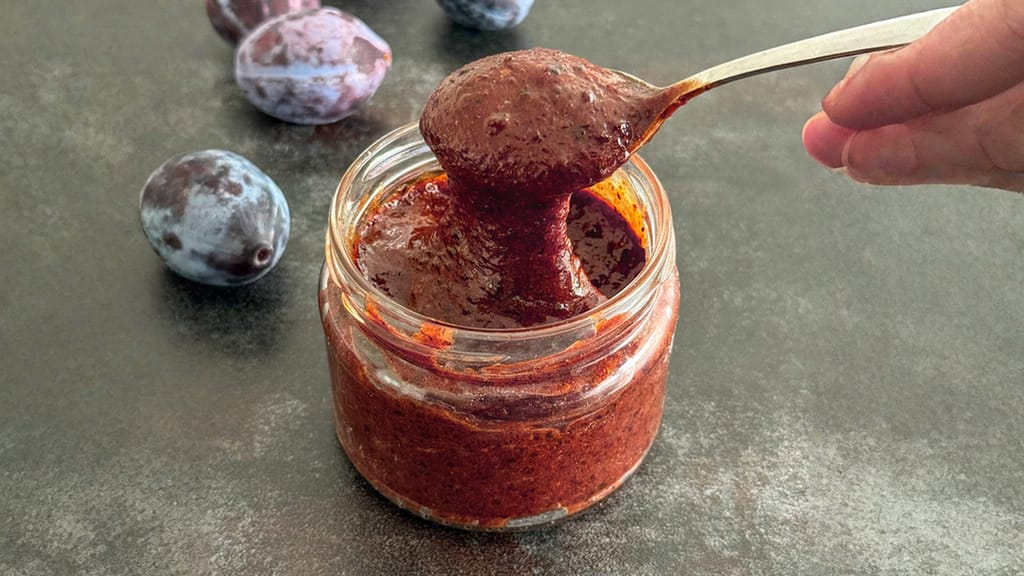
Homemade plum butter
Homemade plum butter — the same slow-evaporation method used for apple butter
From supermarket apples, choose Idared, Topaz or Granny Smith for strudel, and Golden Delicious, Šampion or Jonagold for apple butter. Here's a rundown of the varieties you'll most often come across in the shops:
Gala: sweet, crisp, mild. Good for eating raw and for salads; too bland for baking.
Golden Delicious: sweet, yellow, softens quickly. Great for apple butter, purée and compote; use in strudel only mixed with a tart variety.
Jonagold (and its dark red version, Red Jonaprince): sweet-tart, juicy, aromatic. An all-rounder: good raw, in strudel, and in apple butter.
Idared: firm, crisply tart, keeps well. One of the best store-bought apples for strudel and tarts.
Šampion: juicy, sweet, fragrant, softens quickly. Good for apple butter, juice and eating raw.
Granny Smith: green, distinctly tart, very firm. Good for strudel and tarts where you want the apple to stay in pieces; use in apple butter only as the tart component.
Topaz: a Czech variety, crisply tangy and firm. Great for baking and strudel, and good eaten raw too.
Braeburn: firm, sweet-tart. Holds its shape when baked, works well in tarts.
Fuji: a very sweet, crisp apple for eating raw. Needlessly sweet and pricey for baking.
Pink Lady: sweet-tart, firm, holds its shape when baked, but too pricey to use in strudel.
Gloster: dark red, firm, slightly tart. Stores well and bakes nicely.
Among old varieties, the best are Boskoop, Ontario and Strýmka for strudel, and Matčino and Gdaňský hranáč for apple butter, with Jonathan added for aroma and tartness. You generally won't find these varieties in shops, but they're common in Czech gardens and often make better eating than supermarket apples.
Boskoop (Belle de Boskoop): large, rough greenish-yellow skin, distinctly tart. The classic strudel and baking apple, harvested in October.
Matčino: crimson-skinned, with a honeyed, spicy aroma. Good for eating raw and for fragrant apple butter.
Ontario: tart, firm, harvested late and keeps in cool storage right through to spring. Hard and tart at first, it mellows after storage. Good for strudel and tarts in winter and spring.
Jonathan: smaller, red, firm and tart flesh, very aromatic. Add it to apple butter and compote for fragrance, or use it for dried apple rings and eating raw.
Gdaňský hranáč: ribbed shape, soft and juicy flesh. Good for apple butter and purée, not for strudel.
Průsvitné letní (Transparent de Croncels): the first apple of the season (July-August), pale yellow, turns mealy fast and doesn't store. Good for compote and purée straight after picking.
Cox's Orange Pippin and Panenské české: smaller, very fragrant apples. Good for eating raw and for adding aroma to apple butter blends.
Strýmka: tart, firm, keeps for a long time. Good for baking, similar to Ontario.
You can sort out an unfamiliar apple from the garden or market in about 20-30 minutes: taste it raw and bake one slice.
Take a bite. Is it crisp and juicy, or mealy and soft? Is it distinctly tart, well-balanced, or just sweet?
Bake a test slice. Put a slice about 5 mm thick on a baking tray or in a small pan with a splash of water and bake for 10-15 minutes at 180°C (350°F).
Judge the result. The slice holds its shape and still tastes fresh → strudel and tarts. The slice collapses into mush and smells fragrant → apple butter, purée, compote. The slice holds together but tastes merely sweet → for eating raw, or mixed with a tarter apple in strudel.
Watch out for apples that have been stored a while: even a firm variety will soften and lose its tartness after a few months in the cellar. An apple that was perfect for strudel in October might suit apple butter better by March.
The best way to deal with a surplus of apples is to turn them into dried apple rings, juice and purée: dry firm, tart apples, and press fallen or bruised ones into juice or cook them down into purée and apple butter.
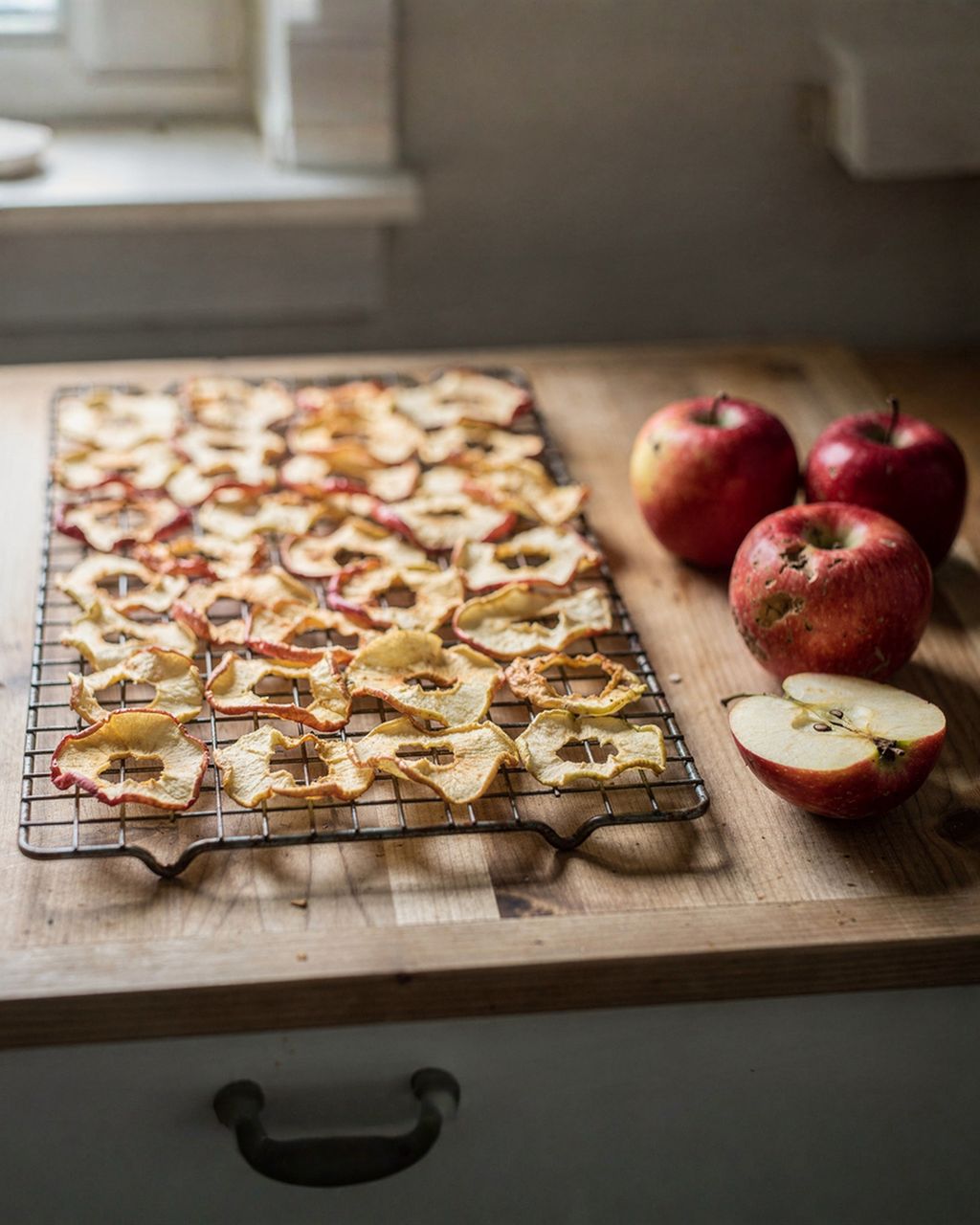
Dried rings: firm, tart varieties like Idared, Boskoop or Jonathan (which also adds great aroma) dry best. Soft apples warp and stick together needlessly when dried.
Juice: juicy apples and a mix of varieties work well here. Sweet, fragrant ones (Šampion, Golden Delicious) add sugar, while a handful of tart apples keeps the juice fresh and lively.
Purée: soft varieties like Golden Delicious, Gdaňský hranáč or Průsvitné letní cook down in minutes and just need sieving.
You don't have to peel apples for strudel, but most people do, because the skin stays in the filling as tough little strips. With thin-skinned varieties like Idared or Topaz you can leave it on, but with Boskoop's thick skin it's better to peel it.
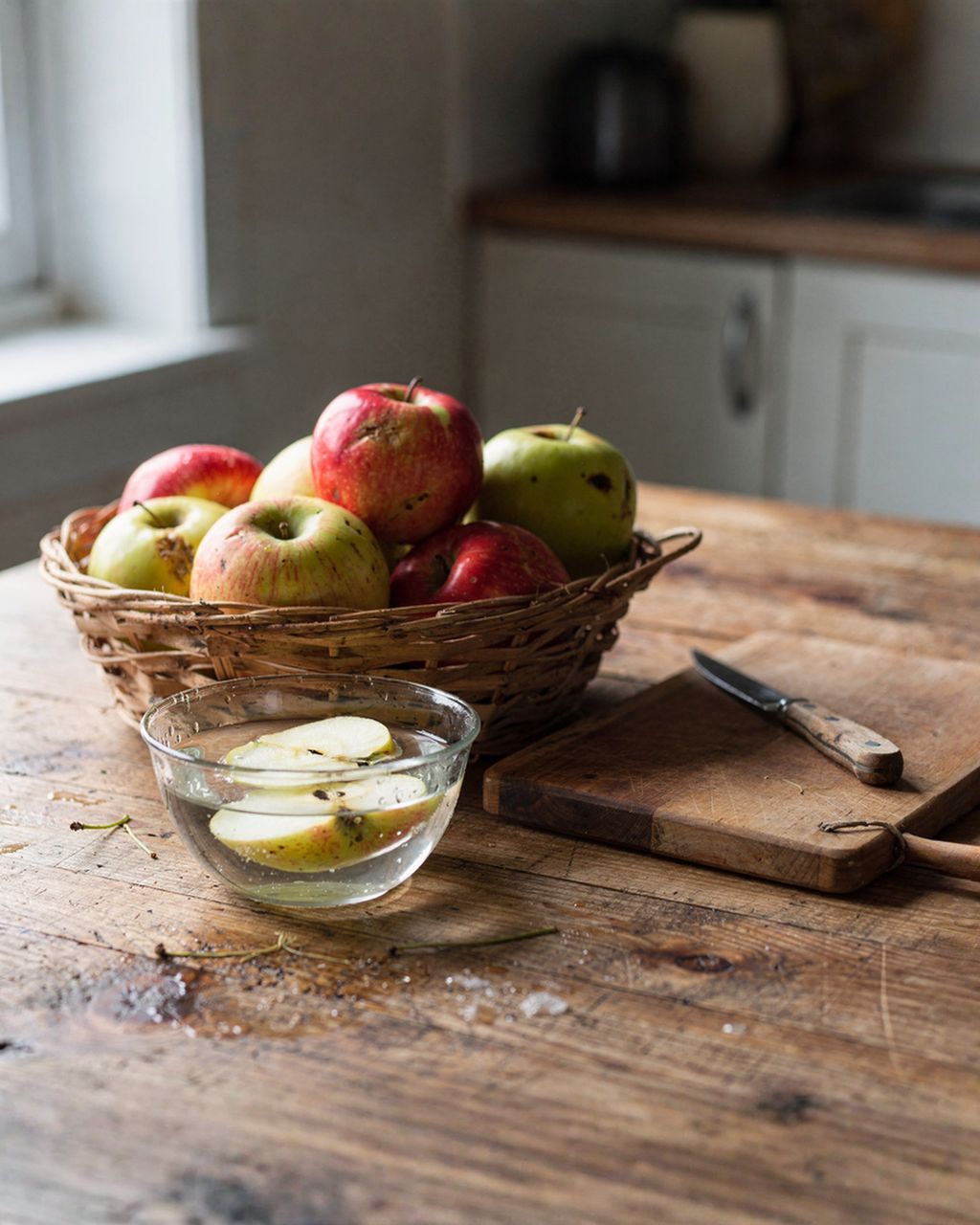
Apples won't brown for strudel if you sprinkle them with lemon juice right after slicing — about 1 tablespoon per 1 kg of apples is enough. Browning is just oxidation and doesn't affect the taste, but the lemon also adds freshness to the filling; tart varieties brown more slowly.
No, apple butter can be made purely from apples, as long as you use a really sweet, fragrant variety and cook it longer. Sugar shortens the cooking time and extends shelf life; typically 10-20% of the apples' weight is added, less for very sweet varieties.
Store garden apples somewhere cold, as close to 0°C (32°F) as possible and no warmer than about 4°C (39°F), in the dark and at high humidity (around 90%), in a single layer so they don't touch. Only store healthy, unbruised apples picked straight from the tree, keep them away from vegetables (apples release ethylene, which speeds up ripening), and late varieties like Ontario, Idared or Boskoop will keep the longest.
For whole baked apples, use firm, tart varieties: Boskoop, Topaz, Idared or Ontario. The apple won't collapse into mush in the oven, the skin stays intact, and the tartness balances out a sweet filling of nuts, raisins or honey.
One recipe worth heating the oven for, one tip, and one deal from the shop. Nothing else.