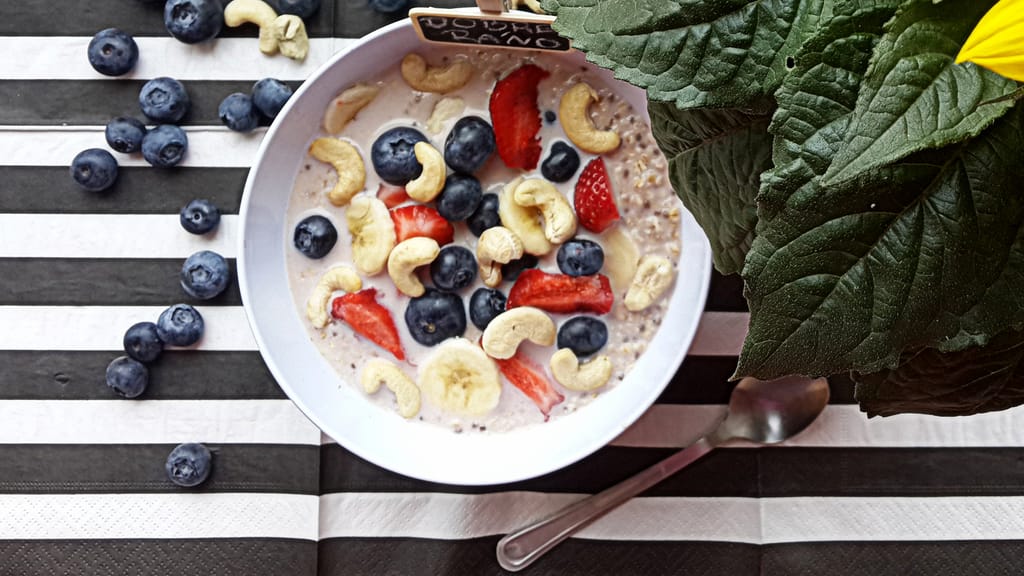
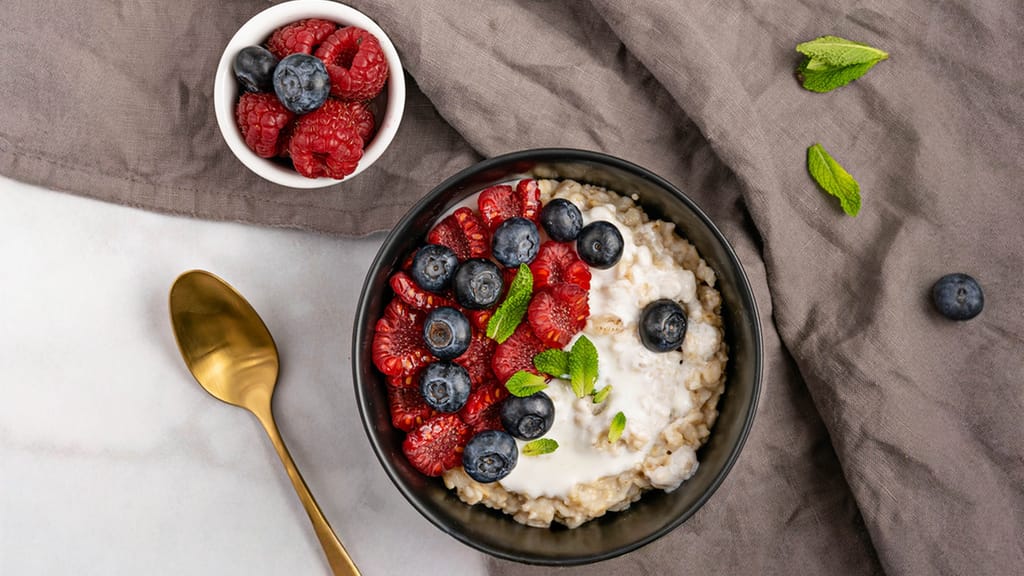
Oatmeal porridge with fruit, cashews and chia seeds
How to Cook Oatmeal: Oats-to-Milk Ratio, Plus Semolina and Millet Porridge
Updated Nov 17, 2026
To make oatmeal, use 1 part oats to 2 parts milk or water (by volume, say 1 cup to 2 cups), bring it to a boil and stir for 5 minutes over low heat. That's it – everything else is fine-tuning: thicker or thinner, on the stovetop, overnight or in the microwave. Below you'll find all the ratios in one place, including semolina and millet porridge, which are cooked quite differently.
The basic ratio is 1:2 by volume – one cup of rolled oats to two cups of milk or water. Quaker gives the same ratio on its old-fashioned oats packaging (½ cup oats to 1 cup liquid for one serving). By weight, that works out to roughly 40–50 g of oats per 250 ml of liquid per person.
The ratios for all the porridges in one place:
Stovetop oatmeal: 1 part oats : 2 parts liquid (by volume), 40–50 g per 250 ml, 5 minutes after adding the oats
Overnight oats: 1 part oats : 1 part milk or yogurt, no cooking, left overnight in the fridge
Microwave oatmeal: 1:2 by volume, 2½–3 minutes on full power (according to Quaker)
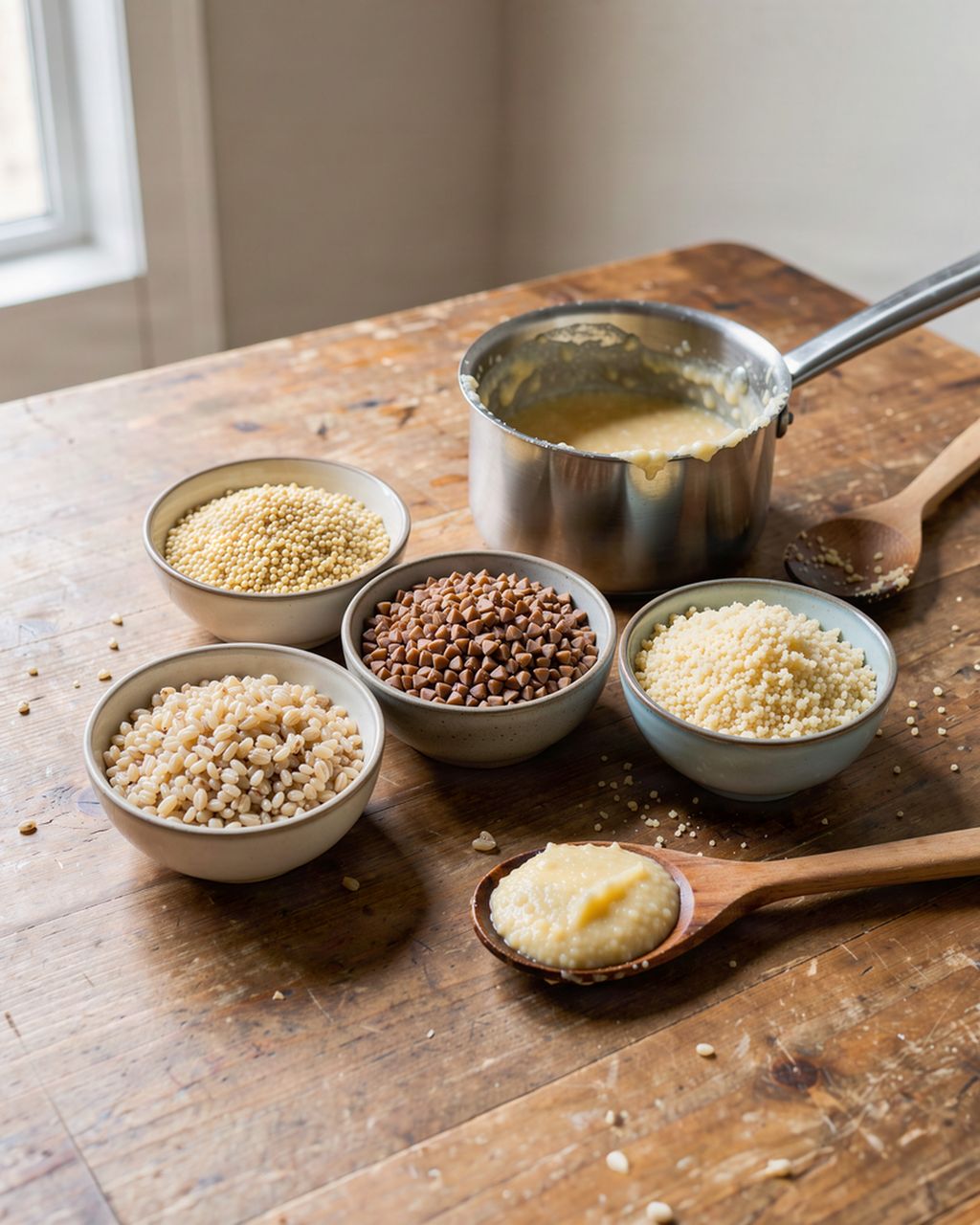
Semolina porridge: per 1 l of milk, 60 g semolina for a thinner porridge, 80–100 g for one that holds on a spoon; 3–5 minutes
Millet porridge: 1 part millet : 3 parts liquid by volume, 15–20 minutes
Want a thicker porridge that holds on a spoon? Cut the liquid to 1:1.5. Thinner, almost creamy? Go up to 1:2.5. Porridge keeps thickening once it's off the heat, so take it off a touch thinner than you want to eat it.
Seasonal baking plans, tested recipes and kitchen tricks that save you time. Unsubscribe in one click.
To make oatmeal on the stovetop, bring 250 ml of milk with a pinch of salt to a boil, add 40–50 g of oats and simmer over low heat for about 5 minutes, stirring occasionally.
Put 250 ml of milk (or half milk, half water) and a pinch of salt in a pot.
As soon as it starts to boil, add 40–50 g of oats and turn the heat down to low.
Stir with a wooden spoon from the bottom – milk scorches on the bottom fastest.
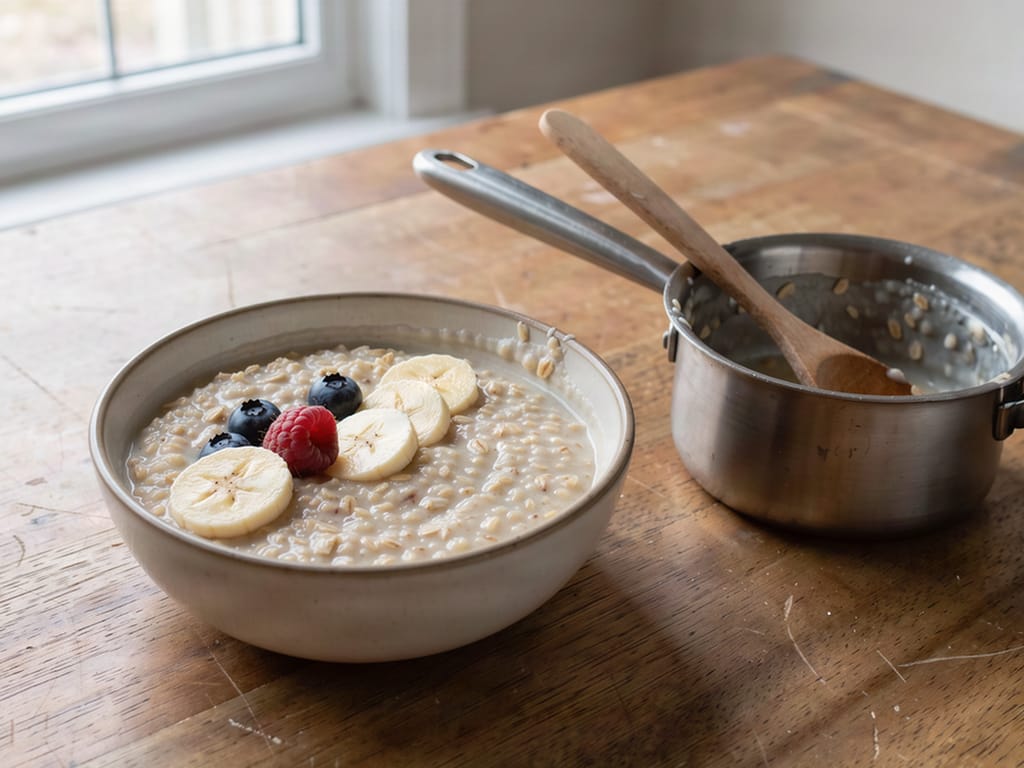
After 5 minutes the oats should be soft but still recognizable. The porridge is glossy and slowly slides off the spoon.
Take it off the heat, let it sit covered for a minute and only then sweeten it and add fruit.
Why salt: a pinch won't make the porridge salty; it just wakes up the grain flavor and the sweetness of the milk. Without it, oatmeal tends to taste bland even if you sweeten it.
Milk or water? Milk gives creaminess and a fuller flavor, but it scorches more easily. Water lets the oat flavor come through, but the porridge won't be as creamy. A compromise that works almost every time: half and half.
What matters most is the type of oats. Quick oats are done in 1–3 minutes and cook down smooth. Classic (large) rolled oats need around 5 minutes. Jumbo oats hold their shape and need more like 8–10 minutes and a little more liquid.
Overnight oats aren't cooked at all: you mix oats with milk or yogurt in a 1:1 ratio and leave them in the fridge overnight, where they soften and soak up the liquid.
For one serving: 40–50 g of oats and 100–120 ml of milk, or half milk and half plain yogurt.
Classic rolled oats work better here than quick oats – quick oats collapse by morning into a porridge with no texture.
A teaspoon of chia seeds thickens the mixture, so pour in a little more milk.
Fruit that releases juice (strawberries, raspberries) can go in the evening. Banana and apple go in in the morning, otherwise they turn brown.
In the morning you can eat it cold or heat it in the microwave for a minute. In flavor, overnight oats are more like muesli with yogurt than warm porridge – they're denser and the oats are firmer, with more bite.
In the microwave, put oats and liquid in a 1:2 ratio in a tall bowl and heat for 2½–3 minutes on full power, as Quaker states for old-fashioned oats; then stir and let stand for a minute.
Pick a big bowl. Milk likes to boil over in the microwave – the bowl should be at least twice as tall as the level of the porridge.
Heat in one-minute bursts. Stir after each minute. The porridge heats evenly and won't boil over.
Quick oats need only 1½–2 minutes.
The microwave is the fastest route, but the texture is slightly worse than from the stovetop – the porridge is less creamy because it isn't stirred as much while heating.
The best oatmeal recipes to start with are oatmeal with fruit, cashews and chia seeds for an everyday breakfast, cocoa oatmeal with mango and banana, which tastes almost like dessert, and pumpkin oatmeal with nuts for fall. All three rest on the same stovetop base and only flavor it differently.
Oatmeal porridge with fruit, cashews and chia seeds
Oatmeal with fruit, cashews and chia seeds
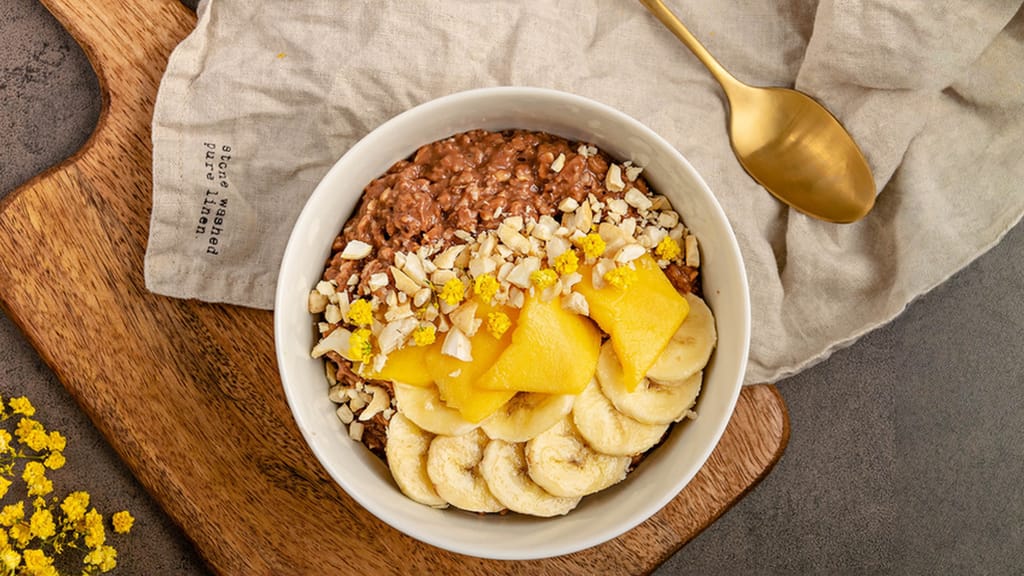
Cocoa oatmeal with mango and banana
Cocoa oatmeal with mango and banana
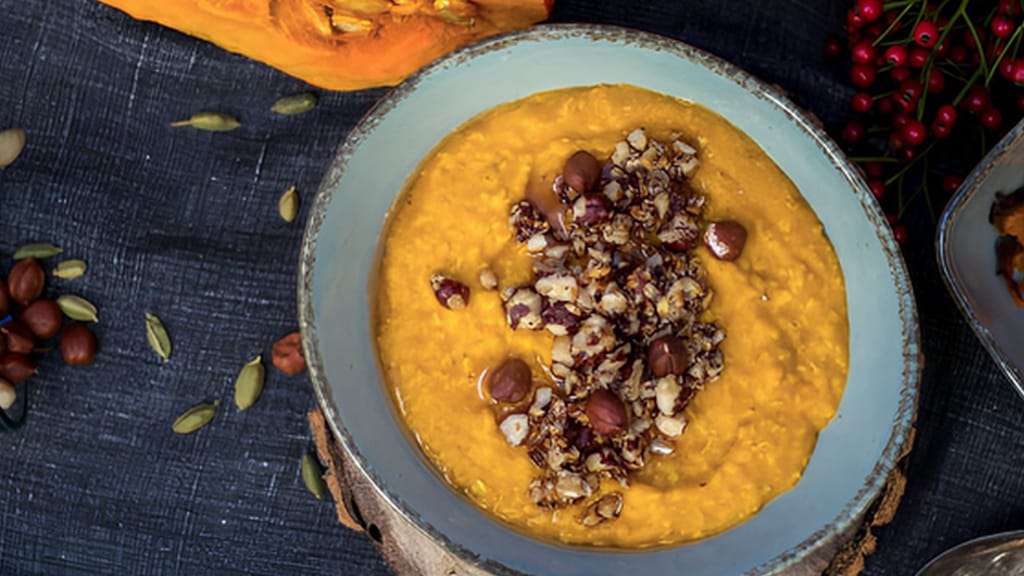
Pumpkin oatmeal with nuts
Pumpkin oatmeal with nuts for a fall breakfast
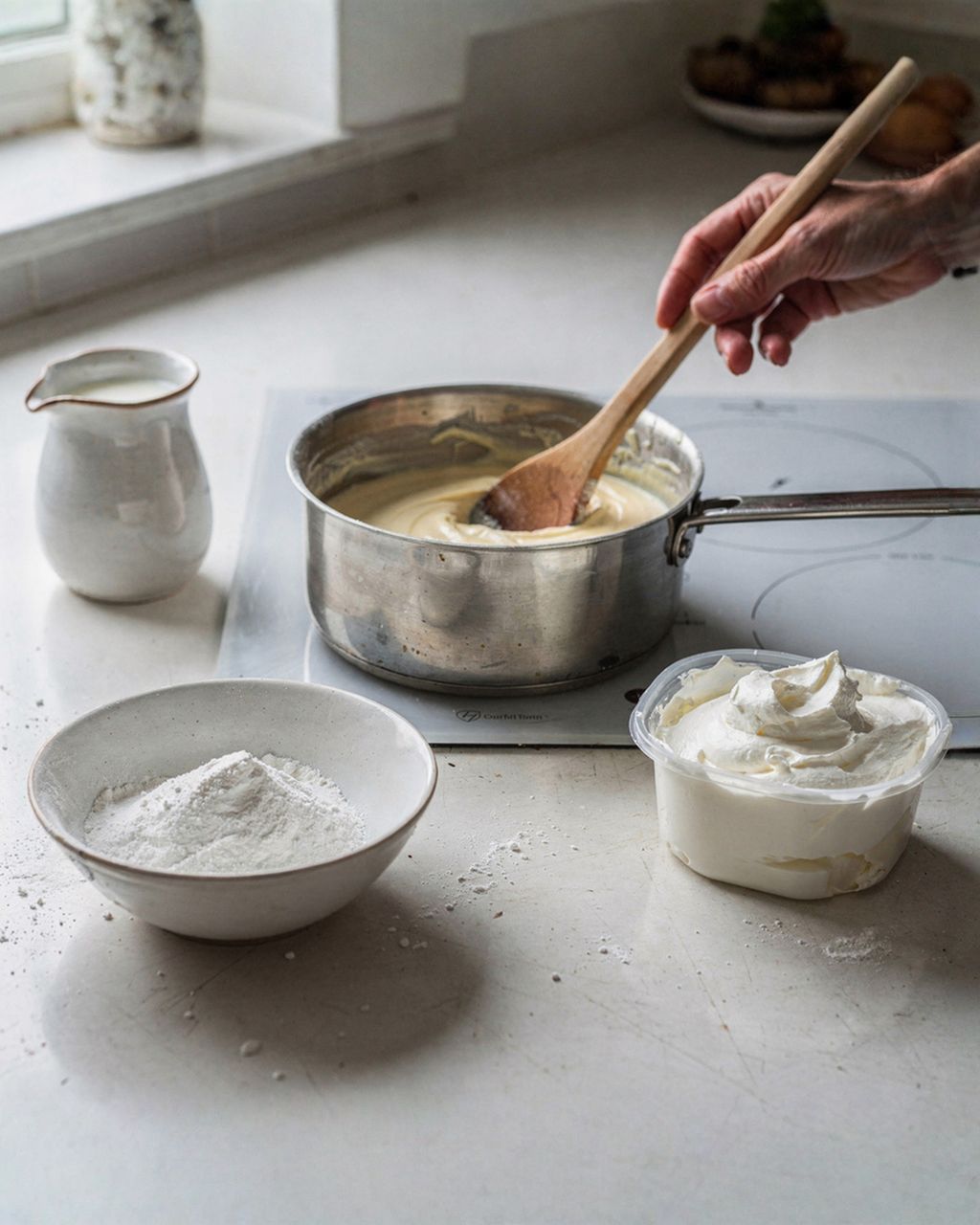
To make semolina porridge, sprinkle semolina into boiling milk in a thin stream while whisking the whole time. Then simmer it for 3–5 minutes over low heat. Per 1 l of milk, use 60 g of semolina for a thinner porridge, 80–100 g for one that holds on a spoon.
Bring the milk to a boil with a pinch of salt (and a small piece of butter, if you like).
Slowly sprinkle in the semolina with one hand while whisking continuously with the other. Lumps form when the semolina falls into the milk all at once – the grains get a gummy coating on the outside and liquid can't reach the inside.
Turn the heat down to low and cook for 3–5 minutes. Keep stirring; of all three porridges, semolina scorches fastest.
Take it off the heat. Within a few minutes it thickens noticeably, so take it off thinner than you want it.
Use fine (baby) semolina – it cooks quickly and the porridge is smooth. Coarse semolina needs longer cooking and the porridge is grainier. The classic way to serve it is sprinkled with cocoa and sugar and topped with melted butter.
If lumps form anyway, blend the porridge briefly with an immersion blender or push it through a sieve.
Before cooking, rinse the millet with hot water or scald it with boiling water, then cook it in a ratio of 1 part millet to 3 parts liquid covered for 15–20 minutes until soft. Scalding is the key step: millet turns slightly rancid in storage, and hot water washes the bitter aftertaste off the surface of the grains. That's why it pays to buy millet with the longest possible shelf life.
Put the millet in a sieve and pour boiling water over it 2–3 times, or boil it for a minute and drain.
Cover it with water or milk in a 1:3 ratio (for a sweet porridge, milk alone is fine) and add a pinch of salt.
Bring to a boil, turn the heat down to low, cover and cook for 15–20 minutes, until the grains are soft and have absorbed the liquid.
For a creamy porridge, add a little milk at the end and blend it, or simply stir it vigorously.
Millet cooked in water (1:2 ratio) also makes a great savory side – the method is the same, just without milk and with a bit more salt. Try the sweet version in the recipe for vanilla millet porridge with wild berries.
And if you like sweet porridges made from other grains, try the Portuguese rice pudding arroz doce – it cooks slowly in milk with lemon zest and cinnamon.
Vanilla millet porridge with forest fruits
Vanilla millet porridge with wild berries
Put cooked porridge in the fridge within 2 hours of cooking and eat it within 3–4 days – that's what the US agency USDA/FSIS recommends for cooked leftovers. The same rule applies to overnight oats, which sit in the fridge from the start.
Room temperature: 2 hours at most, then it goes in the fridge or the bin (USDA/FSIS; just 1 hour in heat above 32 °C / 90 °F).
Fridge: 3–4 days in a covered container (USDA/FSIS).
Freezer: leftovers keep 3–4 months at best quality (USDA/FSIS). Porridge thickens and turns slightly grainy after thawing; it recovers best when reheated with a little milk.
Cooled porridge sets into a dense block. That doesn't mean it has gone off – when reheating, add a spoonful or two of milk and stir it in.
Oats cooked in water won't taste bland if you first toast them dry in the pot for a minute and only then pour in the water – this brings out their nutty flavor. The ratio stays at 1 part oats to 2 parts water, cooked for about 5 minutes. At the end, stir in a teaspoon of butter, peanut butter or a few tablespoons of yogurt, which add the creaminess milk would otherwise give.
Oatmeal turns gummy and sticky most often because it was cooked too long or too hard, or because there's too little liquid in it – the oats release starch and the porridge clumps together. Cook over low heat only until the oats are soft (about 5 minutes for old-fashioned oats) and take it off the heat slightly thinner than you want to eat it, since it will thicken further. You can also prevent stickiness by adding the oats to liquid that is already boiling, not cold.
It's better to sweeten oatmeal at the end of cooking or on the plate. Sugar and honey easily scorch on the bottom of the pot, and you'll only be able to tell how much sweetness you really need once the porridge is done – a ripe banana or dried fruit will often sweeten it on their own.
Yes, semolina porridge can be made with oat or soy drink almost the same way as with milk, but with plain water it turns out bland and thin. Plant-based drinks tend to be thinner, so use semolina toward the upper end (around 100 g per 1 l) and add a little butter or plant-based fat for creaminess. Sweetened drinks will already sweeten the porridge, so add sugar only after tasting. Rice drink is the thinnest, and porridge made with it holds together worst.
Yes, cooled millet porridge can be eaten cold, it's just denser than when warm, almost like pudding. Cold porridge from the fridge makes a quick breakfast if you stir in a few tablespoons of yogurt or milk and add fruit. If you want it creamy and warm again, reheat it on the stovetop with a little milk, stirring constantly.
One recipe worth heating the oven for, one tip, and one deal from the shop. Nothing else.