Breakfast with strawberry chia jam
How Long Does Homemade Jam Last: Storage and Shelf Life
Updated Sep 18, 2026
Properly canned homemade jam keeps in the pantry for about a year, and for a month in the fridge once opened. What decides this is sugar, acidity and a few specific temperatures — 105°C while cooking, 100°C when boiling the jars, 5°C in the fridge. Below you'll find the numbers for each type of jam, the reason they work, and the clear line beyond which a jar simply can't be saved.
Classic homemade jam with around 65% sugar content keeps, canned and unopened, for 12 months in the pantry and 1 month in the fridge once opened. The less sugar, the shorter the shelf life — and uncooked versions are measured in days. Here's the breakdown by type:
Canned, unopened, in the pantry (10–21°C): 12 months at peak quality, safe even longer if the lid still holds a vacuum
Opened classic jam in the fridge: 1 month
Opened reduced-sugar jam: 1–2 weeks
Jam simply poured hot into a jar, without a water-bath seal: belongs straight in the fridge, 2–3 weeks
Chia jam and other uncooked versions: 5–7 days in the fridge
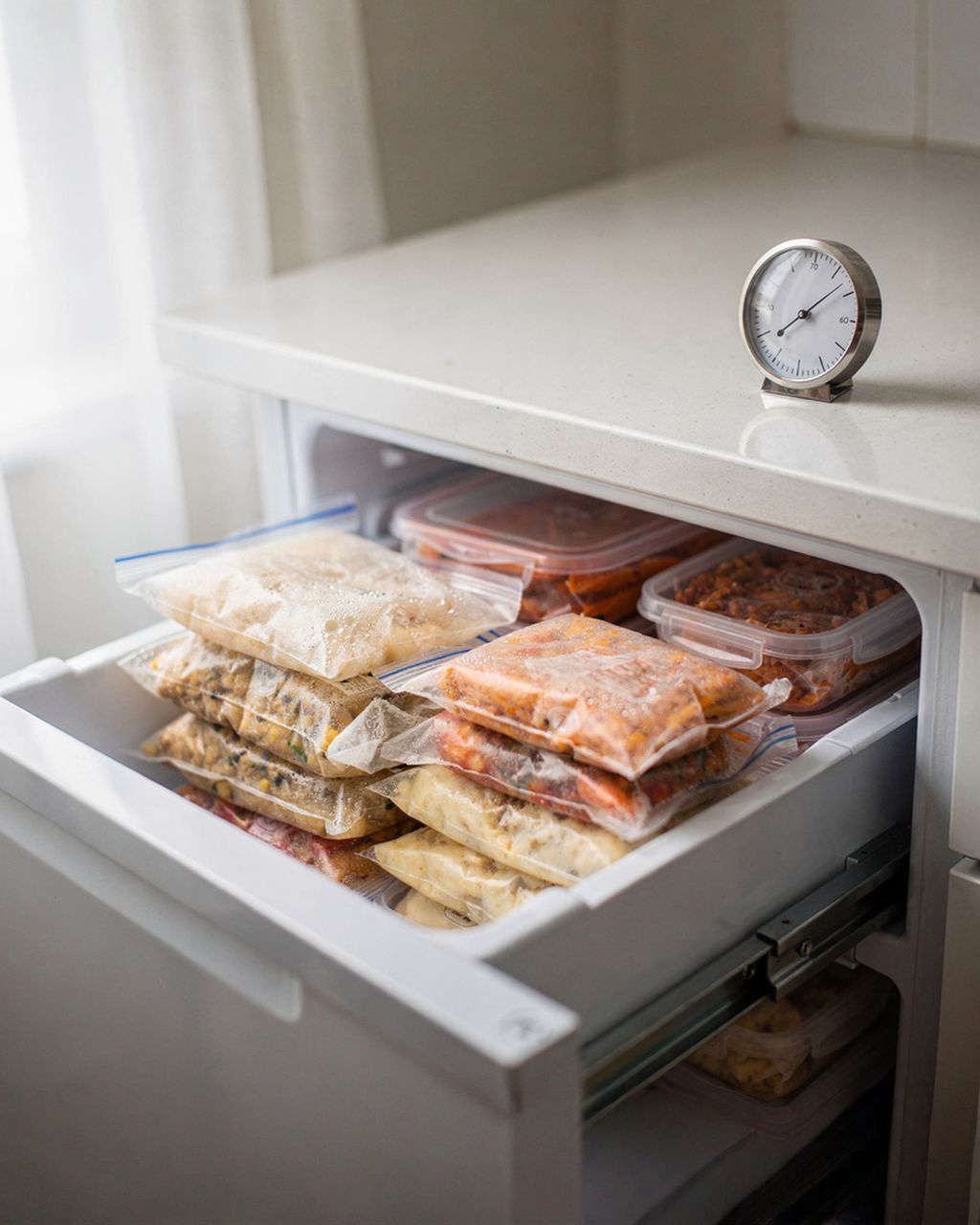
Frozen jam (−18°C): 6–12 months, once thawed 3–4 weeks in the fridge
That "12 months" isn't an expiry date — it's a quality cutoff. After a year, jam fades, loses its fruity aroma, and the set gradually loosens. It stays safe as long as the lid is sealed and the contents show no signs of fermentation.
Seasonal baking plans, tested recipes and kitchen tricks that save you time. Unsubscribe in one click.
Sugar preserves by binding up the water that mould and yeast would otherwise need to grow. Technically this is called lowering the water activity (aw). Classic jam reaches a water activity of roughly 0.75–0.85. That's not enough for bacteria (which generally need above 0.87), nor for most common moulds — but xerophilic moulds and osmophilic yeasts can still grow at 0.65–0.75, which is why jam can go mouldy even though bacteria never get a foothold.
The second line of defence is acidity. Fruit has a pH well below 4.6, and bacteria like Clostridium botulinum can't multiply in such acidic conditions. That's why jam — unlike vegetables, meat or mushrooms — only ever needs a water-bath can, never a pressure canner.
Which leads to a practical conclusion: every reduction in sugar shortens shelf life. Jam made with a 2:1 fruit-to-sugar ratio spoils faster once opened than a 1:1 batch — plan on weeks rather than a month. It's not worse, it just needs to be eaten faster and live in the fridge from day one.
Shelf life isn't decided in the pantry — it's decided during the twenty minutes you spend cooking and filling the jam. Four numbers matter: 105°C while cooking, 10 minutes in boiling water for the jars, 10 minutes in a water bath from the boil for the sealed jars, and 5°C in the fridge (−18°C in the freezer). Each one handles a different part of the problem.
Cook the jam until the thermometer reads 105°C (for large batches, 105–106°C is fine). It's not magic: water boils at 100°C, and sugar syrup boils higher the more concentrated it gets. Once the mixture hits 105°C, it means the sugar content has climbed to roughly 65% — exactly the point where enough water has evaporated for the jam to keep well, and where the pectin sets.
Don't let these two numbers throw you: 60% is the legal minimum refractometric solids content for a product to be allowed to call itself jam at all, and 65–68% is the real-world figure once it's cooked to 105°C. One's a legal floor, the other's what you'll actually get in the pot. From 14 June 2026, an EU amendment also comes into force: the name "citrus marmalade" is reserved for citrus products, while for other fruit "marmalade"/"jam" naming stays as is, and the minimum fruit content rises from 350 to 450 g/kg for jam and from 450 to 500 g/kg for extra jam.
No thermometer? Use the frozen-plate test: a drop of jam on an ice-cold plate shouldn't run after half a minute, and should wrinkle when you push it with a finger.
Boil washed jars and lids for 10 minutes in boiling water (100°C). This clears mould, yeast and common bacteria — it's not sterilization, which would need dry heat at 160–180°C, which is also why the oven isn't a substitute: at 120°C it doesn't sterilize, and glass cracks in it easily.
The reason is simple: glass carries mould and yeast spores from ordinary kitchen air. Hot jam is practically free of live microbes right after cooking, but poured into a non-sterile jar, it gets inoculated within seconds.
Fill jars while both they and the jam are hot — a cold jar can crack, and lukewarm jam won't create enough steam inside the jar to form a vacuum. Leave 5–10 mm of headspace below the rim and wipe the rim with a clean, damp cloth; any jam residue on the rim stops the lid from sealing properly.
Submerge the sealed jars in a pot so they sit 2–3 cm below the surface, and once the water reaches a boil, time 10 minutes. A gentler option that keeps more colour in the fruit: 85°C for 20 minutes — but you'll need a thermometer for this, since "nearly boiling" is just guesswork.
Why bother when the jam is clean right after cooking? The water bath pasteurizes whatever got into the jar during filling — the air gap under the lid, the underside of the lid, and the top layer of jam. It also drives out air, and once it cools, a firm vacuum forms that holds the lid down and keeps new spores from getting in.
Simply flipping the jars upside down doesn't achieve the same thing. It creates a weaker vacuum and relies on the jam staying hot enough for the whole process — which isn't true for the tenth jar in line. It works as a quick fix, but treat that jam as "fridge for a few weeks," not as a year-long stockpile.
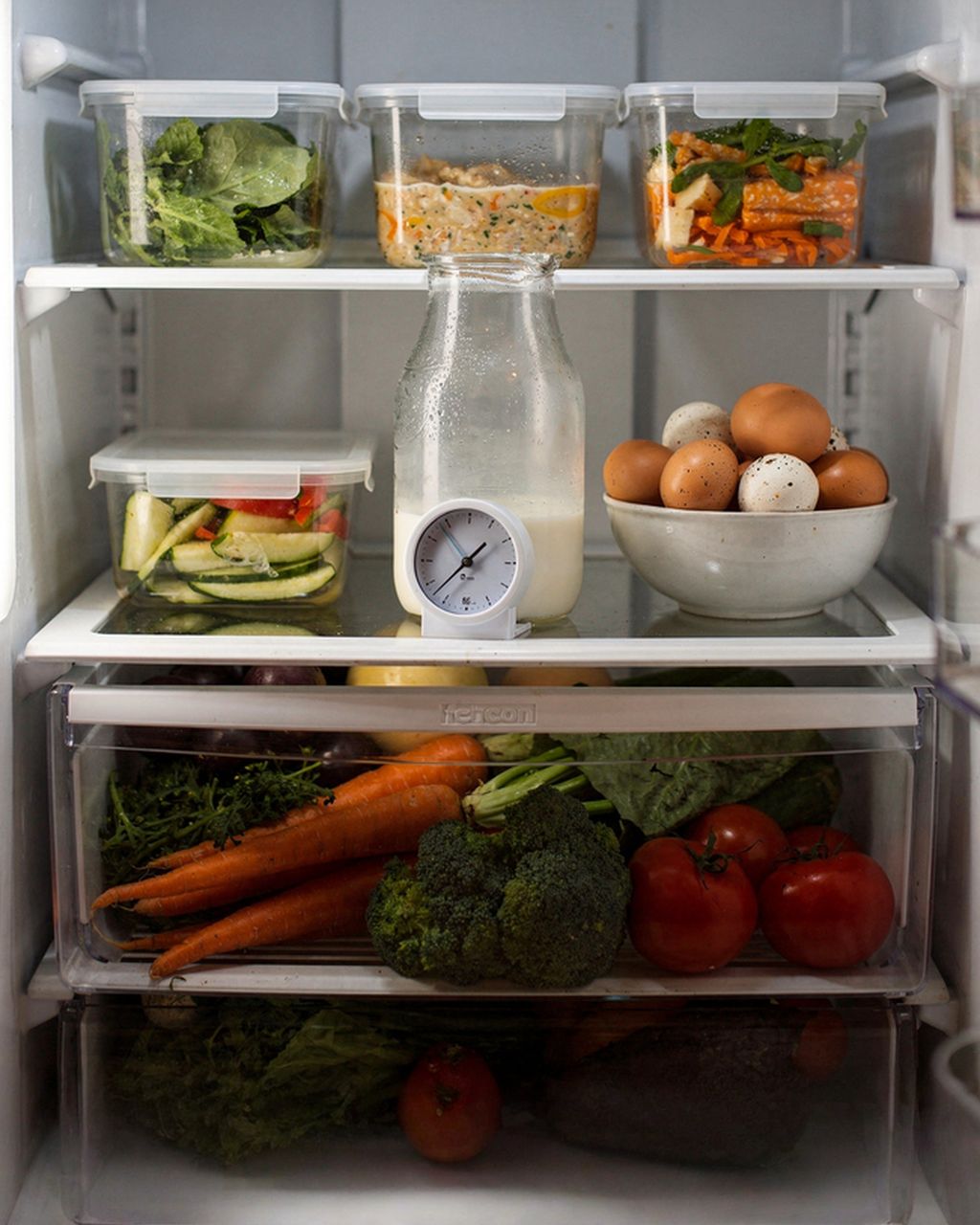
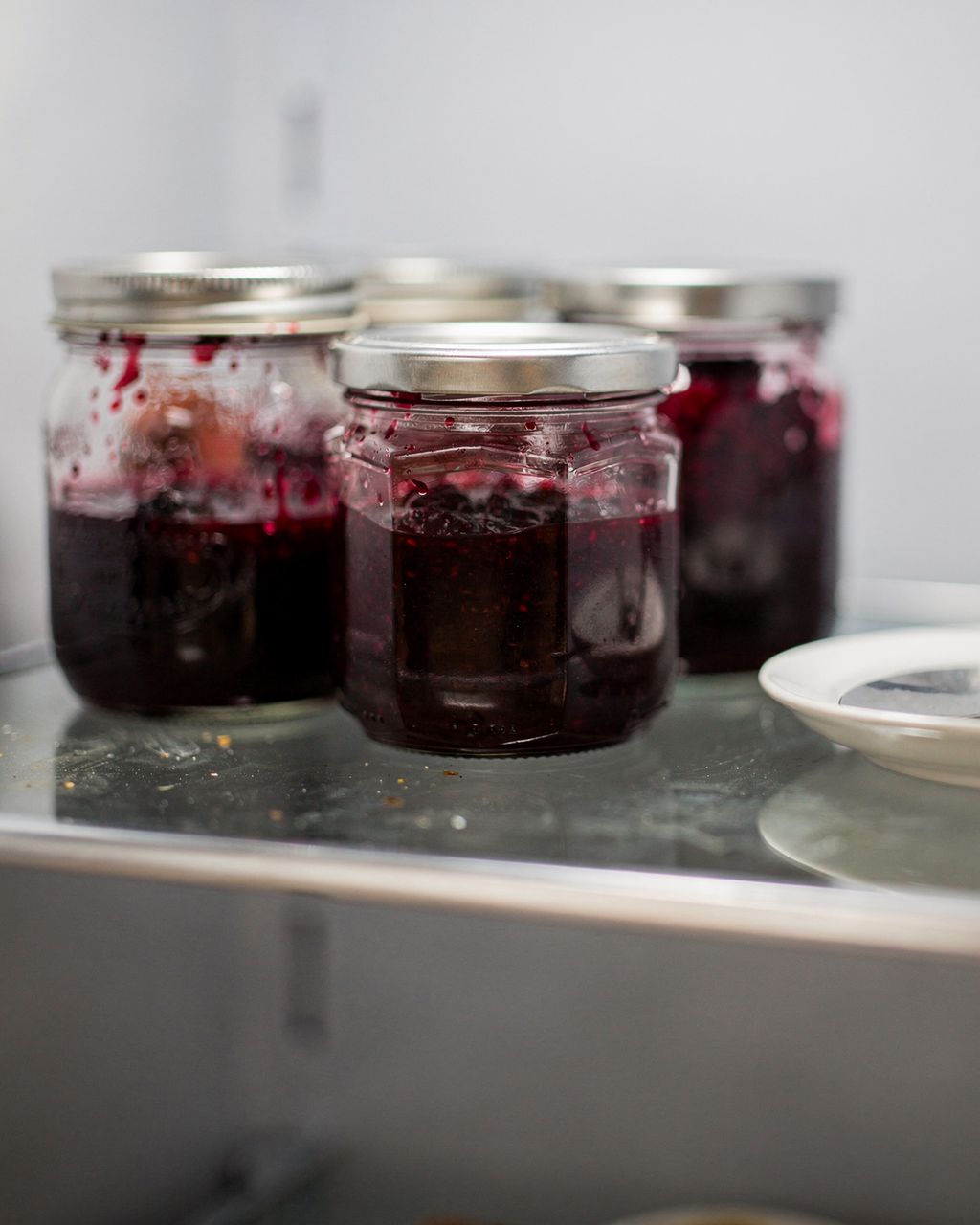
Keep an opened jar in the fridge at 5°C or below. Cold doesn't kill mould, it just slows it down — that's why opened jam has a one-month limit rather than lasting forever. The fridge door is the warmest spot, around 8–10°C; put the jar on a shelf instead.
In the freezer at −18°C, microbial growth stops entirely. Shelf life there isn't about safety but quality: after about a year, jam turns watery and loses its aroma.
You can tell jam has spoiled before you even taste it — from the lid, the sound it makes when opened, the smell, and the surface, where you're looking for a film, sliminess, or a dark, dried-out ring. If even one of these applies, the jar goes in the bin:
Bulging or domed lid. The vacuum is gone and fermentation gas has built up inside. A healthy lid is slightly concave in the middle and doesn't click when pressed.
Hissing or foaming when opened. Not the short pop of a vacuum releasing, but escaping gas and rising bubbles in the jam.
A yeasty, alcoholic or vinegary smell. The fruity aroma turns into something resembling yeast or cider.
A film on the surface. White, greyish-green, pinkish or fuzzy — the colour doesn't matter, its presence does. It often starts as a thin ring around the edge under the lid.
Sliminess, a stringy texture, or a glossy film on the surface.
The surface has darkened and dried into a hard ring. On its own, this is oxidation, not spoilage — but it means air got into the jar, so check the other signs extra carefully.
What isn't a reason to toss it: a thin watery layer on top (the pectin has released water — this is called syneresis), sugar crystals forming at the edge, or darkened colour after a year in the pantry. These are quality flaws, not safety issues.
Canned jars belong somewhere dark, dry and cool — ideally 10–21°C. Everything else comes down to habits that decide whether an opened jar lasts a month or ten days.
Store it in the dark. Light breaks down pigments; strawberry jam left on a sunny windowsill turns brown within weeks.
Never above the stove or near the oven. Temperature swings pump air across the seal and weaken the vacuum.
With Weck jars, remove the metal clips once they've cooled. The vacuum holds the lid on its own, and without the clip you'll spot an unsealed jar immediately. Also, never stack jars more than two high — the weight distorts the lids.
Straight into the fridge once opened, even for very sweet jam. At home you don't have preservatives or controlled pH like a manufacturer does.
Always use a clean, dry spoon. A butter knife or a yoghurt spoon introduces fat, protein and microbes into the jar — the single most common reason jam goes mouldy within a week.
Don't bring the whole jar to the breakfast table. Spoon out a portion into a dish and put the jar straight back in the cold; an hour a day in a warm kitchen adds up.
Label the jar with the fruit and the date you made it. A year from now you won't remember if it's last year's apricot or the year before's.
Jam with no added sugar has essentially no shelf life at all — it's fruit purée, and it keeps 5–7 days in the fridge. It contains only naturally occurring sugars. It's missing the one thing that actually preserves jam, so it behaves like cooked fruit, not like a preserve.
The same goes for chia jam: chia seeds thicken the fruit by soaking up water, but they don't lower water activity, so nothing stops mould. Treat it as a fresh breakfast item for the coming week, not as a stockpile.
Partially reduced-sugar versions (fruit-to-sugar ratio of 2:1 or 3:1) can be canned and kept in the pantry, but expect 6–8 months instead of a year, and 1–2 weeks once opened. Lemon juice helps here — it lowers pH and adds pectin — along with low-sugar canning pectin (often labelled low-methoxyl or LM pectin on the packet), which sets even at a lower sugar concentration. On a label, a jar like this would probably be called a fruit spread, since it doesn't have enough solids to be called jam; at home, don't worry about the name, just the shorter shelf life.
The safest route for reduced-sugar versions is the freezer. Pour the jam into a container, leave 2 cm of headspace for expansion as it freezes, and freeze it. At −18°C it keeps for 6–12 months; thaw overnight in the fridge, then eat within 3–4 weeks.
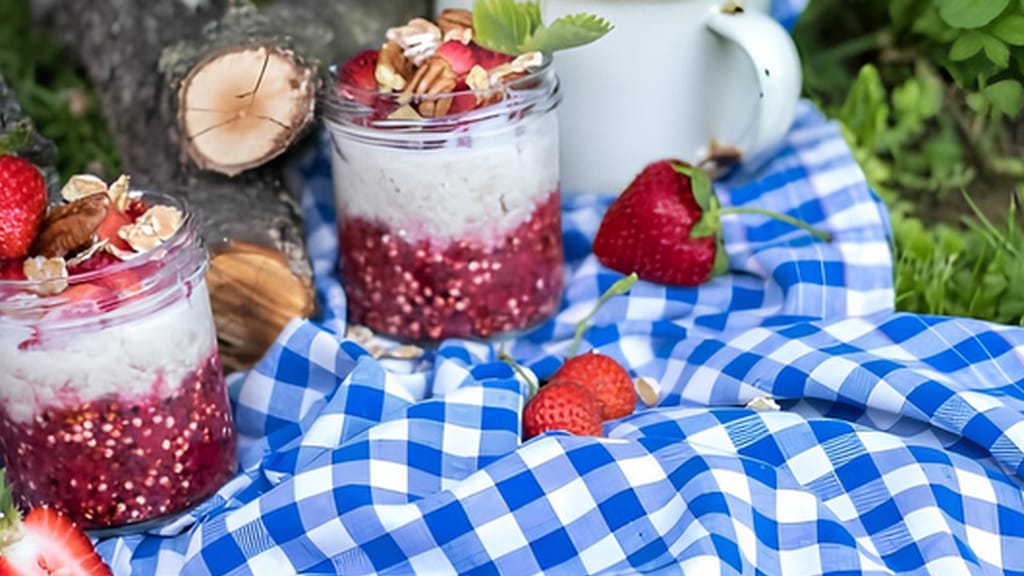
Breakfast with strawberry chia jam
No-cook strawberry chia jam — a breakfast version for one week in the fridge
The longest-lasting are full-sugar jam at a 1:1 ratio, followed closely by plum butter and tangy chilli jam — in all three, the water is either bound up by sugar or evaporated off, and acidity keeps the pH low. The weak point is always extra water, never flavour.
Cherry jam is the classic full-sugar recipe: cook it to 105°C, can it, and you've got a year's supply. Plum butter takes a different route — long, slow evaporation gets it down to a low water activity even without an extreme amount of sugar, which is exactly why it lasts so long. And chilli jam shows how vinegar and hot peppers add another layer of acidity that helps preservation along.
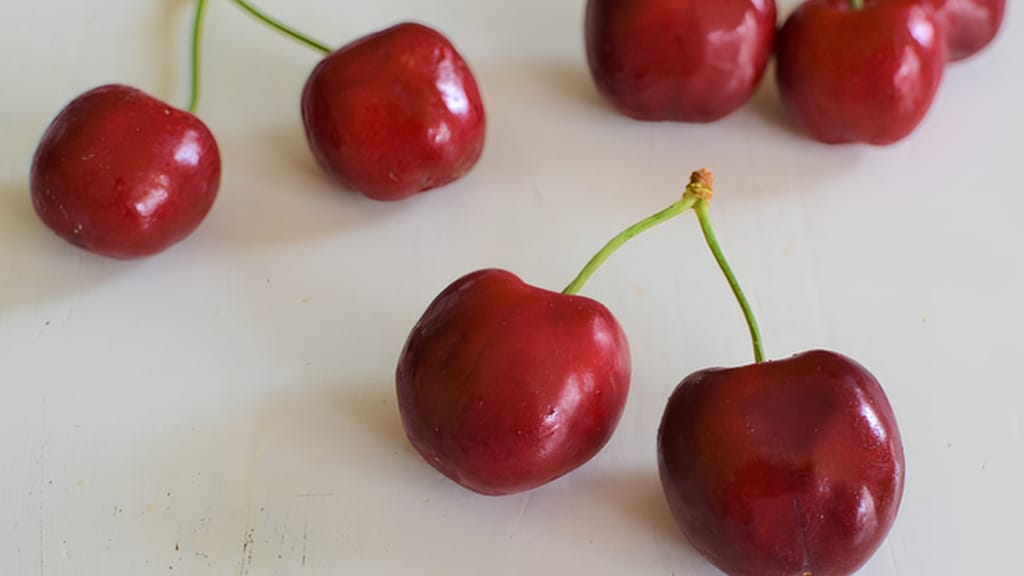
Cherry jam - basic recipe
Cherry jam — the basic recipe for full-sugar canning
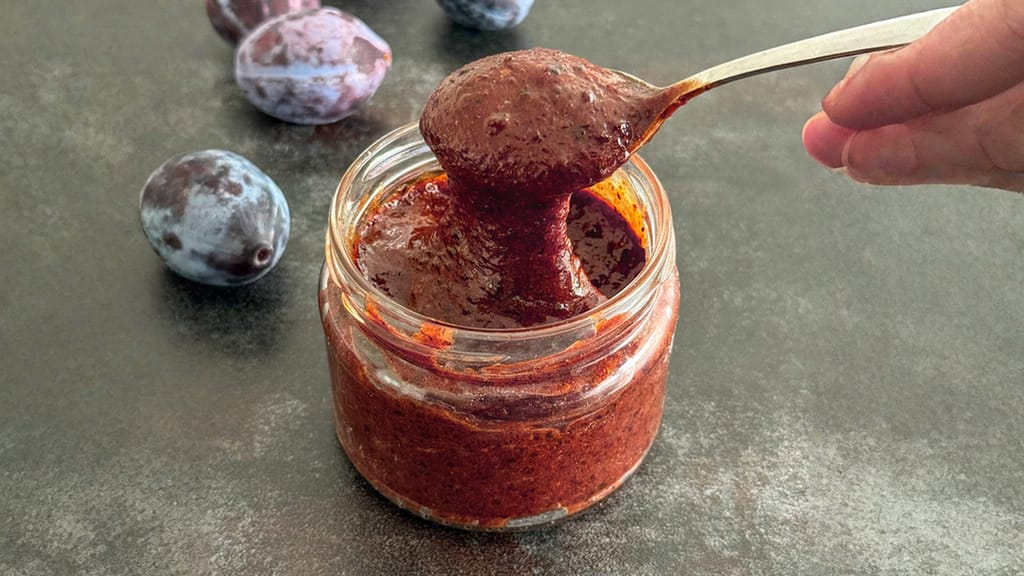
Homemade plum butter
Homemade plum butter — long evaporation instead of a mountain of sugar

Chilli marmalade
Chilli jam — vinegar's acidity as a second line of preservation
No, canning jam in the oven isn't recommended. Dry, hot air heats the jar unevenly and far more slowly than water, so you can't be sure the contents ever reached pasteurization temperature — and glass is also far more likely to crack in the oven. Stick with a water bath: 10 minutes from boiling, jars sitting 2–3 cm below the surface.
Yes, as long as the lid is still concave and sealed and the jam shows no sign of fermentation or mould. A year is a quality cutoff, not a safety one: after two years the colour will have faded, the fruity aroma will be weak, and the set will likely have loosened. Open the jar, give it a sniff, check the surface — and if you have any doubt at all, throw it out.
Condensation under the lid means the jam was ladled into a cold jar, or the jar is being stored somewhere with fluctuating temperature. Water droplets on the surface locally dilute the sugar, raise the water activity, and turn that spot into a perfect starting point for mould. Always fill hot jam into hot jars, and store them somewhere with a steady temperature — not next to the stove or in a sun-baked pantry.
Put a jar that doesn't hold a vacuum once it's cooled straight into the fridge and eat it within a week, or freeze it. You'll know because the lid isn't dimpled in the middle and it clicks when you press it. Don't put it back in the pantry, and don't count on it sealing later. You can only re-can it within 24 hours, and only if the jam is otherwise completely sound — don't try it with anything older or doubtful.
You can use twist-off jars from other foods, but the lid must be new and match the thread and diameter exactly — a bent or scratched seal won't hold a vacuum, and that's precisely where jam spoils first. Plastic lids have no place in canning: neither a water bath nor hot-filling will create a reliable vacuum with them, so they're only suitable for a jar going straight into the fridge. Can jars of different sizes separately so they all spend the same time below the waterline, and discard any jar with a chipped rim outright.
Practically speaking, no — the alcohol concentration in jam is far too low to preserve anything. A tablespoon of rum per kilo of fruit gives a concentration in the jar under 1%, well below any preservation threshold, and some of the alcohol evaporates during cooking anyway. Rum is a flavour ingredient, not a preservative. What actually gives jam its shelf life is sugar, acidity and proper canning technique.
One recipe worth heating the oven for, one tip, and one deal from the shop. Nothing else.