Marble bundt cake with buttermilk and vanilla
What to Bake with Buttermilk: Bundt Cake, Fruit Cake, Pancakes, Red Velvet, Cheddar Biscuits and Bread
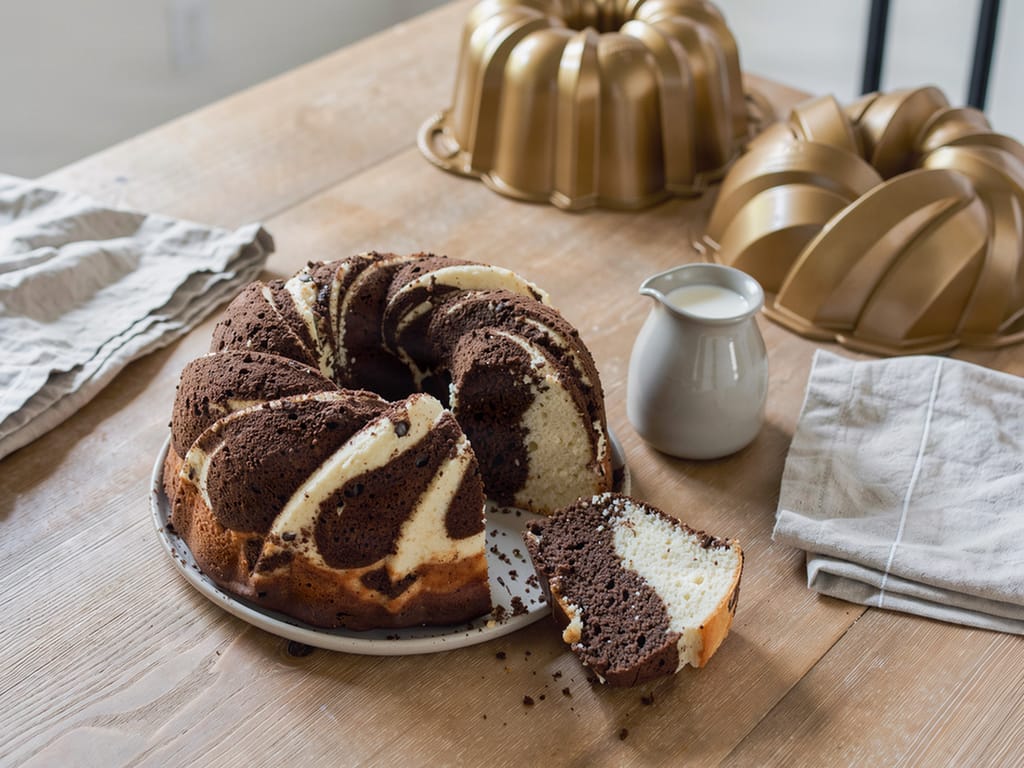
What can you bake with buttermilk? A marble bundt cake, fruit sheet cake, pancakes, red velvet desserts, a pink cake roll, chocolate cupcakes, savory cheddar biscuits, an Easter lamb cake, and if you have kefir left over instead, even a sourdough bread. In batter, buttermilk works with baking soda to leaven, softens the crumb and adds a gentle tang. Below you'll find a short method for each recipe, kefir and soured milk as substitutes, and exactly how much buttermilk to use in place of milk.
With buttermilk you can bake almost anything that's leavened with baking powder or baking soda: bundt cake, fruit sheet cake, cake roll, cupcakes and savory biscuits, and you can cook pancakes with it too. Here's what you'll find in this article, each with a Yumsto recipe and a short method:
a marble bundt cake, where buttermilk keeps even the cocoa layer moist
a breakfast fruit cake with small fruit, frozen is fine
pancakes made only with buttermilk, eggs and flour, with no added milk
red velvet mini desserts with mascarpone cream
a pink cake roll with a quark (tvaroh, a Czech fresh curd cheese) cream
chocolate cupcakes with caramel cream
cheddar chili biscuits, when you want something savory
an Easter lamb cake made with buttermilk batter
and a sourdough bread with kefir milk, in case you have kefir left in the fridge instead
Most of these belong to sweet baking and desserts, while the biscuits and bread are the savory exceptions. In these batters buttermilk is more than liquid. It works: it leavens, softens the crumb and adds a slight tang that you'd otherwise have to chase with lemon zest.
We send seasonal cooking and baking plans and recipes made from everyday ingredients. Unsubscribe in one click.
Buttermilk is acidic, and acid reacts with baking soda: it produces carbon dioxide, which lifts the batter, and at the same time the acidity is neutralized, so the result doesn't taste soapy or like vinegar. That's why recipes with buttermilk so often pair baking soda with baking powder.
What buttermilk gives your batter:
Leavening. Baking soda needs an acid to work at all. Without it the batter stays flat and dense, and the soda leaves a bitter aftertaste.
A tender crumb. Baking sources agree that batters with an acidic dairy ingredient turn out finer and more delicate; they usually explain it by the acid slightly weakening the gluten network. The crumb is then less rubbery.
Moisture. Buttermilk is only a little thicker than milk, but batter made with it stays more moist. That's why the marble bundt cake adds it to the cocoa portion too, which cocoa would otherwise dry out.
Flavor. A light tang brings out vanilla, cocoa and fruit, and sweet bakes don't taste cloying.
How much baking soda per buttermilk? The usual rule in baking guides is about ½ teaspoon of baking soda (2–3 g) per 240–250 ml (1 cup) of buttermilk, when there's no other acidic ingredient in the batter. Baking powder does the rest of the leavening. Always mix the soda with the dry ingredients, not into the liquid, and don't let the finished batter sit for long: the reaction starts as soon as the soda meets the buttermilk, so the sooner the pan goes into the oven, the taller the bake.
Not every recipe needs soda. Our buttermilk pancakes have no leavening at all, and the biscuits and red velvet get by with baking powder. There, buttermilk mainly tenderizes and adds flavor.
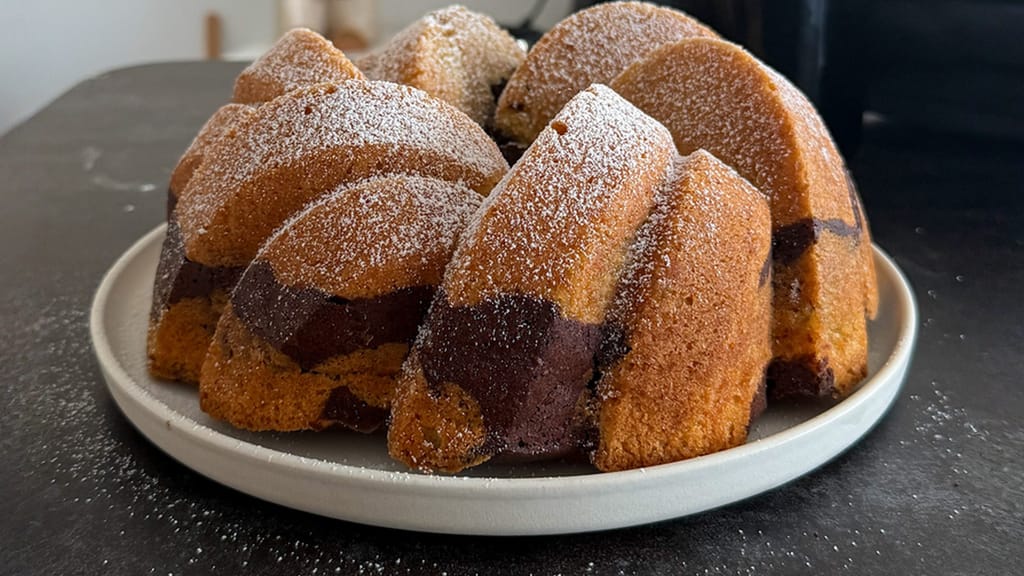
A marble bundt cake with buttermilk stays moist in both the light and cocoa layers, because buttermilk with baking soda leavens and softens the crumb. The recipe for marble bundt cake with buttermilk and vanilla uses 360 ml buttermilk, 385 g all-purpose (plain) flour, 4 eggs, butter and a little sunflower oil; it's leavened with baking powder plus 3 g baking soda.
The method in short: beat softened butter with sugar and the seeds of a vanilla bean for 2–3 minutes until pale and fluffy, pour in the oil and beat in the eggs one at a time. Fold in the flour mixed with the leaveners and salt, alternating with the buttermilk. Start and finish with flour, and mix only until the dry patches disappear. Color roughly a third of the batter with sifted cocoa and a bit more buttermilk, layer light, dark and light batter in the pan and draw a skewer through it in figure-eights. Bake at 165°C (325°F), or 150°C (300°F) fan, for 50–60 minutes, until a skewer inserted in the center comes out clean.
After baking, leave the cake in the pan for 10–15 minutes, then turn it out and slice it only after 1–2 hours of complete cooling. A hot crumb squashes into a rubbery mass under the knife and the slices crumble. Count on about three hours including cooling.
If you want a classic, quark or Christmas version, you'll find them in the bundt cake guide with recipes.
Marble bundt cake with buttermilk and vanilla
Marble bundt cake with buttermilk and vanilla: buttermilk in the cocoa layer too
The buttermilk breakfast fruit cake with small fruit relies on a thicker batter made from 150 ml buttermilk, 3 eggs and 280 g semi-coarse flour (Czech polohrubá, slightly grittier than all-purpose), leavened with baking powder. Cream softened butter-flavored vegetable fat with sugar until creamy, beat in the eggs one at a time, add the vanilla bean seeds and buttermilk, and finally fold in the flour with baking powder and salt, only until the batter is smooth and free of lumps.
The fruit can be frozen, and you don't even have to thaw a berry mix. Toss it in a little semi-coarse flour, with a spoonful of sugar if it's tart: the flour coating catches the juice so the batter around the fruit doesn't turn gummy. Then either fold it straight into the batter or scatter it over the top. Spread the batter with a spatula into a greased and floured baking pan, sprinkle with sugar and bake at 180°C (350°F) for 40–45 minutes, until the top turns golden.
The buttermilk fruit cake is moist and slightly tangy, which goes beautifully with tart fruit such as currants or blueberries. More sweet lunches from the skillet and the oven, from fruit cake to buchty (Czech filled sweet yeast buns), are collected in our article on sweet main dishes.
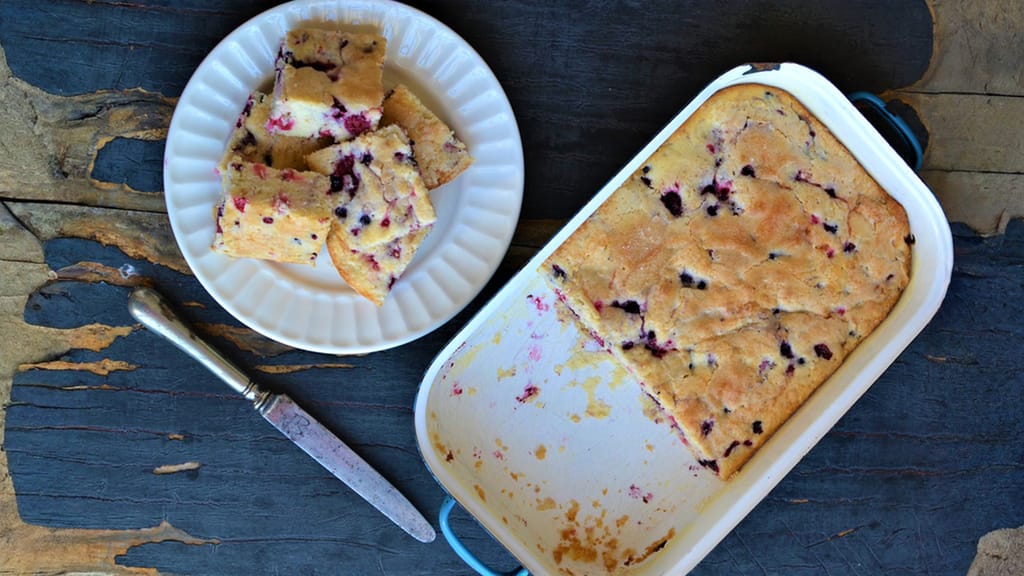
Buttermilk breakfast bublanina with mixed berries
Buttermilk fruit cake with small fruit, even frozen
For easy buttermilk pancakes you need five ingredients: 500 ml buttermilk, 2 eggs, a pinch of salt, 15 g sugar and 250 g semi-coarse flour. There's no added milk or leavening. The buttermilk supplies both the liquid and the flavor.
Whisk the buttermilk with the eggs, salt and sugar and add the flour in portions so no lumps form. Cook in a well-heated pan; the recipe suggests putting a bit of lard in before the first pancake, and then cooking dry in a good pan. You're done in about 23 minutes.
Buttermilk pancakes have a gently tangy flavor that goes well with quark, jam and fruit. Because the batter is only slightly sweet, it also handles a savory filling of spinach or cheese.
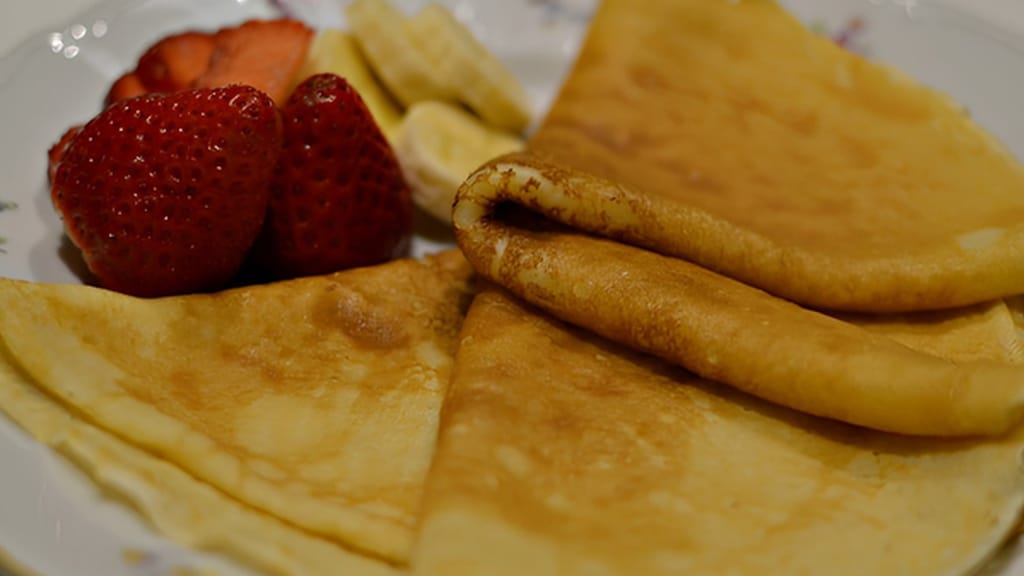
Easy buttermilk pancakes
Easy buttermilk pancakes: five ingredients, no milk needed
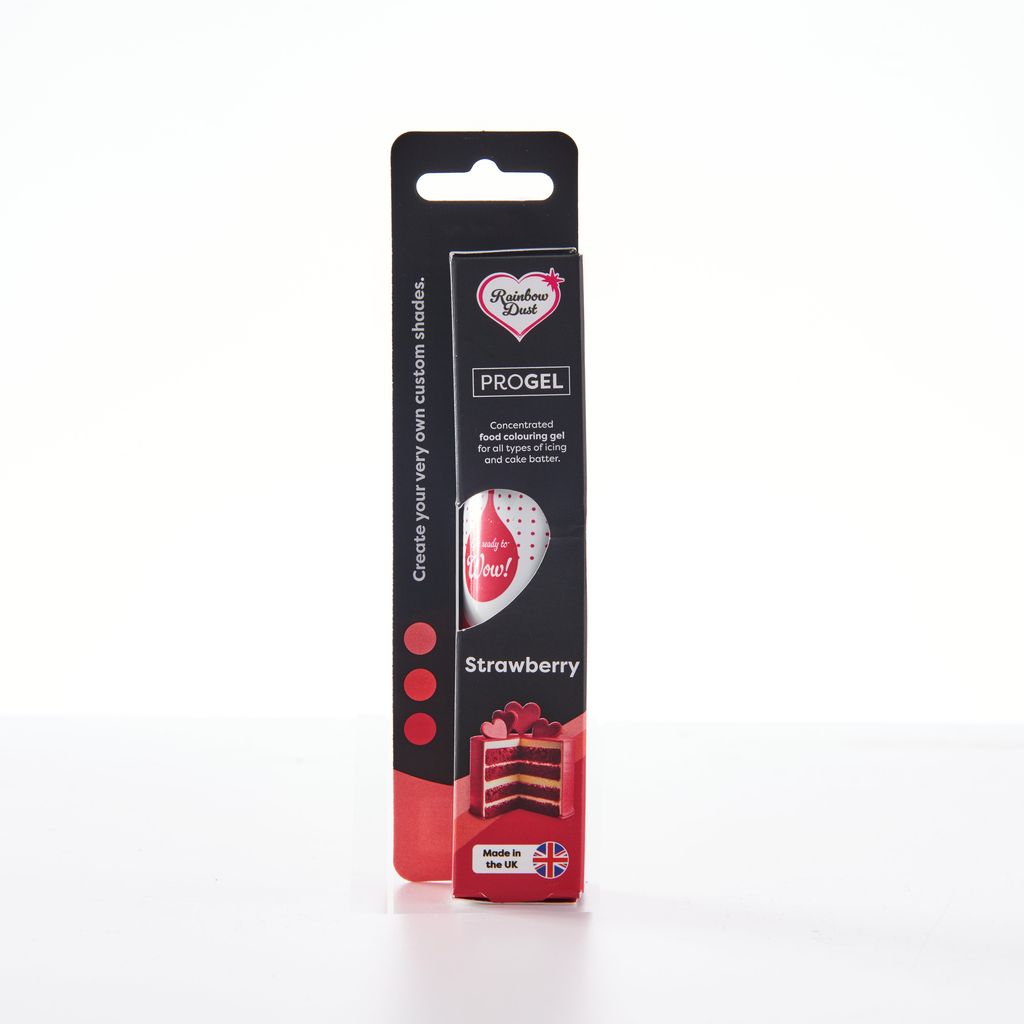
Red velvet is traditionally baked with buttermilk. The "velvet" in the name refers to the fine, velvety crumb, and acidic buttermilk helps create it. Our red velvet mini desserts with mascarpone cream have a base made from 125 g butter creamed with sugar, 2 eggs, 250 g all-purpose flour with baking powder and 250 g buttermilk, in which you whisk the food coloring.
Coloring through the buttermilk is clever: the color disperses evenly in the liquid and leaves no streaks in the batter. Gel and paste colors are stronger than liquid ones, so about a teaspoon is usually enough. Beat the butter with sugar for about three minutes until pale, add the eggs, then the flour with salt and baking powder, and finally the red buttermilk. Pour the batter onto a baking sheet lined with parchment paper and bake at 170°C (340°F) for 20–30 minutes, until the surface springs back when lightly pressed.
From the fully cooled sheet cut rounds with a pastry ring and layer them with a cream of mascarpone, whipping cream, powdered sugar and vanilla extract, with sprinkles on top. Don't throw away the trimmings: crumble them into glasses, alternating with the cream and perhaps some red fruit. Finished desserts belong in the fridge; we recommend eating them within 2 days.
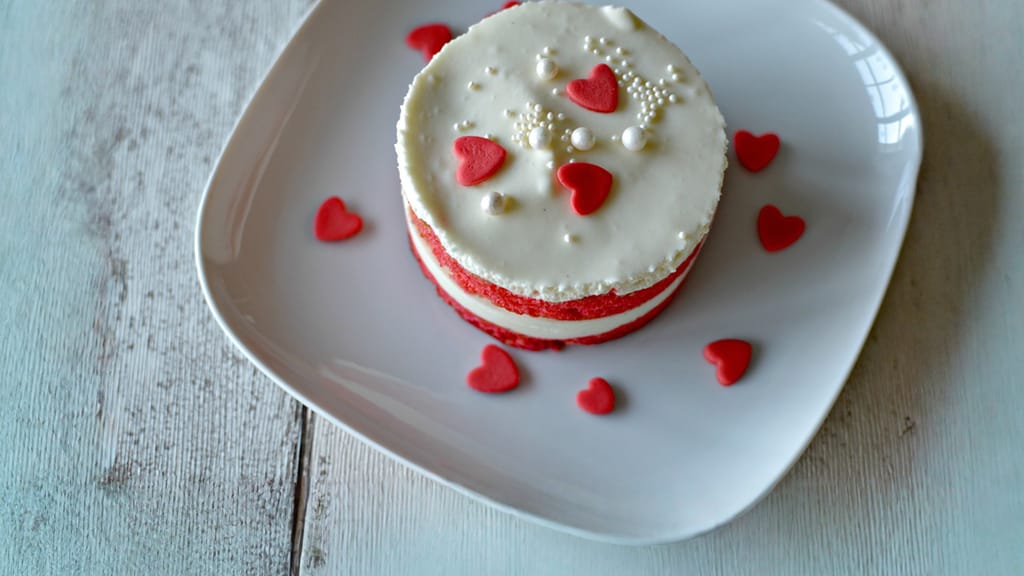
Red velvet mini desserts with mascarpone cream
Red velvet mini desserts with mascarpone cream and a buttermilk base
In the fluffy pink cake roll with quark cream there are only 40 g of buttermilk, but it has a clear job: you stir the gel coloring into it and only then gently fold the colored buttermilk into the egg foam. The color is even and the batter isn't thinned.
Preheat the oven to 200°C (400°F). Beat four eggs with 150 g sugar on highest speed until the foam is thick enough that a trail from the whisk stays for a moment. Fold in the pink buttermilk and then, in portions, the flour mixed with baking powder and salt, each time only briefly so the foam doesn't deflate. Spread the batter with a spatula to an even height on a baking sheet of roughly 40 × 25 cm lined with parchment paper and bake for 10–12 minutes; an overbaked sheet dries out and cracks when rolled.
Turn the still-warm sheet out onto a sugar-dusted kitchen towel, peel off the paper and roll it up with the towel; it cools into shape and then won't break. Whip the cream from full-fat quark, powdered sugar, whipping cream and vanilla seeds, unroll the cake, spread it and roll it up again. Because of the quark and cream, keep it in the fridge and eat it within 2 days, which is our recommendation.
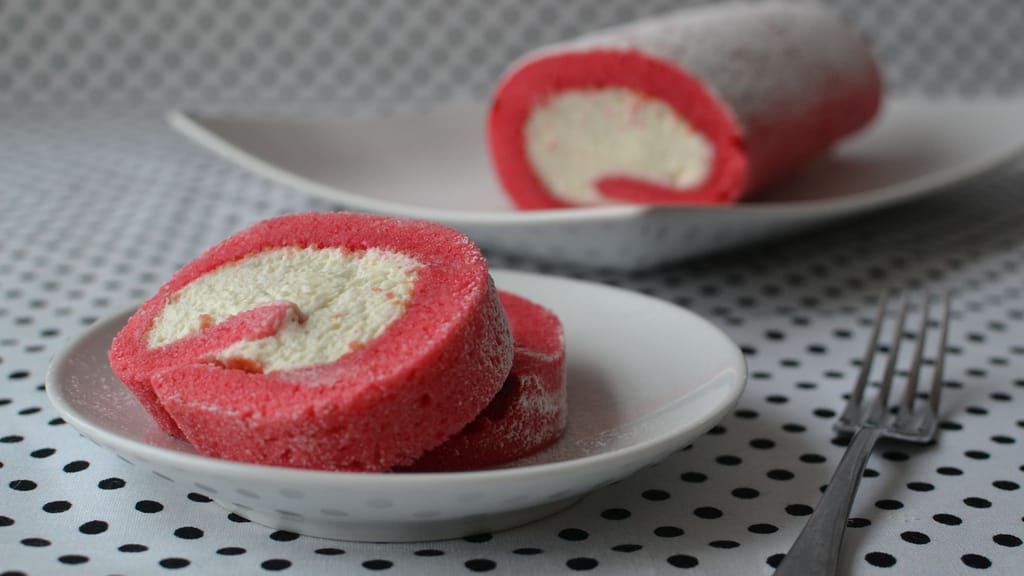
Fluffy pink swiss roll with quark cream filling
Fluffy pink buttermilk cake roll with quark cream
Chocolate cupcakes with caramel cream are a textbook example of buttermilk with baking soda: 240 ml buttermilk, a teaspoon of baking soda, plus a little baking powder and an extra teaspoon of white wine vinegar. There's plenty of acid in the batter, so the soda lifts the cupcakes high and the cocoa batter stays moist.
Take the buttermilk and eggs out of the fridge ahead so they come to room temperature. In one bowl mix all-purpose flour, white and cane sugar, sifted cocoa, soda, baking powder and salt. In another, whisk the buttermilk with the egg, oil, vinegar, vanilla extract and a teaspoon of instant coffee dissolved in a little water. Add the dry mixture to the wet and mix only until smooth, fill the liners two-thirds to three-quarters full and bake at 175°C (350°F) for 18–22 minutes.
Whip the cream from chilled mascarpone, cold whipping cream and salted caramel; everything must be truly cold, or the cream will curdle. Pipe it onto the cooled cupcakes with a star tip and top with sprinkles. The recipe makes 14, and with the cream they belong in the fridge, in our recommendation for 2 days at most.
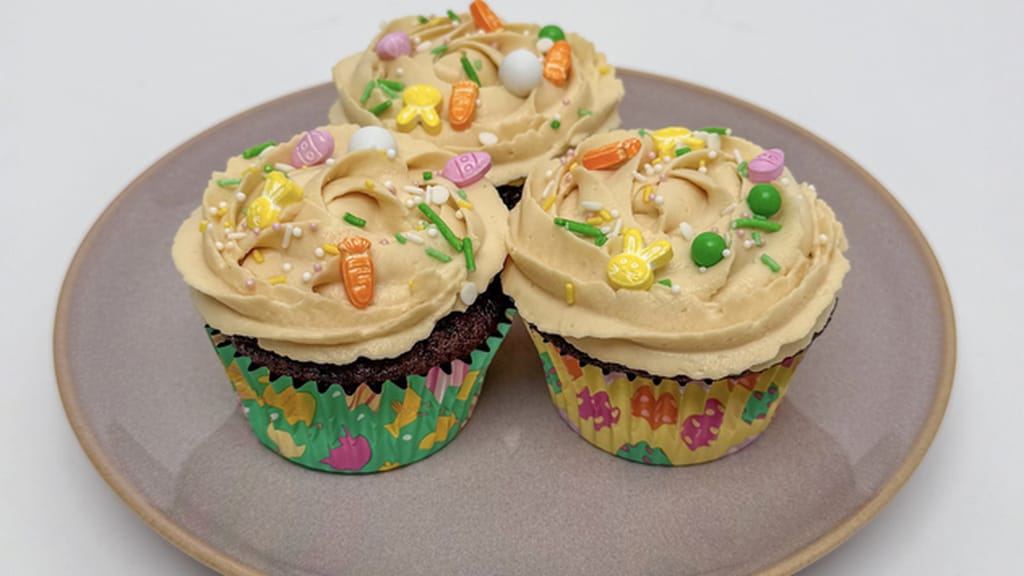
Chocolate cupcakes with salted caramel cream
Chocolate cupcakes with buttermilk and caramel cream
You can bake savory things with buttermilk too: cheddar chili biscuits are ready in 48 minutes and leavened with baking powder. Preheat the oven to 185°C (365°F). Mix all-purpose flour with a little powdered sugar, salt, black pepper, ground chili and baking powder, stir in 150 g coarsely grated cheddar and work in 110 g room-temperature butter, cut into pieces, with your hands until it forms crumbs.
Whisk the egg with 160 ml buttermilk, pour it over the crumbs and stir with a wooden spoon just until combined. The dough will be sticky, not smooth, and that's how it should be. Use two spoons to drop biscuits onto a baking sheet lined with parchment paper, sprinkle them with chili or freshly ground pepper and bake for 15–20 minutes until golden.
They're best still warm, when the cheddar smells strongest. They go well with soup, with a glass of wine, or as a snack in a lunchbox.
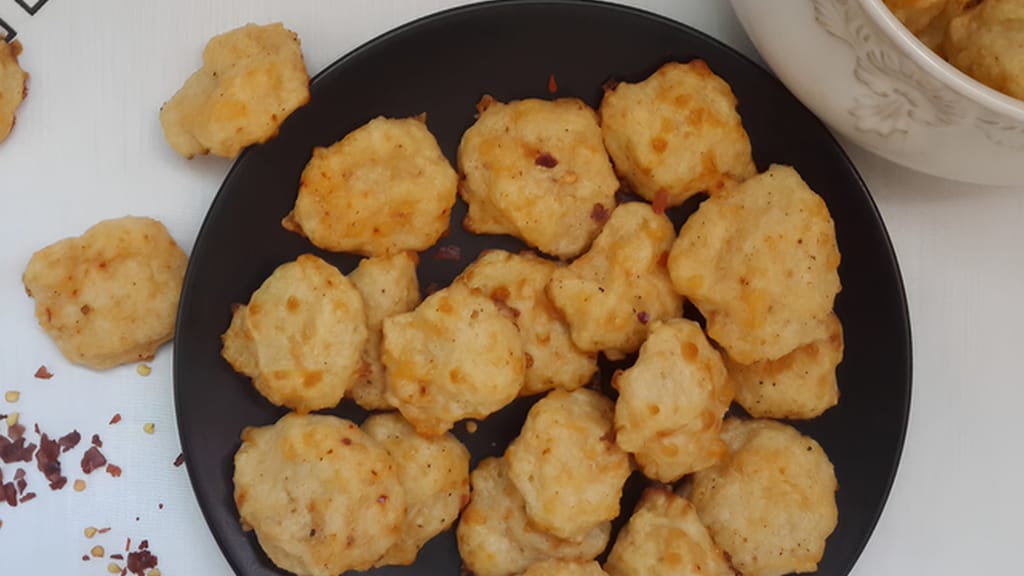
Cheddar and chilli bites
Cheddar chili biscuits: savory buttermilk bakes in 48 minutes
The moist Easter lamb cake made with buttermilk batter relies on 200 ml buttermilk, 100 ml oil, 3 eggs and 380 g semi-coarse flour with baking powder. There's no butter in it; the oil and buttermilk keep it moist.
Preheat the oven to 180°C (350°F) and beat the eggs with 300 g sugar on highest speed into a pale, fluffy foam. Pour in the buttermilk and oil, add the flour with salt and baking powder and mix only until smooth; long mixing would make the lamb tough. After 45 minutes of baking, test the thickest spot with a skewer, let the finished lamb cool in the mold and dust it with powdered sugar. Count on 80 minutes in total.
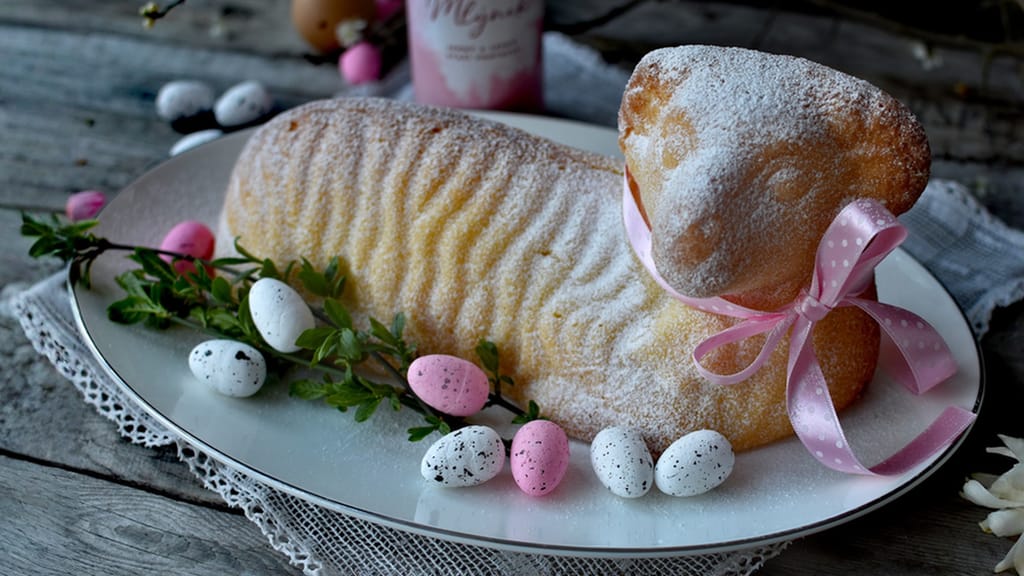
Moist easter lamb cake with buttermilk batter
Moist Easter lamb cake made with buttermilk and oil
Where kefir shines more than buttermilk is bread. In the recipe for seeded sourdough bread with kefir milk, 200 ml of kefir is the only liquid in the main dough and gives the crumb a gentle tang.
The method in short: mix 30 g rye starter with 150 g rye bread flour and 150 g water and leave it for 12 hours, until the leaven has increased in volume. Then add 300 g wheat bread flour and 100 g all-purpose flour, the kefir, salt, caraway and pumpkin and sunflower seeds, fold the dough several times, shape a loaf and let it mature in a proofing basket in the fridge. Score the cold loaf, bake with steam at 230–250°C (445–480°F), reduce to 160°C (320°F) after 12 minutes and bake for about 40 minutes more, until the bottom sounds hollow when tapped. Most of the total 27 hours is just waiting; the actual work is a few tens of minutes.
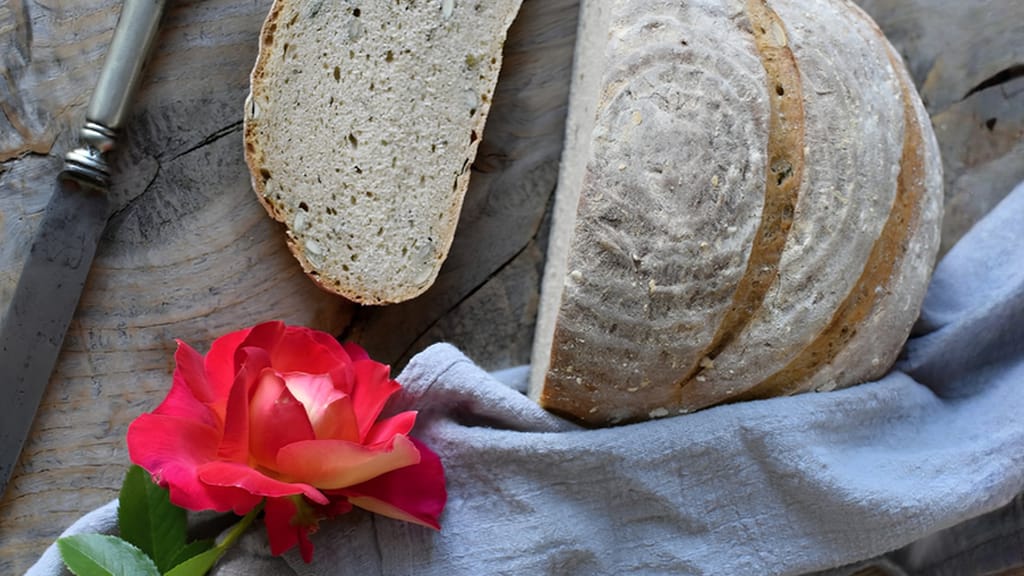
Sourdough seeded bread with kefir
Seeded sourdough bread with kefir milk
The fastest are buttermilk pancakes (23 minutes), and the longest is the sourdough bread with kefir milk, which is made over a day and a night. Total times by recipe:
easy buttermilk pancakes: 23 minutes
cheddar chili biscuits: 48 minutes
chocolate cupcakes with caramel cream: 62 minutes
buttermilk fruit cake with small fruit: 68 minutes
red velvet mini desserts with mascarpone cream: 73 minutes
Easter lamb cake with buttermilk batter: 80 minutes
pink cake roll with quark cream: about 2 hours 40 minutes
marble bundt cake with buttermilk: about 3 hours, much of it cooling
seeded sourdough bread with kefir milk: over 27 hours, most of it just the starter and dough maturing
So for a Sunday breakfast, pancakes or fruit cake; for guests, cupcakes or red velvet; and for a weekend when you're at home, a bundt cake or bread.
With cultured buttermilk you can bake everything in this article. In stores you'll mostly find cultured buttermilk, and recipes usually mean it even when they leave out the word "cultured". Cultured buttermilk is a dairy drink soured with dairy cultures, a little thicker and more acidic than milk. Original buttermilk is the liquid left over after churning butter; non-cultured buttermilk (in legislation simply "buttermilk") is less acidic and doesn't react with soda as well, which is why cultured is the one for baking.
How to work with cultured buttermilk:
Shake the carton before use, because the thicker part settles to the bottom.
Take it out of the fridge about half an hour ahead so the butter mixture doesn't curdle when you pour it in.
Measure it like milk. Recipes list it in milliliters and grams, and the difference is negligible.
Keep leftovers from an opened carton in the fridge and follow the date on the package.
Cultured buttermilk is also traditionally used for a quick bread without starter or yeast: soda bread. Flour, salt and baking soda are combined with buttermilk into a shaggy dough that is worked only briefly, shaped into a round loaf, cut with a cross and goes straight into the oven. We don't have a recipe for it on Yumsto yet, but we're preparing one.
With kefir you can bake almost the same things as with buttermilk: bundt cake, fruit cake, pancakes and cupcakes. It shines most in sourdough bread, where it's the only liquid in the main dough; you'll find the method above among the recipes. How to swap kefir for buttermilk in the other recipes is covered in the next section.
If what you have left in the fridge is plain yogurt, have a look at what to bake with yogurt; and for milk that is starting to sour, we have what to cook and bake with milk and soured milk.
Kefir and soured milk replace buttermilk 1:1, because they're acidic and baking soda works the same way with them. The difference is mainly in thickness:
Kefir is thicker. In bundt cake, fruit cake and cupcakes use it in the full amount. For pancakes or a thin cake roll batter you can thin it with a little milk or water, roughly 3 parts kefir to 1 part liquid, so the batter pours well.
Soured milk is usually closest to buttermilk in both thickness and acidity, so you can swap it in without any changes.
Don't use flavored kefir or sweetened dairy drinks in batter. Sugar and flavoring shift the taste and the color of the crust.
Expect bakes with kefir to be a touch tangier and a touch denser. In a cocoa bundt cake you won't notice; in pancakes you will. More substitutes, from milk with lemon to a vegan option, are covered in our article on what to use instead of buttermilk.
You can swap buttermilk for milk 1:1 by volume, but you have to adjust the leavening. Milk is nearly neutral and buttermilk is acidic, so the batter needs a little baking soda to balance the acid.
The method for every 250 ml (1 cup):
Use 250 ml buttermilk in place of 250 ml milk.
Add ½ teaspoon baking soda (2–3 g) to the flour.
Reduce the baking powder. ½ teaspoon of soda leavens about as much as 2 teaspoons of baking powder, so you can cut back by that much. American baking guides give this adjustment.
If the buttermilk is thicker and the recipe calls for a thin batter, such as for pancakes, thin it with a spoonful or two of water.
The other way around, be careful: don't put milk in place of buttermilk in a recipe with soda unless you add an acid. The soda then has nothing to react with, the bake won't rise and tastes bitter. A quick fix is 250 ml milk with a tablespoon of lemon juice or vinegar, left to stand for 5–10 minutes until it turns cloudy.
Keep bakes without cream at room temperature under a cover; anything with cream belongs in the fridge.
Bundt cake, fruit cake and lamb cake: once completely cool, cover with a cake dome or wrap in plastic wrap so the crumb doesn't dry out. In our experience they stay moist longer with buttermilk than with milk.
Red velvet desserts, pink cake roll and cupcakes: because of the mascarpone, cream and quark, keep them in the fridge, in our recommendation for 2 days at most. Don't leave them on the table longer than serving takes.
Cheddar biscuits: best warm. Briefly reheat cooled ones in the oven and the cheddar smells wonderful again.
Sourdough bread: at room temperature in a kitchen towel or a linen bag, on a board cut side down.
You can freeze sliced bundt cake and bread and thaw them slice by slice as you need them.

Nordic Ware
Bundt Pan - Tradition
Nordic Ware
Bundt Pan - BraidedA buttermilk bundt cake is most often dense because the batter was overmixed, it was sliced while warm, or the baking soda or baking powder was old. After adding the flour, mix only until the dry patches disappear. Longer mixing develops gluten and makes the crumb heavy. Don't let batter with baking soda sit around, because the reaction with buttermilk starts right away. And slice the cake only when it is completely cool, since a hot cake squashes into a rubbery mass under the knife.
Buttermilk bakes taste bitter or soapy when the batter has more baking soda than the acid in the buttermilk can balance, or when the soda was left in clumps. Stick to roughly ½ teaspoon of baking soda per 250 ml (about 1 cup) of buttermilk, and always sift it or mix it into the flour, never into the liquid. Baking soda in a batter made with plain milk and no acid also gives a bitter taste.
The butter mixture curdles when you pour in buttermilk straight from the fridge, because the butter in the creamed mixture firms up. Take the buttermilk and eggs out ahead so they reach room temperature, and add the buttermilk alternately with the flour, which binds the liquid. A slightly curdled mixture usually comes together once the flour is mixed in, and the cake bakes up fine.
Yes, you can freeze buttermilk, ideally in small portions measured for one recipe. After thawing in the fridge it separates and looks grainy, so just whisk it smooth. It's no longer pleasant to drink, but it's perfectly fine in batter.
Yes, plain yogurt can replace buttermilk. Just thin it with milk or water to about the consistency of buttermilk. It is similarly acidic, so baking soda works the same way. Greek yogurt is thicker, so thin it more, roughly half and half.
One recipe worth heating the oven for, one tip, and one deal from the shop. Nothing else.