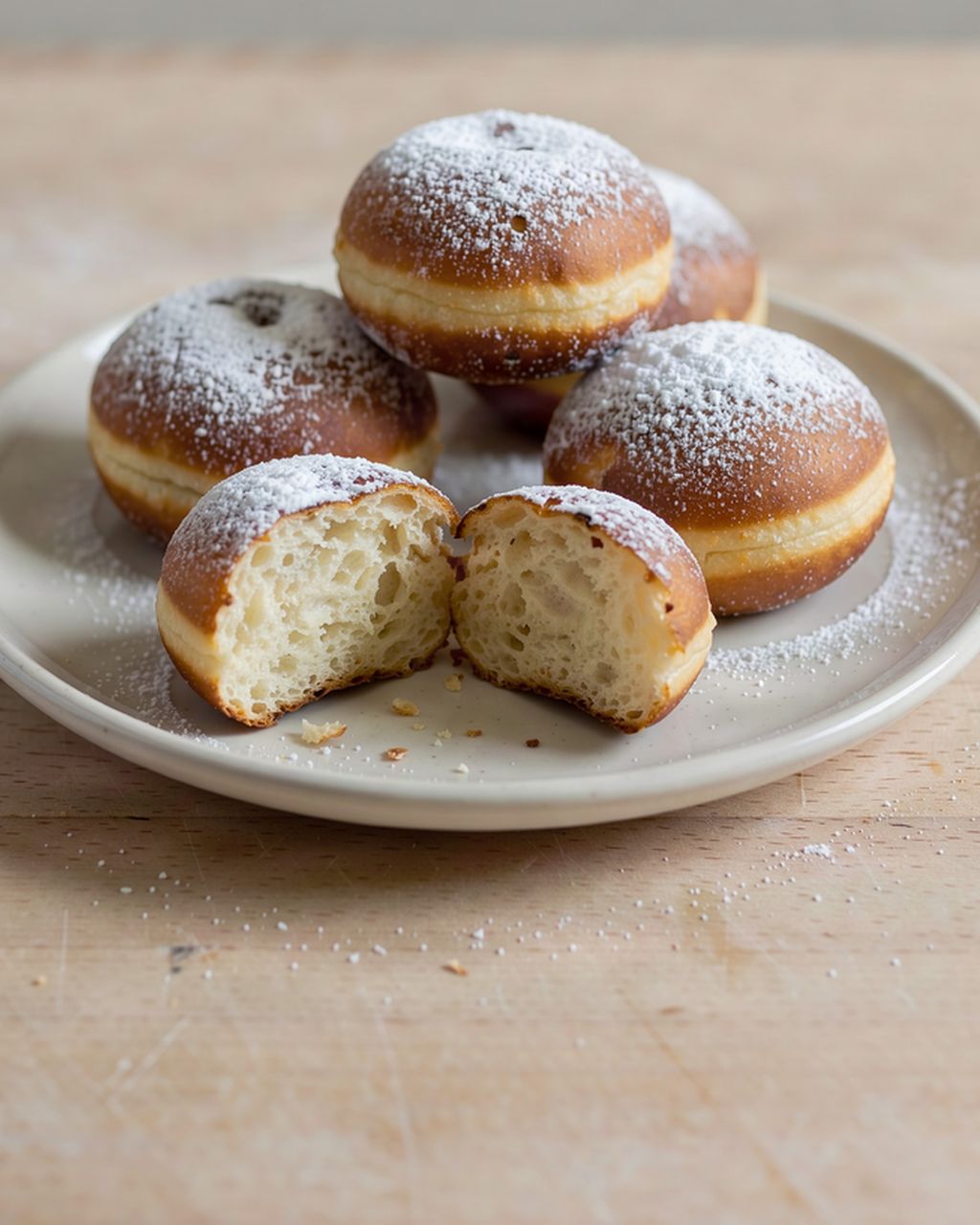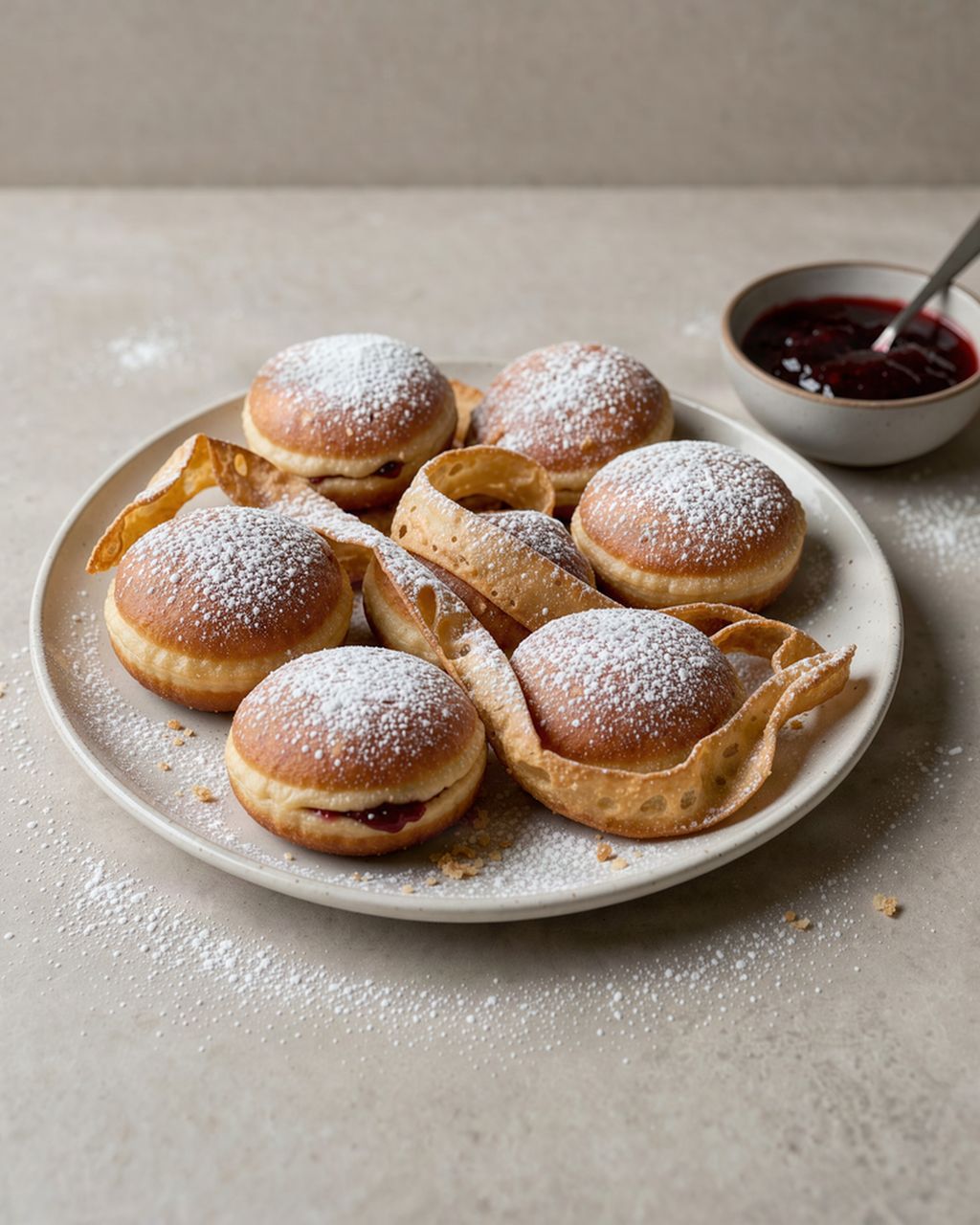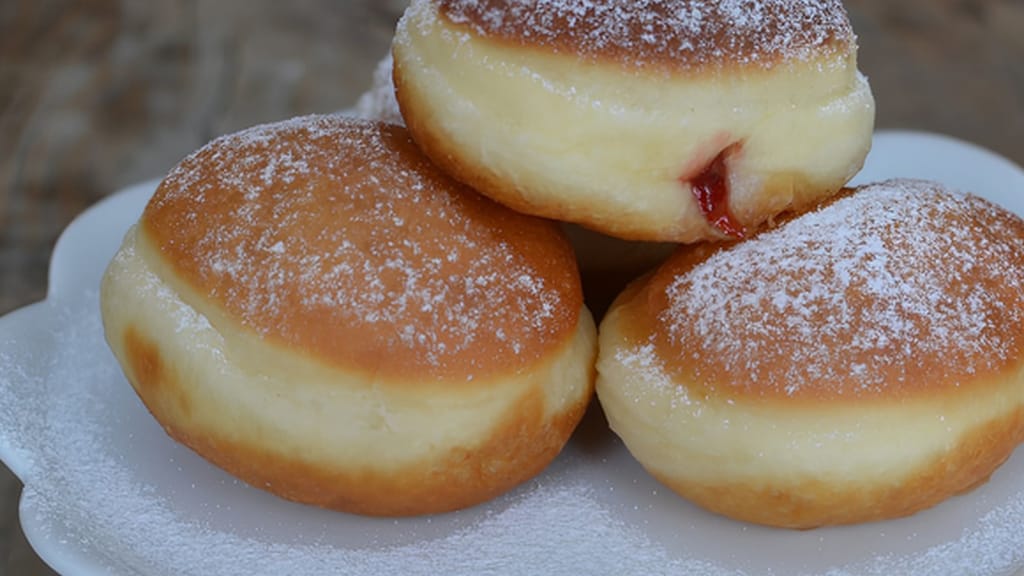
Golden fried doughnuts with jam
Baked Donuts in the Oven: How to Make Them Fluffy, Not Like Sweet Buns (Fan Oven Included)
Updated Nov 17, 2026
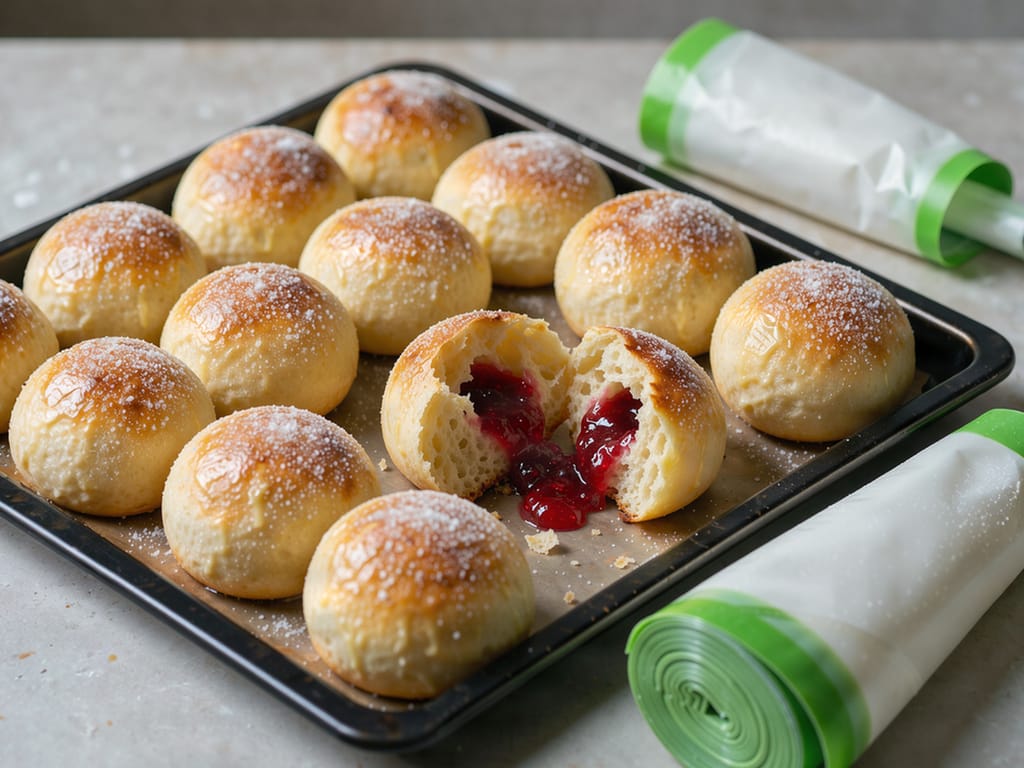
Bake donuts at 190°C (375°F) in a conventional oven (top and bottom heat) or at 170°C (340°F) in a fan oven, for 12–15 minutes until golden. To make them taste like donuts and not like sweet buns, you need a rich dough with butter and egg yolks, brush them with melted butter as soon as they come out of the oven, and roll them in sugar while they're still warm. That fat, which a fried donut would soak up from the oil, goes on after baking instead. Below you'll find how to shape them, how to tell the dough has risen properly, why they sometimes spread or stay pale, and how to fill them.
Donuts bake in the oven for 12–15 minutes: at 190°C (375°F) in a conventional oven, at 170°C (340°F) in a fan oven. Always preheat the oven for at least 15 minutes, because a cold start means pale, spread-out donuts.
Conventional oven (top + bottom heat): 190°C (375°F), 12–15 minutes, baking sheet on the middle rack.
Fan oven: 170°C (340°F), 12–14 minutes; you can bake two sheets at once, but swap them halfway through.
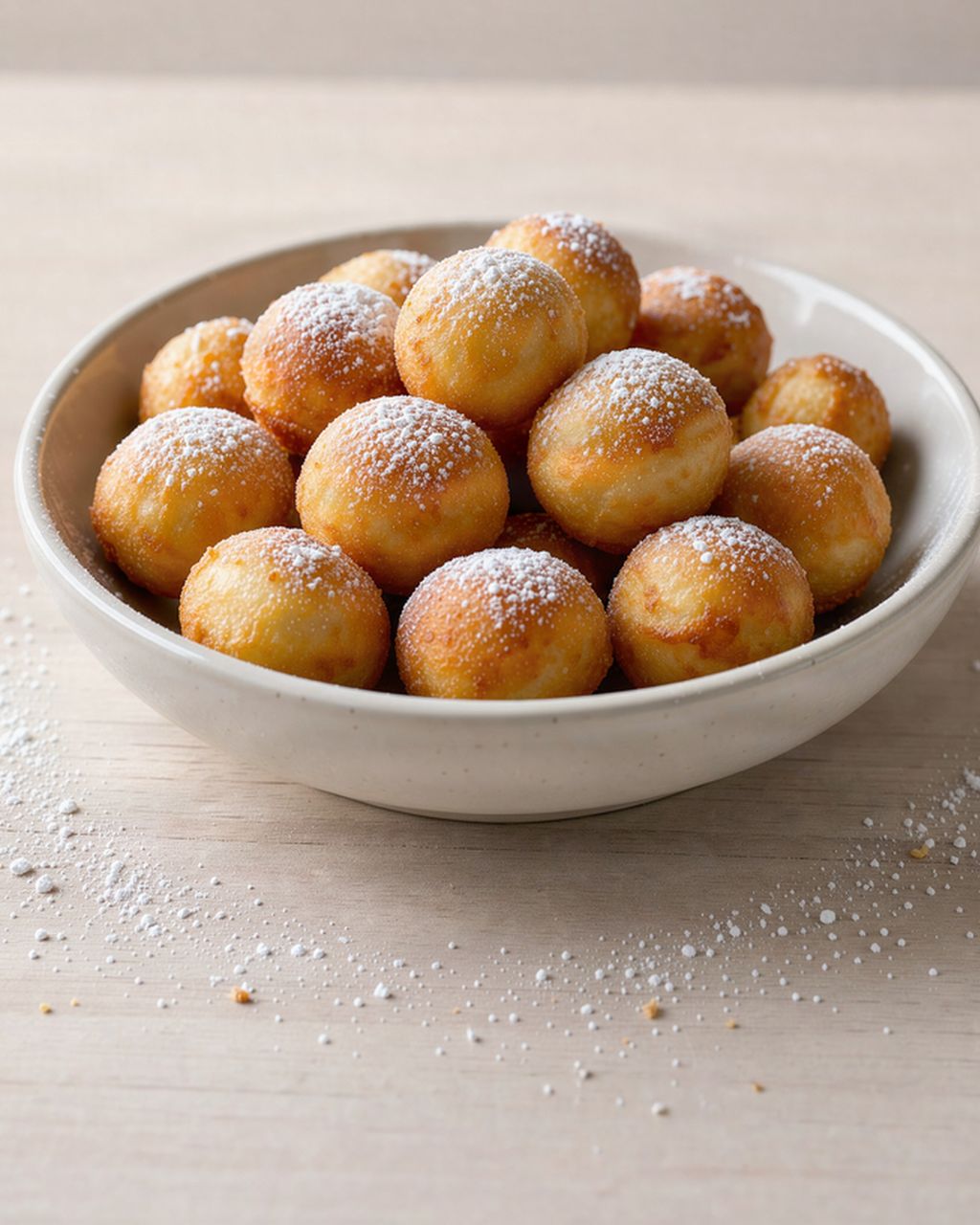
Size: balls of 50–60 g dough. For mini donuts of 25–30 g, cut the time to 8–10 minutes.
They're done when they're golden brown on top and underneath and sound hollow when you tap the bottom. An instant-read thermometer should read around 90°C (195°F) inside.
It's better to take them out a minute early than a minute late. Every extra minute dries them out and turns them into exactly the dry buns you're trying to avoid.
Seasonal baking plans, tested recipes and kitchen tricks that save you time. Unsubscribe in one click.
Oven-baked donuts taste like sweet buns when they lack the fat and sugary crust that a fried donut gets from the oil. The fix has three steps: a rich dough, melted butter right after baking, and a roll in sugar while they're still warm.
A rich dough. Use roughly 60–80 g of butter and 2–3 egg yolks per 500 g of all-purpose (plain) flour, and don't skimp on either the fat or the yolks. The fat softens the crumb, and the yolks give it color and tenderness.
Melted butter right after baking. Take the donuts out and brush them with a pastry brush on all sides within a minute. The warm crust soaks up the butter and softens, and that's what creates the "fried" flavor.
Sugar while they're warm. Roll them in granulated sugar right after the butter. The butter makes the sugar stick and forms the sweet coating you know from a bakery.
If you skip the butter, you're left with a dry crust and a bun-like feel. If you skip the sugar, you've made a brioche. Only all three steps together make a donut.
Golden fried doughnuts with jam
Recipe: golden-baked mini donuts with jam, made in the oven
Baked doughnuts differ from fried ones in three ways: they have no pale ring, the crust is thinner and softer, and the bottom is flat. The crumb, though, can be just as fluffy.
No pale ring. The white band around the middle only forms in frying, when the doughnut floats in oil and its side stays above the surface. In the oven the whole doughnut bakes evenly, so there is no ring.
The crust is softer and thinner. A fried doughnut has a slightly crisp, greasy skin, while a baked one has a delicate golden crust, like a milk roll. Butter and sugar bring it closer, but it won't match exactly.
The bottom is flat. The doughnut isn't turned on the baking sheet, so it ends up a little taller and more regular, but flat underneath.
The crumb is just as fluffy if you get the rise right and don't overbake them.
The oven's advantage: you bake a whole tray at once, with no pot of oil, no temperature to watch and no smell in the apartment. If you want the classic with a ring, see the recipe for golden fried doughnuts with jam. If you have an air fryer, you'll find the method in the article on koblihy and boží milosti in an air fryer.
Shape doughnuts into taut balls: the surface must be smooth and pulled tight, or they'll flatten in the oven.
Turn the risen dough out onto a lightly floured surface and press it down briefly to push out the large air bubbles.
Divide it into equal pieces of 50–60 g. Weighing is worth it, because doughnuts of the same size bake in the same time.
Fold the edges of each piece into the center and turn it seam side down. Then cover it with your palm curved like a bowl and roll it in circles on the surface until the top is taut and smooth.
Place them seam side down on a baking sheet lined with parchment paper, 4–5 cm (1.5–2 in) apart, and gently press the tops down to a height of about 2.5 cm (1 in).
Use as little flour on the surface as you can. Excess flour doesn't bake in, so the crust turns matte and the butter sticks to it less well.
Doughnuts are ready for the oven when they've grown by about half and a dent made with a light fingertip press springs back slowly and not quite completely. This usually takes 30–45 minutes in a warm place (around 25 °C / 77 °F), covered with a kitchen towel or plastic wrap so they don't dry out.
The dent springs back at once and completely: they need more time. Underproved doughnuts crack on the side in the oven and turn out dense.
The dent stays and the dough sinks: they're overproved. Bake them right away; they'll be flatter and spread more.
The dent springs back slowly: the ideal moment, so into the preheated oven they go.
Tip: just before baking you can brush them lightly with beaten egg mixed with a spoonful of milk. The crust will color nicely and look glossier.
Doughnuts most often spread in the oven because of overproving, a dough that's too slack, or an oven that wasn't preheated enough.
Dough that's too slack. It should be soft and slightly sticky, but after kneading it should pull away from the bowl and hold a ball shape.
Balls that aren't taut. A loose surface has nothing to hold the dough up.
Overproving. The gluten is overstretched and collapses in the heat.
A cold or under-preheated oven. The dough spreads before the crust has time to set.
Oven doughnuts stay pale mainly because the oven's real temperature is low, or because the dough is lean, without egg yolks and sugar.
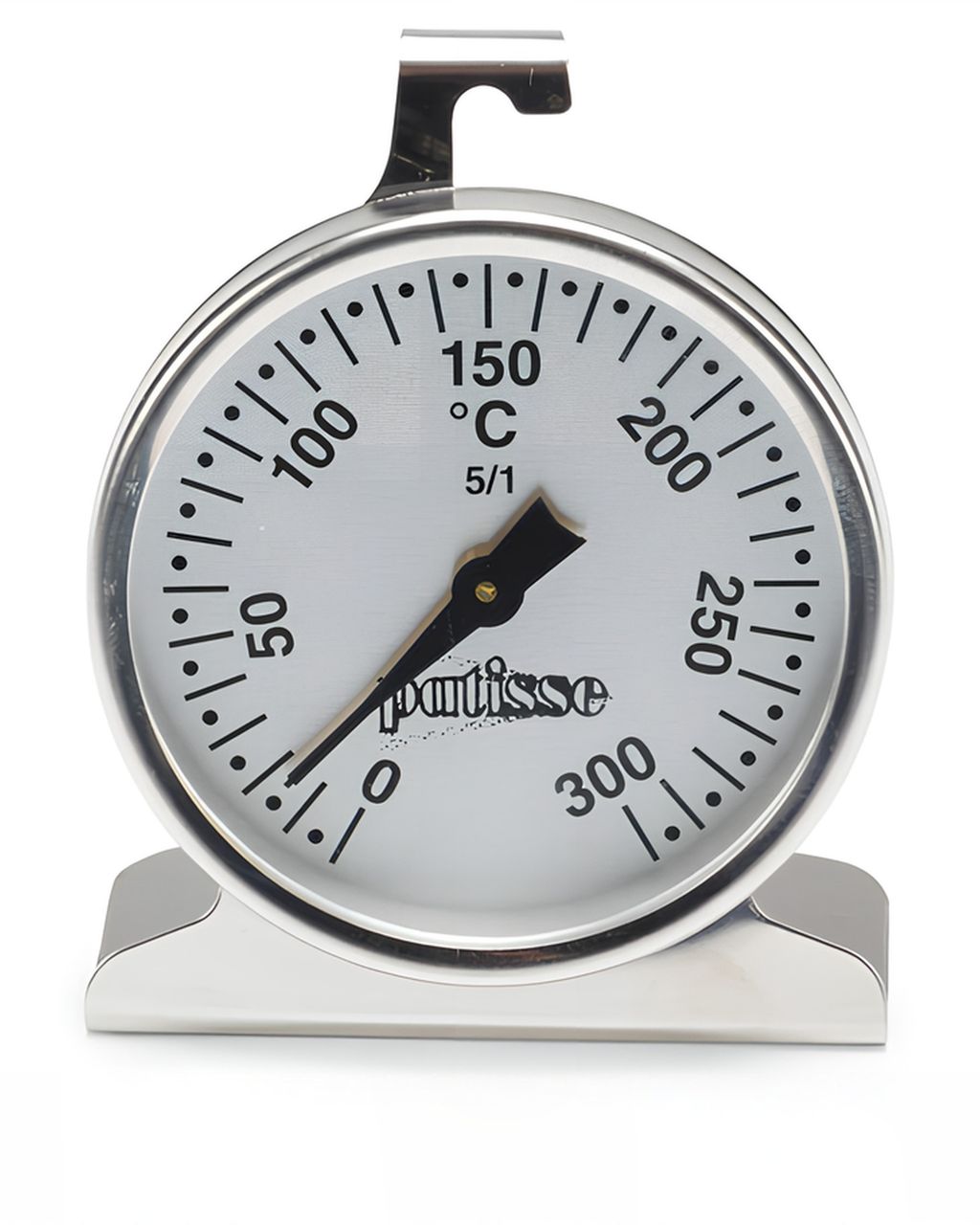
The oven runs cooler than it says. Home ovens often differ by 10–20 °C (18–36 °F), and an oven thermometer will quickly show it.
The dough lacks yolks, sugar or milk. Without them the crust won't brown.
The baking sheet is too low or too crowded. The doughnuts steam instead of bake.
No egg wash. Without it the surface tends to be a dull beige.
In a convection oven, bake doughnuts at 170 °C (340 °F) instead of 190 °C (375 °F) and keep an eye on them from minute 11, because the circulating air browns them faster and dries them out more.
Lowering the temperature by 20 °C is essential. At 190 °C with the fan on, the crust darkens before the center is baked through.
The fan blows on the dough more, too. Leave the doughnuts covered to rise until the last moment and brush them with egg so the crust doesn't dry out.
A convection oven suits two trays at once better than a conventional one. Halfway through baking, swap and turn the trays so the doughnuts bake evenly.
Butter after baking matters even more here: hot circulating air dries the crust out more, so brush it on generously.
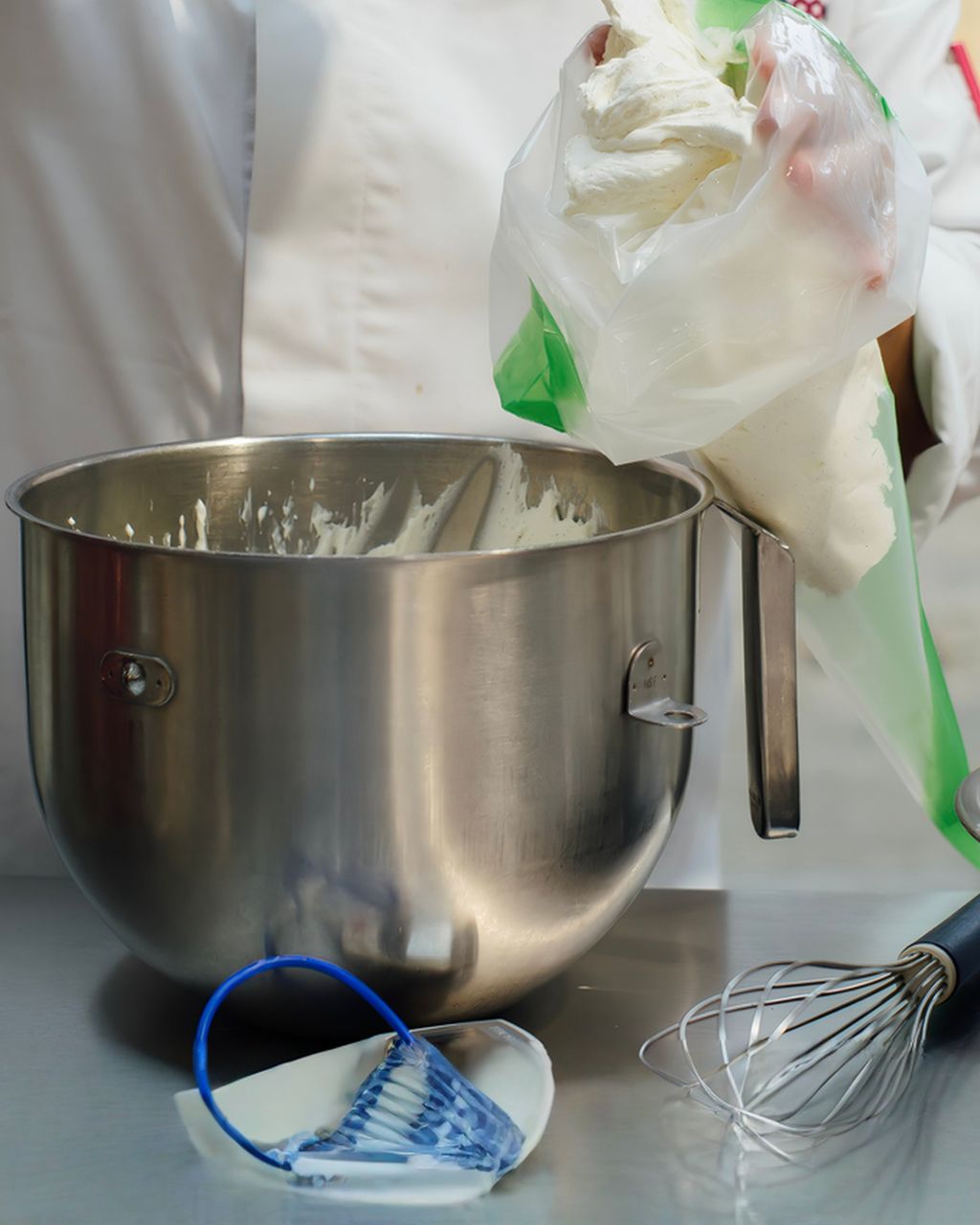
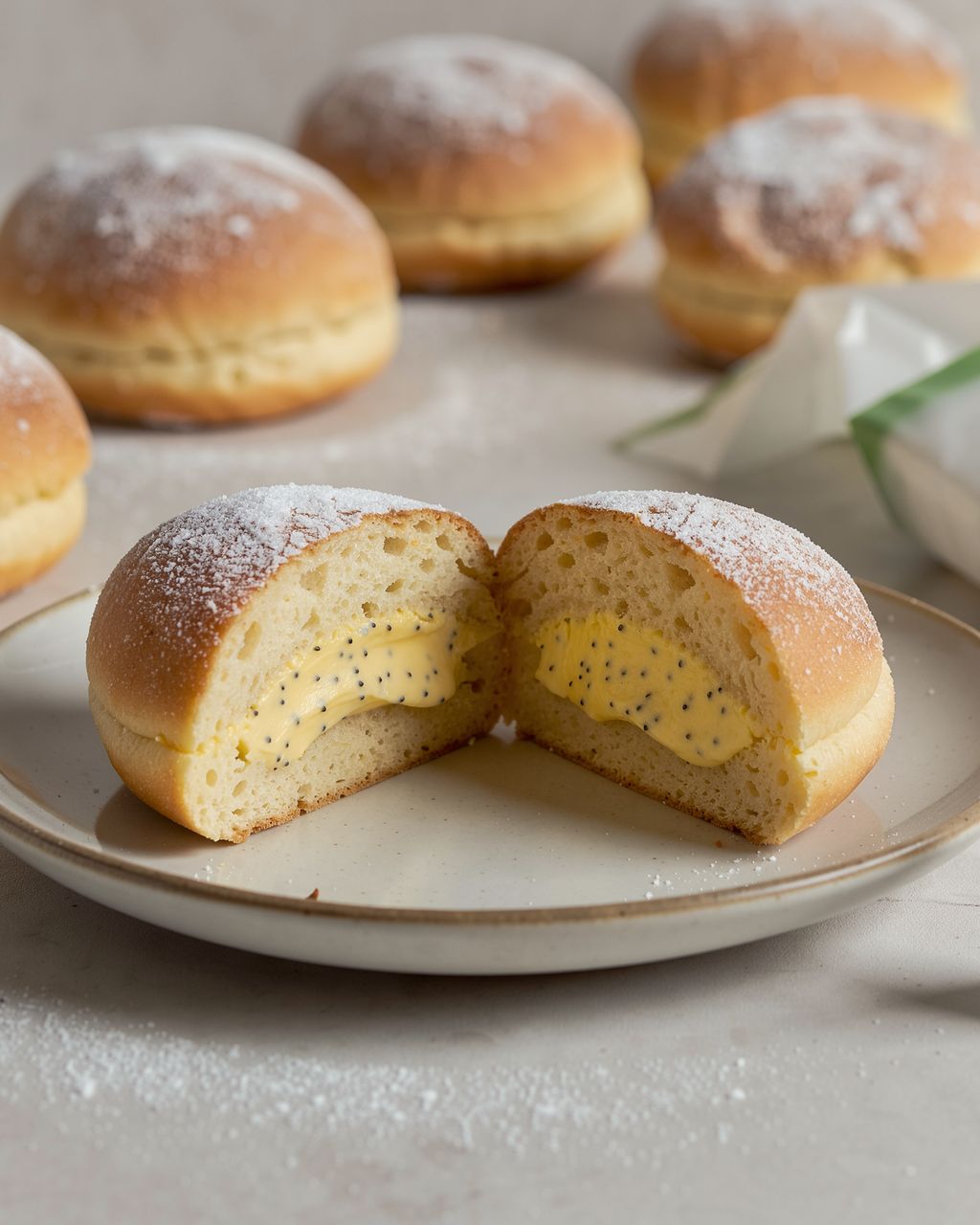
Oven doughnuts are filled after baking: jam while they're lukewarm, and cream, pudding or quark only once they're completely cool. Poke a hole in the side or bottom and pipe in 25–30 g of filling with a piping bag fitted with a narrow round tip (about 5–6 mm in diameter).
For jam, let them cool for 10–15 minutes; for cream, let them cool completely. A hot crumb tears under the pressure of the filling.
Use a skewer or the end of a wooden spoon to poke a hole into the center and give it a slight twist so the filling has somewhere to go.
Insert the tip and squeeze until the doughnut feels heavier in your hand and the filling shows at the hole.
Wipe the hole clean and set the doughnut down with the hole facing up.
Jam is the classic, but you'll find many more options (pudding, vanilla, chocolate, poppy seed and quark), with ratios and tips to keep the filling from leaking, in the article on doughnut fillings. If you'd rather have icing than sugar, see how to make a doughnut glaze that doesn't run. Put it only on cooled doughnuts, without the butter.
Doughnuts belong to masopust (the Czech pre-Lent carnival), and the oven is the easiest way to bake a whole tray for the whole family on Shrove Tuesday. You'll find more traditional baking and cooking under our masopust tag, and we cover what's cooked in masopust cooking from Epiphany to Shrove Tuesday in the article masopust at home.
If you're after a quicker route without yeast, try quark (tvaroh, a Czech fresh curd cheese) doughnuts: quark and baking powder replace the yeast, and the dough is ready in a few minutes. These are fried in oil, though. Why this kind of dough holds its shape and how to work with it is explained in the article no-yeast doughnuts made with quark, yogurt or kefir. Bear in mind that quark doughnuts are denser and more cake-like, and only a yeast dough gives you a fluffy crumb.
Baked donuts are best on the day you make them, but they keep for 1–2 days in an airtight container at room temperature. Donuts with a cream, pudding or quark filling should go into the fridge within 2 hours at the latest (the US FSIS food safety rule) and be eaten within 2 days. You can revive a stale donut with 3–4 minutes in a 160°C (320°F) oven.
Yes, baked donuts can be frozen, best when baked, cooled, and not yet filled or rolled in sugar. They keep for about a month this way. Thaw them at room temperature, warm them briefly in the oven, brush with butter, roll in sugar, and only then fill them.
Yes, you can make the dough in the evening and let it rise in the fridge overnight for 8–12 hours. In the morning, let it sit for 30 minutes to loosen up, shape it into balls and let them rise a second time, a little longer than usual because they're cold. The slow, cool rise also gives the donuts a fuller flavor.
You can put jam in donuts before baking, but we don't recommend it: it boils in the oven, often bursts the seam and leaks onto the baking sheet, where it burns. If you want to try it, use a thick jam or plum butter (povidla), put just a teaspoon in the center, and pinch the seam firmly shut and turn it face down.
From 500 g of flour you can bake about 16–18 donuts of 50–60 g each, or around 35 mini donuts of 25–30 g. The whole dough, with milk, butter, egg yolks and sugar, weighs about 950–1000 g, so it fits on two baking sheets.
One recipe worth heating the oven for, one tip, and one deal from the shop. Nothing else.