Why Did My Cheesecake Sink in the Middle? Causes and How to Stop It
Why Did My Cinnamon Rolls Explode or Flatten? Proofing, Rolling and Filling
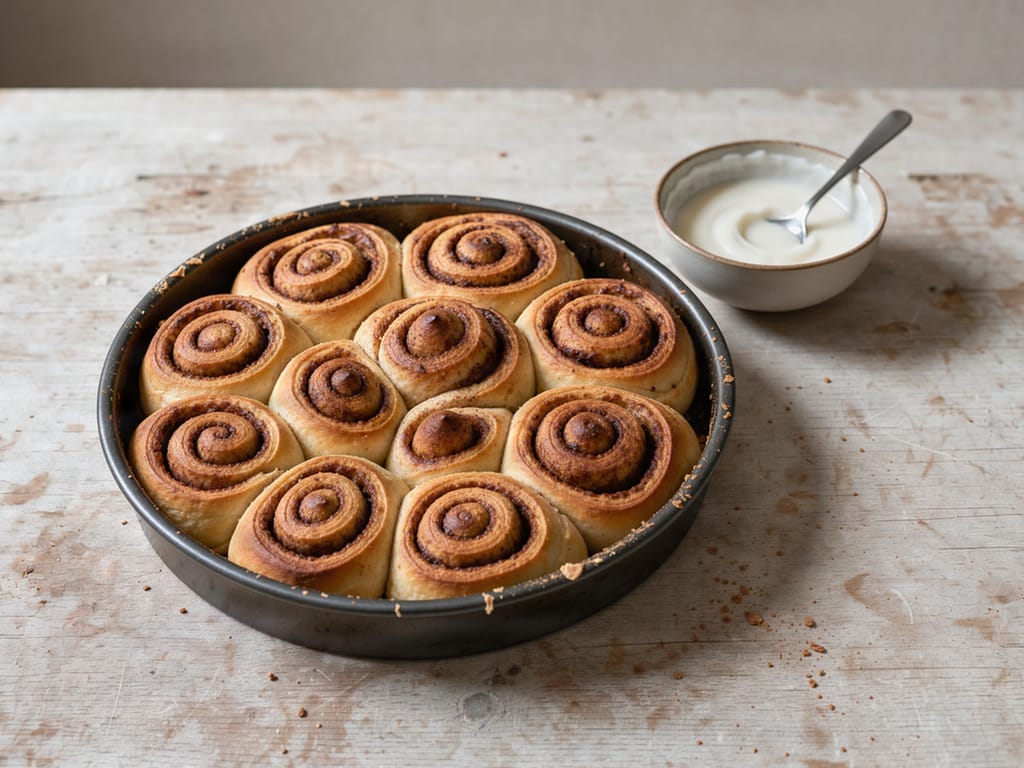
Cinnamon rolls that explode upward in the middle were usually underproofed or rolled too tightly, while rolls that spread flat were usually overproofed or made with a slack dough or melted-butter filling. Cracks, gaps and leaking filling have their own causes. Here is how to read your rolls and fix the next batch.
Cinnamon rolls are a spiral of yeast dough with a sugary layer in between, so anything that changes how the dough rises, or how well the layers stick together, changes the shape. Here is a quick diagnosis:
Centers pushed up into a cone or tower: underproofed, rolled too tightly, or both.
Wide, flat rolls that spread sideways: overproofed, dough too soft, or melted-butter filling.
Cracks or splits on top: dough too dry or underproofed.
Rolls unwinding or with big gaps: rolled too loosely, too much filling, seam not sealed.
Filling leaking and burning on the pan: melted butter or too much sugar in the filling.
Sunken centers after baking: overproofed, or underbaked in the middle.
Most of these come back to two things: proofing and the filling.
One recipe and one tip every Thursday until the end of the year. Unsubscribe in one click.
For the holidays: the morning of December 24, carp roasting times by size and December 31, New Year’s Eve canapés.
When rolls go into the oven underproofed, the yeast still has a lot of rising left to do. The heat gives it a final burst, called oven spring. The outer rings set first, so the softer center has nowhere to go but up, and it pushes out like a telescope.
Rolling the dough very tightly makes this worse, because the inner layers are squeezed together and expand hardest.
How to prevent it:
Proof until the rolls are visibly puffy and touching their neighbors in the pan, not just slightly bigger.
Roll the dough snugly but not tightly. It should hold together without being stretched.
Cut cleanly with dental floss or a sharp knife, so the spiral is not squashed.
Put the rolls close together in the pan, so they support each other and rise up rather than out.
If your rolls barely rise at all, the problem is earlier in the process. See our guide to cinnamon rolls not rising.
Flat cinnamon rolls are usually overproofed. Yeast keeps producing gas, and the gluten stretches to hold it. Leave the rolls too long, or somewhere too warm, and the gluten stretches past its limit. In the oven the rolls slump outward instead of rising, and they may sink as they cool.
Other causes:
Dough too soft or wet. It cannot hold its shape. Next time, add flour a spoonful at a time while kneading until the dough is soft but no longer sticky.
Melted butter in the filling. It runs, makes the layers slide over each other, and lets the spiral sag.
Too much room in the pan. Rolls spaced far apart spread sideways. Packed close, they push each other upward.
Under-kneaded dough. Without enough gluten development, the dough has no structure to hold the rise.
Rolls proofed overnight need care too. They should rise slowly, covered, in the fridge, and then finish proofing at room temperature until puffy. Our guide to overnight cinnamon rolls in the fridge covers timing.
Times in recipes are only a guide, because kitchens and doughs vary. Judge by the dough:
Size: the rolls look clearly puffy and have grown into each other in the pan.
Poke test: press a floured fingertip gently into the side of a roll. If the dent springs back slowly and leaves a small mark, they are ready. If it springs back fast, give them longer. If it stays deflated and the rolls look slack, they may be overproofed.
Cold dough: if the rolls have come straight from the fridge, let them warm up before you poke them, as cold dough springs back fast even when it is ready.
Feel: they look light and soft, not tight and dense.
If you catch them overproofed, bake them straight away. They will be flatter, but still good. Reshaping overproofed rolls usually tears the layers.
Cinnamon rolls made with a rich, buttery dough, such as brioche, rise more slowly than a lean dough. Give them extra time rather than extra heat.
Cracks on top usually mean the dough was too dry or stiff, or the rolls went into the oven underproofed and burst as they sprang. Measure flour by weight if you can, and stop adding flour once the dough is soft and smooth.
Gaps between the layers come from rolling too loosely, spreading the filling too thickly, or using melted butter. The butter melts further in the oven, turns to steam, and pushes the layers apart.
Rolls that unwind were not sealed. Leave a clear strip of dough along the far edge without filling, brush it lightly with water or milk, and pinch it to the roll. Place the rolls seam side down, or with the tail tucked against a neighbor.
A leaking filling is usually too runny. Melted butter and loose sugar slide out of the spiral, pool in the pan, and burn.
For a filling that stays put:
Use softened butter, not melted. It should spread like thick paste.
Mix the butter with the sugar and cinnamon into a paste before spreading, rather than scattering dry sugar over butter. Ready-mixed cinnamon sugar works well for this.
Spread it thinly and evenly, and keep that clean strip along the far edge.
Use brown sugar if you like. It holds moisture and makes a stickier, less runny filling.
A little caramel on the bottom of the pan is normal and tasty. A thick black layer is a sign of too much filling or too much butter.
If the rolls looked fine in the oven but sank as they cooled, or the middle ones are gummy, they were probably overproofed, underbaked, or both. The center rolls in a crowded pan always take longest to cook.
Bake until the middle rolls are golden too, not just the edges, and check one from the center of the pan before you take them out. Our guide to cinnamon rolls raw in the middle covers how to tell they are done, and our article on hard or dry cinnamon rolls covers the opposite problem.
Czech buchty (filled yeast buns) are baked the same way good cinnamon rolls are: packed tightly together in a deep pan, so each bun leans on its neighbors and rises up instead of out. Pulled apart, they have soft, pale sides and golden tops.
If your cinnamon rolls keep spreading, try that: a smaller pan, rolls nestled close together, and a full proof until they fill the gaps. Our article on what a buchta is explains more about this Czech favorite.
Cinnamon rolls pop up in the middle when the dough was underproofed or rolled very tightly. The yeast still has a lot of rising to do in the oven, and the tight center has nowhere to go but up. Proof them until they are puffy and touching, and roll a little more loosely.
Cinnamon rolls flatten when the dough was overproofed, too soft, or filled with melted butter that let the layers slide. Overproofed dough has stretched its gluten too far and collapses in the oven. Bake them when they are puffy but still spring back slowly when poked.
Cinnamon rolls that deflate after baking were usually overproofed or slightly underbaked in the center. Overproofed dough has little strength left to hold its shape, and underbaked centers sink as they cool.
Gaps between the layers of a cinnamon roll come from rolling the dough too loosely, using too much filling, or from melted butter that steams and separates the layers. Use softened butter, spread the filling thinly and roll the dough snugly.
Use softened butter rather than melted, mix it into a paste with the cinnamon sugar, leave a clear strip along the far edge, and pinch the seam closed. Bake the rolls seam side down, close together in the pan.
One recipe worth heating the oven for, one tip, and one deal from the shop. Nothing else.