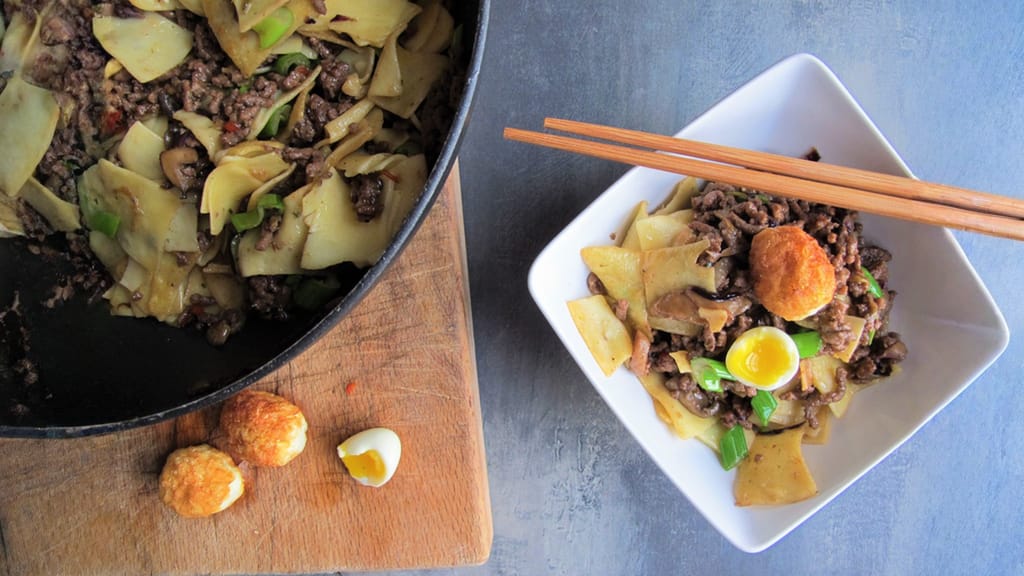
Asian noodle stir-fry with meat and crispy quail eggs
Homemade Chinese Stir-Fry: How to Marinate the Meat, Thicken the Sauce with Starch and Season It
Updated Nov 17, 2026
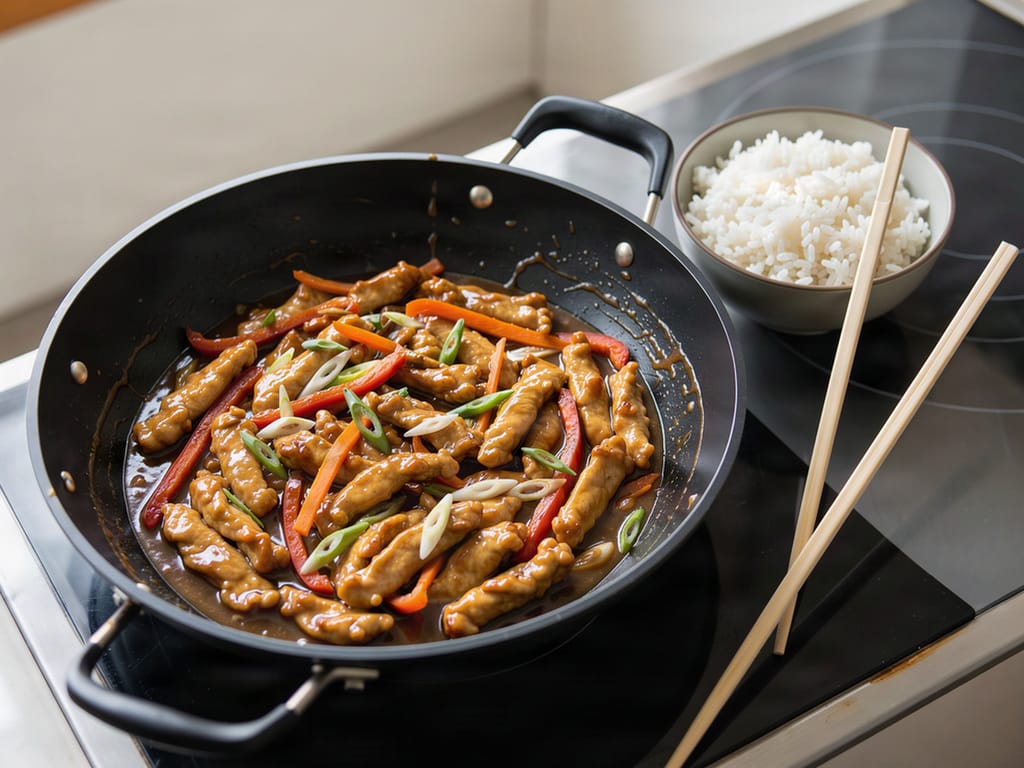
A good homemade Chinese-style stir-fry (Czech čína) rests on three things: you marinate the meat in soy sauce with potato starch (solamyl), you thicken the sauce with starch mixed in water only at the end and let it boil briefly, and you season it at roughly 3 parts salty, 1 part sweet and 1 part sour. For 500 g of meat, you need 1 tablespoon of potato starch in the marinade and another tablespoon for every 250 ml of sauce. Below you'll find why it works, what to do without potato starch, and how to rescue a stir-fry that's too salty, too sweet or too watery.
A stir-fry goes in this order: slice → marinate → sear the meat → stir-fry the vegetables → add the sauce and thicken. The whole cooking time in the pan is 10 minutes, so get everything ready ahead.
Slice the meat into strips about 5 mm thick, against the grain. Cut against the grain, chicken breast, pork neck and pork shoulder all stay tender.
Marinate the meat in soy sauce with potato starch (solamyl) and oil for 15–30 minutes (in the fridge).
Sear the meat in a hot pan or wok in smaller batches, 2–3 minutes each, and set it aside.
Stir-fry the vegetables – hard ones first (carrot, onion, bell pepper), then soft ones (zucchini, leek, sprouts). Add the garlic and ginger for the last 30 seconds only, or they turn bitter.
Return the meat, add the sauce and thicken with starch mixed in water. Once the sauce turns translucent and glossy, it's done.
The most common mistake is an overcrowded pan. The meat then doesn't fry but stews in its own juices, releases water and turns gray. Fry in two or three batches, even if it takes a few minutes longer.
Seasonal baking plans, tested recipes and kitchen tricks that save you time. Unsubscribe in one click.
For 500 g of chicken or pork, use 2 tablespoons of soy sauce, 1 tablespoon of potato starch and 1 tablespoon of oil, mix by hand and leave in the fridge for 15–30 minutes. This is the whole secret to the tender, juicy meat you get at a bistro.
Why it works: the soy sauce seasons the meat and flavors it from the inside, the starch forms a thin coating around each strip that traps the juices during frying, and the oil keeps the strips from sticking together in the pan. In English this is called velveting, in Chinese 上浆 (shàng jiāng).
Chicken breast is lean and dries out easily, so marinating helps it the most. You can add 1 egg white – the coating will be even more delicate.
Boneless chicken thighs are juicier on their own and can handle longer frying.
Pork neck or shoulder can take a stronger marinade: add a teaspoon of sugar and a little grated ginger.
Optional: a tablespoon of rice wine or dry sherry, a crushed garlic clove, a pinch of ground pepper.
Don't dust the meat with dry potato starch. It should be only lightly coated and glossy, not wrapped in batter as for deep-frying. If you want crunchy battered pieces, that's a different dish – see Asian chicken in spicy batter.
15–30 minutes is enough for both flavor and texture; marinating longer doesn't visibly improve the result. Soy sauce is salty and after a few hours it starts drawing water out of the meat, so strips marinated for a long time tend to be too salty.
If you want to prepare the meat ahead, you can – but always in the fridge, never at room temperature. According to USDA FSIS (the US food safety agency), chicken can stay marinated in the fridge for 2 days at most. For a stir-fry, though, don't wait that long: after a day or more in a salty marinade, the meat tends to turn mushy and mealy. A sensible plan is to marinate it in the evening and cook it the next day. In that case, put only half the soy sauce in the marinade and add the rest to the sauce.
Stir 1 tablespoon of potato starch (about 10 g) into 2 tablespoons of cold water and pour it into the boiling sauce. This amount thickens roughly 250 ml of liquid. Then stir and let the sauce bubble for 30–60 seconds until it turns translucent and glossy.
What matters:
Always mix it in cold water. Dry starch tipped into hot sauce clumps immediately into lumps you can't stir out.
Add it at the end, to sauce that is already boiling. Starch doesn't thicken in a cool sauce, and you'll be tempted to keep adding spoonful after spoonful.
Boil it briefly, but properly. A sauce with starch has to come to a boil, or it stays cloudy, milky and with a floury aftertaste. At the same time, don't boil it long: potato starch thickens very quickly, but prolonged boiling and vigorous stirring break the structure down again and the sauce thins out.
Stir the starch slurry again right before pouring. Within a minute it settles on the bottom of the cup and you pour in just water.
Add it gradually. Pour in two thirds, let it come to a boil, and only then decide whether you want the rest. The sauce thickens a little more once it's off the heat.
A stir-fry sauce should be thick enough to coat the meat and vegetables in a thin glossy layer without running across the plate. If you want some for the rice as well, plan for more liquid (350–400 ml) and proportionally more starch.
Without potato starch, the best option is cornstarch in the same ratio (1 tablespoon per 250 ml). Tapioca starch or arrowroot also work, and in a pinch all-purpose (plain) flour.
Cornstarch (Maizena): thickens a little more slowly than potato starch and needs about a minute of boiling. The result is firmer and more matte.
Tapioca starch: very glossy and slightly elastic, typical of Asian bistros. Same ratio as potato starch.
All-purpose flour: use double (2 tablespoons per 250 ml), stir it into cold water and cook for at least 2–3 minutes so the floury taste disappears. The sauce will be cloudier and matte.
No starch at all: reduce a sauce with honey or sugar over high heat for 2–3 minutes until it thickens into a syrup. A spoonful of hoisin or oyster sauce, which are thick on their own, also works well.
For more on thickening without flour (starches, reduction, vegetables), see the article how to thicken a sauce without flour. For a stir-fry, though, there's one extra rule: always thicken in the last seconds, when everything is already in the pan.
The base of a stir-fry sauce is 3 parts salty : 1 part sweet : 1 part sour. For 2–3 servings that means:
3 tablespoons of soy sauce (salty)
1 tablespoon of sugar or honey (sweet)
1 tablespoon of rice or apple cider vinegar (sour)
150 ml of water or stock
1 tablespoon of potato starch to thicken
Add an aromatic base: 2 garlic cloves, a thumb-sized piece of ginger and chili to taste. The Czech bistro version of čína often includes a tablespoon of ketchup too – it adds a sweet-and-sour flavor and red color, and the sauce comes out thicker.
How to season a stir-fry depending on what it's missing:
It's bland: it lacks acidity, not salt. Add a teaspoon of vinegar or lime juice, then taste again.
It's salty but flat: add a teaspoon of sugar – sweetness rounds out the soy sauce.
It lacks depth: a spoonful of oyster or hoisin sauce, or light miso paste.
It lacks aroma: a few drops of toasted sesame oil after taking it off the heat, then sprinkle with scallions and toasted sesame seeds.
It's too hot: add liquid without chili, a teaspoon of sugar and a little something sour, or more vegetables and plain rice on the side.
Always season before thickening. In a thick sauce the flavor spreads less easily, and every extra spoonful of soy sauce just dilutes it needlessly.
You fix an oversalted stir-fry by diluting it, an oversweet one with something sour, and a watery one with quick reduction or starch:
Too salty: dilute the sauce with 50–100 ml of water or unsalted stock, add a teaspoon of sugar and a few drops of vinegar, and thicken it briefly again. A handful of extra vegetables or unsalted rice helps too. Don't add any more soy sauce.
Too sweet: balance it with something sour and salty – a teaspoon of vinegar or lime juice and a few drops of soy sauce. A pinch of chili or freshly ground pepper also tones down the sweetness.
Watery: take the meat and vegetables out so they don't overcook, and reduce the sauce over high heat for 1–2 minutes. If it still runs, add another teaspoon of starch mixed in water and let it come to a boil. Next time, fry in smaller batches and don't salt the vegetables in advance.
The method in this article is best tried on an Asian meat skillet – the same principle of seared meat and vegetables in a glossy sauce. Instead of plain rice, you can make fried rice following the spicy wings recipe. And if you're looking for what else to cook on a weekday, you'll find inspiration in quick everyday cooking ideas.
Asian noodle stir-fry with meat and crispy quail eggs
Asian meat skillet with crispy quail eggs
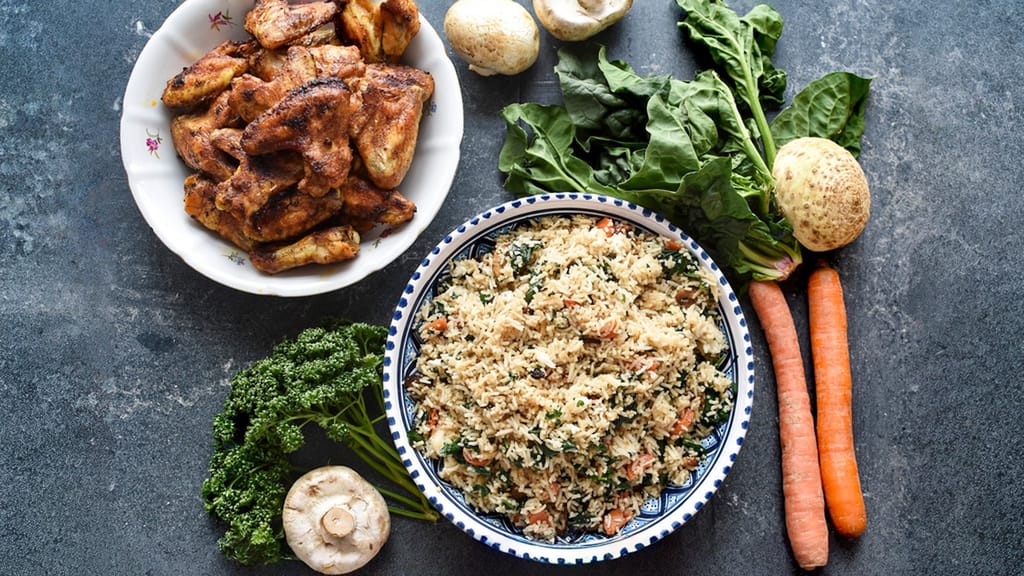
Lightly spicy wings with perfect fried rice
Mildly spicy wings and fried rice to go with the Asian skillet
Yes, you can make a stir-fry in a regular pan. Just take the largest heavy-bottomed pan you have and get it properly hot. A pan has less hot surface than a wok, so fry the meat in even smaller batches and add the vegetables gradually so they don't steam. Don't heat a nonstick pan empty on maximum – cast iron or steel can take more.
You can mix the stir-fry sauce ahead – soy sauce, sugar or honey, vinegar and water or stock – and keep it in a closed jar in the fridge. Don't add the starch: stir it into cold water separately just before cooking, because it settles on the bottom and the sauce would then thicken unevenly. Add the garlic and ginger straight to the pan; freshly fried, they smell better.
According to USDA FSIS, cooked stir-fry keeps 3–4 days in the fridge and shouldn't sit at room temperature for more than 2 hours. Reheat it in a pan with a spoonful of water until the sauce bubbles and the meat is hot all the way through (74°C / 165°F). Don't boil it for long, though – a sauce thickened with potato starch thins out with prolonged boiling.
The closest substitute for soy sauce in a stir-fry is tamari, a Japanese soy sauce, in the same amount. Coconut aminos are sweeter and less salty, so use more of them and cut back on the sugar; in a pinch, diluted fish sauce works, but only a teaspoon per serving.
One recipe worth heating the oven for, one tip, and one deal from the shop. Nothing else.