- Season
- Available all year; it is a shelf-stable dry ingredient.
- Price
- Low
Calories and nutrition
per 100 g
337 kcal
Calories
0 g
Protein
84.2 g
Carbs
0 g
Fat
Potato Starch
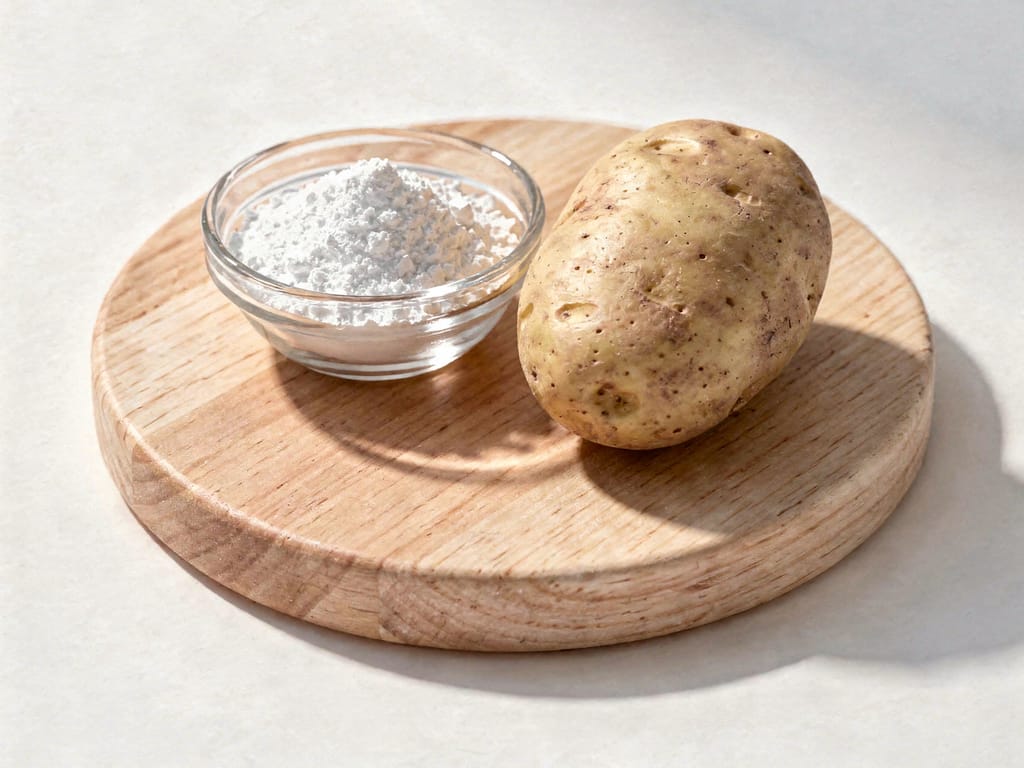
Potato starch is a fine white powder of pure starch from potatoes, sold in Czechia for example as Solamyl. It thickens more strongly than cornstarch, 10–15 g is enough for 500 ml of sauce, and it gives a clear, glossy result but does not survive long boiling.
per 100 g
337 kcal
Calories
0 g
Protein
84.2 g
Carbs
0 g
Fat
Keep it dry and dark in a well-closed bag or container, away from strong-smelling foods. Unopened it keeps until the best-before date, opened, in a closed container, also until the best-before date. Throw it out if it is damp, musty or lumpy.
Don't refrigerate it. It doesn't need it and could absorb moisture in a container that isn't airtight.
Freezing makes no sense. Temperature changes can cause condensation.
Look for potato starch (bramborový škrob) on the pack, with nothing else on the ingredient list. It comes in 200 g bags next to cornstarch, so don't mix them up. For coeliacs, buy packs labelled gluten-free. It should be snow-white, dry and free-flowing, with no lumps or off smell.
Cornstarch: 15–20 g per 500 ml of sauce instead of 10–15 g potato starch. It survives a short boil and reheating, but the sauce will be slightly matt.
Plain flour, about 25–30 g per 500 ml as a roux or slurry. The sauce must simmer for at least 10 minutes and will be cloudier and contain gluten.
Always stir the starch into cold water first, about a tablespoon per 50 ml, then pour it into the hot sauce, taken off a hard boil, while stirring. Don't add it dry to something hot, it will form lumps. After that just heat the sauce through; long boiling thins it again.
When you squeeze grated potatoes for potato pancakes, let the squeezed-out water stand for a while. Pour the water off carefully and return the white starch from the bottom to the batter; it helps it hold together.
Roughly what a spoon or cup weighs, filled the way you usually would.
3 g
1 teaspoon
11 g
1 tablespoon
Potato starch thickens sauces, fruit juices and sweet-and-sour sauces where the colour should show through. In Linzer and gluten-free cookies it replaces part of the flour and makes the dough more tender. In frying batter it adds crispness.

Hazelnut linzer cookies with blackcurrant jam
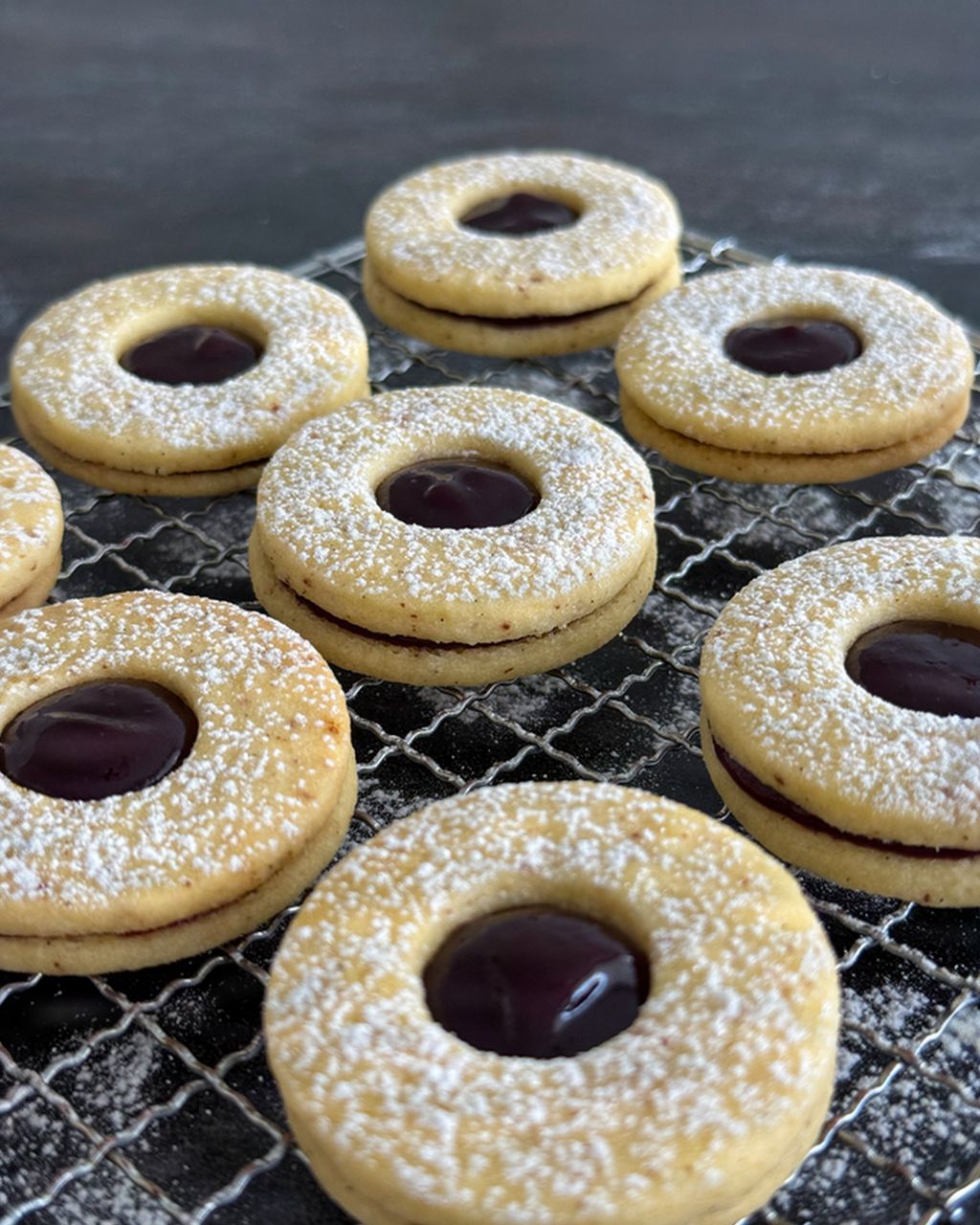
Brown butter linzer cookies with tonka bean and blackcurrant
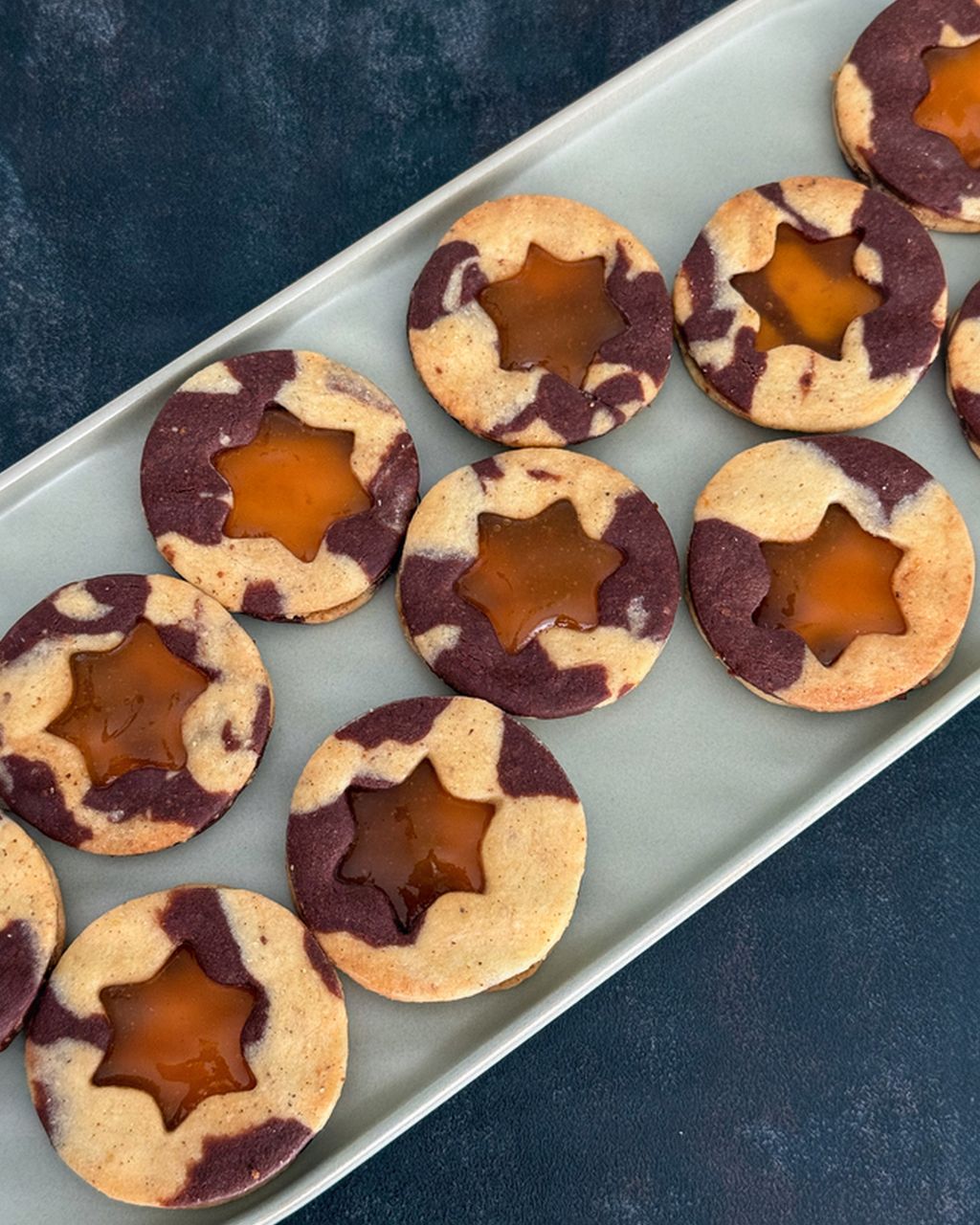
Marbled linzer cookies with vanilla and cocoa dough
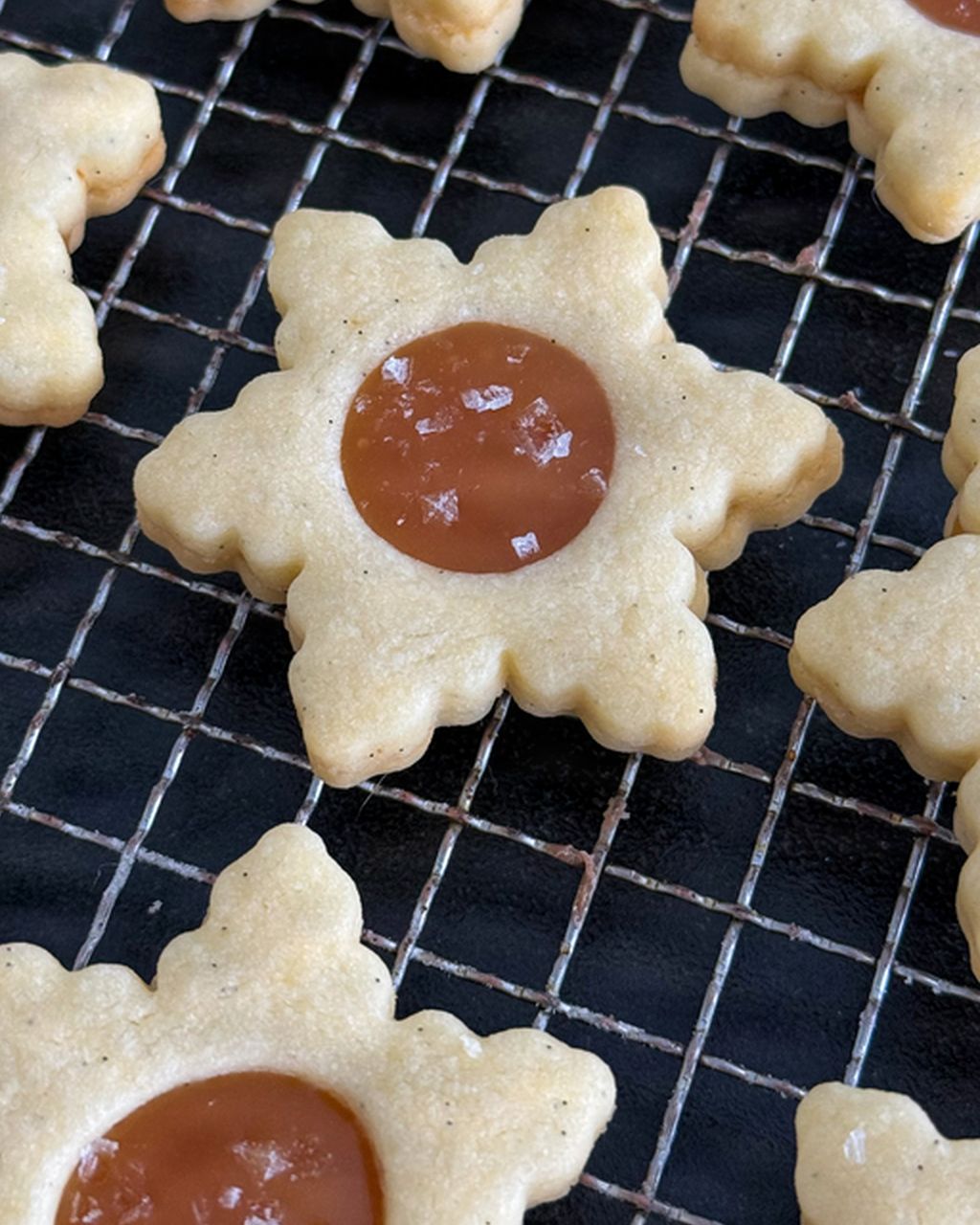
Linzer cookies with salted caramel and flaky sea salt

Classic linzer cookies with redcurrant jam
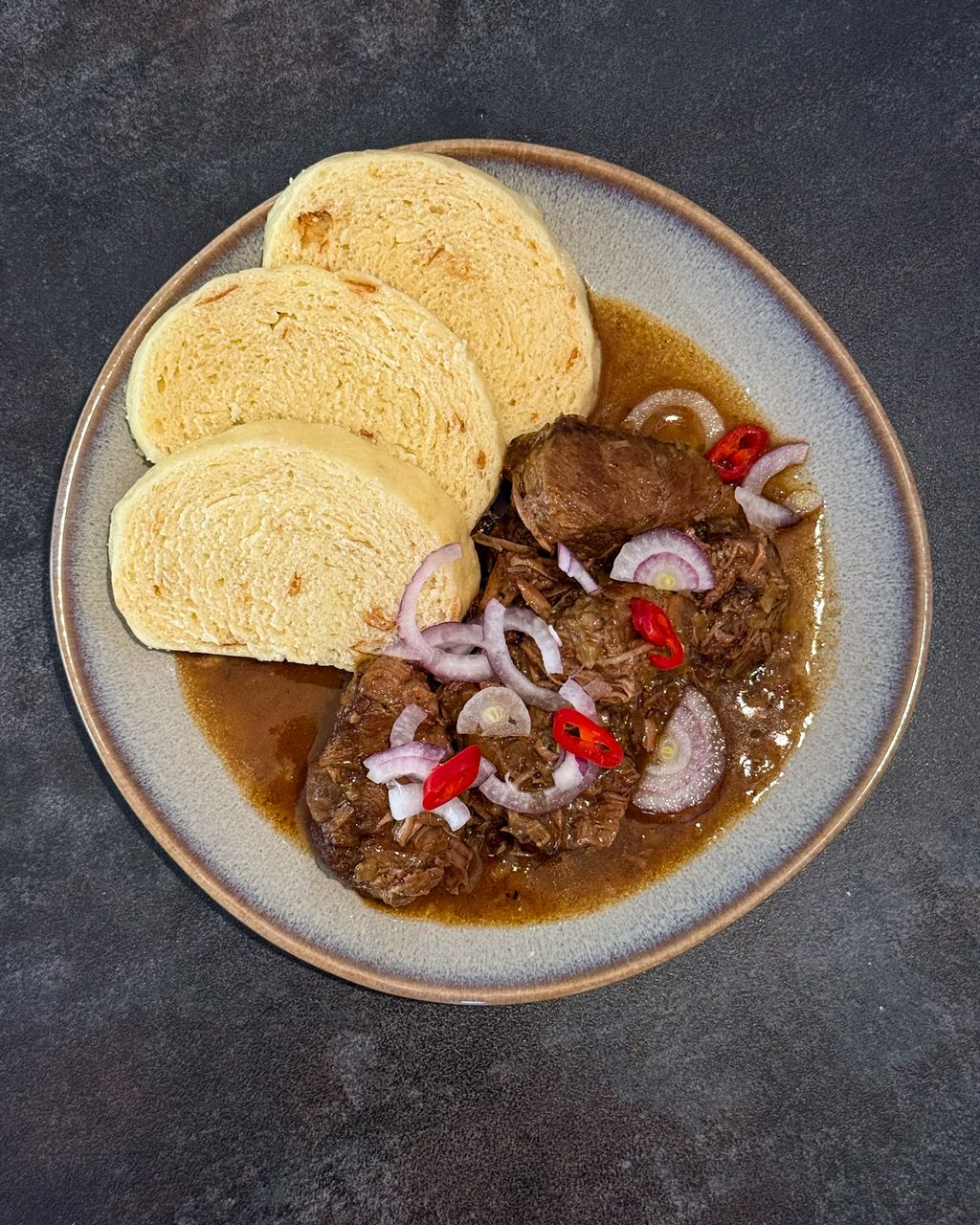
Classic czech beef goulash with chilli and bread dumplings
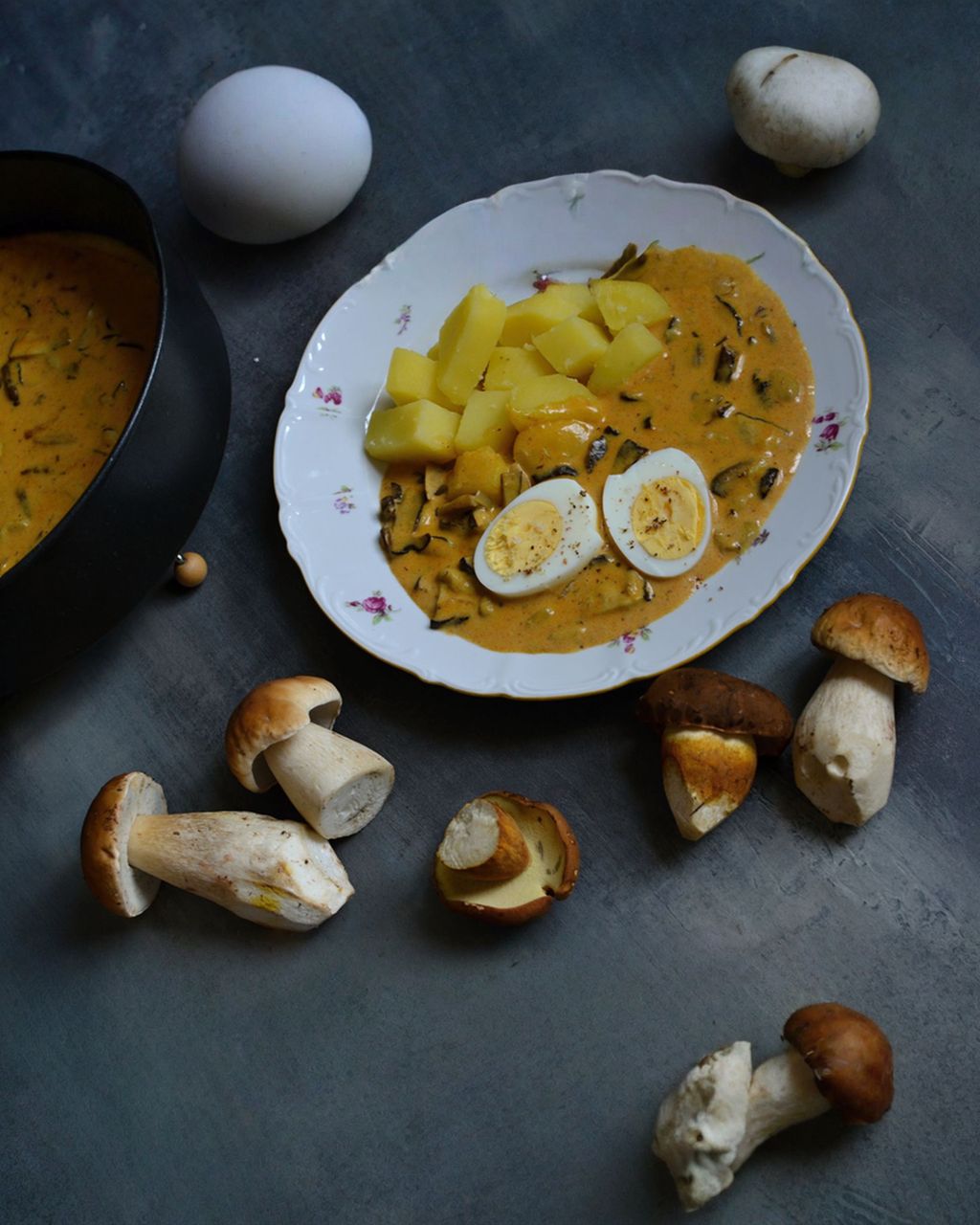
Mushroom sauce with cream
Fluffy strawberry-rhubarb soufflé
The ingredient list on the pack says only potato starch, with no protein or fat. Unlike flour it forms no gluten, so in the kitchen it is mainly a thickener and in baking it makes dough more tender. In Czechia Dr. Oetker sells it as Solamyl and Amylon as škrob bramborový. Cornstarch is a different product with a different dose and different tolerance to boiling.
It has no taste or smell. Between your fingers it feels silky and squeaks. In a sauce it gives a smooth, glossy, almost transparent body; in baking, tenderness.
3 min read
Potato starch is starch washed out of potatoes. Czech packs call it bramborový škrob, and Dr. Oetker sells it as Solamyl. So Solamyl is not cornstarch; the same brand sells cornstarch as Gustin. How the two differ is on the cornstarch page.
For 500 ml of medium-thick sauce, 10–15 g of potato starch is enough, about 1–1.5 tablespoons, roughly two thirds of the cornstarch dose. For a litre, allow 20–30 g.
Potato starch swells from around 58–65 °C, well before boiling, and longer boiling or vigorous stirring breaks it down, so the sauce thins again. Take the sauce off a hard boil to 70–80 °C, when the surface barely trembles, pour in the starch stirred into cold water and stir for 20–30 seconds. Doses for every thickener are in how to thicken a sauce without flour, and a worked example is this mushroom sauce with cream.
Potato starch thickens more strongly and gives a clear, glossy result, which suits fruit glazes and sweet-and-sour sauces. It does not tolerate boiling or reheating. Cornstarch needs a short boil, is more robust and slightly matt, so it belongs in sauces you will reheat and in puddings. For a sauce that will sit on the stove for a long time, use cornstarch.
Starch forms no gluten, so when it replaces part of the flour the dough becomes more tender. For example, these classic Linzer cookies with redcurrant jam use 270 g plain flour and 30 g potato starch in the dough, and the top halves are dusted with icing sugar mixed with starch, which binds moisture.
In gluten-free cookies potato starch holds moisture, so they stay soft longer; it suits gingerbread in particular. Starches usually make up 20–40% of a gluten-free blend. Ratios are in what to use instead of flour in gluten-free Christmas cookies.
Potato starch has about 337 kcal and 84.2 g carbohydrates per 100 g, with only traces of protein and fat. Potato starch packs in the shops list 319 kcal and 79 g carbohydrates per 100 g.
Unopened it keeps until the best-before date; opened, in a dry place and a closed container, also until the best-before date. It does not belong in the fridge or freezer, where it could get damp. Throw it out if it is damp, musty or lumpy.
A teaspoon of potato starch weighs about 3 g and a tablespoon about 11 g. A level spoon is lighter and a heaped one heavier, so weigh it for thickening.
Potatoes contain no gluten, so pure potato starch is naturally gluten-free. For coeliacs, though, only starch labelled gluten-free is safe; under EU Regulation 828/2014 it may contain at most 20 mg gluten per kilogram. Potatoes are not among the allergens that must be emphasised on the label.