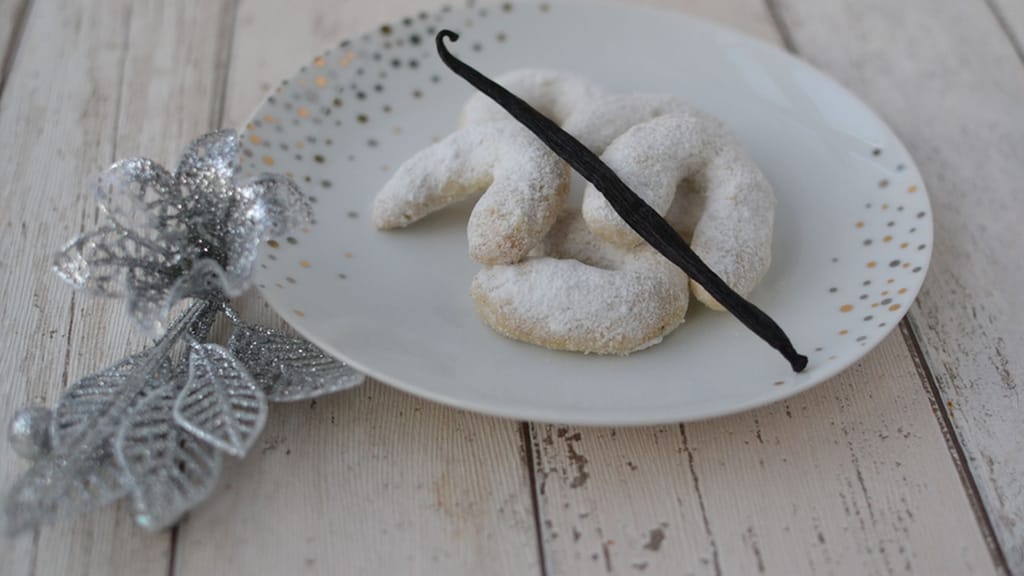
The best christmas cookies? vanilla crescents, of course!
Why Vanilla Crescent Cookies Break When Rolling in Sugar (And How to Fix It)
Updated Oct 4, 2026
Why do vanilla crescent cookies break when you roll them in sugar? Most often it's because you're coating them while they're too hot: the butter inside is still liquid and the dough has no structure yet. The second culprit is dough that was already crumbling during shaping, and the third is coarsely ground nuts. We go through all five causes below – once you know which mistake you're making, you can fix it with your very next batch.
Vanilla crescents break because they're an extremely buttery, delicate dough, usually with no eggs and no baking powder – the only thing holding them together is firm fat and a bit of gluten from the flour. While the butter is still warm, the cookie is as fragile as sand.
There are five causes, starting with the most common:
You're rolling them in sugar straight from the oven – the butter is still liquid and the structure hasn't set yet.
The dough was already crumbling when you shaped it – the cookie already has hidden cracks that simply open up during coating.
Coarsely ground nuts – every larger piece becomes a weak point where the cookie snaps.
Tips rolled too thin – they bake faster, dry out, and break off first.
Oven too hot or baking too long – the surface dries and turns brittle before the centre is properly baked.
We break down each of these below. For the basic method, see our recipe for vanilla crescent cookies, the best Christmas cookie.
The best christmas cookies? vanilla crescents, of course!
Recipe for vanilla crescent cookies that won't fall apart
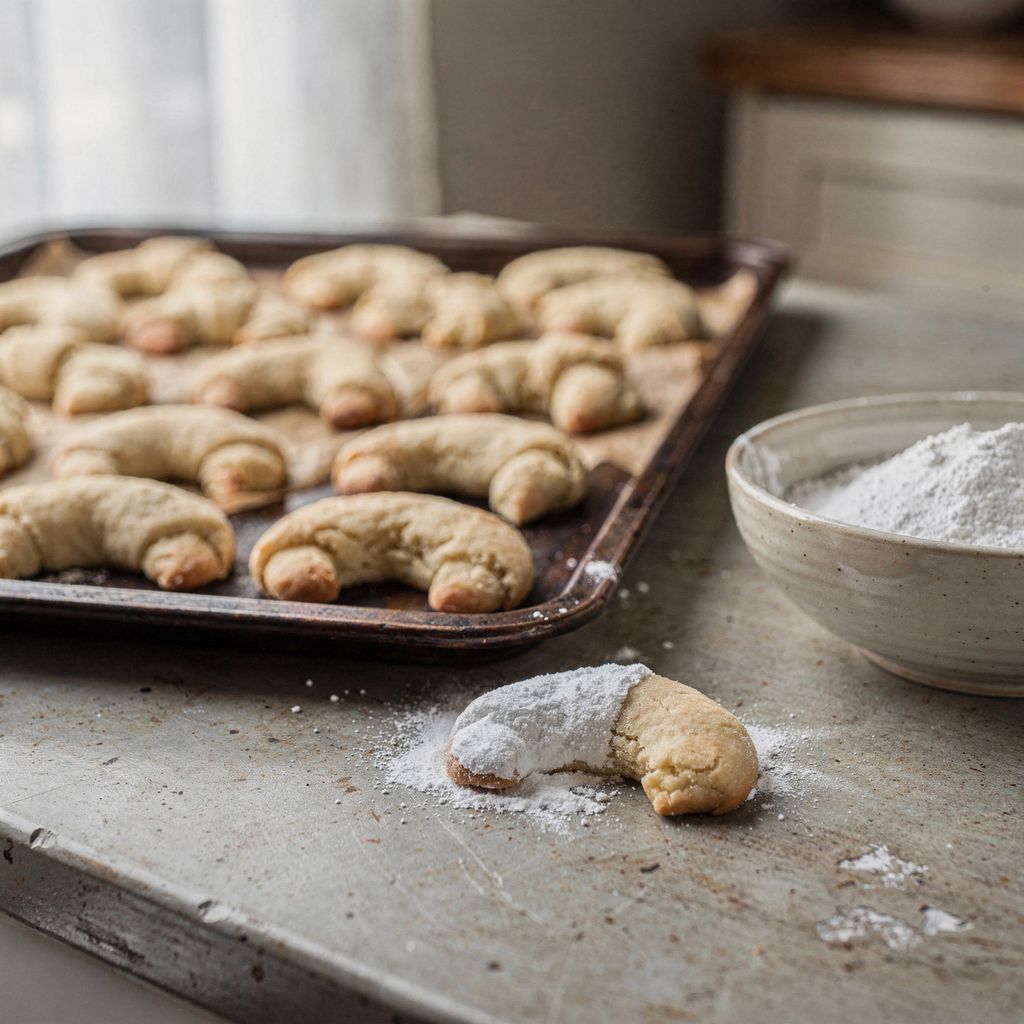
Roll vanilla crescents in sugar while warm, not hot – about 2–5 minutes after they come out of the oven. The cookie should feel warm to the touch but not hot, and when you lift it carefully, it shouldn't bend.
Straight from the oven: the butter is still liquid and the cookie falls apart in your fingers. On top of that, the sugar soaks up the melted butter and moisture from the warm dough, turning into a sticky, see-through layer.
After 2–5 minutes on the tray: the surface has firmed up a little but is still warm, so the sugar sticks lightly. This is the ideal window.
Fully cooled: the cookies are firmer, but the sugar barely sticks at all – it just falls off.
The most reliable method is to coat them twice: the first time lightly while still warm (the sugar clings to the residual fat), the second time once fully cooled – this time the sugar sticks because it has that first warm layer to grab onto. The second coat stays snow-white and dry.
How to coat them without breaking them:
Don't let them drop from the tray into the bowl. Move them with a flat spatula straight into the sugar.
Sprinkle the sugar on with a spoon or sieve instead of trying to roll the cookies around in the bowl.
Work in small batches and never stack them while they're still warm.
Vanilla crescent dough crumbles when it's too cold, under-mixed, has too much flour relative to the butter, or contains coarsely ground nuts. Cracks that form in the raw dough won't heal in the oven, so a cookie like that will break even after baking. There are four causes:
The dough is too cold. Straight from the fridge, the butter is hard and the dough breaks. Let it sit at room temperature for 10–15 minutes, or just take a small piece at a time and warm it in your hands until it's as pliable as modelling clay.
The dough isn't properly worked. Butter, flour, nuts and sugar need to come together into a smooth mass. If you still see dry patches of flour, work it a little more by hand – but only until it comes together, since over-kneading will make it greasy.
The fat-to-flour ratio is off. Too much flour (or too many dry nuts) gives a crumbly dough; too much butter and the cookies will spread in the oven. Stick to a tried-and-tested recipe and weigh ingredients in grams, not cups.
The nuts are too coarsely ground. Larger pieces break up the dough's structure, and that's exactly where the cookie will snap. Grind the nuts or almonds finely, almost to a flour-like consistency.
Adding one egg yolk can help (if your recipe doesn't already call for one) – it acts as a binder and holds the dough together. The cookies will be a touch less melt-in-the-mouth, but much sturdier.
The tips of vanilla crescents break because they're thinner than the middle: they bake faster in the oven, dry out, and fall off at the first touch.
Roll the log so it's the same thickness along its whole length, with just the ends tapered slightly – not down to a sharp point.
Stick to around 8–10 g per cookie. That way, all the crescents on the tray bake for the same amount of time.
Shape them into a curve on the tray, not in your hand – you won't break a straight log while simply moving it.
If the dough cracks on the outer edge when you bend it, it's too cold. Warm it in your hands.
Bake vanilla crescents at 160–170°C/320–340°F (fan 150–160°C/300–320°F) for about 10–14 minutes, until they're pale and just the tips are starting to turn golden. Vanilla crescents should stay pale overall.
Too hot: the surface bakes and dries out before the centre does, leaving the cookie crisp like a shell on the outside and soft inside. This type breaks the most easily.
Too long: the whole dough dries out and turns crumbly. Dark tips are a clear sign of this.
Too short: the centre stays raw and the cookie falls apart even once cooled.
Every oven bakes differently, so treat the first tray as a test batch. We go into why Christmas cookies in general need a lower temperature in the article why Christmas cookies are baked at a lower temperature, and you'll find a temperature overview for other types in what temperature to bake Christmas cookies at.
It also matters where the crescents cool: leave them on the tray for a few minutes so they firm up before you move them. Only transfer them to a wire rack after coating them in sugar.
Crumble broken vanilla crescents into a cream in a jar, use them as a base for a no-bake dessert, or sprinkle them over ice cream. They taste exactly the same as whole ones, so don't throw them away:
Crumble them into a cream cheese or mascarpone dessert for a quick dessert in a jar.
Use them as a base for a no-bake tart or energy balls – with a bit of butter they hold together well.
Sprinkle them over ice cream or your morning porridge.
For more ideas on what to do with trimmings and crumbs, see the article what to do with leftover bits from baking Christmas cookies.
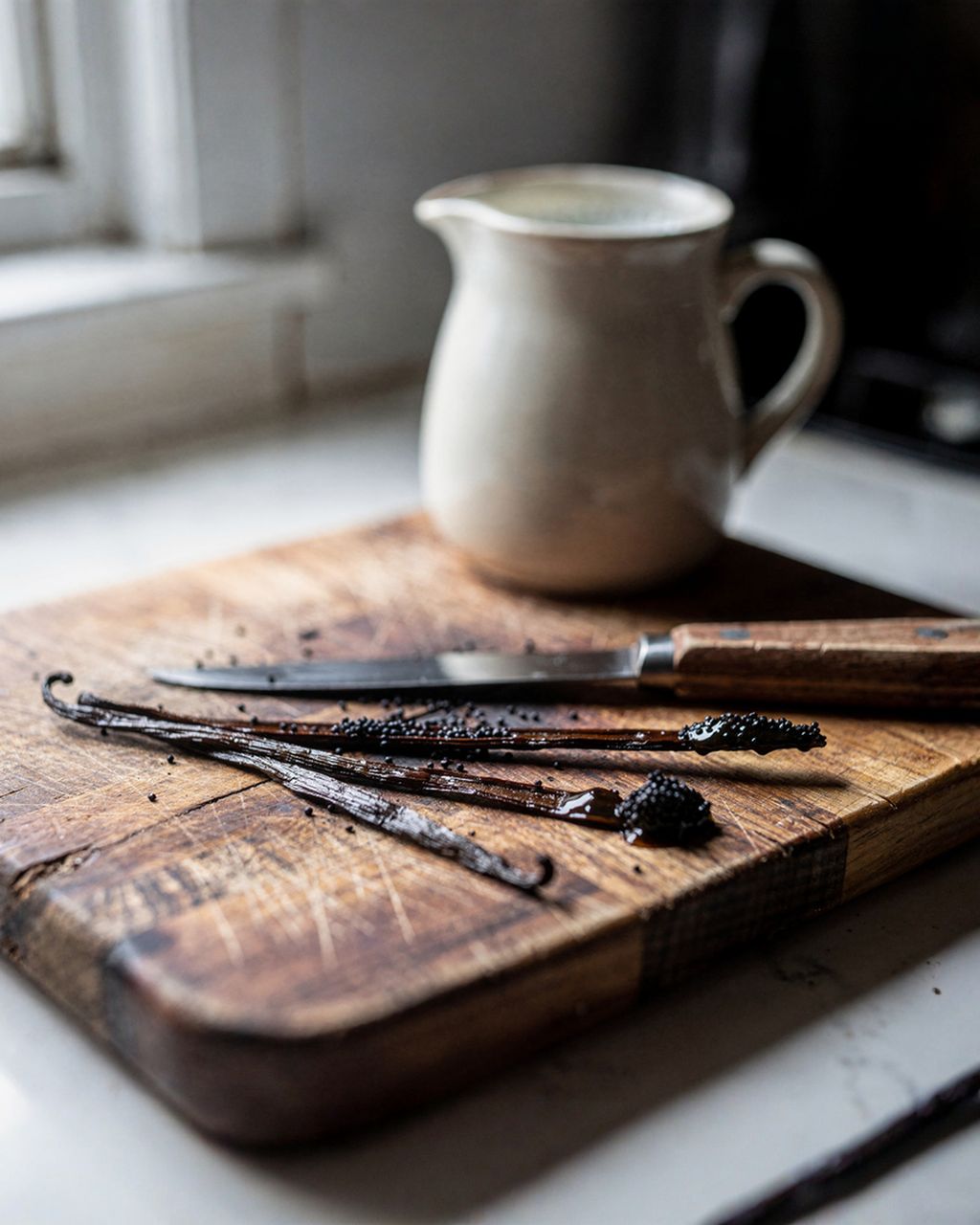
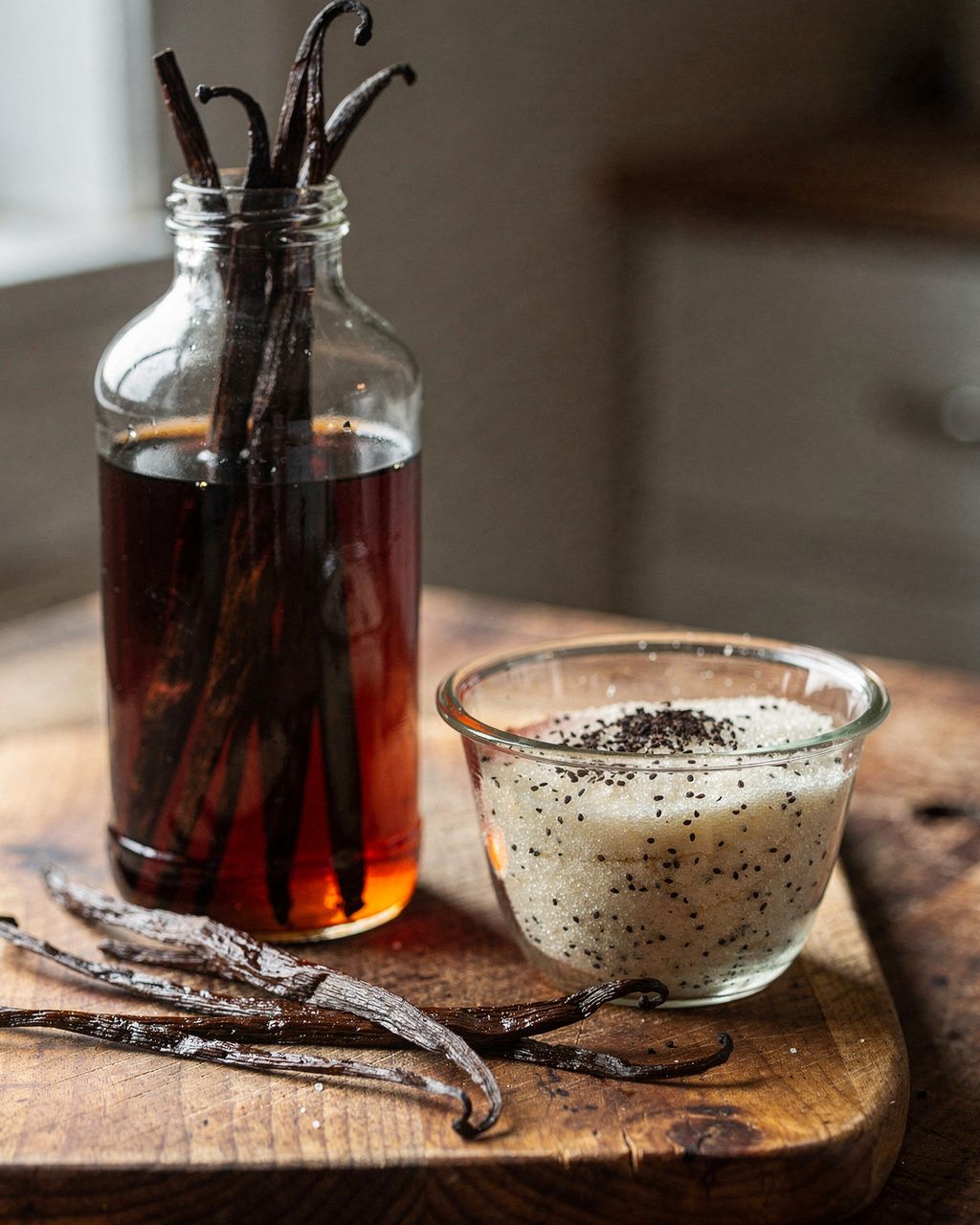
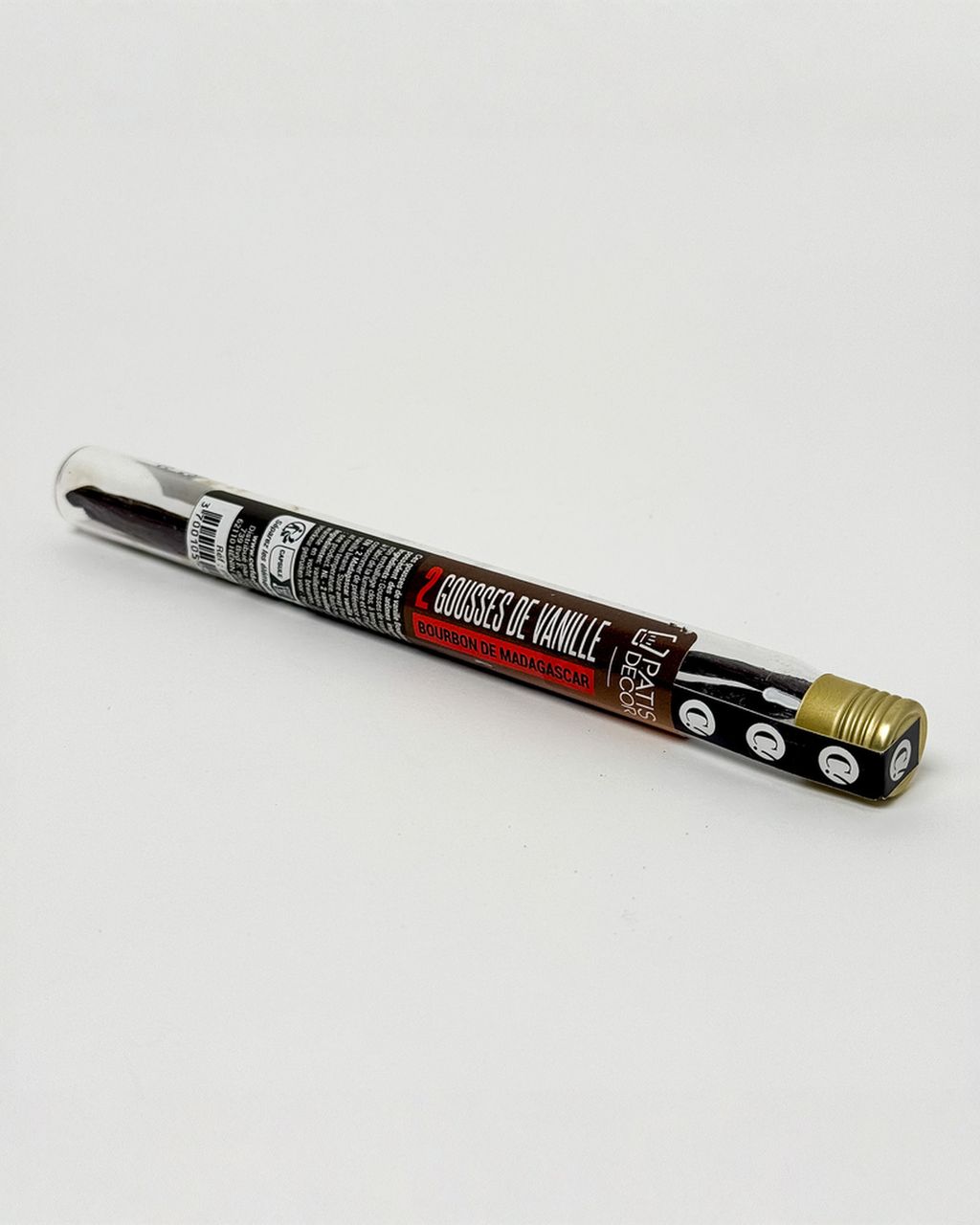
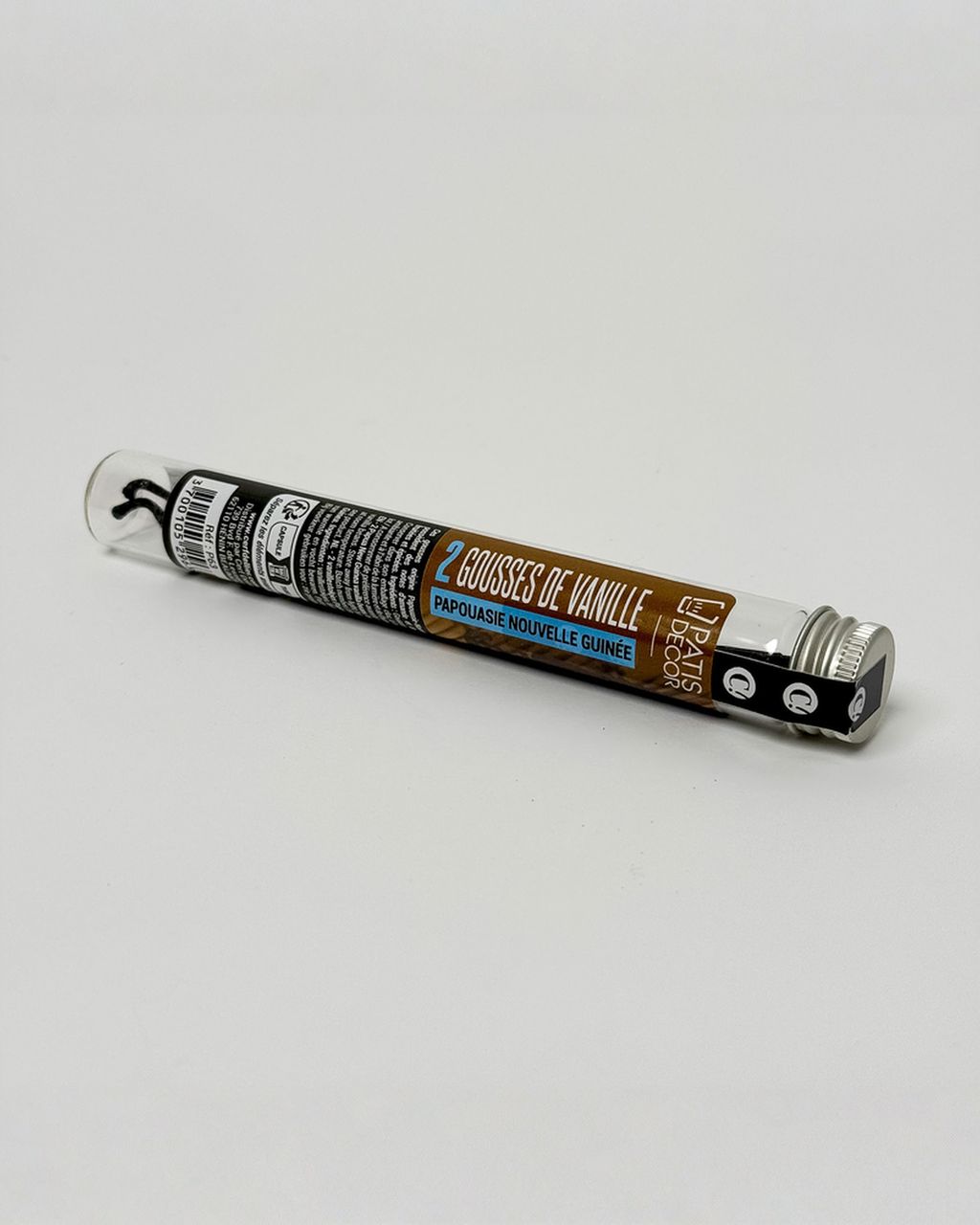
Coat vanilla crescents in icing sugar with the seeds scraped from a real vanilla pod – one pod's worth of seeds per 200 g of sugar. If you also drop the scraped-out pod into the sugar container, the sugar will take on even more flavour within a few days. The coating sugar makes up a big part of the crescents' flavour, so don't skimp here. You'll find vanilla pods, vanilla sugar and other vanilla ingredients on our vanilla for baking page.
We explain why crescents are coated in icing sugar rather than caster sugar in the article icing sugar vs. caster sugar in Christmas baking.
How to make your own stock of vanilla sugar, and what the different types of vanilla pods taste like, we cover in the separate articles below.
Bake vanilla crescents 2–3 weeks before Christmas if you like – stored in a sealed tin in a cool place, they'll keep for several weeks and the flavour will even settle and deepen. They're one of the cookies that's typically baked first.
Container: a tin or other sturdy, well-sealed container, so the crescents don't pick up moisture or odours.
Layers: one or two, separated with baking paper, so the bottom layer doesn't get crushed.
Storage spot: a cool, dry pantry or larder, ideally below 15°C/59°F. Not the fridge – the sugar turns damp in there.
You'll find timings for other types of Christmas cookies in our Christmas baking calendar and in the shelf-life overview by cookie type. We cover storage in detail in the article how to store Christmas cookies, and if you want to bake even earlier, check out how to freeze Christmas cookies and dough.
Once your crescents are done, it's often time for crisp linzer Christmas cookies or soft honey gingerbread – read up on how long linzer cookies keep and what temperature to bake gingerbread at.
You can put vanilla in both the dough and the coating sugar for vanilla crescents, but it has more impact in the sugar, since that's what you taste first. If you only have one pod, put the seeds in the sugar.
Use whichever flour your tried-and-tested recipe calls for – most often it's plain flour. If you swap the flour, the dough may behave differently, so treat the first tray as a test batch.
Vanilla crescents break more because of coarsely ground nuts than because of whether they're made with almonds or walnuts. Almonds give a firmer, drier dough, while walnuts make it richer and slightly more delicate. Whichever you use, grind it finely and discard any coarse pieces.
You can freeze vanilla crescents either baked or as raw dough – freeze baked ones without the sugar coating and coat them only after thawing, otherwise the sugar turns damp. You'll find the full method in the article on how to freeze Christmas cookies and dough.
Vanilla crescents call for butter, ideally with 82% fat. Baking fats and margarines usually have a different fat-to-water ratio, so the dough behaves differently – it tends to be softer and the cookies spread more. And above all, butter gives crescents that distinctive flavour that no substitute can replicate.
One recipe worth heating the oven for, one tip, and one deal from the shop. Nothing else.