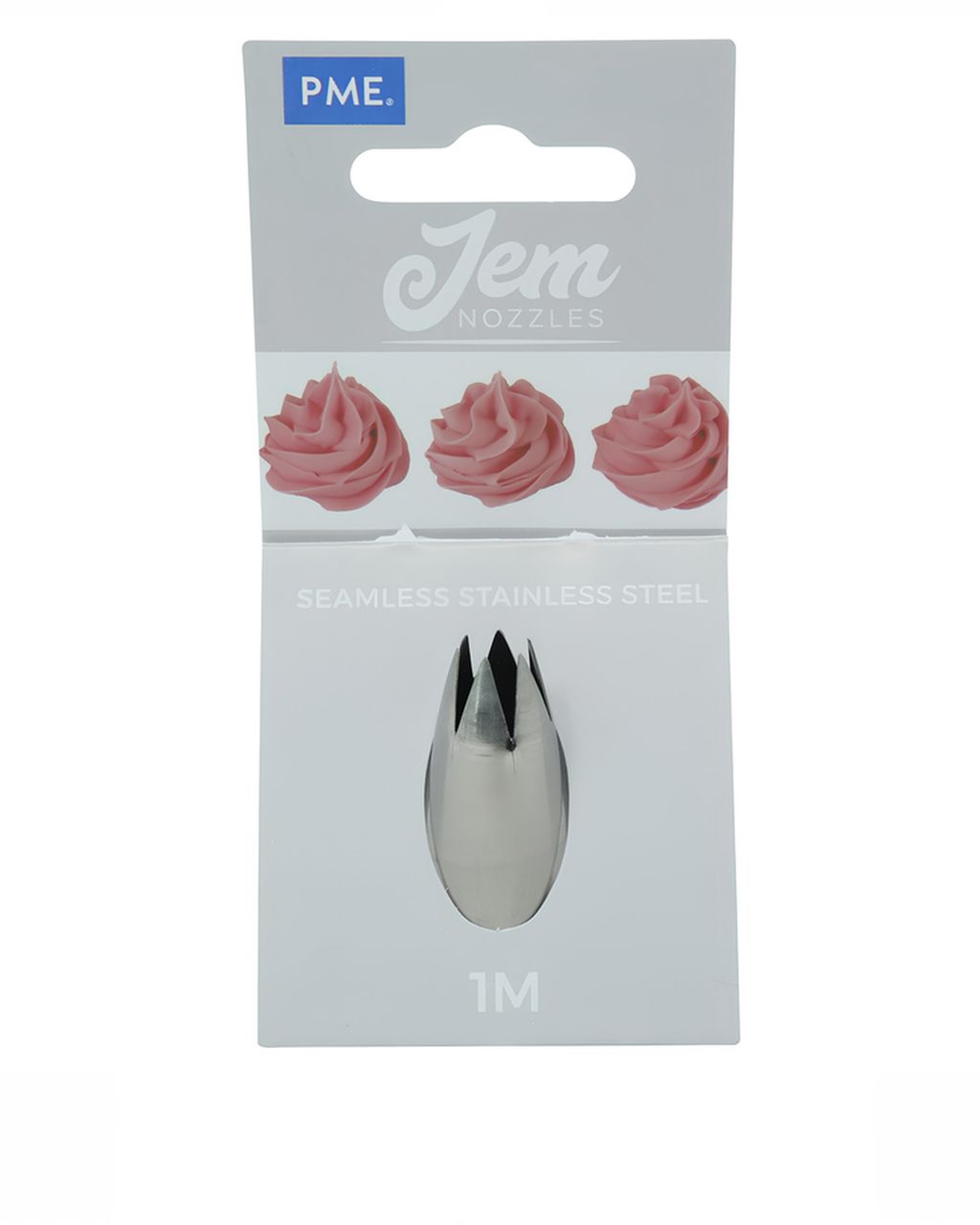
JEM Savoy Piping Tip – Open Star #1 (Small)
Piping Tips: How to Clean, Store and Know When to Replace Them
Updated Oct 15, 2026
Piping tips can last for years if you soak them in warm soapy water right after decorating, brush them out, let them dry completely and store them upright so nothing presses on their teeth. You need to replace them once the teeth are uneven, the opening is misshapen or rust shows up along the seam – you'll see it in every rosette you pipe. Below you'll find a step-by-step method, what to do about the dishwasher, how to store your tips and how to tell which ones are worth keeping in your kit.
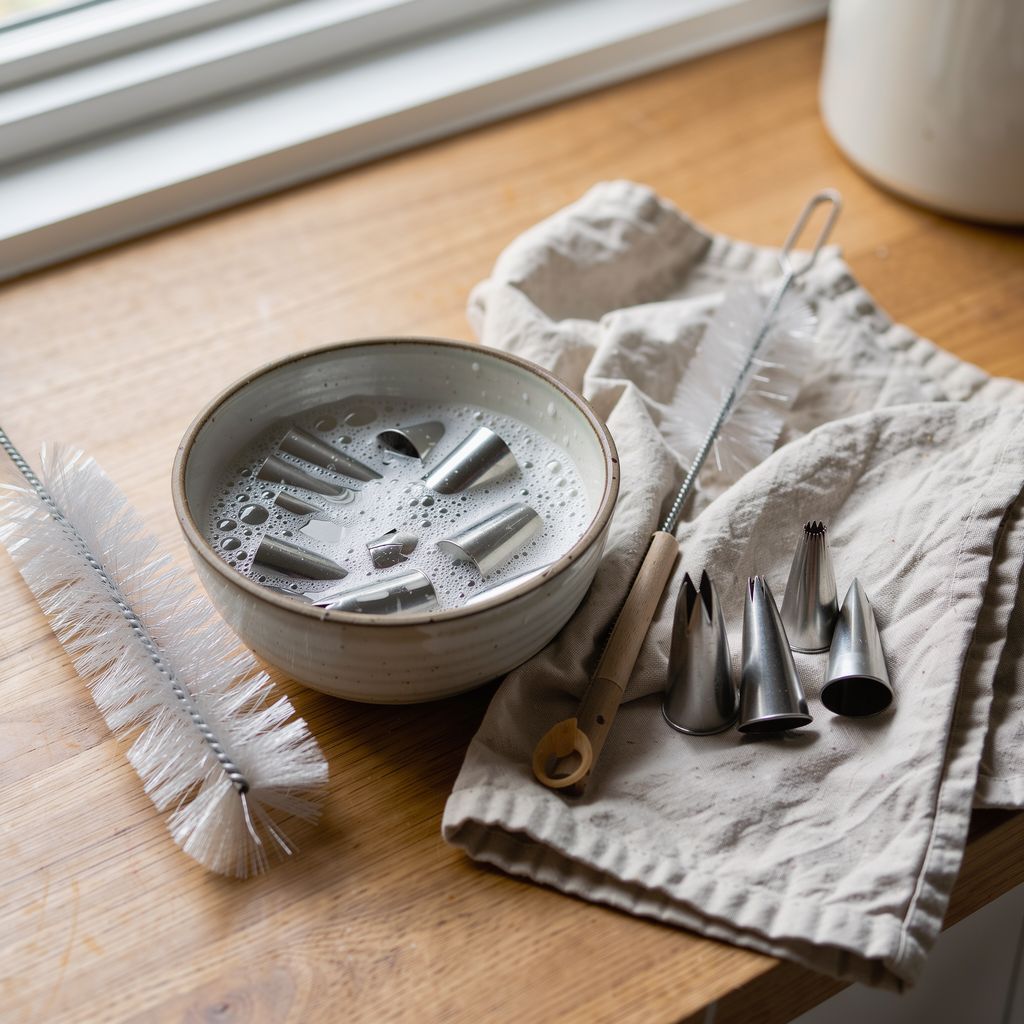
Clean your piping tips right after decorating, in four steps: knock out, soak, brush, dry. The longer frosting sits in a tip, the more work it will be to clean.
Knock out and push through any leftovers. Take the tip out of the piping bag or coupler and push the remaining frosting out with your thumb, from the wide end toward the tip. Never the other way around – that jams frosting between the teeth.
Soak for 10–15 minutes in warm water (about 40–50 °C / 105–120 °F) with a drop of dish soap. The warmth melts butter and the fat in whipped cream, and the water dissolves sugar.
Brush it out from the inside. Run a narrow piping tip or bottle brush through the tip from the wide end out. Clean the teeth of star and petal tips from the outside with a soft toothbrush.
Rinse and dry. Hold the tip up to the light under running water to check that the opening is clear. Then wipe it with a dish towel and leave it to air-dry for at least another hour, tip down, so the water drains out.
Don't use a toothpick, knife or steel wool on the teeth. The thin metal bends easily, and a bent tooth shows up on every decoration.
Dried-on residue will loosen with a longer soak in hot water. Each type of frosting needs a slightly different approach, though:
Buttercream and ganache: water at around 50 °C (120 °F) and dish soap. In cold water the fat sets and stays inside the tip as a greasy film.
Royal icing and sugar glaze: soak the tips right away, even while you're still decorating. Dried royal icing is as hard as cement, but it dissolves in water on its own in 20–30 minutes. Don't scrape it.
Chocolate: warm water first to soften the chocolate, and only then dish soap.
Whipped cream and cream cheese frostings: warm soapy water is enough, but wash them right away because dairy residue starts to smell.
You can spot leftover greasy film inside a tip when water doesn't run over it in a smooth sheet but beads into droplets. If that happens, soak it once more.
Couplers and cloth piping bags need the same care as the tips. Frosting most often gets stuck in the threads of the coupler. Unscrew it and brush both parts separately. Turn a cloth bag inside out, wash it in hot water with dish soap and dry it over a bottle or rolling pin so no moisture stays trapped inside. Don't reuse disposable bags, because you can't wash the greasy film out of them.
Gel food colors will stain plastic couplers and bags, but not stainless steel. If you tint a lot of frostings in deep shades, expect plastic parts to pick up color over time. It doesn't affect how they work. You'll find bags, couplers and spare connectors in the piping bags and tips category.
Seamless stainless steel piping tips usually survive the dishwasher, but hand-washing in warm soapy water is gentler; tips with a seam should not go in the dishwasher. Manufacturers such as JEM and PME recommend washing tips by hand in warm water with dish soap. A dishwasher harms a tip in two ways:
Mechanically. Small tips travel around the dishwasher, knock against the dishes and fall through the rack. A tooth bent by even a fraction of a millimeter will give you a crooked rosette.
Chemically. Dishwasher tablets are strongly alkaline. Tips made of tinned or nickel-plated metal then rust quickly along the seam.
If you do put tips in the dishwasher, shut them in a small-items basket or a mesh laundry bag so they have nowhere to roll. Take them out as soon as the cycle ends and finish drying them. Moisture in a closed dishwasher is worse for tips than the washing itself.
Store piping tips completely dry, upright and separated so nothing presses on their teeth. Tips are most often ruined in the drawer, not while decorating.
A box with compartments or pegs. Each tip has its own spot, standing on its wide end with the point facing up. A plastic organizer for screws works well too.
The original box from the set. If the set came in a case with molded inserts, keep it in there. The insert holds the shape of the teeth better than anything else.
Never loose in a bag or drawer, where tips slide into one another and get squashed under utensils.
No moisture. Only put tips in the box once they're completely dry. If you close it with a damp tip inside, rust will most likely appear along the seam.
Keep large tips (open stars, flower tips) separate from small writing tips. The small ones love to slip inside the big ones and scratch or stretch them from within.
Replace a piping tip when you notice one of these five signs: uneven teeth, a misshapen opening, rust, a crack or burrs. There's a simple test: pipe three rosettes in a row onto paper. If they're all crooked in the same way, the fault is in the tip, not your hand.
Uneven or bent teeth. A star tip no longer has regular ridges, one is shallower or kinked, and the rosette is flat on one side.
A misshapen opening. A round tip pipes an oval or flattened line. With writing tips up to 2 mm, you'll see it right away in pearls that aren't round.
Rust. Brown spots or a coating, most often along the seam or at the edge of the opening. Rust should never get into your frosting.
A crack or a split seam. Frosting then escapes sideways and the tip warps even more.
Burrs and sharp edges on the opening that tear the frosting and leave ragged lines.
Plastic tips go dull over time, pick up scratches and their edges round off. Replace them as soon as the pattern loses its sharp definition.
A slightly bent tooth and surface rust can be fixed. A crack and rust that has pitted the metal cannot.
Bent tooth: from the inside, carefully nudge it back into line with the blunt end of a bamboo skewer or the round handle of a teaspoon. Work slowly, a millimeter at a time – the metal is thin and will snap if you bend it repeatedly.
Squashed round opening: slide the tip onto a round skewer or pencil of the right thickness and gently twist it. This reshapes the opening.
Surface rust: soak the tip in vinegar for 10 minutes or scrub it with a paste of baking soda and water. Then wash it thoroughly and dry it. If rust leaves pits in the metal, throw the tip away. The rust will come back in them.
If the tip doesn't straighten out after repair, even in the three-rosette test, new tips cost less than a ruined cake.
Seamless stainless steel piping tips last the longest. They have no joint where frosting can collect and rust can start, and they hold their shape after years of washing. An overview by material:
Seamless stainless steel – for example JEM or PME tips. They're made from a single piece of metal, so there's no crevice for frosting to hide in. They tolerate hot water, and manufacturers recommend washing them by hand in warm water with dish soap. They cost more, but they last the longest.
Metal with a welded or folded seam – common inexpensive sets, often tinned or nickel-plated. They're fine to start with, but frosting settles into the seam and that's where rust shows up first. Don't put them in the dishwasher.
Plastic – it won't rust and it's cheap, but because of its thicker walls and rounded edges it doesn't produce such sharp patterns and wears down over time. It suits kids or rough decorating, but not fine rosettes.
Many other manufacturers (Wilton, Ateco and others) also make branded stainless steel tips, and they work well. You won't find those here, but the care rules apply equally to all of them. If you're not sure which tip you need for which design, take a look at our guide to piping tips for cakes – which one for what.
For most decorating, a few seamless stainless steel tips that last for years are all you need. It's better to have three good tips than twenty-five that bend the first time you wash them.
JEM Savoy small open star #1M is the basic star tip for rosettes and borders. It's just what you need to pipe a buttercream rosette on a cupcake.
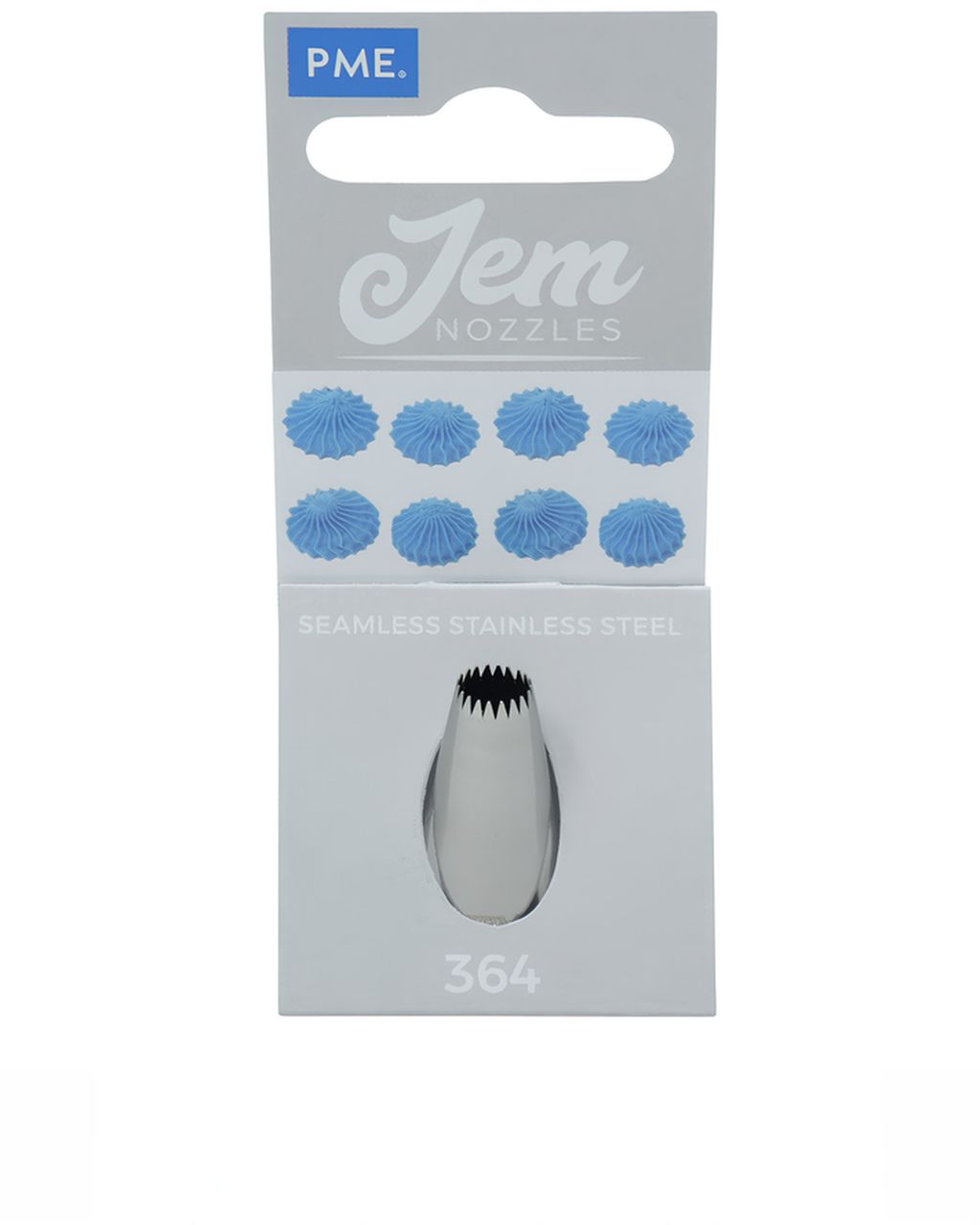
JEM fine-toothed star #364 has denser, finer teeth. On a tip like this a bent tooth shows up first, so store it separately.
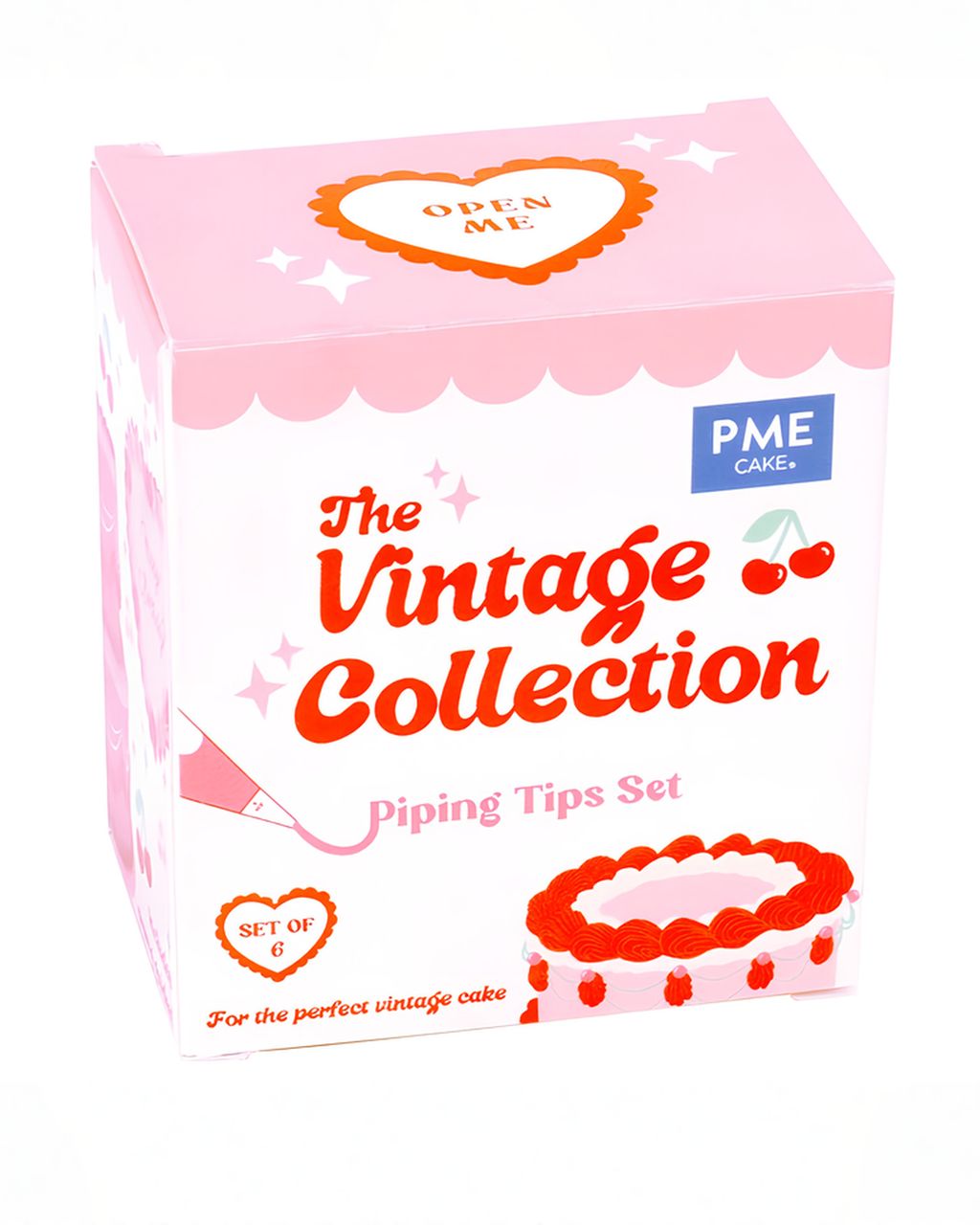
PME Vintage set (6 pcs) includes tips for shells, ruffles, little flowers, hanging swags and writing – everything you need for a vintage (Lambeth) cake. You can use its writing tip for piping a message on a cake with frosting, for example.
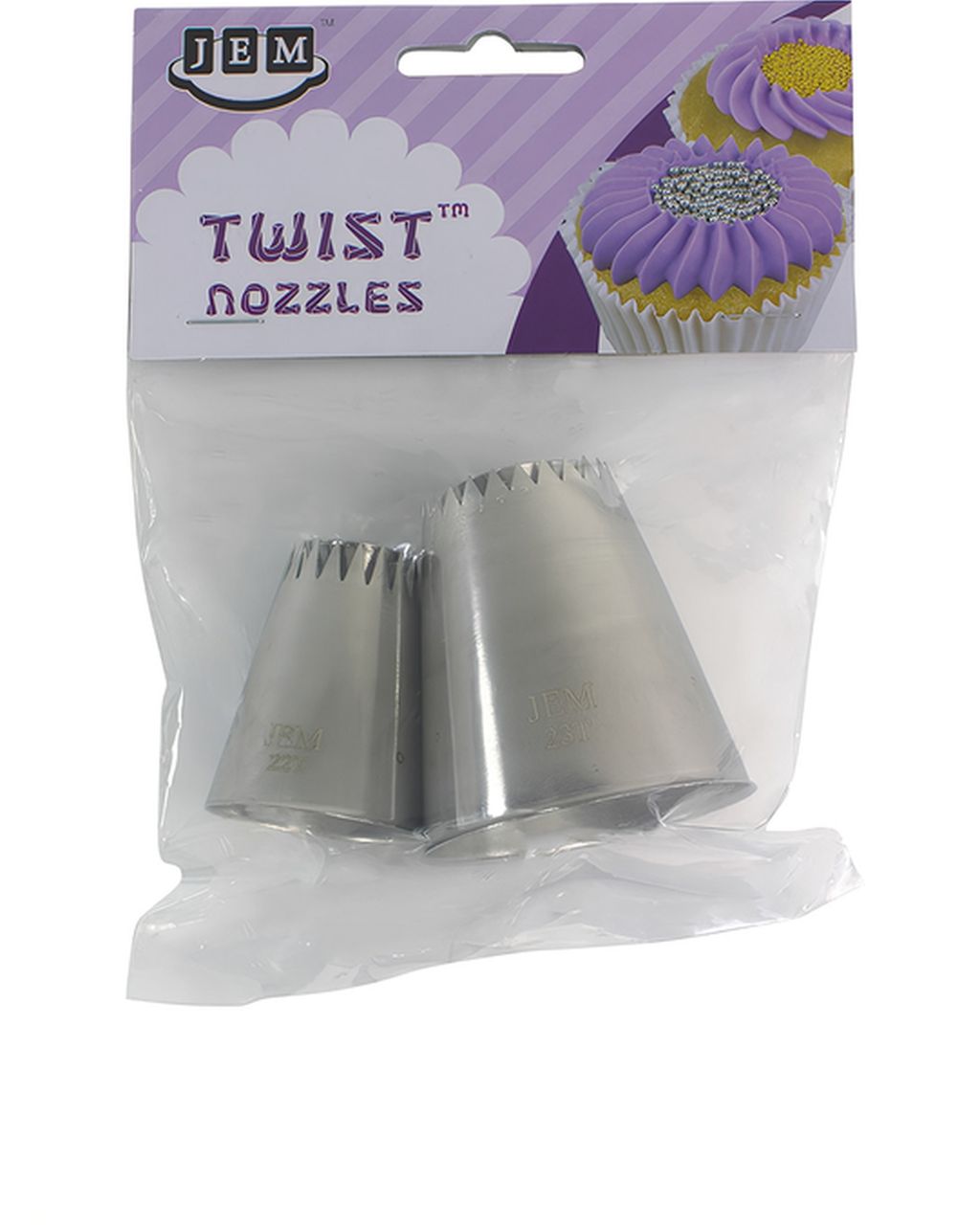
JEM Twist sets (Set 1 and Set 2, 2 pcs each) add more shapes to your kit. Dry them thoroughly before storing, just like your other stainless steel tips.
Yes. Wash new piping tips in warm soapy water before first use and let them dry. They can carry dust or an oily film from manufacturing and packaging, and that could end up in your frosting.
You can briefly scald stainless steel piping tips with boiling water, but for everyday use it isn't necessary. Just wash them thoroughly in warm soapy water and dry them completely. Boiling water can warp plastic tips and couplers.
A piping tip smells when a film of fat or dairy is left inside it or in the threads of the coupler. Soak it for 15 minutes in hot water with dish soap and a teaspoon of baking soda, brush it out from the inside and let it dry completely before storing.
Yes, a metal piping tip can handle hot choux pastry and melted chocolate. Soak it in warm water straight after use, though, because hardened dough or chocolate clogs the opening and the tip bends easily if you scrape it.
One recipe worth heating the oven for, one tip, and one deal from the shop. Nothing else.