The best christmas cookies? vanilla crescents, of course!
Homemade Vanilla Extract and Vanilla Sugar: How to Make Them
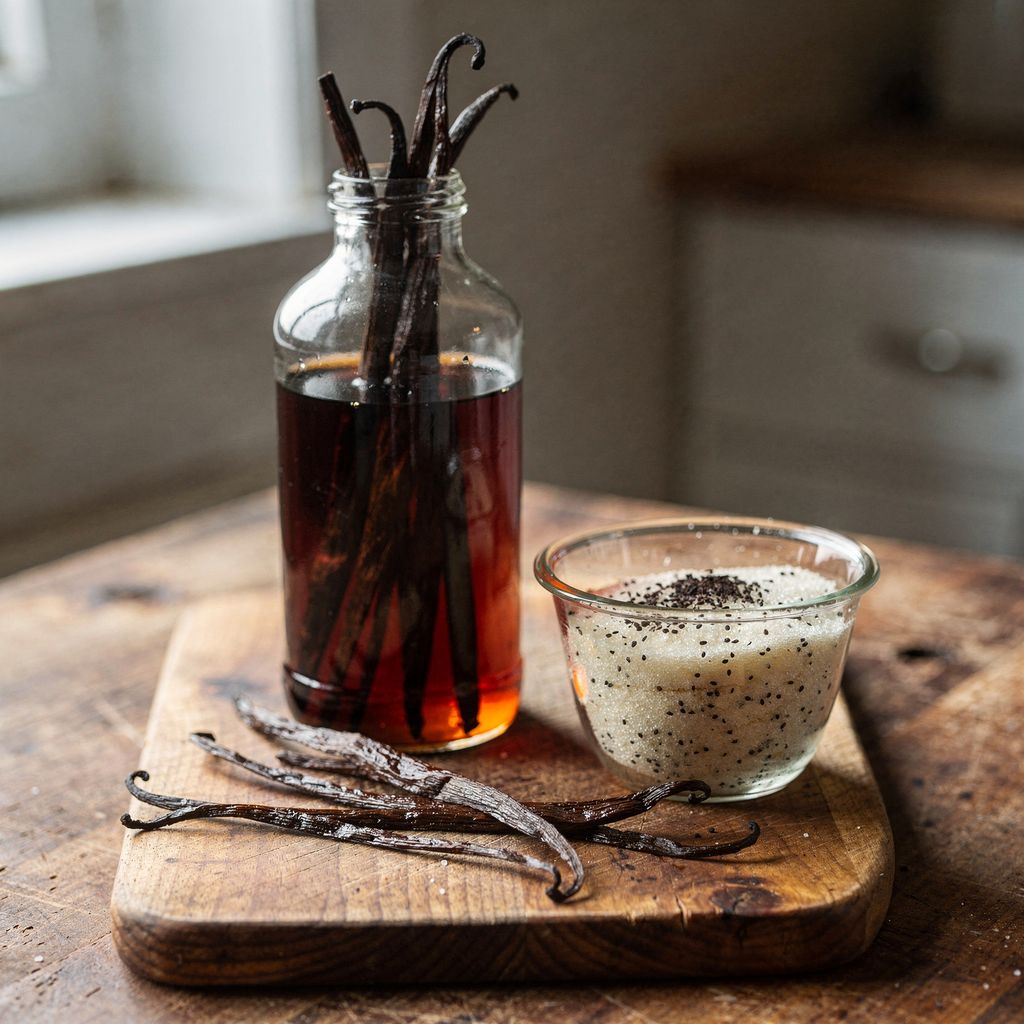
Updated Oct 4, 2026
Homemade vanilla extract comes down to just two things: split vanilla pods and alcohol that's at least 35% ABV (vodka is the typical choice), in a ratio of roughly 100 g of pods per litre, left to mature for at least 8 weeks, ideally half a year. Vanilla sugar is even simpler — bury a pod in sugar and it's ready in 1–2 weeks. Below you'll find exact ratios, the reasoning behind them, and how to get the most out of a single pod: first into custard, then into extract, and finally into sugar.
To make homemade vanilla extract, split open vanilla pods, cover them with alcohol that's at least 35% ABV, using roughly 100 g of pods per litre, and let them steep in the dark for at least 8 weeks. The alcohol gradually draws out vanillin and hundreds of other aromatic compounds from the pod, giving it a depth that synthetic vanillin simply can't match. The whole process takes five minutes of actual work — time does the rest.
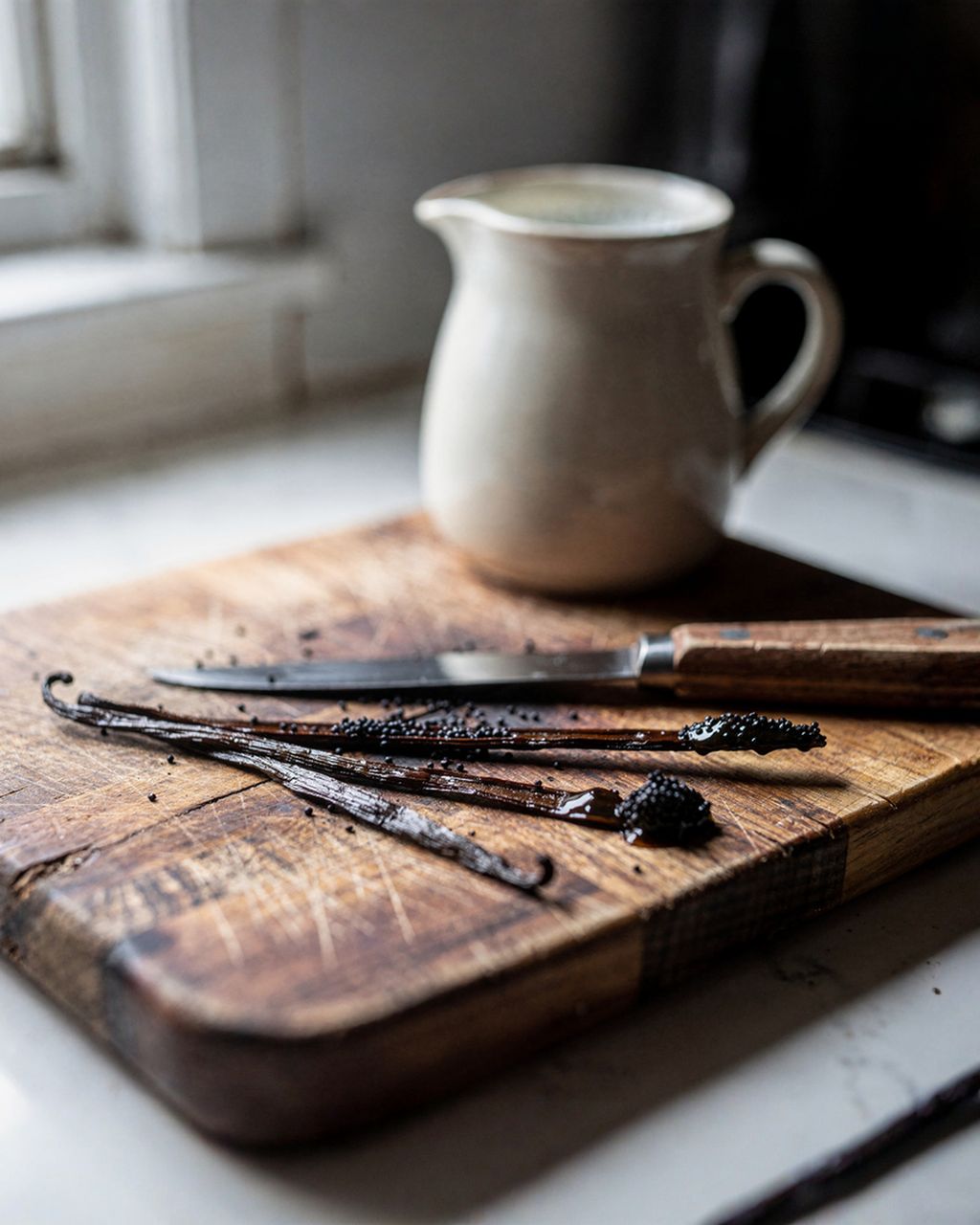
Split the pods lengthwise with a sharp knife, but leave them joined at the top. Don't scrape out the seeds — they stay in the extract and keep working.
Cut them into pieces (3–5 cm) if they won't fit whole into the bottle. They need to be fully submerged.
Put them in a clean glass bottle and cover with alcohol — allow 25 g of pods per 250 ml of alcohol.
Seal and shake. Give the bottle a shake once a week for the first few weeks to help extraction along.
Store in the dark at room temperature (a cupboard or pantry) — not on a windowsill, and not in the fridge. Cold slows extraction; light destroys the aroma.
Within a few days you'll see the alcohol turning golden. It's ready once it's deep amber, smells sweetly rounded, and the alcohol no longer overpowers the vanilla on the nose.
Use roughly 100 g of vanilla pods per litre of alcohol — that's 25 g per 250 ml. This matches the US standard for single-fold pure vanilla extract set by the FDA (13.35 oz of pods per gallon, which works out to almost exactly 100 g per litre).
Why weigh rather than count pods: a single pod weighs roughly 3–5 g, depending on origin and moisture content, so for 250 ml you'll need about 5–8 pods. Lean towards the higher number for thin, dry pods, and the lower number for plump, moist ones. The standard assumes pods with no more than 25% moisture — if your pods are especially moist, feel free to add a few extra grams.
Fewer pods (say, 2–3 per 250 ml) still works, you'll just get a weaker extract that needs longer to mature and more of it per recipe.
Double-fold extract (200 g per litre) is more concentrated — useful when you don't want to add much liquid, say in custards or ganache.
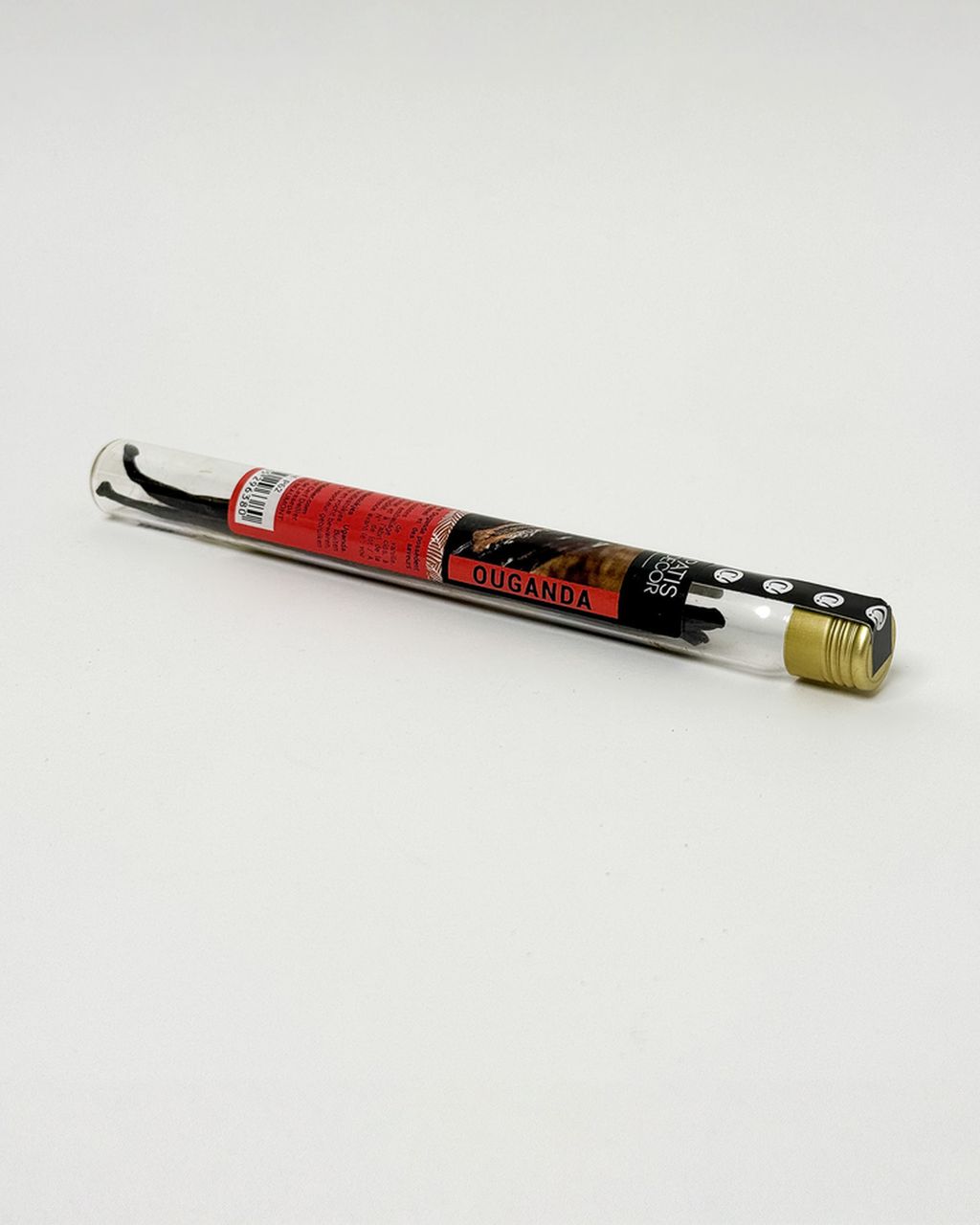
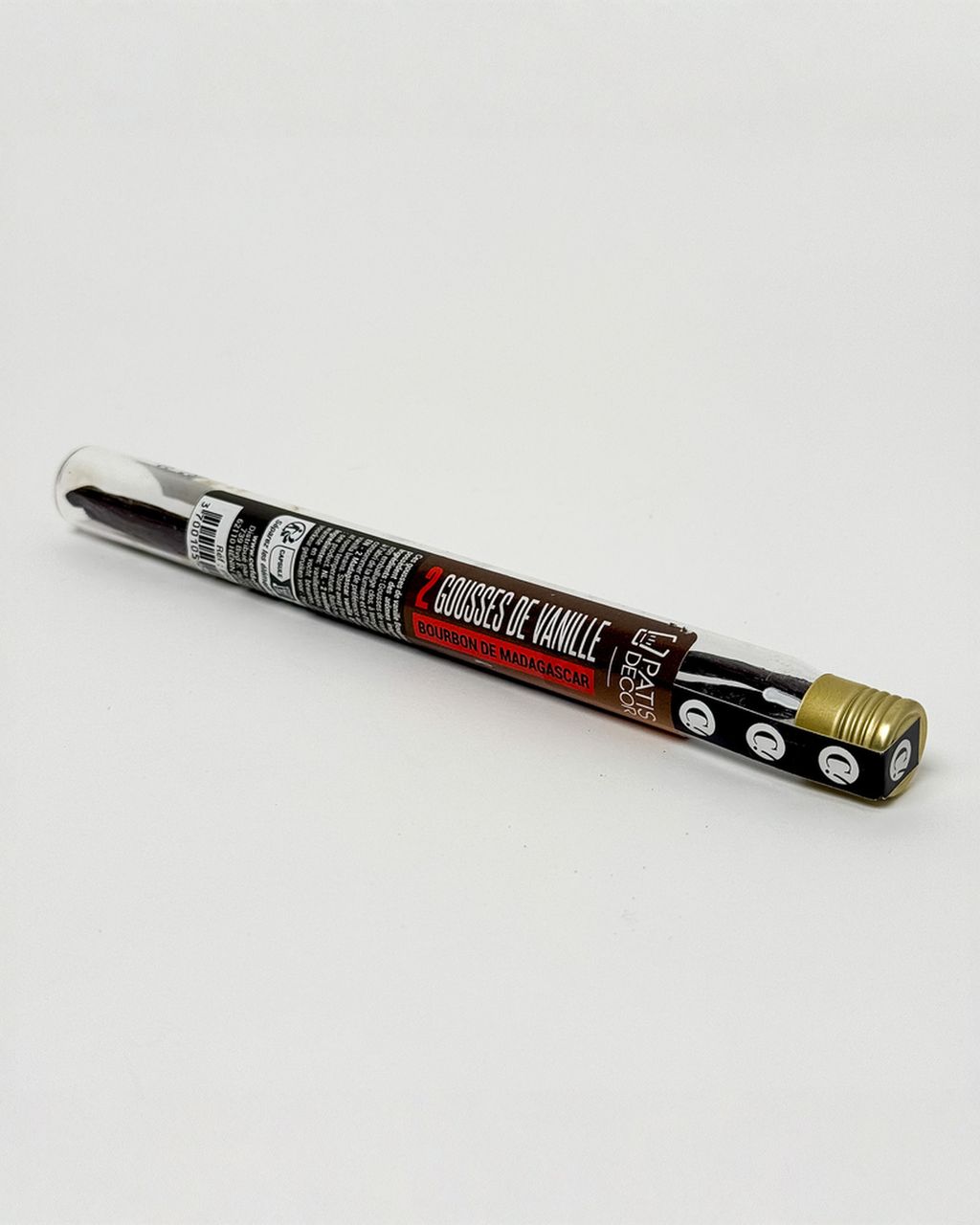
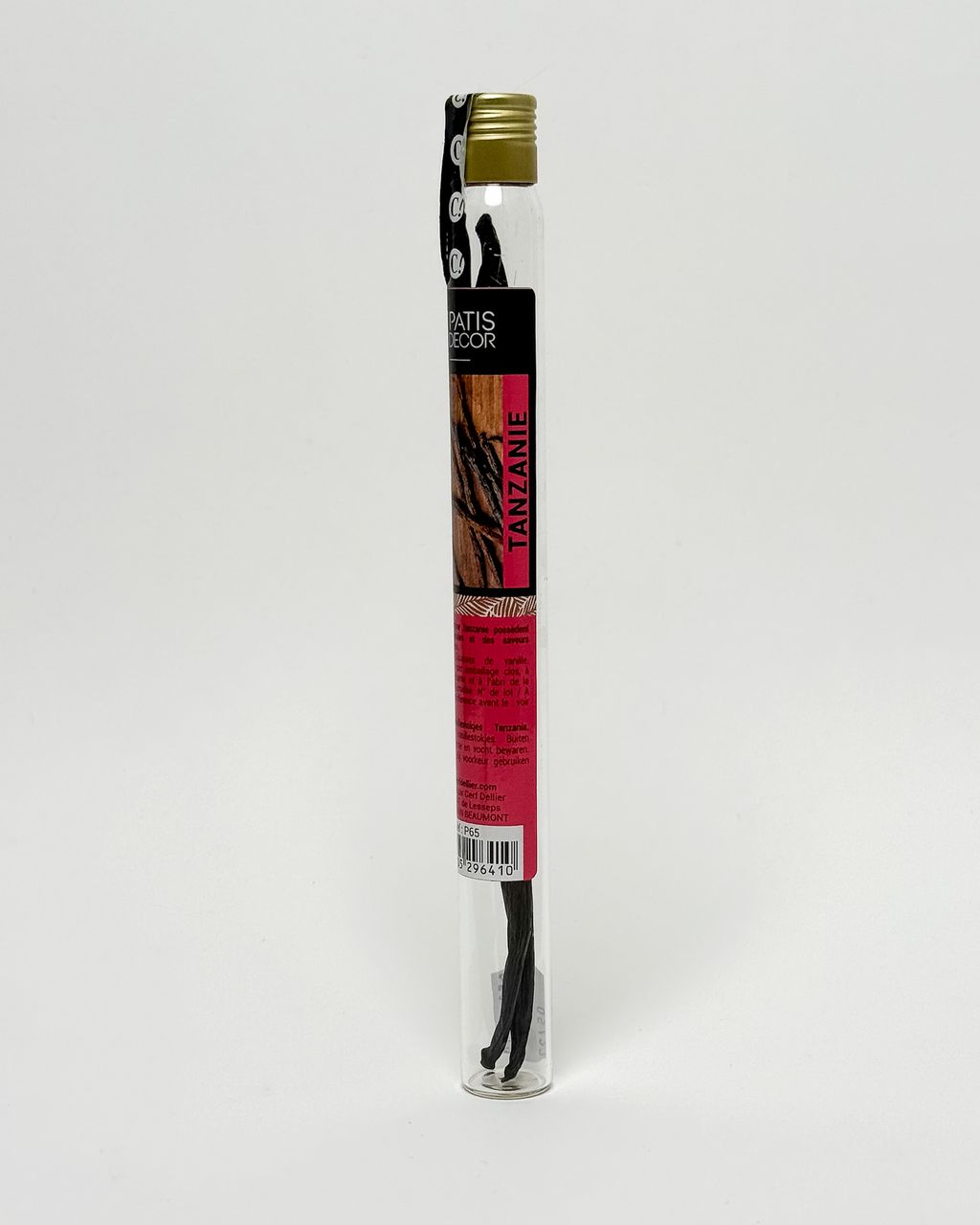
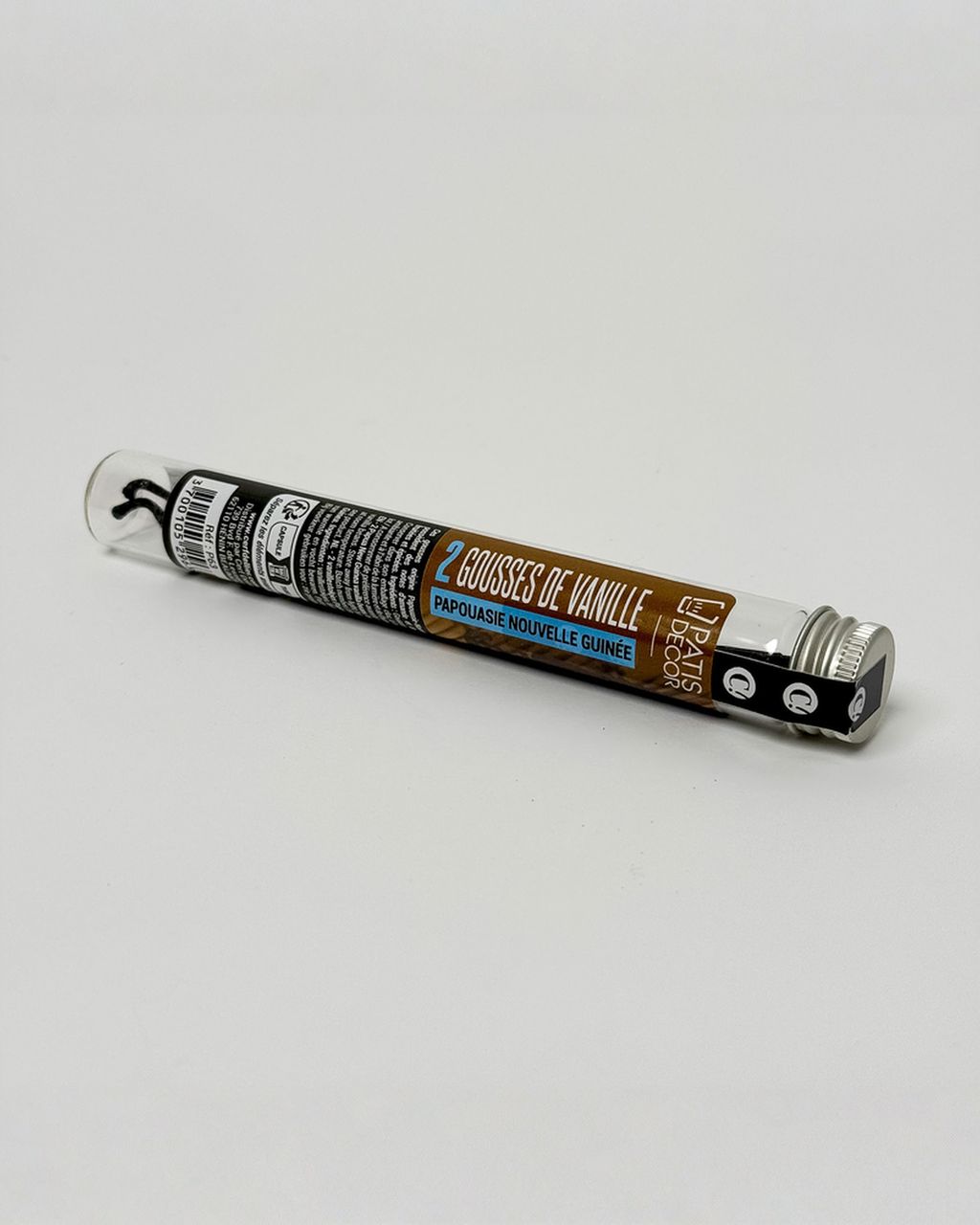
You don't need to buy picture-perfect pods for extract. Shorter, drier, or slightly split pods (sold abroad as "grade B") smell just as good and make no difference once they're in the alcohol. You'll find vanilla from different origins in our vanilla pods and vanilla category — Ugandan vanilla is bold with milky cocoa notes, while Madagascar Bourbon vanilla is the classic creamy choice.
The best choice is plain 40% ABV vodka — it's neutral, so the vanilla itself can shine. What matters most is that the alcohol is at least 35% ABV: below that, the aromatic compounds don't extract as well and the extract isn't reliably shelf-stable.
Vodka (40%) — pure vanilla flavour, the most versatile choice.
Rum (dark or light) — caramel, spiced notes, great for Christmas baking and bundt cakes.
Bourbon or brandy — woody, biscuity aroma, lovely in chocolate desserts.
Stronger spirits (50%+) — not worth it; without enough water, some of the pod's aromatic compounds release less readily.
There's no need to splash out on expensive alcohol, but skip the cheapest, harshest-smelling bottle too — that sharpness will carry through into the extract.
Vanilla extract is usable after 8 weeks at the earliest, but reaches full flavour after 6–12 months. In the early weeks it smells mostly of alcohol, and the aroma only rounds out gradually over time.
As a rough guide:
2–4 weeks — already dark in colour, but the flavour is still sharp and flat. Don't use it yet.
8 weeks — good for everyday baking.
6 months or more — deep, sweet aroma, the kind you'll really appreciate in vanilla custard or ice cream.
If you want extract ready for Christmas, start it by early October at the latest. It also makes a lovely gift — decant it into small bottles and drop a piece of pod into each one.
You don't need to start from scratch every time: as the level drops, top up with the same amount of alcohol and add a fresh pod every so often. Leave the old pods in the bottle — they'll keep giving for months.
Rule of thumb for keeping it strong: for every 250 ml of alcohol you top up, add roughly 25 g of pods (spent pods from custard work fine too, see below). You'll know a pod is spent once it's pale, soft, and barely has any smell left — pull it out and dry it for vanilla sugar.
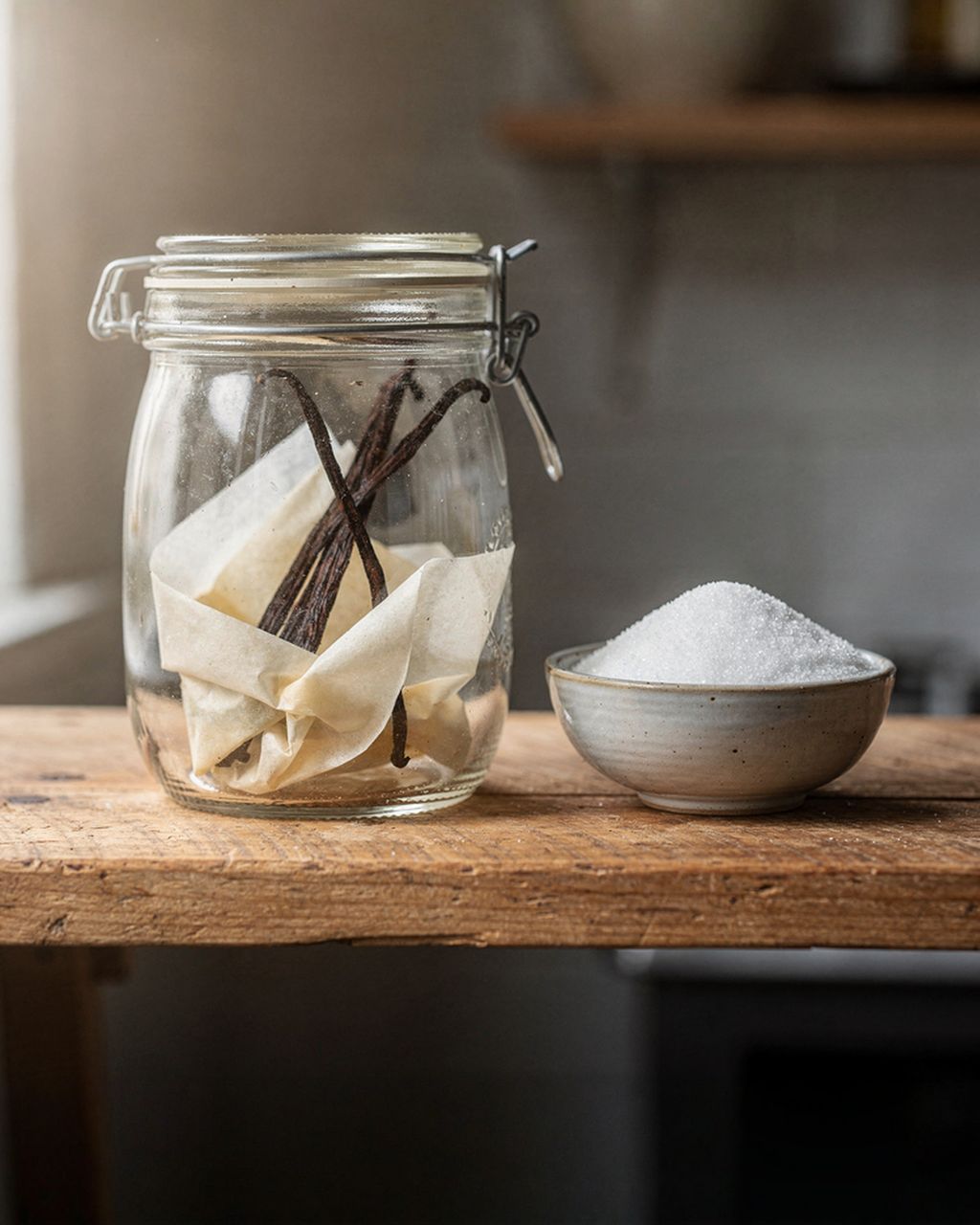
To make vanilla sugar at home, bury 1 vanilla pod in 250–500 g of sugar in a well-sealed jar and let it sit for 1–2 weeks. The sugar absorbs the aroma, and the pod will keep working until the sugar runs out.
For a faster, more intense version:
Split the pod lengthwise and scrape out the seeds with the back of a knife.
Rub the seeds into the sugar with your fingers — this breaks them up and spreads them evenly (otherwise they clump together).
Cut the scraped pod into pieces and bury it in the sugar.
Seal and shake. With the seeds rubbed in, the sugar is usable almost right away, though it reaches full flavour after a week.
With one pod per 250 g of sugar you get a strong, flavourful sugar for coating; per 500 g, a milder one for everyday baking.
You can make vanilla sugar from both granulated and icing sugar: granulated holds up better and doesn't clump. Icing sugar picks up the aroma faster but absorbs moisture easily — keep it dry and sift before use. Vanilla icing sugar is exactly what you want for dusting vanilla crescent cookies.
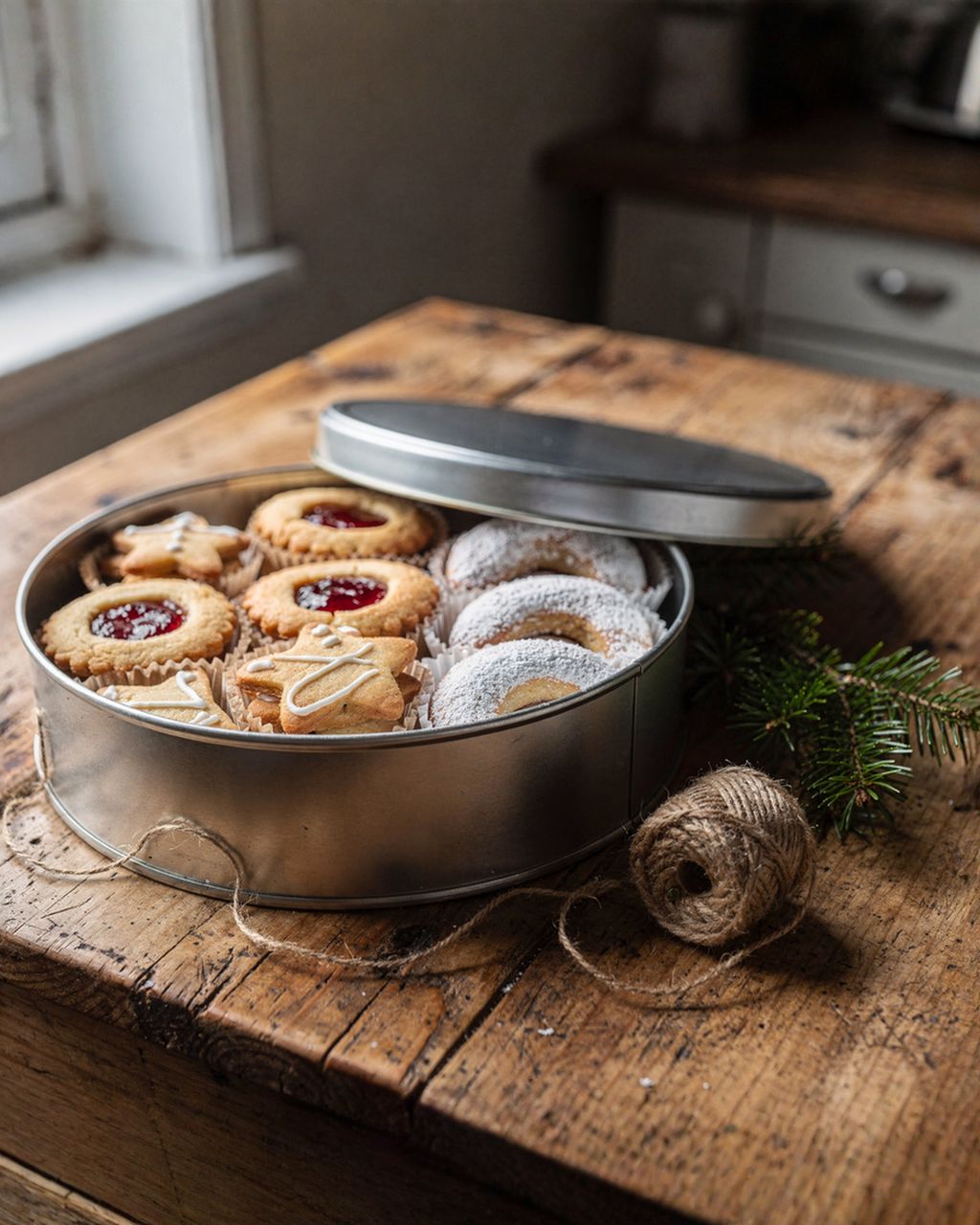
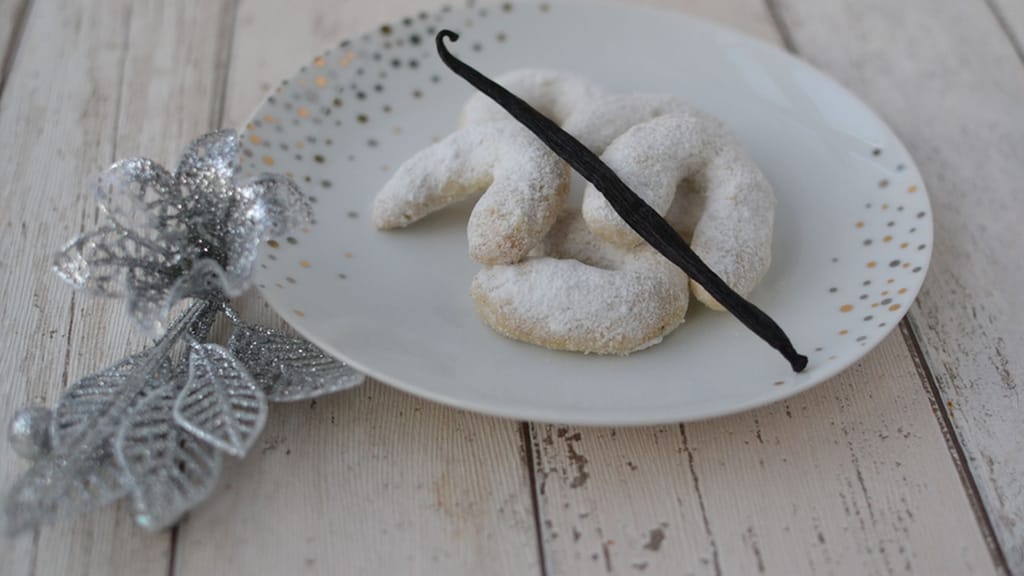
The best christmas cookies? vanilla crescents, of course!
Vanilla crescent cookies – a classic where homemade vanilla sugar shines in every bite
To make vanilla sugar from spent pods, rinse the pod, dry it completely (1–3 days uncovered, or 10–15 minutes at 60–80°C/140–175°F), then bury it in sugar or blend it in, using roughly 1 pod per 100–200 g of sugar. A spent pod — say, one used for cooking custard, cream, or steeped in extract — still holds plenty of aroma for vanilla sugar. The only catch is you must dry it completely first, or the sugar will turn damp and clumpy.
Rinse the pod (to remove milk or cream residue) and pat dry with paper towel.
Leave it to air-dry for 1–3 days at room temperature, or pop it in the oven at 60–80°C/140–175°F for 10–15 minutes. It's ready once it's hard and snaps easily.
Either bury it whole in sugar, or blend it together with the sugar (roughly 1 pod per 100–200 g) in a blender or coffee grinder, then sift out any tough fibres.
Sugar blended with dried spent pods is the most intense version — speckled dark, strongly aromatic, and made from what would otherwise be pod "scraps".
Vanilla sugar is flavoured with real vanilla (pods, seeds, or extract); vanillin sugar uses a synthetic aroma — vanillin or ethylvanillin. Vanillin is vanilla's main aromatic compound, but on its own it's just a single note — real vanilla has hundreds, which is why it smells fuller, creamier, and less "artificial".
Store-bought vanillin sugar is cheap, and in baking alongside other strong flavours (cocoa, spices, gingerbread) you often can't tell the difference. You'll notice it most where vanilla takes centre stage: crescent cookies, whipped cream, custards, or vanilla ice cream. That's where homemade vanilla sugar or extract really pays off.
A single vanilla pod can serve three purposes: first the seeds go into custard, then the pod goes into extract, and finally the dried pod goes into sugar.
For custard: scrape the seeds into custard, pudding, or batter; simmer the pod in milk.
For extract: rinse the pod and drop it into a bottle of extract — it'll add extra strength.
For sugar: dry the spent pod from the extract and blend it with sugar.
Store any unused pods so they don't dry out — find out how in our article How to store vanilla pods so they stay moist and fragrant.
Most failed attempts come down to one of six causes: too few pods, alcohol that's too weak, impatience, pods sticking out above the liquid, a damp pod added to sugar, or light and heat.
Too few pods. One pod in a half-litre bottle gives you vanilla-flavoured vodka rather than real extract. Stick to 100 g per litre.
Alcohol under 35% ABV. Liqueurs and weaker spirits extract poorly, and the extract may spoil over time.
Impatience. After 3 weeks the extract looks dark, but the flavour isn't there yet. Colour doesn't mean it's ready.
Pods sticking out above the liquid. Anything not submerged dries out and can grow mould. Cut the pods shorter so they fit.
A damp pod added to sugar. A freshly used pod straight from custard carries moisture into the sugar — the sugar hardens and, worse, can start to ferment. Always dry it first.
Light and heat. A bottle on a windowsill or above the stove loses its aroma. A dark cupboard is ideal.
One vanilla pod is roughly equivalent to 1 tablespoon (15 ml) of vanilla extract. If your homemade extract is weaker, say because you used fewer pods, add a bit more and go by the smell of your batter or custard.
Homemade vanilla extract made with alcohol above 35% ABV keeps practically indefinitely, as long as it's sealed and stored away from light. If anything, the flavour deepens over time. A dark sediment at the bottom is just seeds and fine pod fibres, not spoilage — give the bottle a shake before using.
Yes, you can use food-grade glycerine diluted with water instead of alcohol (roughly 3 parts glycerine to 1 part water). The extract will turn out sweeter and milder, and takes a similarly long time to mature, but it doesn't keep as well — store it in the fridge and use within a few months. That said, the simplest alcohol-free route is to make vanilla sugar instead.
Yes, dry, hard vanilla pods are perfectly fine for extract — the alcohol will soften them during steeping and draw out their aroma. Break or snip them into pieces so the alcohol can reach the inside. Keep in mind that a dry pod weighs less, so by weight you'll need to use more pieces.
One recipe worth heating the oven for, one tip, and one deal from the shop. Nothing else.