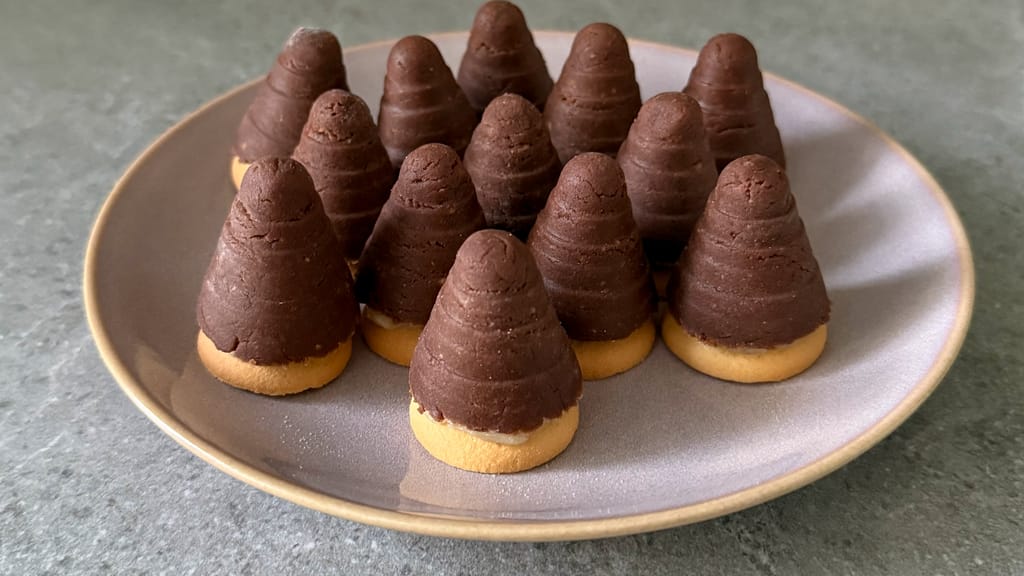
Grandma's traditional wasp's nest cookies with rum cream
Updated Sep 17, 2026
Almost everything left over from baking Christmas cookies can be put to good use: reroll or freeze raw dough scraps, crush crumbs from broken cookies into truffle balls, wasp nests or a no-bake cheesecake base, and either use up leftover filling in the next batch or freeze it for up to three months. The only things that belong in the bin are anything damp, stale or rancid — and after a good baking session, that's surprisingly little. Here's what to do with what, including ratios and timings.
Sort your cookie leftovers into four piles and handle each one differently:
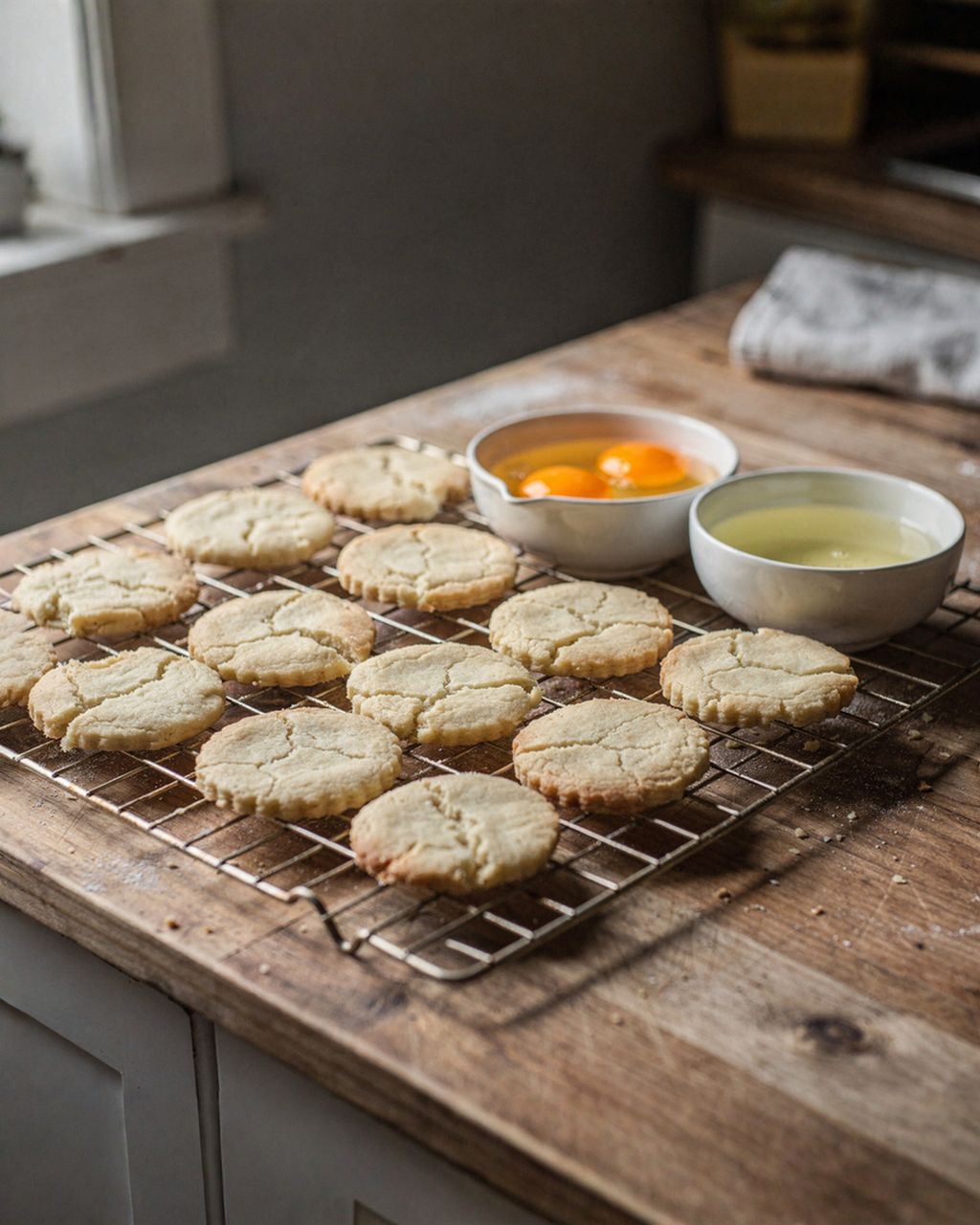
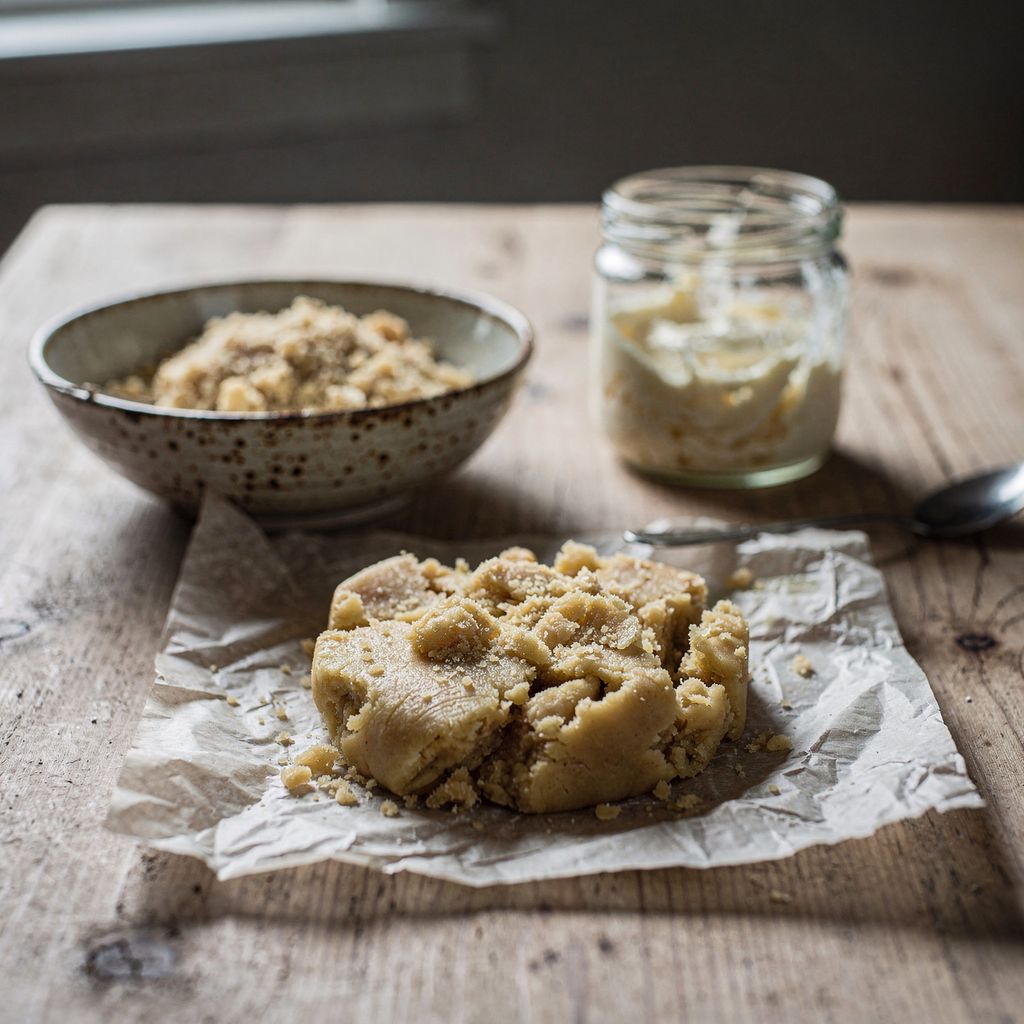
Raw dough scraps – press them into a disc, chill for 15–20 minutes and reroll. Twice, max. Anything you don't want to reroll, freeze.
Crumbs and broken pieces – wasp nest filling, chocolate-dipped truffle balls, a no-bake cheesecake base, crumble topping for baked fruit, or a sprinkle over yoghurt.
Leftover filling and icing – use it to top up another batch of cookies, work it into crumb truffles, or freeze it in portions for up to three months.
Leftover egg whites and yolks – egg whites keep in the freezer for six months or more; use yolks within two days.
The only things you actually need to throw out are anything damp, musty or rancid: filling that smells sour, nutty cookies with a bitter, oily aftertaste, and anything showing the faintest trace of mould.
Reroll linzer dough scraps twice at most; by the third time, the dough turns tough and dry. Every extra round of kneading and rolling develops more gluten in the dough, and developed gluten turns delicate linzer pastry into a tough, flat biscuit. The other culprit is the extra flour you dust on each time — it works its way into the dough bit by bit, so the third batch ends up drier and tougher than the first, even though nothing else has changed.
How to get the most out of your scraps:
Don't reroll the scraps straight away. Set them aside until you've cut out the whole sheet.
Press them together rather than kneading them – squeeze them into a flat disc between your palms instead of working them like fresh dough.
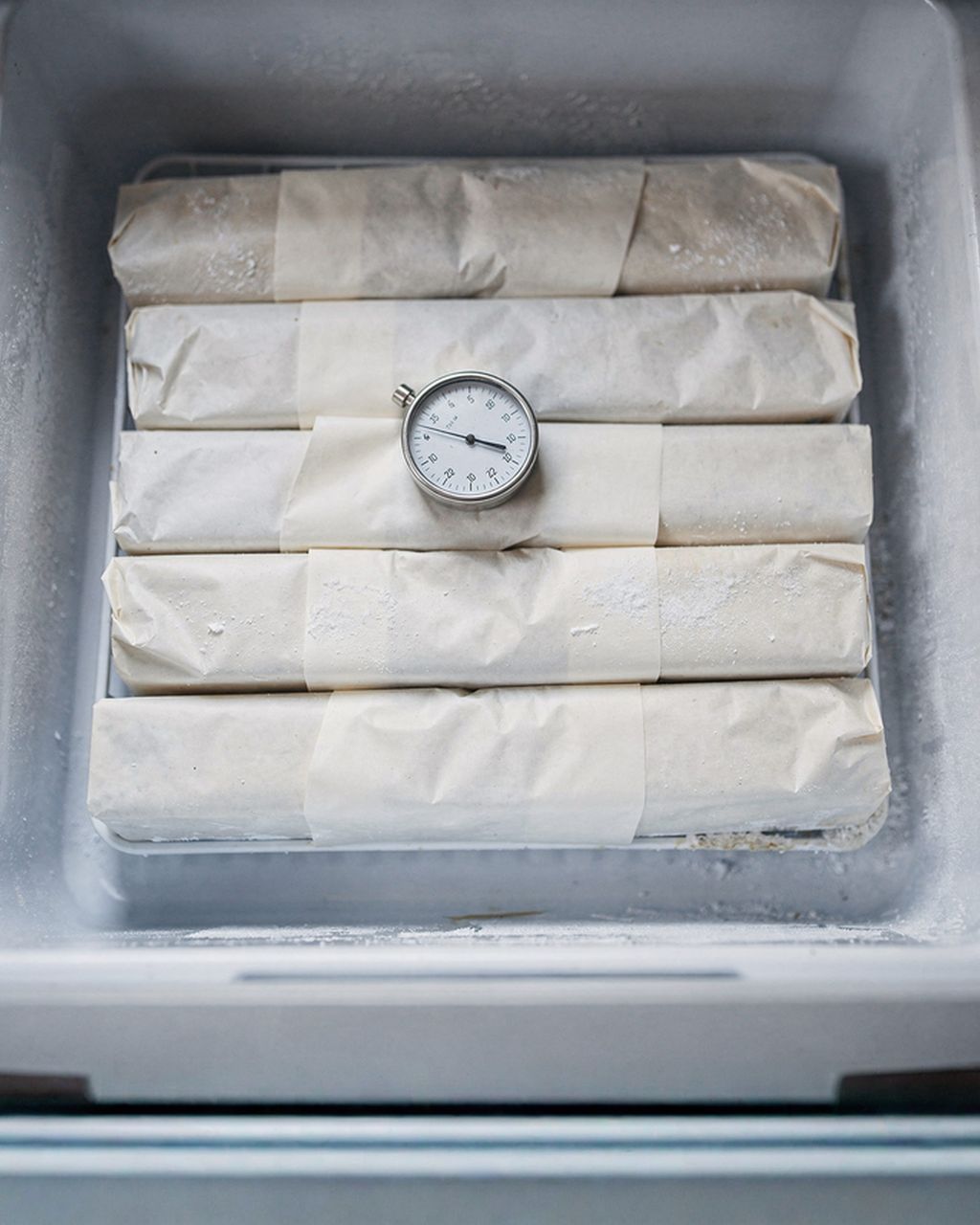
Wrap the disc in plastic wrap and chill it for 15–20 minutes. This lets the gluten relax and the butter firm back up.
Roll between two sheets of baking paper instead of dusting with flour. That alone removes one whole cause of toughening.
Bake the second batch on its own tray. It's slightly firmer and behaves differently in the oven than the first round.
If your linzer cookies are already turning tough from the very first batch, the problem isn't the scraps — that's covered in our article on why linzer cookies turn tough and how to keep them tender. And if your scraps are falling apart and won't press together at all, check out our piece on crumbly linzer dough.
You've got three options: freeze them, bake them into cinnamon-sugar strips, or cut them out with a smaller cutter. All three beat the bin.
Freeze them. Raw cookie dough keeps in the freezer for about three months. Wrap the disc in plastic wrap, then in a freezer bag, press out the air and label it with the date. Thaw overnight in the fridge, not on the counter — thawing at room temperature melts the butter unevenly and the dough turns greasy. There's a full walkthrough in our guide to freezing cookies and cookie dough.
Bake them into cinnamon-sugar strips. Roughly roll out the last of the scraps, cut into strips or diamonds with a knife, sprinkle with cinnamon sugar and bake at the same temperature as the rest of your cookies. They don't look like proper cookies, nobody counts them for the tin, and they'll be gone by that evening.
Cut them out with a smaller cutter. Firmer dough works better in a small shape than a large one — it's less prone to breaking and bakes faster. This goes double for gingerbread: gingerbread dough can handle a bit more handling than linzer, since it's leavened with baking soda rather than relying on butter-and-gluten structure. Even so, over-worked gingerbread still toughens up more after baking — you'll find the reasons and fixes in our article on why gingerbread cookies go tough.
Crumbs and broken pieces can be put to use in five ways: as the base for wasp nests, as the base for chocolate-dipped truffle balls, as a no-bake cheesecake base, as a crumble topping for baked fruit, and as a sprinkle over yoghurt or ice cream.
The principle is always the same: crumbs need a binder, in a ratio of roughly 2:1 to 2.5:1 depending on the use. For anything you need to shape by hand — truffle balls and nests — go with 200g of crumbs to 100g of binder (melted butter, leftover filling, ganache or sweetened condensed milk), since the mixture needs to be rollable in your palm. For a base you're just pressing into a tin, a drier ratio of 200g crumbs to 80g melted butter is enough. If the mixture won't hold together, add binder a spoonful at a time — you can't take it back out once it's in.
Crumb-based wasp nests – traditional wasp nests are shaped from crushed sponge, so cookie crumbs fit right in: crushed cookies, softened butter, icing sugar, a spoonful of cocoa and a spoonful of rum. The filling stays classic — butter whipped with icing sugar, egg yolk and rum.
Chocolate-dipped truffle balls – roll the mixture into balls about 2–3cm across, let them firm up in the fridge for at least half an hour, then dip them in melted chocolate. A cold ball won't fall apart in the chocolate, and the coating sets faster too.
No-bake cheesecake base – mix 200g of crumbs with 80g melted butter, press into the bottom of a springform tin and chill for at least two hours.
Fruit crumble topping – mix the crumbs with a handful of oats and a knob of cold butter, scatter over apples or pears and bake for 20 minutes at 180°C.
Sprinkle topping – crush coarsely, not to dust, and sprinkle over yoghurt, curd cheese or ice cream.
One thing to watch: only combine crumbs from cookies that actually taste good together. Vanilla crescents, linzer and nut balls all blend into a nice mellow buttery mix. Gingerbread crumbs are strongly spiced and will overpower everything else — process those separately.
Grandma's traditional wasp's nest cookies with rum cream
Traditional wasp nests with rum buttercream – crushed sponge nests where cookie crumbs fit right in

Lotus biscoff truffles
Truffles made from biscuit crumbs – the same method works with leftover Christmas cookies
Buttercream keeps in the fridge for about a week and in the freezer for up to three months; fillings made with whipped cream, curd cheese or raw egg only keep 2–3 days in the fridge. Chocolate ganache behaves much like buttercream — a week or two in the fridge, three months in the freezer.
Wherever you store it, press plastic wrap directly onto the surface of the filling, not just over the top of the container. Skip this and it'll form a skin and pick up fridge odours. Thaw slowly in the fridge, then let it come to room temperature and whisk briefly — it'll look grainy and split straight after thawing, but whisking brings the emulsion back together.
What to do with it:
Top up another batch of cookies. The simplest fix: bake one extra tray of linzer sandwich rounds and give the filling somewhere to go.
Work it into crumb truffles. Filling is an ideal binder — it's already sweetened and flavoured, so there's nothing extra to adjust.
Spread it on pancakes or into filled buns. Vanilla and buttercream fillings work there without any changes.
Freeze it in portions. Split it into small bags of about 100g each, so you don't have to thaw the whole batch just for one tray.
Ganache that's set rock-hard can be rescued: warm it over a bain-marie and loosen it with a spoonful of warm cream until it flows again.
Don't pour leftover royal icing down the drain either — sealed in a container with plastic wrap pressed onto the surface, it keeps in the fridge for several days and can be stirred back to the right consistency before use.
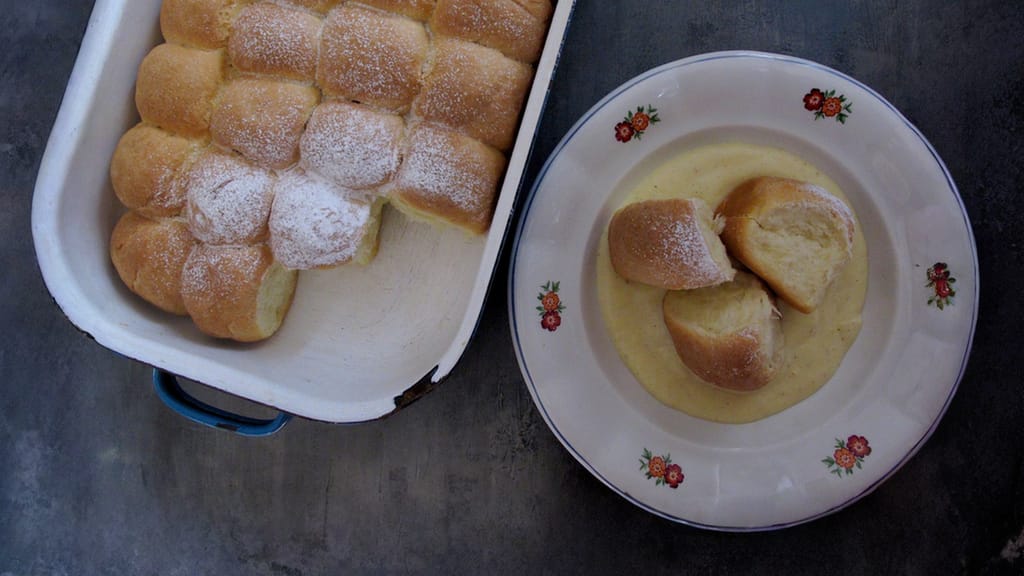
Sweet buns with silky vanilla custard
Filled buns with smooth vanilla filling – a good home for leftover cookie filling
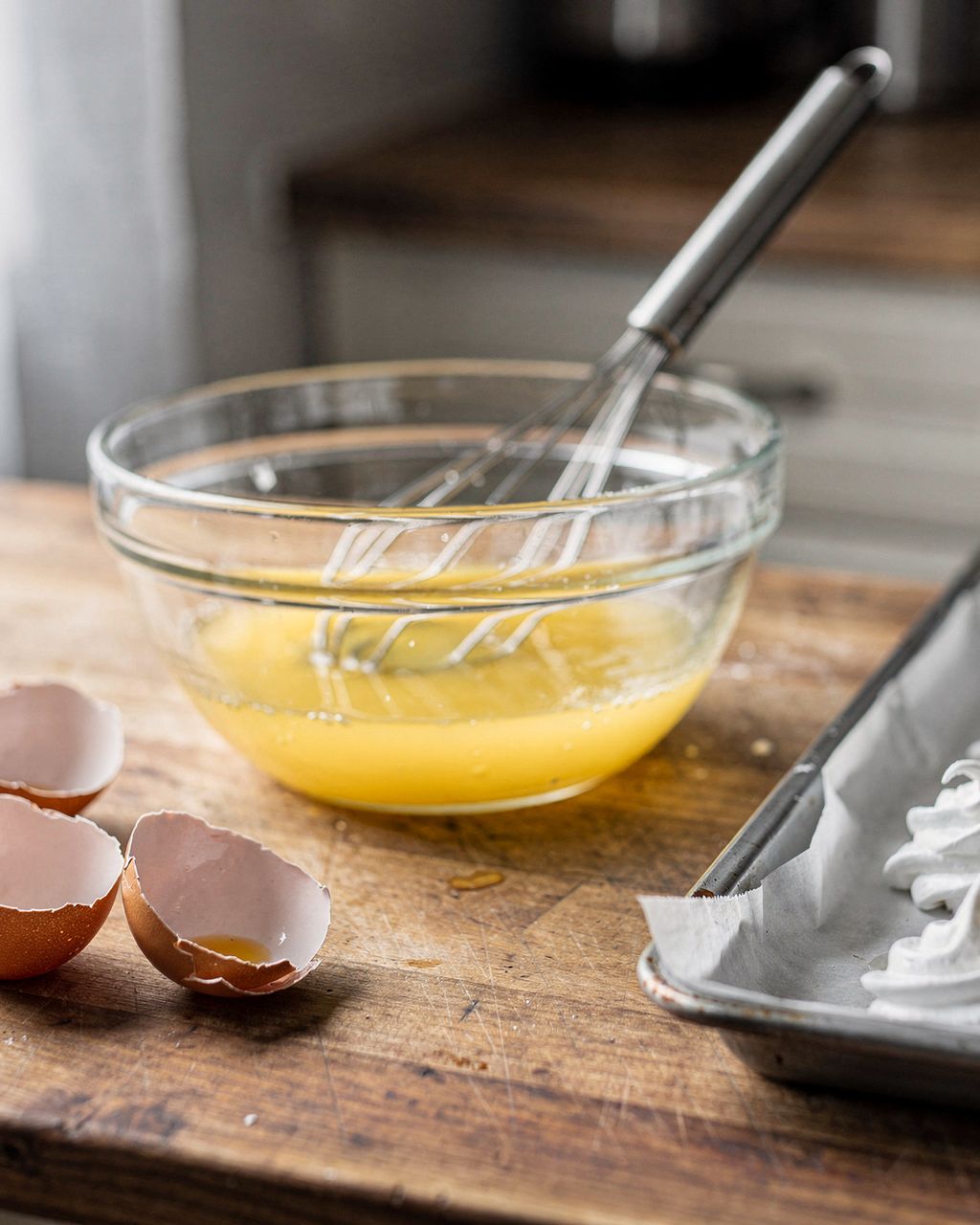
Egg whites keep in the fridge for 2–4 days, and yolks should be used within 2 days; in the freezer, egg whites keep for six months or more. Linzer dough and most short pastries call for just yolks, so by the end of December you'll likely have a bowl of spare whites.
Freeze egg whites individually in an ice cube tray, then tip them into a bag so you can grab them one at a time — one egg white weighs about 33g, so you can even measure them out after thawing. Use them for meringues, coconut macaroons, snowy peaks or stiff royal icing — icing is the quickest fix and uses up two or three at once.
Yolks are more delicate: use them within 2 days, and in the fridge cover them with a spoonful of water or milk so the surface doesn't dry out. They're perfect for wasp nest filling, buttercream, or another batch of linzer dough.
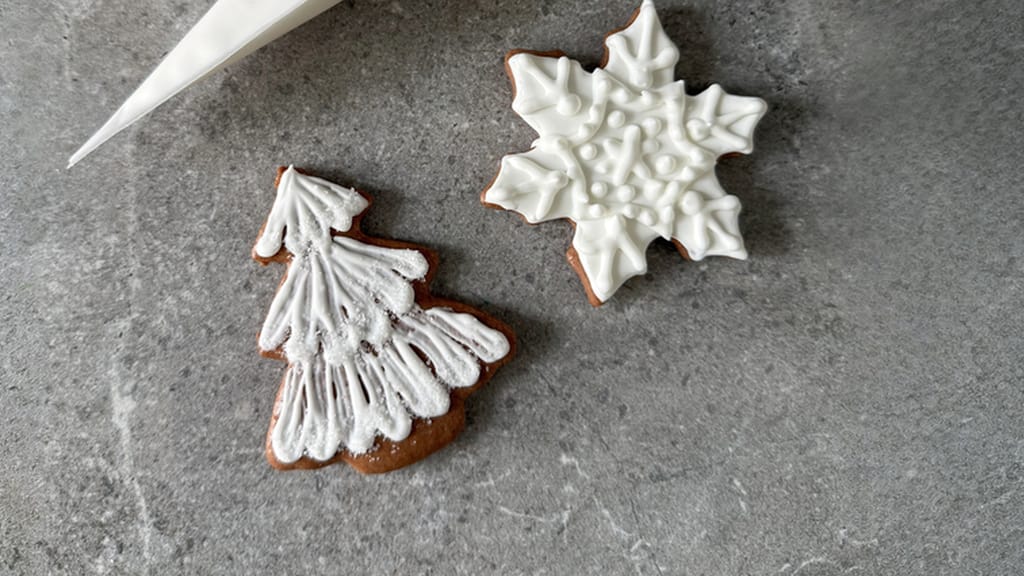
Royal icing for cookies: the foundation for perfect decorating
Royal icing for cookies – the fastest way to use up leftover egg whites
You'll end up with fewer leftovers if you cut shapes from the edge and close together, fill gaps with a smaller cutter, roll the dough to an even thickness, and mix your filling based on the actual number of cookies rather than guessing.
Cut from the edge and place your cutters close together. The difference between careless and tight cutting is often a whole extra batch's worth of scraps.
Keep a smaller cutter on hand to fill the gaps around a round one. Small stars or circles about 2cm across will fill the spaces between larger shapes.
Roll the dough to an even thickness. An uneven sheet means the thin edges burn and you end up snapping them off.
Mix your filling based on the actual number of cookies, not a guess. For 40 sandwiched linzer rounds, about 150g of filling is enough.
Plan your baking schedule ahead. Bake everything in one weekend and leftovers pile up faster than you can deal with them. A calendar of when to bake which cookies can help with that.
Throw away dough made with egg that's sat out of the fridge for more than two hours, filling with a sour or musty smell, nutty cookies with a bitter, oily aftertaste, and anything with the faintest trace of mould. In more detail:
Dough made with egg that's sat out of the fridge for more than two hours.
Filling that smells sour, like old fat, or simply different from the day it was made.
Nutty cookies that taste bitter and oily. The fat has turned rancid, and no amount of extra processing or chocolate will fix that.
Anything with the faintest trace of mould. Don't just cut around it — in soft, moist baked goods, mould spreads further than you can see.
In every other case, a simple rule applies: if it smells fine and it's dry, there's something you can do with it.
Raw cookie dough can safely be frozen a second time if it was thawed in the fridge — but quality drops after the second freeze, and the cookies tend to come out tougher and greasier. If you know you won't use the whole batch, split the dough into smaller discs before the first freeze and only thaw the one you actually need.
Leftover filling can be used on a cake if it's buttercream or ganache. Let it come to room temperature and whip it briefly so it's spreadable. Just keep in mind there won't be much of it — nowhere near enough to cover a whole cake — so it works better as a filling between layers or as a decorative topping.
Don't freeze curd cheese filling — it separates and weeps water after thawing, since it's high in water and low in fat. The freezer only really works well for high-fat fillings: buttercream and ganache hold their emulsion and look freshly made again after a slow fridge thaw and a quick whisk. Curd- and cream-based fillings are better used up straight away within two to three days — on pancakes, in filled buns, or as filling for one tray of rolled cookies.
Don't add rum to the no-bake mixture if children will be eating the truffle balls — most of the alcohol stays in the mixture since it's never heated enough to cook off. Use rum flavouring instead (often labelled as rum essence), strong cold tea with a splash of lemon, or juice from stewed fruit — they'll do the same binding job and add similar flavour, and the mixture will hold its shape just the same.
Truffle balls made from leftover cookie crumbs keep for about a week in a sealed container in the fridge. Adding filling, butter or liquid brings moisture back into what was a dry mixture, and that moisture is exactly what shortens the shelf life compared with the original cookies. Keep the truffles separate from your regular cookies — otherwise they'll make the dry ones go soft too.
One batch of linzer-style dough typically leaves about a quarter to a third of the dough behind as scraps after the first round of cutting. Cut shapes tightly from the edge and you'll end up closer to a quarter; space the cutters carelessly and you can easily lose half the dough. In practical terms, a 500g batch will leave you with 125–170g of scraps after the first tray — just enough for one smaller tray of a second batch, or one disc for the freezer.
One recipe worth heating the oven for, one tip, and one deal from the shop. Nothing else.