Beef Gelatin Powder 200 Bloom
Jello Shots for New Year's Eve: How Much Gelatin to Use for Your Alcohol Level and How to Unmold Them
Updated Oct 15, 2026
Jello shots need roughly 28–40 g of powdered 200 Bloom gelatin per liter of liquid. The more alcohol, the more gelatin, and don't go above 20% alcohol in the finished jello. Stir the liquor into the mixture only once it has cooled to lukewarm, around 30–35 °C (86–95 °F), so it doesn't evaporate. Let the shots set overnight, then unmold them from a lightly oiled mold or after a short chill in the freezer. Below you'll find amounts for three strengths, a comparison of gelling agents and a method for getting the cubes out whole. This is a drink in solid form, so it's for adults only.
For 500 ml of finished mixture, use 14–20 g of powdered 200 Bloom gelatin. Choose the exact amount based on how much alcohol ends up in the jello. Count the full volume, including the water for soaking the gelatin, the juice, the syrup and the liquor:
Lighter, about 8% alcohol (100 ml of 40% liquor + 400 ml other liquid): 14 g gelatin, or 2.8%. The cubes can be cut and unmolded, and they're soft in the mouth.
Medium, about 13% alcohol (165 ml of 40% liquor + 335 ml other liquid): 16 g gelatin, or 3.2%. The best compromise between flavor and firmness, and the strength we recommend for parties.
Strong, about 20% alcohol (250 ml of 40% liquor + 250 ml other liquid): 18–20 g gelatin, or 3.6–4%. It holds, but it's springier and the alcohol is very noticeable.
Don't go above 20% alcohol. The gel holds less well, and gelatin can curdle in strong spirits.
These amounts assume you'll be unmolding the cubes. If you leave them in cups and eat them with a spoon, you can reduce the gelatin by about a fifth (for example, 13 g instead of 16 g).
Strength of the finished jello = (volume of liquor × its percentage) ÷ total volume of the mixture. Example: 165 ml of 40% vodka in 500 ml of mixture gives 165 × 40 ÷ 500 = 13.2%.
Liqueurs are at least 15%, egg liqueur at least 14%, cream liqueurs around 15–20%, but herbal and orange liqueurs are often 35–40%. Always check the label. 250 ml of a 20% liqueur in 500 ml gives only 10%. On the other hand, watch out for strong rums and absinthes at 50–70%. Pour in only enough that the result doesn't exceed 20%, and fill the rest of the volume with juice or water.
The best choice for jello shots is powdered gelatin with a known Bloom strength. It's dosed by the gram and dissolves at a temperature that doesn't destroy the alcohol. Other options work too, but each has a catch:
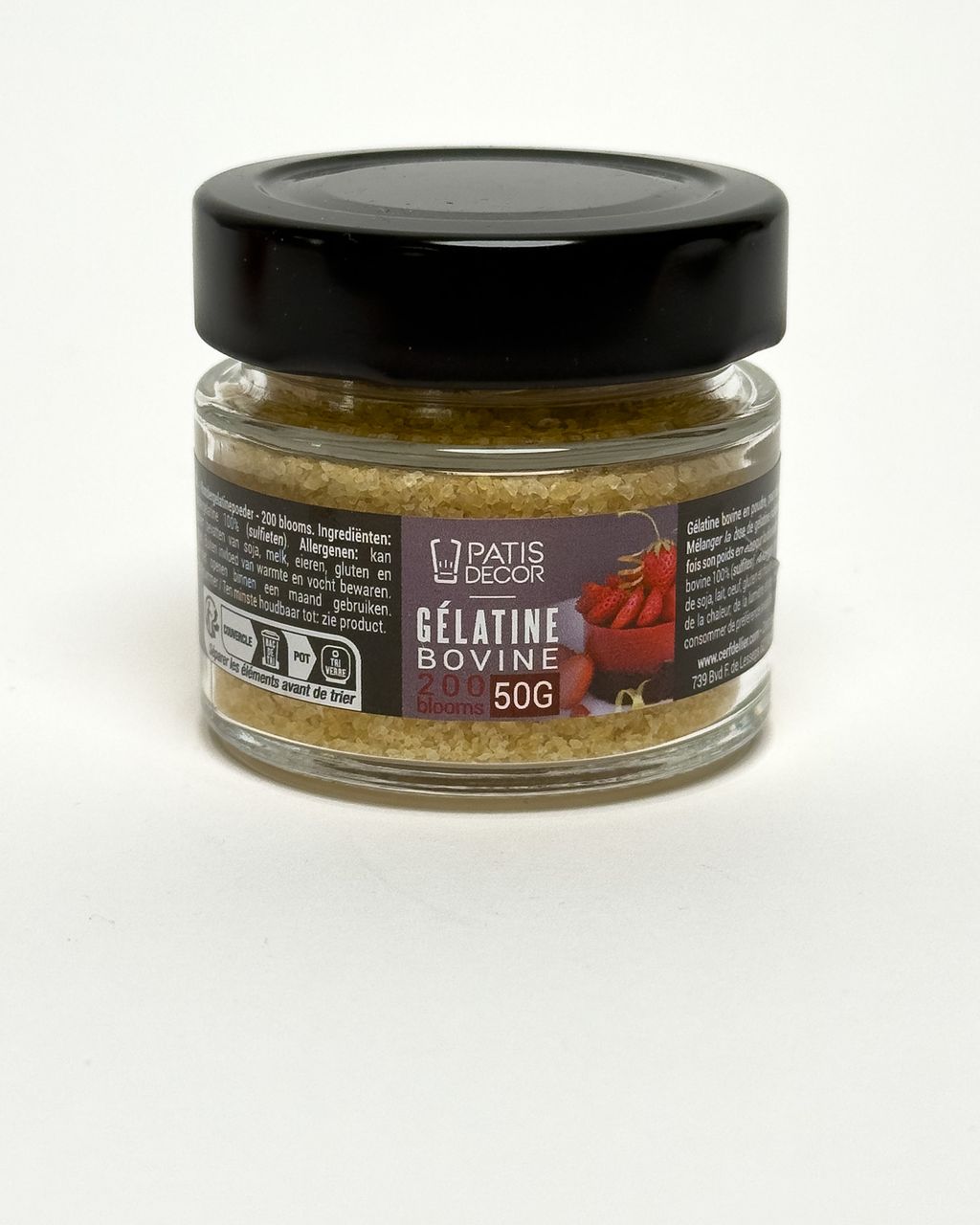
Powdered 200 Bloom gelatin: you measure it exactly by the gram, it's neutral in flavor and the jello melts in the mouth. All the amounts in this article are calculated for it. Patisdécor powdered beef gelatin, 200 Bloom, is exactly this type.
Sheet gelatin: works just as well, but the sheets don't have a uniform weight or strength. Gold sheets are usually around 200 Bloom, silver around 160. Weigh the sheets and adjust the amount if the gelatin is weaker. According to the formula manufacturers work with, the amount needed rises with the square root of the strength ratio, so for 160 Bloom multiply the amount by roughly 1.12. Soak the sheets in cold water and squeeze them out before dissolving.
Agar: not very suitable for alcoholic jello. Agar has to be boiled (it dissolves only above 85 °C / 185 °F) and sets already at 35–40 °C (95–104 °F), so you'd add the liquor to a hot mixture, some of the alcohol would evaporate and the jello would start to set in the pot. The result is brittle and doesn't melt in the mouth. It is a plant-based choice when you need jello without animal ingredients.
Boxed jello: Czech packets are agar- or carrageenan-based and must be boiled, so for alcoholic jello they have similar drawbacks to agar. Better not to use them for shots, or only with a product that explicitly lists gelatin in its ingredients.
Everything that can be used for gelling and thickening is gathered in our guide to gelling agents and binders.
Dissolve the gelatin in the non-alcoholic part and pour in the liquor only once the mixture is lukewarm, around 30–35 °C (86–95 °F). Method for 500 ml of medium strength (13%):
Bloom the gelatin. Sprinkle 16 g of powdered gelatin over 80 ml of cold water (5× more water than gelatin) and let it swell for 10 minutes. Always sprinkle the gelatin into the water, not the other way around, or lumps will form.
Heat the flavored liquid. Heat 255 ml of juice or water with 40–60 g of sugar until the sugar dissolves. Without sugar, vodka with juice tastes sharp, and with a little sweetness the jello is more pleasant.
Dissolve the gelatin. Stir the bloomed gelatin into the warm liquid at 50–60 °C (122–140 °F). Don't boil it. Boiling weakens gelatin, and the jello may then not set.
Let the mixture cool to 30–35 °C (86–95 °F). It should feel lukewarm to the touch, not hot. At a higher temperature the alcohol evaporates. Below 25 °C (77 °F) the gelatin starts to thicken, and the liquor wouldn't mix in evenly.
Stir in the liquor (165 ml of 40% vodka, rum or gin), mix and taste. This is the last chance to adjust the sweetness.
Pour into the mold and refrigerate until set for at least 6 hours, ideally overnight. Alcohol slows setting, and the gel keeps firming up long after the surface looks done.
Fresh pineapple, kiwi, papaya, figs and ginger contain enzymes that break down gelatin, so jello made with them won't set. Briefly boil the juice from these fruits before using it to destroy the enzymes, or use canned or pasteurized juices. Those from a jar or carton are safe.
Acidic juices, especially lemon and lime, weaken the gel. If you use more than a quarter of the volume, add 10% more gelatin.
Jello shots unmold best from a silicone mold after 15 minutes in the freezer, or you can cut them from a single sheet. From rigid cups, you can get them out after a brief dip in warm water. Three reliable methods:
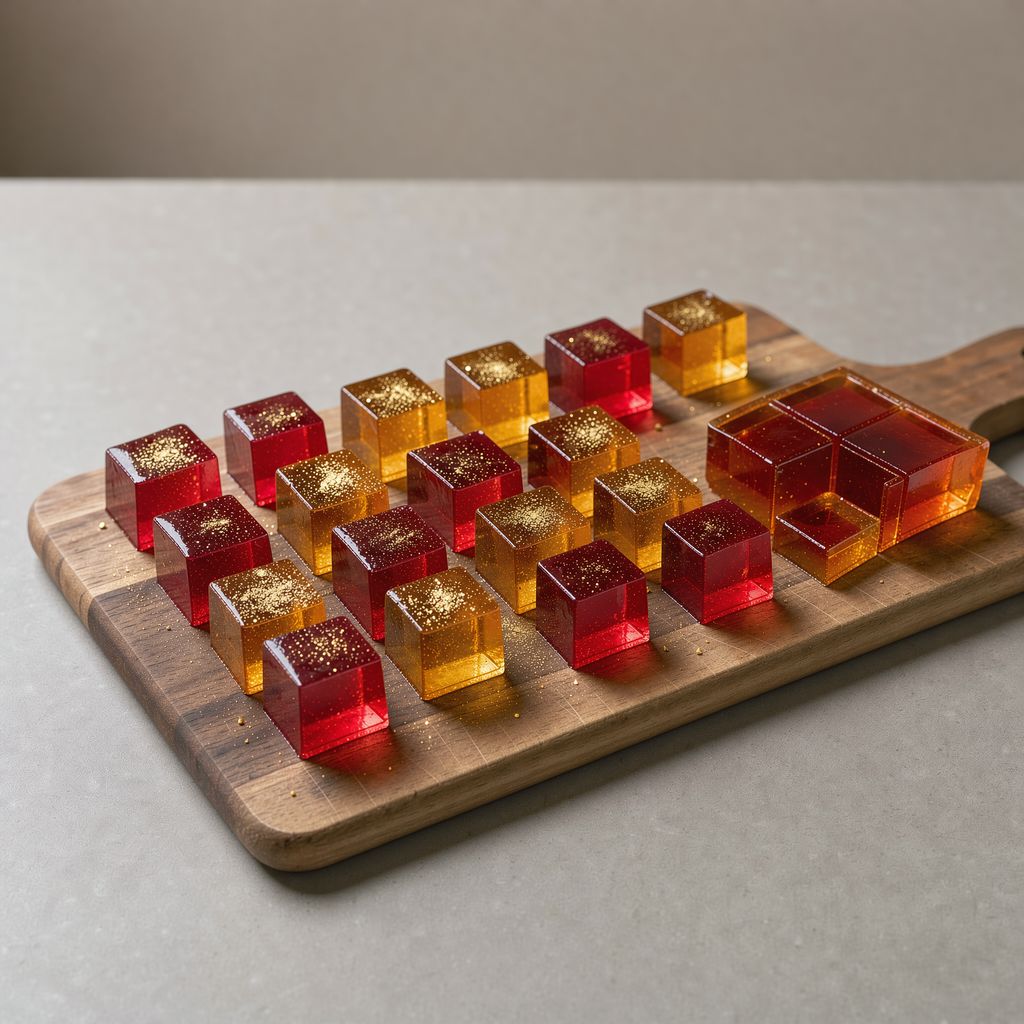
Sheet and knife (the surest way for large batches). Brush a 15 × 15 cm (6 × 6 in) pan with a thin layer of neutral oil and wipe off the excess with a paper towel. 500 ml of mixture makes a layer about 2.2 cm thick, which you can cut into 36 cubes of 2.5 × 2.5 cm, each about 14 ml. Dip the knife in hot water, wipe it and cut in one stroke. Reheat it after every cut.
Silicone mold. Put the set jello in the freezer for 15 minutes so the surface firms up. Then flex the mold and push the cubes out from underneath with your thumb. Don't leave them in the freezer for more than 20 minutes, because ice damages the structure of the jello.
Shot cups. Lightly rub the cups with oil beforehand. Before serving, run a finger or the blunt side of a knife around the edge of the jello and dip the bottom in warm water (about 40 °C / 104 °F) for 5 seconds. The jello then slips out on its own or can be sucked out.
Serve unmolded cubes within 1–2 hours. At room temperature, jello with alcohol softens faster than plain jello.
Flavor jello shots with juice, syrup or flavoring paste, and decorate them with edible glitter just before serving.
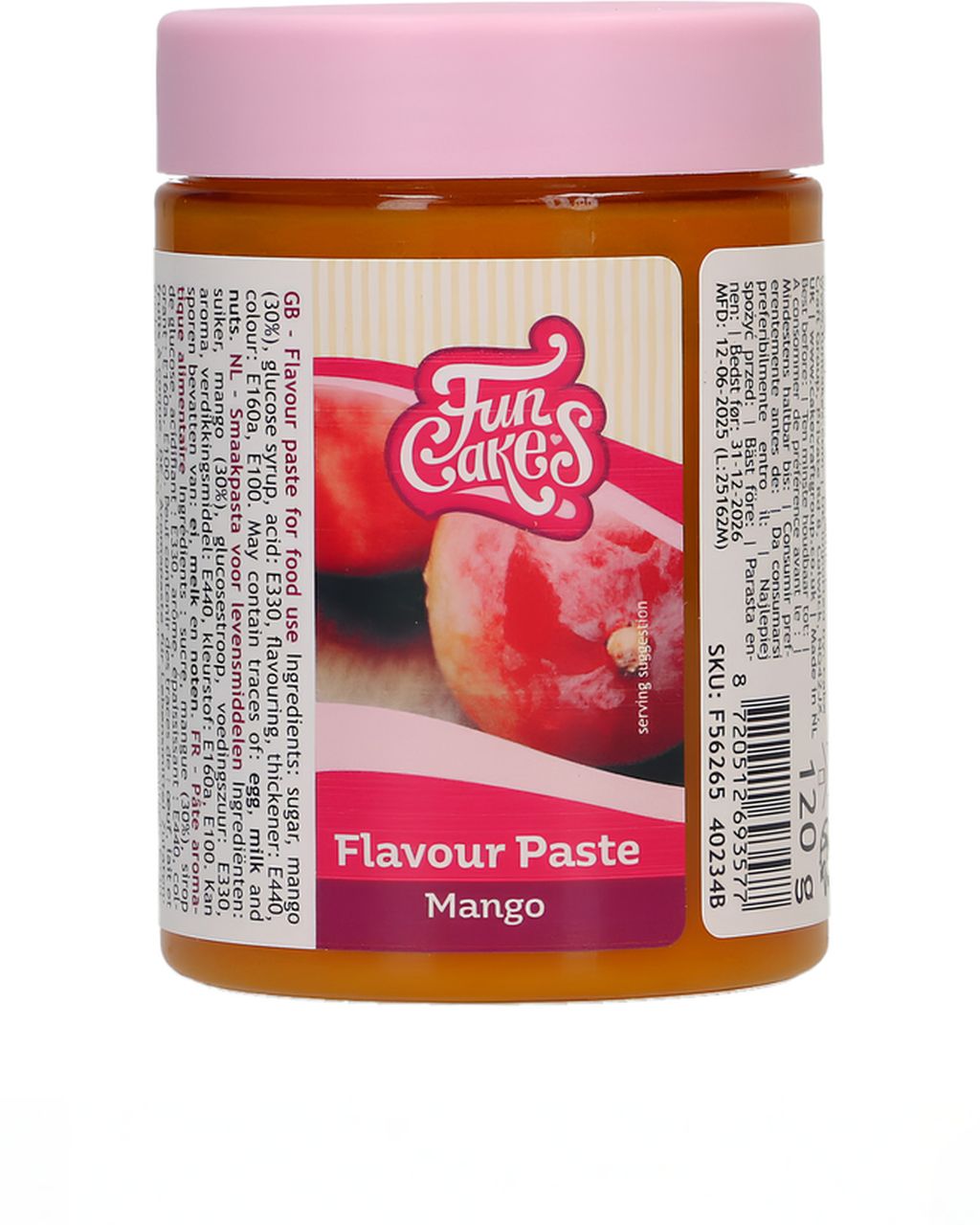
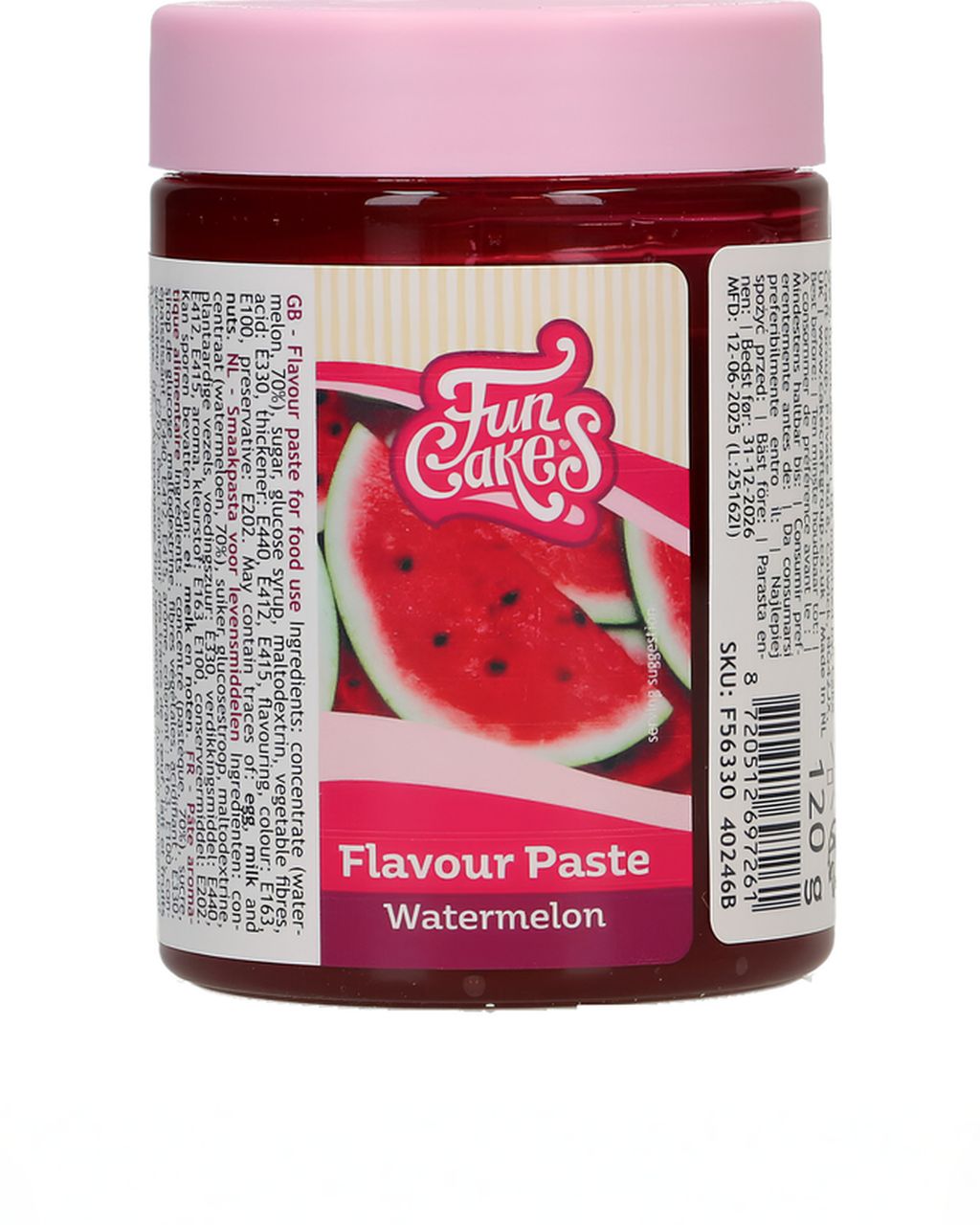
Flavoring pastes give both flavor and color at once. FunCakes pastes suit mango or melon jello. The manufacturer doses them at 30 g per 500 g of cream, but for jello start with 15–20 g per 500 ml, taste and add more if needed. Keep in mind that the paste makes the jello cloudy. If you want crystal-clear cubes, flavor them with clear juice or syrup.
Edible glitter: look for the label "E171 free." Titanium dioxide (E171) has not been permitted in food in the EU since 2022. There are two ways to use the glitter. You can dust the tops of unmolded cubes with a dry brush just before serving, since moisture darkens it over time. Or you can stir a pinch (about 0.5 g per 500 ml) into the mixture when it starts to thicken at around 20–25 °C (68–77 °F). The glitter then stays suspended throughout the jello and doesn't sink to the bottom.
Clear liquor or dark? Vodka and white rum let the color of the juice stand out. Dark rum or whisky give an amber tone and a pronounced flavor, which suits cola, apple or coffee.
To make layered shots, pour the next layer onto the previous one only once it has set but is still tacky, usually after 30–45 minutes in the fridge. The new layer must be lukewarm, not hot, or it will melt the layer below. Make a creamy layer from cream or condensed milk with the same amount of gelatin. You'll find the principle of colored cubes in milky jello in our article on sliceable mosaic jello.
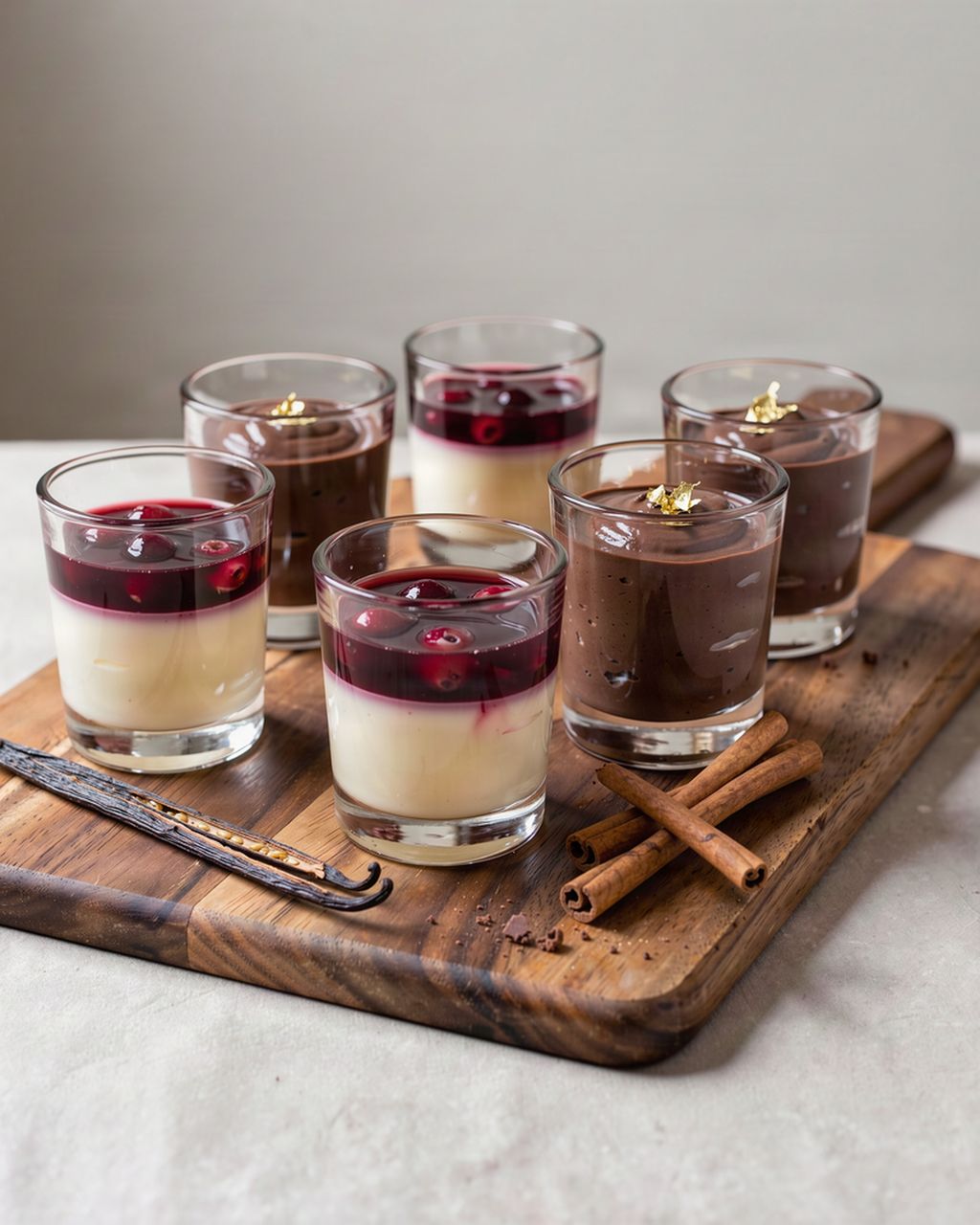
For drivers and for children, make an alcohol-free version with the same juice. Without alcohol, about 2.5% gelatin is enough, which is 12–13 g per 500 ml. Strawberry panna cotta with chocolate and mint jelly also makes a sweet alcohol-free finish. And if you're planning the whole New Year's Eve table, take a look at how to decorate open-faced sandwiches for New Year's Eve too.
Covered jello shots are fine in the fridge for 3–4 days, but the texture is best within 24 hours. After that they gradually firm up and turn rubbery, so make them no more than a day ahead. Cover them with plastic wrap, or the surface will dry out and pick up fridge odors. Serve unmolded cubes within 1–2 hours, as they soften at room temperature.
No, the freezer won't make jello shots set; it only damages their structure. Ice crystals tear the gel, and once thawed the cubes leak liquid. Use the freezer only for 15 minutes before unmolding from a silicone mold.
Rubbery jello shots have either too much gelatin or too much alcohol. Stay at no more than 4% gelatin and 20% alcohol in the finished mixture. Long storage in the fridge also adds to the rubberiness: they're edible for 3–4 days, but the texture is best within 24 hours, so don't make them more than a day ahead.
A layer at the bottom of jello shots means the gelatin didn't dissolve completely, or you added the liquor to a mixture that was too cold. Dissolve the gelatin at 50–60 °C (122–140 °F) and stir in the alcohol at 30–35 °C (86–95 °F), while the mixture is still liquid.
Plan on 3–4 cubes of 2.5 × 2.5 cm (1 × 1 in) per adult guest, which at 13% strength is about 4–6 g of alcohol per person. From 500 ml of mixture you can cut 36 cubes of roughly 14 ml each, which is enough for about ten people. If you serve them in 25 ml shot cups, 500 ml gives you only 20 shots.
One recipe worth heating the oven for, one tip, and one deal from the shop. Nothing else.