Homemade caramel sauce with just 4 ingredients
Powdered Sugar in Christmas Cookies: Why Not Granulated (and When You Actually Want It)
Updated Aug 29, 2026
Powdered sugar goes into cookie dough because it has time to dissolve — granulated sugar doesn't. Delicate shortbread-style doughs have very little water and bake quickly, so bigger sugar crystals stay put as tiny shards: you feel them on your tongue, they tear the dough as you roll it, and they leave microscopic holes once baked. Powdered sugar simply disappears, leaving behind a smooth, crumbly texture. But that's not the whole story. For meringues, caramel, and a crunchy finish, coarser sugar (granulated or coarse) is actually the better choice — you want to feel that grain. Here's what crystal size really does to dough, when to reach for which sugar, what's hiding inside powdered sugar besides sugar itself, and how to grind your own if you run out two days before Christmas Eve.
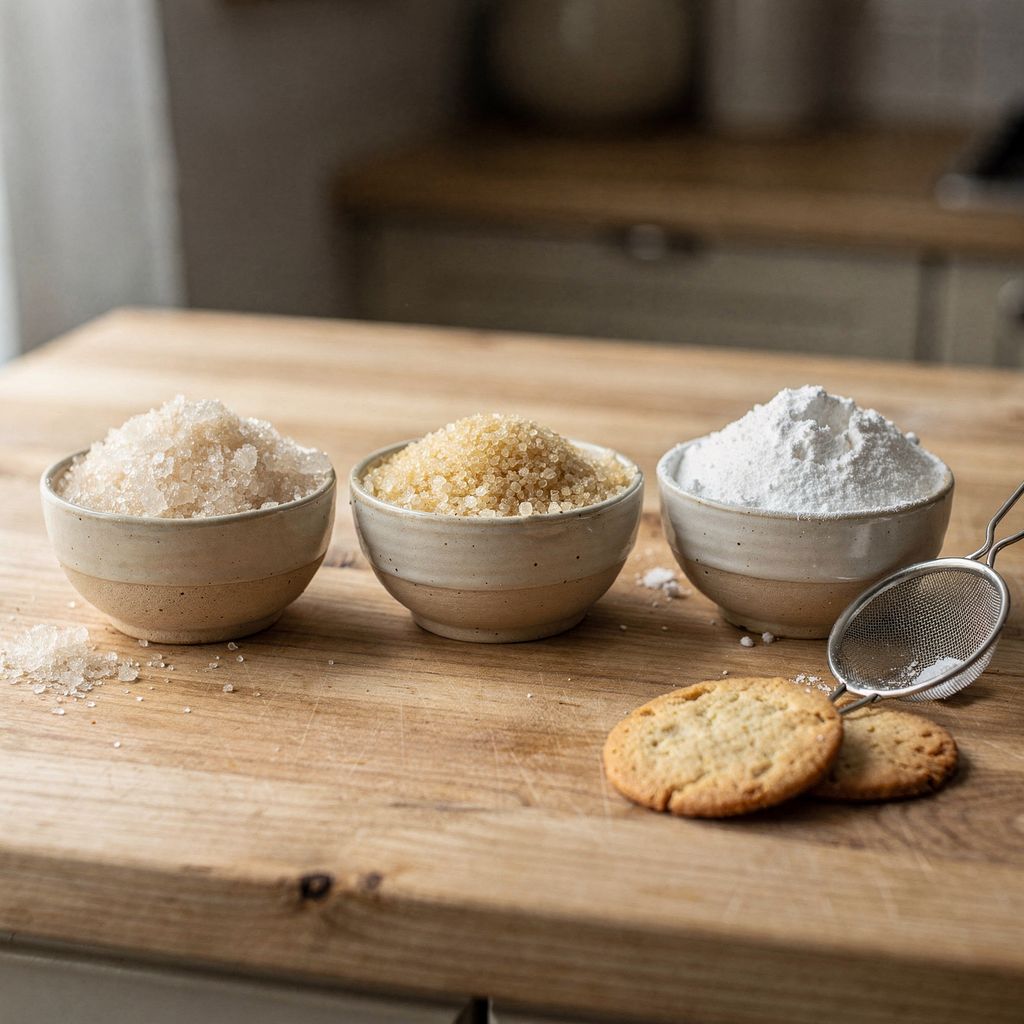
Powdered and granulated sugar are the same sucrose — they only differ in how finely they're ground: granulated grains measure around 0.5 mm, powdered sugar is roughly ten times finer, plus up to 3% starch is added to prevent clumping.
Coarse sugar — the chunky one. Regulations call for at least 70% of grains to fall between 0.40–2.00 mm; in practice the grain size tends to run around 1 mm or more. The kind you hear crunch as you spoon it into your coffee.
Granulated sugar (fine granulated) — by regulation, at least 70% of grains fall between 0.16–1.00 mm, though in practice it tends to sit around 0.5 mm. This is what most recipes mean when they simply say "sugar."
Powdered sugar (icing sugar) — the standard requires at least 90% of grains to be under 0.40 mm; in practice, though, it's ground far finer, typically down to tens of micrometers (around 0.05 mm). Plus up to 3% starch to prevent clumping.
Grain sizes in the Czech Republic are classified under regulation No. 490/2025 Coll., Annex 2, Table 6, "Classification of crystalline sucrose by particle size"; it replaced the older regulation No. 76/2003 Coll. If you come across different figures elsewhere — coarse sugar at 0.80–0.16 mm, powdered sugar at 95% under 0.40 mm — those are from the old standard. The new regulation lowered the powdered sugar requirement from 95% to 90% and raised the upper limit for granulated sugar's grain range from 0.80 to 1.00 mm.
The difference between granulated and powdered sugar isn't small — regular powdered sugar's grain is roughly ten times smaller than granulated sugar's. And since dissolving happens at the surface, a grain that much smaller dissolves dramatically faster. This one number pretty much explains everything else in this article.
There's one more trap to watch for: powdered sugar is airy. The same volume weighs roughly a third to almost half less than granulated sugar — a cup of granulated sugar is about 200 g, while the same cup of powdered sugar comes to 110–130 g depending on whether it's sifted. Never swap sugars by cups or spoons — always go by weight.
Powdered sugar goes into cookie dough for four reasons: it dissolves even in dough with almost no water, it doesn't whip air into the butter (so the cookies spread less), the starch in it holds back gluten and soaks up moisture, and it's smooth for coating and icing. Each one deserves a closer look.
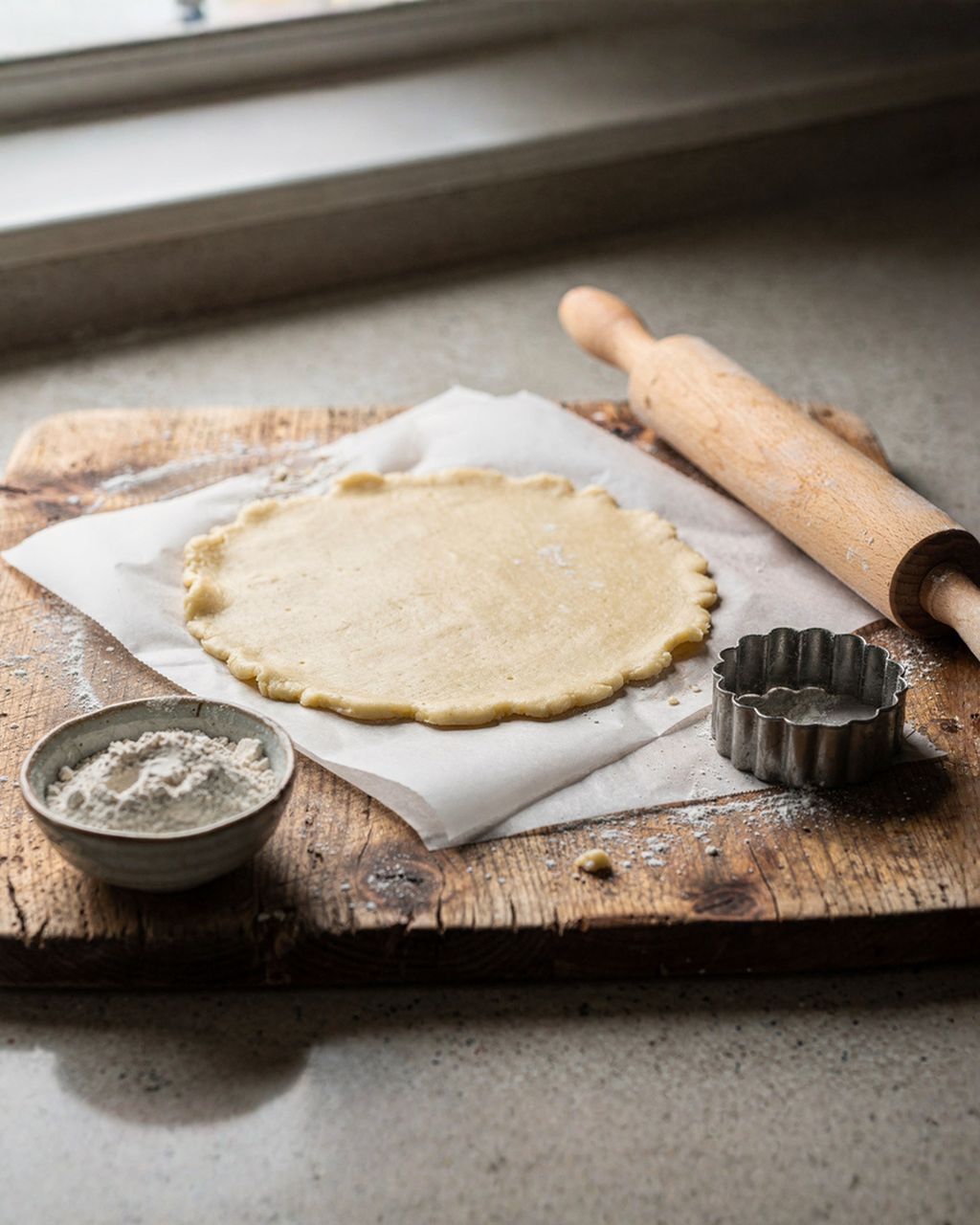
Sugar dissolves in water, not fat — and delicate shortbread-style dough contains only a few percent water. Linzer dough, for instance, is butter, flour, and egg yolk; all the water in it comes from the butter (about 16%) and the yolk. You bake it for 8–12 minutes at 170–180°C (340–355°F), and that tiny bit of water evaporates before it has a chance to dissolve a 0.5 mm granule.
Here's what that means for the finished cookies:
A grainy bite. You can feel undissolved grains even when the dough is otherwise perfectly delicate.
Holes and crumbliness. The granule partially dissolves in the oven and leaves a tiny cavity behind. Thousands of these cavities turn delicate texture into outright crumbliness.
Tearing while rolling. A hard granule is a foreign body in a thin sheet of dough — the sheet tears around it, especially with cut-out cookies.
Powdered sugar, in the same dough, blends with the fat almost instantly. There's an underrated bonus too: you work the dough faster, which means less overworking, and less-worked gluten means more delicateness.
When you cream butter with granulated sugar, the sharp edges of the crystals mechanically carve tiny air pockets into the butter — it's a form of leavening without any raising agent. Powdered sugar has no edges and dissolves almost instantly, so it doesn't add air to the butter at all.
In a pound cake or a whisked batter, that's a drawback. In cookies, it's exactly what you want:
the dough stays dense and compact, not puffy,
cut-out shapes keep their crisp edges and don't spread,
the texture is fine, not porous — the break is short and clean.
So the rule flips depending on what you're making: the more a cookie needs to hold its shape and stay short, the more it wants powdered sugar. The more it needs to rise and stay soft, the more it wants granulated.
The starch in powdered sugar binds up some of the moisture that would otherwise go to the flour — and the less water reaches the gluten proteins, the less gluten develops in the dough. The result is a softer, shorter, more delicate dough that also spreads less. Even the mere three percent of starch in powdered sugar is enough to do this.
That same property makes powdered sugar the only sensible base for royal icing (also called egg-white icing): the powder mixes smoothly into egg white, and the starch helps the icing set faster and stay put on the gingerbread where you piped it.
For coating and icing, powdered sugar is the only real option, because its grain is so fine it sits on the surface without you ever noticing it. Granulated sugar just slides off a crescent cookie — the grains won't stick to the butter — and whatever grains do stick will crunch under your teeth instead of melting away.
Coating crescents and other rolled cookies. Sift the powdered sugar before coating. A lump that's clumped up in the bag ends up as a white bump on the finished cookie and only dissolves once it hits your mouth.
Royal icing. Powdered sugar passes even through the finest piping tip. The smallest undissolved grain will clog the tip mid-stroke, so always sift the icing through a fine sieve into the piping bag rather than spooning it straight in.
You want coarser sugar (granulated or coarse) whenever the sugar needs to stay noticeable or transform into something else: meringues, caramel, and a crunchy sugar coating. In all three cases, the fineness of powdered sugar works against you. There's a fourth reason to reach for granulated sugar — aerating whisked batter — covered above in "Aeration: sharp crystal edges whip air into butter."
Meringue calls for granulated sugar, because egg whites hold enough water to dissolve it — and dissolved sugar is exactly what holds meringue together. Coarse sugar is too rough: it won't dissolve, syrup will weep out of it during baking, and you'll end up with a sticky puddle under your meringues.
A practical test: add the sugar to already-whipped egg whites a spoonful at a time, whisking continuously, until you can't feel any grain between your fingers. It takes longer than you'd expect — easily 5–8 minutes.
Powdered sugar can go into meringue too, but the starch makes it duller and slightly chalky. Pastry chefs tend to add it only at the very end, and only part of the total sugar.
For caramel, use plain granulated or coarse sugar only. Sucrose starts to caramelize around 160°C (320°F) and full caramel flavor develops around 170–180°C (340–355°F) — and at that temperature, the starch in powdered sugar won't dissolve; it'll cloud the caramel and burn before the sugar itself does.
The same rule applies to sugar syrup, fondant, and pulled sugar: the purer the sugar, the cleaner the result.
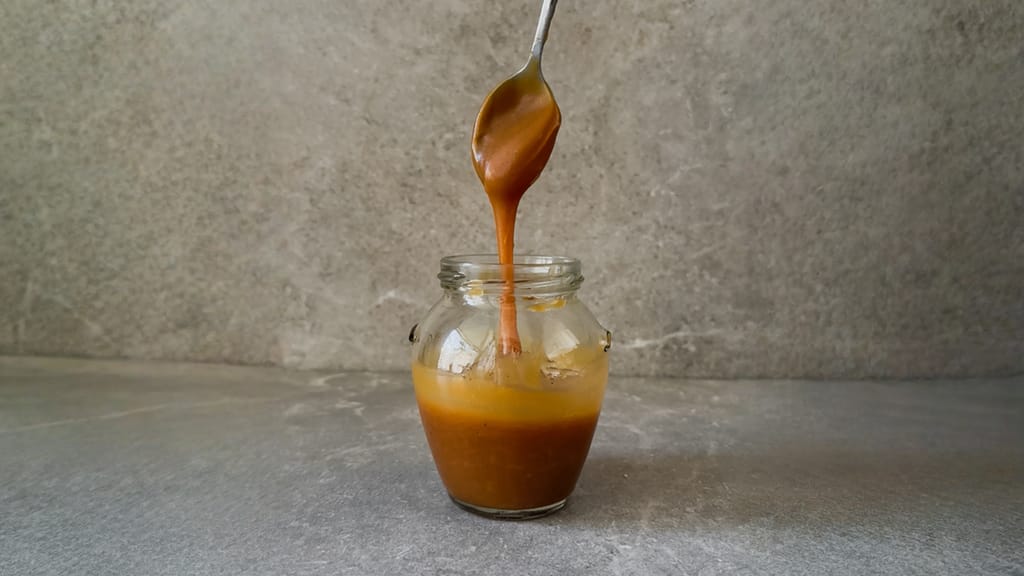
Homemade caramel sauce with just 4 ingredients
Homemade four-ingredient caramel sauce — caramel made from pure granulated sugar
Coarse sugar sprinkled on top of dough right before baking partially melts in the oven and sets into a thin, glassy crust that crunches under your teeth. That's exactly the effect you know from gingerbread topped with coarse sugar, or butter cookies with a sugary crust.
Try the same thing with powdered sugar and nothing happens — it just soaks into the dough and vanishes. So the rule is simple: powdered sugar goes inside the dough, coarser sugar goes on top.
Powdered sugar contains added starch (potato, corn, or wheat), capped by regulation at no more than 3% by weight. You'll find it listed on the pack twice, each time under a different name: in the ingredients list, either simply as "potato starch," or — if it's modified starch — as "anti-caking agent (modified potato starch, up to 3%)"; in the product name itself, it appears as the legally required label powdered sugar with anti-caking agents. It's there so the fine powder doesn't clump: sugar ground this fine has an enormous surface area that loves to condense airborne moisture, and without the starch, the bag would turn into a solid brick within a few weeks.
Here's what that means for you in the kitchen:
Icing sets faster and holds better — the starch binds water from the egg white.
Dough is shorter/more delicate — the starch takes water away from the gluten.
It's a problem in hot syrup — it won't dissolve, clouds the syrup, and burns.
It gives a slight stabilizing boost to creams and whipped cream — which is why they're usually sweetened with powdered rather than granulated sugar.
Starch-free versions do exist. You can only tell by checking the ingredients list, not the product name — flip the bag over and look for starch among the ingredients. Without starch, the sugar clumps more, so always sift it before use.
If icing or a filling has ever thickened up more than expected for no obvious reason, this is usually why. Three percent starch in 300 g of sugar comes to 9 g — and that's the maximum; it's usually a bit less. Even in a small batch of icing, you'll notice the difference.
You can grind your own from granulated sugar: 200 g granulated sugar + 6 g (just under a level tablespoon) cornstarch or potato starch, in a powerful blender or coffee grinder, 30–60 seconds at full speed. It comes out almost identical to store-bought.
The container and blade must be completely dry — even a trace of moisture will clump the sugar instantly.
Fill the blender no more than a third full, otherwise the sugar just spins around the blade without grinding.
Grind in short pulses, 10–15 seconds at a time, shaking the container in between.
Once it's ground, let the container sit closed for a minute — otherwise the fine dust will fly all over your kitchen.
Sift. Whatever doesn't pass through the sieve goes back in for another grind.
Two important notes. Measure the ratio by weight, not by cups — powdered sugar is noticeably lighter than granulated, so swapping by volume gives you about a third less sugar than the recipe needs. And use freshly ground sugar right away; homemade ground sugar isn't as evenly fine as the store-bought kind and tends to clump in the bag.
And what if you don't have anything to grind it with? Base your decision on how much liquid is in the dough:
Gingerbread and honey-based dough — you can swap in granulated sugar 1:1 without issue; the honey and eggs will dissolve it.
Linzer dough, crescents, pressed cookies — better to track down some powdered sugar. Granulated sugar will feel gritty here, the dough will be harder to roll out, and the shapes will lose their edges.
Linzer cookies, crescents, and pressed cookies call for powdered sugar; gingerbread and meringues call for granulated; and butter cookies with a crunchy crust want powdered sugar inside and coarse sugar on top. In more detail:
Linzer cookies — powdered sugar in the dough. Little water, short baking time, cut-out shapes: exactly the case where granulated sugar would ruin the delicate texture.
Vanilla crescent cookies — powdered sugar in the dough and for coating. Grind your own vanilla sugar for coating from powdered sugar and a scraped-out vanilla pod.
Gingerbread — granulated sugar or honey in the dough; there's enough liquid in it to dissolve it. Save powdered sugar for the royal icing decoration.
Pressed cookies — powdered sugar. The dough gets pressed into molds and needs to be smooth and compact.
Meringue — granulated sugar, added a spoonful at a time to whipped egg whites.
Butter cookies with a crunchy crust — powdered sugar inside, coarse sugar on top before baking.
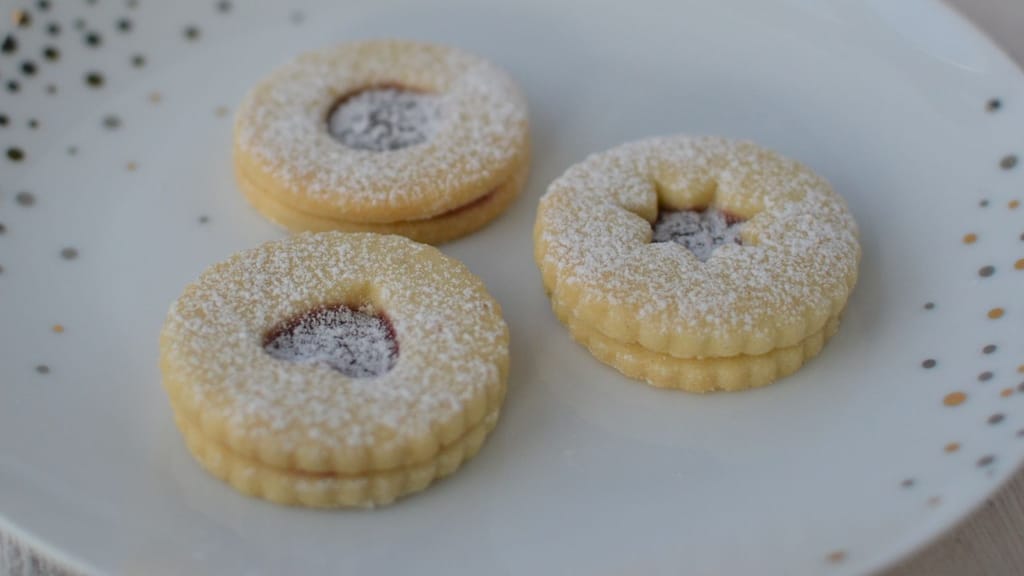
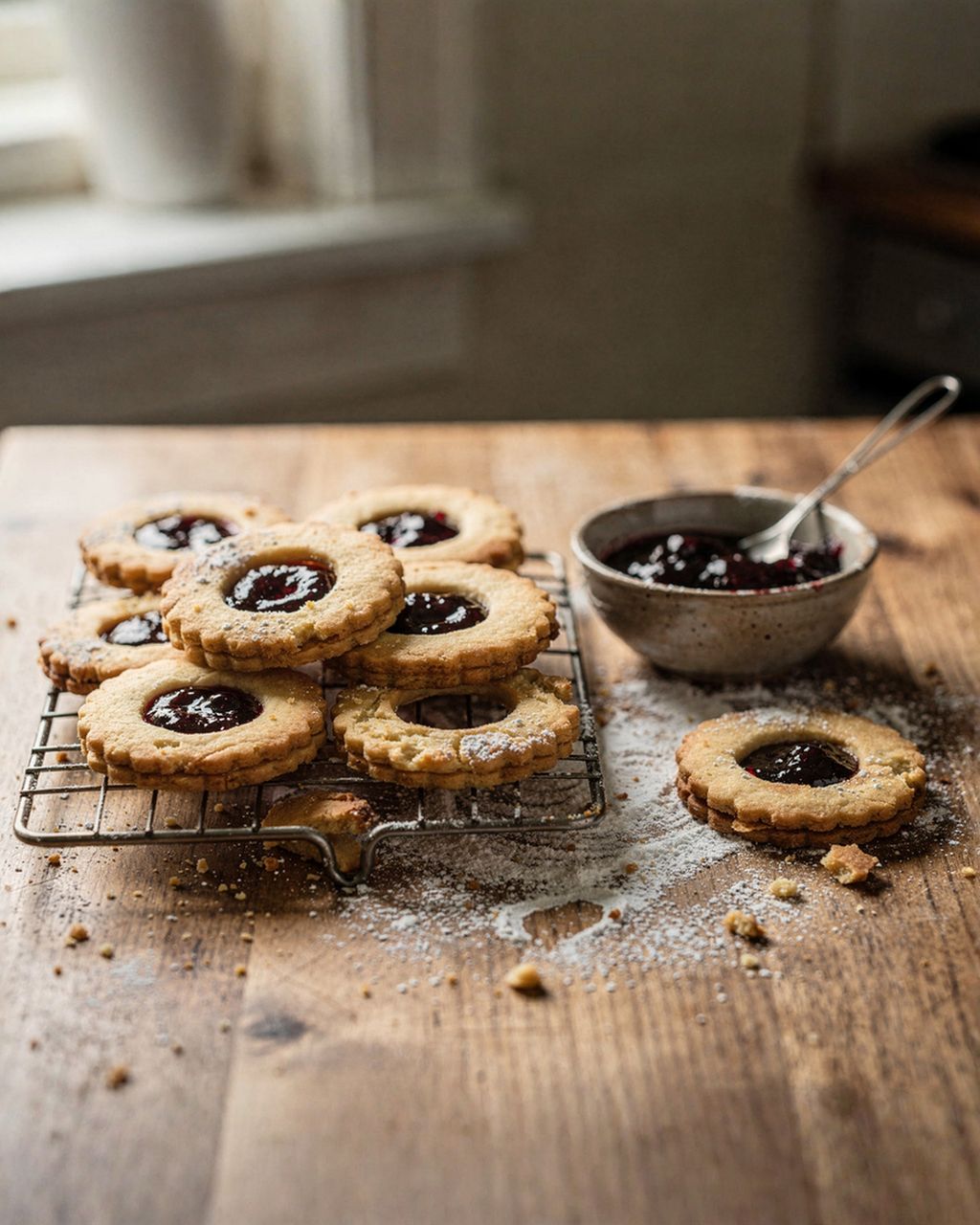
Classic christmas cookies: delicate linzer cookies
Classic delicate Linzer cookies — a dough where powdered sugar makes all the difference
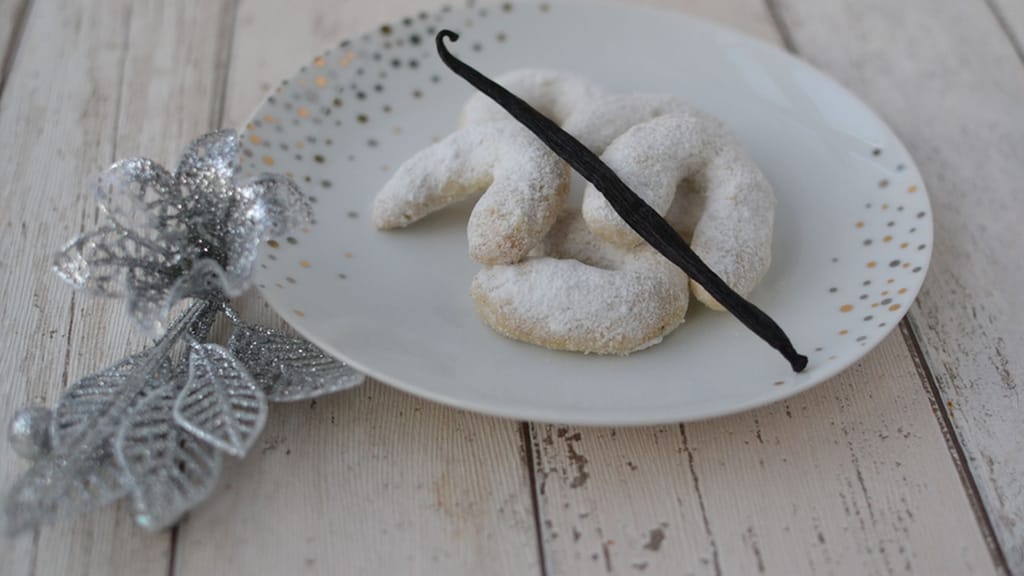
The best christmas cookies? vanilla crescents, of course!
Vanilla crescent cookies coated in vanilla powdered sugar
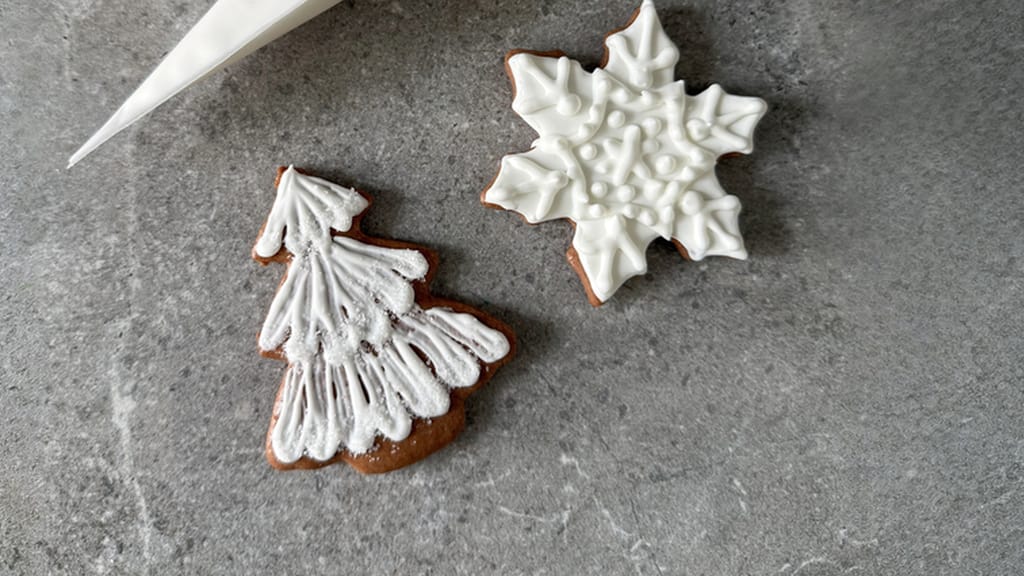
Royal icing for christmas cookies: the base for flawless decorating
Royal icing made from powdered sugar for decorating gingerbread
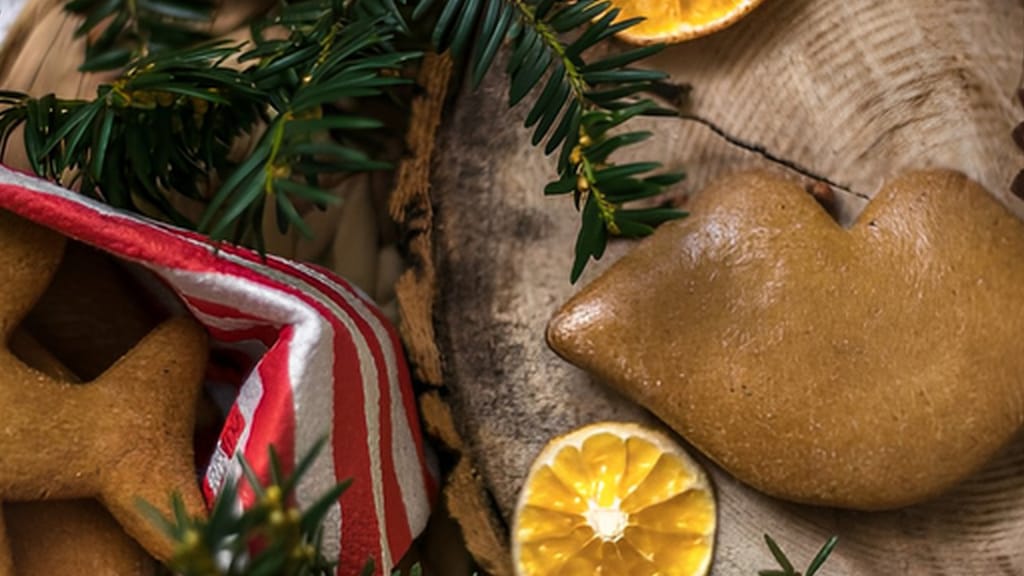
Soft gingerbread cookies
Soft gingerbread — a dough with enough liquid where granulated sugar works just fine
Besides sugar, two other variables decide how delicate your cookies come out: the fat (how much of it there is, how cold it is, and how evenly it's worked into the flour) and how the dough is handled (the less you knead, the less gluten develops, and the shorter the dough stays). Sugar is only one part of the equation — here's more reading that picks up where this leaves off.
Cookies crunching under your teeth is usually down to lumps of unsifted powdered sugar, not crystal size. Powdered sugar clumps up in the bag over time, and a lump won't dissolve in butter any better than a granule would — always sift it, even if it looks fine and loose. The second culprit is homemade ground sugar that still has some coarser bits left in it; sift it after grinding and re-grind whatever's left over. And third: granulated sugar hiding in a sugar coating or filling that you forgot to account for.
Powdered sugar is hygroscopic — it pulls moisture from the cookies themselves and from the air inside the tin, then soaks straight into the surface. Crescent cookies are coated twice for exactly this reason: once while warm, straight out of the oven (so the sugar sticks), and again, dry, right before serving. It doesn't help to store sugar-coated cookies alongside soft, moist ones — the powdered sugar will happily draw moisture from your gingerbread.
Yes, powdered sugar works well for whipped cream and creams — and it's actually the better choice over granulated sugar, since it dissolves instantly in a cold mixture. Granulated sugar won't fully dissolve and you'll notice the grain, whereas the starch in powdered sugar even gives a slight stabilizing effect — whipped cream holds its shape longer and separates less. Just adjust the quantity: powdered sugar is lighter by volume, so weigh it rather than measuring by spoonfuls.
Store homemade powdered sugar in a clean, completely dry sealed jar — never a bag. Keep it in a pantry or cupboard away from steam, never near the stove, above the dishwasher, or in the fridge, where moisture condenses on the cold sugar. Open the jar as little as possible and never dip in a damp spoon; sift the sugar through a fine sieve before each use.
The sugar itself is gluten-free, but the anti-caking agent in it can be wheat starch. Czech manufacturers typically use potato starch, while imported brands may use corn or wheat starch instead — if you're gluten-free, always check the ingredients list on the pack, or grind your own from granulated sugar and cornstarch.
One recipe worth heating the oven for, one tip, and one deal from the shop. Nothing else.