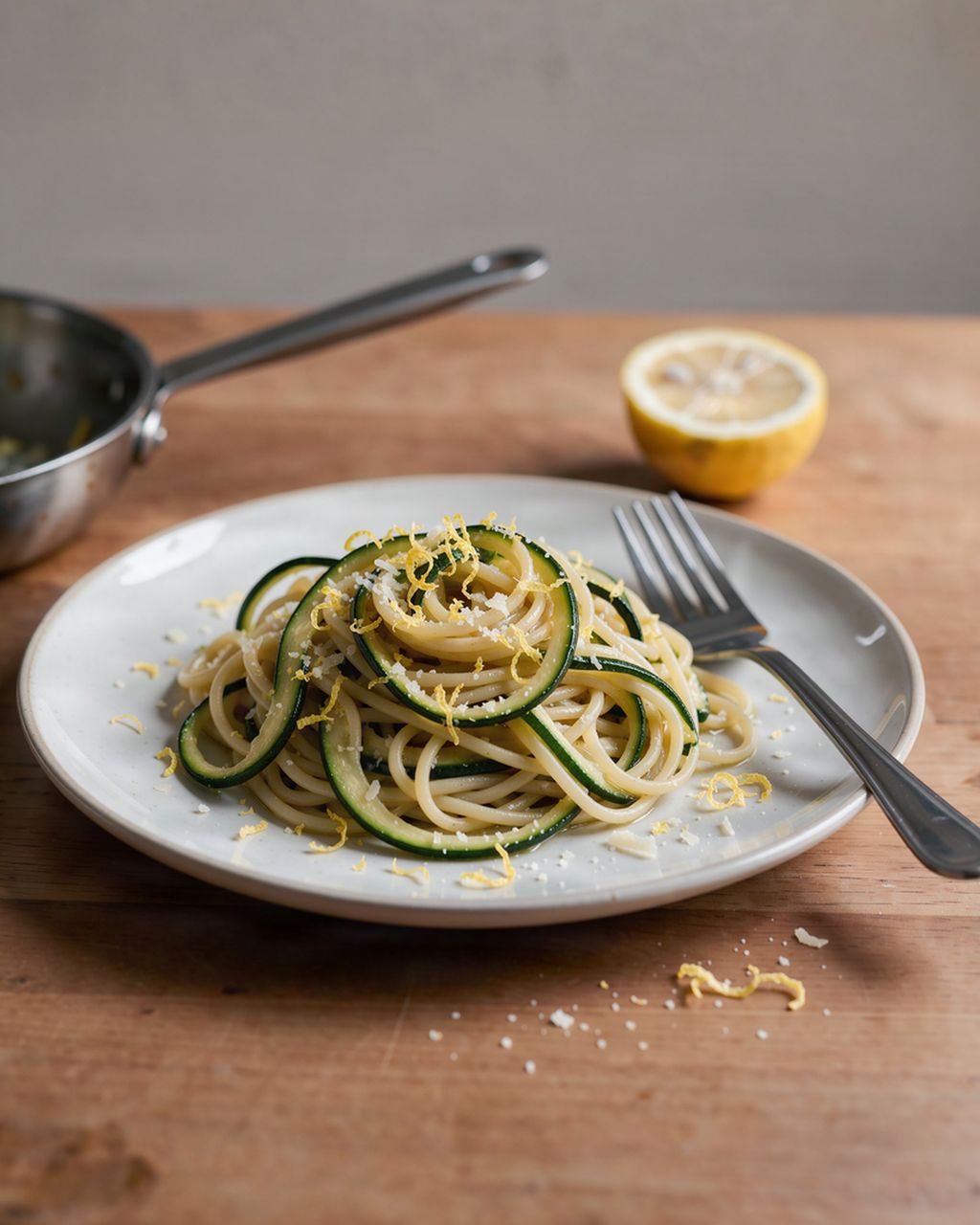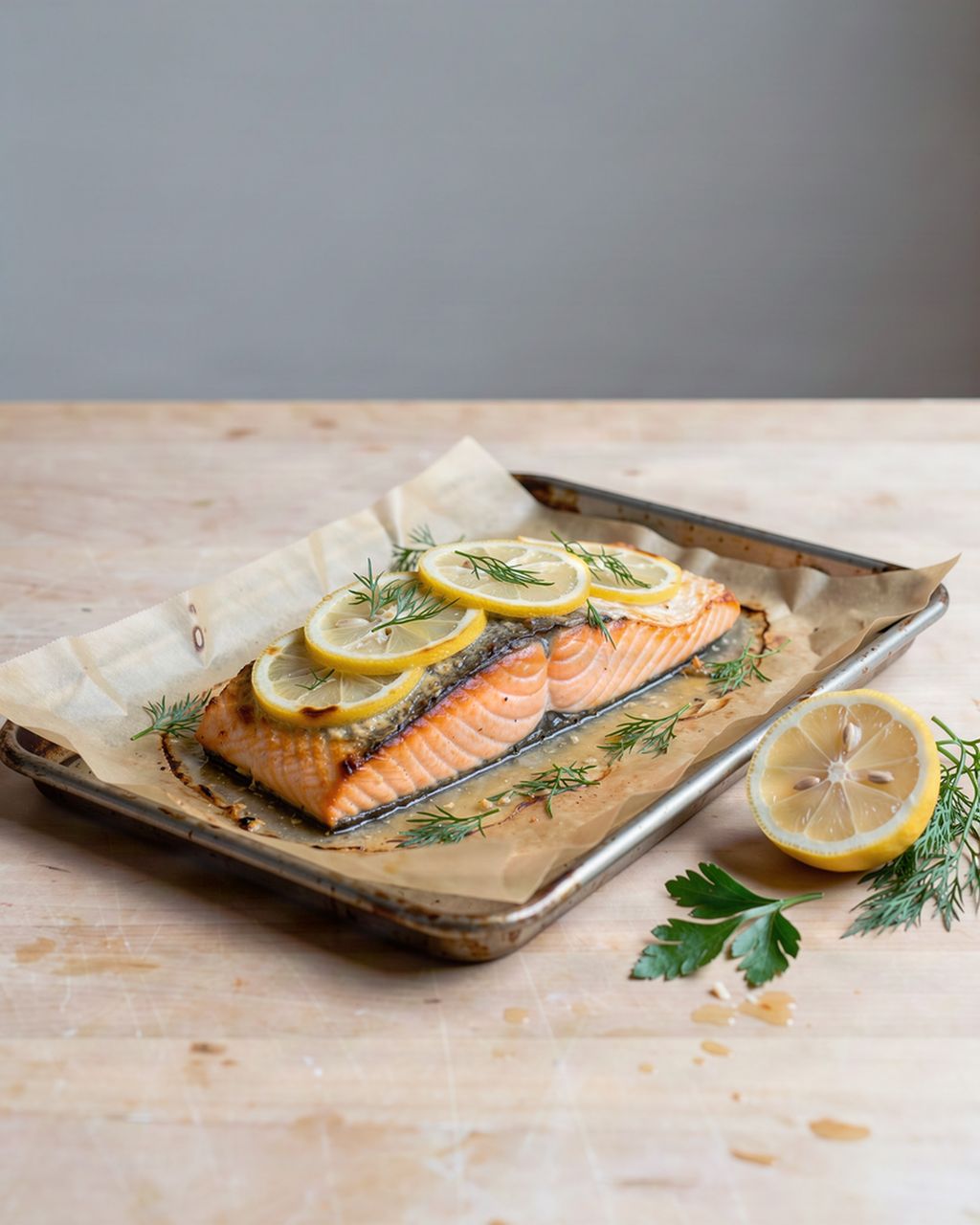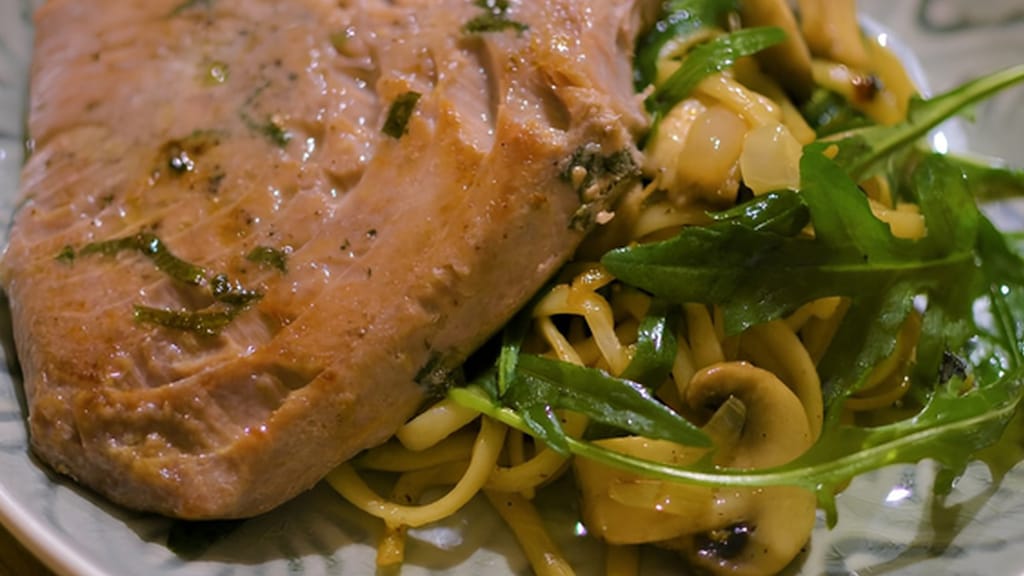
Tuna with mint and gluten-free pasta
What to Make With Tuna: Canned or a Fresh Steak
Updated Nov 18, 2026
What can you make with tuna when you want a quick dinner? From a can, you can have pasta, a bean salad, a spread, patties or a pasta bake in 20 minutes, and a fresh steak is done in the pan in five. What matters most is which tuna you have at home. Tuna in oil suits dishes where you want juiciness and flavor, tuna in its own juice suits dishes where you're adding your own fat or sauce, and a steak is a completely different kind of meat that cooks briefly. For each dish you'll find what makes it good, which tuna to pick and what to watch for. At the end you'll find how much tuna the UK's NHS recommends in pregnancy and how to store an opened can.
Tuna in oil is juicier and more flavorful, tuna in its own juice is leaner and drier, and a fresh steak is a separate meat for the pan, not a substitute for canned. You can usually make any dish with either can, you just adjust the fat accordingly.
Tuna in oil: soft, tender flakes and full flavor. Good in pasta, in salads without mayonnaise and anywhere the tuna doesn't get another sauce.
Tuna in its own juice (often also labeled "in brine" or "in water"): leaner, drier and more neutral. Ideal for spreads, patties and bakes, where mayonnaise, cheese or eggs supply the fat.
Tuna steak: fresh or frozen fillet that is seared briefly. It tastes more like beef than like canned fish, and it's a waste to put in a spread.
Tuna in oil has roughly 185–200 kcal per 100 g once drained, and tuna in its own juice roughly 90–130 kcal depending on the species and brand, according to the US nutrient database USDA. Both are high in protein: drained tuna in oil has roughly 26–29 g protein per 100 g, and tuna in its own juice roughly 19–26 g, depending on the species and brand.
In practice this gives you a simple rule: if you use tuna in oil, cut fat elsewhere (less oil in the pan, less mayonnaise). If you use tuna in its own juice, add the fat yourself, or the dish will be dry and crumbly.
Open the lid partway, press it onto the fish and pour off the liquid; then tip the tuna into a sieve and press lightly with a fork. For a moist dish, don't press it bone dry, just get rid of the loose liquid.
Don't throw the oil away. From a good can it's flavored oil, which you can use to soften garlic for pasta or add to a dressing.
The liquid from tuna in its own juice can go into a pasta sauce, where it adds saltiness and a fishy depth. Keep it out of a spread, where it will thin it.
For patties and fish cakes drain thoroughly. Every extra spoonful of liquid makes the patties more likely to fall apart in the pan.
Flake it at the end. Big pieces of tuna in a salad look and taste better than a mush mashed as soon as the can is open.
We send seasonal cooking and baking plans and recipes made from everyday ingredients. Unsubscribe in one click.
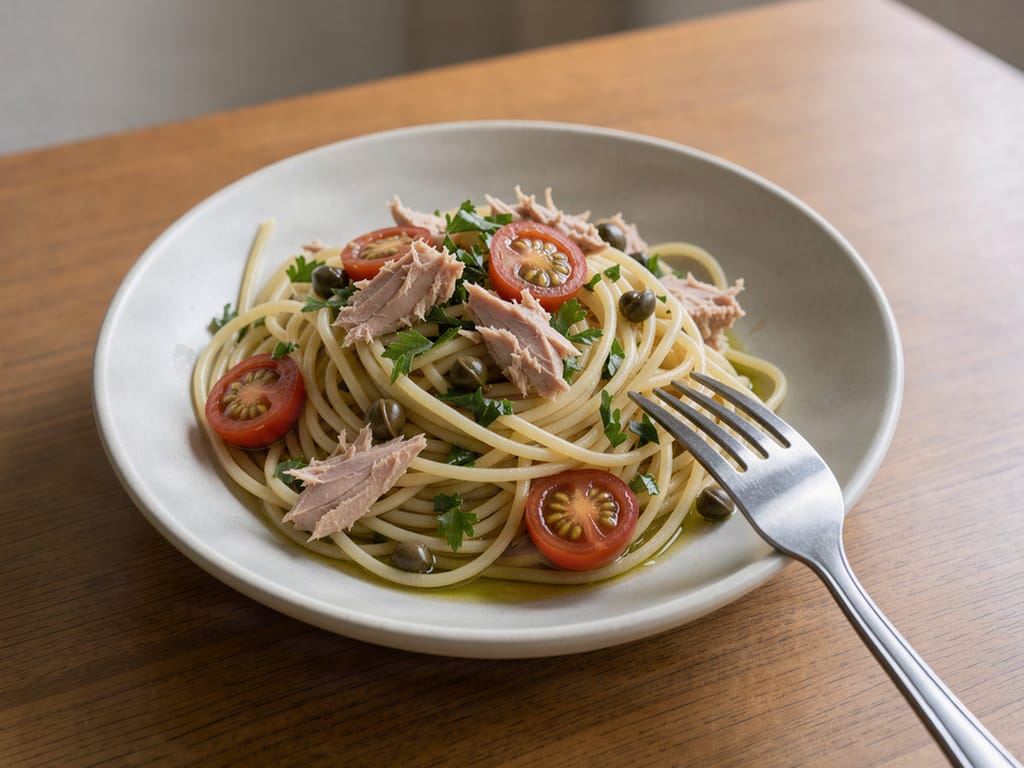
You can make tuna pasta in three basic ways: with tomato sauce, with oil, lemon and capers, or with cream. All three are ready in the time it takes to cook the pasta, so 10–12 minutes, and you should allow 60–80 g drained tuna per serving. One rule applies to all of them: add the tuna at the end and just warm it through. If you simmer it in the sauce, it dries out and falls apart into crumbs.
If you're not sure how much water and salt to use for pasta, see our guide on how to cook pasta.
Tuna pasta with tomato sauce is a pantry classic: tuna in oil, chopped tomatoes, garlic and capers. Let the sauce bubble for 8–10 minutes to thicken, and add the tuna for the last minute only, so it stays in tender chunks. Use the oil from the can to soften the garlic, which gives the sauce a savory depth for no extra effort; instead of Parmesan, try dry-toasted breadcrumbs.
Tuna pasta with lemon and capers is the fastest version, ready in 10 minutes and built on tuna in oil. You don't cook a sauce: toss hot pasta with a little pasta water in a bowl with the tuna, its oil, lemon zest and capers, and the starch and oil come together into a glossy sauce. It's good cold the next day too.
For a fresh tuna steak, grilled with mint and served with spaghetti and mushrooms, try the recipe tuna with mint and gluten-free pasta.
Tuna with mint and gluten-free pasta
Tuna and mint pasta: a fresh gluten-free version
Creamy tuna pasta is built on cooking cream, onion and peas, which is why tuna in its own juice belongs here: the cream supplies the fat. The sauce needs only 3 minutes of simmering, you simply stir in the tuna, and lemon zest at the end freshens the creaminess. Kids usually eat this version without complaint.
You can build a tuna salad most often on beans, on eggs and potatoes in the niçoise style, or on pasta. The tuna acts as the protein that turns a salad into a proper lunch, and you should allow 100–120 g drained tuna per serving. Tuna in oil, flaked into large pieces and added last so it doesn't break down, tastes best.
If you have dried legumes at home, our guides on how to cook beans until tender or how to cook chickpeas will help you prepare the base. Chickpeas work in a tuna salad just as well as beans.
Bean and tuna salad is a Tuscan classic with three ingredients: white beans, tuna in oil and red onion. Let the onion pickle for 10 minutes in vinegar with a pinch of salt to mellow it, and let the finished salad rest for 15 minutes so the beans soak up the dressing. With toasted bread, it's a whole lunch.
Among legume dishes you might also like the lentil salad with tuna, which is more filling and keeps in the fridge until the next day.
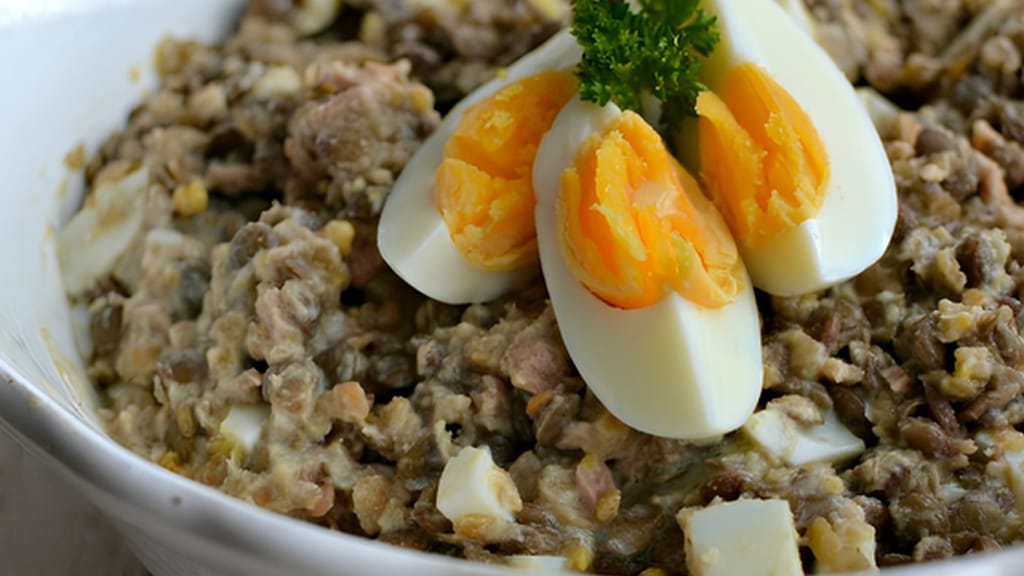
Lentil salad with tuna
Lentil salad with tuna: a hearty legume lunch
Niçoise-style tuna salad is a full dinner of eggs, potatoes, green beans, olives and large chunks of tuna in oil. Boil the eggs for 8 minutes so the yolk stays creamy, and cool the green beans in cold water after 4 minutes so they stay green and crisp. A mustard dressing with wine vinegar ties everything together.
If you have eggs left over, you'll find more ideas in the article what to make with eggs.
Tuna pasta salad is made with short pasta, tuna, vegetables and a yogurt dressing, and it tastes best the next day from a lunchbox. Cook the pasta a minute longer than the package says, because it firms up in a cold salad, and leave the salad in the fridge for at least 30 minutes so the flavors come together.
Without pasta, with just salad leaves and homemade mayonnaise, there's the fresh tuna salad with sun-dried tomatoes.
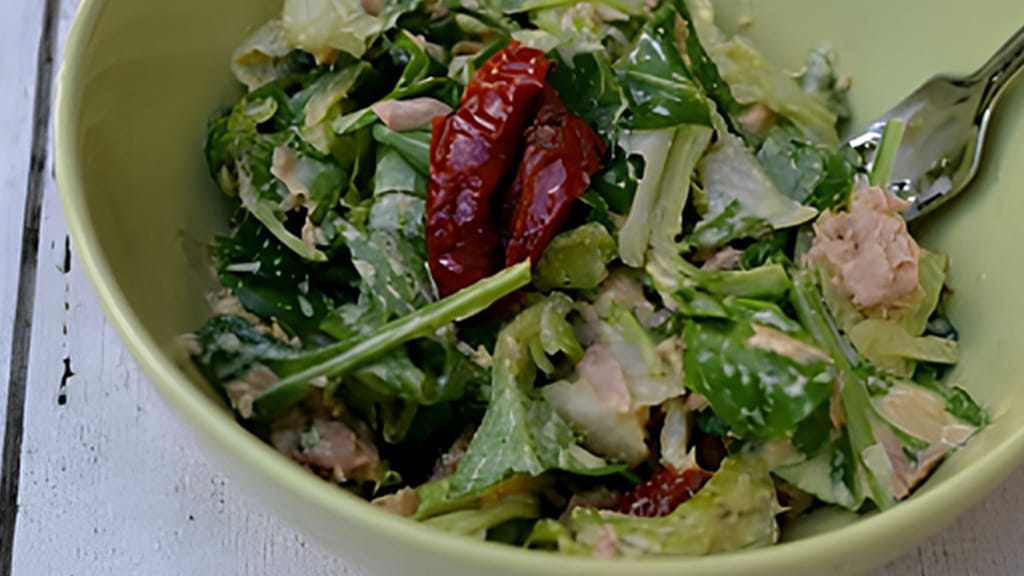
Fresh tuna salad with sun-dried tomatoes
Fresh tuna salad with sun-dried tomatoes
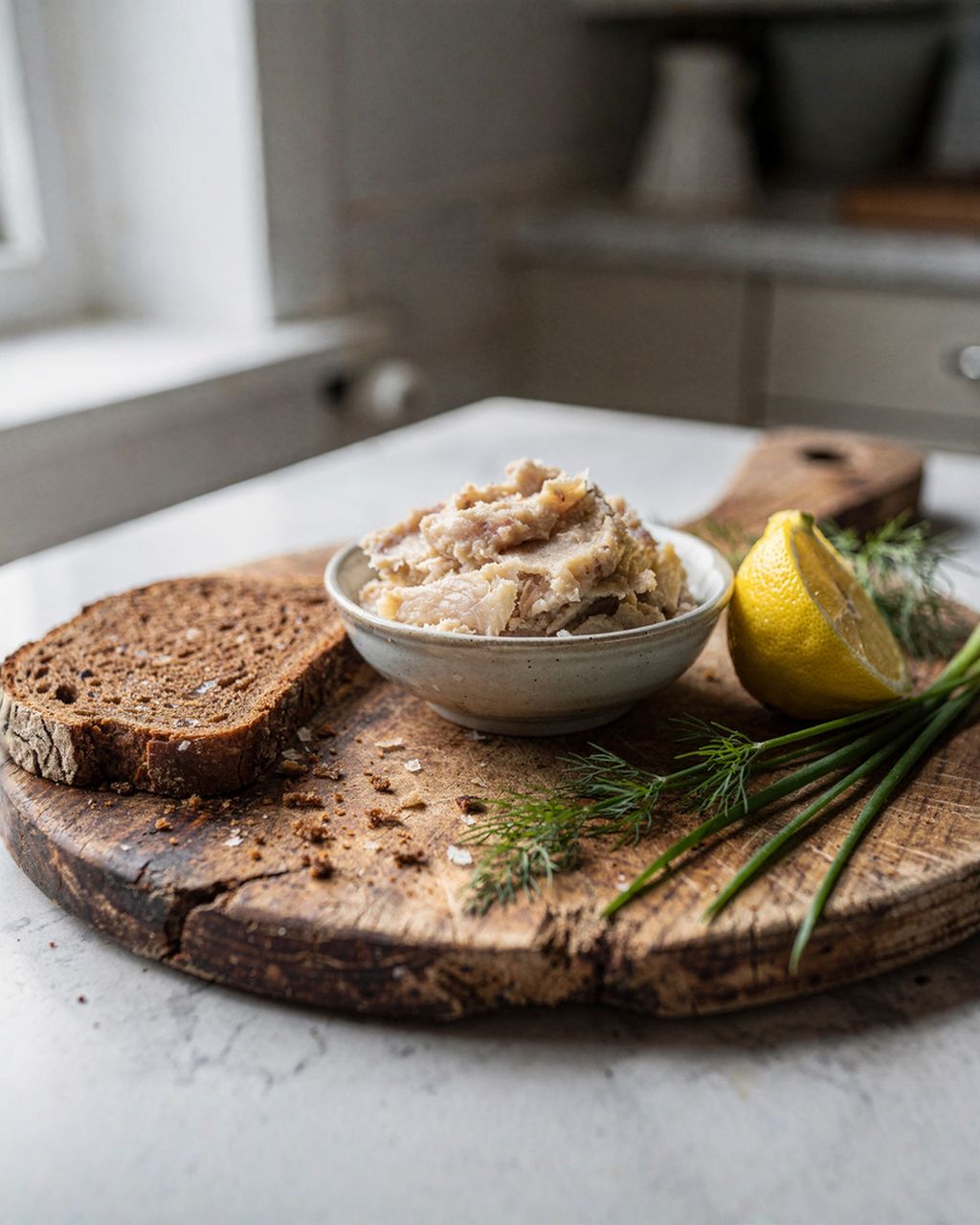
You can make a tuna spread in 5 minutes from one can of tuna, 100–150 g quark (tvaroh, a Czech fresh curd cheese) or lučina (a Czech soft fresh cheese) and finely chopped onion, seasoned with lemon and pepper. Tuna in its own juice is the better choice here, since the dairy base supplies the fat. Don't blend the spread smooth; a quick mash with a fork leaves a texture that tastes better on bread.
Pickles, capers, hard-boiled egg or chives go well in it. Why tuna behaves differently in a spread from sardines or mackerel, and which base to choose, we cover in the article fish and tuna spread. In a closed container in the fridge it keeps 1–2 days.
Tuna patties and fish cakes hold together thanks to an egg and a binder, best mashed potato or breadcrumbs, and they fry for 3–4 minutes per side over medium heat. Allow 100–120 g drained tuna per serving. The key is to drain the tuna well and let the mixture rest in the fridge for a while, or it will fall apart in the pan.
Tuna and potato patties are the most tender version: cold mashed potato holds the mixture together and doesn't dry it out the way breadcrumbs alone do. Let the shaped patties firm up in the fridge for 15 minutes, then fry them for 3–4 minutes per side until golden. Serve with yogurt tartar sauce and a green salad.
Tuna fish cakes are the potato-free version, in which only egg and breadcrumbs bind the tuna. The mixture should be shapeable and not stick to your hands; if it sticks, add breadcrumbs a spoonful at a time. Fry them for 3 minutes per side, or bake for 15–18 minutes at 200°C (400°F), and serve with mashed potatoes, in a bun as a burger, or cold in a lunchbox.
For similar patties made with fresh salmon, see the recipe salmon fish cakes with tartar sauce.
Baked tuna is the most convenient dinner from a can: mix it with pre-cooked pasta or potatoes and a sauce, top with cheese and bake for 20–30 minutes at 200°C (400°F). Everything goes into the oven already cooked, so baking just brings the flavors together and makes a golden crust. Tuna in its own juice is ideal here, since cream and cheese supply the fat; allow 100–120 g drained tuna per serving.
Tuna pasta bake is penne with cream, eggs, peas and tuna under a layer of cheese, baked for 20 minutes at 200°C (400°F). Cook the pasta 2 minutes less than the package says, because it finishes cooking in the oven. Let it rest for 5 minutes before cutting so it holds its shape.
Tuna potato bake is the tuna version of French-style potato bake: layers of potatoes, tuna and onion covered in cream mixed with egg, baked for 25–30 minutes at 200°C (400°F). Parboil the potato slices for 8 minutes first, or they stay hard in the oven. Pickled vegetables or a green salad go well with it.
You'll find the method for baking in the recipe baked potato gratin with sausages; swap the špekáčky (Czech grilling sausages) for tuna. More potato dishes are in the article what to make with potatoes.
You can stuff peppers, tomatoes and zucchini with tuna: mix a tuna filling with rice, breadcrumbs or cheese and bake for 20–30 minutes at 190°C (375°F); avocado is stuffed cold. Tuna in the filling replaces ground meat, and you don't need to brown it first.
Peppers stuffed with tuna and rice bake for 25–30 minutes at 190°C (375°F), until soft and starting to brown on top. A little water in the bottom of the baking dish prevents burning and keeps the filling moist. Large tomatoes need only 15–20 minutes, or they collapse.
Tuna-stuffed zucchini are boats made from a hollowed-out zucchini, filled with the chopped flesh mixed with tuna, garlic, breadcrumbs and Parmesan, and baked for 20–25 minutes at 190°C (375°F). The scooped-out flesh doesn't go to waste and keeps the filling juicy. It also suits an overgrown zucchini from the garden; how to hollow one out is in the article overgrown zucchini: how to hollow it out and what to use it for.
Avocado stuffed with tuna is a quick cold dinner in three minutes: spoon tuna mixed with lemon, scallions and a spoonful of yogurt into the hollow left by the pit. It only works with a ripe avocado that gives slightly when pressed. The lemon also slows browning of the flesh.
In both a tortilla and a bowl, the tuna goes in cold, flaked and seasoned, so dinner is ready in 10–15 minutes with almost no cooking. At most, warmth comes from a toasted tortilla or warm rice.
A tuna tortilla is a 10-minute dinner: tuna with yogurt or mayonnaise, corn and red onion, wrapped with salad leaves and vegetables. Warm the tortilla for 30 seconds per side in a dry pan so it softens and doesn't crack when rolled. With grated cheese and 2 minutes per side in the pan, you can turn it into a warm version.
Naan works in a similar way: try the recipe tuna in coriander naan bread.
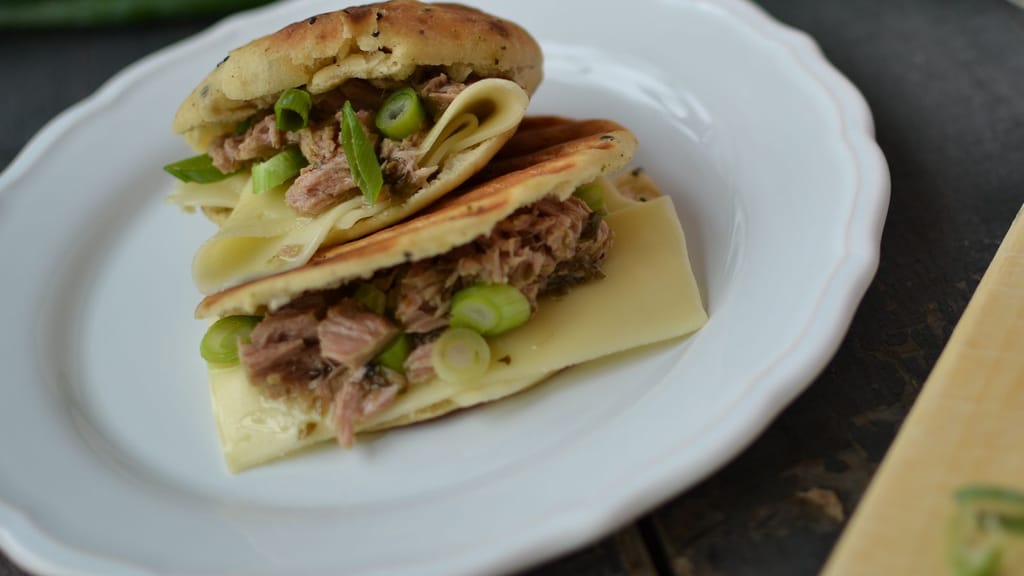
Tuna in coriander naan bread
Tuna in coriander naan bread
A tuna bowl is warm rice topped with canned tuna in sriracha mayonnaise and raw vegetables; it's ready in 15 minutes. Sprinkle the rice with a spoonful of rice vinegar and season it all with soy sauce and sesame. Leave raw tuna for poke to restaurants that have fish intended to be eaten raw; at home, canned tuna is a safe and cheap choice.
How to prepare the rice base is in the article sushi rice: how to cook and season it, and there are more ideas in the article what to make with rice.
Sear a tuna steak briefly in a hot pan: a 2–2.5 cm thick steak needs 1–2 minutes per side to stay pink inside, and 3–4 minutes per side over medium heat to be cooked through. Cooking it longer turns it into a dry, stringy sole, because tuna is lean and has no fat to render. When buying, look for a steak that is deep red, firm and odorless.
You cook a tuna steak in five steps: dry it, oil it, heat the pan, sear briefly and let it rest.
Take the steak out of the fridge 15 minutes ahead and pat it thoroughly dry with a paper towel. A wet surface won't sear, it steams.
Oil the meat, not the pan, then salt and pepper it. For a spiced crust, coat it in sesame seeds or crushed pepper.
Heat the pan until almost smoking, ideally cast iron or a heavy-bottomed pan. Lay the steak in and don't move it.
Sear according to thickness and how you want it done (times below), turning once.
Let it rest for 2 minutes and slice across the grain.
Potatoes, asparagus, a salad with lemon dressing or rice with soy sauce go well with the steak. Two tested recipes: seared tuna steak with green asparagus and tuna steak with green asparagus and hollandaise sauce.
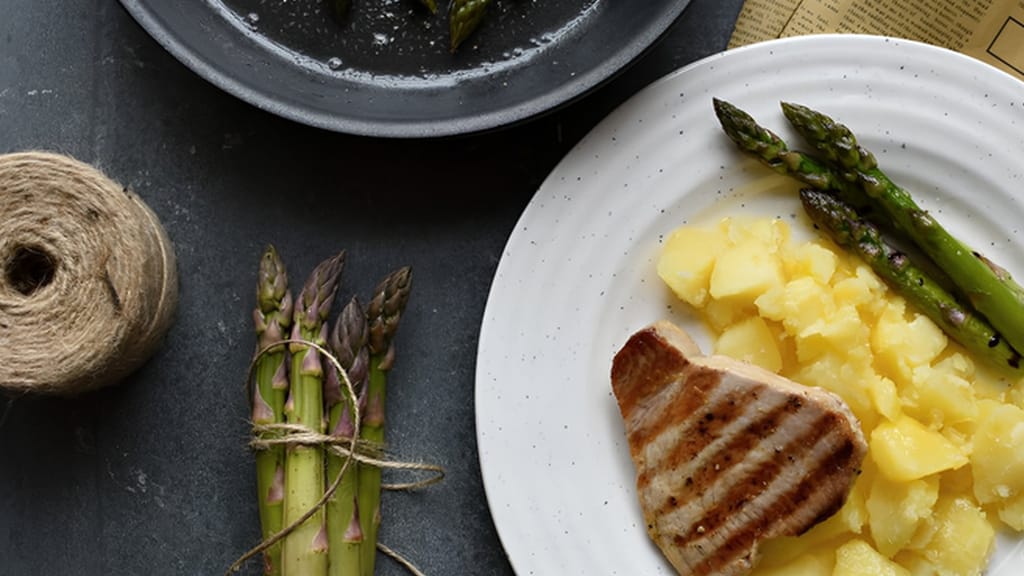
Tuna steak with potatoes and green asparagus
Seared tuna steak with green asparagus
A tuna steak is cooked through when it is light grayish-brown and opaque across the whole cut and reads 63°C (145°F) inside; a pink center means rare or medium.
Rare: 1–2 minutes per side. A thin gray edge, bright red and cooler in the middle.
Medium: 2–3 minutes per side. Just a narrow pink strip in the middle.
Cooked through: 3–4 minutes per side over medium heat, then 2 minutes covered with a lid off the heat. The flesh flakes apart with a fork.
An instant-read thermometer is the surest method. The US safe-temperature chart from FoodSafety.gov gives 63°C (145°F) inside the flesh for fish; that is the threshold for a cooked-through steak, and a pink center doesn't reach it.
For pregnant women and children, serve tuna steak cooked through, not pink. The UK's NHS lists raw fish among foods pregnant women should avoid and considers cooked fish safe; the pink center of a steak is partly raw. For children, cooking it through is our own kitchen caution, not a specific rule from an authority: simply don't give raw fish to small eaters.
To keep a well-done steak from drying out, buy a thicker one (at least 2 cm), sear it over medium heat and cover it with a lid after turning. Serve it with a sauce, such as a yogurt and herb one, or sliced into pasta, where the moisture makes up for it.
The UK's NHS advises pregnant women and women trying to get pregnant to eat no more than 4 cans of tuna a week, or no more than 2 tuna steaks. The reason is mercury, of which tuna has more than most other fish. For breastfeeding, the NHS gives no limit on tuna.
Here is what the sources say, as worded by them:
NHS (UK): the limit above applies to pregnant women and women planning a pregnancy. The NHS also states that neither fresh nor canned tuna counts as an oily fish, so you can't use it to replace the recommended portions of oily fish (salmon, mackerel, sardines).
NHS and children: for children the NHS gives no specific limit on tuna. It recommends that children and young people under 16 not eat shark, swordfish or marlin at all.
EFSA (European Food Safety Authority): in its 2015 opinion it lists tuna among the main dietary sources of methylmercury. It recommends that toddlers, children and women of childbearing age eat mainly fish species low in methylmercury. EFSA gives no specific number of cans of tuna per week.
So for children there is no number of cans, and don't make one up. It's sensible to alternate tuna with other fish for children, rather than making it the main fish on the plate. If you're pregnant or planning a small child's diet, discuss specific amounts with your doctor.
Canned tuna is one of the best pantry staples: it keeps, needs no prep and gives you dinner in 15 minutes. If you're looking for more dishes from your stores for a weeknight, see what to make for dinner in 10, 20 or 30 minutes.
You can freeze canned tuna, but once thawed it is drier and more fibrous, so it only suits patties, pasta bakes or sauces. Freeze it drained in a container and thaw it in the fridge overnight.
Canned tuna is already cooked and can be eaten straight from the can. In hot dishes, add it at the end and just warm it through, because longer cooking dries it out.
Canned salmon or mackerel are the best substitutes for canned tuna, and sardines also work in spreads and patties. For a vegetarian version, mashed chickpeas with capers, nori and lemon mimic the texture of tuna salad.
Allow 60–80 g drained canned tuna per serving of pasta, and 100–120 g per serving of salad, patties or a baked dish. How many cans that is depends on the can size, so go by the drained weight printed on the label.
Solid tuna keeps large pieces and is better in salads and pasta, where you want to see the chunks. Chunk or flaked tuna breaks up more easily, so it suits spreads, patties and fillings.
Thaw a frozen tuna steak overnight in the fridge, in a covered container on a plate. Pat it thoroughly dry before cooking: thawed meat releases water, and without drying it won't sear or form a crust in the pan.
One recipe worth heating the oven for, one tip, and one deal from the shop. Nothing else.