How to Cook Rice: Water Ratios for Basmati and Jasmine, on the Stove, in the Oven and in a Rice Cooker
Sushi Rice: How to Cook It, Season It and What to Use Instead of Rice Vinegar
Updated Nov 17, 2026
Sushi rice is short-grain Japanese rice that you rinse until the water runs clear, cook with the same volume of water (or up to a tenth more), and season while still warm with a mix of rice vinegar, sugar and salt. Good sushi rice holds its shape, yet you can still see every grain – it's neither mush nor sticky rice. Below you'll find which rice to buy, how to cook it in a pot or a rice cooker, how to season and cool it, how it differs from sticky rice, and what to use when you're out of rice vinegar.
For sushi, buy short-grain or medium-grain japonica rice – in stores it's sold as "sushi rice" or under the variety name Calrose. Other rice won't hold sushi together.
It comes down to starch. According to the specialist literature, Japanese rice contains roughly 15–18% amylose; the rest is amylopectin, which lightly glues the grains together once cooked without breaking them down into mush. That's why you can shape it and it still stays fluffy.
Yes: sushi rice, Calrose, Japanese short-grain rice.
In a pinch: arborio or other risotto rice – it sticks together, but it's firmer and starchier, so rinse it more thoroughly.
No: basmati, jasmine, long-grain or parboiled rice – it won't hold together and your roll will fall apart.
No: sticky (glutinous) rice – it's far too sticky; more on that below.
Seasonal baking plans, tested recipes and kitchen tricks that save you time. Unsubscribe in one click.
Rinse sushi rice until the water is nearly clear – this washes off the surface starch that would turn the rice into a gummy mass. Then let it drain or soak for a while so the grains absorb water evenly.
Put the rice in a bowl, cover it with cold water and gently swirl it with your hand – don't squeeze it, as the grains break.
Pour off the milky water and repeat, usually 3–5 times, until the water is almost transparent.
Leave the rice to drain in a sieve, or soak it in clean water. Japanese cooks and sushi rice producers usually recommend soaking for about 30 minutes (in winter, when the water is colder, an hour is fine).
Soaking matters mostly for pot cooking: the grain softens right through to the center, so you don't end up with a hard core while the outside is already breaking down.
Measure the ratio by volume: for soaked and drained sushi rice, use the same volume of water, or at most a tenth more (1 : 1–1.1). For rice you haven't soaked, use a little more, about 1 : 1.2.
Sushi rice needs less water than rice served as a side dish, because the vinegar will moisten it further. If you cook it "normally" and then add the seasoning mix, you get mush.
The easiest way is to measure both the rice and the water with the same cup.
If you're weighing the rice: 300 g of dry Japanese rice measures about 360 ml (the traditional Japanese measure of 1 gō = 180 ml ≈ 150 g rice).
Soaked rice: 300 g rice ≈ 360–400 ml water.
Unsoaked rice: 300 g rice ≈ 430 ml water.
300 g of dry rice is enough for roughly 4–5 maki rolls or for 3–4 people.
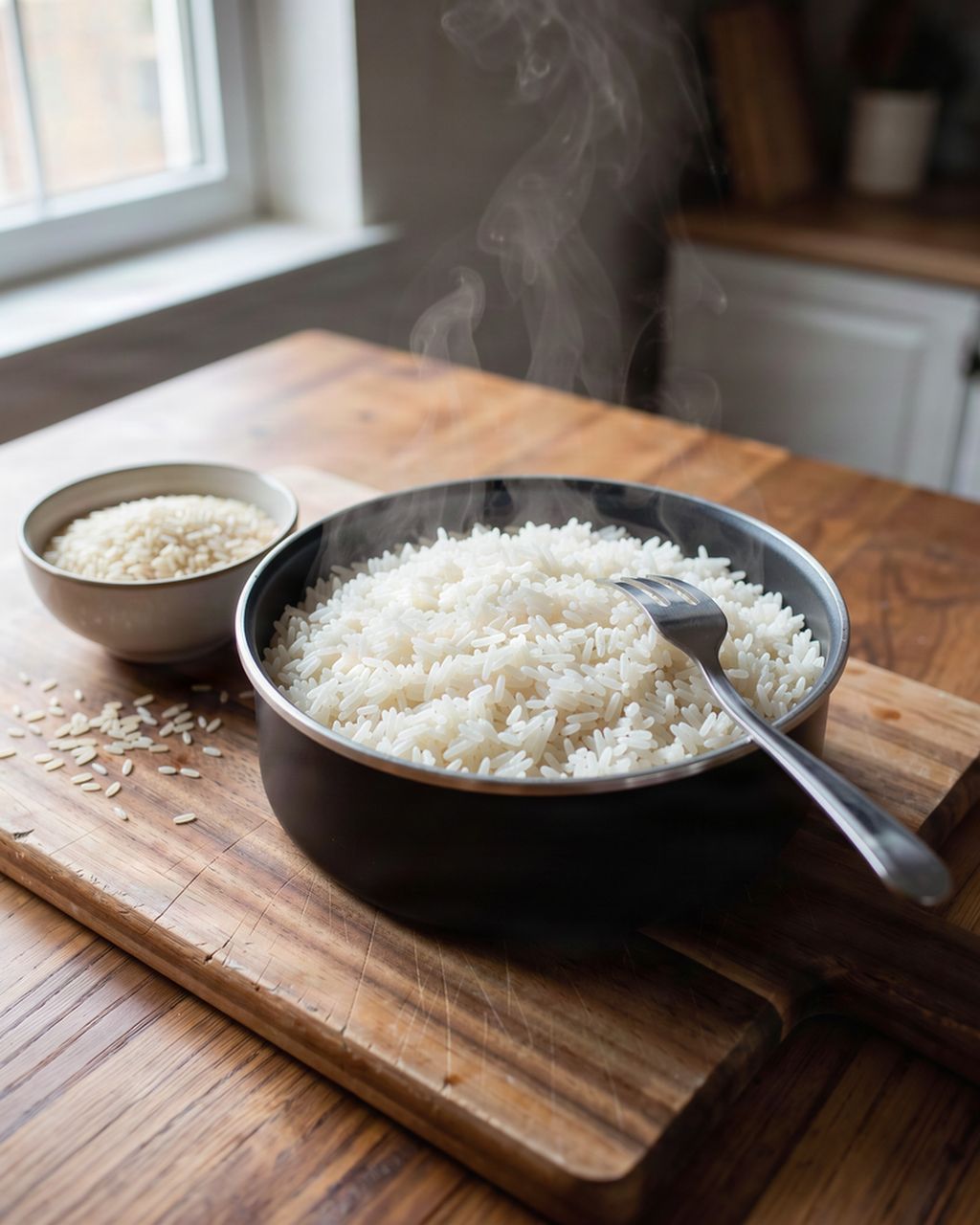
In a pot, bring the sushi rice to a boil with the lid on, finish cooking it on the lowest heat, then take it off the heat and let it steam until done. Don't lift the lid in the meantime.
Put the drained rice in a heavy-bottomed pot and add the measured water.
Cover with the lid and bring to a boil over higher heat.
As soon as it comes to a boil, turn the heat down to the minimum. Most sushi rice producers give 12–15 minutes of cooking on the package.
Take it off the heat and let the rice steam, covered, for another 10–15 minutes.
Only then take off the lid. All the water should be absorbed, with small "craters" on the surface.
What went wrong if the rice:
is mushy – it wasn't rinsed enough or had too much water; use less next time.
has a hard center – too little water, not soaked enough, or you lifted the lid and the steam escaped.
scorched on the bottom – a thin pot or too much heat; use a heavy-bottomed pot and the smallest burner.
A rice cooker is the easiest way to cook sushi rice: put the rinsed rice in the pot, add water up to the line for the matching number of cups and start the white rice program, or the "sushi" program if your rice cooker has one.
The lines in the pot apply to the measuring cup that came with the rice cooker – it's smaller than a standard cup (usually 180 ml for Japanese rice cookers). If you measure with a different cup, the line won't match.
Some rice cookers have a dedicated "sushi" line, which allows for less water. If yours doesn't, pour the water a little below the line for white rice.
Follow the manufacturer's instructions on whether to soak the rice beforehand; many rice cookers have soaking built into the program.
When the program finishes, don't leave the rice on "keep warm" – transfer it right away and season it.
Season sushi rice with a mix of rice vinegar, sugar and salt (in Japanese sushi-zu), folded into the rice while it's still hot. Warm grains soak up the seasoning; cold ones would stay wet on the surface.
For 300 g dry rice:
60 ml rice vinegar
2 tablespoons sugar
1 teaspoon salt
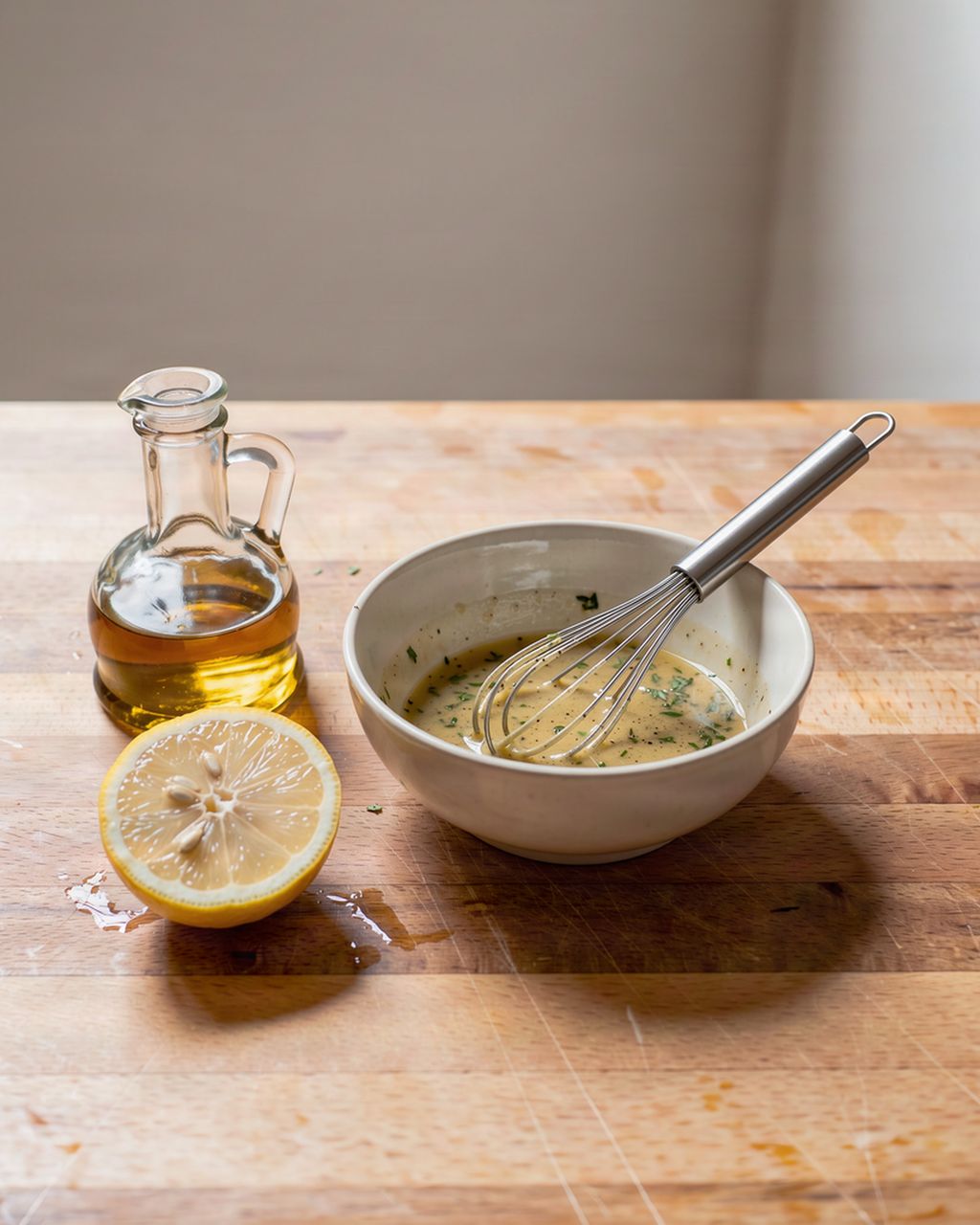
Stir the sugar and salt into the vinegar until dissolved. You can warm it slightly, but don't boil it – the vinegar would evaporate.
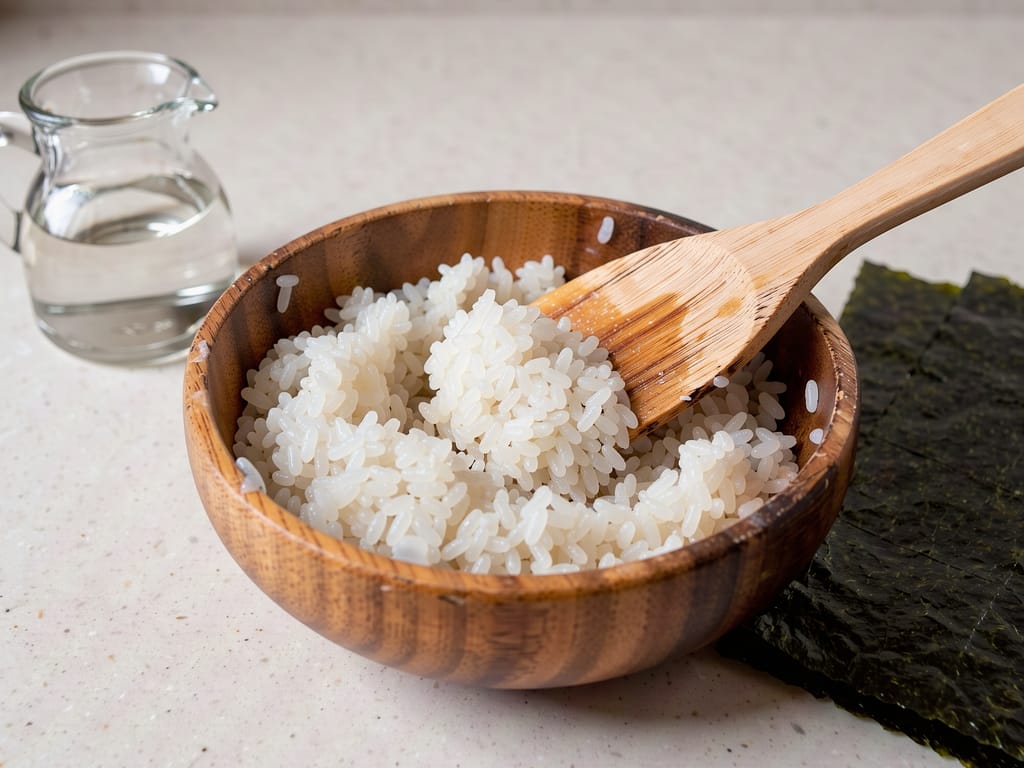
Turn the hot rice out into a wide bowl, ideally wooden or glass (metal can react with the vinegar).
Pour the mixture over a wooden spoon or spatula so it spreads evenly.
Fold the rice with cutting motions – slice and turn it with the spoon, don't stir in circles or press down. Pressing turns the grains into sticky mush.
You can adjust the proportions: raw fish goes well with a stronger, more tangy rice, while sweeter rolls with avocado can take a little more sugar.
Use seasoned sushi rice within 1–2 hours at room temperature (within 1 hour above 32 °C / 90 °F); eat finished sushi the same day. Fan the rice right after seasoning (with a hand fan, a piece of cardboard or an electric fan) and keep turning it until it's about body temperature. Cooling it quickly evaporates excess moisture and gives the grains a shine – and it's also a matter of safety.
Sushi rice for rolls or nigiri is used lukewarm to room temperature – straight from the fridge it hardens and loses flavor. Keep it covered with a damp towel only as long as it takes you to finish making the sushi.
Vinegar does make rice more acidic, but it doesn't make it safe – the time limits apply to seasoned rice too.
Sushi rice and sticky rice are two different kinds: sushi rice is ordinary Japanese short-grain rice, while sticky (glutinous) rice is a variety whose starch is almost entirely amylopectin. Specialist sources give only about 0–2% amylose for sticky rice, against roughly 15–18% for Japanese sushi rice. That's why sticky rice melds into one chewy, stretchy mass after cooking, while sushi rice stays as separate grains.
It looks different: raw sticky rice is a dull, chalky white; sushi rice is more translucent.
It's cooked differently: soak sticky rice for at least several hours, ideally overnight, then steam it over water (in a sieve lined with a cloth or in a bamboo basket) rather than boiling it – in water it turns to glue.
It's seasoned differently: not with vinegar. In Thailand and Laos it's eaten unseasoned, or sweet with coconut milk – as in the recipe for sticky rice with mango and salted cashews. In Japan it's made into mochi.
Don't use sticky rice for sushi – the roll would be rubbery and impossible to bite through properly. And if you're craving creamy sweet rice, reach for short-grain pudding rice instead, as in Portuguese rice pudding arroz doce.
The best substitute for rice vinegar is white wine vinegar; apple cider vinegar also works well, and in a pinch you can use distilled white vinegar diluted with water. Always watch the acidity: rice vinegar is mild, around 4–4.5% acetic acid, while other vinegars tend to be sharper.
White wine vinegar (usually 5–7%) – the cleanest flavor; you can swap it for rice vinegar almost 1 : 1. You can use a tablespoon less and top it up with water.
Apple cider vinegar (5–6%) – works, but you can taste a slight fruity note in the rice. It doesn't matter with avocado or salmon rolls.
Distilled white vinegar – ordinary Czech vinegar is usually 8% according to the label, so roughly double rice vinegar. Dilute it 1 : 1 with water and add a little more sugar, otherwise the rice will be sharply sour.
Lemon juice – only as a last resort and half-and-half with vinegar; the flavor will be citrusy, not sushi-like.
Don't use balsamic vinegar, malt vinegar or flavored herb vinegars – they'll color the rice and overpower it.
If you'd like to compare vinegars and their flavors beyond rice, check out which vinegar to use in a vegetable salad dressing. And you'll find substitutes for other Asian ingredients – mirin, fish sauce or sesame oil – in the article What to use instead of fish and oyster sauce, mirin, sesame oil and curry paste.
Yes – sushi vinegar (sushi-zu) is rice vinegar that the maker has already mixed with sugar and salt. If you use it, don't add any more sugar or salt to the rice; just taste and adjust if needed. For dressings and sauces where you want clean acidity, plain rice vinegar is the better choice.
Plan on about 75–100 g (about 2.6–3.5 oz) of dry sushi rice per person. 300 g of dry rice makes roughly 4–5 maki rolls, enough for 3–4 people as a main course. If you're also serving soup or a salad with the sushi, the lower amount will do.
Yes, in a pinch you can make sushi rice from ordinary round-grain rice, the kind used for Czech milk rice pudding – it's short-grain, so it sticks together. It tends to be softer and starchier than Japanese rice, so rinse it longer, until the water is truly clear, and use a little less water, closer to 1:1 by volume. The result will be a touch gummier, but it works for maki rolls.
Revive hardened sushi rice with a brief reheat: put it in a bowl, cover it with a damp paper towel and microwave in 20–30 second bursts. Then sprinkle it with a teaspoon of the vinegar mixture or rice vinegar and fold it with cutting motions. Only revive rice that has been in the fridge for no more than 24 hours. Heat it only until lukewarm, not hot – then work with it right away.
Wet your hands with water mixed with a little vinegar and spread the sushi rice over the nori firmly, but without pressing down.
One recipe worth heating the oven for, one tip, and one deal from the shop. Nothing else.