Zucchini stuffed with ground meat
Updated Aug 28, 2026
An overgrown courgette can still be cooked perfectly well — you just need to remove the seeds first, scoop out the spongy core, and get rid of the excess water. Do that, and it works brilliantly stuffed and baked, grated into batter, cooked into a ratatouille-style veg mix, or pickled in jars. Skip it, and it'll turn to mush in any pan. On top of that, after a few days the water content, seeds and skin all change inside a courgette — and how you handle it depends on that.
An overgrown courgette tastes different because four things change in it all at once: the water, the seeds, the skin, and the flavour. The flesh turns watery and spongy, the seeds harden, the skin goes woody, and the fresh green flavour dilutes into a neutral starchiness.
Water. Courgette is 94–95% water even when young, but in a young fruit that water is held firmly in crisp, dense flesh. In an overgrown one, the cell walls break down, the flesh turns spongy, and the water releases the moment it meets heat or salt. That's where the watery mush in the pan comes from.
Seeds. The plant starts storing reserves in them, wrapping them in a slimy, spongy core, and the seed coat hardens. In a finished dish you'll spot them as tough little discs that just won't cook down.
Skin. It turns woody and won't soften no matter how long you roast it. On a young courgette, the skin is the best part — it holds the slice together. On an overgrown one, it's rubber in your mouth.
Flavour. The fresh, slightly sweet green flavour fades and neutral starchiness takes over. That's not a flaw — it's an opportunity: overgrown courgette carries spices, garlic, paprika and cheese better than a young one, because it doesn't compete with them.
You handle an overgrown courgette in four steps: peel, halve, scoop out the seeds, drain. It takes five minutes and decides whether you end up with a meal or a puddle.
Peel it. Use a peeler or a knife. On really big ones the skin comes off in tough strips — proof that it really needed to go.
Slice it lengthwise in half. Use a large knife and go carefully — the fruit likes to roll under pressure. Steady your board with a tea towel underneath.
Scoop out the core. Use a soup spoon to dig out the spongy, seedy centre — it's easy, the texture is like a pumpkin's. Take out the loose, fluffy bit around the seeds too, not just the seeds themselves. What's left is the firm, pale flesh near the skin, and that's the part you want to cook with.
Decide based on what you're making. For stuffing, leave the halves whole or cut them into 5 cm rounds and hollow those out like little cups. For batters and pancakes, grate it. For ratatouille-style dishes and stews, cut it into 2 cm cubes — smaller pieces will just fall apart.
Salt the grated courgette and let it sit in a colander. The salt draws a large amount of water out of the courgette through osmosis — it drains off into the colander along with some of the water-soluble compounds. This doesn't hurt the flavour; if anything, it concentrates it.
Ratio and time: roughly 1 teaspoon of salt per 500 g of grated courgette, mix through, and leave it to sit in a colander for 15–30 minutes.
Then squeeze it. Tip it into a clean tea towel or cheesecloth and wring it out like a wet rag. You'll be surprised how much comes out — with a big courgette, easily 200 ml or more.
Cut back the salt in the recipe. Some salt stays behind in the courgette. For sweet baking, quickly rinse the courgette after squeezing and wring it out again.
For slices, skip the salting step. Pat them dry with a paper towel and fry or roast on high heat — the water evaporates before the flesh has a chance to collapse.
This is the step people skip and then complain that their courgette loaf is soggy in the middle. It's not the recipe's fault — it's the water.
Overgrown courgette is at its best in five ways: stuffed and baked, grated into batter, cooked into ratatouille or stew, made into fritters, and pickled in jars. In all five, its size and neutral flavour work in your favour, not against you.
For stuffing, an overgrown courgette is actually better than a young one — you need a cavity, and it's already there. With a young courgette you have to laboriously carve out firm flesh; here you just scoop out the soft centre with a spoon.
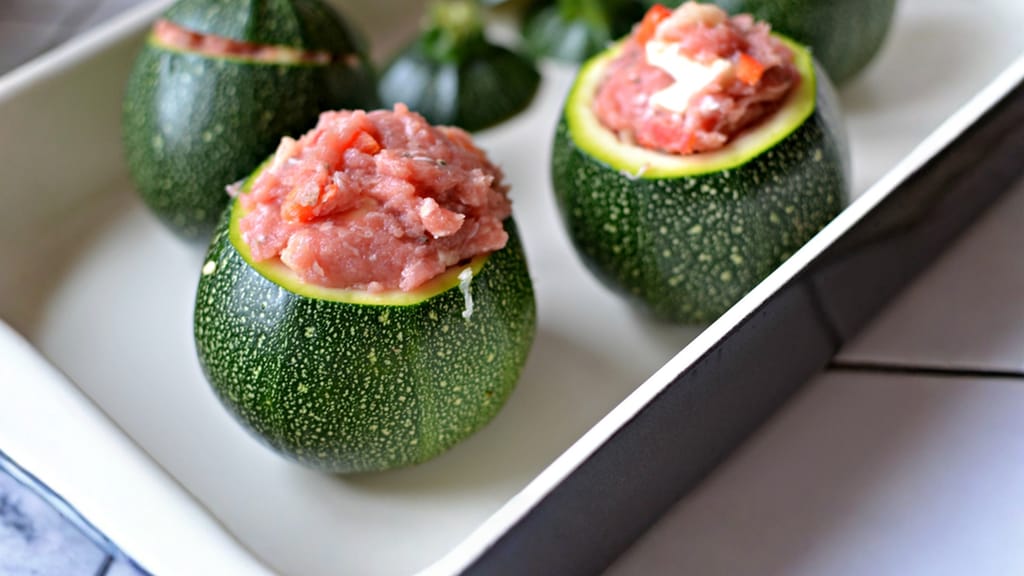
Salt the halves or rounds, brush with oil, and pre-bake for 10 minutes at 200°C before filling. Pre-baking drives off water that would otherwise seep out under the filling and dilute it. Go generous and bold with the filling: minced meat, tomatoes, garlic, smoked paprika, cheese on top.
Zucchini stuffed with ground meat
Courgette stuffed with minced meat — exactly what an overgrown fruit is perfect for
Grated and squeezed courgette does in batter what oil does: keeps it moist without tasting of vegetables. That's why you can't tell it's in a courgette loaf or bread — and why it's the quietest way to use up a whole kilo of surplus.
Courgette also works grated into batter in carrot-and-courgette mini loaves or in a savoury version — a courgette bread with sun-dried tomatoes can take a lot of grated courgette and makes a great packed lunch for work.
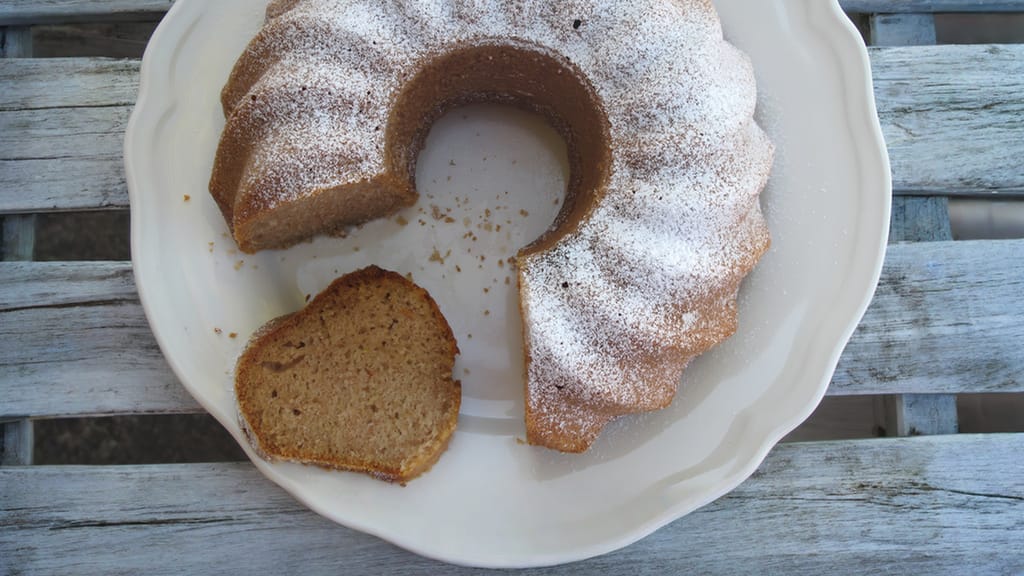
Zucchini bundt cake
Courgette loaf — the easiest way to make half an overgrown courgette disappear
In braised dishes, the high water content of overgrown courgette is actually an advantage — it releases juice that everything else braises in. Just add it in the second half of cooking, cut into 2 cm cubes, and don't stir it too much. Courgette falls apart from stirring far more than from time.
Toss it into a classic ratatouille with the peppers and tomatoes about 10 minutes before it's done. In a stew, it can stand in for some of the meat and soaks up the paprika and marjoram beautifully.
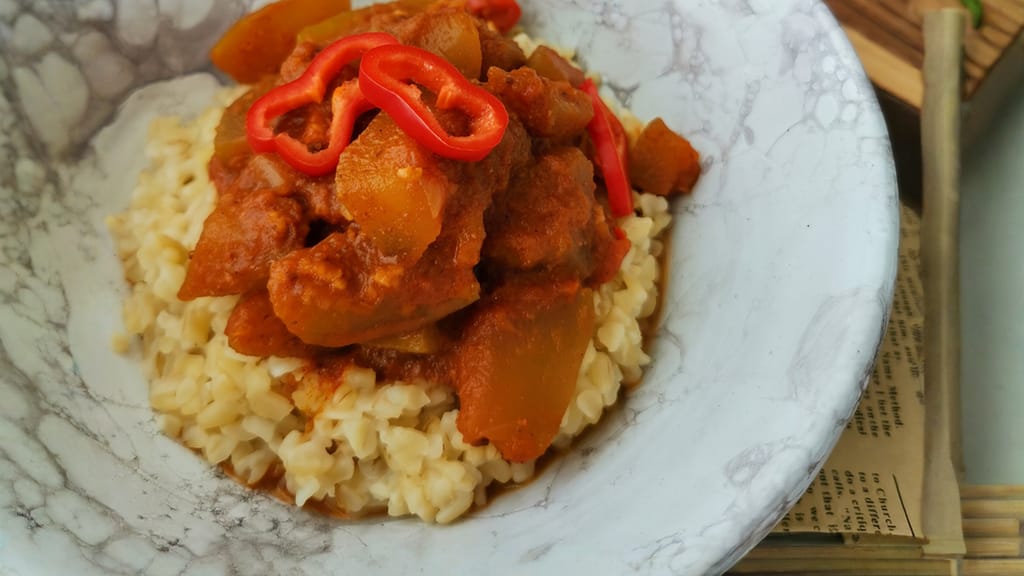
Divine zucchini goulash
Amazing courgette stew — a hearty dish for a pile of end-of-season courgettes
Courgette fritters are the fastest way to use up a big pile of overgrown courgette — and they even forgive the fact that overgrown courgette won't hold its shape, since you're grating it anyway. The key, again, is squeezing out the water; a wet batter just spreads out in the pan and soaks up oil.
Flourless courgette fritters work fine with an overgrown fruit too — just plan on wringing it out for longer.
Pickling is the one use where the firmer flesh of an overgrown courgette actually helps — it won't turn to mush in the brine the way a young one would. Cut it into thicker slices or cubes and pickle in a sweet-and-sour brine with mustard seed, caraway and onion; the flavour lands somewhere between cucumber pickles and marrow.
The other option is courgette chutney: courgette, onion, apple, vinegar, sugar and spices, simmered until soft. It keeps for months and is a great way to use up even the more fibrous pieces.
Overgrown courgette fails anywhere you need a slice that holds its shape, or actual crunch. Save young courgettes for these jobs and don't try to force big ones into them:
Grilling in slices. It falls apart on the grill and the skin stays rubbery. You can grill courgette roll-ups made from thin slices, but only with young, firm courgette.
Courgette noodles (zoodles). You can't spiralise firm strands out of waterlogged flesh — you'll get wet shreds instead. Save young courgettes for these, say in meatballs with courgette noodles.
Crispy fries and breaded fried slices. The water inside breaks through the crumb coating from the inside and the crust goes soft. Crispy courgette fries need firm flesh.
Raw in salads. Bland in flavour and spongy in texture. Finely grated young courgette works in a salad; an overgrown one doesn't.
Quick summer pasta. Courgette here needs to sear fast on high heat and stay in distinct pieces — pasta with courgette and lemon deserves a young fruit.
Simple rule of thumb: where the courgette needs to stay visible, go young. Where it needs to melt into the dish, go overgrown.
A whole, undamaged overgrown courgette keeps for about one to two weeks in a cool, humid spot around 5–10°C — the thick skin that annoys you when cooking is actually great protection. The tougher the skin, the longer it tends to last. Only put it in the fridge for a few days, and not in the coldest part — below 5°C the skin develops pitting and the fruit rots faster. Don't set it straight on concrete; a crate, some paper and slightly humid air will do.
Once you've cut into it, count on 3–4 days in the fridge in a sealed container.
For the freezer, always freeze it grated and squeezed, never in slices. Portion it out into whatever amount you need for one batch of batter — say, 250 g per bag — and press out the air. Grated courgette that hasn't been blanched is fine for up to 3 months. If you blanch it for 1–2 minutes before freezing (until it turns translucent), it'll keep for around 10 months. After thawing, just squeeze it again and use it straight away in a loaf or fritters.
You can also freeze it cubed for ratatouille-style dishes, but blanch the cubes for 3 minutes in boiling water and cool them in ice water first, or you'll end up with mushy shreds.
What not to put in the freezer: raw slices meant for grilling, or anything you need to stay firm after thawing. Freezing water tears the cell walls apart, and an overgrown courgette — which already has few intact cells left — won't have anything left to hold together.
Without gutting, the cut-off point is roughly 25 cm and 500 g — up to that size, you can cook a courgette whole, skin, seeds and all. Bigger ones can still be used, but you'll need to peel and hollow them out; once they're over 40 cm, all that's left after gutting is a thin ring of flesh next to the skin, and it's a fair question whether it's even worth the effort. Judge by the fruit itself, not the tape measure: if your nail sinks easily into the skin and the seeds are still white and soft, it's a young courgette.
Yes, the seeds in an overgrown courgette are edible — they're just unpleasantly tough, which is why they get scooped out. You can separate them from the pulp, rinse them, dry them, and toast them in a pan or oven at 160°C just like pumpkin seeds — they're smaller, but it works just as well. One word of caution if you're saving seeds from your own courgette to grow: if the plant was pollinated by an ornamental gourd, the offspring can turn out bitter and inedible.
Yes — with an overgrown courgette, always take the skin off. It's gone woody and won't soften even after long roasting. There's a simple test: if you can't get a fingernail into the skin, it needs to come off. With young courgettes it's the opposite — leave the skin on, since it holds the slice together and carries most of the colour and flavour.
Raw overgrown courgette is safe to eat, but it's a letdown in both taste and texture — watery, spongy and bland. For eating raw, reach for a young courgette instead, thinly sliced or grated. The one raw thing genuinely worth doing with an overgrown one is taking a tiny taste test: if it's bitter, throw the whole thing out.
Courgette contains vitamin C, but it was never exactly loaded with it to begin with — reckon on about 18 mg per 100 g. There isn't solid data on exactly how that changes as the fruit grows past its prime, and honestly, it doesn't matter much in the kitchen. Either way, it's a low-calorie vegetable, around 17 kcal per 100 g. Squeezing out the water takes with it mainly water, but also some of the water-soluble compounds along with it. For taste and texture, it's a trade worth making.
One recipe worth heating the oven for, one tip, and one deal from the shop. Nothing else.