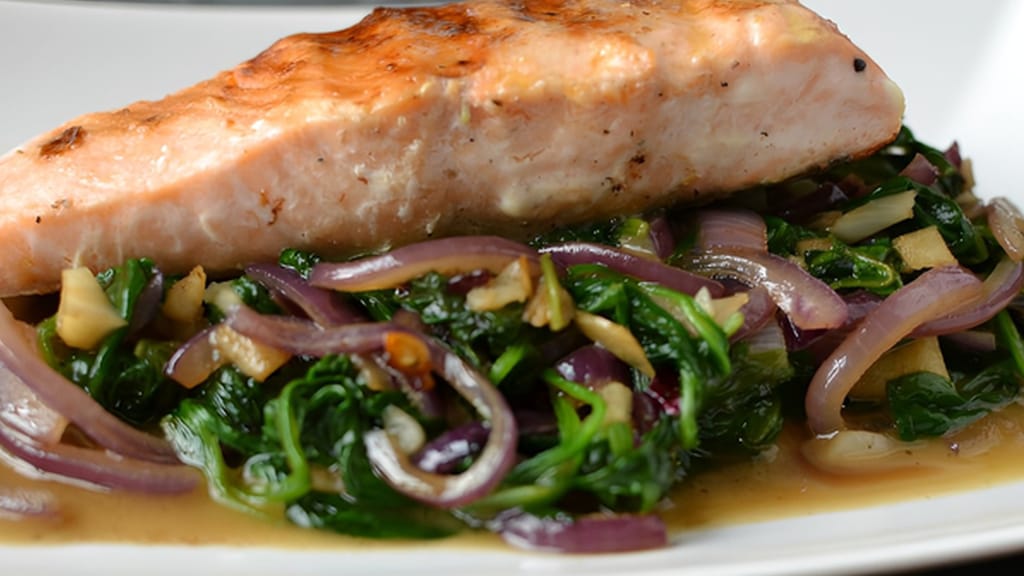
Smoky salmon with quick-wilted spinach
What to Cook With Salmon: Oven, Pan, Pasta, Smoked Salmon and Quick Dinners
Updated Nov 18, 2026
What can you cook with salmon when it's sitting in your fridge and you're tired of making the same thing? Salmon does almost everything: bake it in the oven in 12–15 minutes, pan-sear it for skin as crisp as chips, toss it into pasta or a rice bowl, or wrap it in foil with vegetables. With smoked salmon you can make a spread, open-faced sandwiches or a one-pot dinner. Below you'll find the temperature, timing and a side dish for each version, plus how to tell when salmon is done and how long it keeps.
For the pan and the baking sheet, buy skin-on fillets; for pasta, salmon cakes and bowls, skinless is fine. The skin protects the flesh from direct heat, holds the fillet together, and in a pan it becomes the best part of the plate. Skinless fillets are easier to cut into cubes, but they dry out faster.
Atlantic salmon, skin-on fillet – for the pan, oven and grill. Choose a piece of even thickness along its whole length so it cooks evenly. The middle is the thickest and juiciest; the tail end is thin and done a few minutes sooner.
Skinless fillet – for pasta, curries, bowls and salmon cakes, in other words anywhere you'll break it into pieces anyway.
Frozen salmon fillet – a perfectly good choice, not a last resort. Fish is usually frozen quickly after processing, so it often beats the "fresh" piece that has spent a few days on the counter.
With fresh salmon, look for three things: the flesh is firm and springs back when pressed, it smells of the sea and not of fish, and the cut surface has no dry, dull edges. Thaw frozen salmon overnight in the fridge, not on the counter. In a hurry, put it in a sealed bag in cold water for 30–60 minutes. Always pat it thoroughly dry with a paper towel before cooking. Surface water is the main reason salmon steams in the pan instead of searing.
We send seasonal cooking and baking plans and recipes made from everyday ingredients. Unsubscribe in one click.
Bake salmon at 200°C (400°F) for roughly 5 minutes per centimeter of thickness. A classic fillet 2.5–3 cm thick is done in 12–15 minutes. Measure the thickest spot, not the length of the fillet.
Thin fillet or tail end (1.5 cm): 7–8 minutes
Medium portion (2.5 cm): 12–13 minutes
Thick center (3–4 cm): 15–20 minutes
Whole side of salmon (about 1 kg): 180°C (350°F), 20–25 minutes
Why 200°C (400°F) rather than a gentler 160–180°C (320–350°F)? Salmon has little connective tissue that needs breaking down. High heat cooks it before the juices have time to run out. A lower temperature gives a more even result, so it suits a whole side or a festive table where you're not in a hurry. For a detailed breakdown of times, see Salmon in the oven and in the pan: what temperature and how long so it doesn't dry out.
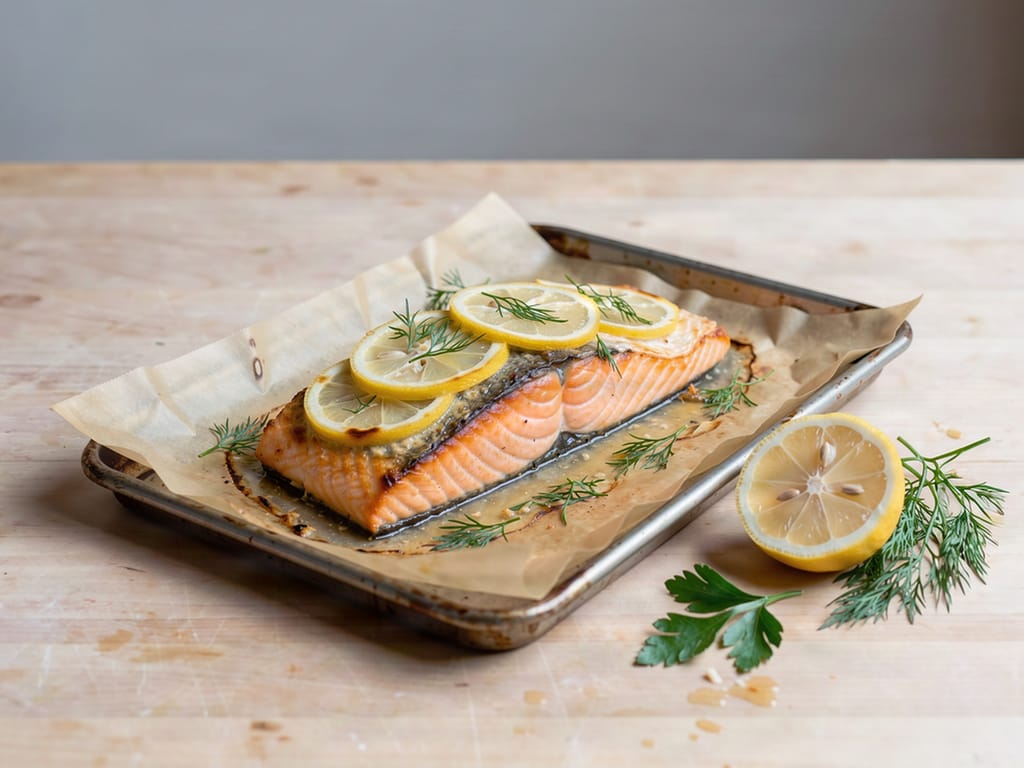
Salmon with lemon and herbs is the base everything else builds on: a fillet with oil, lemon zest and dill, skin side down on a baking sheet, 12–14 minutes at 200°C (400°F). Add the lemon juice only after it comes out, because acid dries the flesh needlessly during baking. Serve with boiled buttered potatoes or smooth mashed potatoes with nutmeg.
Salmon with honey-mustard glaze looks festive and is ready in 15 minutes: brush the fillet with a glaze of mustard, honey and soy sauce and bake for 12 minutes at 200°C (400°F), with the last 2 minutes under the broiler so the glaze caramelizes.
Sheet-pan salmon with potatoes and vegetables is dinner on one pan: the potatoes go in the oven 20 minutes earlier (210°C / 410°F), then the fish and vegetables join them for the last 12–15 minutes at 200°C (400°F). For inspiration on bringing fish, bulgur and mushrooms together on one plate, see the recipe for fish with bulgur, mushrooms and pumpkin seeds, where you can happily swap in salmon.
If you want salmon with a crust, take a look at fish fillet with a crispy crust. A crust of breadcrumbs, Parmesan and garlic works on salmon too: bake it according to its thickness and finish the crust under the broiler for the last few minutes.
To get crispy skin, place the salmon skin side down in a hot pan and cook it on that side for 80% of the time. Turn it over only for the last minute. The whole thing takes 6–8 minutes.
Dry the skin. Thoroughly, with a paper towel. If you have time, leave the fillet uncovered in the fridge for 20 minutes so the skin dries out further.
Salt just before it goes in the pan. Salt draws out water, so if you salt an hour ahead, the skin gets damp.
Heat the pan over medium-high heat. Use a cast-iron or stainless steel pan and a spoonful of oil with a high smoke point (canola, sunflower). The oil should shimmer and ripple, but not smoke.
Lay the fillet skin side down and press it with a spatula for 10 seconds. The skin shrinks in the heat and the fillet curls. Pressing makes sure the whole surface sears.
Don't move it. 5–6 minutes for a 2.5 cm portion. The color of the flesh creeps up from the bottom, and when it's opaque about two-thirds of the way up, it's time.
Flip and finish for 30–60 seconds. You can add a knob of butter, a garlic clove and a sprig of thyme, and spoon the foaming butter over the fish for a few seconds.
The most common mistake is a cold pan or too many fillets at once. The pan then cools, the fish releases water and the skin sticks. If the skin sticks, it isn't ready yet. Once it's golden, it releases from the pan by itself.
Anything quick goes well with pan-seared salmon. Try salmon with a smoky flavor and quick spinach: in a second pan, wilt spinach with onion and garlic in a few minutes and dinner is done, side dish included. For the weekend, make halibut with Italian risotto and spinach with salmon instead of halibut. The method is the same; salmon just needs a minute less.
Smoky salmon with quick-wilted spinach
Pan-seared salmon with a smoky flavor and quick spinach
For pasta, add salmon that you've baked or pan-seared separately and flaked into pieces only at the end. If you cook it directly in the sauce, it falls apart into strands and dries out. For four servings, 300–400 g of fillet and 400 g of pasta is enough.
Creamy pasta with salmon and leek. Leek softened in butter, cream thickened with starchy pasta water, dill and lemon zest. You only fold in the salmon at the end; you don't cook it. Ready in 20 minutes.
Lemony pasta with salmon and zucchini. A cream-free version, fresh and lemony. Quick pasta with zucchini and lemon makes a good base; add pan-seared salmon broken into large pieces on the plate. Ready in 20 minutes.
Pasta with salmon, tomatoes and spinach. Cherry tomatoes cooked down for 5 minutes with garlic, a handful of baby spinach and pieces of salmon. The acidity of the tomatoes balances the rich fish beautifully.
Gnocchi instead of pasta. If you want something more filling, try homemade smoked salmon with gnocchi. You lightly smoke the salmon yourself at home and serve it with soft gnocchi. It's a weekend recipe for when you feel like playing around with dinner.
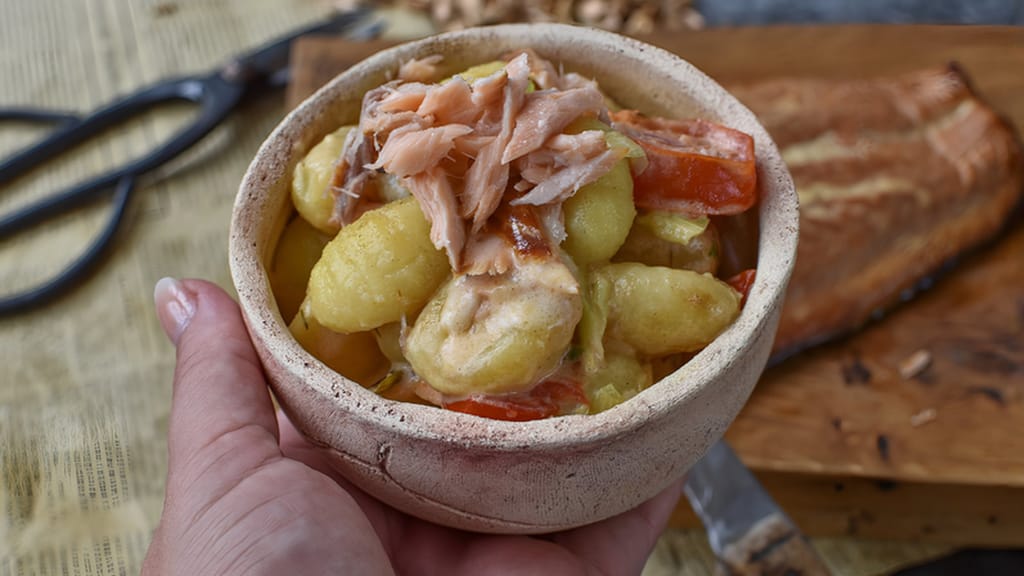
Homemade smoked salmon with gnocchi
Homemade smoked salmon with gnocchi
Salmon with rice is ready in 20–25 minutes: the rice cooks for 15–20 minutes while the salmon bakes or sears. You can serve it two ways: the classic main course with rice as a side, or as a bowl, a dish of rice, fish, raw and pickled vegetables and a sauce. Allow 60–80 g of dry rice and 100–120 g of salmon per person.
Flaked salmon with rice salad. The salmon is baked or grilled, flaked with a fork and tossed with cooled rice, herbs and vegetables. You'll find the method in the recipe for flaked grilled salmon with rice salad. It works warm or cold, so it's ideal for a lunchbox the next day.
Teriyaki salmon with rice. Sear the salmon skin side down, flip it, and for the last 1–2 minutes coat it in a sauce of soy sauce, honey and ginger that thickens in the pan. With jasmine rice and sesame seeds, it's ready in 20 minutes.
Salmon bowl. Put rice in the bottom of the bowl, ideally seasoned with rice vinegar and sesame seeds. Sesame rice with pomelo salad makes a good base, with the fresh citrus working well against the rich fish. On top, arrange cubes of baked salmon, sliced avocado, cucumber, radishes, edamame and pickled ginger carrots. Drizzle with soy sauce mixed with sriracha or mayonnaise. You can put it together in 10 minutes if the rice is cooked ahead.
In restaurants, a bowl (poke) is often made with raw salmon. At home you need fish explicitly sold for eating raw, which the supplier has frozen beforehand because of parasites. If you're craving raw fish, try salmon ceviche or cured salmon gravad lax. During pregnancy, the UK's NHS advises avoiding raw fish (ceviche, poke) altogether, and eating cold-smoked or cured fish (gravlax) only if it's cooked until steaming hot all the way through. On Yumsto we don't give it to small children at all. More on that below.
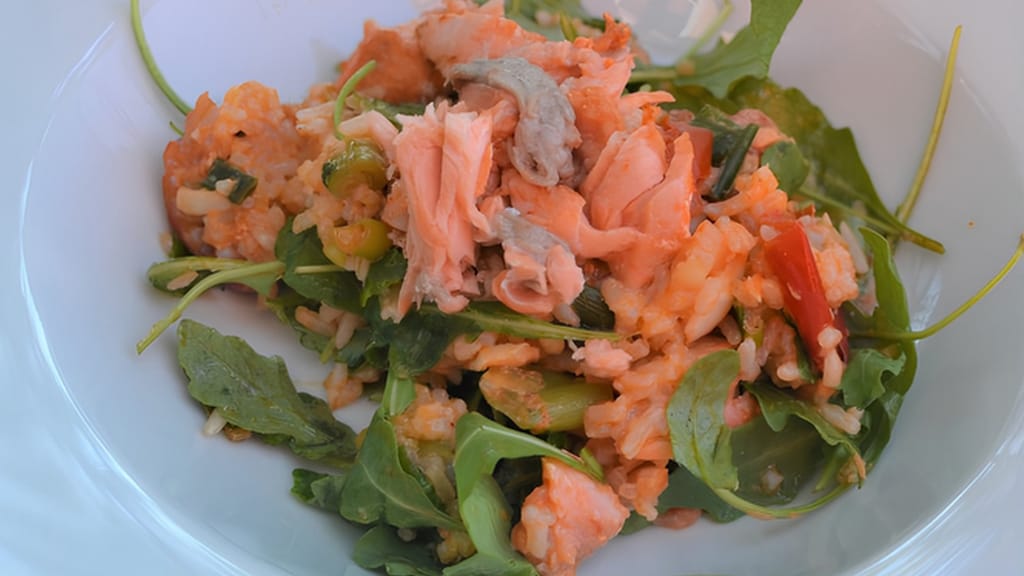
Pulled grilled salmon with rice salad
Flaked grilled salmon with rice salad
Salmon in foil bakes at 200°C (400°F) for 15–20 minutes: the fish and vegetables steam in their own moisture, so the fillet doesn't dry out even if you bake it a bit longer. It's the safest route for anyone who worries about overcooking salmon.
On a large piece of foil (or parchment paper, if you don't want aluminum touching the lemon), lay out thin slices of vegetables: zucchini, bell pepper, cherry tomatoes, scallions, fennel or asparagus.
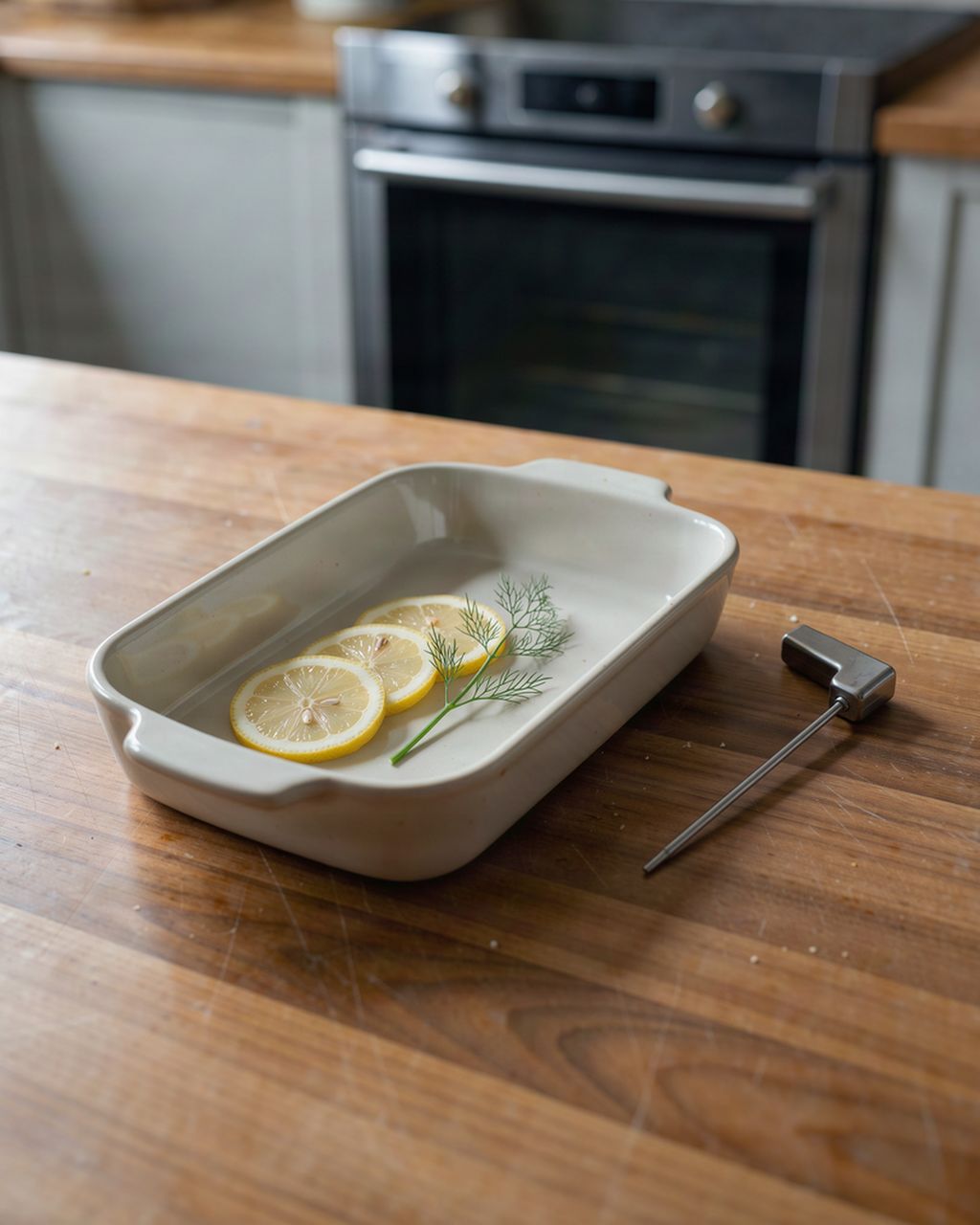
Salt the vegetables and drizzle with oil. Place a skinless or skin-on fillet on top, salt it, and add a slice of lemon, a sprig of dill or thyme and a teaspoon of butter.
Fold the foil over and crimp the edges tightly so no steam escapes from the packet. Leave a little room at the top.
Bake for 15 minutes for a 2.5 cm fillet, 18–20 minutes for a thicker one. Open the packet carefully, as hot steam escapes.
The size of the vegetables matters. Zucchini, tomatoes and asparagus are done in the same time as the fish. Slice carrots, potatoes or celery into 2–3 mm slices, otherwise they stay hard. A juice of butter, lemon and vegetables collects at the bottom of the packet. Don't pour it away: spoon it over rice or dip bread in it.
There are plenty of variations: Mediterranean with olives, capers and tomatoes; Asian with ginger, soy sauce and bok choy; summer with asparagus and peas. You can assemble the packets in the morning, keep them in the fridge and just pop them in the oven in the evening. They also work on the grill: 12–15 minutes over medium heat with the lid closed.
The most common things to make with smoked salmon are a spread, pasta, open-faced sandwiches and canapés, small pancakes, or scrambled eggs. Most of these dishes are ready in 15 minutes. First, though, check which kind of smoked salmon you have in the fridge, because the two differ more than the packaging suggests:
Cold-smoked (vacuum-packed slices) is smoked at a low temperature, so the flesh stays raw. It's silky, translucent and eaten without cooking.
Hot-smoked (in a piece, often with the skin) is cooked through during smoking. It's opaque, flakes apart and can be served warm or cold.
Smoked salmon spread is ready in 5 minutes and needs no cooking: mix chopped salmon with fresh soft cheese (lučina, a Czech soft cream cheese, or similar), dill and a squeeze of lemon. Hardly add any salt, as salmon is salty on its own. It's best after an hour in the fridge, when the flavors come together. Spread it on bread, for example homemade bread, or serve it as a dip for radishes.
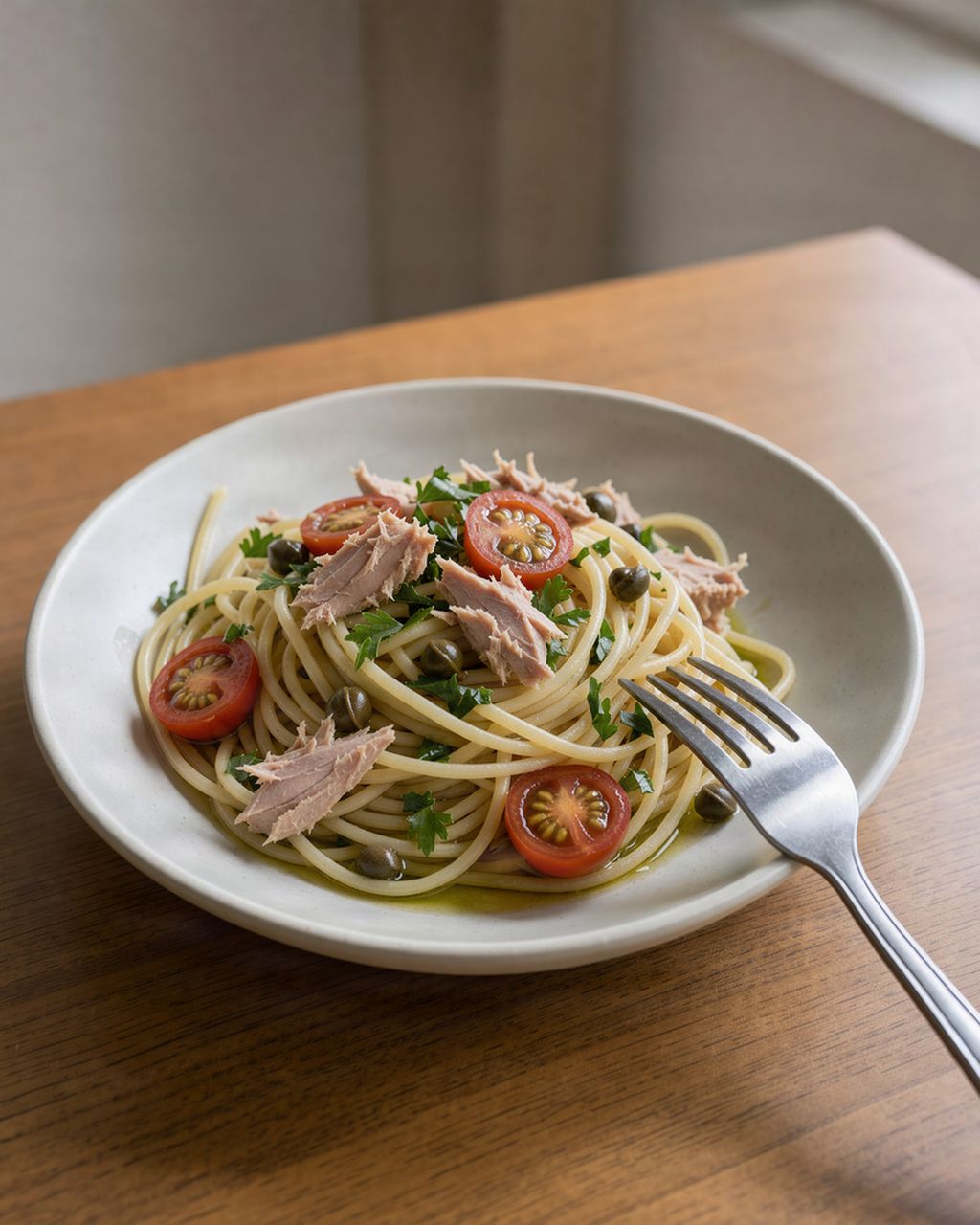
Pasta with smoked salmon is ready in 15 minutes, in the time it takes the pasta to cook. Add strips of salmon to a cream sauce with shallot and lemon off the heat, so the residual warmth just warms them through and they stay tender. If you're cooking for someone in a higher-risk group (see below), let the salmon bubble in the sauce until it's steaming hot all the way through (just warming it isn't enough).
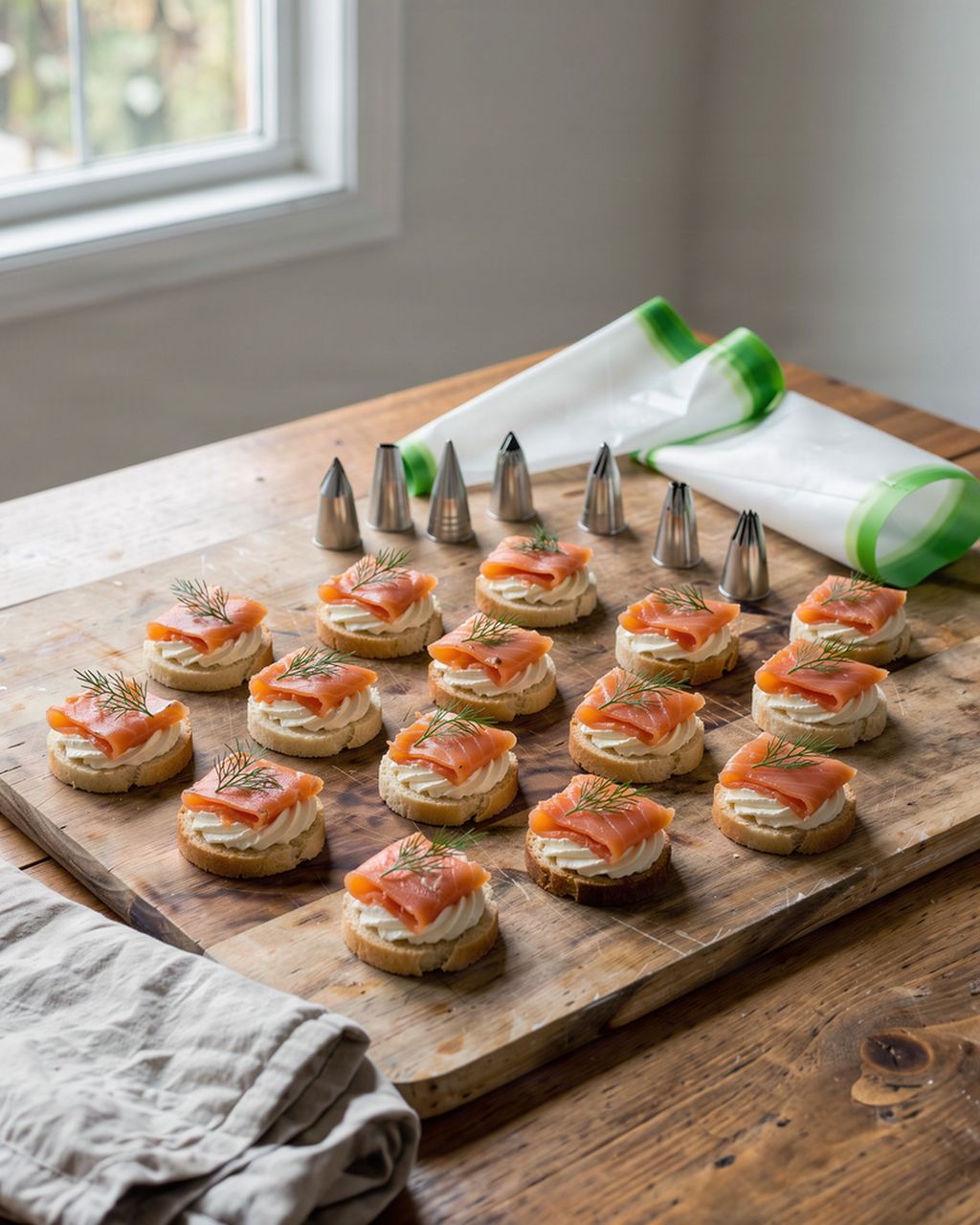
For open-faced sandwiches with smoked salmon, spread the bread with a thin layer of butter or a lučina cream cheese spread with horseradish, then top with a folded slice of salmon, cucumber and dill. The butter forms a barrier so the bread doesn't get soggy. Make them no more than 3–4 hours before serving and keep them covered in the fridge until then.
For a party, try avocado canapés with smoked salmon: avocado cream with lime, topped with a rosette of salmon. For what else goes with salmon and how to serve it so it doesn't dry out, see the article Canapés with smoked salmon.
For a weekend breakfast, try spinach pancakes with yogurt dip and smoked salmon. Fry the green pancakes in a pan for about 2 minutes per side, and lay the salmon on them only once they're on the plate.
And the quickest breakfast of all: scrambled eggs with smoked salmon. Take the eggs off the heat while they're still creamy, and only then fold in strips of salmon and chives.
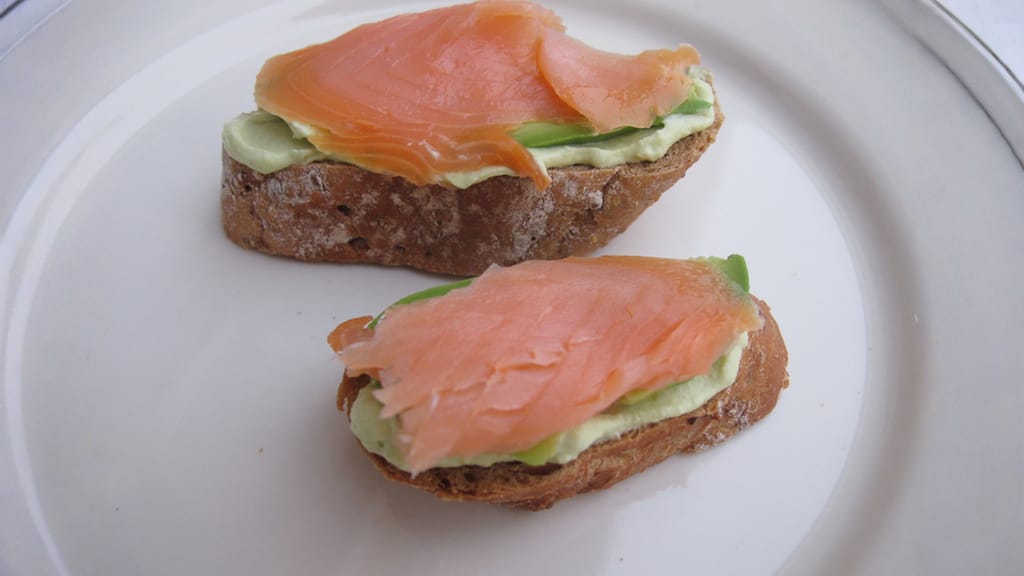
Avocado canapés with smoked salmon
Avocado canapés with smoked salmon
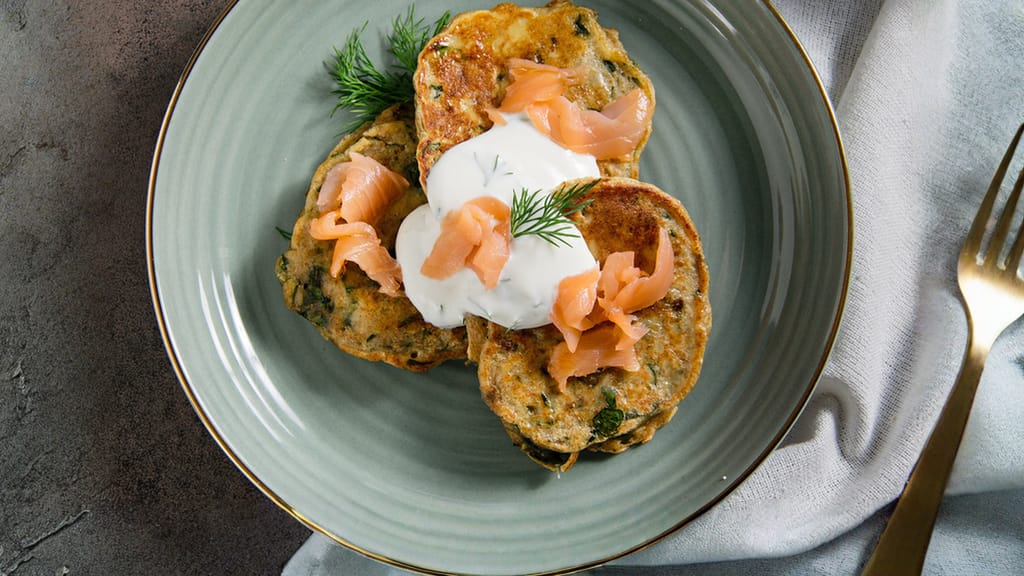
Spinach pancakes with yogurt dip and smoked salmon
Spinach pancakes with yogurt dip and smoked salmon
The quickest salmon dinners are pan-seared salmon with vegetables, salmon cakes, salmon in coconut curry, salad with leftover salmon, and frittata with leftover salmon. You can finish all of them in 10–25 minutes.
Pan-seared salmon with vegetables (15 min). Sear the fillet skin side down following the method above, set it on a plate, and toss spinach, green beans or zucchini slices into the fat left from the fish for 2–3 minutes.
Salmon cakes (25 min). Chopped and blended salmon with shallot, mustard and breadcrumbs, fried for 3–4 minutes per side. A tried-and-tested method is in the recipe for salmon cakes with delicate tartar sauce. Serve with potato salad or in a bun as a burger.
Salmon in coconut curry (20 min). Cubes of skinless salmon gently simmered for 4–5 minutes in coconut milk with red curry paste and vegetables. Serve with jasmine rice.
Salad with leftover salmon (10 min). Cold baked salmon flaked and tossed with lettuce, boiled potatoes, green beans, a hard-boiled egg and a mustard dressing. Potato salad with green beans and smoked mackerel offers inspiration; just swap the mackerel for salmon.
Frittata with leftover salmon (20 min). Flakes of baked salmon with peas and chives in eggs: 5 minutes in the pan and 8–10 minutes in the oven at 180°C (350°F).
If you're looking for a quick dinner with other meat too, you'll find the same logic (one pan, done in half an hour) in the article What to cook with chicken breast: quick dinners, with rice, potatoes and pasta.
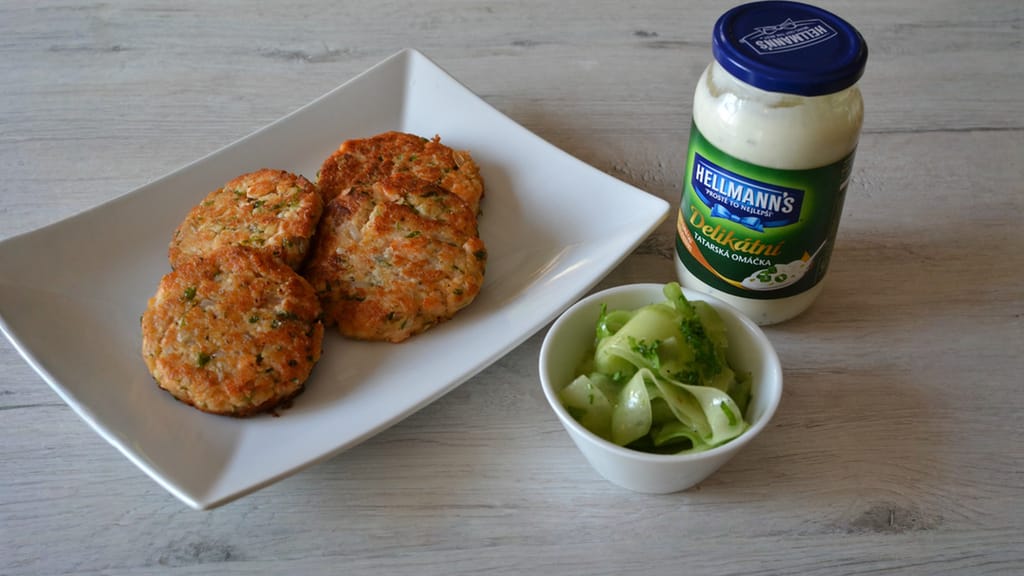
Salmon patties with creamy tartar sauce
Salmon cakes with delicate tartar sauce
According to the US government site foodsafety.gov (USDA and FDA), salmon is safely cooked at an internal temperature of 63°C (145°F) at the thickest point, or when the flesh is no longer translucent and flakes easily with a fork.
Chefs often pull salmon earlier, at 50–55°C (122–131°F). The center is then still slightly glassy and very juicy. It's a matter of taste and freshness of the fish, and common practice for a healthy adult with good-quality fish. For children, pregnant women and older people, though, always cook salmon through, meaning to 63°C (145°F) or until it's opaque all the way to the center.
How to tell without a thermometer:
Color: raw salmon is deep orange and translucent; cooked salmon is a dull light pink all the way through.
Flakes: press a fork into the thickest spot. Done flesh separates into layers along the white lines.
White droplets on the surface (the protein albumin) mean the fish is done, or just a bit past it. If a lot of them appear, take it off sooner next time.
Remember that salmon keeps cooking for another 1–2 minutes after it leaves the oven, and the internal temperature rises by a few degrees. An instant-read thermometer pays off mainly with thick pieces and whole sides of salmon, where judging by eye most often goes wrong.
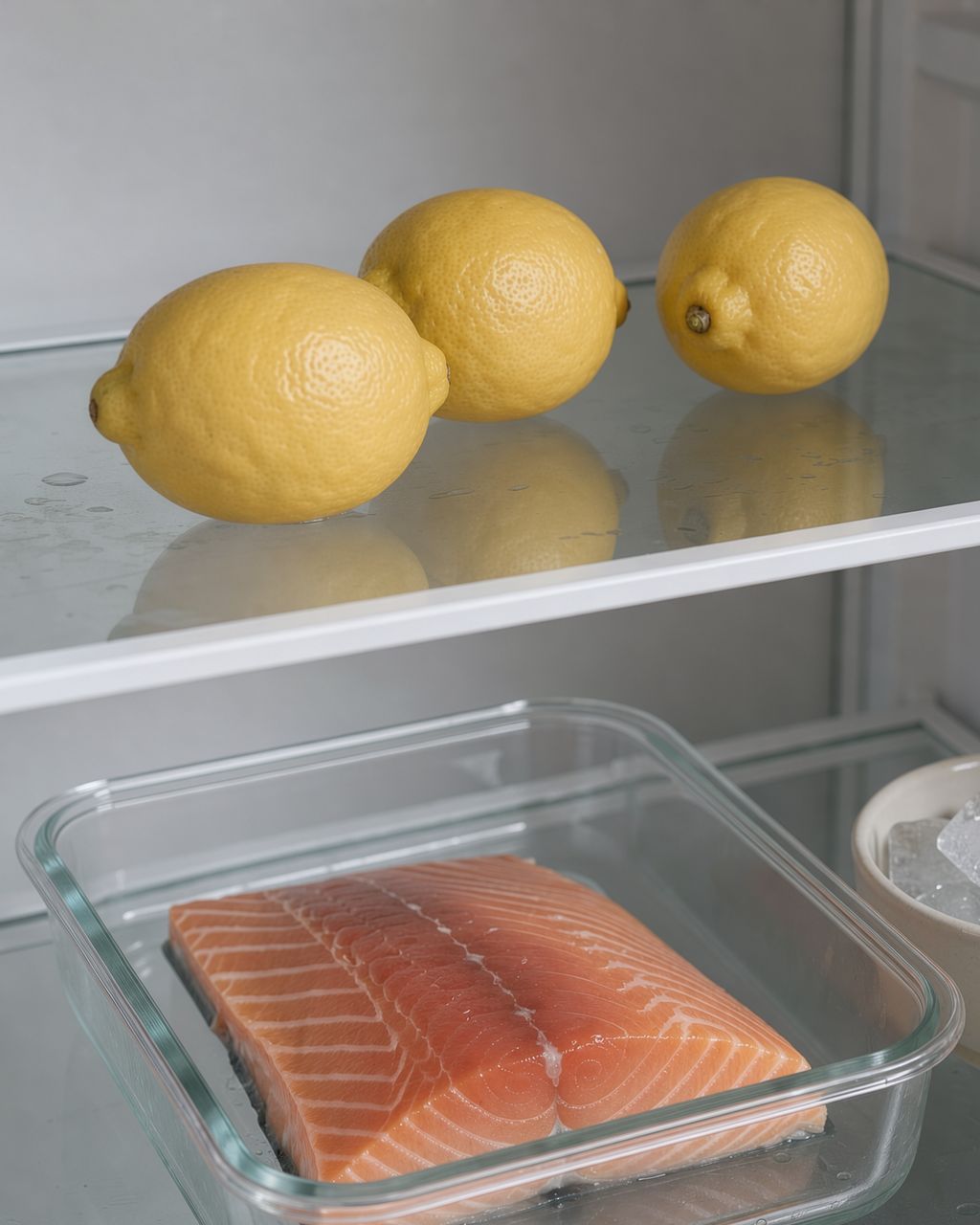
Cook raw salmon within 1–2 days of buying it; baked salmon keeps in a sealed container in the fridge for 3–4 days. According to the USDA, these times apply to a fridge set to 4°C (40°F) or below. Fish belongs in the coldest part, usually at the back on the bottom shelf.
Fresh fillet: in its original packaging or a sealed container, ideally on a dish of ice so it doesn't drip onto other foods.
Baked salmon: cool it (no more than 2 hours at room temperature) and put it in a container. Cold, it's great in a salad, spread or frittata.
Smoked salmon: unopened packages by the use-by date on the label, opened ones within 1–2 days.
Freezer: a raw fillet wrapped airtight, ideally vacuum-sealed, holds its quality for roughly 2–3 months. After that it's still safe, but loses flavor and texture.
Reheating: gently and briefly, ideally in the oven at 120–140°C (250–285°F) covered with foil for 10–15 minutes. Harsh reheating turns it into dry paper.
For full details, including sushi and smoked fish, see the article Salmon and sushi in the fridge: how long raw and smoked fish keeps and how to freeze it.
Yes, you can bake frozen salmon straight from the freezer, but allow about half as much time again. Rinse off any ice, pat it dry, rub it with oil and bake at 200°C (400°F) for 18–22 minutes, depending on thickness. Add the seasoning only after 8–10 minutes, once the surface has thawed and the seasoning will stick. You won't get crispy skin this way, so always thaw salmon before pan-searing.
Yes, salmon skin is edible, and when it's cooked crisp, many people think it's the best part of the fish. It tastes best from the pan or grill. From the oven or foil it tends to be soft and rubbery, so feel free to leave it on the side of the plate. Before cooking, just run the back of a knife over it against the direction of the scales so no bits are left behind.
The best way to remove salmon bones is with tweezers or small pliers, pulling in the direction the bone grew. Run your finger down the middle of the fillet from head to tail and you'll feel a row of thin bones. Grip each one by the end and pull it out at a slant, forward, so the flesh doesn't tear. You can lay the fillet over an upturned bowl, which makes the bones stick out more.
For a main course, allow 150–200 g (5–7 oz) of fillet per person; for pasta, salad or a bowl, 100–120 g is enough. 100 g of smoked salmon makes a spread for 3–4 people or about 8 open-faced sandwiches. Children usually need only half an adult portion.
To stop salmon sticking on the grill, grill it skin side down on a clean, hot, oiled grate and leave it alone for the first 5–6 minutes. Heat the grill to medium, around 200°C (400°F), rub the fillet with oil and close the lid. A 2.5 cm (1 in) portion is done in 7–9 minutes and doesn't need turning at all. Grilling salmon on a cedar plank or in foil is a surer bet, because it never sticks.
You can leave salmon overnight only in a dry salt cure (gravad lax). Leave it in an acidic marinade for 30 minutes at most, and in a marinade without acid for 2–4 hours. In an acidic marinade (with lemon, lime or vinegar), the acid would break down the surface over a longer time and the flesh would turn mealy. Keep marinades without acid, for example soy sauce, oil, garlic and herbs, in the fridge.
One recipe worth heating the oven for, one tip, and one deal from the shop. Nothing else.