Spaghetti allo scarpariello: a quick recipe from naples
How to Cook Pasta: How Much Water and Salt, How Long, and How to Keep It From Sticking
Updated Nov 17, 2026
How to cook pasta: use 1 liter of water and 10 g of salt for every 100 g of pasta, add it only once the water is at a rolling boil, stir for the first two minutes, and cook by the package time, tasting a minute before the end. You don't need oil in the water or a cold rinse. Below you'll find out why, and how spaghetti, tagliatelle, orzo, soup noodles and microwave pasta differ.
For 100 g of dry pasta, use 1 liter of water and 10 g of salt (roughly a heaping teaspoon). Italians call this the 1000–100–10 rule, and Barilla gives the same water ratio.
Portions: 80–100 g of dry pasta per person as a main course, 50–60 g as a side or in soup.
Water: 1 l per 100 g, so at least 4 l for 400 g. More water means it returns to a boil faster after you add the pasta, and the pasta sticks less.
Salt: 10 g per liter, added to the boiling water just before the pasta. This is the only time to salt pasta: once it's cooked, the salt won't get in.
The water should taste about like a lightly salted soup. If the sauce is very salty (Parmesan, bacon, olives, capers), cut the salt to 7 g per liter.
Seasonal baking plans, tested recipes and kitchen tricks that save you time. Unsubscribe in one click.
Cook it for the time on the package, but taste it 1–2 minutes early. Timing varies with the shape, thickness and brand, so a generic chart is never as accurate as the package.
Bring the water to a rolling boil, salt it and add the pasta.
Stir right away, then another 2–3 times during the first two minutes — that's when pasta sticks the most, because the surface is releasing starch.
Cook uncovered at a gentle but steady boil.
A minute or two before the end, fish out one piece and bite into it.
Al dente (literally "to the tooth") means the pasta is still firm inside and offers slight resistance to the teeth, but isn't crunchy. When you bite through it, you'll see a thin, lighter stripe in the center. If you'll be finishing the pasta in the sauce, drain it at exactly this point — it will finish cooking in the pan in a minute.
Before draining, scoop out a mug of the cooking water. It's full of starch, and a few spoonfuls bring the sauce and pasta together into a glossy cream. If your sauce still turns out thin, our article on how to thicken a sauce without flour can help.
Oil in the water doesn't help, and rinsing with cold water does harm. Both are well-worn habits that do more to take away from pasta than to improve it.
Oil floats on the surface while the pasta cooks below it, so it doesn't prevent sticking. It only coats the pasta when you drain it, and then the sauce slides right off. What prevents sticking is plenty of water and stirring at the start — even Barilla explicitly advises against oil in the water.
Rinsing washes away the surface starch that holds the sauce, and cools the pasta down. Drain it, leave a little moisture on it and toss it with the sauce right away.
The exception: for pasta salad, or when you want to store the pasta, you can give it a quick rinse — it stops the cooking and keeps the pasta from clumping together.
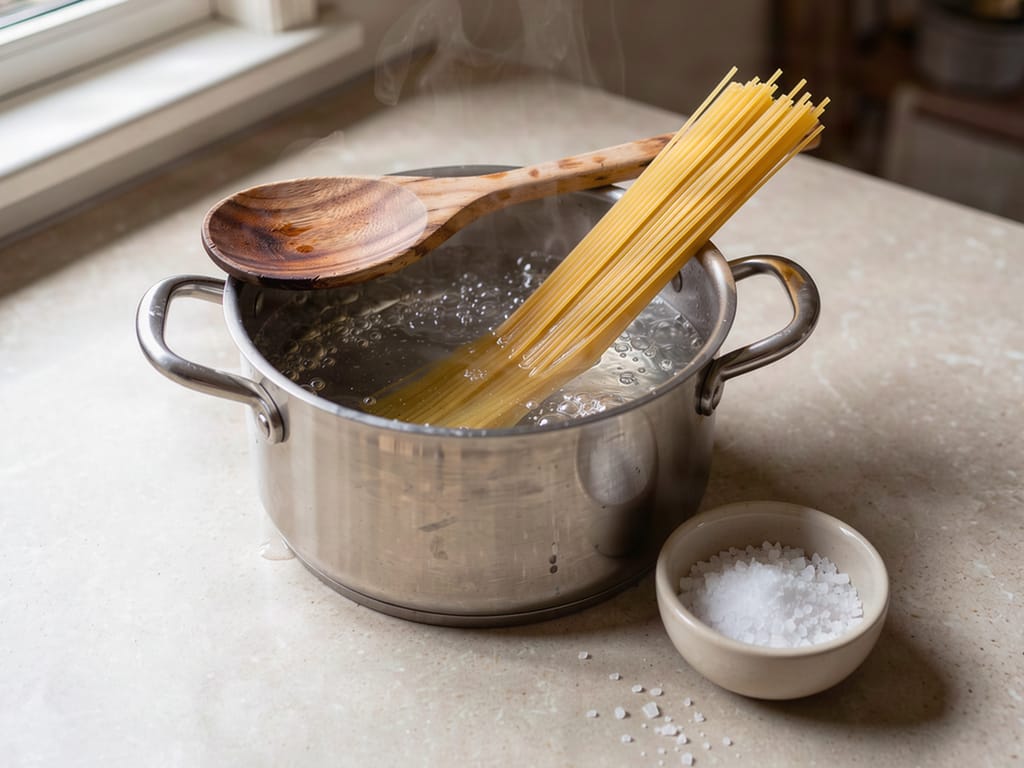
Cook spaghetti in a large pot with 1 l of salted water per 100 g. Don't break it; let it soften and sink on its own over the first 30 seconds. Then push it around with a fork and stir to loosen the bundle — this is where most clumps form.
Thin spaghetti (spaghettini) is usually done in 5–7 minutes, classic in 8–11, and thicker spaghettoni in 12–14. Go by the package.
Don't have a tall enough pot? Stand the bundle in the water, wait 30 seconds, and push the rest down with a spoon as the bottom softens.
At the end, transfer it with tongs straight into the pan with the sauce and add a few spoonfuls of cooking water.
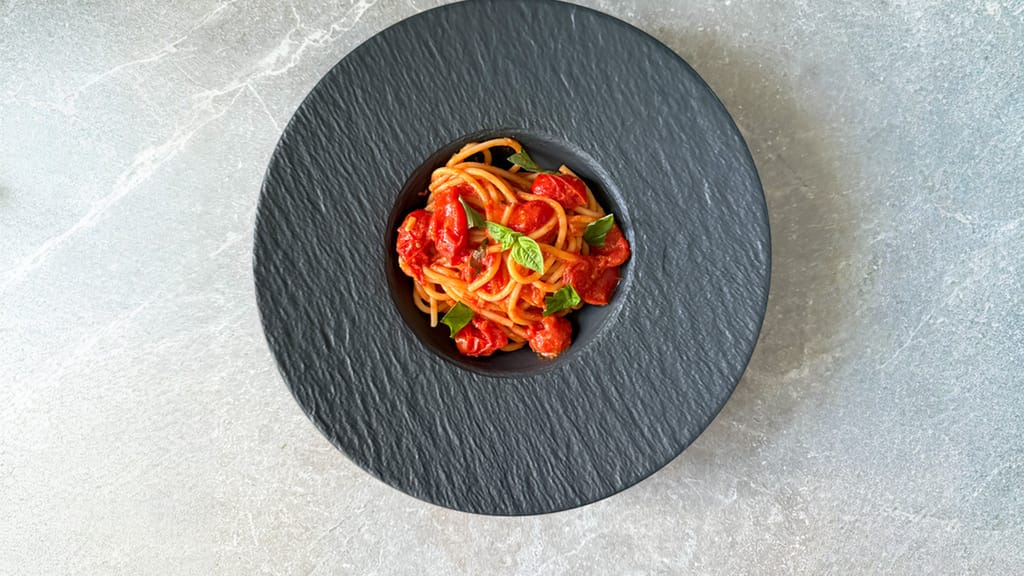
Try it in Neapolitan spaghetti allo Scarpariello — a quick dish where properly cooked spaghetti does half the work.
Spaghetti allo scarpariello: a quick recipe from naples
Spaghetti allo Scarpariello: a quick recipe from Naples
Cook tagliatelle like any other pasta, except loosen the nests right after they go in — gently shake them apart with a fork as soon as they begin to soften, or they'll stick together in the middle.
Dried egg tagliatelle (nests): usually 4–7 minutes, depending on the package.
Fresh refrigerated tagliatelle (from the chilled section) or homemade: just 2–4 minutes. They're done shortly after they float to the top; start tasting from the first minute.
Wide ribbons break easily — stir gently and drain them into a colander rather than tipping them out from a height.
Tagliatelle works best with creamy and meaty sauces that cling to the ribbons — for example creamy tagliatelle with chorizo and Parmesan. For baking, cook it 2 minutes less than the package says, since it will finish cooking in the oven: baked tagliatelle with goat cheese.
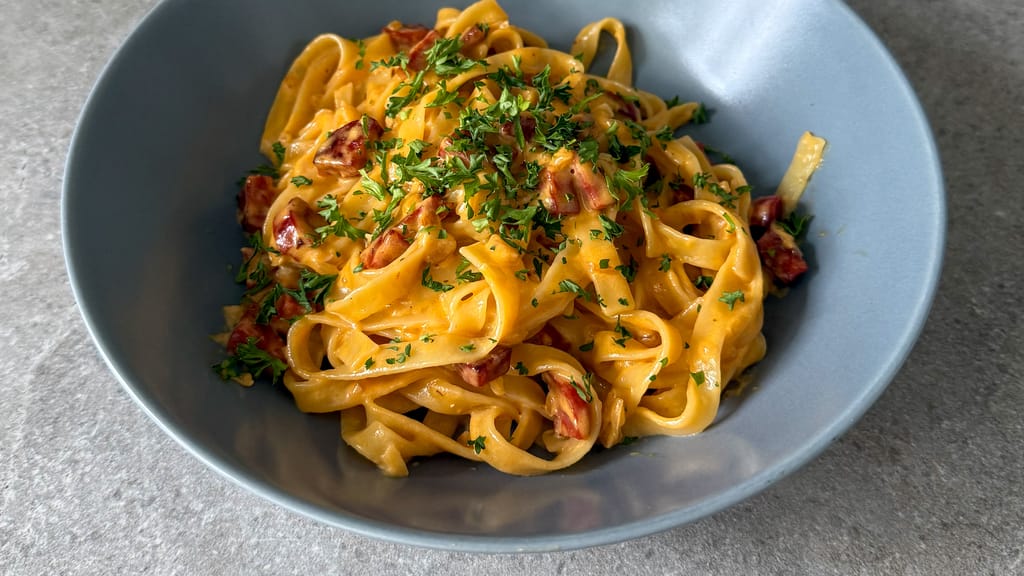
Creamy chorizo tagliatelle with parmesan
Creamy tagliatelle with chorizo and Parmesan
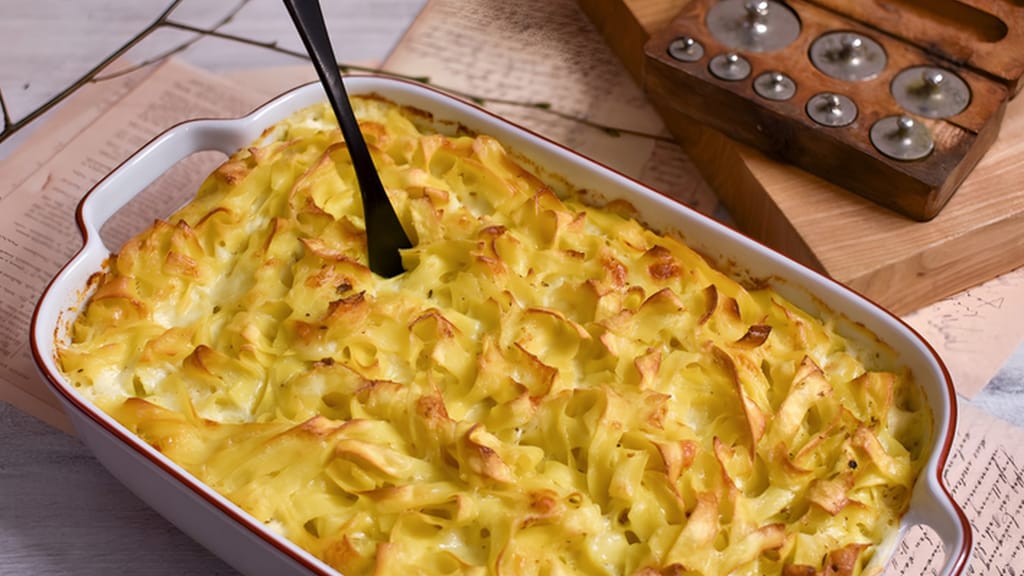
Baked tagliatelle with amazing capriccio goat cheese
Baked tagliatelle with goat cheese
Orzo is a tiny pasta shaped like grains of rice, and it's cooked in one of two ways: in plenty of water like regular pasta, or by absorption like risotto.
In water: 1 l of salted water per 100 g, usually 8–10 minutes depending on the package. Stir often while it cooks — the tiny grains quickly settle on the bottom and stick. Drain it in a fine strainer; it will fall through a coarse one.
Risotto-style (orzotto): briefly sauté the orzo in butter or oil, then gradually add hot broth, stirring until it's absorbed. Count on roughly three times the volume of liquid to orzo, and keep tasting — the starch stays in the pot and makes a creamy texture without any cream.
For a salad, briefly rinse the orzo after draining and toss it with a drop of oil, otherwise the grains will fuse into one block.
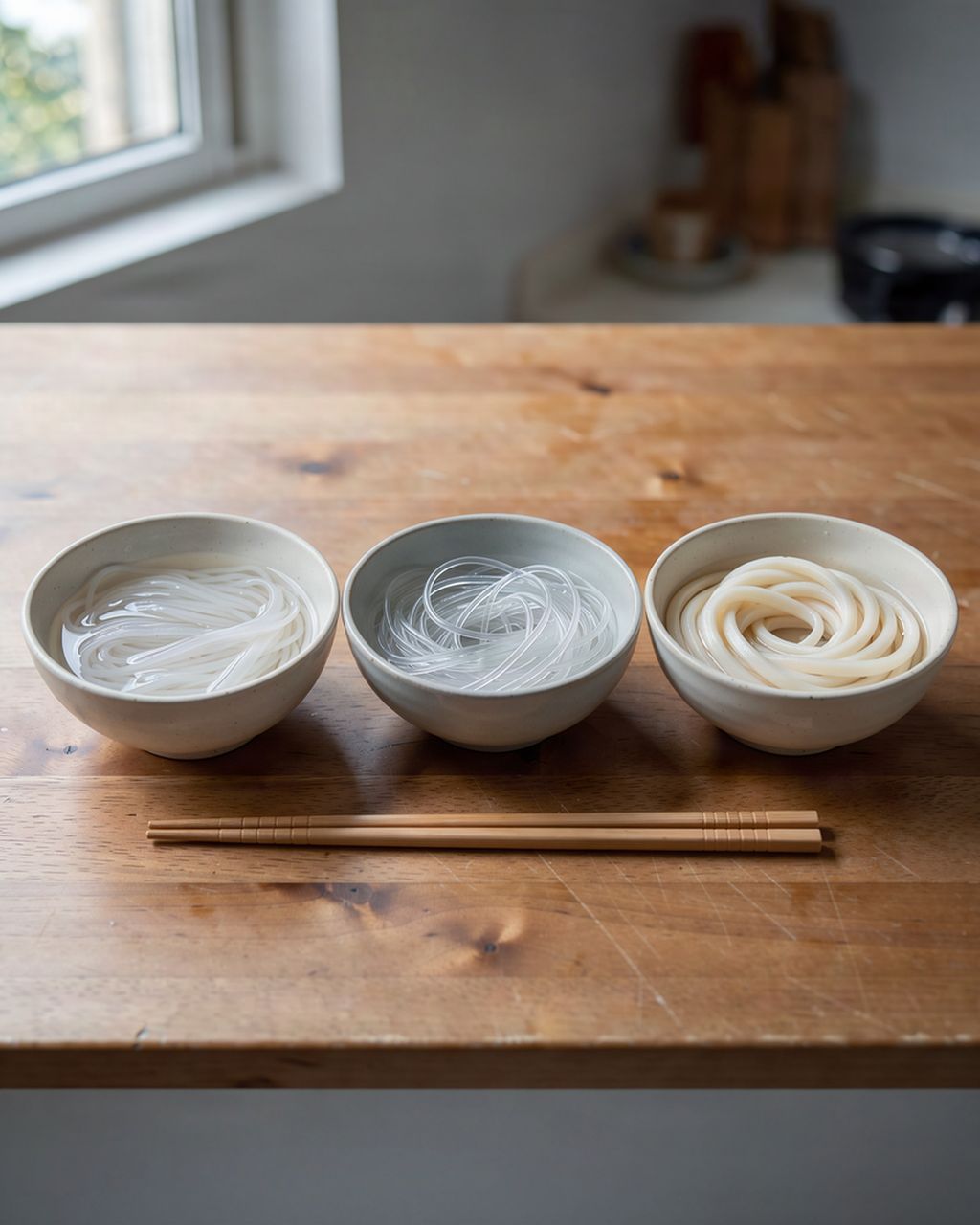
Cook soup noodles separately in salted water, drain them, and add them to the bowl only when serving — never store them in the broth. Cooked right in the soup pot, they release starch and cloud the broth, and overnight they soak it up, turn soft and stick together.
Cook the noodles in 1 l of salted water per 100 g, one minute less than the package says (they'll finish in the hot broth).
Drain them and give them a quick rinse — with soup noodles that's right, since you want to wash off the surface starch.
Toss them with a spoonful of broth or oil so they don't stick together.
Put a portion of noodles in a bowl and pour hot soup over them.
Feel free to cook the noodles all at once for a whole pot of soup, even several days ahead. Then store the leftover noodles and broth in the fridge separately, with the noodles in a sealed container. When serving, just pour hot soup over them and they'll heat through in a minute. That way the soup stays clear and the noodles won't turn to mush the next day.
To cook pasta in the microwave, put it in a wide bowl, cover it with water so it sits at least 5 cm (2 in) below the surface, add salt, and cook on full power for 3 minutes longer than the package says. This suits one or two portions; for more, a pot is faster.
Take a large, deep microwave-safe bowl — the water rises and foams as it boils.
Add the pasta, water and a pinch of salt, and stir. Don't skimp on the water: pasta absorbs a little more water than its own weight as it cooks, and some boils away. If the water level is low, the top layer sticks out and stays hard.
Cover loosely with a plate or lid, leaving a gap for steam.
Cook on full power for the package time + 3 minutes, stirring halfway.
Taste it. If it's still firm, add one minute at a time.
Drain, and take the bowl out with oven mitts — it's hot and the steam burns.
Short shapes (penne, fusilli, elbows) cook best in the microwave. Break spaghetti in half so it's fully submerged. The time varies with the power of your microwave, so taste more often the first time.
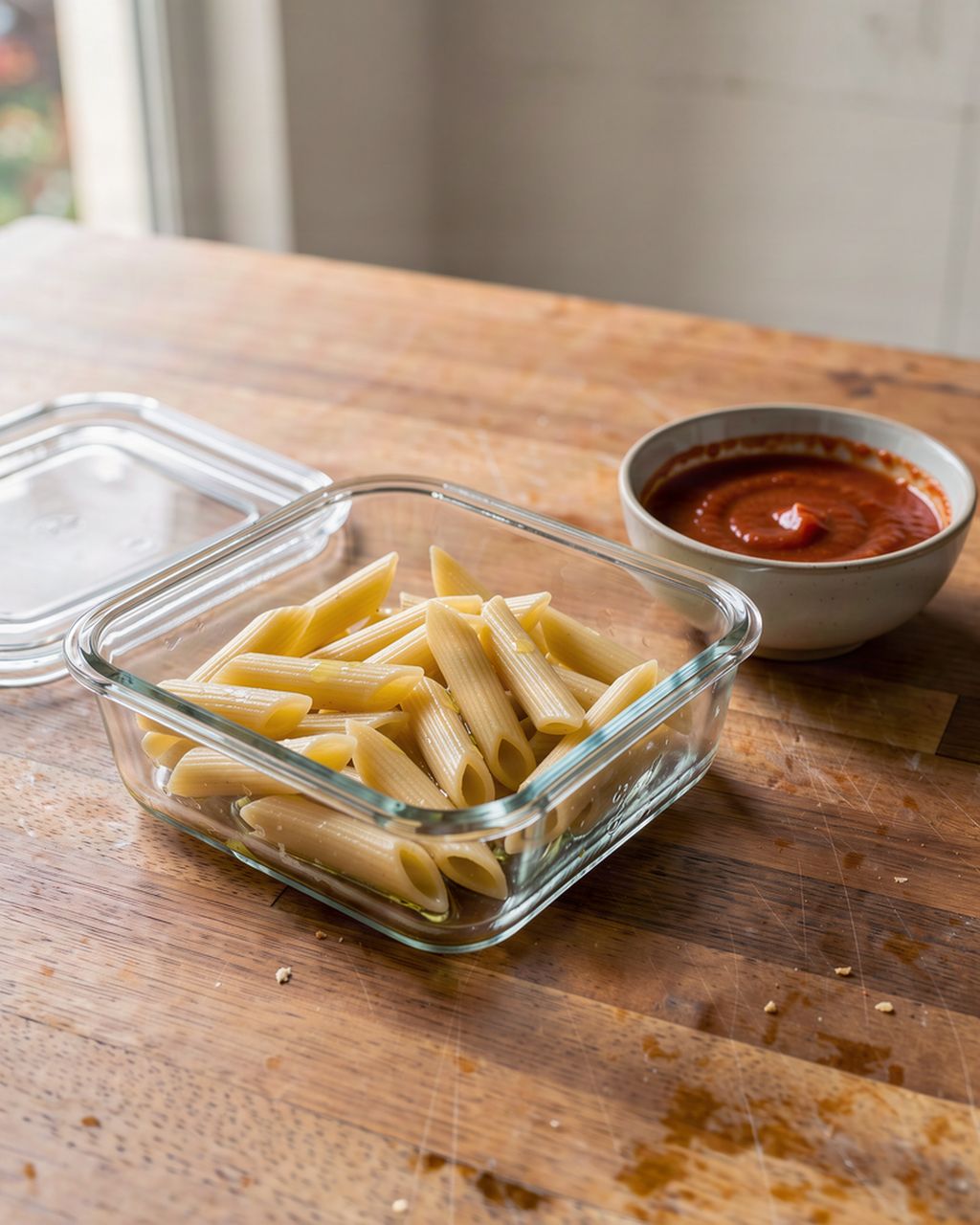
Cooked pasta keeps in the fridge for 3–4 days in a shallow, sealed container, as long as you put it in within 2 hours of cooking (within 1 hour if the temperature is above 32 °C / 90 °F). These limits come from the US agency USDA/FSIS, which says no cooked food should sit at room temperature any longer.
For how long other cooked dishes and ingredients keep in the fridge, freezer and pantry, see the overview food shelf life: a chart by type.
In a small pot you can cook pasta in half the water (about 0.5 l per 100 g), but you'll need to stir more often, especially during the first three minutes. The water will be starchier, which is handy for the sauce. Cut the salt in proportion to the water, roughly 5 g per half liter.
100 g of dry pasta weighs roughly 220–240 g once cooked, because it absorbs a little more water than its own weight. The exact weight varies with the shape and the cooking time.
Drain overcooked pasta right away and give it a quick rinse with cold water to stop the cooking. Then sauté it in a pan with butter or olive oil: the surface firms up and the sauce clings to it better. Very soft pasta also works in a baked casserole or a pasta frittata, where firmness matters less.
Whole wheat and gluten-free pasta are cooked the same way (plenty of well-salted water, stirring at the start), but watch the time more closely. Whole wheat usually takes a minute or two longer and stays firmer. Gluten-free pasta overcooks and falls apart easily, so start tasting 2 minutes before the package time and stir gently. Always go by the package, as times vary a lot between brands.
Yes, orzo can be cooked right in a soup or a thinner sauce. Just keep in mind that it soaks up a lot of liquid and releases starch, so the dish will thicken. Add it about 10 minutes before the end, stir, and top up the liquid as needed. For a soup you'll be reheating over the next few days, cook the orzo separately.
One recipe worth heating the oven for, one tip, and one deal from the shop. Nothing else.