- Season
- Year-round, fresh and frozen. Most tuna in Czech shops is imported and has been frozen.
- Price
- Medium
Calories and nutrition per 100 g
- 102 kcal
- 24.7 g protein
- 0.4 g fat
- 0 g carbs
Tuna Steak
A tuna steak is a thick slice cut from the loin of a tuna, most often yellowfin, that is seared briefly in a pan or on a grill. A pink or raw centre is only safe with tuna sold as suitable for eating raw; cook an ordinary counter steak to 63 °C in the centre.
Do not leave it at room temperature. Warm tuna quickly builds up histamine, which no cooking can destroy afterwards. Put it straight into the fridge after shopping.
Fresh tuna keeps in the coldest part of the fridge at 0–4 °C for 1–2 days at most, or until the use-by date on the pack. Use thawed tuna within 24 hours and do not refreeze it.
Tightly wrapped or vacuum-packed, it keeps good quality at −18 °C for 2–3 months. Thaw it overnight in the fridge, not on the counter. A −18 °C home freezer is not enough to turn ordinary tuna into fish for eating raw.
Fresh tuna is deep red to burgundy, glossy and firm, and smells cleanly of the sea. Avoid steaks that are brown, rainbow-sheened, slimy or smell of ammonia or sourness. Browning can also be natural oxidation, so smell and firmness matter most. For searing, choose slices at least 2.5 cm thick, which do not overcook inside as quickly. If you want tuna pink or raw inside (tartare, poke), buy only fish labelled as suitable for eating raw. With frozen tuna, check that the pack has no ice inside and the edges are not dried out.
Swordfish: similarly meaty, firm flesh that takes high-heat searing. Note that swordfish is advised against entirely in pregnancy.
A salmon steak or a firm white fish such as mahi-mahi. Salmon is fattier and tastes different; white fish is milder and needs less cooking time.
Take the steak out of the fridge about 10–15 minutes before cooking and pat it very dry with paper towel, otherwise it will not sear. Brush it lightly with oil, season with salt and pepper, or coat it in sesame seeds or cracked pepper. Heat the pan or grill until very hot. For 2.5 cm tuna that is suitable for eating raw, sear 1–2 minutes per side and the centre stays pink. Cook an ordinary steak longer, about 3–4 minutes per side depending on thickness, until it reaches 63 °C in the centre. Rest it for 2 minutes and slice across the grain.
Use trimmings from raw-grade tuna for tartare or poke; sear other trimmings and stir them into pasta, salad or a spread. Leftover cooked steak keeps 1–2 days in a closed container in the fridge.
Roughly what one measure weighs, scooped the way you normally would in the kitchen.
Tuna is at its best seared briefly in a very hot cast-iron pan or on a grill, crusted outside and juicy inside. It also works with a sesame or pepper crust, on skewers and with Asian sauces of soy, ginger and lime. Oven-baking or long braising dries it out. Raw tuna is served as tartare, sashimi or poke, but only from fish intended for eating raw. Marinate briefly, under 30 minutes, or the acid turns the surface white and firm.
A tuna steak is a thick cross-cut slice from the loin of a large tuna, most often yellowfin, less often bigeye or albacore. The flesh is dense, dark red and almost boneless, so it is treated much like a beef steak: seared briefly over high heat. It is sold fresh from the chilled counter, vacuum-packed or frozen. Leave it pink inside only when the seller explicitly labels the fish as suitable for eating raw, which means it has been frozen in a way that kills parasites. Cook any other steak to 63 °C in the centre.
Tuna tastes clean, meaty and lightly salty, with little fishy smell. Briefly seared it is juicy and tender inside; cooked through it becomes firmer and drier, closer to canned tuna. Yellowfin is lean and mild, bigeye slightly fattier and fuller, albacore paler and the mildest.
Seasonal baking plans, tested recipes and kitchen tricks that save you time. Unsubscribe in one click.
3 min read
Tuna is lean, and a juicy steak turns dry and stringy within minutes. Sear it briefly over the highest heat you have. Thickness decides the timing, and so does whether it may stay raw inside.
For a 2.5 cm steak of tuna suitable for eating raw, sear 1–2 minutes per side. The outside turns grey to a depth of about 3–5 mm and the centre stays pink. Ordinary tuna from the counter needs about 3–4 minutes per side. It is done when it reaches 63 °C in the centre, turns opaque and separates easily.
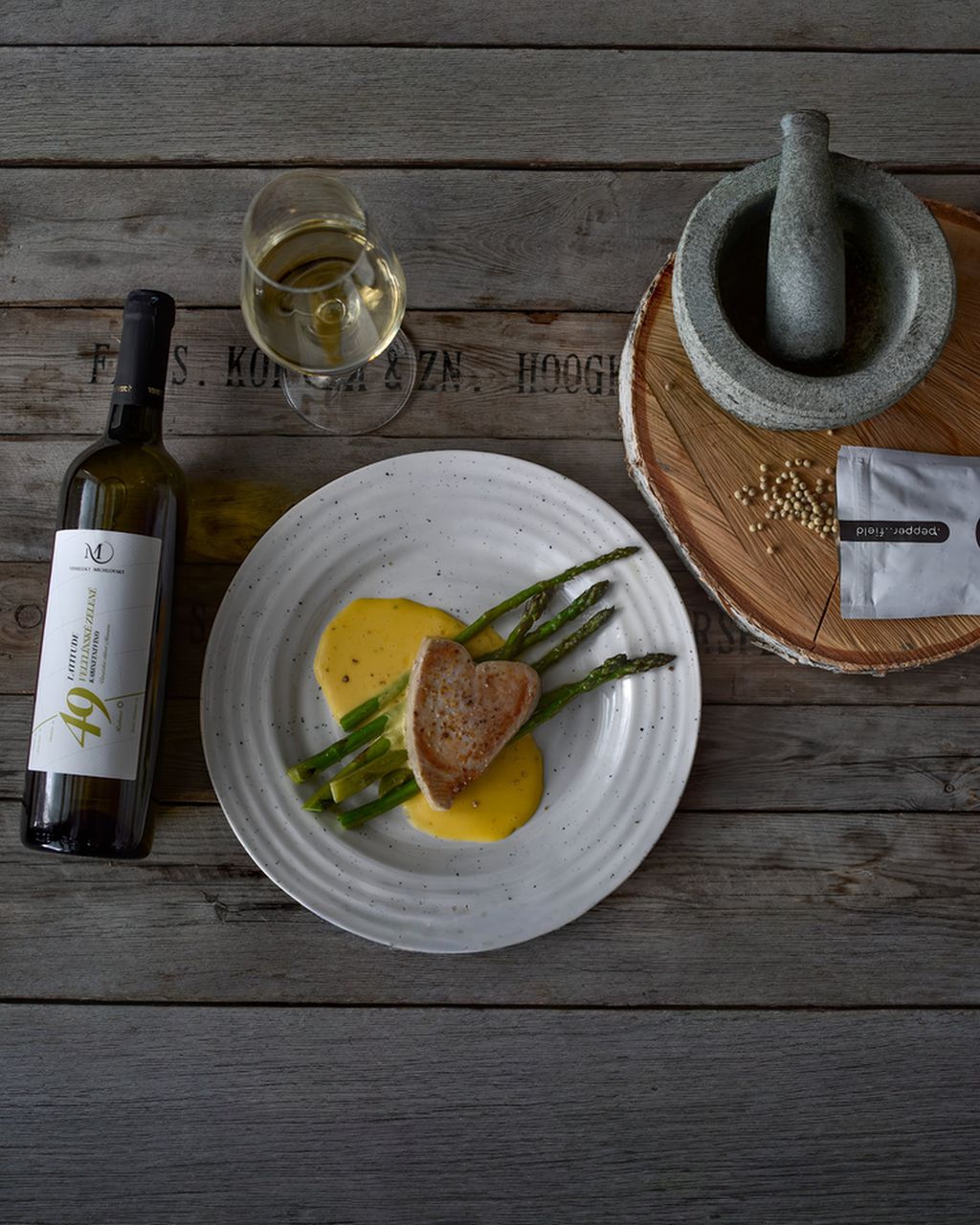
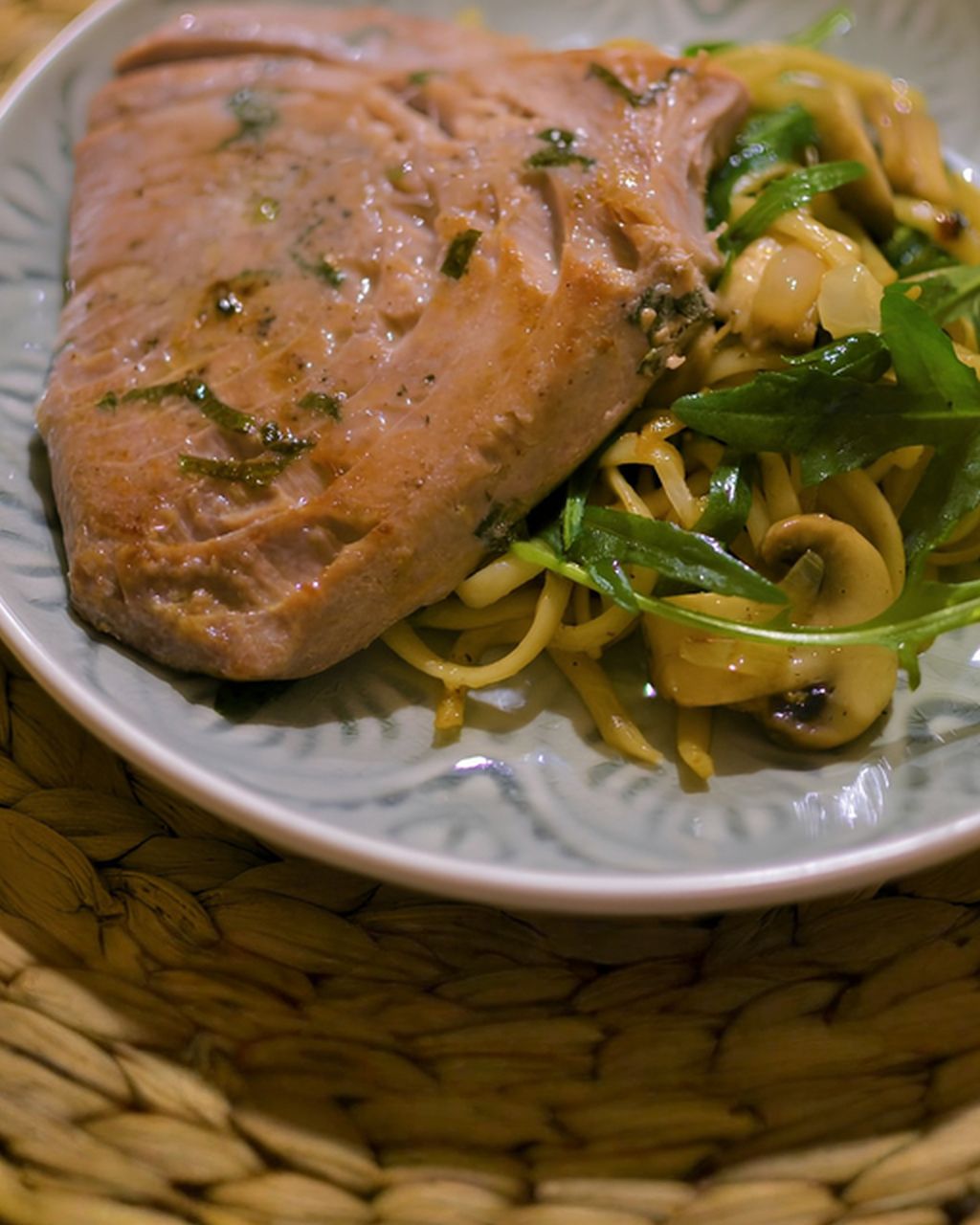
A seared steak goes well with green asparagus, as in our tuna steak with asparagus and hollandaise, or sliced into pasta, as in tuna with mint and pasta. When to bake fish in the oven instead is covered in Baked fish in the oven: what temperature.
Sea fish can carry parasite larvae (for example Anisakis worms). Cooking kills them reliably; a quick sear with a pink centre does not. For fish to be eaten raw or almost raw, EU Regulation (EC) No 853/2004 therefore requires freezing to −20 °C or below in all parts for at least 24 hours, or to −35 °C for at least 15 hours.
A home freezer usually runs at −18 °C, which is not enough. For tartare, poke or a pink centre, buy only tuna labelled as suitable for eating raw and store it as the pack says. More on raw fish in the fridge and freezer in Salmon and sushi in the fridge.
Tuna is one of the fish whose flesh is rich in the amino acid histidine. When the fish sits warm, bacteria turn histidine into histamine. This causes scombroid poisoning: tingling or burning in the mouth, rash, itching, headache, nausea and diarrhoea, usually within minutes to hours of eating.
Histamine is not destroyed by frying, baking, freezing or canning, and the fish can still smell normal. The only protection is unbroken chilling from catch to pan. So do not leave tuna sitting on the counter, and if the first bite makes your mouth tingle or burn, do not eat any more. People with histamine intolerance should be careful even with fresh tuna; see Histamine intolerance.
Large, long-lived predatory fish build up mercury in their flesh. Tuna carries more than small fish such as sardines, and large species (bluefin, bigeye) more than smaller ones.
The UK NHS advises pregnant women to eat no more than 2 tuna steaks or 4 cans of tuna a week. It lists swordfish, marlin and shark among fish to avoid completely, as well as raw fish, even if previously frozen. In pregnancy, always cook tuna through to 63 °C.
Yellowfin tuna (Thunnus albacares), also called ahi, is the most common steak tuna. It is lean, mild and affordable. Bigeye (Thunnus obesus) is fattier and fuller. Albacore (Thunnus alalunga) has pale flesh and the mildest flavour but is more often canned. Bluefin is the most expensive, and its fatty belly is served in Japan as toro. Skipjack is rarely sold as steaks and mostly ends up in cans.
Under EU rules the label must give the commercial and scientific name of the species, the catch area and method, and whether the tuna has been defrosted.
Stock health varies by species and ocean. Atlantic bluefin is recovering thanks to quotas set by the international commission ICCAT, while some other stocks are still overfished. Pole-and-line or hook-and-line caught fish, with less bycatch, and MSC-certified products are the better choices. Look for the exact species and catch area on the label, not just the word "tuna".