How to Melt Chocolate Without Lumps: Methods, Temperatures & Rescue Tips
How to Melt Milk Chocolate Without Scorching or Seizing
Updated Nov 3, 2026
Melt milk chocolate slowly and never above 40–45 °C (104–113 °F). Use a double boiler over barely trembling water, or the microwave at medium power in 15–20-second bursts, stirring between each one. It's more delicate than dark chocolate: it has more sugar and milk powder, which scorch and turn grainy when overheated, and a single drop of water or steam is enough to make it seize into clumps.
Milk chocolate scorches more easily than dark because it contains more sugar and milk powder and less cocoa solids. The milk proteins and milk sugar start to brown and turn grainy at a higher temperature, so the chocolate thickens into a lumpy paste long before dark chocolate would even overheat.
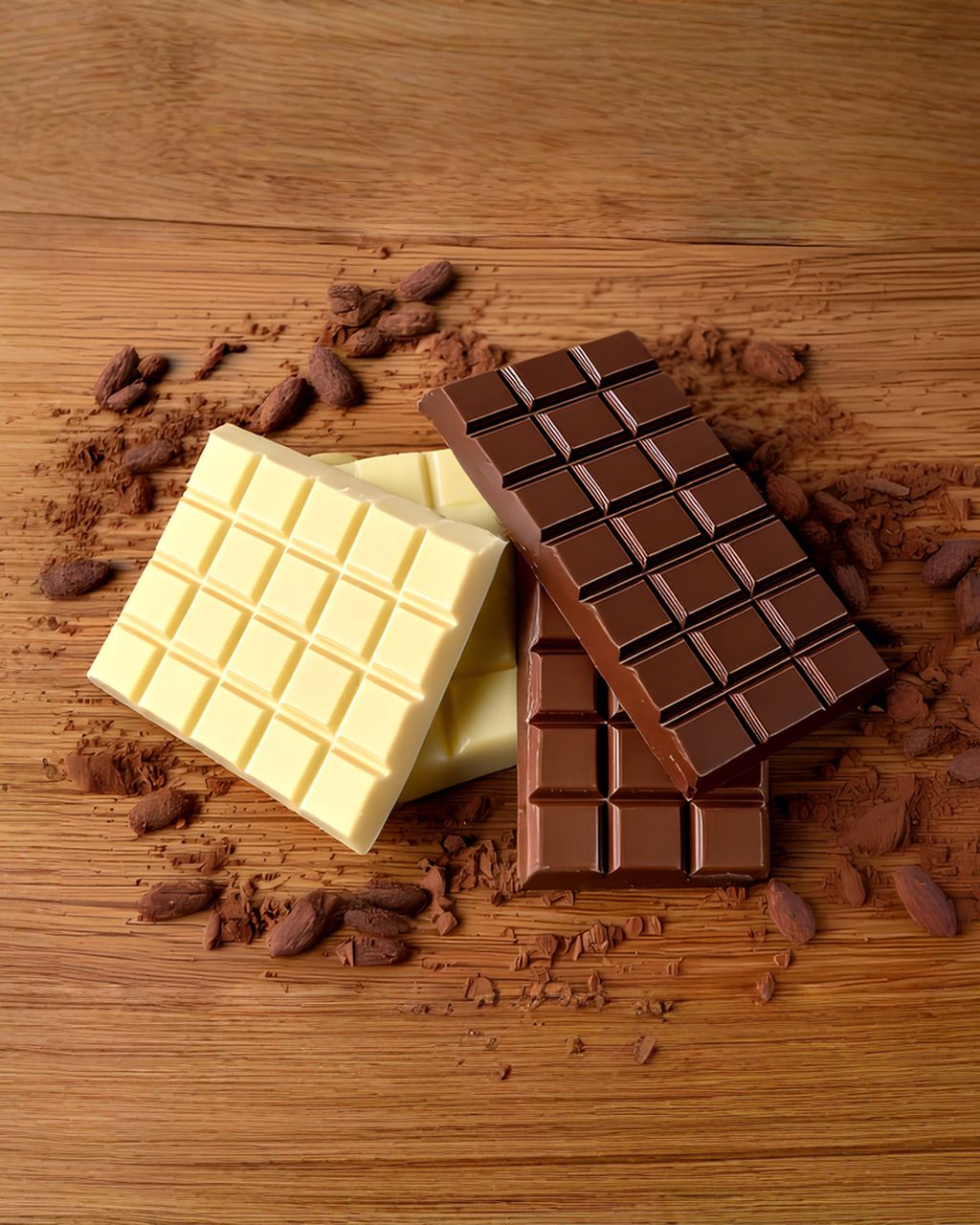
Take a look at the ingredients: in Callebaut 823 milk chocolate, sugar comes first, followed by cocoa butter, whole milk powder and only then cocoa mass. In dark chocolate, cocoa mass comes first. For a breakdown of how all three types differ in composition and behaviour, see Dark, Milk and White Chocolate.
Seasonal baking plans, tested recipes and kitchen tricks that save you time. Unsubscribe in one click.
Melt milk chocolate at 40–45 °C (104–113 °F). Don't go any higher – above this limit the milk components start to brown and the chocolate turns grainy.
Melting: 40–45 °C (104–113 °F)
Working temperature after tempering: around 29–30 °C (84–86 °F)
No thermometer? Dab a little chocolate on your lower lip. It should feel just lukewarm, not hot.
For a specific chocolate, it's worth checking the packaging – manufacturers often print the temperature curve there.
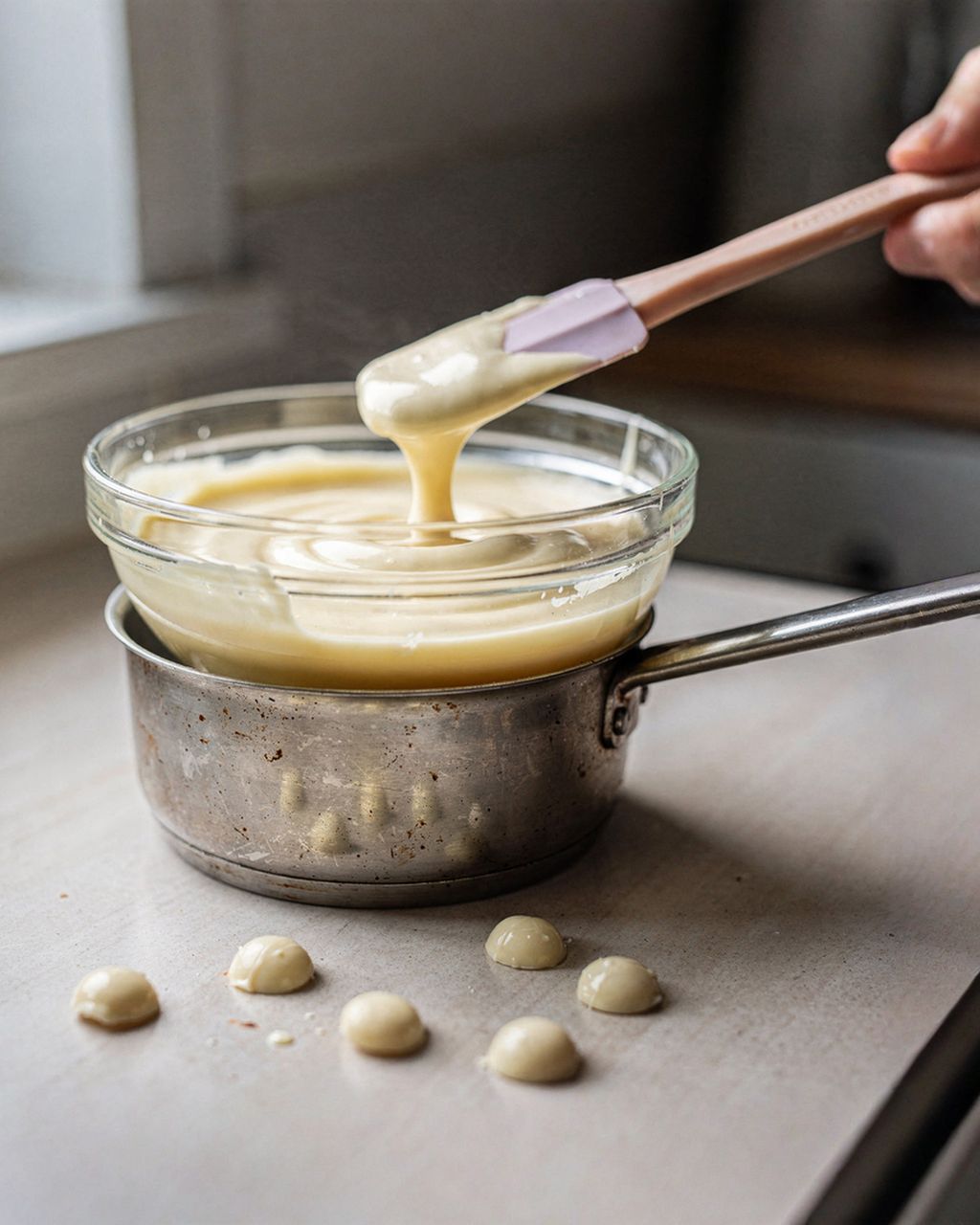
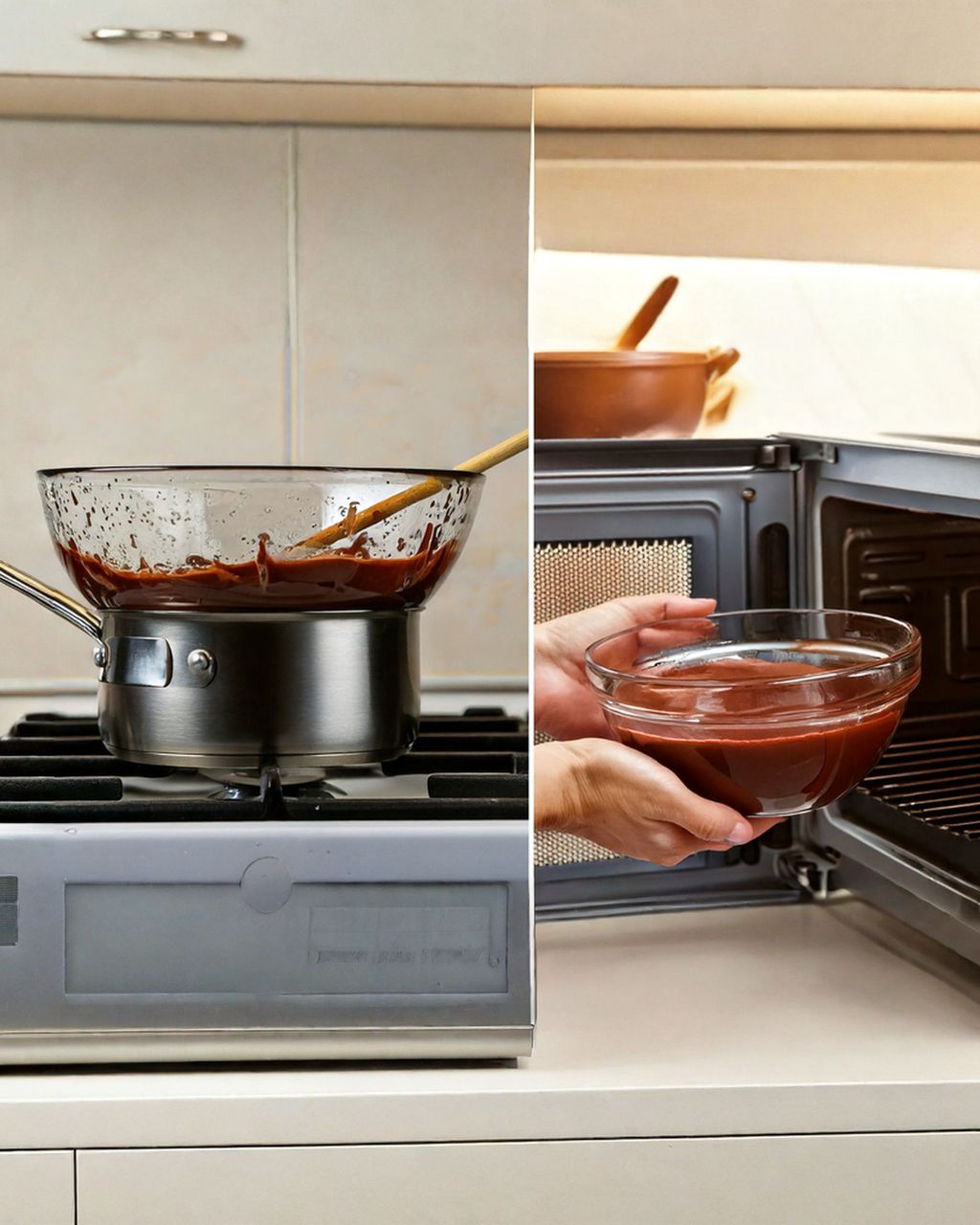
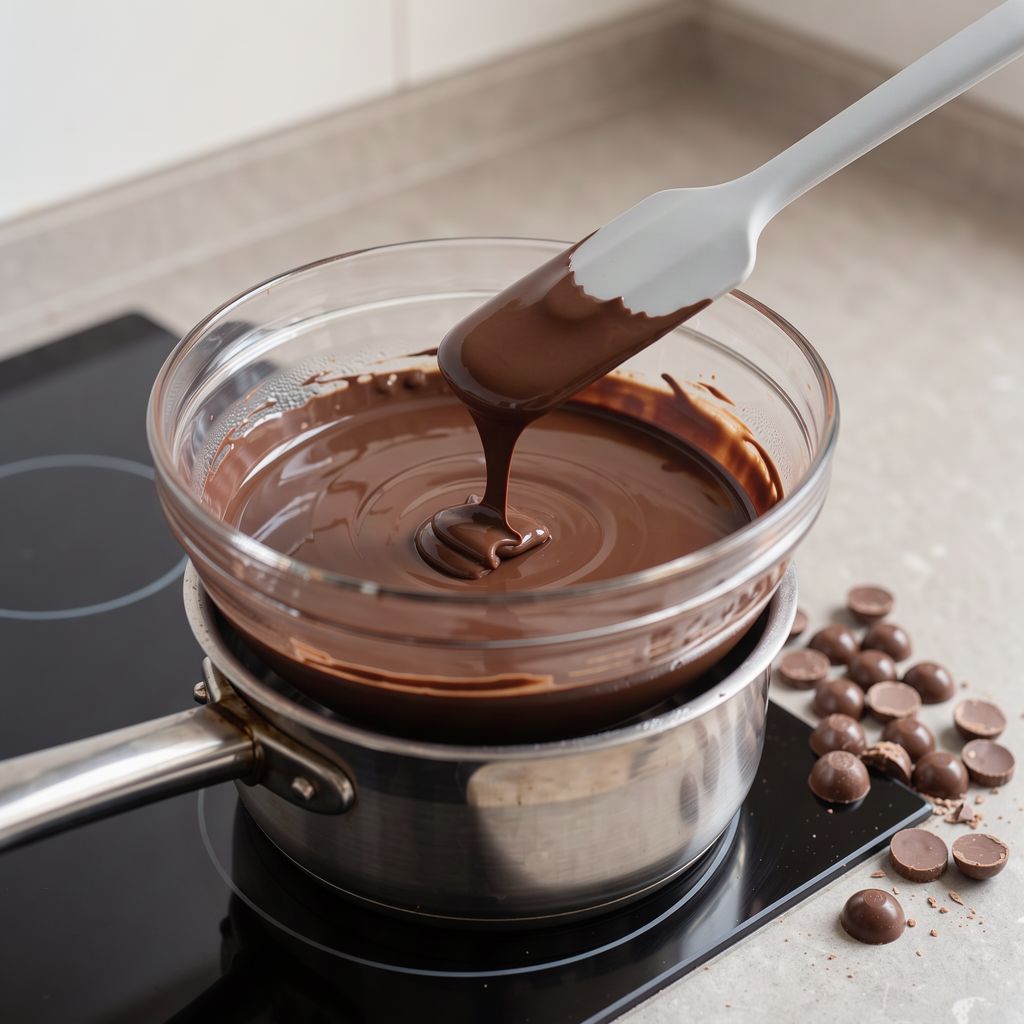
A double boiler is the gentlest way to melt milk chocolate: a bowl set over a pan of barely trembling water, with the base of the bowl not touching the water.
Pour a few centimetres of water into a pan and bring it to a boil. Then turn the heat down to the minimum so the water just trembles.
Put the chocolate chips, or chocolate chopped into evenly sized pieces, into a dry metal or glass bowl.
Set the bowl on the pan so that its base doesn't touch the water and no steam escapes around the edges.
Stir with a dry spatula. When about two-thirds of the chocolate has melted, lift the bowl off and stir in the rest using the residual heat.
Wipe the bottom of the bowl after lifting it off so no water drips into the chocolate.
Don't cover the bowl with a lid – the steam will condense and drip into the chocolate. And don't let the water boil: hot steam both overheats and wets the chocolate at once.
In the microwave, melt milk chocolate at medium power (500–600 W) in 15–20-second bursts, stirring after each one. For 100 g (3.5 oz), allow roughly 1–1.5 minutes in total.
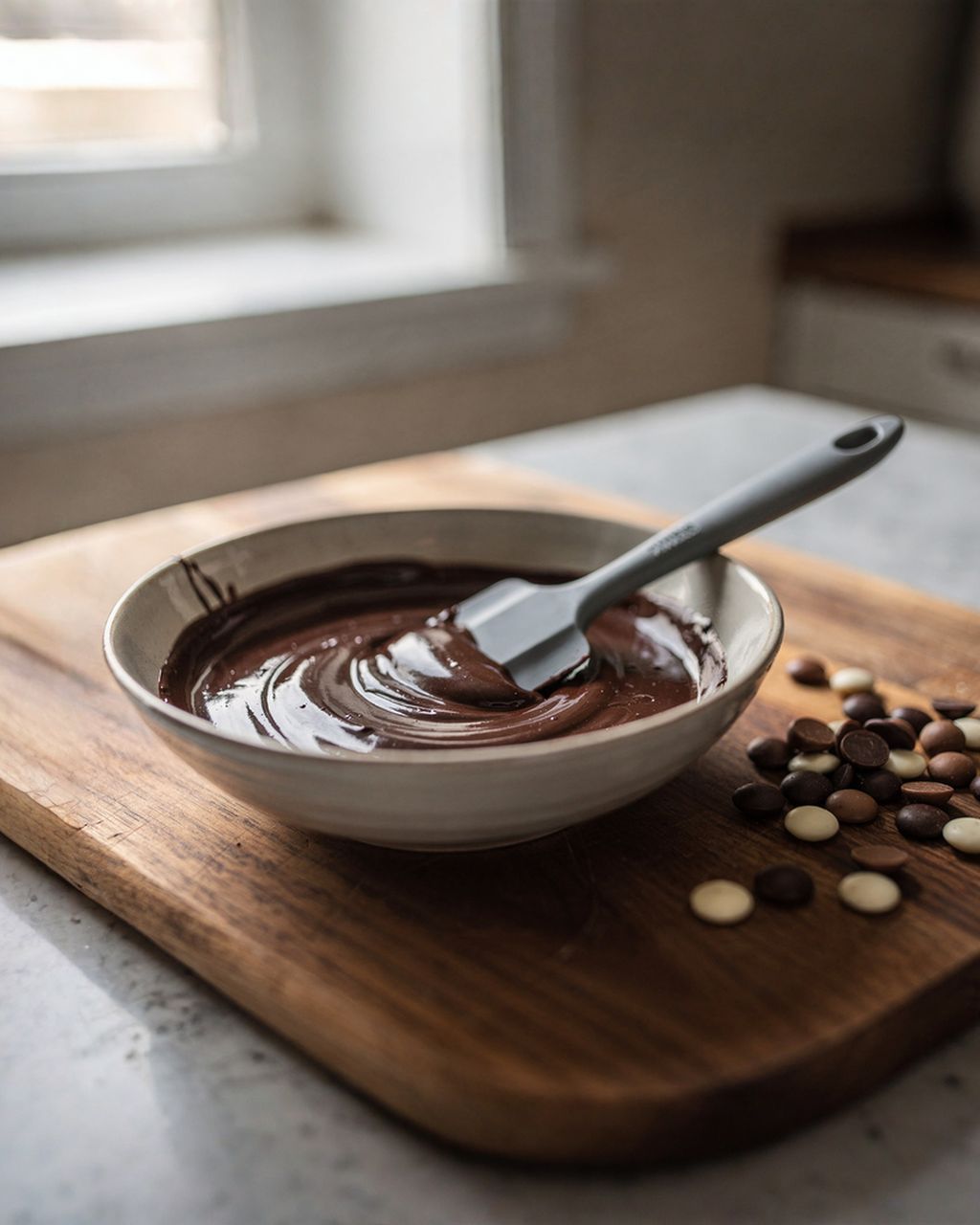
Put the chocolate in a dry glass or ceramic bowl.
Heat for 15–20 seconds and stir thoroughly each time, even if it looks like nothing is happening. Chocolate in the microwave holds its shape even when melted.
Towards the end, shorten the bursts to 10 seconds.
Stop when a few unmelted pieces remain and stir until they melt.
Don't use full power. A microwave heats unevenly, and milk chocolate scorches in the middle before the edges have melted. For general rules that apply to all types of chocolate, see How to Melt Chocolate Without Lumps.
Seized milk chocolate has three possible causes, and each is fixed differently: water, overheating, or simply cooling down.
Water or steam got in. The chocolate suddenly thickens into a dull paste. It won't work for coating or tempering any more, but you can still save it: stir in a tablespoon of hot cream until smooth and you have a sauce or ganache.
It overheated. It's thick, grainy, and smells of caramel or burnt sugar. Take it off the heat, stir in a handful of unmelted chips to cool it quickly, and strain it through a fine sieve. If it smells burnt, it's too late – use it in a batter or dough.
It just cooled down. It's thick but glossy and smooth. Simply warm it up in 5–10-second bursts in the microwave or briefly over lukewarm water.
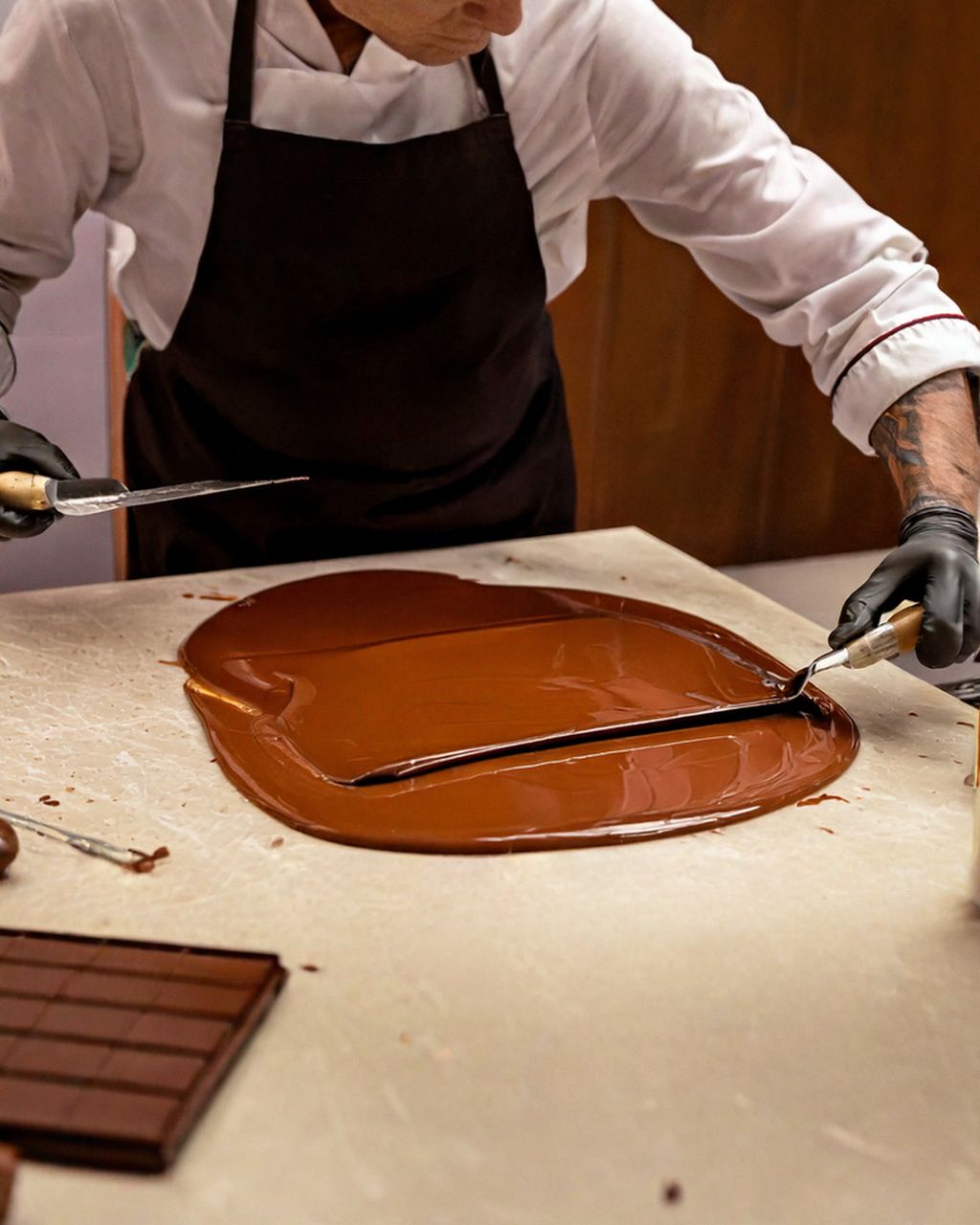
Temper milk chocolate when it needs to keep its shine and snap once set – for pralines, chocolate decorations, or dipped treats that will sit in a box. For ganache, cream, batters, or a coating you'll eat right away, there's no need to temper.
The tempering process: melt to 40–45 °C (104–113 °F), cool to 27–28 °C (81–82 °F), then rewarm to a working temperature of 29–30 °C (84–86 °F). The whole process is described step by step in How to Temper Chocolate.
For melting, glazes and pralines, choose real milk chocolate, ideally couverture with a higher share of cocoa butter. It melts into a fluid, glossy mass and can be tempered. Regular milk chocolate bars for snacking are thicker and need thinning for coating.
Cocoa-flavoured coating is a different product: it contains vegetable fat instead of cocoa butter. It melts easily and doesn't need tempering, but it tastes waxy and has no snap. For how couverture differs from cooking chocolate, see Couverture Chocolate vs. Cooking Chocolate. You'll find milk couverture chips among the baking chocolates.
Don't melt milk chocolate directly in a saucepan on the stove. The bottom of the pan gets far hotter than 45 °C (113 °F), so the chocolate scorches at the base before the top has melted. If you have no other option, use a heavy-bottomed pan on the lowest heat and switch the burner off as soon as the chocolate starts to melt.
Melted milk chocolate is thick because it has either cooled down, overheated, or come into contact with water. If it has simply cooled, gently warm it up again. If it looks grainy or dull, it has overheated or got wet – you'll find rescue steps earlier in the article. For a thin coating, you can thin it with a teaspoon of melted cocoa butter or neutral oil.
To melt milk chocolate with cream, heat the cream until just below boiling, pour it over chopped chocolate, let it sit for a minute, then stir until smooth. For ganache, use roughly 2 parts milk chocolate to 1 part cream; for a thinner glaze, use more cream. Don't boil the cream and chocolate together.
Yes, you can melt set milk chocolate again using the same method, as long as it hasn't overheated in the meantime and no water has got into it. Heat it slowly and again to no more than 40–45 °C (104–113 °F). If it was tempered, melting it again undoes the temper, so you'll need to re-temper it for pralines.
One recipe worth heating the oven for, one tip, and one deal from the shop. Nothing else.