Freeform Chocolate Heart for Valentine's Day: How to Cast, Fill and Gift-Wrap It
Freeform Chocolate Heart for Valentine's Day: How to Cast, Fill and Gift-Wrap It
Updated Nov 17, 2026
To make a chocolate heart without a mold, slip a paper heart template under parchment paper, spread tempered chocolate over it in a 3–4 mm (about 1/8 in) layer, let it set, then pour a second layer. For a heart 15 cm (6 in) wide, plan on 150–200 g of chocolate. You don't need a special mold, just paper, a scraper and properly tempered chocolate. Below you'll find the exact method, how much chocolate each size needs, how to fill the heart with freeze-dried raspberries or pralines, how to turn it into a cake decoration, how to dye chocolate deep red, and how to wrap the heart so it looks like it came from a pastry shop on February 14.
How to Make a Chocolate Heart Without a Mold: Step by Step
You can make a mold-free chocolate heart in 8 steps: template, tempering, outline, pouring, setting, second layer, weighting and peeling off the paper. It takes about 2–3 hours in all, most of it waiting.
Template. Draw or print a heart in the size you want and cut it out. Place it on a flat baking sheet or board and cover it with parchment paper (or acetate sheet for extra shine). The outline must show through.
Temper the chocolate. Untempered chocolate sets dull, with grayish streaks, and won't snap cleanly. For a step-by-step method, see the guide to tempering chocolate for a perfect shine. The working temperature is around 31–32°C (88–90°F) for dark, 29–30°C (84–86°F) for milk and 28.5–29.5°C (83–85°F) for ruby. Ruby is sensitive to overheating, so even half a degree matters.
Trace the outline. Put some of the chocolate in a piping bag, snip off a small tip and trace the heart along the line. Let it set for 2–3 minutes. This forms a dam and keeps the edge sharp.
Pour and spread. Pour chocolate inside and use a small scraper to spread it into a 3–4 mm layer right up to the dam. Tap the baking sheet on the counter to bring up any bubbles.
Let it set. At a room temperature of 18–20°C (64–68°F) this takes 15–20 minutes. The chocolate should no longer be sticky but not yet rock hard.
Second layer. Pour and spread a second 3–4 mm layer, again right to the outline. A single layer on a heart 15 cm wide or larger cracks when you wrap or carry it; two layers (6–8 mm in total) hold up.
Weight it and let it finish setting. Wait until the second layer starts to set and is no longer sticky (about 5–10 minutes at 18–20°C). Only then cover the heart with parchment paper and set a light board on top. Liquid chocolate would smear under it. Chocolate shrinks as it sets, and without a weight the edges curl up. Leave it undisturbed for at least 1–2 hours.
Peel off the paper. The face side is the one that lay on the paper, and it is the shiniest. Trim any uneven edge with a knife warmed in hot water and wiped dry.
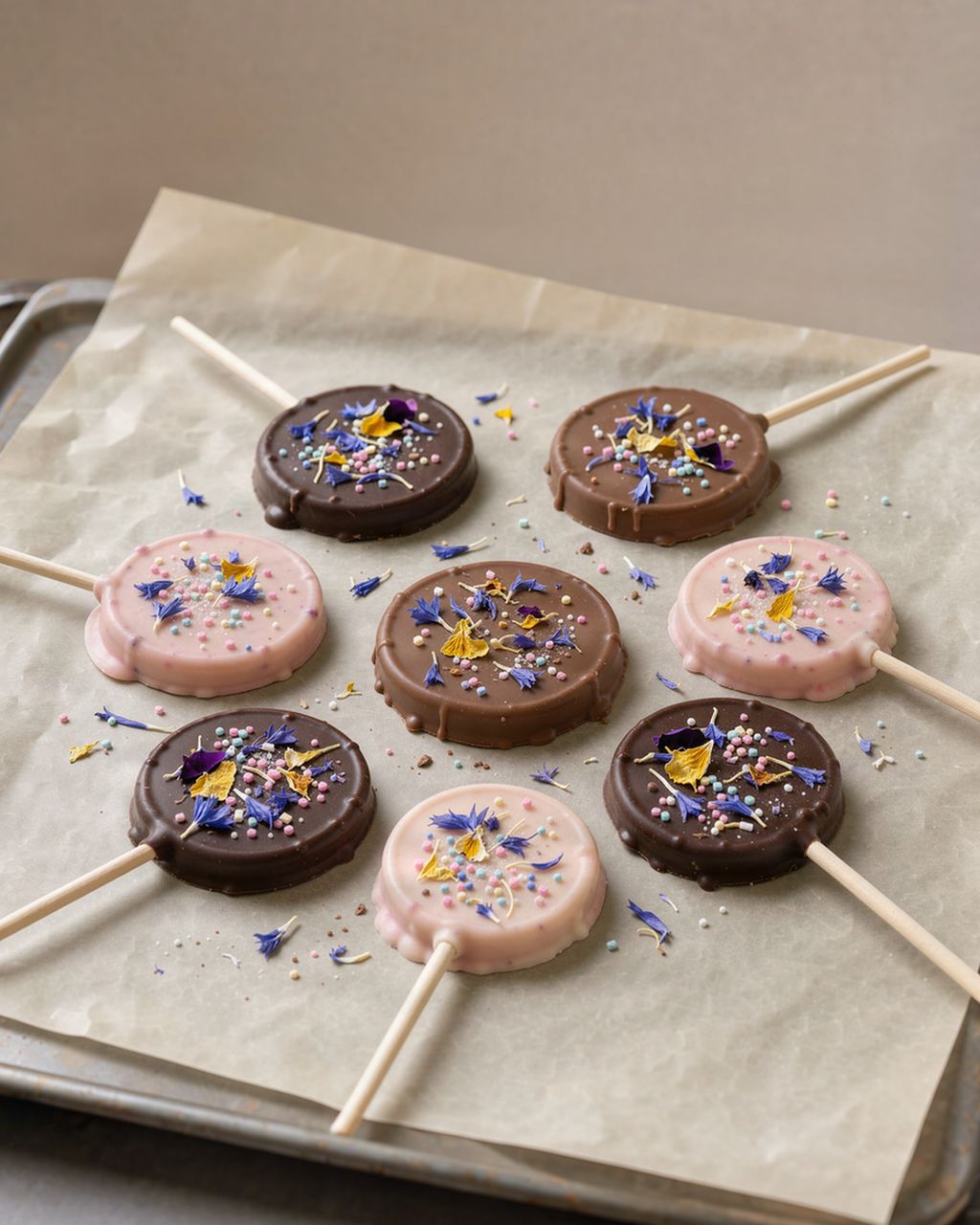
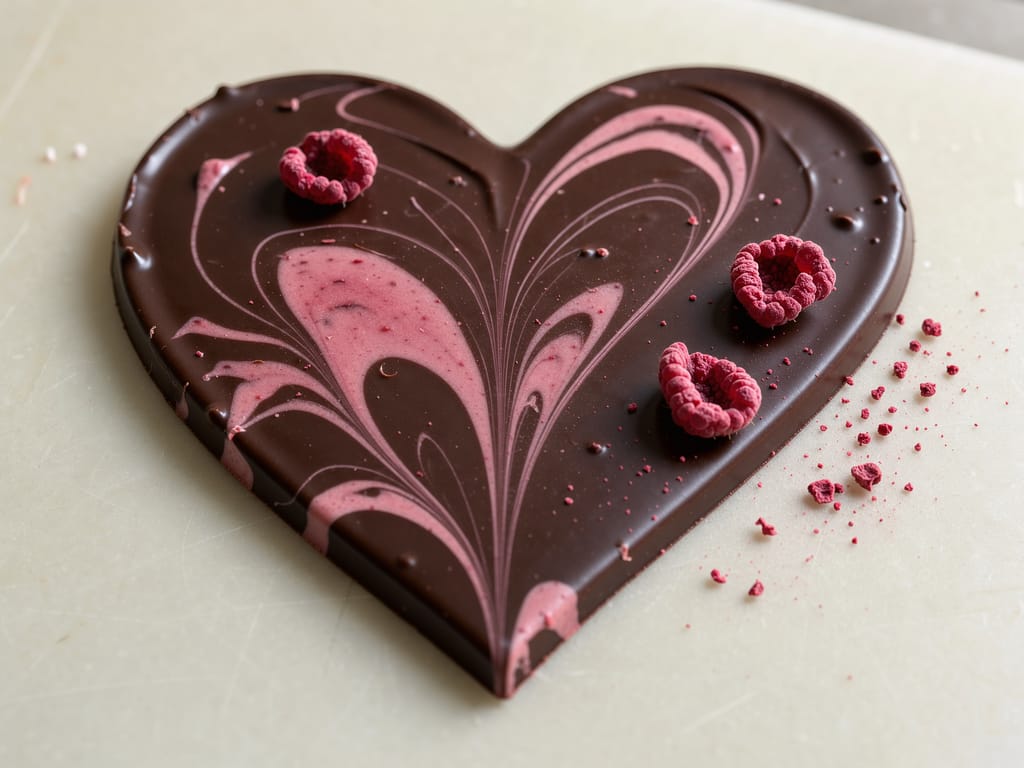
Want a two-color heart? Decorate the face side first: spatter or drizzle ruby or white chocolate onto the paper, let it set, and only then pour the dark chocolate over it. The pattern will show on the glossy side. Casting chocolate lollipops uses the same pour-onto-paper principle.
How Much Chocolate You Need for a Chocolate Heart
For a heart 15 cm (6 in) wide in two layers, plan on 150–200 g of chocolate. As a guide:
10 cm: 70–90 g
15 cm: 150–200 g
20 cm (large heart): 280–350 g
Always temper at least 300 g, though. A smaller amount cools quickly and the temperature drops before you can spread the second layer. Pour any leftovers onto paper, let them set and use them next time, since tempered chocolate can be melted and tempered again.
Why a Chocolate Heart Goes Wrong: Streaks, Cracks, Sticking
A chocolate heart most often fails because of poor tempering, water in the chocolate or a layer that's too thin.
Gray streaks, dull surface, a heart that bends — the chocolate wasn't tempered, or it warmed above working temperature while you worked. Melt it and temper again.
Chocolate thickened into a lumpy paste — water got into it (steam from the water bath, a wet scraper, gel coloring). Chocolate like this is no good for a glossy heart; stir it into batter or a cream filling instead.
The heart sticks to the paper — it either hasn't finished setting or wasn't tempered. Tempered chocolate releases from the paper by itself because it shrinks as it sets.
It cracks when you peel it — it's too thin, or you lifted it by the edge. Peel the paper off the heart, not the heart off the paper: flip the heart over together with the paper, face up, and peel the paper away.
Did that help? We’ll send you more tips by email.
Seasonal baking plans, tested recipes and kitchen tricks that save you time. Unsubscribe in one click.
Which Chocolate to Choose for the Heart: Dark, Milk or Ruby
For a heart that should shine and snap, use couverture, a chocolate with a higher share of cocoa butter that tempers well and flows nicely. Baking chocolate bars are usually thicker and harder to spread into an even layer.
Dark (around 54%) — the easiest to temper and forgiving of small mistakes, with a bold flavor and the most shine. The safest choice for a first heart.
Milk — sweeter and popular with kids; it tempers at a lower temperature and is slightly softer.
Ruby — naturally pink with no coloring, with a fruity, tart note that suits Valentine's Day better than any other. It's sensitive to overheating, light and moisture; read more in ruby chocolate: what it is and how to work with it.
You'll find the whole selection in the chocolate for baking and tempering category. A combination works beautifully too: a dark base with ruby marbling on the face.
Filled Chocolate Heart with Raspberries or Pralines
A filled heart is made by joining two chocolate shells with a dry filling between them: freeze-dried raspberries, pralines, nuts or small candies. The filling must be dry. Fresh raspberries release juice, the chocolate around them softens and the heart goes moldy within a few days.
The best fillings:
Freeze-dried raspberries — crunchy, tart and bright red; ideal with ruby or dark chocolate.
Pralines or truffles — a gift inside a gift, but with a cream ganache only in a heart you hand over the same day. For raspberry praline inspiration, see the recipe for chocolate cake with raspberry pralines.
Roasted hazelnuts, almonds, mini marshmallows, heart-shaped sprinkles — inexpensive, long-lasting and they look great when the heart is broken.
Filled Chocolate Heart in a Silicone Mold
For a filled chocolate heart in a silicone mold, make two double-layer shells, fill one and seal them together with a warmed edge. Brush the mold with tempered chocolate, pour out the excess, let it set and repeat. Two layers strengthen the shell so it can be removed without cracking. Make two halves. Fill one, touch the edge of the other for a second to a warm plate or baking sheet so it melts slightly, and press the halves together. You can tidy the seam with a gloved finger.
Filled Mold-Free Chocolate Heart: Base, Wall and Lid
Build a filled chocolate heart without a mold like a little box: a flat base, a wall of piped chocolate lines 1–1.5 cm (about 1/2 in) high, and a lid.
Cast two identical flat hearts using the method above (the base in two layers, the lid in two as well, since a single layer cracks).
Pipe a thick line of chocolate around the base, a little in from the edge. Let it set and pipe more lines on top of each other until the wall is 1–1.5 cm high.
Pour the filling into the middle.
Pipe a final line on the wall and immediately set the lid on top, face up. Press lightly and let it finish setting.
Such a heart can also be given as a "smash heart", with a small wooden hammer the recipient uses to break it and find the filling.
Chocolate Hearts for Cakes
Make small chocolate hearts for a cake the same way as the big one, just smaller: pipe tempered chocolate from a bag into heart outlines on parchment paper, or spread it on paper in a 2–3 mm layer and cut out hearts with a cutter when the chocolate is half set (no longer sticky, but not yet brittle).
Size: 3–6 cm for decorations around the edge, one 10 cm heart in the middle.
Sticking them into the cake: pour a skewer or toothpick into the back of the heart with a second layer of chocolate.
When to put them on the cake: only just before serving. A cake taken out of the fridge gets condensation, and the hearts on it turn white and lose their shine.
The hearts look great on the most chocolatey chocolate cake. If you want the cake itself to be heart-shaped, see how to cut a heart-shaped cake without a pan. The same little hearts also suit Valentine's cupcakes.
How to Dye Chocolate Red: Use Oil-Based Coloring, Not Gel
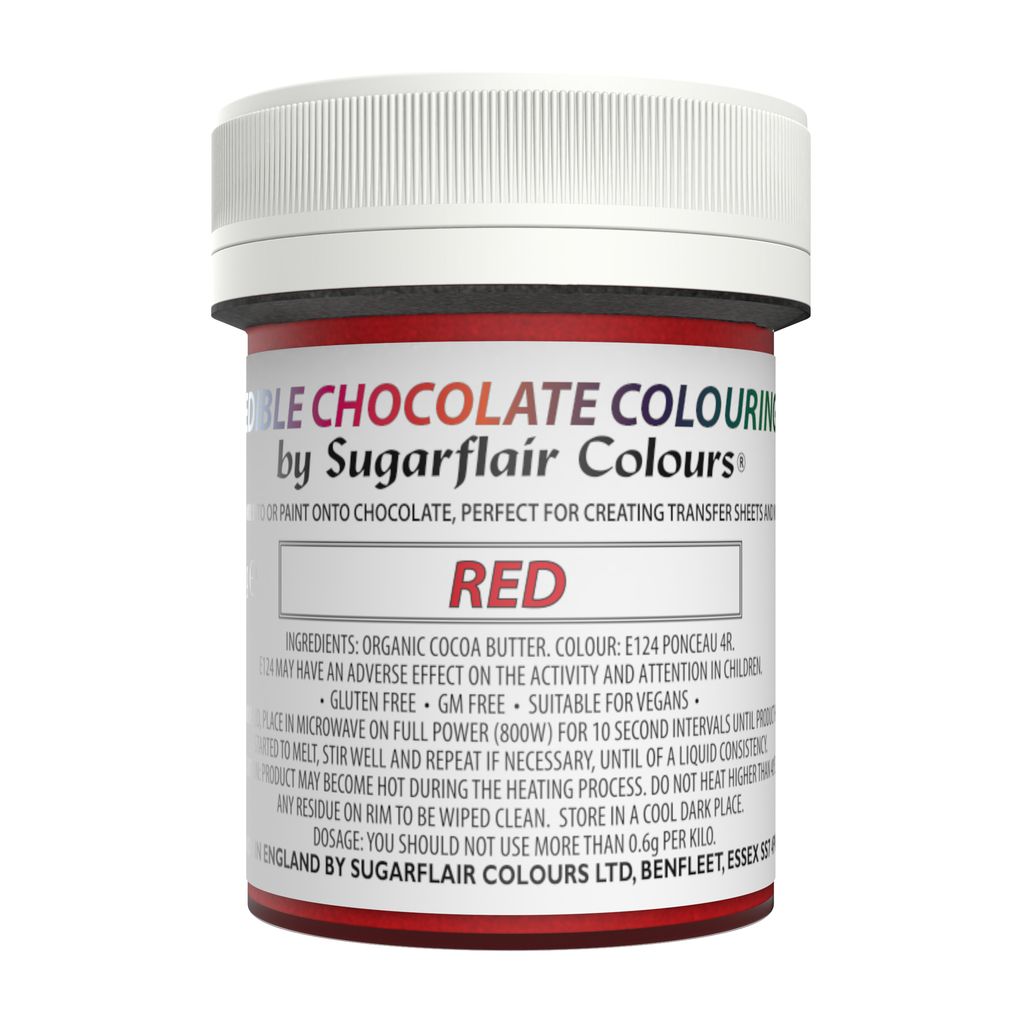
Color chocolate only with a fat-soluble coloring, meaning oil-based chocolate coloring. Gel and liquid colorings contain water, which instantly "seizes" chocolate: it thickens, turns lumpy and no longer flows.
Color white chocolate. Coloring won't show in dark chocolate, and in milk chocolate it only turns a brownish red. A deep red comes only from a white base.
Add it drop by drop to melted chocolate and mix thoroughly. The color darkens slightly more as it sets.
Color before tempering, or warm the coloring to the chocolate's working temperature. Cold coloring added to tempered chocolate cools it locally.
Don't color ruby. Its pink is natural and is enough on its own for Valentine's Day.
For marbling, just swirl a few teaspoons of red or ruby chocolate into the dark heart with a toothpick before the first layer sets.
How to Wrap a Chocolate Heart and How Long It Keeps
Store the chocolate heart somewhere cool and dry at 12–20°C (54–68°F), in the dark. Don't put it in the fridge. Chocolate taken out of the fridge gets condensation, the water on the surface dissolves the sugar and the heart ends up with a whitish film.
Follow these rules when wrapping:
Handle the heart with gloves, as fingers leave prints on glossy chocolate.
Put an unfilled (solid chocolate) heart in a cellophane bag and tie it with a ribbon; for a large or filled heart, a box lined with crepe or tissue paper is better, so it can't move around.
Keep it away from coffee, spices and onions, since chocolate absorbs odors.
Don't leave it on a radiator or in a sunny window.
For its couverture stored at 12–20°C, Callebaut gives a shelf life of 24 months for dark, 18 months for milk and 18 months for ruby RB2 (unopened pack, from the production date). A homemade heart cast from tempered chocolate with no filling can therefore easily keep for several weeks without losing flavor or shine; go by the date on the bag of chocolate you cast it from. With a filled heart, the filling decides: with freeze-dried raspberries and nuts it keeps for weeks. Pralines and truffles with cream ganache are perishable food (no more than 2 hours out of the fridge, according to USDA/FSIS), so seal them into the heart only on the day you give it, and tell the recipient to eat them right away or refrigerate them. That way you can calmly make the heart the weekend before Valentine's Day.
If you enjoy wrapping things in bags, use the leftover chocolate to make homemade chocolate bars with edible flowers and nuts. They wrap up exactly the same way.
Valentine's Desserts and Gifts to Go with the Chocolate Heart
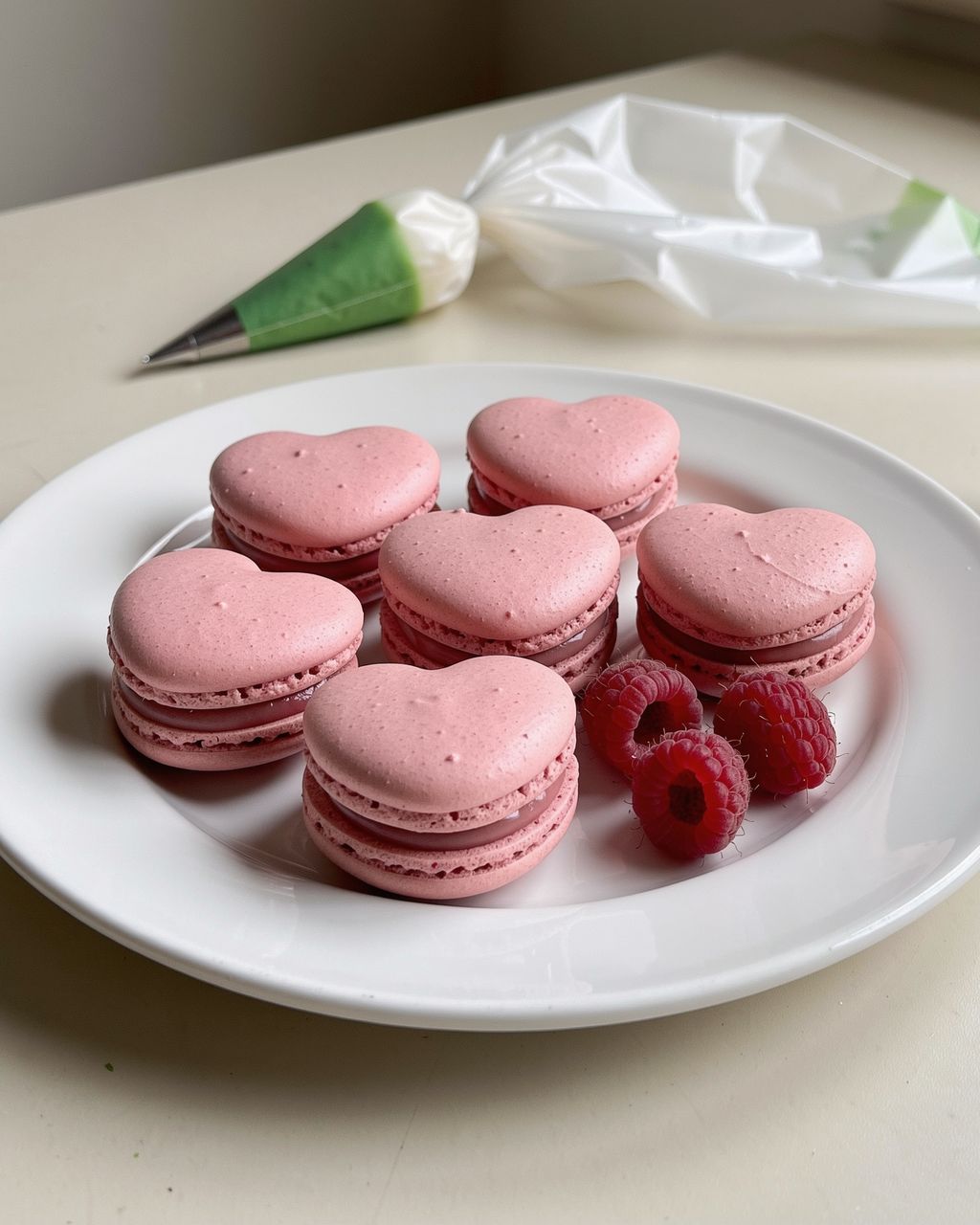
A homemade dinner with dessert and heart-shaped macarons go well with a chocolate heart on Valentine's Day. You'll find a complete plan of what to make and when in the article Valentine's at home: dinner, dessert and a sweet gift. And if you'd like hearts in another form, try heart-shaped macarons.
What to cast and color the heart from
Callebaut
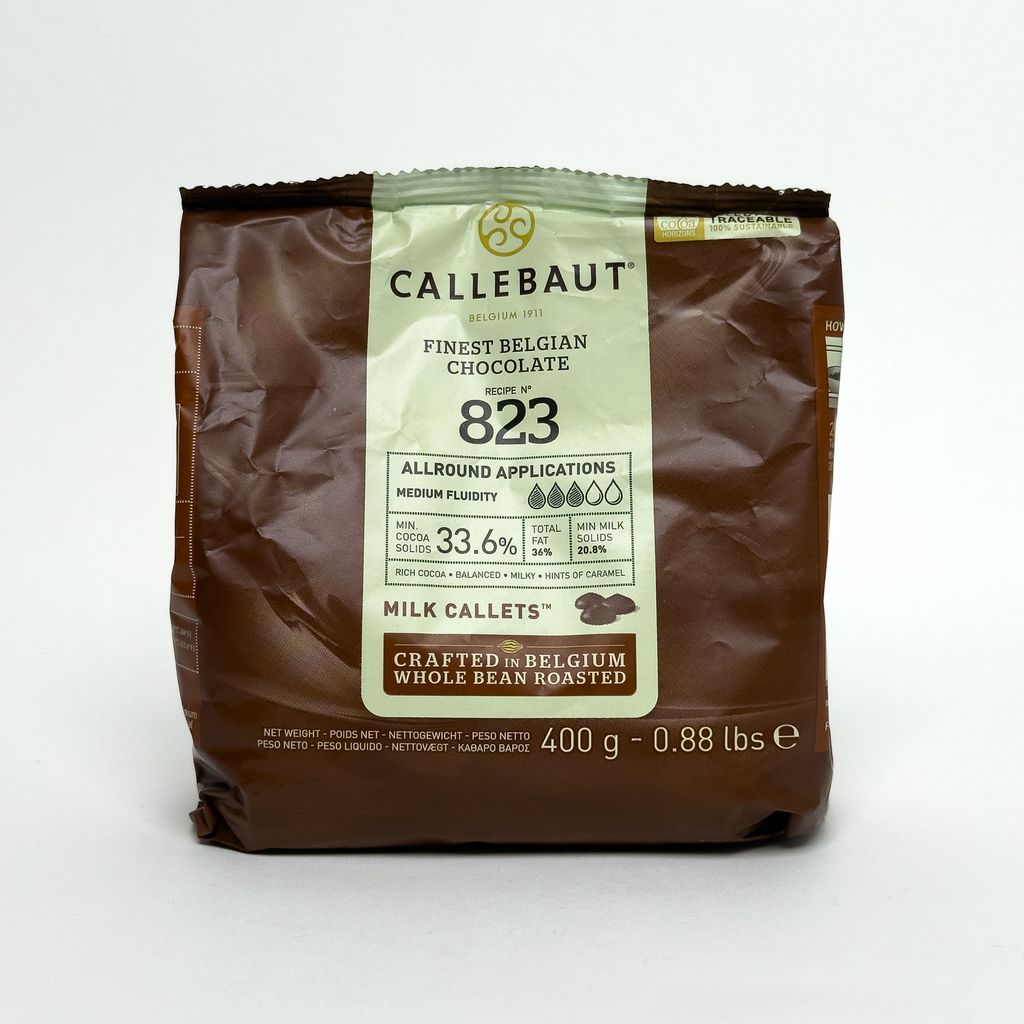
Callebaut Milk Chocolate Callets (823) 400gKč 279.00Previous price Kč 325.00−14%Callebaut
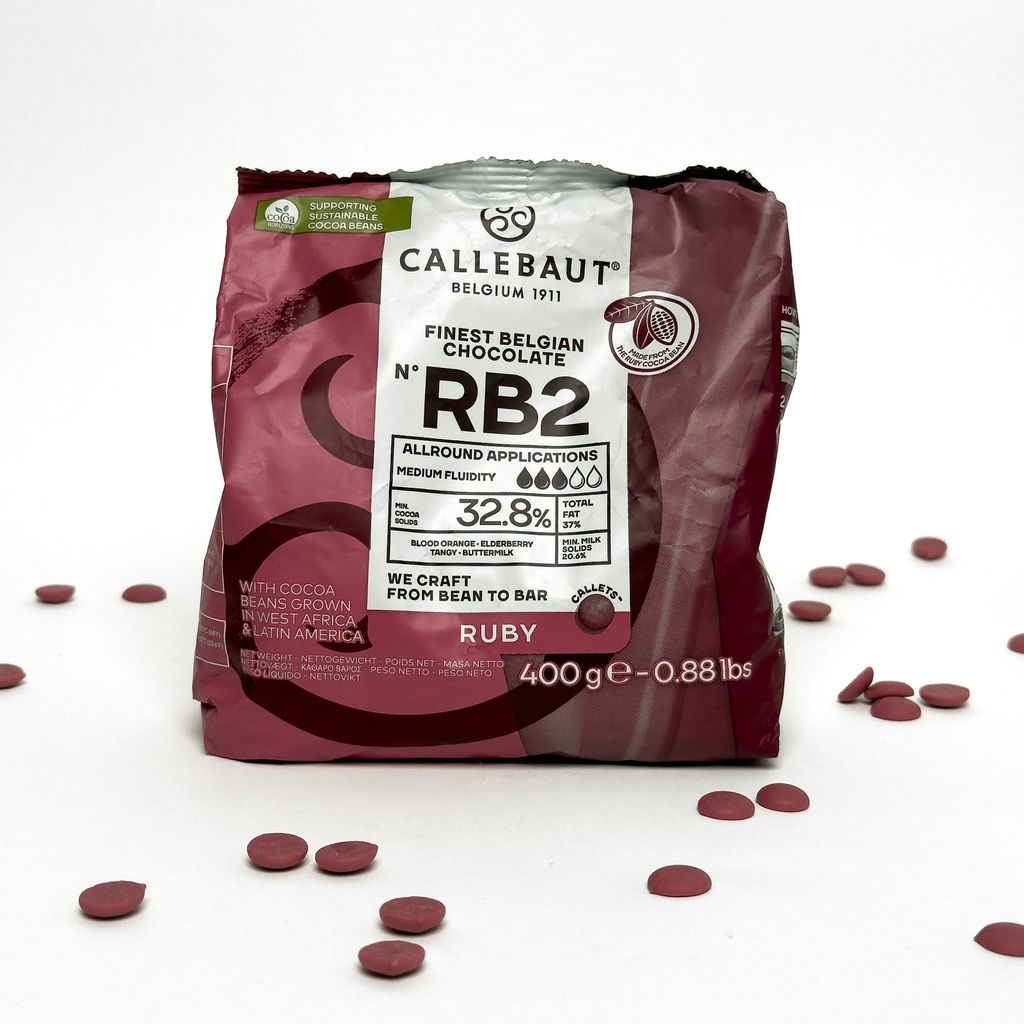
Ruby RB2 Chocolate Callets 400gSold outKč 460.00

Frequently asked questions
Can I make a chocolate heart from white chocolate?
Yes, you can make the heart from white chocolate, but like dark or milk chocolate it has to be tempered. White chocolate is also the only base that turns a deep red heart once you color it with oil-based food coloring.
How big can a freeform chocolate heart be?
Even without a mold you can make a heart 20–25 cm (8–10 in) wide, but it has to be thicker. Above 20 cm, plan on three layers of 3–4 mm each (9–12 mm in total); a heart 25 cm wide takes roughly 650–800 g of chocolate. Only move the heart on a board, never by its edge.
How do I write a name or message on a chocolate heart?
Pipe the name onto the already set surface with contrasting tempered chocolate in a bag with a small tip. Practice the lettering on paper first. If you want the writing on the face side, write it in mirror image on the parchment before you pour the heart.
Can I freeze a chocolate heart?
Better not to freeze it: as it thaws it gets condensation and turns white, just as it does when taken out of the fridge. If you want to make it well ahead, store it somewhere dry at 12–20°C (54–68°F), where it keeps for weeks.
How do I mail a chocolate heart?
Mail the heart in a sturdy box padded on all sides, and only in cool weather. The heart must have no room to move in the box. Above 25°C (77°F) chocolate softens and may bloom white; in a hot delivery van it can warp.
Want tips like this every Thursday?
One recipe worth heating the oven for, one tip, and one deal from the shop. Nothing else.