Gluten-free beetroot and walnut brownies
What Chocolate to Use for Brownies and Chocolate Cake: Cocoa %, Types, and Substitutes
Updated Oct 8, 2026
The best chocolate for brownies and chocolate cake is real dark chocolate with 55–70% cocoa that contains cocoa butter, not a substitute made from vegetable fat. Milk chocolate works best in ganache, buttercreams, and as chunks in the batter. Below you'll find what each cocoa percentage does to flavour and texture, which chocolate to use in which layer of a cake, what to use instead if you're out of chocolate, and what to buy if you want a guaranteed result.
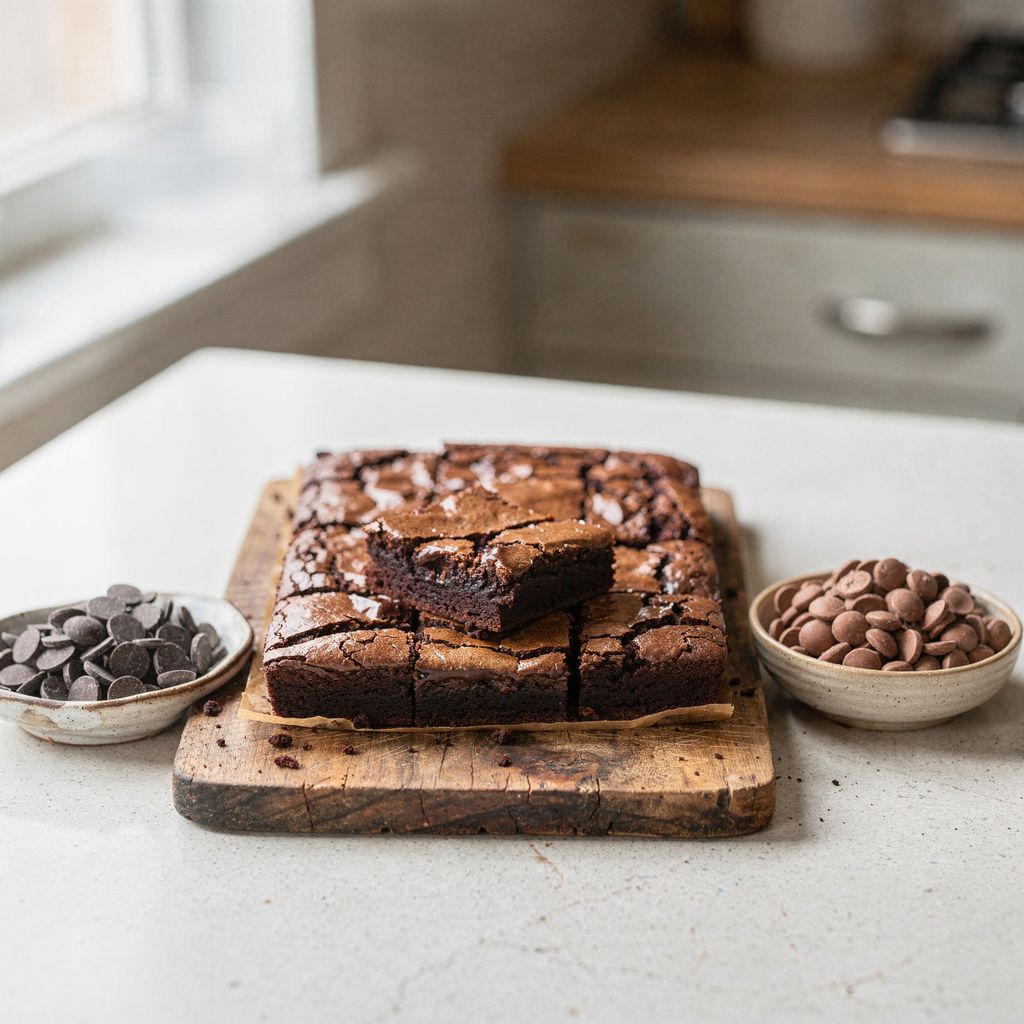
Use dark chocolate with 55–70% cocoa in brownies. It's the key ingredient in the batter: it gives the flavour, but thanks to the cocoa butter — which firms up as it cools — it also gives brownies their characteristic dense, moist texture.
What you want from it:
55–70% cocoa: enough bitterness for a bold flavour, but still enough sugar that the brownies won't turn out dry.
Cocoa butter, not a vegetable-fat substitute: look for the word chocolate or chocolate coating on the label, not cocoa or fat-based coating.
A flavour you'd happily eat on its own: if you don't like it straight from the bar, you won't like it in brownies either.
For baking, chocolate callets are the easiest to work with, since you don't need to chop them and they melt quickly and evenly. A classic choice among pastry chefs is Callebaut 811, at 54.5% cocoa. It sits just under the lower end of the range, so it gives round, mildly bitter brownies that even kids tend to like. Want something bolder and more bitter? Add an extra 10–15 g (about 1 tbsp) of cocoa powder to the batter, or reach for a chocolate around 70%. You'll find more dark baking chocolates in our dark baking chocolate category.
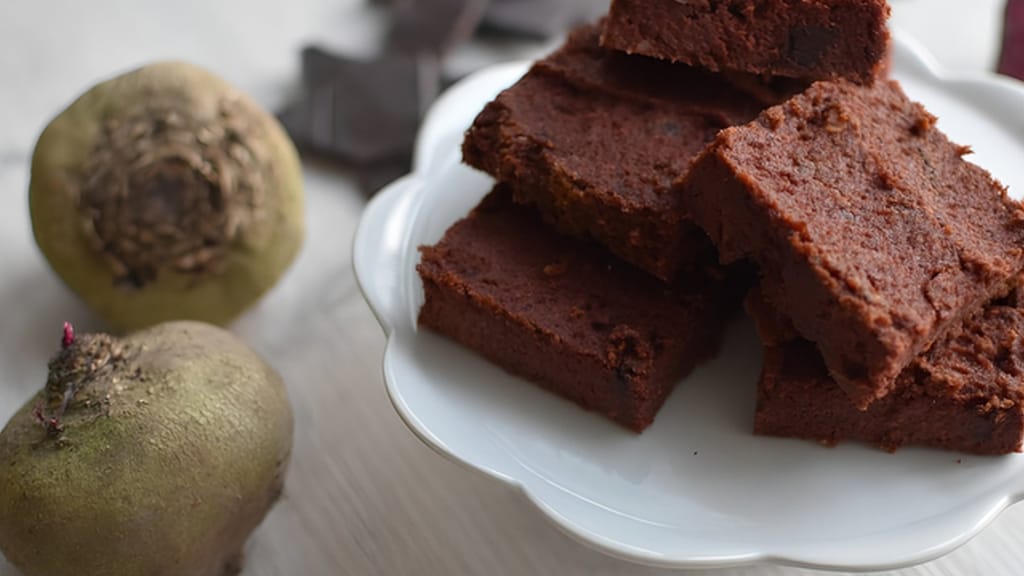
Ready to bake right now? Check out our gluten-free beetroot and walnut brownies, or the chocolate brownie monster bites that are perfect for a kids' party.
Gluten-free beetroot and walnut brownies
Gluten-free beetroot and walnut brownies
Short answer: 55–60% for mild, sweeter brownies, 65–70% for a strongly chocolatey result, and anything above 75% only if you adjust the recipe. The percentage shows how much of the bar is made up of cocoa components (cocoa mass and cocoa butter combined) — the rest is mostly sugar.
50–60% (e.g. Callebaut 811, 54.5%): rounded flavour, more sugar in the chocolate itself, resulting in moist, glossy brownies. The safest choice when a recipe doesn't specify a percentage.
65–70%: the most pronounced bitterness without drying things out. This is the range most often recommended for brownies.
75–85%: less sugar and more cocoa solids, which soak up moisture. Without tweaking the recipe, brownies made with this will be drier, crumblier, and quite bitter. Add 1–2 tablespoons of sugar, or replace a third of the chocolate with something milder.
Under 50%, or milk chocolate: brownies turn out sweet and soft, and set less firmly (more on this below).
One thing to watch out for: swapping 55% chocolate for 70% in a recipe doesn't just change the flavour. You're adding cocoa solids and removing sugar at the same time, which changes the texture too. Adjust the percentage gradually, in steps of 10–15 points.
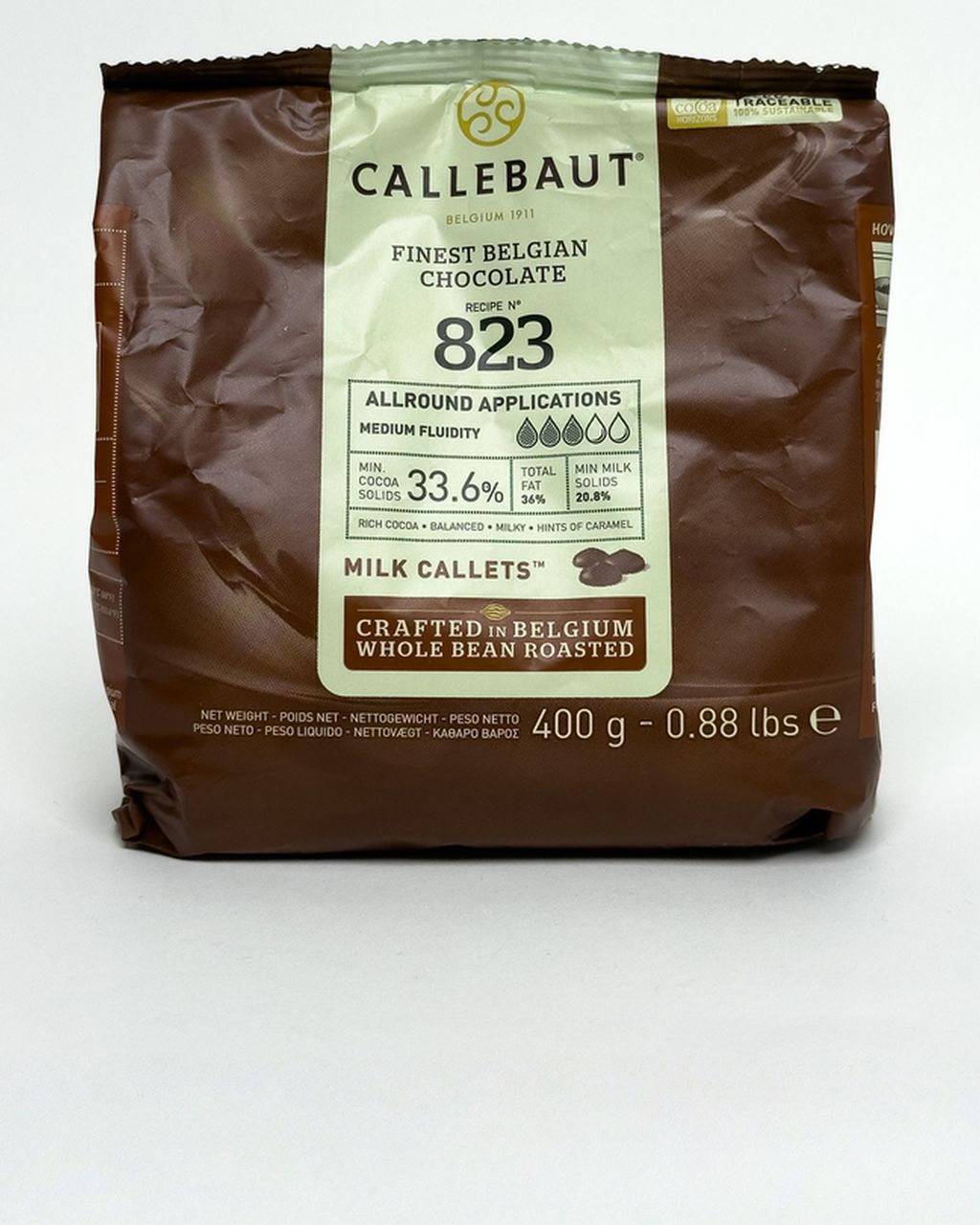
You can use milk chocolate in brownies, but not as the only chocolate in the batter. Milk chocolate has roughly a third of the cocoa content (Callebaut 823 has 33.6%) along with plenty of sugar and milk solids. Brownies made purely from milk chocolate turn out overly sweet, pale, and don't set as firmly in the middle.
Three ways to use it well:
Mix it with dark chocolate. A 2:1 ratio (dark to milk) gives a more caramel-like flavour while keeping the brownies firm.
Cut back on sugar. If you do replace some of the dark chocolate with milk, reduce the sugar in the recipe by about a quarter to a third.
Add it as chunks. Roughly chopped Callebaut 823 folded into dark batter creates creamy, caramel-like pockets. Just note that callets meant for melting will turn to liquid in the oven.
Choose your chocolate layer by layer: the sponge relies mainly on cocoa powder, the buttercream and ganache need good-quality chocolate, and the glaze needs chocolate with plenty of cocoa butter.
Sponge: mostly cocoa powder, sometimes with an extra 50–100 g (2–3½ oz) of melted dark chocolate (50–60%) added for moistness. Very bitter chocolate doesn't really stand out in a sponge — the flavour here comes from the cocoa powder.
Ganache and filling: dark 54–70% for a bold flavour, milk chocolate (e.g. Callebaut 823) for a softer, sweeter cream. This is where chocolate quality matters most, since it isn't baked.
Chocolate foam and mousse: dark 55–70%. Milk chocolate makes the mousse softer and sweeter, good for a second layer.
Glaze: dark chocolate ganache. It gives a beautiful shine and slices cleanly without cracking.
For inspiration, try our simple chocolate cake, the classic Sacher torte, or a chocolate cake for sweethearts. For a mousse layer, our chocolate foam is a great fit.
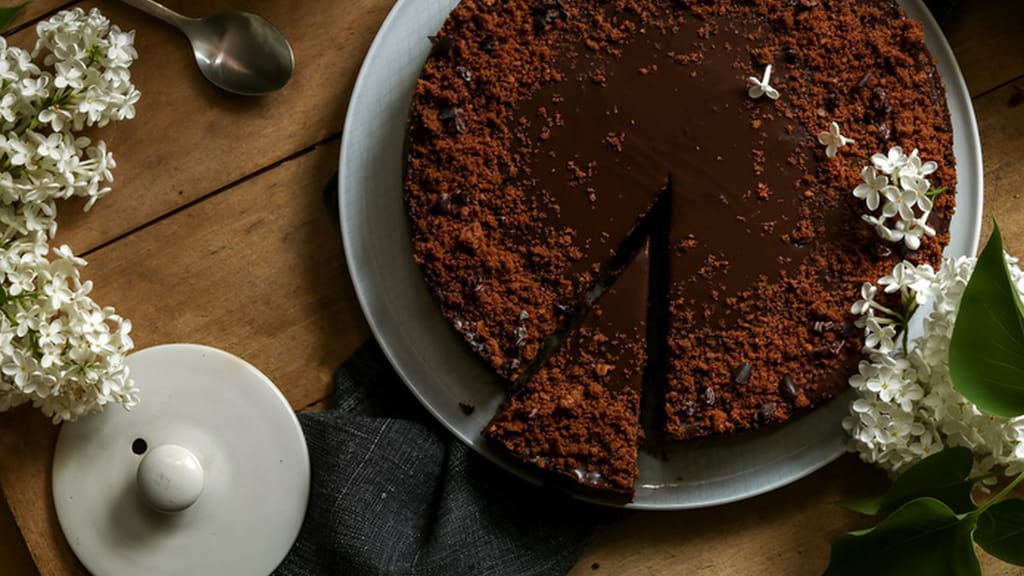
Simple chocolate cake
Simple chocolate cake
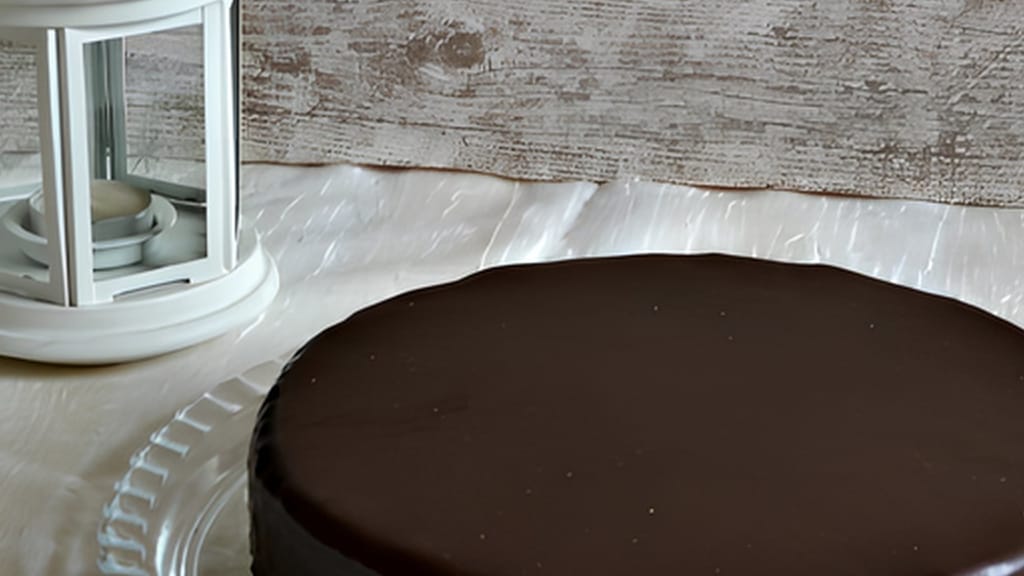
Sacher torte – the classic viennese chocolate cake
Sacher torte: a chocolate Viennese specialty
The basic rule is dark chocolate and 33% cream in a 1:1 ratio for a glaze, and 2:1 for a firm filling. Milk chocolate contains less cocoa butter and cocoa solids, so you need more of it.
Dark, 1:1 (e.g. 200 g/7 oz chocolate + 200 g/7 oz cream): a glossy glaze that drips nicely down the sides of a cake. Pour it at 30–35°C (86–95°F).
Dark, 2:1: a thick, sliceable filling between layers or under fondant.
Milk chocolate, 2:1: a soft glaze or cream. For a firm filling, use 2.5–3 parts milk chocolate to 1 part cream.
Whipped ganache: dark chocolate at a 1:2 to 1:3 ratio (more cream), chilled overnight and then whipped into a mousse-like texture.
Pour hot cream (not boiling) over the chocolate, let it sit for 1–2 minutes, then stir from the centre outward until it comes together into a glossy emulsion.
Any real chocolate works for both brownies and cake. What actually makes a difference is the amount of cocoa butter and how well the chocolate melts — not the label on the pack. An honest comparison:
Couverture in callets (Callebaut, Valrhona, and others): higher cocoa butter content (at least 31% by standard), so it melts smoothly and works best for ganache and glazes. No chopping required, and if you bake regularly, you'll appreciate the consistent quality. On packaging it's often labelled by the legal term chocolate coating — this is genuine chocolate with at least 31% cocoa butter, not to be confused with cocoa-based (fat) coating.
Good-quality dark bar chocolate from the supermarket (60–70%): perfectly fine for brownies — go ahead and use it. You'll need to chop it, and it tends to be a touch thicker when melted for a glossy glaze.
Baking chocolate: quality varies a lot by brand, so read the label. If the product is called chocolate, it is chocolate; the best options are ones whose label doesn't warn that other vegetable fats are added alongside cocoa butter. Other vegetable fats are allowed up to 5% of the product, and if present, must be stated on the label.
Cocoa (fat-based) coating: this isn't chocolate — skip it for brownies and cake. You'll find out why in the FAQ at the end of this article.
Baking chocolate chips: lower in cocoa butter, so they hold their shape in the oven. Good as chunks in batter, not for melting.
For a detailed breakdown of the difference between couverture and regular chocolate, see our article on couverture chocolate vs. baking chocolate.
The most reliable substitutes for chocolate in brownies and cake are cocoa powder with butter and sugar, a blend of two chocolates, or a chopped bar instead of callets. Leave the rest of the recipe as is.
Cocoa powder + butter + sugar: a common rule of thumb is that 30 g (1 oz) of unsweetened chocolate can be replaced with roughly 3 tablespoons of cocoa powder (about 15–18 g) and 1 tablespoon of butter (about 14 g). For 100 g (3½ oz) of dark chocolate around 70%, use roughly 40 g cocoa powder, 35 g butter, and 30 g sugar. The brownies will turn out slightly less dense and glossy, since they're missing the cocoa butter that firms up on cooling.
Strongly bitter chocolate + a milder one: only got 85% chocolate at home? Mix it 1:1 with milk chocolate to get roughly 60% cocoa — right in the sweet spot for brownies. With 70% chocolate, just a third milk chocolate is enough.
Bar chocolate instead of callets: substitute 1:1 by weight. Chop it into pieces about the size of callets so it melts evenly without overheating.
If a recipe calls for cocoa powder rather than chocolate, you'll find the differences between cocoa, cocoa powder, and baking chocolate explained in our article cocoa vs. cocoa powder vs. baking chocolate.
Melt chocolate slowly — dark chocolate up to 50°C (122°F) at most, milk chocolate up to 45°C (113°F) at most — and without a single drop of water. Overheated chocolate turns thick and lumpy, and its milk solids scorch and turn bitter. Even a drop of water or steam will turn it into a stiff, grainy mass.
Bain-marie (double boiler): set a bowl over a pot of gently simmering water, making sure the bottom of the bowl doesn't touch the water. Stir with a spatula and take it off the heat just before the last pieces melt — they'll finish melting from residual heat, so the chocolate never overshoots the target temperature.
Microwave: heat in 20–30 second bursts on medium power, stirring in between each time.
Together with butter: in brownies, chocolate is often melted directly with the butter. The butter acts as a buffer, making the chocolate less likely to overheat.
Add the chocolate to the batter while it's still lukewarm, around 35–40°C (95–104°F). Too hot and it will curdle the eggs; too cold and it will set into lumps. If your chocolate does seize up anyway, our article on how to melt chocolate without lumps can help.
Brownies are ready when the edges are set and the centre only wobbles slightly if you give the pan a gentle shake. A skewer inserted into the middle should come out with a few moist crumbs clinging to it, not completely clean. They continue to firm up in the pan and only fully set once completely cool, since the cocoa butter in the chocolate solidifies at room temperature.
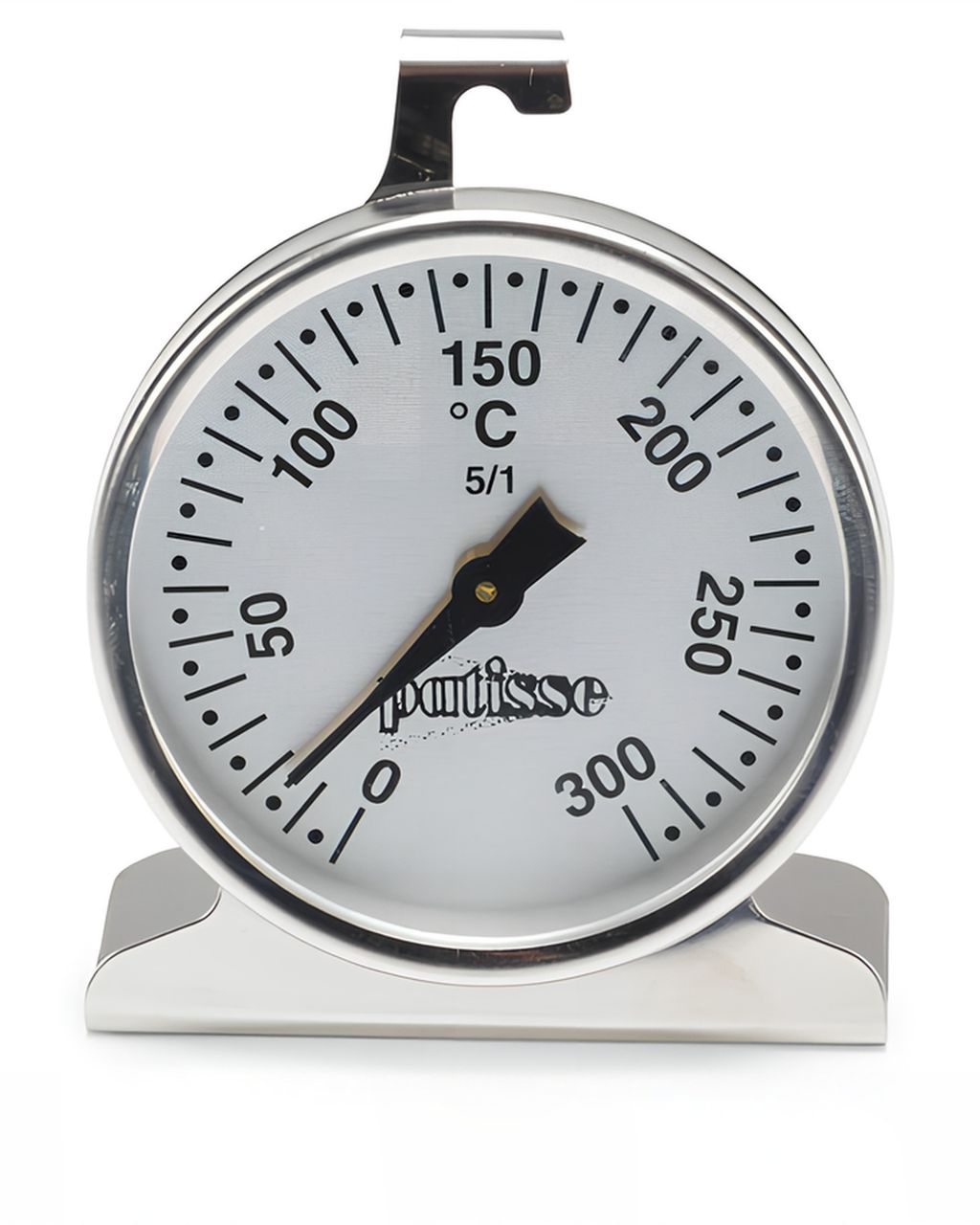
Brownies are most often baked at 170–180°C (340–355°F), but home ovens frequently run 10–20°C (20–35°F) off from the dial setting. With brownies, that difference is often what separates moist from dry.
For a 20×20 cm (8×8 in) pan, most recipes call for 150–200 g (5–7 oz) of dark chocolate, usually paired with around 150 g (5 oz) of butter. With 150 g the brownies turn out lighter and more cake-like; with 200 g they're denser and more intensely chocolatey. For a larger 20×30 cm (8×12 in) pan, multiply the amounts by roughly one and a half.
You can use flavoured chocolate without a filling — sea salt, orange, or chilli, for example — and melt it just like plain dark chocolate. Don't melt filled chocolate (caramel, nougat, cream) into the batter, though, since the filling throws off the sugar-to-fat ratio and the brownies may not set properly. Instead, chop it up and sprinkle it over the batter before baking.
You can use white chocolate in a cake, but mainly in buttercreams and ganache, not in the chocolate sponge itself. It contains no non-fat cocoa solids — just cocoa butter (at least 20% by standard), sugar, and milk — so it won't give the cake any chocolate flavour. White chocolate ganache needs roughly 3 parts chocolate to 1 part cream to set firm enough for a filling.
Store baking chocolate somewhere dry and dark, at 15–18°C (59–64°F), well sealed and out of the fridge. The white film is caused either by temperature swings (which bring cocoa butter to the surface) or by moisture (which crystallises the sugar). Chocolate with this bloom is still safe to eat, and you can use it in brownies, cake sponge, or ganache without worry, since it melts the same way regardless.
Cocoa (fat-based) coating isn't chocolate: its cocoa butter is replaced with cheaper vegetable fat, which is why it can't legally be sold under the name chocolate. It sets quickly and doesn't need tempering, but it tastes waxy. It's not suitable for brownies or ganache, because the vegetable fat it contains (often lauric fat from coconut or palm kernel oil) sets and melts differently than cocoa butter: ganache made with it turns out waxy or gluey, separates easily, and tastes flat, while brownies made with it won't get the dense, moist texture that comes from set cocoa butter.
One recipe worth heating the oven for, one tip, and one deal from the shop. Nothing else.