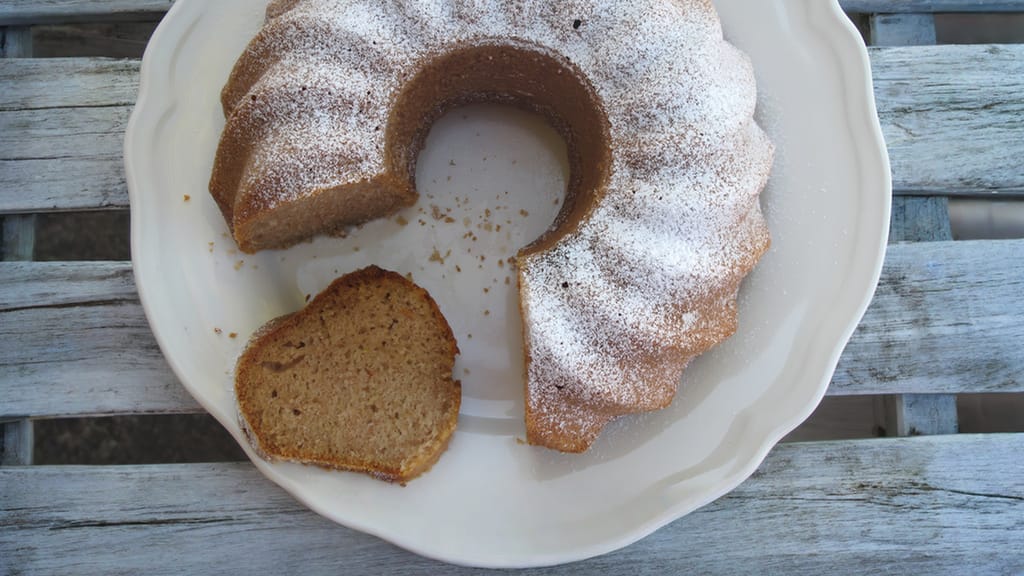
Zucchini bundt cake
Gluten-Free Bundt Cake: How to Keep It Moist
Updated Sep 18, 2026
Gluten-free bundt cake turns out moist when you give it more water and something to hold onto that water: a flour-to-starch blend of roughly 70:30, psyllium or xanthan gum, a moist ingredient like sour cream or grated courgette, oil instead of butter, and a 20–30 minute rest before baking. Without gluten, the batter has no protein network to lock in moisture, so a gluten-free bundt cake goes stale faster than a wheat one. Below we'll walk through each of these five steps — the numbers and the amounts — plus where gluten-free bundt cakes most often fall apart when you turn them out of the tin.
Gluten-free bundt cake dries out faster because it lacks the gluten network that traps water in wheat-based batter, and because it contains much more starch. Starch swells and absorbs water during baking, but as it cools, its molecules gradually realign back into a crystalline structure and push the water back out. This is called starch retrogradation, and it's the main reason gluten-free baked goods go stale sooner than wheat ones — the higher the starch content, the faster it happens.
That's the whole strategy behind this article, in a nutshell:
Add more water than you'd expect. Rice flour, cornflour and almond flour all absorb liquid differently than wheat flour.
Add something that binds that water. Psyllium and xanthan are hydrocolloids: they form a gel with water and hold onto it.
Slow down retrogradation. Fat and sugars that bind moisture will significantly extend how long it takes the cake to go stale.
Worth saying plainly: if you tolerate gluten just fine, a gluten-free bundt cake isn't a healthier option for you. It's a different baking technique, not a better dessert.
Five things make a gluten-free bundt cake moist: a flour-to-starch blend of roughly 70:30, psyllium or xanthan as a binder, a moist ingredient (sour cream, yoghurt, grated courgette or apple), oil instead of butter, and a 20–30 minute rest before baking. Let's break down each step in turn.
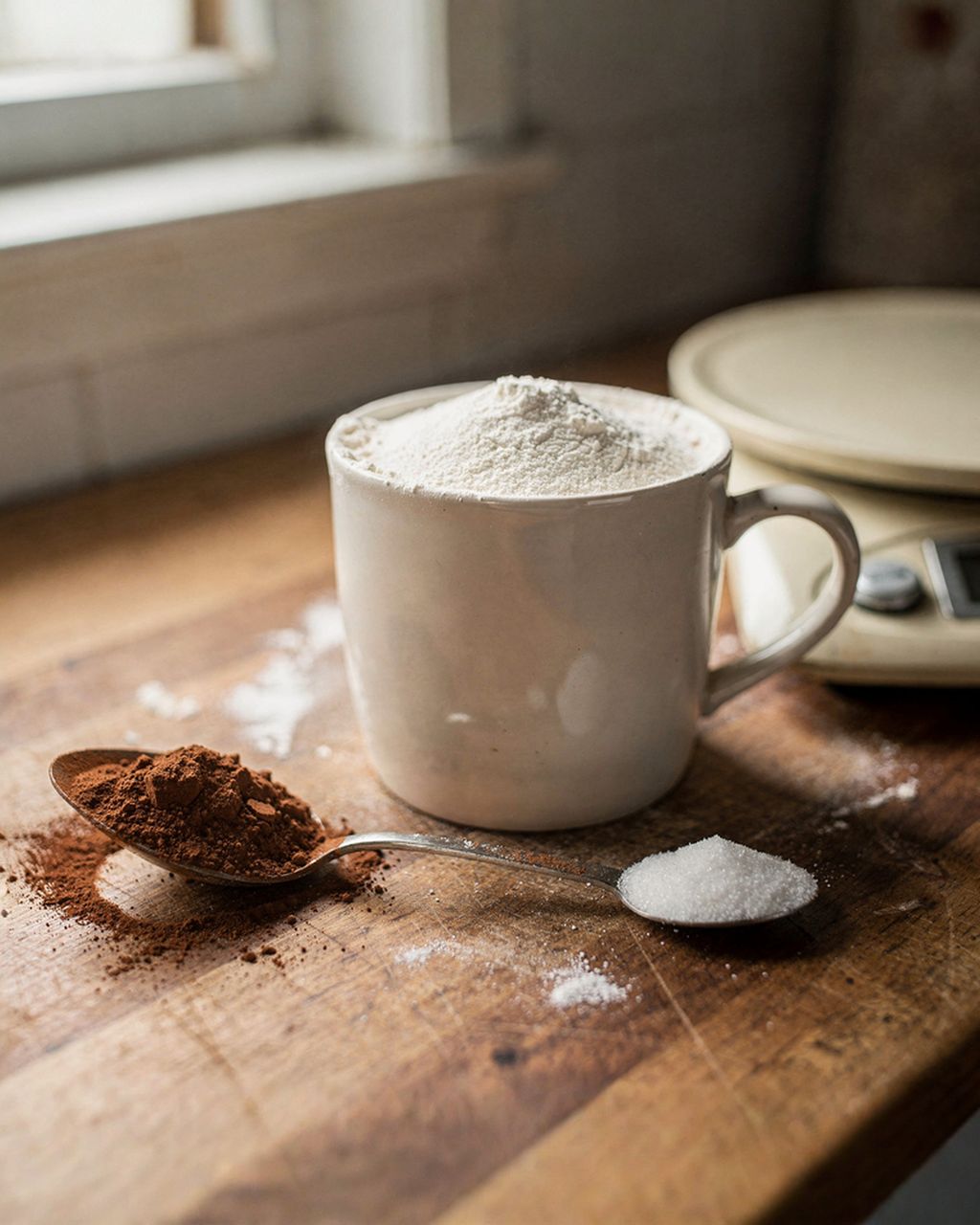
For a moist gluten-free bundt cake, blend roughly 70% gluten-free flours (rice, almond, millet) with 30% starches (cornflour, potato starch, tapioca starch). No single gluten-free flour on its own will give you a moist structure — that only comes from the combination:
Flours (structure and flavour): fine rice flour, almond, millet, buckwheat, sorghum. Almond flour is a real winner for bundt cake — it naturally contains fat, so it holds onto moisture on its own.
Starches (lightness and a fine crumb): cornflour, potato starch, tapioca starch. Starch alone gives lightness, but also a dry, crumbly texture — so never use more than a third of the total.
If you're using a ready-made all-purpose gluten-free blend, check the ingredients. Bread blends tend to have more fibre and psyllium and turn out heavy in a bundt cake; for cakes, reach for a blend with starch and finely milled rice flour.
One more thing that decides how it feels in the mouth: coarsely milled rice flour feels grainy between your teeth. Either buy the extra-fine version, or give the batter a longer rest (step 5).
Add 0.5–1% xanthan gum by weight of flour (1.5–3g per 300g), or 1–2% psyllium (3–6g per 300g); psyllium holds moisture slightly better, while xanthan doesn't affect colour. Both stand in for gluten — binding water, holding the batter together, and preventing crumbling.
Xanthan gum: roughly 0.5–1% of the flour's weight, so about 1.5–3g (½–1 teaspoon) per 300g of gluten-free blend. Whisk it into the dry ingredients thoroughly, or it will clump. More isn't better — too much and the crumb turns gummy and slick on the palate.
Psyllium (finely milled husk): roughly 1–2% of the flour's weight, so 3–6g per 300g of blend. Always mix psyllium with lukewarm water or milk first at a ratio of about 1 part psyllium to 8–10 parts liquid, let it swell into a gel for 10 minutes, then add it to the batter. Added dry, it will pull moisture out of the batter and leave the cake dry — the exact opposite of what you want.
From experience: batter with psyllium holds water a bit more firmly and goes stale more slowly than with xanthan, though the two binders give similar volume and lightness. Psyllium also adds a slightly darker colour and earthier note — a plus in a dark cocoa batter, less so in a pale lemon one, where xanthan is the better choice.
Many ready-made gluten-free blends already contain xanthan. Check the ingredients list — if it's already in there, don't add any more.
The simplest way to add moistness to a gluten-free bundt cake is to swap part of the liquid for something thick and tangy, or to add grated vegetable or fruit:
Sour cream, buttermilk or plain yoghurt (150–200g for a cake made with 300g of flour) add both water and protein, and their acidity softens the crumb. They also activate the baking soda, if your recipe uses it.
Grated courgette (about 150g, not squeezed dry) is underrated in gluten-free baking — it releases water gradually during baking, and you won't taste it in the finished cake.
Grated apple or apple purée (100–150g) does the same job and adds sweetness, so you can cut back on sugar.
Ground poppy seed, ground almonds or hazelnuts (50–80g) bring their own fat and an oily moistness that lasts for days.
Gluten-free bundt cake batter should be noticeably thinner than wheat batter — it should slowly drip off a spatula, not fall off in thick clumps. If it looks as thick as a regular bundt cake batter, add 2–4 tablespoons of milk. This is the most common mistake people make when converting a recipe.
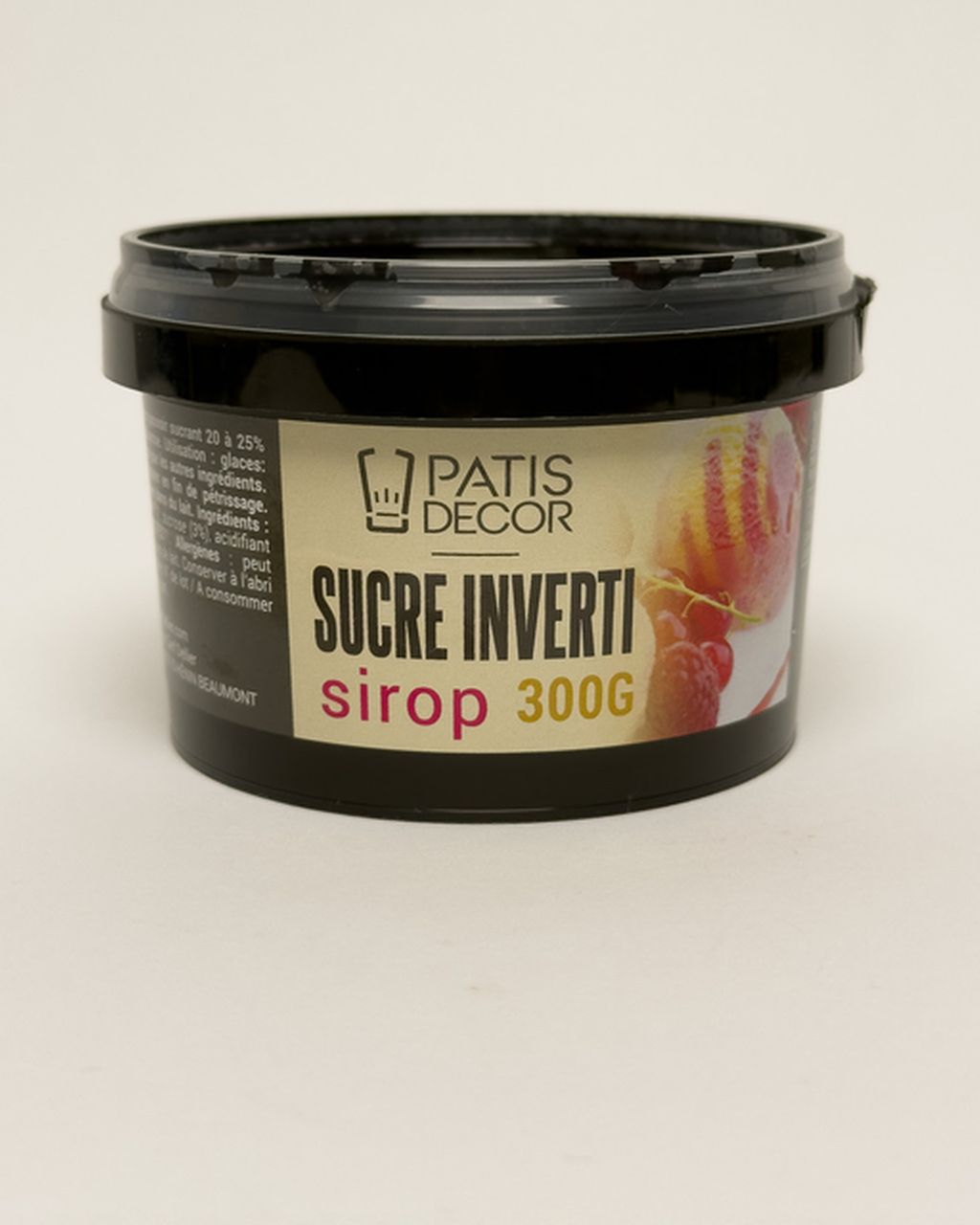
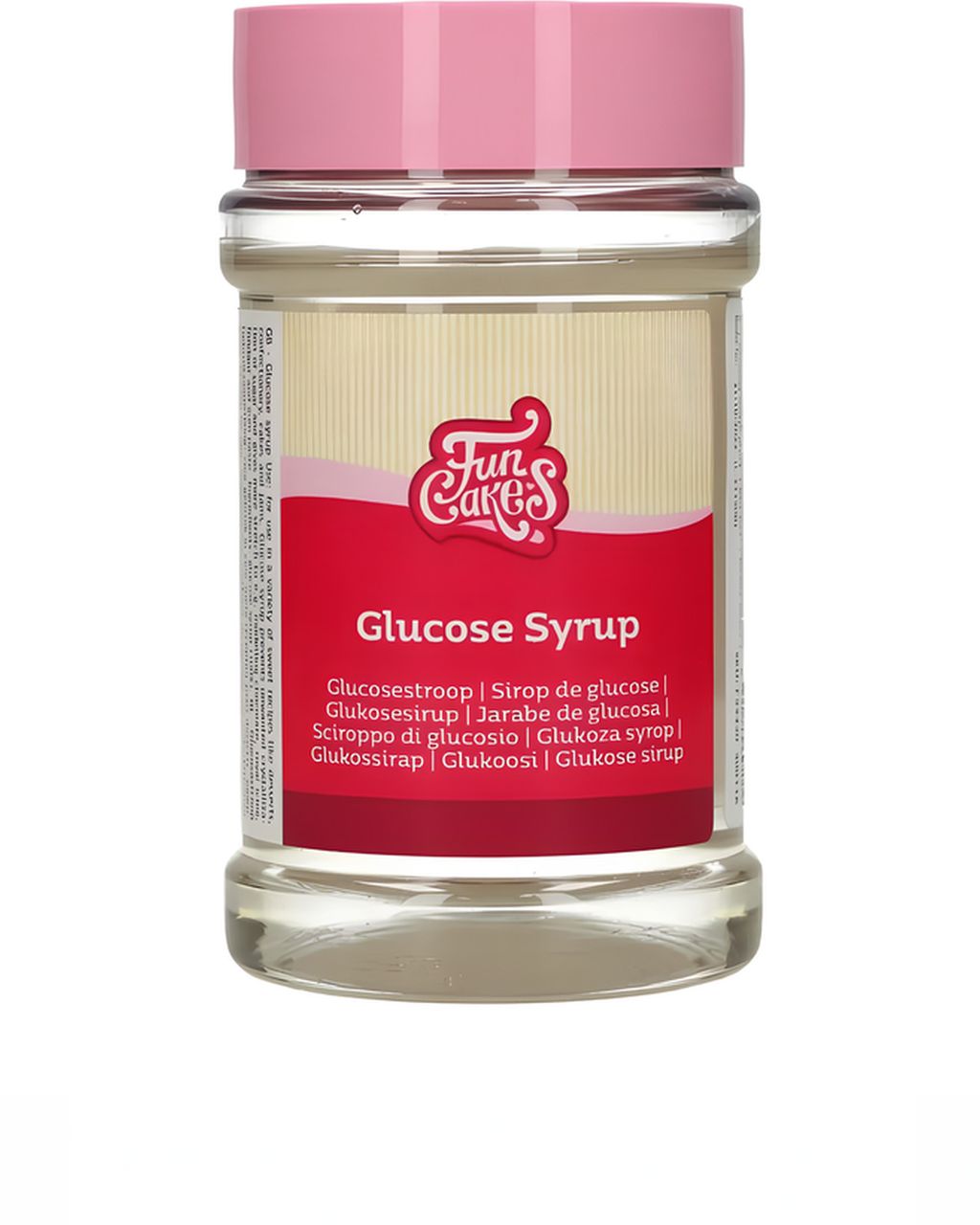
For gluten-free bundt cake, use 100–120ml of oil per 300g of flour instead of butter and replace 20–25% of the sugar with honey, invert sugar or glucose syrup.
Oil instead of butter. Butter is solid at room temperature, so a butter-based cake feels drier and firmer the next day. Oil (rapeseed, sunflower, or melted coconut oil) stays liquid, keeping the crumb moist for longer. If you're converting a recipe that uses butter, use about 80% of its weight in oil.
Sugar that binds moisture. Honey, invert sugar and glucose syrup are hygroscopic — they draw in moisture from the surroundings and hold it in the batter. Replace no more than 20–25% of the sugar in the recipe with them, or the cake will brown before it cooks through. If you're using honey, also lower the oven temperature by 10°C.
In gluten-free batter, a higher fat content is usually less of a problem than in wheat batter — but past a certain point the cake simply won't rise and stays dense and sunken.
Pour the finished batter into the tin and let it sit for 20–30 minutes before putting it in the oven. Gluten-free flours and starches absorb liquid more slowly than wheat flour and need time to fully hydrate. Resting does two things at once:
It gets rid of the gritty feel of coarser rice flour on the palate.
It firms up the structure, so the cake holds its shape better while baking and sinks less.
If you're using baking powder, it gets a second rise once it hits the oven, so resting won't cost you any lightness. If you're using baking soda on its own, move faster — soda reacts with acid immediately and has mostly done its job within half an hour. In that case, cut the rest down to 10–15 minutes.
Under EU Implementing Regulation No. 828/2014, only a food that contains no more than 20mg of gluten per kilogram in the form sold to the end consumer may carry a "gluten-free" claim (in the UK this is simply labelled "gluten-free").
There's also a separate claim, "very low gluten" — this may only be used on foods made from wheat, rye, barley, oats or their crossbred strains that have been specially processed to reduce their gluten content, and that contain no more than 100mg of gluten per kilogram. Naturally gluten-free ingredients like rice, corn or buckwheat don't fall into this category at all. The limit here is five times more lenient, so people with higher sensitivity often steer clear of foods labelled this way.
Oats may only be used under either claim if they've been specifically produced, prepared and/or processed to avoid contamination, and contain no more than 20mg of gluten per kilogram.
For home baking, the practical takeaway is this: check not just the flour, but everything else that goes into the cake. Gluten commonly hides in:
baking powder (sometimes contains wheat starch),
vanilla and custard powder,
icing, flavoured chocolate and decorative sprinkles,
oats that aren't explicitly labelled gluten-free.
Bake gluten-free bundt cake lower and longer than a wheat-based one — roughly 165–170°C for 50–65 minutes, depending on the size of the tin. A higher temperature sets the surface before the centre cooks through, and the cake sinks in the middle.
Other places where things commonly go wrong:
Don't open the oven for the first 35 minutes. Gluten-free batter has no gluten network to hold its structure together, so it's more prone to sinking.
Test with a skewer in two spots. Moist starch can look like underbaked batter; the skewer should come out with moist crumbs clinging to it, not wet batter.
Let the cake rest in the tin for 15 minutes. Gluten-free crumb only fully sets once out of the oven — it breaks apart if handled while hot.
But don't wait much longer than that. Once it's cold, the sugars stick to the tin and the cake gets stuck fast.
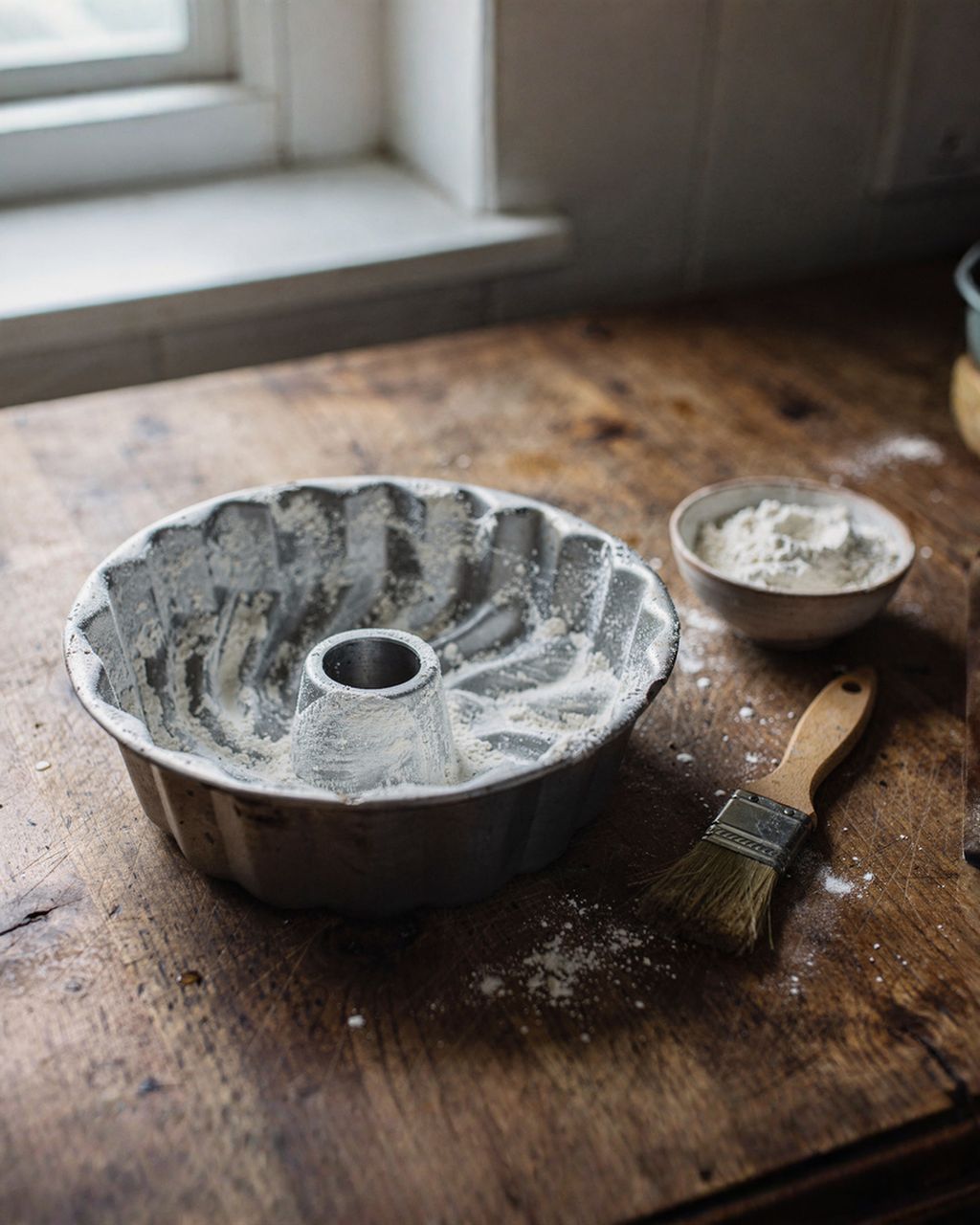
Grease and flour the tin thoroughly. Gluten-free batter sticks more than wheat batter — check out our guide on what to coat a bundt tin with so it won't stick.
And if the cake still cracks or loses a chunk off the top: cover it in icing or dust it with icing sugar. No one will ever know.
Don't put gluten-free bundt cake in the fridge. Cold significantly speeds up starch retrogradation — at around 4°C, starch crystallises fastest, so the cake will go stale faster than if left on the counter. The fridge is your enemy here, not your friend.
What actually works:
Let it cool completely before wrapping it up. A warm cake sealed in a container will sweat and turn damp, even sticky, on the surface.
Keep it in a sealed container at room temperature. It'll stay moist for 2–3 days.
Freeze it if you know you won't finish it within two days. Freezing essentially stops retrogradation in its tracks. Slice it, layer the slices with baking paper, and freeze in a bag; a single slice will then thaw in just a few minutes.
Revive it with heat. Pop a stale slice in the microwave for 10 seconds, or warm it briefly in the oven — heat temporarily softens the starch again.
One tip that always works: a bundt cake coated in icing or chocolate, or brushed with lemon syrup right after baking, stays noticeably moister for longer. A barrier on the surface stops moisture from evaporating.
The easiest bundt cakes to convert to a gluten-free version are the ones that already include a moist ingredient or nuts in the original recipe — they have moistness built in and can handle a flour swap without drama. Use the same approach for all four: replace the wheat flour with a blend of 70% gluten-free flour and 30% starch, add xanthan as described in step 2, and pour in an extra 2–4 tablespoons of milk.
Zucchini bundt cake
Courgette bundt cake — grated courgette holds onto moisture, an ideal base for a gluten-free version
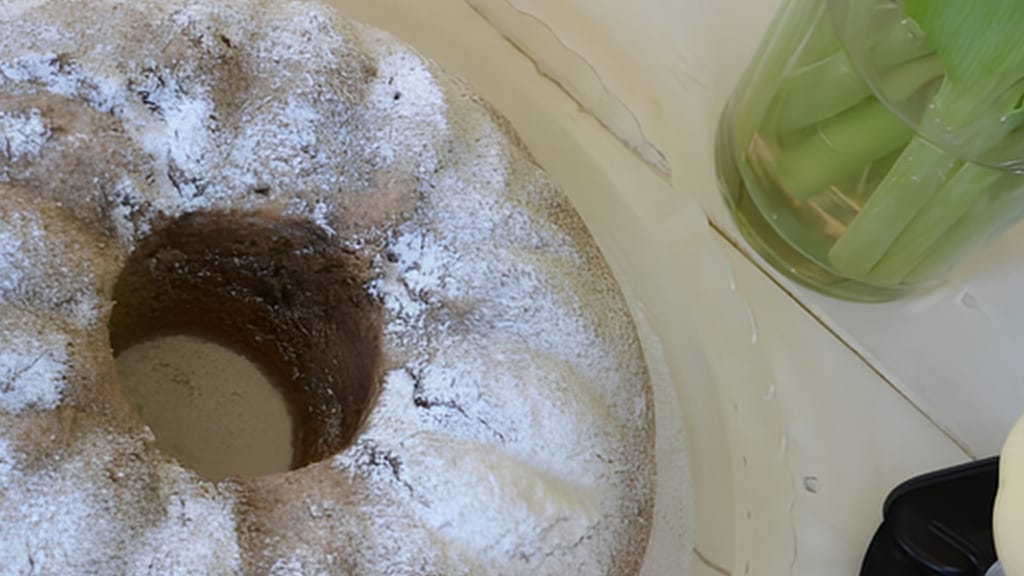
Apple bundt cake with coconut fat
Apple bundt cake with coconut oil — apple and fat both keep the gluten-free crumb moist
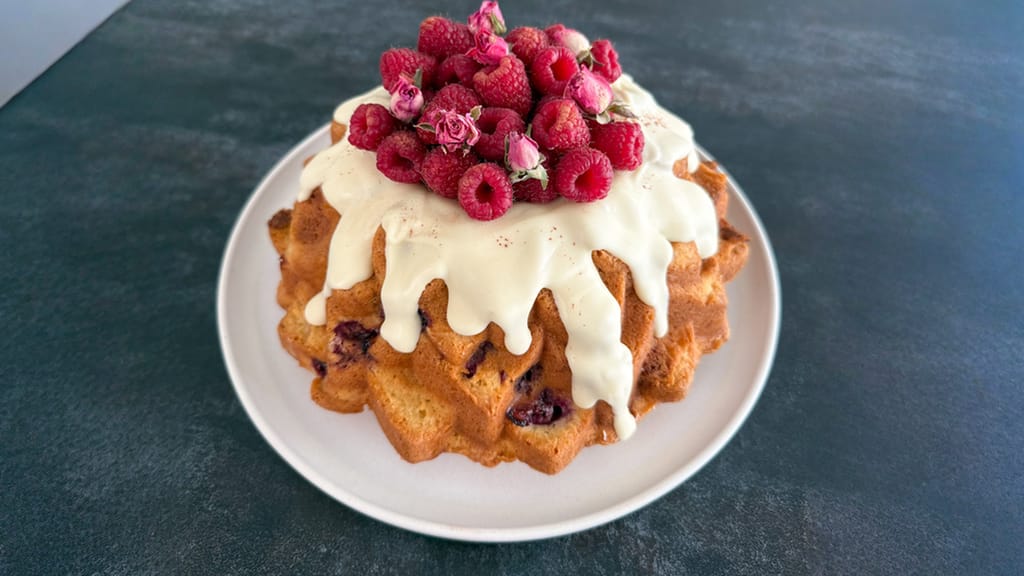
Raspberry bundt cake with white chocolate and sour cream
Raspberry bundt cake with sour cream — the tangy sour cream softens gluten-free batter
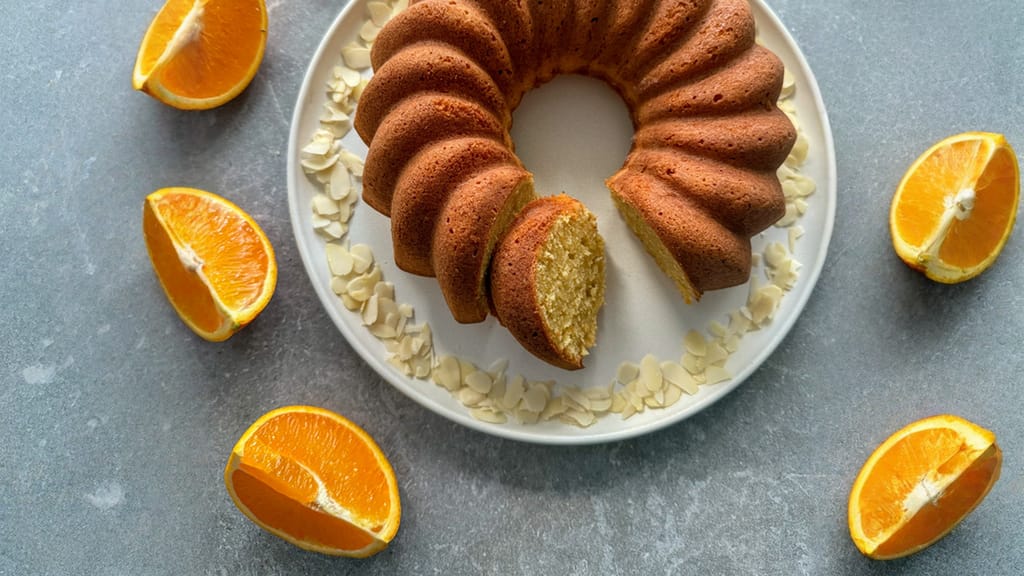
Orange bundt cake with almonds, cinnamon and cardamom
Orange and almond bundt cake — ground almonds replace part of the gluten-free flour and the fat
You can swap wheat flour for a gluten-free blend 1:1 by weight, but always add extra liquid and a binder alongside it. Gluten-free flours and starches absorb liquid differently than wheat flour, so add 2–4 tablespoons of milk or sour cream per 300g of flour, and stir in ½–1 teaspoon of xanthan gum (about 1.5–3g) if your blend doesn't already contain it. Skip these two tweaks and you'll end up with a dry, crumbly cake even if the flour ratio is spot on.
The closest substitute is xanthan gum at half the amount — use about 2g of xanthan in place of 4g of psyllium. Ground chia or flax seeds soaked in water at a 1:8 ratio also work, but they'll leave visible flecks and an earthy taste in the cake. In a bundt cake made with almond flour, sour cream or grated courgette, you can often skip the binder altogether — the moist ingredient holds the batter together on its own.
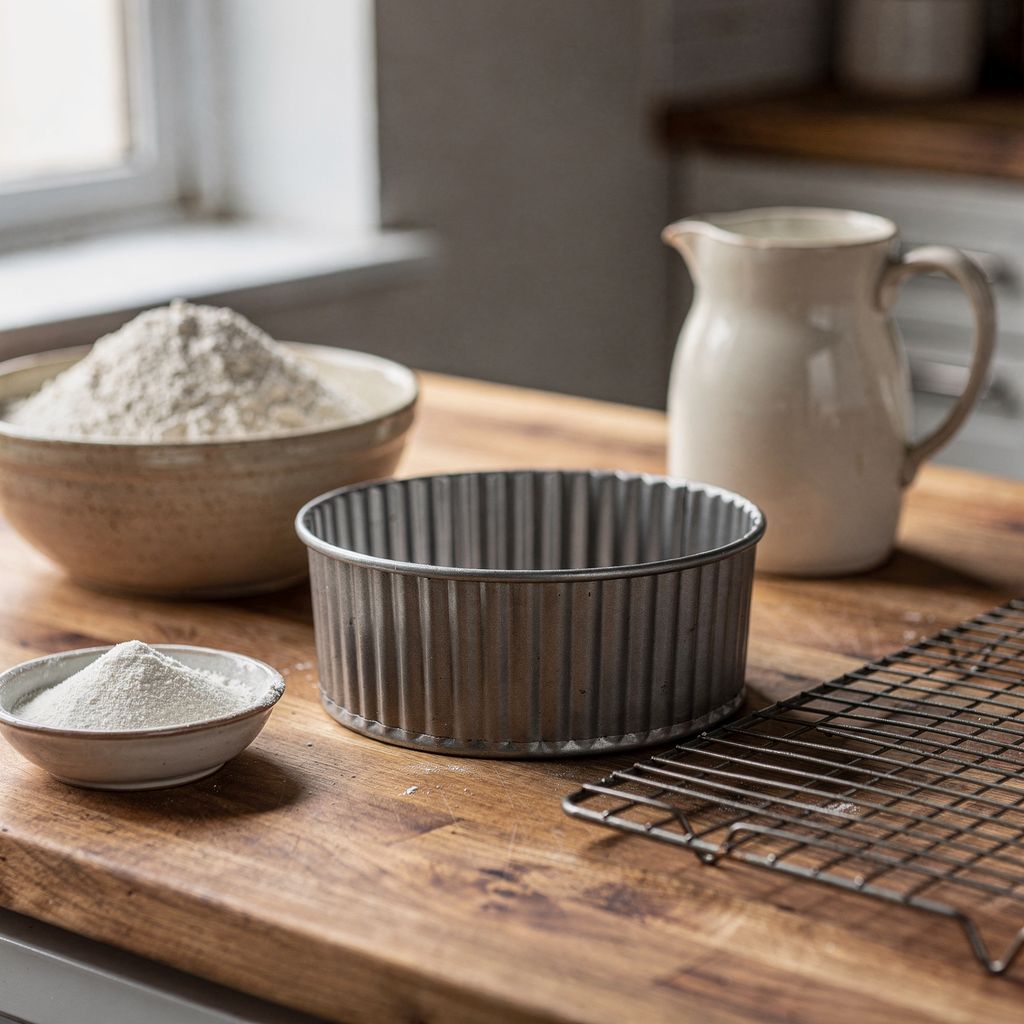
A light-coloured metal tin with a smooth surface and a narrower centre tube works best for gluten-free bundt cake, ideally around 1.5–2 litres in capacity. A dark metal tin absorbs more heat, so the edges set before the moist gluten-free centre cooks through — if that's what you're using, drop the oven temperature by a further 10°C. A silicone tin, on the other hand, bakes slowly, and gluten-free batter tends to stay pale and wet against the sides; if it's all you have, add 10 extra minutes to the bake. Skip tins with deep, sharp ridges — gluten-free batter tears when you try to release it from them.
You can bake a gluten-free bundt cake with only almond flour, but it comes out dense and moist rather than light and airy — almond flour has no starch, which is what gives crumb its lightness. If you want a classically fluffy bundt cake, use almond flour for only part of the 70% flour portion and make up the remaining 30% with starch. Using it as the entire base suits shorter, deliberately moist cakes where a dense crumb isn't a problem.
A gluten-free bundt cake can be made without eggs, but it needs a stronger binder — eggs do more structural work in gluten-free batter than they do in wheat-based batter. For every egg, use 1 tablespoon of ground flaxseed soaked in 3 tablespoons of water, or 60g of apple purée, and add a bit more baking powder. Expect a denser, moister crumb — which, for a gluten-free bundt cake, is often no bad thing.
One recipe worth heating the oven for, one tip, and one deal from the shop. Nothing else.