- Season
- Year-round
- Price
- Low
Calories and nutrition
per 100 g
364 kcal
Calories
6 g
Protein
77 g
Carbs
2.3 g
Fat
Maize Flour
Maize flour (corn flour in the US) is finely milled flour from dried corn kernels, pale yellow and slightly sweet, used mainly for baking and coating. It is not the same as cornstarch (called cornflour in the UK), a pure white thickener, or polenta, which is coarse cornmeal.
per 100 g
364 kcal
Calories
6 g
Protein
77 g
Carbs
2.3 g
Fat
Store it in an airtight container in a dry, cool, dark cupboard. Unopened, use it by the best-before date. Once opened, use wholegrain flour ideally within 3 months, and ordinary degermed flour by the date on the pack. Keep it away from moisture, heat and pantry moths.
In an airtight container in the fridge, wholegrain flour keeps about 6 months without turning rancid. This is most useful in summer and for wholegrain flour. The container must seal well so the flour does not absorb moisture and odours.
In a well-sealed bag or tub it keeps up to 12 months in the freezer. Before using, let it come to room temperature in the closed container so no moisture condenses on it.
Check the pack to make sure you are buying flour, not starch: maize flour is pale yellow and lists "maize flour" or "corn flour" as the ingredient, while starch is white and lists "cornstarch" or "maize starch". Tell fine flour for baking apart from coarser cornmeal and polenta by the grind. If you cook gluten-free, buy only flour labelled "gluten-free" or carrying the crossed-grain symbol. Wholegrain flour tastes stronger but goes rancid sooner, so buy small packs and watch the best-before date. The flour should smell clean and sweetish, not musty or bitter.
Fine cornmeal or polenta ground finely in a grinder. The flavour stays the same, only the texture is coarser. For tortillas and tamales, use masa harina.
For coating and baking, rice flour or plain wheat flour 1:1, though the corn flavour disappears and wheat flour contains gluten. For thickening, about half the amount of cornstarch or potato starch is enough.
Maize flour needs only measuring and adding. Sift it for baking so no lumps remain. Because it has no gluten, a dough made from it alone does not hold together or rise like wheat dough. In baking, combine it with other flours or starch and with eggs. To thicken, mix it first into cold liquid and then pour it into the hot dish. It thickens less strongly than starch, and the sauce must simmer for a few minutes so it does not taste floury. For coating, mix it with salt and spices or use it in place of breadcrumbs.
Use leftover maize flour to dust a baking tray or pizza stone so the dough does not stick. It also works in a coating for fish or vegetables, in pancakes or in bread in place of part of the wheat flour. Do not use flour that smells rancid.
Roughly what a spoon or cup weighs, filled the way you usually would.
2.5 g
1 teaspoon
7.4 g
1 tablespoon
124 g
1 cup (250 ml)
Use maize flour for cornbread, muffins, bundt cakes and pancakes, where it adds a golden colour and a tender crumb. It is excellent for coating: fish, chicken and vegetables get a crisp crust when fried. It thickens sauces and soups, but less strongly than starch. Tortillas and pupusas are traditionally made from masa harina and arepas from precooked maize flour. Polenta-style porridge is cooked from coarser cornmeal, not from fine flour.
Maize flour (corn flour in the US) is finely milled flour from dried corn kernels, pale yellow and slightly sweet, used mainly for baking and coating. Wholegrain maize flour contains the whole kernel including the germ and bran. Much of the flour sold in shops is milled from degermed kernels, so it is paler and keeps longer. It is easily confused with two related products. Cornstarch (sold in Czechia as Maizena or Gustin) is the pure starch from the kernel, snow-white and flavourless, used for thickening and puddings. Polenta is coarsely ground cornmeal, cooked into the Italian porridge of the same name. Watch the English too: British "cornflour" is cornstarch, while American "corn flour" is maize flour. Tortillas need a special nixtamalised flour, masa harina.
Maize flour is gently sweet with an earthy, slightly nutty undertone. Toasting or baking deepens the flavour. Yellow flour tends to taste more distinctly of corn, white flour is milder. In baking it gives a tender, slightly crumbly texture and a golden colour.
Seasonal baking plans, tested recipes and kitchen tricks that save you time. Unsubscribe in one click.
4 min read
All three come from corn, but in the kitchen they are not interchangeable.
Maize flour (US corn flour) is finely ground corn kernel, pale yellow and tasting of corn. It suits baking, coating and pancakes. It thickens, but only weakly.
Cornstarch (UK cornflour; Maizena or Gustin in Czech shops) is just the starch washed out of the kernel. It is snow-white, flavourless and squeaks between your fingers. It thickens about twice as strongly as flour and is the basis of homemade pudding. How to thicken a sauce with it is explained in How to thicken a sauce without flour.
Polenta and cornmeal are coarsely ground. They are cooked into a porridge that can then be sliced and fried. Fine flour would give a sticky paste instead.
Masa harina is flour from nixtamalised corn, that is corn cooked in limewater. Only masa harina can be kneaded into a dough for real tortillas.
Maize flour varies by the colour of the kernel and the grind. Yellow maize flour is the most common. It is naturally sweet and bright yellow and suits baking and coating. White maize flour is milder and paler. Blue maize flour is milled from blue corn varieties, blue-grey in colour and nuttier in flavour. Wholegrain flour contains the germ as well, tastes stronger but goes rancid sooner. Finely ground flour is as soft as wheat flour, while coarser grinds are sold as cornmeal or polenta.
Corn itself contains no gluten, so maize flour is a naturally gluten-free ingredient. It is a gluten-free food, however, only when the manufacturer says so on the pack. Under EU Regulation 828/2014, only food with no more than 20 mg of gluten per kilogram may be labelled "gluten-free". Flour without that label may have come into contact with wheat in the mill or during packing. People with coeliac disease should therefore buy only flour labelled gluten-free.
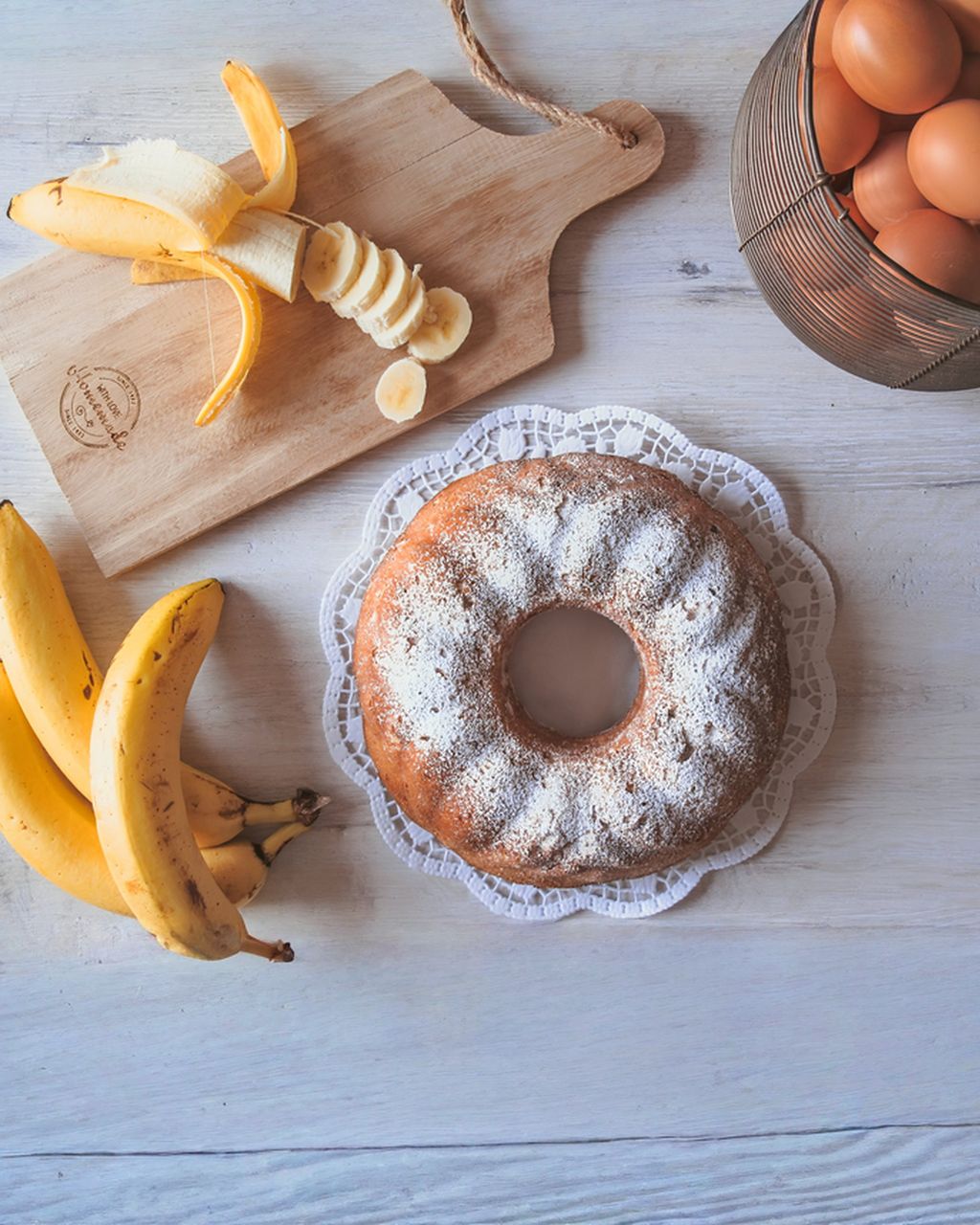
In gluten-free baking, maize flour works best in a blend with rice flour, starches and binders. Which gluten-free flour suits which job is summed up in the gluten-free flour guide. Try it in a gluten-free banana bundt cake with chocolate, and for tips on keeping it moist see Gluten-free bundt cake.
Maize was domesticated about 9,000 years ago in the Balsas River valley of south-western Mexico from a wild grass called teosinte. For the Maya, the Aztecs and other peoples of the Americas it was a staple food with sacred meaning. The Maya sacred text Popol Vuh tells how the gods shaped the first people from maize dough. Kernels were soaked in alkaline water (nixtamalisation), ground on stone slabs (metates) and the dough was baked into flatbreads on clay griddles (comales). After 1492 maize spread to Europe and Africa. Northern Italy turned it into polenta, Romania and the Balkans into mămăligă, Africa into ugali and North America into cornbread.
Maize flour thickens thanks to its starch. When heated in liquid, the starch granules absorb water, swell and form a gel, a process called gelatinisation. Unlike pure starch, flour also contains protein, fat and fibre, so it thickens less strongly and has a fuller flavour. The fat from the germ is also why wholegrain maize flour turns rancid sooner. Corn proteins do not form gluten, so a maize flour dough cannot hold gas and does not rise on its own. Nixtamalisation, cooking corn in limewater, softens the hull and releases bound niacin (vitamin B3). Where people ate mostly non-nixtamalised corn, pellagra, a niacin deficiency disease, spread in the past. The yellow colour comes from carotenoids, mainly lutein and zeaxanthin.
Maize is one of the most widely grown crops in the world. Large-scale monoculture is criticised for soil erosion and for its use of pesticides and water. In the EU, genetically modified maize in food must be labelled and in practice is almost never used, so maize flour in European shops is usually GM-free. If you want lower-impact farming, look for flour with the EU organic logo.