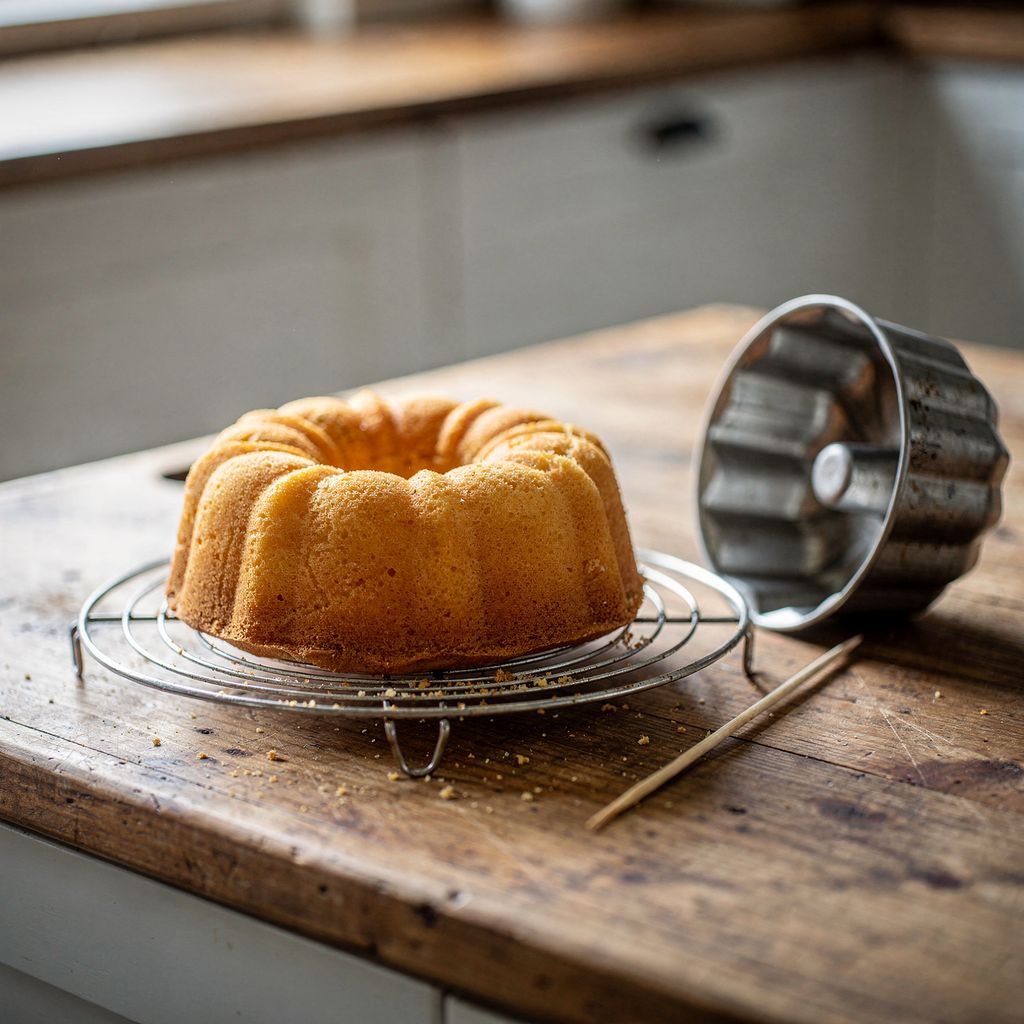
Wonderful cream bundt cake
What Temperature and How Long to Bake a Bundt Cake: Times by Pan and Batter
Updated Oct 17, 2026
What temperature and how long should you bake a bundt cake? Set the oven to 170–180 °C (340–355 °F) with top and bottom heat and bake for 45–55 minutes. That suits most classic creamed bundt cakes in a standard 22 cm metal pan. A yeast-raised cake is done sooner, a dense chocolate one wants a lower temperature and a longer bake, and a moist zucchini or pumpkin cake can easily take over an hour. The pan matters more than you'd think: silicone, ceramic or a large cast-aluminum Nordic Ware pan can shift the time by 5–15 minutes. Below you'll find specific numbers for every type of batter and pan, how to adjust for a convection oven, why an oven thermometer pays off, and how to tell for sure that your bundt cake is properly baked.
Bake a bundt cake at 170–180 °C (340–355 °F) with top and bottom heat. The vast majority of bundt cakes bake well in this range: the batter has time to rise from the inside before the surface sets into a crust.
Fine-tune it by batter type:
Creamed bundt cake (butter, oil or whipped cream): 175 °C (350 °F)
Yeast-raised bundt cake: 175–180 °C (350–355 °F)
Dense cocoa or chocolate cake: 160–170 °C (320–340 °F) – a dark batter with sugar and cocoa browns faster, so turn it down
Quark bundt cake: 170 °C (340 °F) – quark holds moisture and the center bakes through more slowly
Moist batters with fruit, zucchini or pumpkin: 170 °C (340 °F)
Savory bundt cake with cheese and ham: 180 °C (355 °F)
Mini bundt cakes and muffin cups: 175 °C (350 °F)
Why not above 180 °C. At 200 °C (400 °F) the surface sets and hardens within the first ten minutes. The batter inside is still expanding and has nowhere to go, so it breaks through the crust along a crack down the middle and stays raw inside while the outside is dark. It's a classic mistake that looks like "my oven bakes weirdly."
Why not below 160 °C (320 °F). Below 160 °C the leavening doesn't kick in fast enough, so the cake doesn't rise and simply dries out slowly. The result is low, dense and dry.
Always use a preheated oven. Preheat for 15–20 minutes, even if the indicator light goes off sooner – it only tracks the air, not the heated walls and rack.
A classic creamed bundt cake in a 22 cm pan bakes for 45–55 minutes. The time depends mostly on the volume of the batter and how moist it is, not on the recipe printed on the box.
Creamed bundt cake, 22 cm pan, 175 °C (350 °F): 45–55 minutes
Creamed bundt cake, 24–26 cm pan, 175 °C (350 °F): 55–65 minutes
Yeast-raised bundt cake, 22–24 cm pan, 175–180 °C (350–355 °F): 35–45 minutes – yeast dough is airier and bakes through faster
Quark bundt cake, 170 °C (340 °F): 55–65 minutes – for example Grandma's quark bundt cake (Dvěstěpadesátka)
Moist batters (zucchini, pumpkin, grated apples), 170 °C (340 °F): 55–70 minutes
Dense chocolate, 165 °C (325 °F): 60–70 minutes
Savory bundt cake, 180 °C (355 °F): 45–55 minutes
Mini bundt cakes, 175 °C (350 °F): 18–25 minutes
The time is an estimate; testing tells you when it's done. Treat these numbers as the moment to check for the first time, not as an order to take the cake out. Two ovens on the same setting can easily differ by 15 °C, and over an hour of baking that's ten minutes either way.
If the bundt cake browns before it's done, tent it loosely with foil on top and keep baking at the same temperature. While the batter is still rising, don't lower the temperature mid-bake – the leavening would lose its push, the bake would drag on and the center would dry out. Set a lower temperature the next time you bake. The only exception is finishing a cake that already has a firm crust and just a damp center – more on that below under underbaked bundt cake.
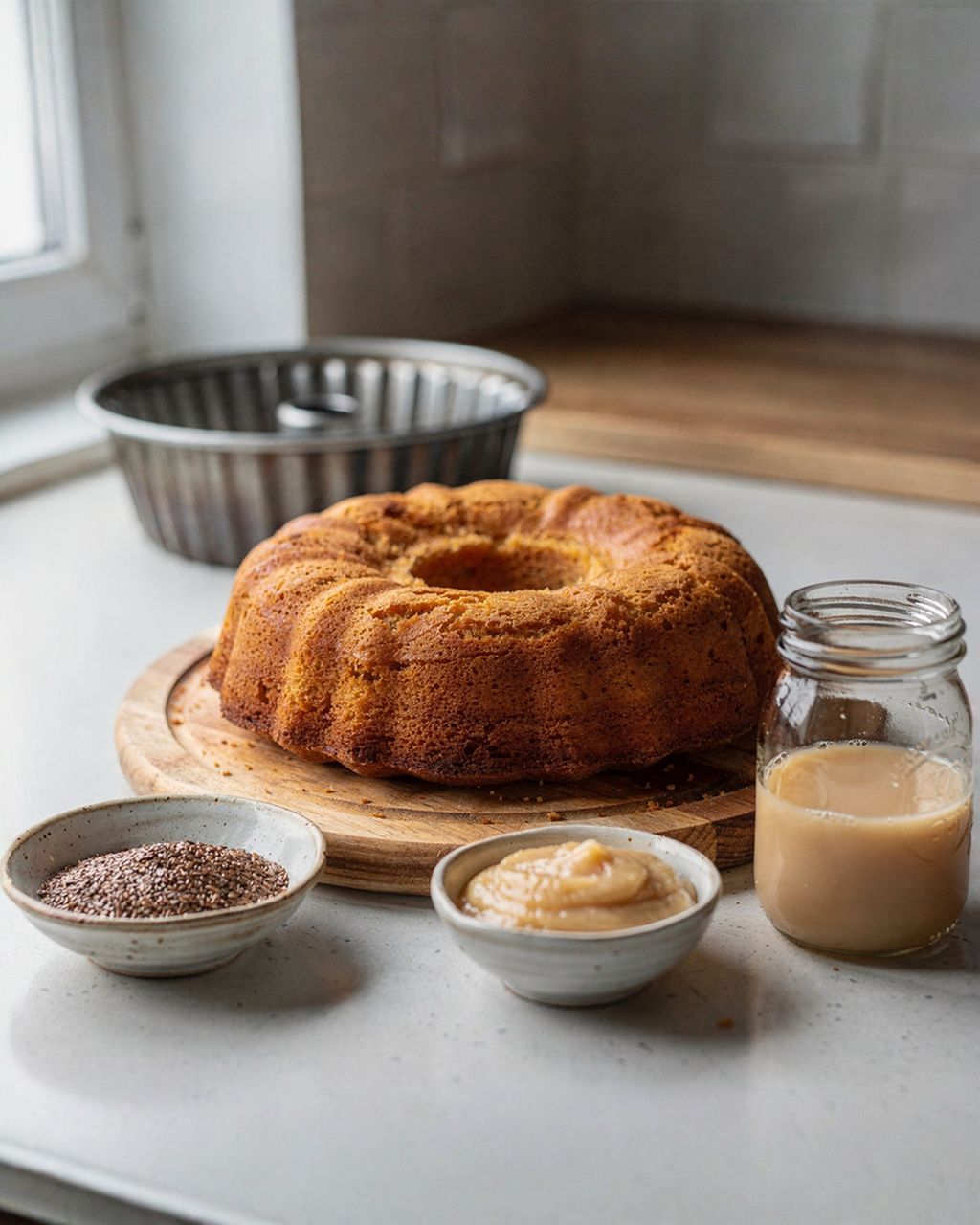
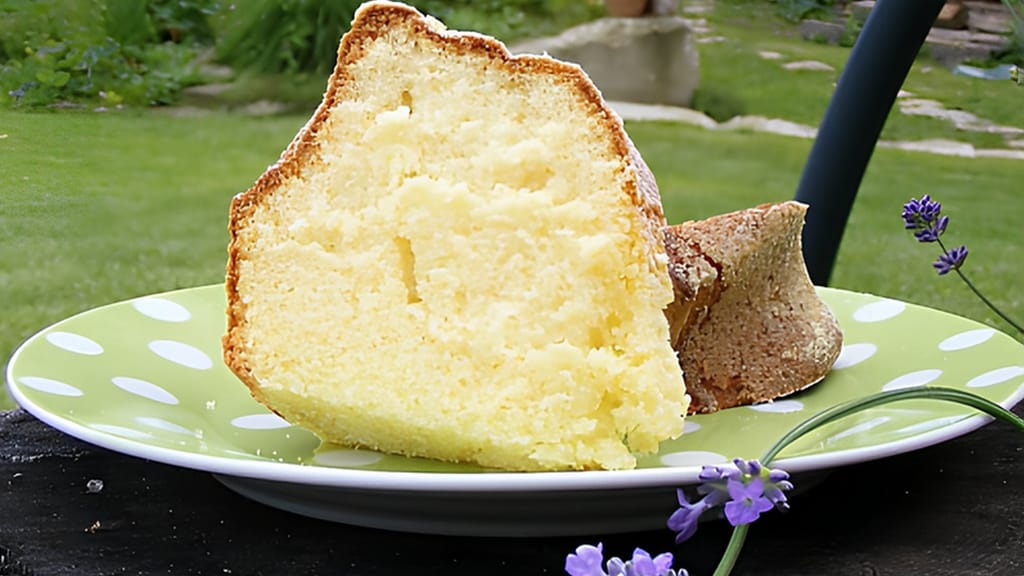
Wonderful cream bundt cake
A great whipped-cream bundt cake – classic creamed batter, baked at 175 °C (350 °F) for 50 minutes
Bake a classic creamed bundt cake in a light-colored metal 22 cm pan at 175 °C (350 °F) for 45–55 minutes; the bigger the volume and the more slowly the pan conducts heat, the longer it takes. Here's an overview for creamed batter (for yeast-raised, subtract about 10 minutes; for moist and chocolate batters, add 10–15):
Mini bundt cakes, 100–150 ml molds: 175 °C (350 °F), 18–25 minutes
Small 16–18 cm pan (about 1 l), half batch: 175 °C (350 °F), 35–45 minutes
Classic 22 cm pan (1.5–2 l), light metal: 175 °C (350 °F), 45–55 minutes
Large 24–26 cm pan (2–2.5 l): 175 °C (350 °F), 55–65 minutes
Dark metal or nonstick 22 cm pan: 165 °C (325 °F), 45–55 minutes
Silicone 22–24 cm pan: 175 °C (350 °F), 50–65 minutes (5–15 minutes longer than metal)
Ceramic or cast iron 22 cm pan: 165 °C (325 °F), 55–65 minutes
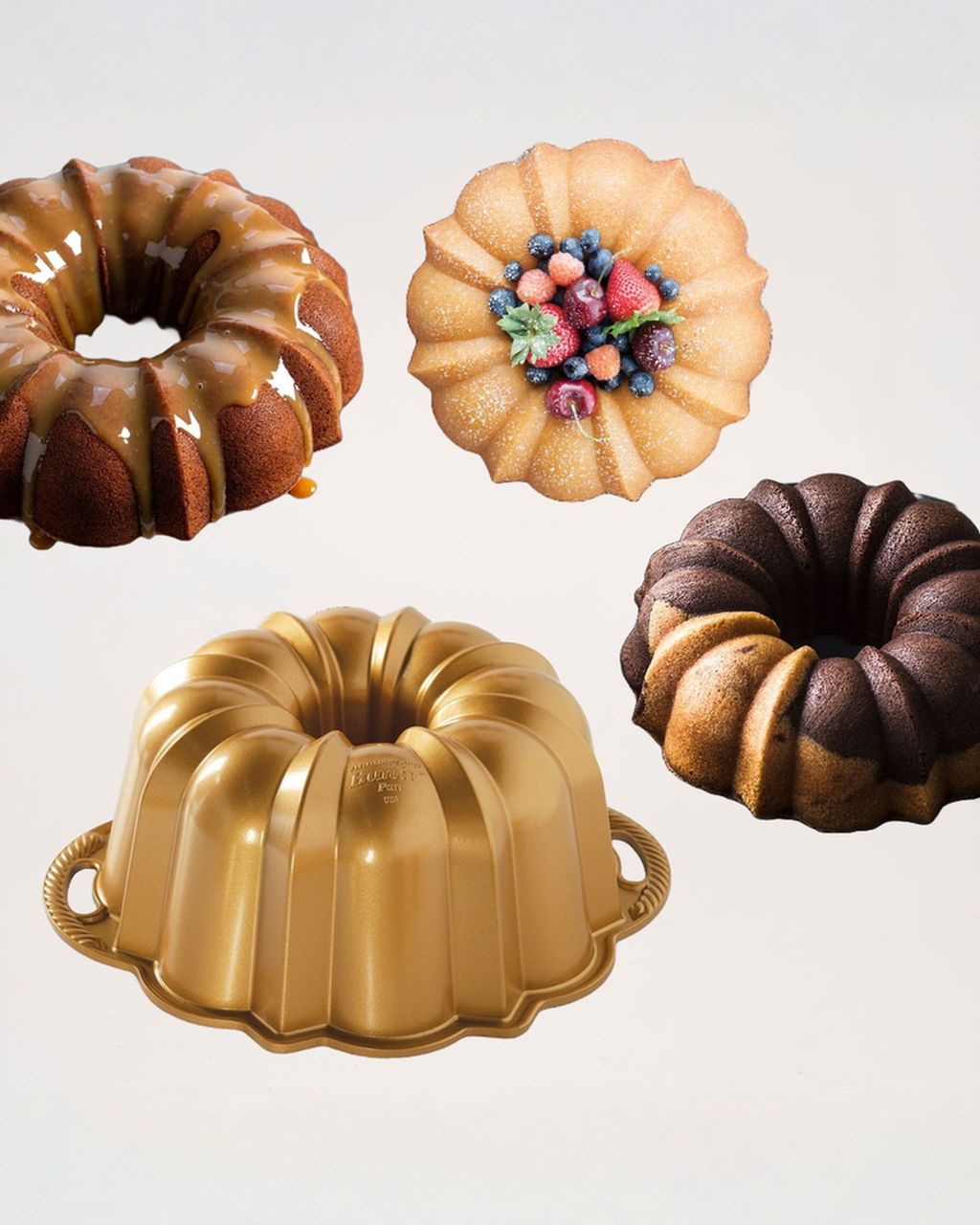
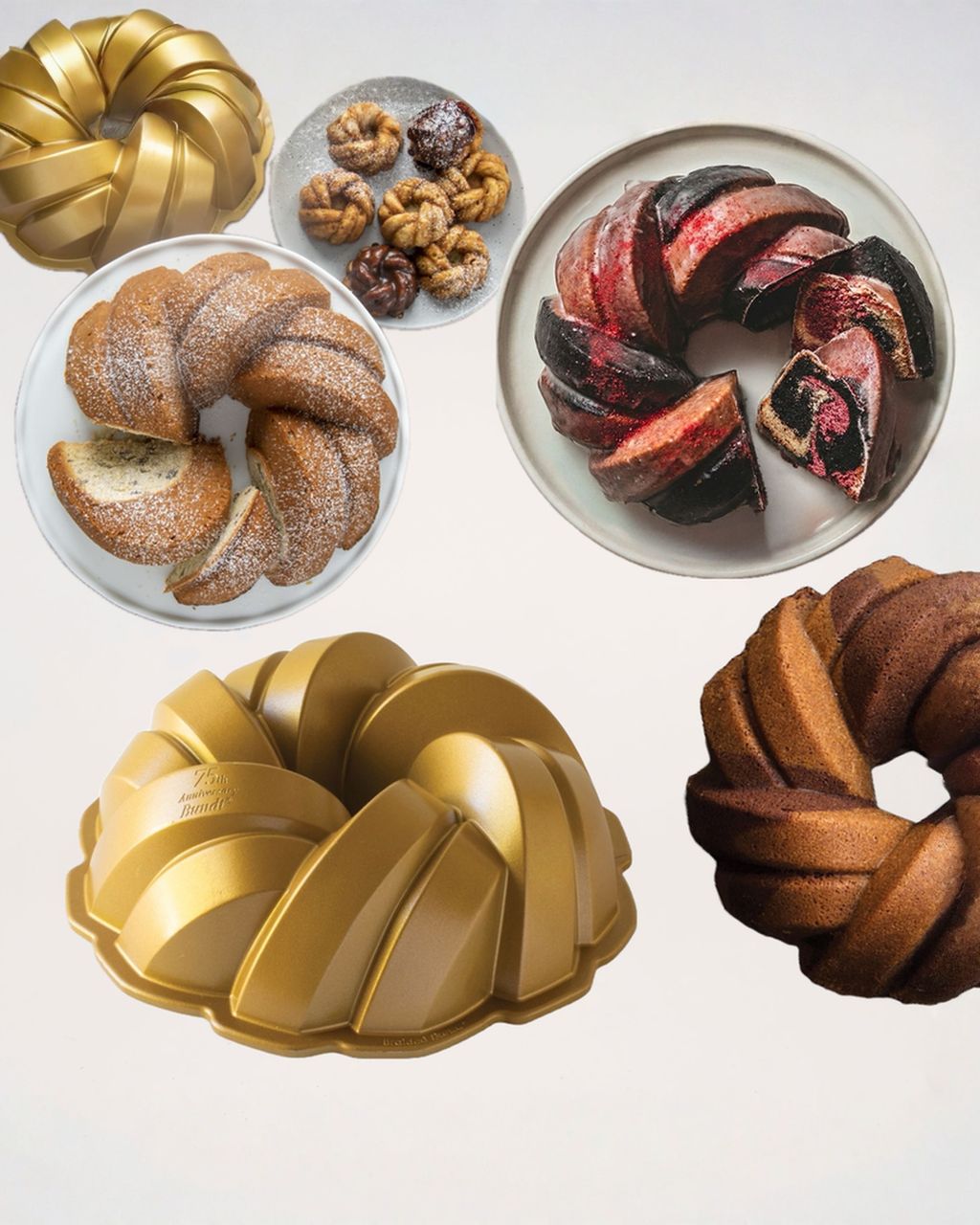
Cast aluminum Nordic Ware (2.4–2.8 l), full batch: 165–170 °C (325–340 °F), 55–70 minutes; for a dark or bronze finish, 160 °C (320 °F)
Quick rule: twice the batter doesn't mean twice the time. Heat has to travel from the walls and center tube to the middle, so going from a 22 cm to a 26 cm pan adds more like 10–15 minutes, not half an hour. For a half batch in a small pan, take off roughly a quarter of the time.
Change the temperature for the material, not the size. A bigger pan needs more time, not more degrees – a higher temperature would just scorch the surface before the center is done. Lower the temperature where the pan heats aggressively (dark finish, ceramic, cast iron).
Light-colored metal or cast aluminum works best, and you should fill the pan no more than two-thirds full. Dark metal, silicone, ceramic and cast iron work too, but each needs an adjustment in temperature or time – for a detailed comparison of materials, see the article Bundt pans: ceramic, silicone, cast iron or Nordic Ware?.
Light metal – the baseline all the times above are written for. No adjustment
Dark metal and nonstick – they absorb more heat, so the bottom and sides brown faster. Lower the temperature by 10 °C (about 20 °F) or start checking 5–10 minutes earlier
Silicone – conducts heat less well than metal, so expect 5–15 extra minutes and a paler surface. Always set it on a baking sheet, or it will sag under the weight of the batter
Ceramic and cast iron – they heat up more slowly but then hold the heat. Add 5–10 minutes and drop to 165 °C (325 °F) so the edges don't burn before the middle heats through
Cast aluminum (Nordic Ware) – thick walls conduct heat evenly and bake deep into the batter, but the pan tends to be larger. More in the separate section below
Measure the volume with water, not by diameter. Common Czech pans with a 22–23 cm diameter hold anywhere between 1 and 2 liters depending on shape and depth, so diameter alone tells you nothing. Fill the empty pan with water to the brim, pour it into a measuring jug and remember that number. Two-thirds of it is the maximum amount of batter that belongs in the pan.
Why two-thirds. The top third is room for rising – if you fill it, the batter overflows the center tube and the bottom doesn't get a chance to bake through. For a 1.5 l pan that works out to about a liter of batter, i.e. a batch made with 3 eggs, 250 g flour and 200 g sugar. For how to scale a recipe to another pan, see the article how much batter for a bundt pan and how to scale a recipe.
Grease and flour, even if the pan is nonstick. Brush butter into every groove, then dust with coarse flour or breadcrumbs. For a cocoa batter, dust with cocoa instead – flour would stay on the dark surface as a white film. You don't need to grease silicone.
If you're still choosing, browse bundt pans, both cast aluminum and classic – and so you don't tire of your pan after Easter: what to bake in a bundt pan besides bundt cake, from braided sweet bread to savory loaves.
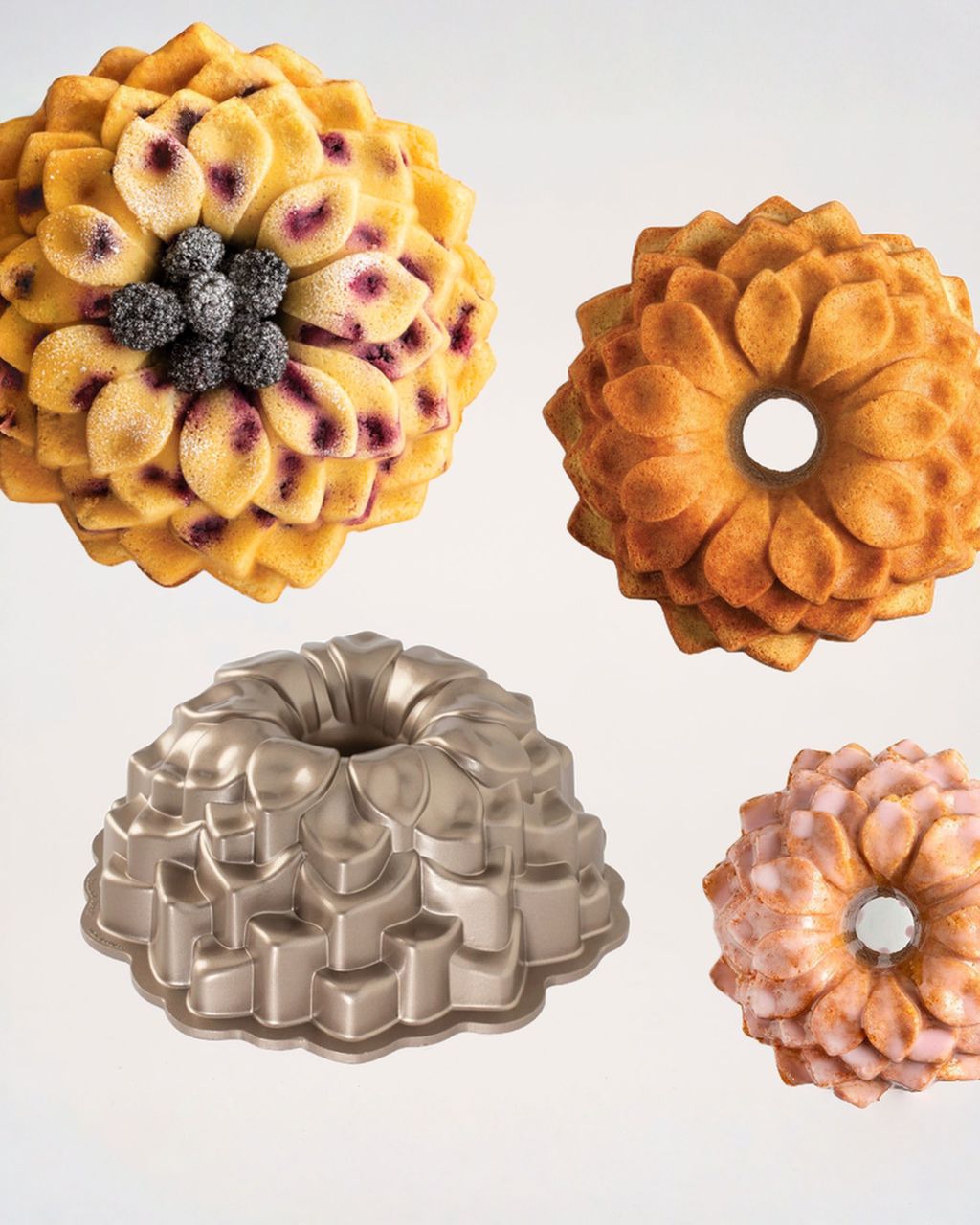
In a cast-aluminum Nordic Ware pan, bake a bundt cake at 165–170 °C (325–340 °F) for 55–70 minutes if you fill it with a full batch. For its pans of about 2.4–2.8 l, Nordic Ware itself gives a range of 163–177 °C and 45–60 minutes; fuller and moister batters tend toward the upper end in practice.
Volume: pans like Nordic Ware Tradice, Pletenec or Květ tend to be larger than a standard Czech pan. One batch from a recipe written for a 22 cm pan fills them only halfway – the cake comes out low and bakes 5–10 minutes sooner. For a full pan, use 1.5 times the recipe. Check the volume with water
Finish color: for dark and bronze finishes, the manufacturer recommends lowering the temperature by about 15 °C, i.e. baking at 160 °C (320 °F). A dark surface absorbs more heat, and the ridges would darken before the middle bakes through
Pattern: deep grooves and sharp edges heat the batter evenly, but they're also where a bundt cake most often sticks. Get butter or pan spray into every crevice, even if the pan is nonstick
Testing: insert the skewer between the center tube and the wall, not in a groove – in a thin protrusion of the pattern the batter is baked long before the middle
After taking it out, leave the cake in the aluminum pan for 10 minutes, then turn it out. Cast aluminum holds heat, and the cake would keep drying out in it.
For a bundt cake, reach for top and bottom heat. A bundt cake needs gentle, even heat. Convection drives air across the surface, dries out the crust, and with yeast-raised batter it can make the cake collapse before it has a chance to set.
If your oven only has convection: set it 20 °C (about 35 °F) lower than the recipe says and check 5–10 minutes earlier. So instead of 175 °C, use 155 °C (310 °F) and insert the skewer already at 40 minutes.
Where to put the pan: on a rack in the lower third of the oven, not in the middle. A bundt cake is tall, and in the middle position its top sits too close to the upper element – it browns before the bottom is baked through.
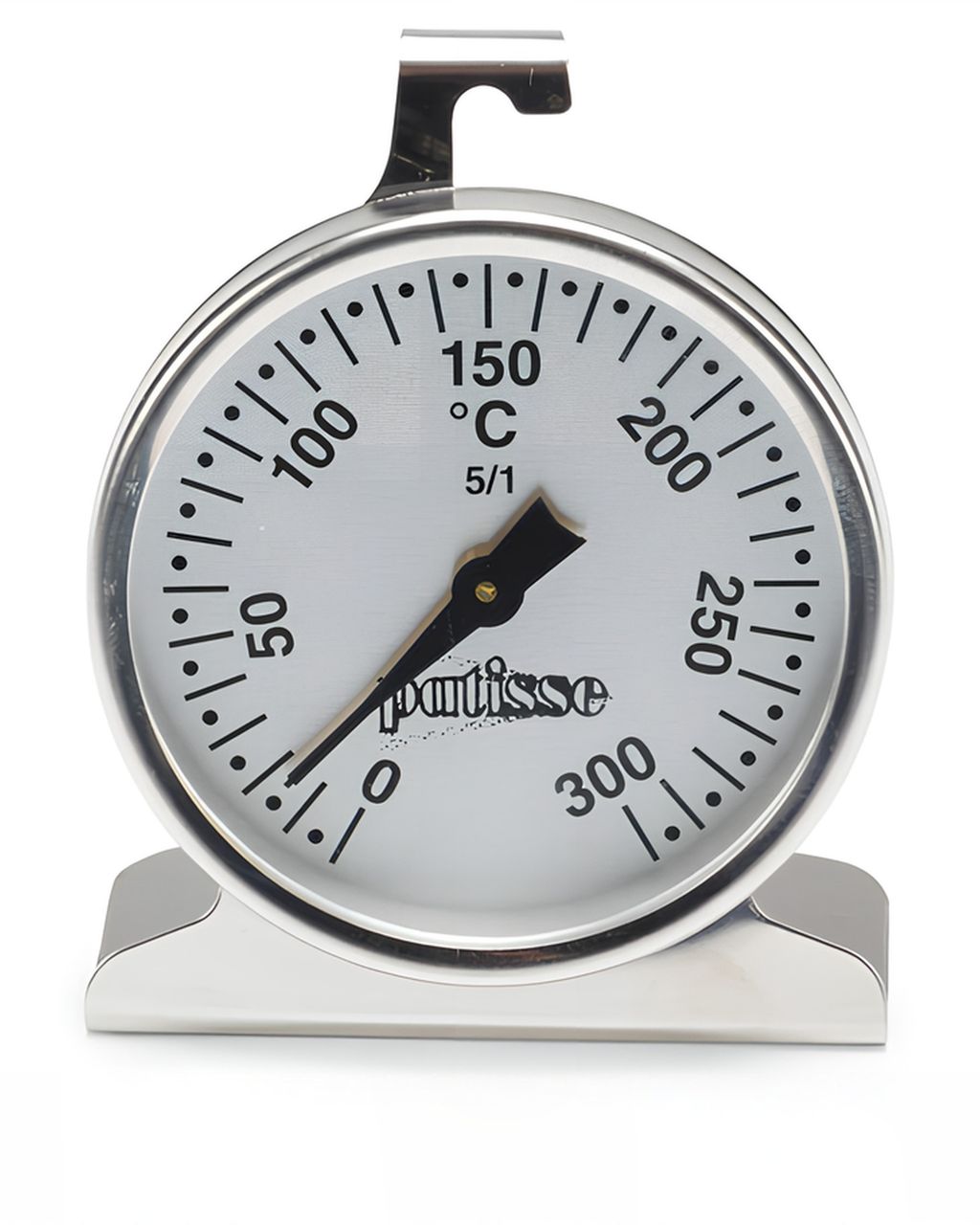
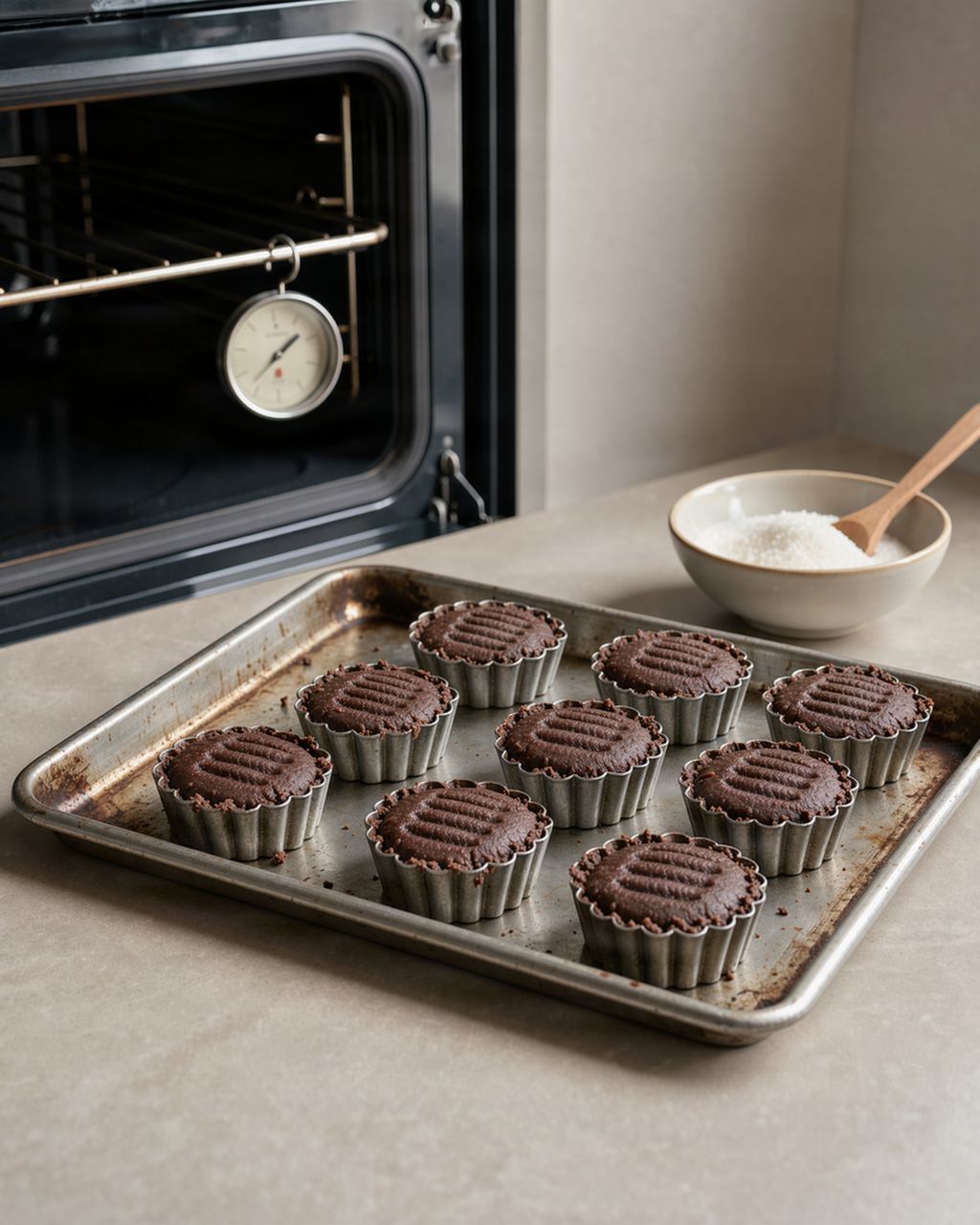
An oven thermometer pays off when baking a bundt cake, because an oven almost never bakes at exactly the temperature you set. According to measurements by the thermometer maker ThermoWorks, typical home ovens deviate from the set value by roughly 15–30 °C. With a bundt cake, where the 170–180 °C range is what matters, that's the difference between a tender center and a cracked, raw or dried-out cake.
An oven's thermostat is a regulator, not a measuring instrument: it monitors the temperature at a single point near the heating element, not where the pan sits, and the heating also cycles on and off. The display shows you a wish, not reality.
How to test your oven (once is enough):
Place a thermometer on the rack where the bundt cake bakes – lower third, in the middle.
Set top and bottom heat to 175 °C (350 °F) and preheat.
Wait at least another 10 minutes after the signal so the temperature settles, then read the value.
Remember the deviation and add it to or subtract it from the set temperature next time. A difference up to 10 °C is normal fluctuation; at 15 °C or more, start correcting.
A plain Patisse oven thermometer that stays hanging on the rack is enough for this. Don't confuse it with an instant-read thermometer: an oven thermometer measures the air in the oven, while an instant-read one measures the core of the cake. Ideally you have both – one tells you whether the oven bakes correctly, the other, together with a skewer, helps you confirm whether the cake is done.
A bundt cake is done when a skewer from the thickest spot comes out clean, the edges pull away from the pan, and the surface springs back when pressed. An instant-read thermometer is a useful extra check, but it isn't enough alone – the right core temperature varies by recipe, so always combine it with a skewer and what you can see.
Instant-read thermometer – an extra check, not proof by itself. Measure in the thickest part between the center tube and the wall, not all the way through, and always compare the result with the skewer, the edges and the surface
Skewer or thin knife – it should come out clean or with a few dry crumbs. A wet, shiny coating means another 5–10 minutes. Careful with batters containing chocolate or fruit: melted chocolate on a skewer isn't raw batter
Edges pull away – you can see a thin gap between the batter and the pan, both around the edge and around the center tube
Surface springs back – press lightly with a finger; the dent should return right away
Sound – a fully baked cake in the oven barely bubbles anymore; a quiet hiss and bubbles on the surface mean water is still evaporating from liquid batter inside
Check in at least two ways. Golden color alone tells you nothing – a dark pan or a high rack position will color the surface long before the middle is baked.
After taking it out, leave the cake in the pan for 10 minutes, then turn it out onto a wire rack. Any sooner and it still crumbles; any later and it steams in the pan and the surface turns damp.
Almost always the temperature is to blame – either set wrong or disturbed too early by opening the oven. Here's what each problem means:
Sank in the middle – the oven wasn't preheated, you opened it in the first half of baking, or the temperature was too low. Fix: preheat for 20 minutes and leave it alone
Cracked lengthwise – normal for creamed bundt cakes, but a deep split means the temperature was too high. Next time lower it to 165–170 °C (325–340 °F)
Dark outside, raw inside – the temperature was too high or the pan sat too high. Cover it with foil now and finish baking; next time go 10–15 °C lower and move the rack down
Dry and dense – overbaked, or the batter was mixed too long. Check 10 minutes earlier than you think you need to
Won't turn out – the pan wasn't greased well, or you waited too long. Ten minutes in the pan, not twenty
Different every time, even with the same recipe – your oven is probably fluctuating. Check it with an oven thermometer
What to do about a wet center. If the bundt cake is still whole in the pan and the skewer just came out damp, put it back in the oven at 155 °C (310 °F) for another 10–15 minutes and cover it with foil. This is the only case where a lower temperature helps: the crust is firm and the batter is no longer rising, so the leavening has nothing left to lose – all that matters is finishing the core without the surface burning further. If you've already turned it out and cut it open, don't put it back in the oven: the baked part will just dry out and the middle still won't be fixed. Instead, cut out the raw center, slice the rest, dry the slices in the oven at 150 °C (300 °F) for about 10 minutes and use them as a base for trifle cups, or crumble them as a base under a crumble topping. You'll find all the causes and rescue methods in the article underbaked bundt cake: why it happened and what to do with it.
Depending on the batter, bundt cakes bake at 165–180 °C (325–355 °F) for 45–70 minutes – here's a recipe for each category. Keep a thermometer handy as you bake them and you'll see how the time changes with the thickness of the batter.
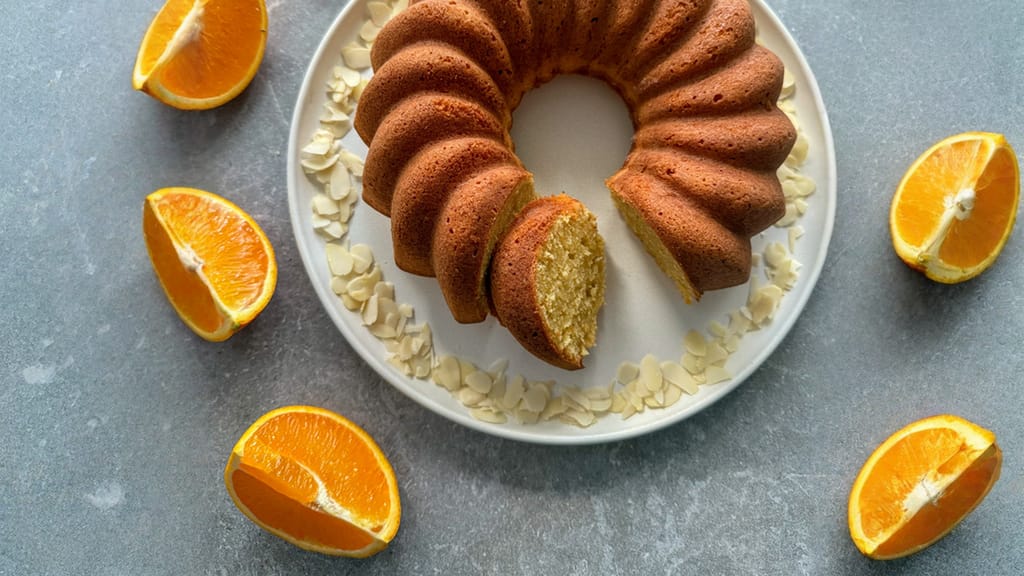
Orange bundt cake with almonds, cinnamon and cardamom
Orange bundt cake with almonds, cinnamon and cardamom – creamed batter, 175 °C (350 °F) and about 50 minutes
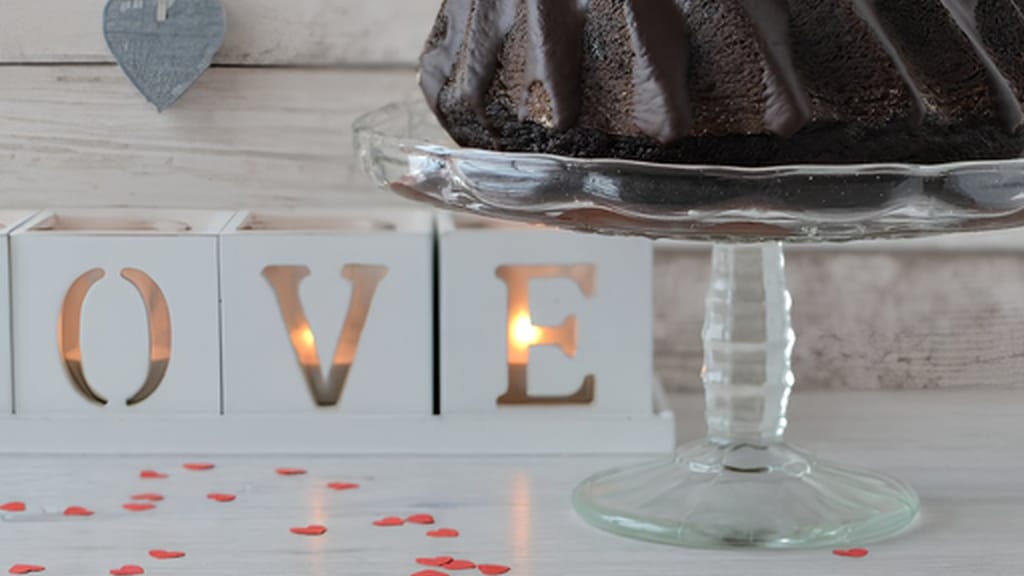
Valentine's chocolate bundt cake with pomegranate seeds
Valentine's chocolate bundt cake with pomegranate – a dense cocoa cake that does best at 165 °C (325 °F) and a longer bake
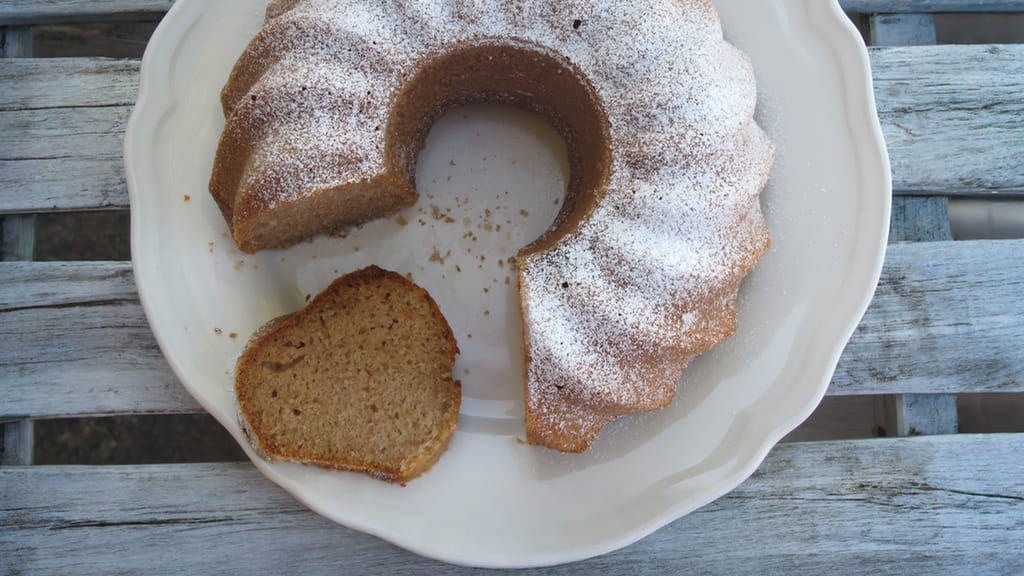
Zucchini bundt cake
Zucchini bundt cake – a moist batter that needs 170 °C (340 °F) and easily 65 minutes
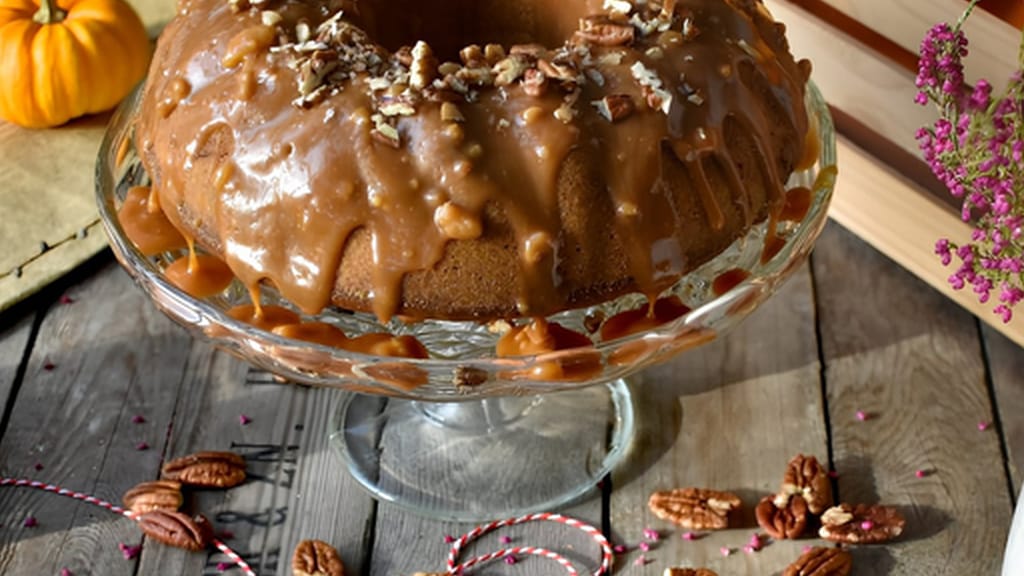
Autumn pumpkin bundt cake with creamy caramel glaze
Autumn pumpkin bundt cake with cream caramel glaze – moist pumpkin batter at 170 °C (340 °F) for 60–70 minutes
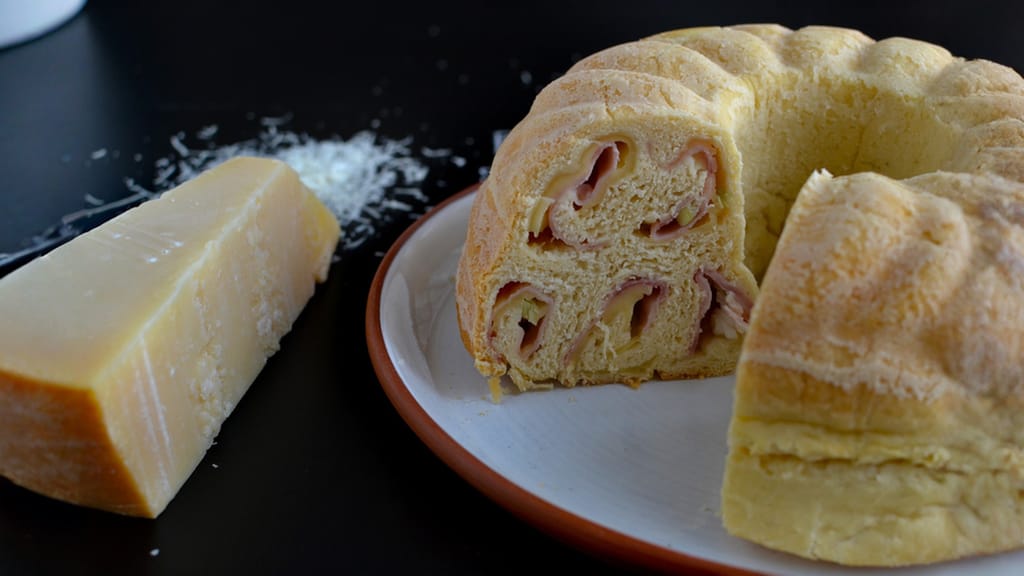
Savory bundt cake with ham and cheese (and more)
Savory bundt cake with ham and cheese – bakes at 180 °C (355 °F) for about 50 minutes
Bake a bundt cake from a mix just like a homemade creamed one: at 170–175 °C (340–350 °F) with top and bottom heat, about 45–55 minutes in a 22 cm pan. The time on the box only applies to the pan the manufacturer had in mind – in a bigger pan the cake comes out shorter and is done sooner, in a smaller one it comes out taller and takes longer. Start checking 10 minutes earlier than the box says, and go by a skewer that comes out clean, edges that pull away from the pan, and a surface that springs back. An instant-read thermometer is a useful extra check, but it isn't enough on its own.
You can bake bundt batter in a regular cake pan or a loaf pan, but without the center tube it takes longer and the middle is easily underbaked. With no tube, the center of the batter is farther from the hot walls, so the heat takes longer to reach it. Fill the pan as you would a bundt pan, no more than two-thirds full, set it in the lower third of the oven, and don't rely on the time in the recipe – insert the skewer right in the center, where the batter bakes most slowly. If the top browns too soon, cover it with foil and keep baking.
You can bake two bundt cakes at once only in a convection oven at 155 °C (310 °F), adding 10–15 minutes to the time. With top and bottom heat, two racks bake unevenly – the lower cake browns on the bottom, the upper one on top. Place the pans side by side rather than directly above one another, and swap them halfway through baking.
In a gas oven, bake a bundt cake at the setting that corresponds to 170–180 °C (340–355 °F). This varies by manufacturer, so don't guess from generic conversion charts. Put a thermometer in the oven, try the middle setting, and after 15 minutes of preheating read what temperature it actually reaches. A gas oven also heats more from below, so set the pan in the middle position and protect the bottom with a baking sheet on the rack beneath it.
A baked bundt cake keeps for 3–4 days in a sealed container at room temperature, and oil-based and whipped-cream versions last a day or two longer than butter ones. Don't put it in the fridge – it dries out fastest there. You can slice it and freeze the slices for up to three months, then thaw them at room temperature.
No – a [marbled bundt cake](/cs/recipes/mramorova-babovka-s-podmaslim-a-vanilkou--9f1dca4b-5aaa-41ba-ac26-183e16014a4c) bakes exactly like a plain creamed one, at 175 °C (350 °F) for about 45–55 minutes. The pattern is just a surface swirl of two batters of the same thickness, so it has no effect on how the cake bakes through. Check doneness the same way as for a plain bundt cake: a skewer inserted between the center tube and the wall should come out clean.
One recipe worth heating the oven for, one tip, and one deal from the shop. Nothing else.