Cocoa chickpea flour pancakes
Gluten-Free Pancakes: How to Make Them Fluffy
Updated Sep 18, 2026
Gluten-free pancakes turn out fluffy when you let the batter rest and give it something to bind it together — without gluten, there's nothing to trap the bubbles inside. In practice that means: mix your flour from three components (a neutral base, a flavour flour like buckwheat or chickpea, and a starch), add 0.5–1 g xanthan gum per 100 g flour, let the batter rest 20–30 minutes, and fry it over medium heat for longer than you would classic pancakes. The rest of the article explains why this works and where it most often goes wrong.
Gluten-free batter is missing the gluten network — the stretchy structure that, in wheat pancakes, traps carbon dioxide bubbles and holds the pancake together. Starch, binder and eggs have to take over that job, and they need two extra things: time and heat.
What that means at the stove:
Gluten-free flours absorb water more slowly. Freshly mixed batter is always thinner than you'd expect. After 20–30 minutes of resting it thickens on its own — and it's the rested batter that won't spread out into a thin puddle in the pan.
Starch doesn't set until around 60–75°C. Until the whole centre heats through, the pancake has no structure. That's why it needs more time and lower heat on the pan than a wheat pancake.
Finished pancakes go stale faster. Gluten-free starch ages (retrogrades) within a few hours. Gluten-free pancakes are meant to be eaten warm — or reheated, not served cold.
That's the whole theory. Everything else is just ratios.
"Gluten-free" is a legally defined term: under EU Commission Implementing Regulation No 828/2014, only food that contains no more than 20 mg/kg of gluten in the form sold to the final consumer may carry this label. The legal wording is "gluten-free"; the term is applied consistently, with regulators enforcing the same 20 mg/kg threshold.
Two things that get mixed up around this:
"Very low gluten" is a different category, with a threshold of up to 100 mg/kg. It is not the same as gluten-free. If you're cooking for someone with coeliac disease, stick strictly to products labelled "gluten-free".
A naturally gluten-free ingredient isn't the same as a gluten-free product. Rice, buckwheat, millet and corn don't contain gluten themselves, but an ordinary bag of buckwheat flour off the shelf may have been milled on a line that also processes wheat. If you're baking for a diagnosed coeliac, buy flours that carry the gluten-free label on the pack, not just ones that are "naturally gluten-free".
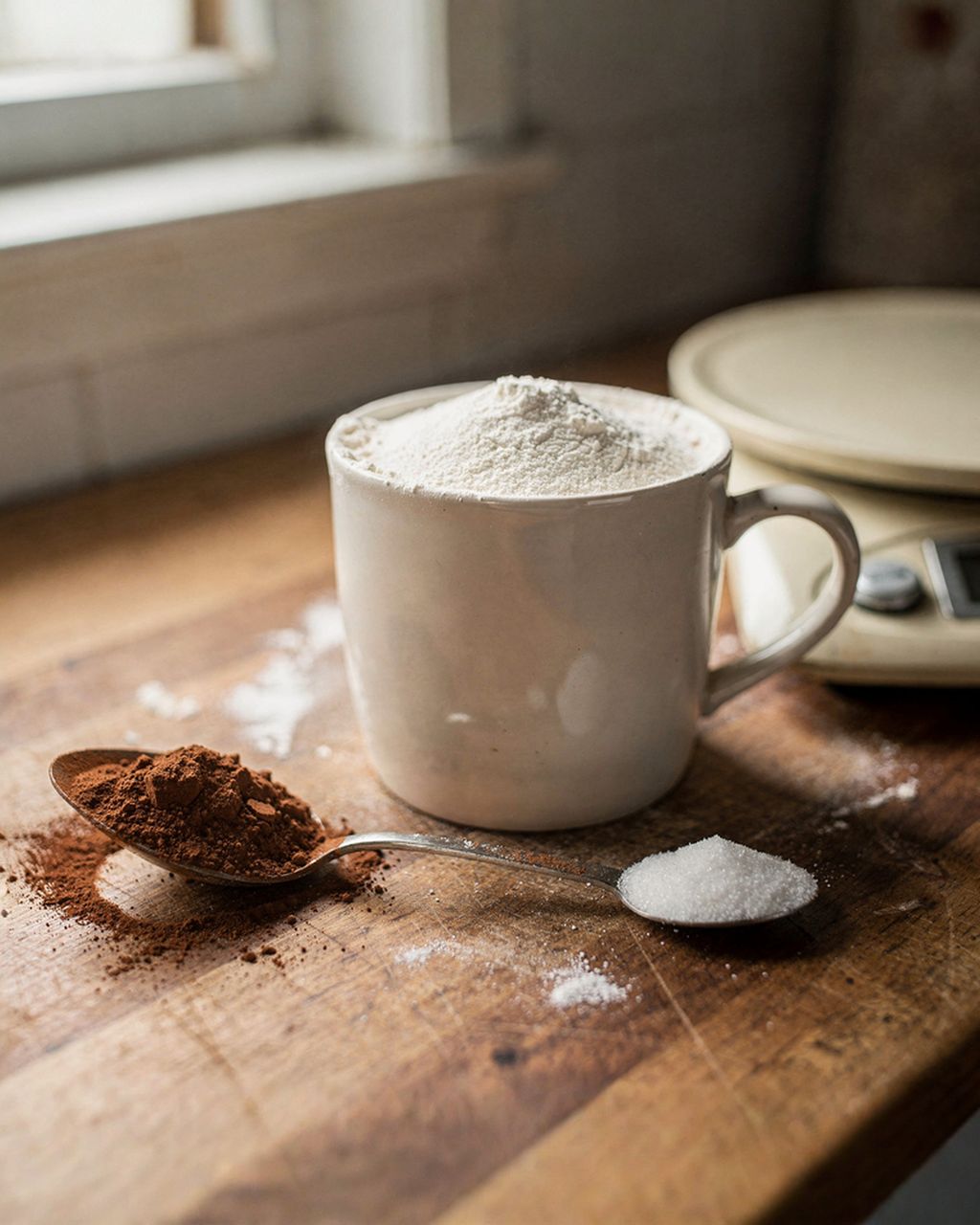
Three components work best together: a neutral base, a flavour flour (buckwheat, chickpea…) and a starch — in a ratio of roughly 50:20:30. Any single flour on its own makes pancakes either gritty or gummy; the combination behaves much more like smooth wheat flour.
For 250 g of a homemade mix, that works out to 125 g neutral base, 50 g flavour flour and 75 g starch.
Finely milled rice flour or millet flour works best as the neutral base of a gluten-free pancake mix, at roughly 50% of the total.
Rice flour — the most widely available, but a coarser grind is noticeably gritty in the finished pancake. Buy the finest one you can find.
Millet flour — finer and slightly buttery, great for sweet pancakes.
The flavour component of a gluten-free mix is buckwheat, chickpea, chestnut or almond flour, at a maximum of 20% of the mix.
Buckwheat — naturally gluten-free, bold, slightly nutty. White buckwheat is mild, roasted buckwheat is much more aromatic and dark. More than a fifth of the mix and it overpowers everything else.
Chickpea — high in protein, so it holds the batter together on its own. It tastes distinctly of pulses raw, but that disappears once it's fried.
Chestnut or almond— sweet and tender, but pricey; treat them as a bonus, not the base.
Starch (cornflour, tapioca or potato starch) makes up about 30% of the gluten-free mix and gives lightness and a soft centre.
Cornflour or tapioca starch — creates lightness and a soft centre, and smooths out the grittiness of rice flour.
Potato starch — holds onto moisture, so the pancakes stay moist for longer.
Ready-made gluten-free pancake mixes work well and are the safest choice for a first attempt. Just check the ingredients list: most all-purpose gluten-free mixes already contain xanthan or guar gum, so don't add any extra binder — otherwise the pancakes will turn out rubbery.
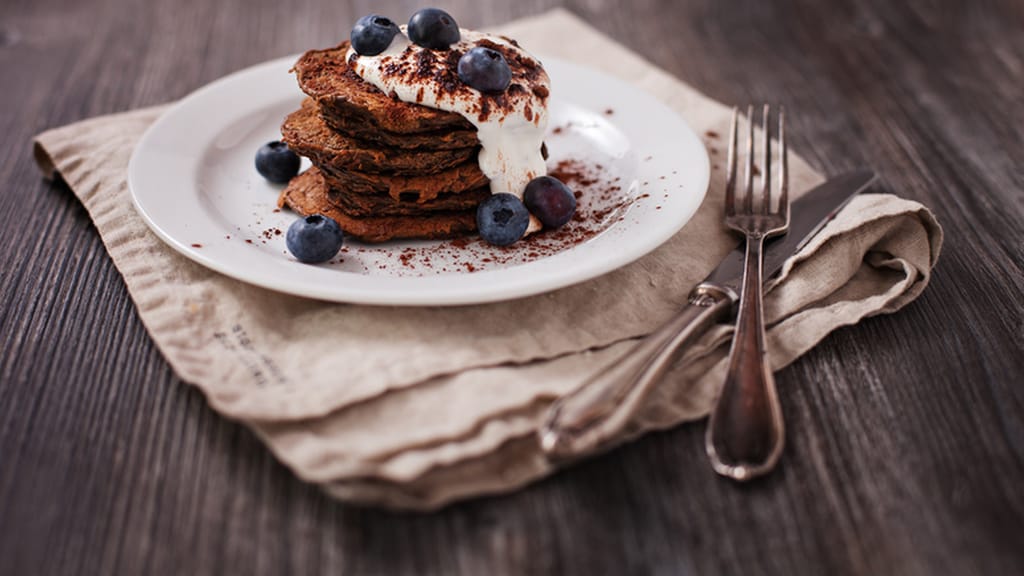
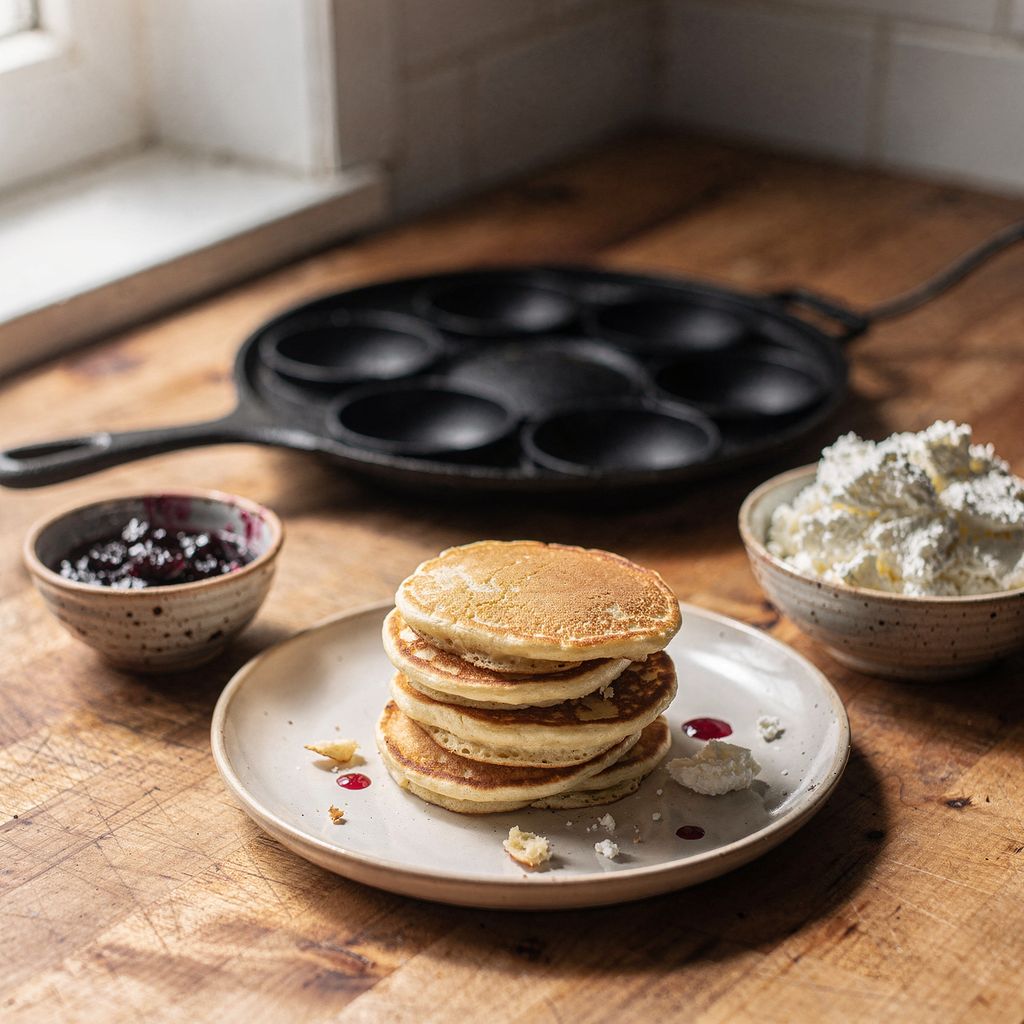
Cocoa chickpea flour pancakes
Chickpea-flour cocoa pancakes — a naturally gluten-free batter that holds together even without xanthan gum
Xanthan gum is the better choice for gluten-free pancakes — 0.5–1 g per 100 g of flour; psyllium suits savoury flatbreads better and needs double the amount plus 20–30 ml extra liquid. Half a gram to a gram of xanthan gum is roughly half a teaspoon per 150 g of flour. Above 1.5 g per 100 g the batter turns slimy and the pancake rubbery. Pancakes are far less demanding on binders than, say, bread, and overdoing it is by far the most common mistake here.
Which one to choose:
Xanthan gum — the first choice for pourable batters and baked goods. It works instantly, needs no resting time, and has no flavour of its own. 0.5–1 g per 100 g of flour.
Psyllium (finely ground) — use roughly double the amount compared to xanthan gum and add 20–30 ml extra liquid, since it soaks up far more water. It gives a more tender, bread-like texture; better suited to savoury pancakes and flatbreads.
Eggs, curd cheese, thick yoghurt — natural binders. When the batter is built around these, you can often skip gum-based binders altogether.
Nothing at all. With high-protein flours (chickpea, lentil) and batters with grated vegetables, the pancake holds together on its own.
It only makes sense to judge the consistency once the binder is mixed in. Let the batter rest for 20–30 minutes, then check: it should pour off the ladle slowly and in a steady stream, not drip and not fall in a lump. Only now should you adjust with more milk or flour.
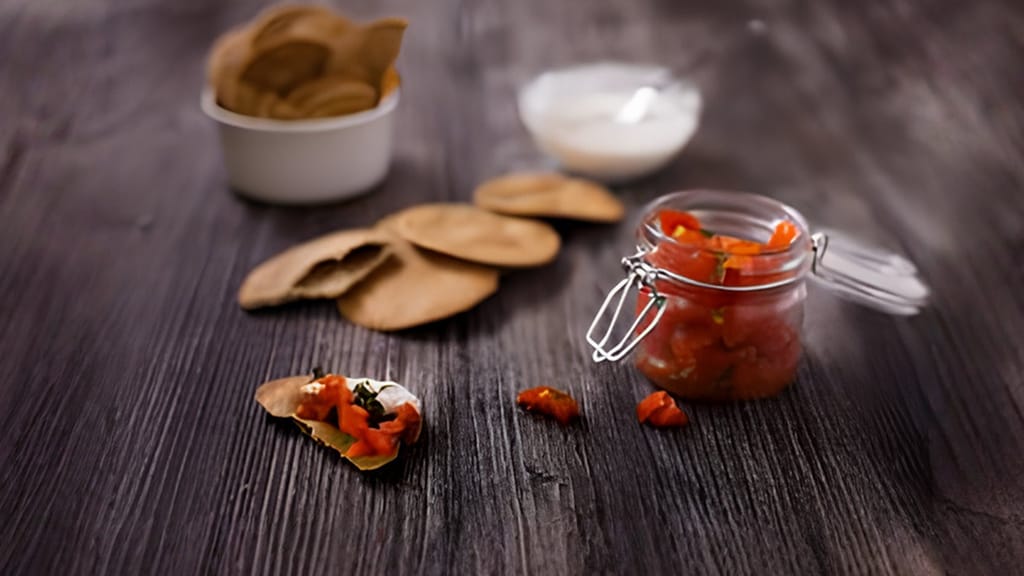
Lentil flour crackers
Lentil-flour flatbreads — a gluten-free batter that holds together on legume protein alone
Yeasted ones have a deeper flavour and a finer, more even centre; quick ones are on the table in half an hour. Gluten-free batter suits both approaches — they just need to be handled differently.
The ratios don't differ from wheat versions: for 250 g of flour, count on 20 g fresh yeast or 7 g dried yeast and about 300 ml of milk at 30–35°C. (If you've got the other type on hand, you'll find the conversion in our article on dried vs. fresh yeast.)
What's different about the gluten-free version:
Don't expect a dome. Gluten-free batter won't rise into an arched loaf shape — it just bubbles up and grows in volume by roughly a third. That's as far as it goes.
Don't over-prove it. With no gluten to hold the bubbles in, over-proved batter will collapse and the pancakes will end up flat and sour-tasting. 45–60 minutes somewhere warm is enough — no longer.
Stir just once, gently. Once it's risen, don't beat the batter — you'd knock out exactly the air you were waiting for.
Fry within the hour. Gluten-free yeasted batter doesn't keep well.
For 250 g of flour, use 8–10 g baking powder — and check it's gluten-free; some brands are bulked out with wheat starch. (If you've run out, our guide on what to use instead of baking powder covers substitutes and how to convert the amounts.)
Two tricks that make the biggest difference here:
An acidic liquid. Buttermilk, kefir or soured cream combined with 1/2 teaspoon of bicarbonate of soda lifts the batter noticeably more than baking powder alone, and also softens the grittiness of rice flour.
Whisked egg whites. Whip them to soft peaks and fold in at the end — for gluten-free batter, this is the cheapest way to get the fluffiness that gluten would otherwise provide.
This version, though, can't sit around: once you've mixed in the leavening, fry it within 30 minutes, or the baking powder will burn itself out for nothing.
Medium heat, smaller pancakes and longer cooking time: about 3–4 minutes on the first side and 1.5–2 minutes on the second. A gluten-free pancake needs the whole centre cooked through, and on high heat it browns before it gets the chance.
Heat the pan to medium (roughly 160–170°C) and let it settle at that temperature for at least a minute. A drop of batter should sizzle gently, not spit.
Wipe on a thin layer of fat — clarified butter or rapeseed oil, wiping off the excess with a paper towel. In a pool of fat, the gluten-free edge fries into crispy lace while the centre stays raw.
Keep the diameter to 8–9 cm. A bigger pancake won't cook through before the underside goes dark. On an electric pancake pan, the moulds handle this for you.
Flip once the surface bubbles have burst and the edge turns matte and loses its shine. This takes noticeably longer with gluten-free batter than with wheat — don't go by the clock, watch the surface instead.
Once flipped, stop pressing it with the spatula. You'll squeeze out air that, without gluten, has no way of coming back.
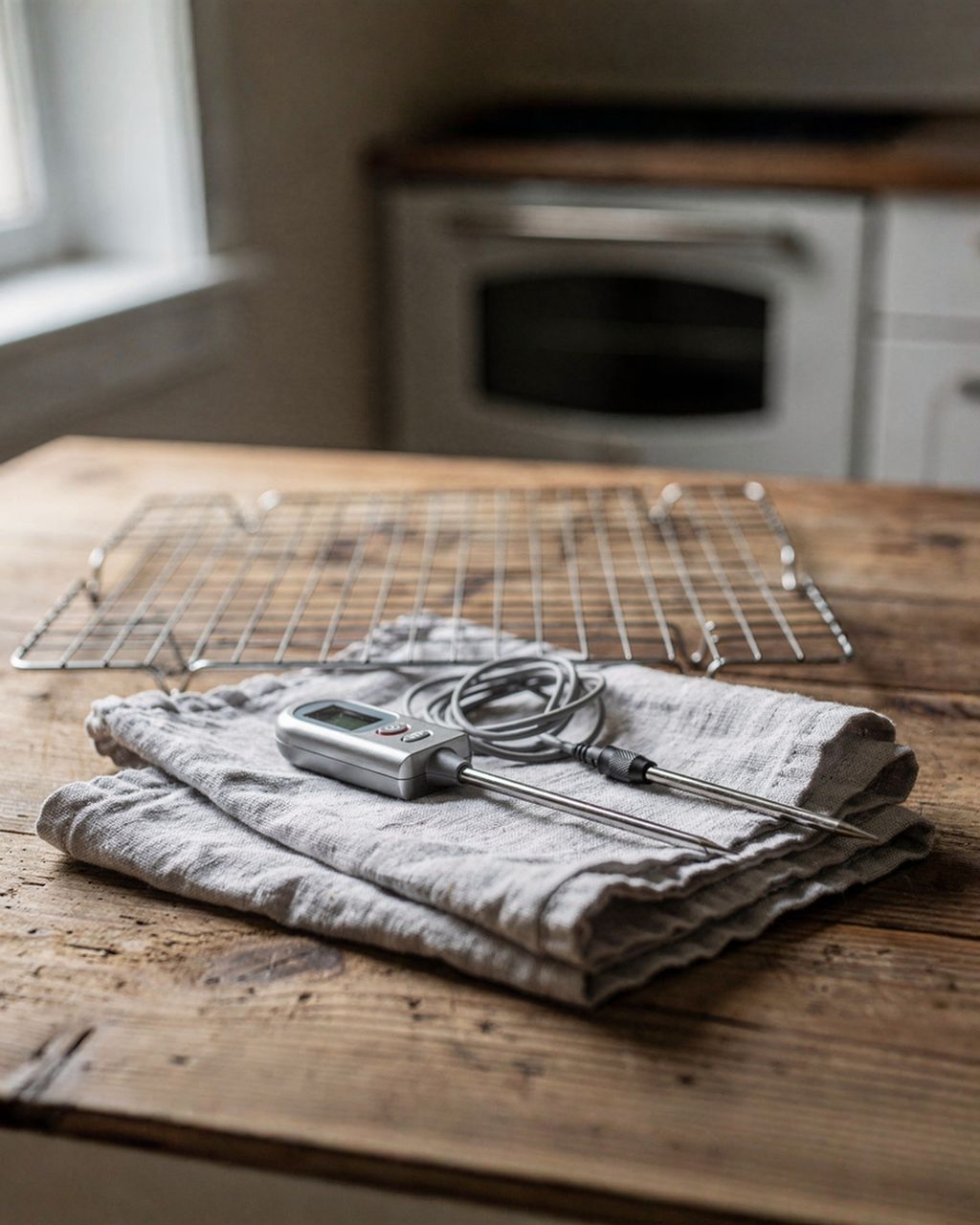
Rest them on a wire rack, not stacked on a plate. On a plate, steam condenses under the bottom pancake and turns it soggy.
They spread out thin, turn rubbery, stay raw in the middle, go dry the next day, or taste too floury. Each of these five problems has one specific cause:
They spread out into a thin puddle → the batter didn't rest long enough. Gluten-free flours need 20–30 minutes to swell and thicken. Don't fix this by stirring in more flour right after mixing, or you'll end up with a brick.
They're rubbery and stretchy → too much binder. Either you added xanthan gum to a mix that already contains it, or you went over 1 g per 100 g of flour. Next time, measure it on a scale, not with a teaspoon.
Raw centre, dark surface → pan too hot, or pancake too big. Drop to medium heat and shrink the diameter to 8–9 cm.
Hard the next day → normal behaviour for gluten-free starch. You can't prevent it, but you can work around it: add potato starch or two tablespoons of curd cheese to the batter, and above all, reheat before serving.
They taste "floury" → too much buckwheat, chickpea or amaranth flour. Keep the flavour component to under 20% of the mix and let the neutral flour and starch make up the rest.
Gluten-free pancakes go best with fruit butter, curd cheese and soured cream. All three are naturally gluten-free, and the tang of the soured cream nicely balances the sweetness of the batter. Homemade plum butter can be made ahead and kept in the pantry all winter.
To move further from the classic pairing:
Fruit and yoghurt — blueberries, raspberries or baked plums with cinnamon.
Nut butter and banana — a rich, sweet combination that suits a slow weekend breakfast.
A savoury version — gluten-free pancakes made from chickpea or buckwheat flour, topped with soured cream, herbs and smoked salmon.
Among the recipes on Yumsto, the ones built around curd cheese, yoghurt or vegetables convert best to a gluten-free version — they contain so little flour that swapping in a gluten-free mix barely changes anything.
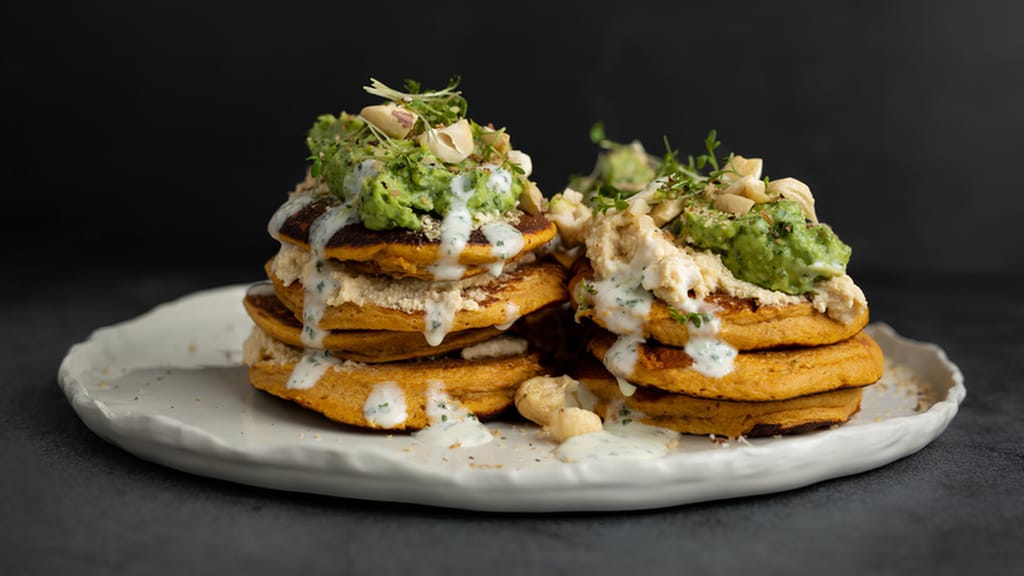
Sweet potato pancakes with avocado mash and cashew cream
Sweet potato pancakes with avocado mash and cashew cream — a savoury, gluten-free version
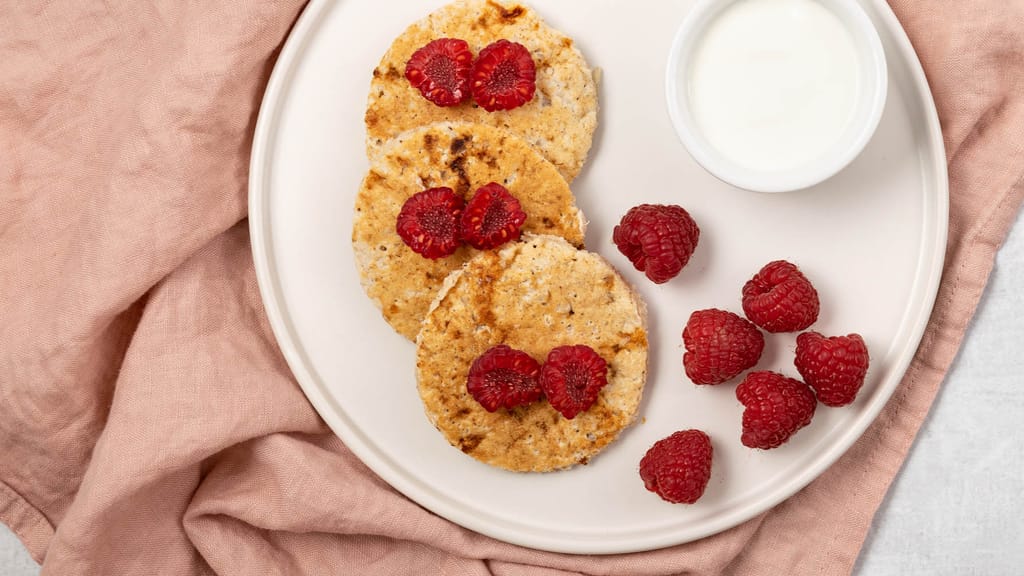
Oat pancakes with raspberries and yogurt
Oat pancakes with raspberries and yoghurt — gluten-free only with certified gluten-free oats
They keep for 2 days in a sealed container in the fridge, and 3 months in the freezer. Since gluten-free starch hardens faster, treat reheating as part of the recipe, not as an emergency fix.
Freezing: let them cool completely, layer with a sheet of baking paper between each pancake, and freeze flat. Otherwise they'll stick together and you won't be able to separate them.
Reheating from the fridge: dry pan over medium heat, 1–2 minutes per side. A microwave will soften them but turns them rubbery.
Reheating from frozen: straight into the toaster from frozen (only if it's a dedicated gluten-free toaster), otherwise 5 minutes in the oven at 160°C. Don't thaw them first, or they'll go soggy.
Gluten-free pancakes make sense as a recipe choice, not a health move — without a diagnosis, cutting gluten won't give you any benefit. If you don't have coeliac disease, a wheat allergy, or doctor-confirmed non-coeliac gluten sensitivity, make them because you fancy the taste of buckwheat or chickpea flour, or because you're cooking for someone who can't eat gluten. If you suspect you have trouble with gluten, see a doctor first — before you cut it out, otherwise you'll skew any test results.
Yes, you can make gluten-free pancakes without eggs, but you need to replace the binding power the eggs were providing. For each egg, use 1 tablespoon of ground flaxseed mixed with 3 tablespoons of water and left to swell for 10 minutes, or 60 g of thick plant-based yoghurt plus an extra half gram of xanthan gum. Without eggs the batter is more delicate, so keep the pancakes small (under 8 cm) and flip them more gently.
Don't make the finished batter the night before — but you can absolutely measure out the dry flour mix. Yeasted batter left overnight will over-ferment and collapse, and with the baking-powder version, the leavening will fizzle out before morning and won't lift anything. In the evening, weigh out your dry ingredients into a bowl (flours, starch, xanthan gum, leavening, sugar, salt), and in the morning just add the milk and eggs — the batter itself only needs 20–30 minutes to rest.
If you're cooking for someone with coeliac disease, watch the kitchen as well as the flour — even the best gluten-free flour can be compromised by cross-contamination. The most common culprits at home are a shared toaster, wooden spoons and cutting boards with grooves, a sieve previously used with wheat flour, and butter or jam that someone's dipped a bread knife into. Fry gluten-free pancakes in a clean pan and use freshly opened or dedicated jars of spreads.
Gluten-free pancake batter is noticeably thicker and leavened, while crêpe batter is thin and has no leavening at all. Crêpe batter is roughly 1 part flour to 2 parts liquid and doesn't rise — but the gluten-free version needs more eggs or xanthan gum, because a thin crêpe without gluten tears when you flip it. Pancake batter, on the other hand, needs to be as thick as double cream so it holds its round shape in the pan.
One recipe worth heating the oven for, one tip, and one deal from the shop. Nothing else.