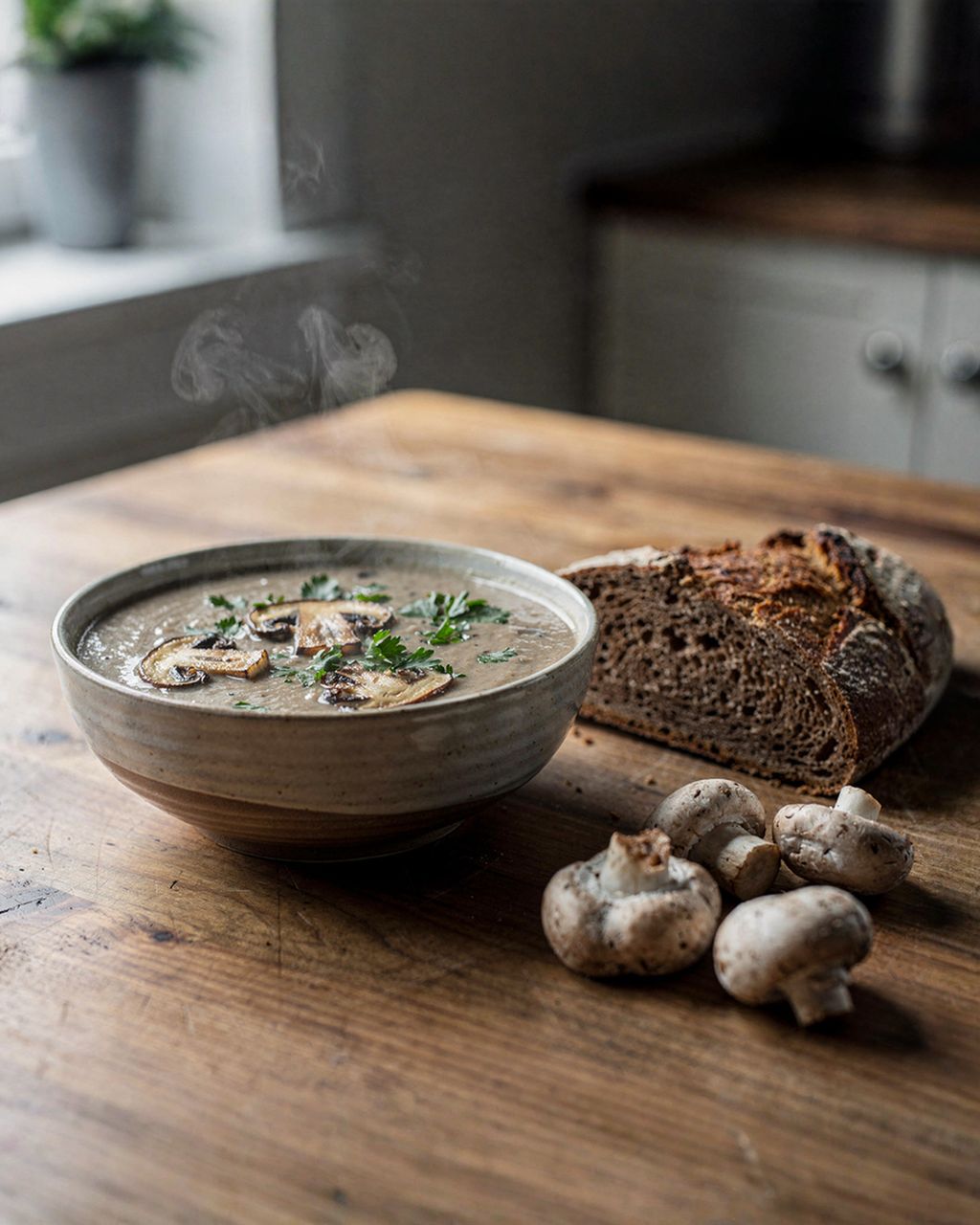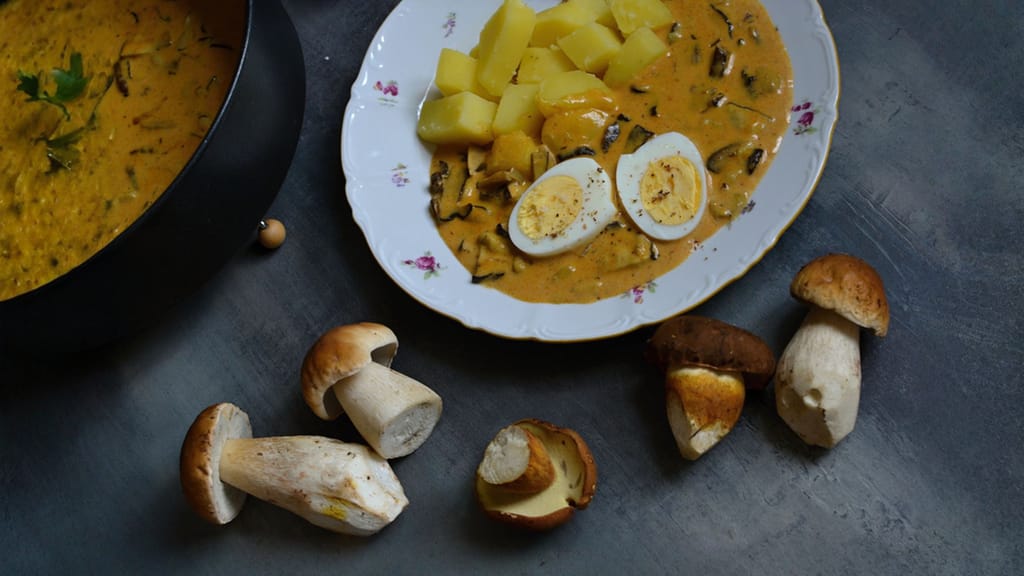
Mushroom sauce with cream
What to Cook with Mushrooms: Fresh, Wild, Frozen, Dried and Pickled Mushrooms, and Button Mushrooms
Updated Nov 18, 2026
What can you cook with mushrooms? With fresh wild mushrooms, make smaženice (Czech mushrooms fried with egg), mushroom sauce, kulajda (Czech creamy mushroom and dill soup) or breaded cutlets. With dried mushrooms, make kuba (Czech baked barley with dried mushrooms) and soup. Frozen mushrooms suit goulash and risotto, pickled mushrooms make a quick salad, and button mushrooms go into anything from risotto to oven-baked stuffed caps. What matters most is the type and the form: a firm porcini takes almost anything, chanterelles want a frying pan, and dried porcini are concentrated flavor for broth. Below you'll find which mushrooms to use for what, how to handle them fresh, frozen, dried and pickled, and what decides how each dish turns out. And at the end, the most important part: how to handle wild mushrooms safely.
For the frying pan and smaženice, porcini, chanterelles and oyster mushrooms work best; for sauces and soups, porcini and button mushrooms; for drying, porcini; for cutlets, oyster mushrooms, large button mushrooms and parasol mushrooms. In detail:
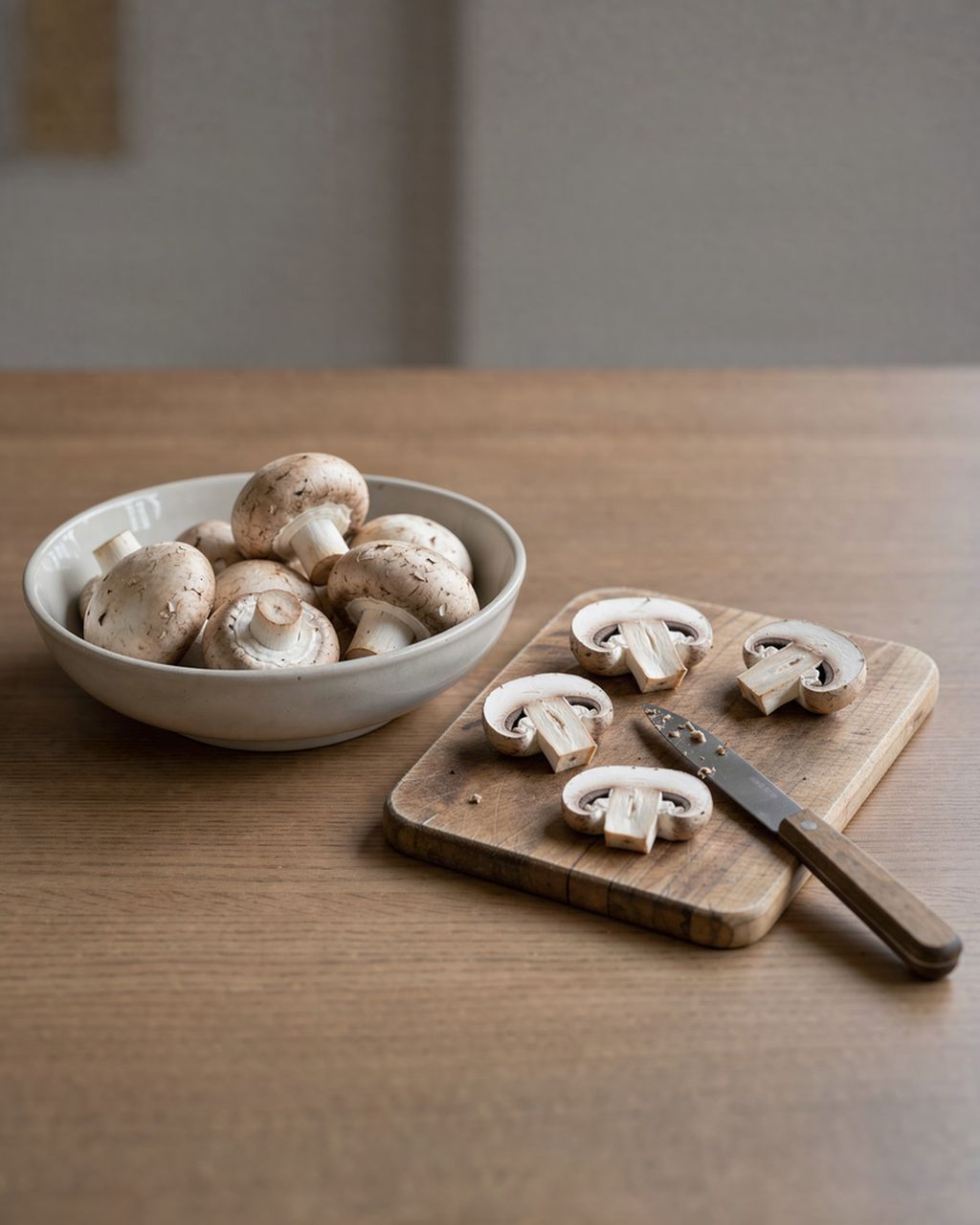
Button mushrooms – the year-round standby. Mild flavor, lots of water, and they cook through quickly. White ones are the most delicate; brown (chestnut) ones have firmer flesh and a stronger flavor. They suit sauces, risotto, the frying pan and the oven.
Oyster mushrooms – meaty and fibrous, they turn beautifully golden and crisp in the pan. Ideal for cutlets, "pulled meat," wraps and toasts. They stay firm in broth.
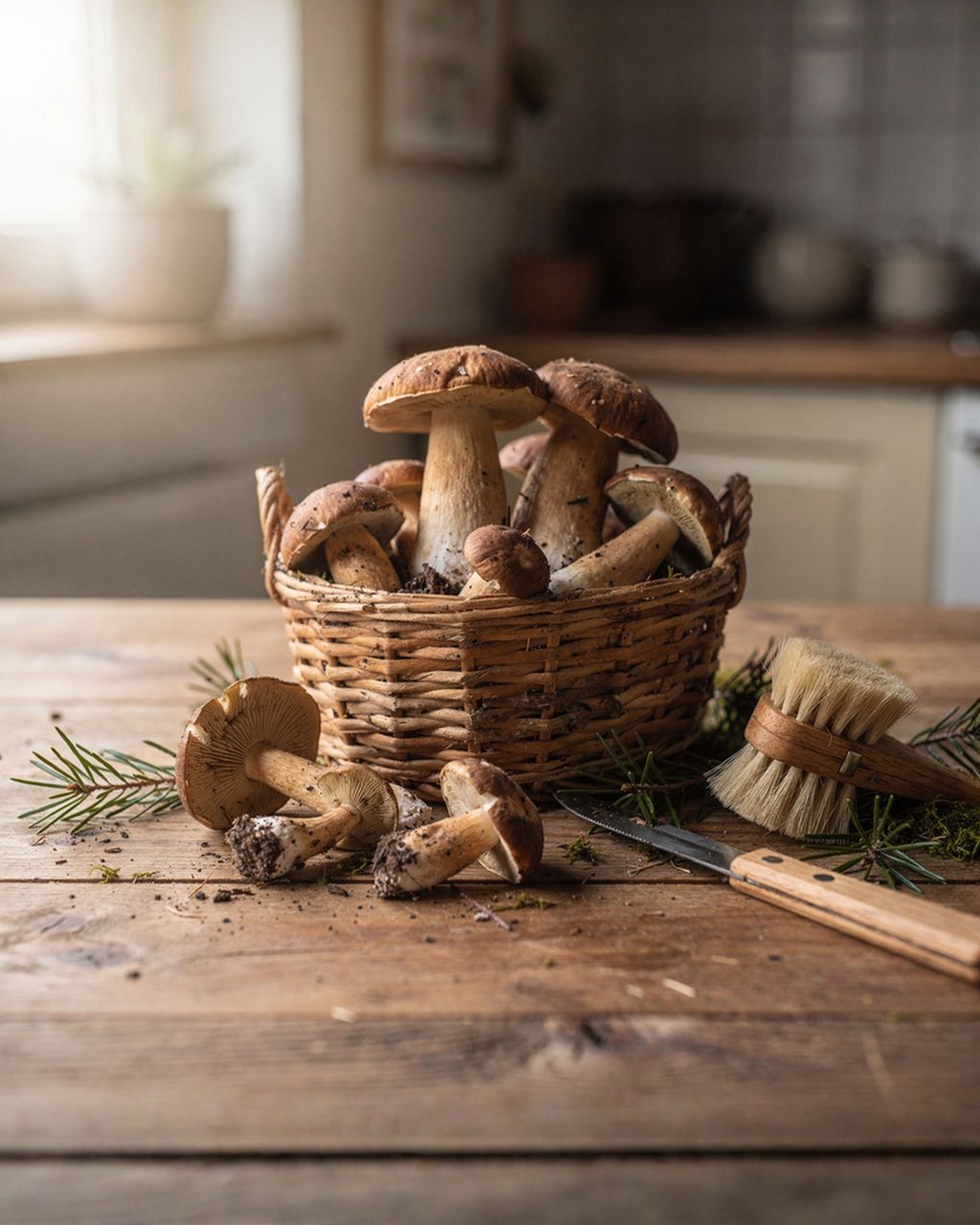
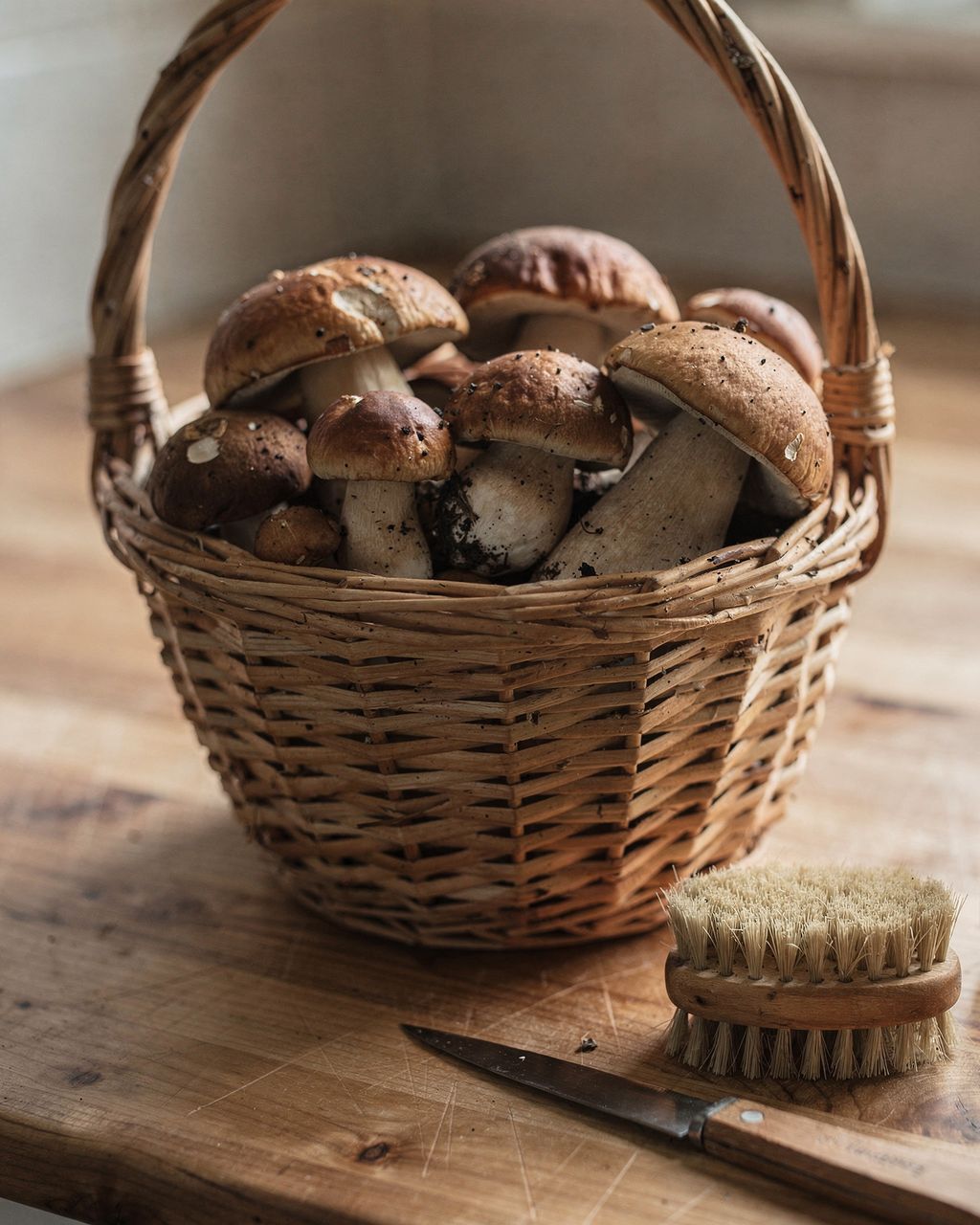
Porcini – firm flesh, a nutty aroma, and the best of all mushrooms for drying. Young ones suit smaženice and cutlets; older, softer ones suit soup and sauce.
Babky – a folk name that, depending on the region, mostly means kozáky (birch boletes) and křemenáče (aspen boletes). They taste excellent in the pan and in goulash; they just darken as they cook, which is normal and doesn't hurt the flavor.
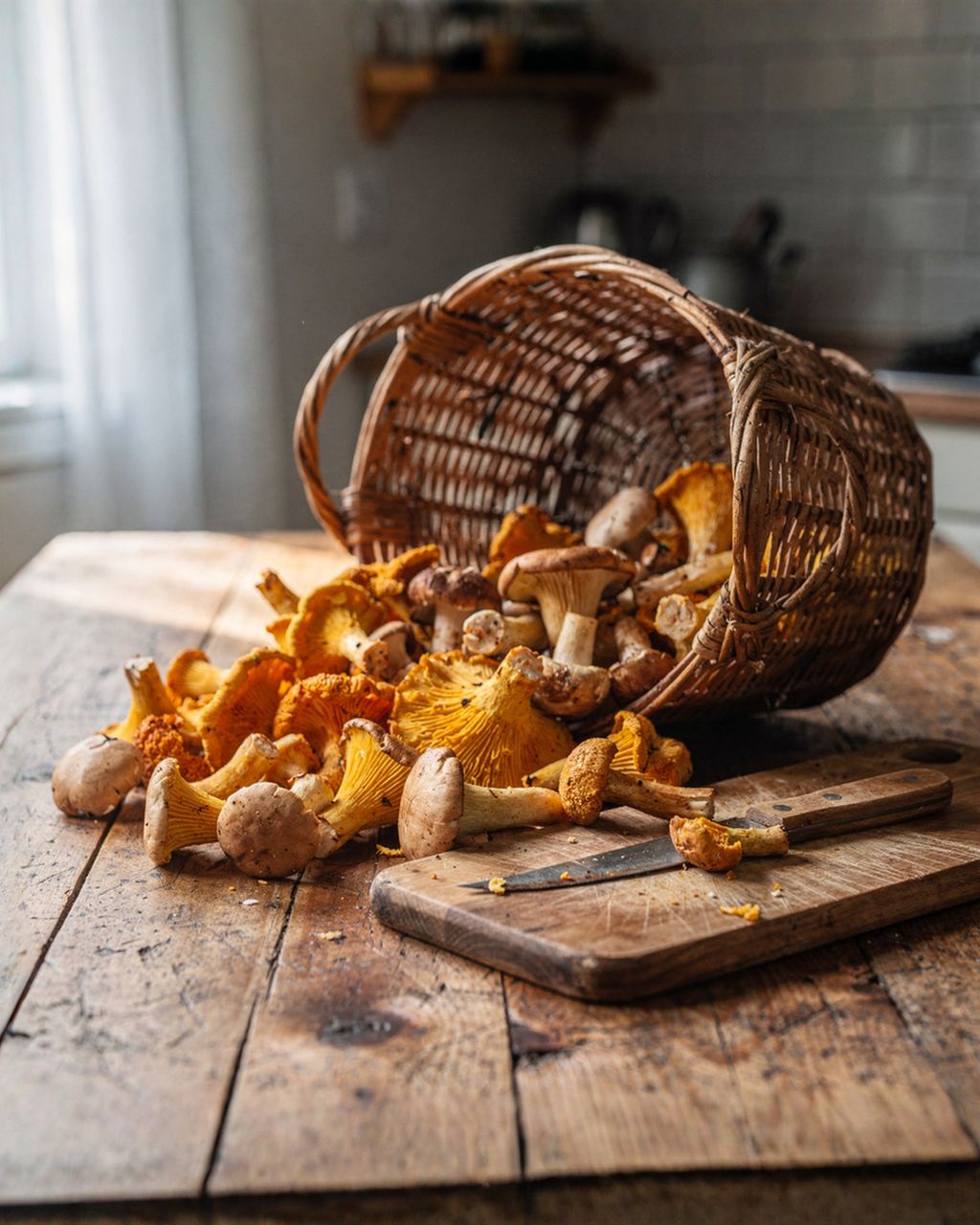
Chanterelles – firm, with a fruity aroma and a slightly peppery taste, and they hold their shape. They belong in butter with onion, in a creamy sauce and with eggs. They don't dry well and turn tough; it's better to sauté and freeze them.
If you come home from the forest with a mixed haul, you don't need to sort it: in smaženice, goulash and soup the varieties complement one another. For a reliable flavor from the shop, reach for a mix of fresh mushrooms – a combination of button mushrooms, oyster mushrooms and other cultivated types gives a dish more layers than a single kind.
Caraway, marjoram, parsley, dill, thyme and garlic go best with mushrooms – plus a fat to carry the flavor: butter, lard or cream. Caraway and marjoram belong in kuba, goulash and soup; dill in kulajda and creamy sauces; parsley on smaženice and buttered mushrooms; thyme and rosemary with oven-roasted button and oyster mushrooms. A sour note at the end – a splash of vinegar, lemon or white wine – wakes up the mushroom flavor and balances the richness of cream.
Fresh mushrooms give texture, dried ones flavor, and frozen ones convenience. Fresh are best where you really chew the mushroom – smaženice, cutlets, buttered mushrooms. Frozen work almost anywhere mushrooms are stewed or simmered: goulash, sauce, risotto, soup. Dried ones are a concentrate – a small amount is enough for a whole pot of kuba or soup.
How to swap dried mushrooms for fresh: fresh mushrooms are mostly water, so count roughly 10 g dried mushrooms in place of 100 g fresh (a ratio of about 1:10). For soup or kuba you can even use less, since dried mushrooms are more intense. It works the other way too: if a recipe calls for 20 g dried mushrooms and you only have fresh, take about 200 g and expect a milder flavor.
We send seasonal cooking and baking plans and recipes made from everyday ingredients. Unsubscribe in one click.
Pan-fried mushrooms turn out well when you put them in a very hot pan, in a single layer, and salt them only at the end. Salt draws water out of mushrooms, and if the pan is crowded, they simmer in their own juices instead of browning and turn rubbery.
A few rules that apply to every pan-fried mushroom dish:
Heat the pan over medium-high to high heat before the mushrooms go in. Cast iron or a thick base holds the temperature best.
Don't overcrowd. Fry a large amount in two batches, or let the water cook off first and only then add the fat.
Choose the fat for the flavor you want: lard or oil for high heat; add butter only near the end so it doesn't burn.
Salt, pepper and herbs last. Parsley and caraway are classics; thyme and garlic work with oyster and button mushrooms.
Why this works: mushrooms are mostly water, and their flesh behaves like a sponge. In a lukewarm pan it soaks up fat and slowly releases juice, in which it stews. In a hot pan the water evaporates quickly, the surface browns, and a roasted, nutty flavor develops – the same reaction that makes the crust on roast meat. You can even hear it: mushrooms should sizzle, not bubble.
Smaženice is the simplest dish from fresh wild mushrooms: mushrooms fried with onion and finished with eggs. What matters is frying the mushrooms over high heat until the juice evaporates and they start to turn golden, then stirring the eggs in only a few times so they stay soft.
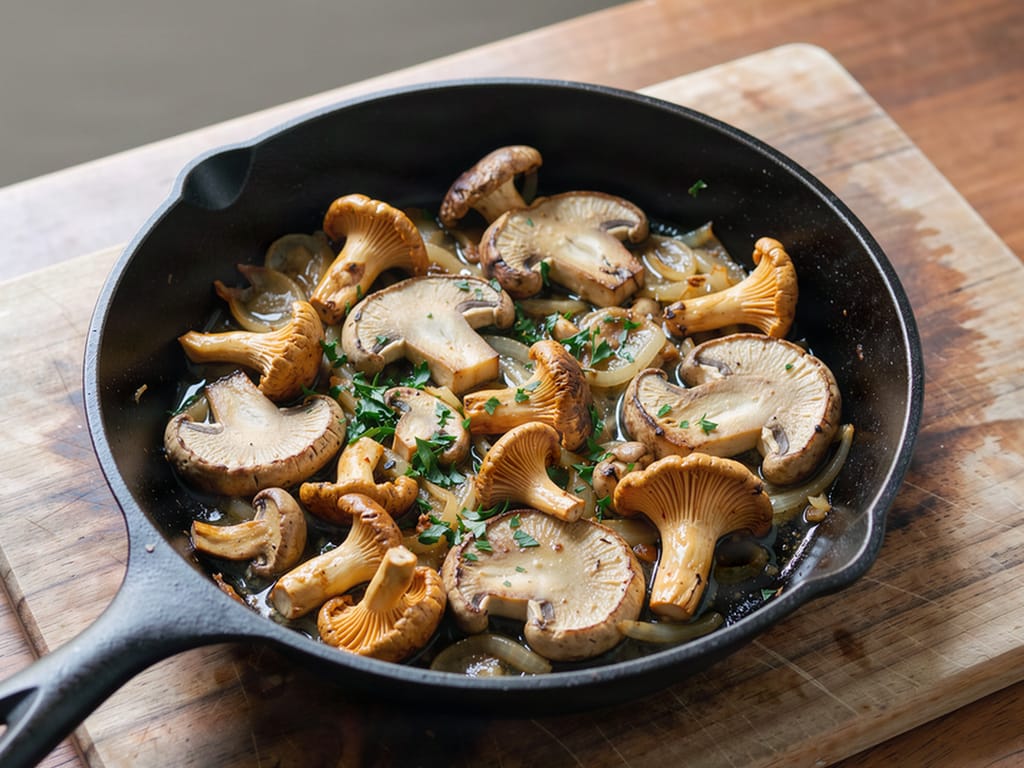
Buttered mushrooms are a quick side dish or a dinner on their own – on toast, with eggs or alongside roast meat. The key is the order: first brown the chanterelles, porcini or oyster mushrooms in very hot oil until golden, then add the butter with onion, garlic and parsley at the end so it doesn't burn.
Oyster mushrooms are the most rewarding mushroom for a crispy meatless dish. Tear them into strips along the fibers and choose where to brown them:
In the pan: fry them in oil for 8–10 minutes until golden, and season with smoked paprika, soy sauce or garlic only at the end.
In the oven: spread the torn strips in a single layer on a baking sheet lined with parchment paper, drizzle with oil, toss with smoked paprika and thyme, and bake at 200–220°C (400–425°F) for 15–20 minutes, turning once halfway. They're done when the edges crisp up and darken. Salt only after baking.
Cooked oyster mushrooms belong in bread – try the "hlívák" sandwich with BBQ sauce, avocado and wasabi or, for breakfast, avocado toast with roasted oyster mushrooms.
Mushroom sauce and mushroom risotto rest on the same foundation: mushrooms browned before any liquid goes in. Browning adds a depth of flavor that boiling alone can't.
Mushroom sauce is a classic made with fresh, frozen or dried mushrooms. What decides the result is browning the mushrooms properly in butter with onion before the broth and cream go in, plus a splash of lemon or vinegar at the end to balance the richness; serve it with steamed bread dumplings, pasta or potatoes.
Mushrooms also make a good base for a sauce to go with meat. Pork leg with mushrooms shows this nicely, with the mushrooms stewed alongside the meat and their juices thickening the sauce, as do meatballs with cheese and mushroom ragù.
Mushroom sauce with cream
Creamy mushroom sauce – step by step
Mushroom risotto is an ideal dish for frozen or dried mushrooms, because the mushrooms get stewed in it anyway. What matters is browning the mushrooms separately until golden and stirring them in near the end, and, with dried mushrooms, using the strained soaking water as part of the broth.
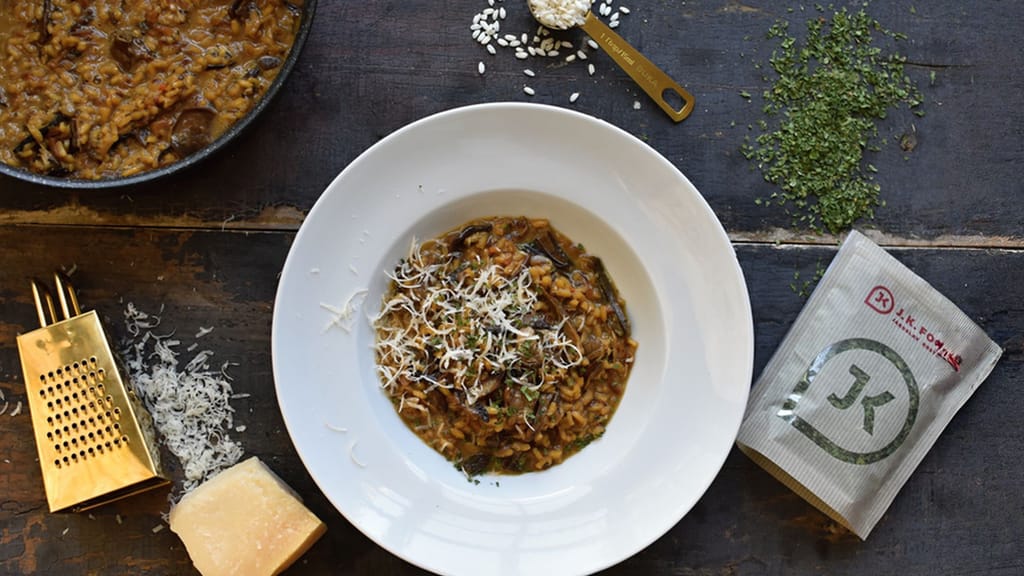
Italian mushroom risotto with kostera seasoning
Italian mushroom risotto – a recipe for creamy risotto with mushrooms
Pasta with mushrooms is the fastest mushroom dinner. The principle is simple: brown the mushrooms separately until golden, and bring the sauce together with a ladle of pasta water and butter – it works with fresh button mushrooms, a frozen mix or soaked dried porcini.
Mushroom soup is the best way to use up a mixed haul or dried mushrooms, and kulajda is its Czech festive version, made with potatoes, cream, dill and an egg. Both work with fresh, frozen or dried mushrooms.
A basic mushroom soup is built on mushrooms sautéed with root vegetables and seasoned with caraway, marjoram and garlic. For a creamier version, see the recipe for smooth, fragrant mushroom soup.
Kulajda is made with potatoes, cream, dill, a splash of vinegar and an egg in the bowl – it's the acidity and fresh dill that set it apart from an ordinary mushroom soup.
Why mushroom soup sometimes tastes flat, how to work with the broth and which mistakes to avoid, we cover in detail in mushroom soup: recipes, technique and mistakes.
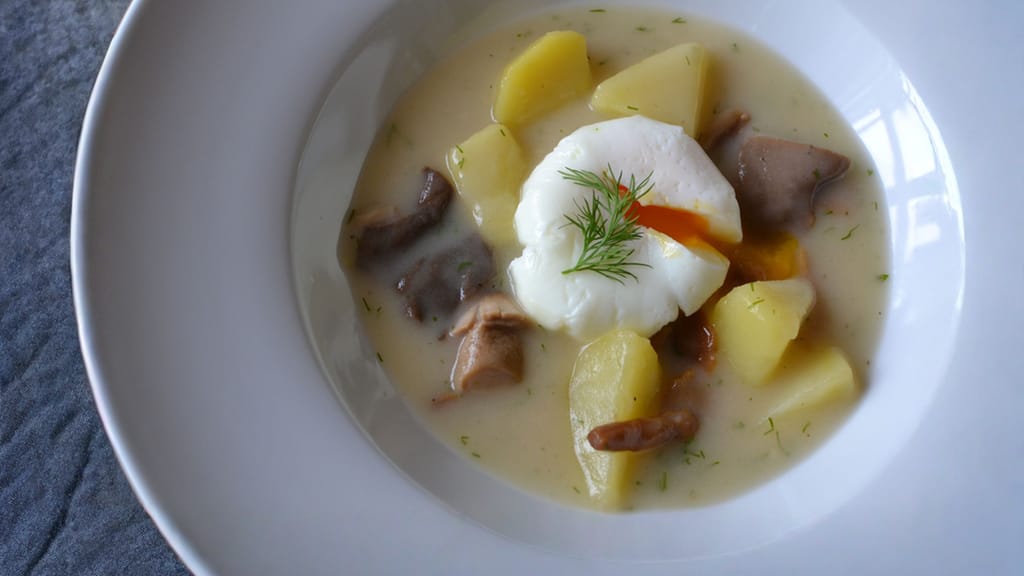
Kulajda with mushrooms, dill and poached egg
Kulajda – a traditional soup with mushrooms, cream and dill
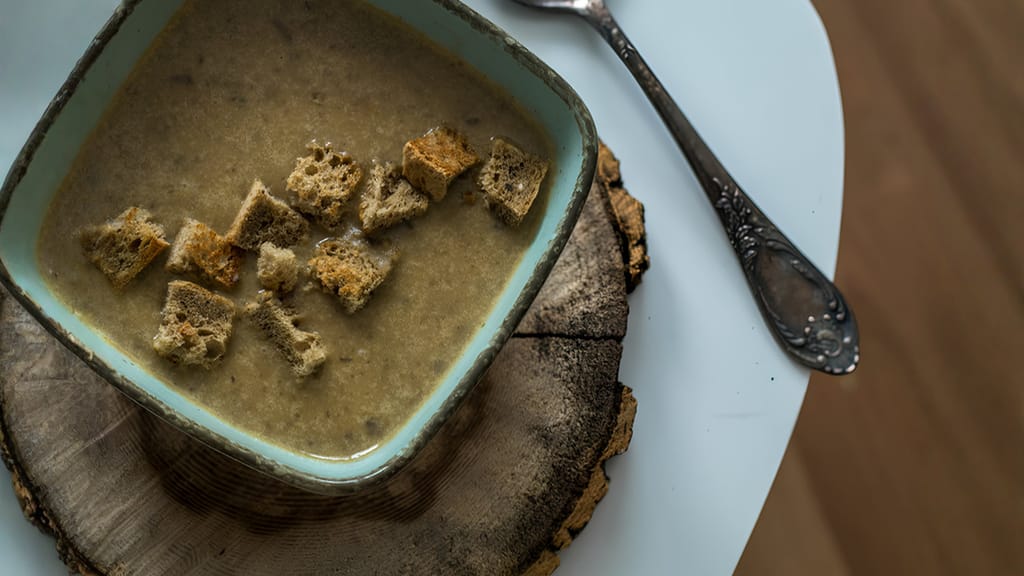
Mushroom soup
Mushroom soup from dried porcini
Mushroom goulash and mushroom cutlets are the two best meatless main courses you can make from mushrooms. Goulash can use softer, older mushrooms and frozen stock, while cutlets need firm, large pieces.
Mushroom goulash is made just like a meat one, only it's ready much faster. The flavor is built on onion slowly fried until golden, and the paprika is deglazed right away with a little water so it doesn't turn bitter – just as in zucchini goulash, which works on the same principle.
Oyster mushrooms, large button mushroom caps and parasol mushrooms suit cutlets – parasols only if you are absolutely certain you can identify them. The key is whole caps or large clusters of oyster mushrooms gently pounded flat, and the classic three-step breading; if you'd rather not fry, you can bake them in the oven much like baked crispy cutlets in cornmeal breadcrumbs.
If you want mushrooms in a burger too, try homemade mushroom burgers.
Kuba is a traditional Christmas Eve dish of barley and dried mushrooms baked with onion, garlic and marjoram. It's the best reason to keep dried mushrooms at home: the strained mushroom soaking water goes into the barley too, and it bakes until a crispy crust forms on top.
If you like barley, also try kroupoto – barley cooked like a risotto, which goes very well with sautéed mushrooms.
From frozen mushrooms you can cook goulash, sauce, risotto, soup and smaženice, and the main rule is: don't thaw them; put them in the pot or pan still frozen. Thawed mushrooms release water, turn soft and go rubbery; when you drop them straight into hot fat or boiling soup, the water evaporates and the texture holds.
In the pan: put the frozen mushrooms into a hot pan with no fat or just a little, let the water cook off (5–8 minutes), and only then add the onion, butter or eggs. Smaženice from frozen mushrooms hardly differs from the fresh version.
In soup and goulash: add them frozen to the simmering base and cook for as long as you would fresh ones, plus a few minutes for thawing.
In sauce and risotto: first sauté them separately from frozen until the juice evaporates and they start to turn golden, then add them.
Frozen mushroom mixes are worth using mainly in dishes where the mushrooms float in a sauce or broth: kulajda, mushroom soup and goulash taste almost the same as with fresh ones. Frozen mushrooms aren't suited to cutlets, because after thawing they don't hold their shape.
If you froze the mushrooms blanched or already sautéed, they're even quicker: you only need to heat them through. How to freeze mushrooms so they cook well afterward is covered in the article how to freeze mushrooms.
From dried mushrooms you can make kuba, mushroom soup, sauce, risotto and goulash, and you almost always soak them first. Dried mushrooms are concentrated flavor, so a handful is enough for a whole pot of soup (for the conversion to fresh mushrooms, see the section "Fresh, frozen or dried mushrooms?" above).
How to soak dried mushrooms:
Rinse the mushrooms briefly in cold water to wash off dust.
Cover them with warm (not boiling) water so they're submerged, and leave them to soak for 20–30 minutes. Larger pieces of porcini can soak longer.
Squeeze them out and chop. Don't pour away the soaking water – it's full of flavor. Strain it through a fine sieve or cheesecloth, because there is often sand at the bottom.
Add both the mushrooms and the water to the dish. For soup and goulash you can add dried mushrooms without soaking, just cook them 10–15 minutes longer.
For sauce and risotto, 15–20 g of dried mushrooms is enough for 4 servings; for kuba, 30–40 g. If you don't have your own, reach for a mix of dried mushrooms, which works anywhere mushrooms are cooked. And how to dry your own forest mushrooms so they don't go moldy and last until spring is in the article how to dry mushrooms at home.
Pickled mushrooms work best where their acidity is an advantage: in cold dishes, with cheese and meats, and as a contrast to rich food. Don't cook them for long – the sour brine and the texture are lost with heat.
Mushroom salad: drain the pickled mushrooms, chop them, and mix with onion, pickled cucumber, a little oil and chives. Ready in 5 minutes, great with bread or as a side to roast meat.
On open-faced sandwiches and toasts: drained mushrooms go on a quark (tvaroh, a Czech fresh curd cheese) spread or with ham; the acidity balances the rich cheese.
On a platter: with sausage, smoked meats and cheeses, just like utopenci (Czech pickled sausages) or pickles.
Added to warm dishes at the end: a few chopped mushrooms in potato salad, in a creamy sauce just before serving, or in goulash in place of a splash of vinegar.
You can make pickled mushrooms yourself with the recipe for mushrooms pickled in vinegar – it's one of the best ways to preserve small, firm forest mushrooms.
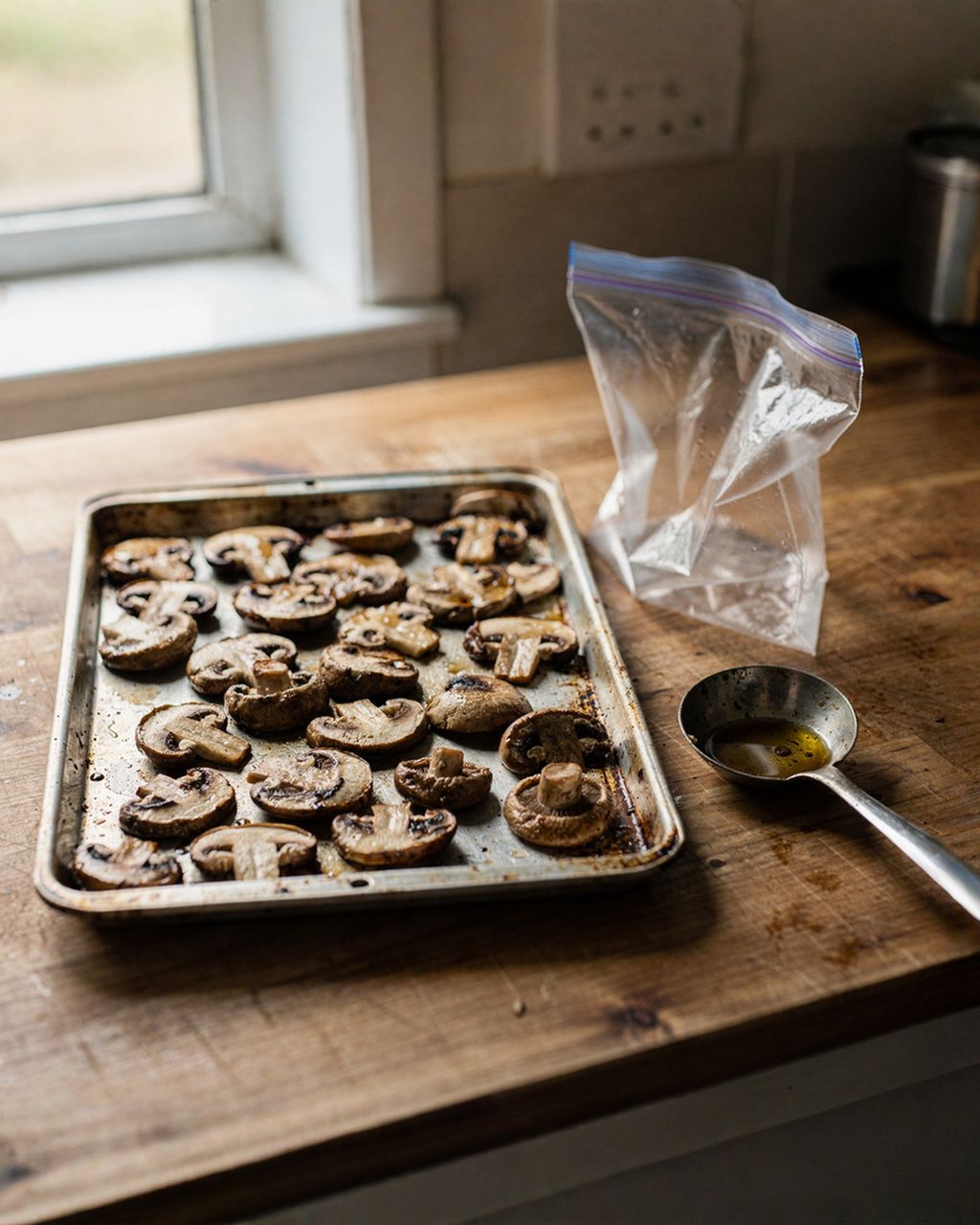
Oven-baked button mushrooms are the easiest button mushroom dish: whole or halved, drizzled with oil, salted and baked at 200–220°C (400–425°F) for about 15–20 minutes, until golden and releasing their juice. Season them with garlic, thyme or rosemary and serve as a side to meat, in a salad, or on their own with a baguette. How to bake button mushrooms so they aren't watery, and how long they keep in the fridge, is covered in the article button mushrooms: storage and oven baking.
More button mushroom dishes:
Stuffed button mushrooms: large caps filled with chopped stems, cheese and herbs and baked in the oven. A more festive version is button mushrooms stuffed with cheese in a bacon wrap.
Button mushrooms with meat on the grill or in the oven: grilled chicken hearts with button mushrooms or, for Sunday, slow-roasted leg of lamb with button mushrooms and vegetables.
Mushroom stuffing: mix chopped sautéed button mushrooms with soaked bread roll, egg and parsley, fill it under the skin or into the cavity of poultry, and roast it together with the meat. For inspiration, see the recipe for spring chicken with mushroom stuffing.
Quick dinner: fish with bulgur, button mushrooms and pumpkin seeds or sweet potato mash with asparagus and mushrooms.
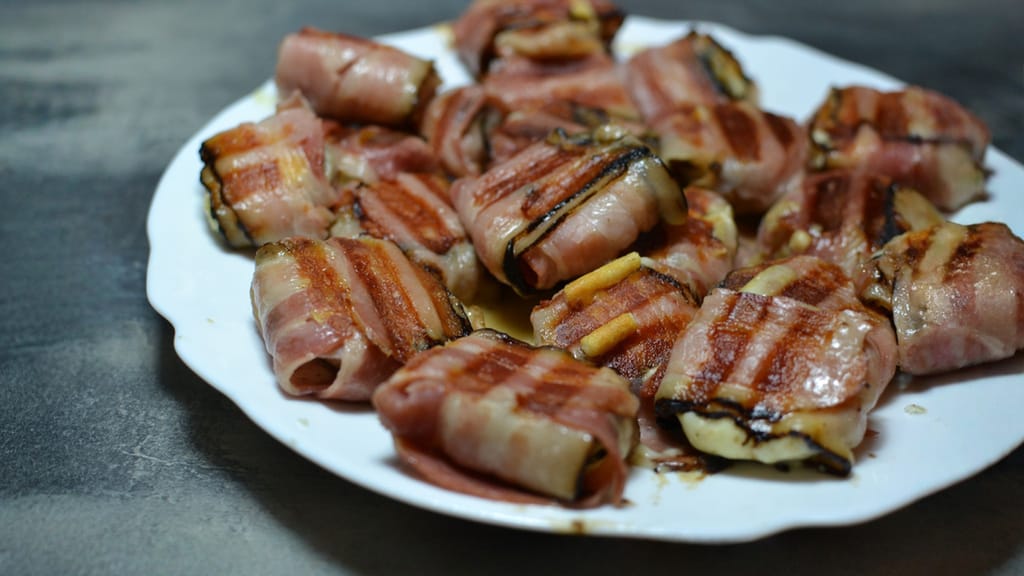
Blue cheese-stuffed mushrooms wrapped in bacon
Button mushrooms stuffed with blue cheese in a bacon wrap, made in a contact grill
Cook only mushrooms you can identify with absolute certainty, always cook wild mushrooms thoroughly, and chill finished mushroom dishes quickly, put them in the fridge and eat them by the next day at the latest.
Only mushrooms you're sure of. Germany's Federal Institute for Risk Assessment (BfR) advises collecting and preparing only mushrooms you can reliably identify as edible, and not relying solely on identification through a phone app. If you're not sure, leave the mushroom in the forest or show it to a mushroom advice center.
Wild mushrooms always cooked. According to the BfR, raw mushrooms in salads often cause intolerance problems, which is why it recommends cooking every mushroom dish for at least 15 minutes. The Austrian health portal gesundheit.gv.at points out that many edible mushrooms are poisonous raw.
Chill cooked food quickly. According to gesundheit.gv.at, mushroom dishes should be cooled quickly and stored in the fridge at 2–4°C (36–39°F), and reheated to at least 70°C (158°F).
Eat by the next day. The consumer advice center Verbraucherzentrale Südtirol advises cooling mushroom leftovers quickly, putting them in the fridge and eating them the very next day; when reheating, heat them through to at least 70°C (158°F), ideally with a brief boil.
Where does the old ban on reheating mushrooms come from? According to Verbraucherzentrale Südtirol, it most likely dates from a time when households had no fridge, and today nothing stands in the way of reheating – provided the food cooled quickly, sat in the fridge and you eat it the next day. So the rule is easy to remember: chill quickly, refrigerate, eat soon and heat through thoroughly. Leave a pot that stayed on the stove overnight alone.
What else to watch for in the kitchen:
Process mushrooms fresh. Don't leave a basket from the forest until the next day in a warm place or in a plastic bag; clean and process it as soon as possible. How to clean mushrooms quickly by type is in the article how to clean mushrooms.
Throw out rotten, mushy and wormy pieces. Only firm, sound mushrooms belong in the dish.
Divide a big haul. What you won't eat right away, dry, freeze or pickle straight away. How to process a full basket in one evening is described in a surplus of forest mushrooms.
Raw button mushrooms are commonly eaten in salads, but it is safer to cook them first. Raw, they contain a small amount of agaritine, and Germany's BfR (Federal Institute for Risk Assessment) recommends cooking every mushroom dish for at least 15 minutes – a quick sauté isn't enough. If you want them in a salad, cook them for at least 15 minutes and let them cool.
Kozáky turn black because their flesh oxidizes (browns enzymatically) once cut and heated. It's harmless and doesn't affect the flavor. In smaženice, goulash or soup the darker color doesn't matter; for a pale kulajda or a creamy sauce, choose porcini, chanterelles or button mushrooms instead.
Most mushrooms only need dry cleaning with a knife and a brush, or a brief rinse right before cooking. Mushrooms that have soaked up water steam in the pan instead of browning. How to clean porcini, chanterelles, kozáky and button mushrooms by type is covered in our article How to Clean Mushrooms.
Process fresh mushrooms as soon as possible, within two days at most. Verbraucherzentrale Südtirol advises storing fresh mushrooms for no more than two days in the fridge's vegetable drawer. Don't leave wild mushrooms in a plastic bag or in a warm place.
Pickled mushrooms aren't suitable for kulajda, because the sour brine and the texture are lost in cooking. Frozen mushrooms can go straight into it still frozen, and they taste almost the same as fresh there.
One recipe worth heating the oven for, one tip, and one deal from the shop. Nothing else.