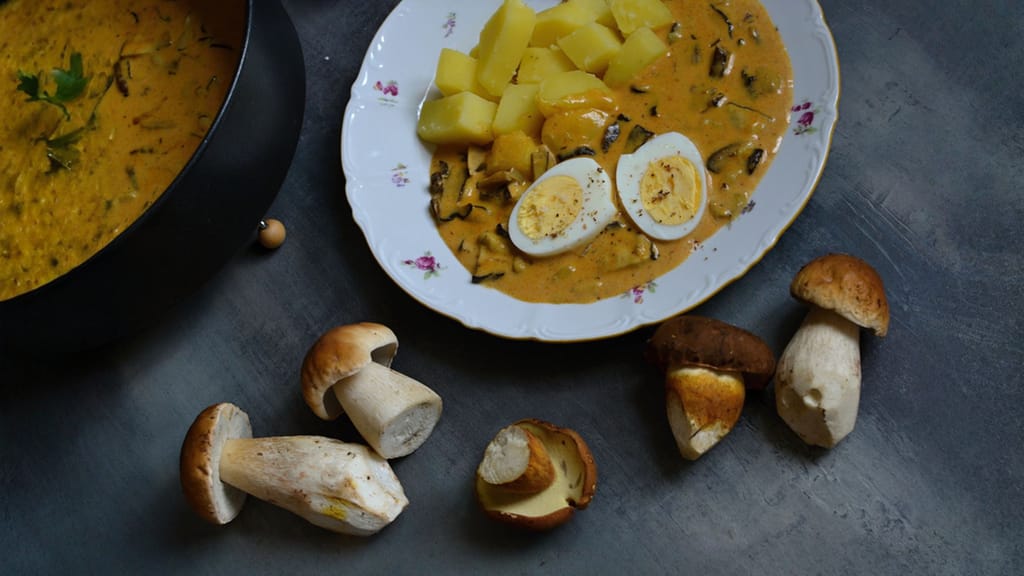
Mushroom sauce - an easy and wonderful autumn treat
Updated Aug 28, 2026
There are two ways to freeze mushrooms, and neither of them is "toss them raw in a bag": either blanch them for 3–5 minutes in salted water, or sauté them dry in a pan until all the liquid's gone. Then let them cool, spread them on a tray, flash-freeze until firm, and pack into portioned bags. Treated this way, they'll keep at −18°C (0°F) for 6 to 12 months, and you can add them straight to the pot frozen — no need to thaw first. Raw mushrooms barely last two months in the freezer, and once thawed, all that's left is watery rubber.
Raw mushrooms keep breaking down in the freezer — just more slowly. Two things are to blame, and cold alone doesn't stop either of them fast enough.
Enzymes keep working even below freezing. Mushrooms contain enzymes (mainly polyphenol oxidase) that break down their tissue and cause browning. Freezing doesn't switch them off instantly: a big pot of mushrooms in a home freezer can take several hours to freeze solid, and the enzymes keep working the whole time. A brief boil or a quick sauté kills them off in a matter of minutes — that's why blanching is standard for vegetables too, and why food safety guidance recommends cooking mushrooms before freezing.
Mushrooms are mostly water. Around 90% of their weight is water locked inside the cells. When it freezes, ice crystals rupture the cell walls — and once thawed, the water simply leaks out. What's left is a soft, rubbery scrap with no structure left. Studies on porcini show that freezing strips away most of their firmness — even after blanching. Precooking or sautéing won't stop that entirely, but it does get rid of the water that would otherwise leak out on thawing, and it stops the enzymes, so the mushrooms don't brown or turn slimy.
Blanching or sautéing mushrooms tackles both problems at once: it deactivates the enzymes and gets rid of the water that would otherwise cause trouble in the freezer. Bonus: sautéed mushrooms take up roughly a third to half of their original volume in the freezer.
Clean mushrooms dry, sort through them, and cut them to the size you'll actually cook with — before freezing, not after.
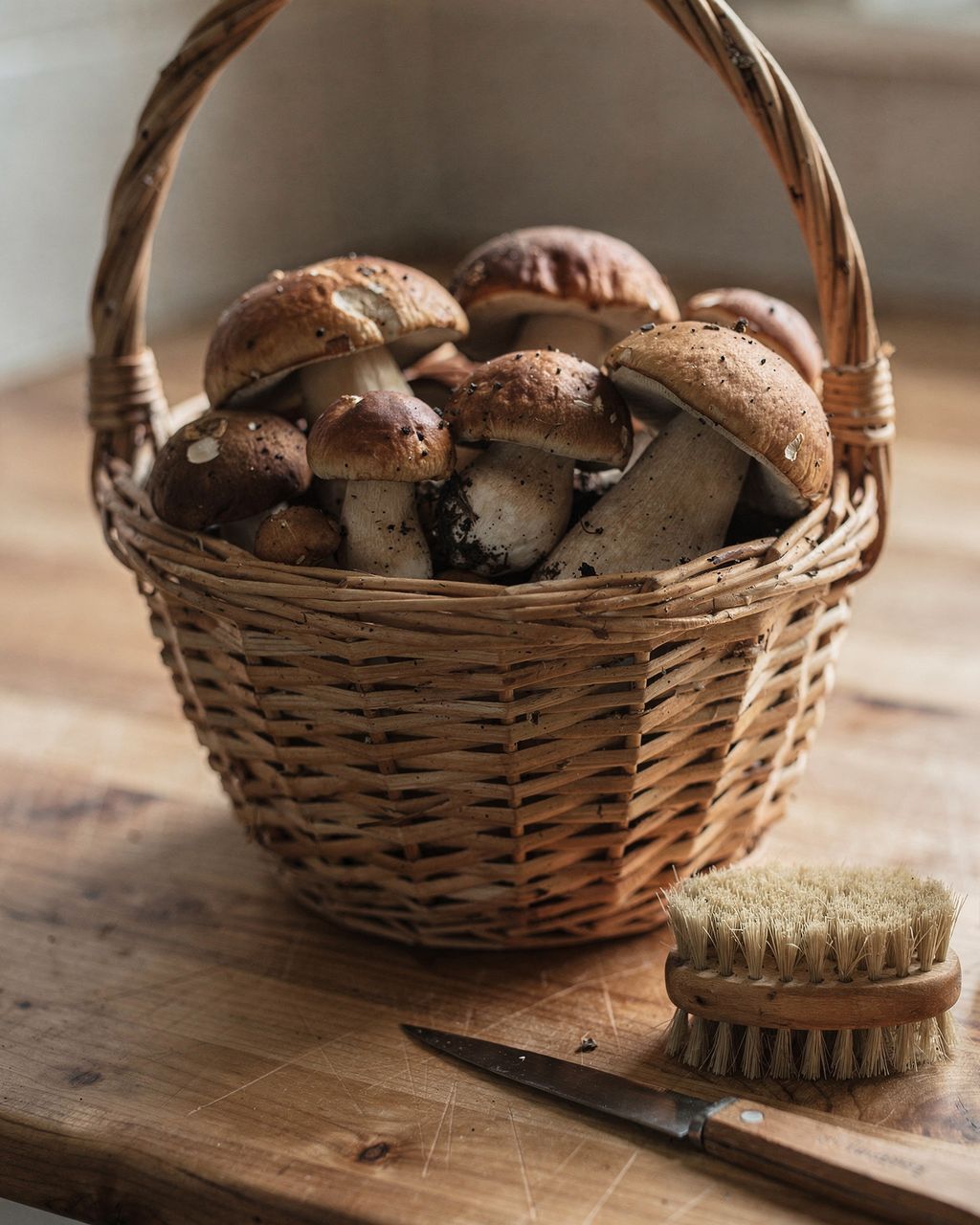
Clean them dry. Trim off any dirt with a knife, and wipe the caps with a damp cloth or a small brush. Mushrooms rinsed under the tap soak up extra water, which you'll then have to cook off in the pan.
Sort ruthlessly. Only young, firm, worm-free pieces belong in the freezer. Freezing won't save anything — a rotten mushroom thaws out just as rotten.
Slice them right away. Slices 5–8mm thick, small porcini quartered. Once frozen into a solid block, you'll only manage to cut it with a cleaver, and you'll waste a lot in the process.
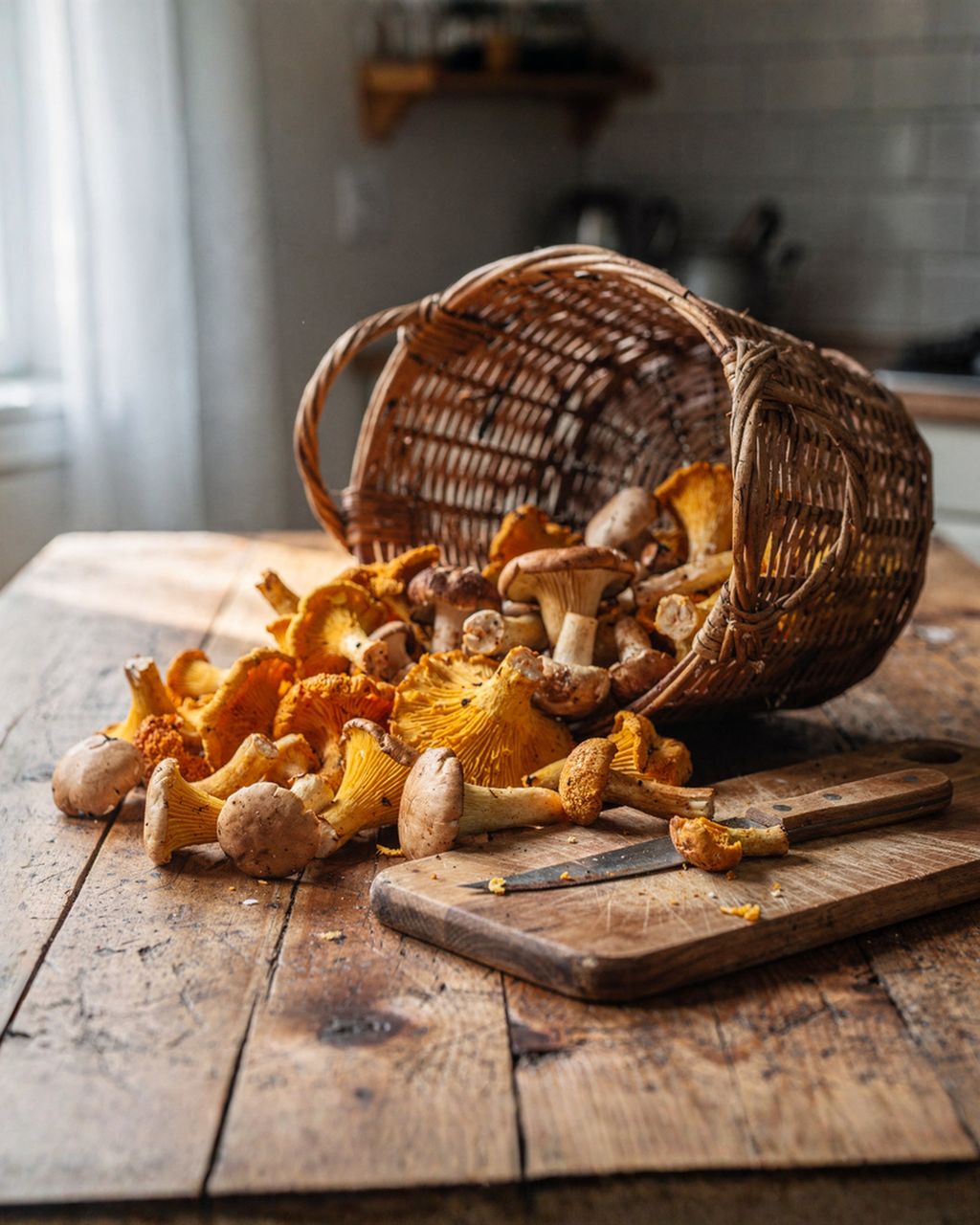
Sort by type. Porcini, chanterelles and button mushrooms all cook for different lengths of time. Mix them together and one type will fall apart in the pot before the other's even cooked through.
Don't throw away the stems. Chop the tougher stems finely and freeze them separately — they're perfect for soup or fillings, where they disappear into the mix anyway.
Blanching mushrooms before freezing means 3–5 minutes in boiling salted water, depending on the size of the pieces, followed immediately by an ice bath. It's the fastest way to get through a full basket in one evening, and it works especially well for porcini, red-capped scaber stalks and chanterelles.
Bring a large pot of salted water to the boil (about a teaspoon per litre). If you want to keep the colour pale, add a tablespoon of lemon juice.
Add the mushrooms in batches, so the water only just stops boiling. An overcrowded pot will steep the mushrooms rather than scald them. If you've got a steamer basket, steam them instead — they absorb less water and hold a lighter colour; the US NCHFP actually recommends steaming.
Cook for 3–5 minutes once the water comes back to the boil — 3 minutes for smaller slices, 5 for thick chunks of porcini.
Lift them straight out with a slotted spoon into a bowl of ice water. Don't skip this step — the mushrooms keep cooking in their own residual heat and will fall apart otherwise.
Drain on a tea towel and pat dry. Any water left on the surface is exactly what glues the mushrooms into one solid block in the bag.
Don't pour away the blanching liquid: strain it and freeze it separately in an ice cube tray. Add it to sauces or risotto later for real mushroom flavour instead of plain water.
Sautéed mushrooms give the best flavour of any freezing method, since you get to caramelise them before they go in. It takes a little longer than blanching, but the result is in a different league entirely — and it saves you a lot of freezer space.
Heat a wide pan dry, with no fat, and spread the mushrooms in a single layer. Don't salt them.
Let them release their water and wait for it to evaporate. The pan needs to stop hissing and start sizzling — that's your sign the water's gone.
Only now add a spoonful of butter or oil and sauté until golden, 3–5 minutes. You want golden edges, not pale slices.
Let them cool completely, spread out in a single layer on a plate. Warm mushrooms in a bag create steam, which turns to frost — and that's what causes freezer burn.
Why no salt? Salt draws even more water out of the mushrooms, and in the freezer it also slightly lowers the freezing point, so the mass never gets properly firm. Salt, garlic and pepper all belong in the finished dish, not before. Skip the onion too — its flavour intensifies in the freezer and drowns out the mushroom flavour.
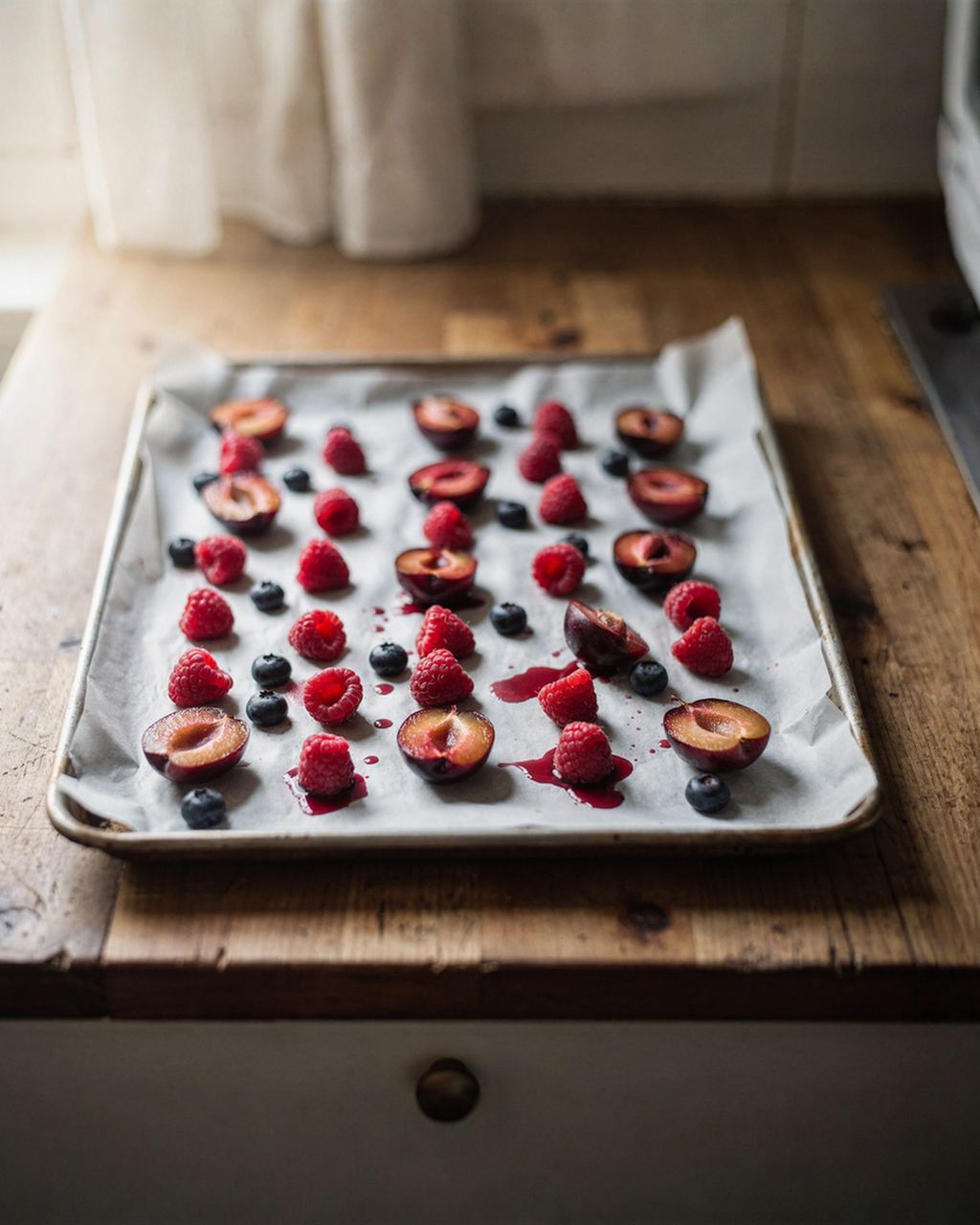
Spread the cooled mushrooms in a single layer on a baking tray lined with parchment, freeze for 1–2 hours, and only then transfer them to bags. They'll freeze individually, so next time you can scoop out exactly as much as you need instead of hacking a chunk off one solid block.
It's the same principle used for freezing berries: as long as the pieces aren't touching, they've got nothing to stick to. Packing them properly finishes the job:
Portion by meal. 150–200g is enough for a sauce or risotto for four. There's no point thawing a big bag just to get a handful of mushrooms.
Press out the air. Water evaporates from the surface of the mushrooms into any empty space in the bag — that's exactly what causes freezer burn. Less air means less drying out. A vacuum sealer is ideal, but submerging the bag in a bowl of water to push the air out on its own works surprisingly well and is the cheapest alternative.
Label everything. Type, prep method and date. Five months from now you won't be able to tell sautéed porcini from blanched scaber stalks, or know whether they're still within date.
Store flat. Flat bags freeze faster, get used up faster, and stack more neatly.
Blanched or sautéed mushrooms keep for roughly 6 to 12 months at a steady −18°C (0°F); raw ones last only a few weeks. That heat treatment makes all the difference — skip it and you're racing the clock.
Blanched mushrooms: 8–12 months. No fat to turn rancid in the freezer. According to the US NCHFP, steamed mushrooms hold their quality longer than pan-cooked ones, though they don't give an exact storage time. Czech sources tend to be more cautious, recommending use within 6 months — though they're still perfectly usable up to a year, just gradually losing aroma.
Sautéed mushrooms: a somewhat shorter shelf life than blanched. Best flavour and smallest volume, but the fat slowly oxidises in the freezer.
Raw mushrooms: just a few weeks. And always cook them thoroughly afterwards. Think of this as an emergency option for a night when you're too tired to process them properly — not a storage method.
Finished mushroom dishes: 2–3 months. Goulash, fillings, mushroom sauce mix.
Pay attention to where in the freezer the mushrooms sit. The door and top drawer swing in temperature the most every time you open it, and those temperature swings damage the texture faster than time alone does. A bag stored at the back, at the bottom, where nobody touches it, will last the longest.
Don't thaw frozen mushrooms — tip them straight from frozen into a hot pan or a pot of boiling soup. Thawing is exactly the stage where mushrooms lose their water and turn into a rag.
When a mushroom thaws slowly in the fridge, the ice crystals have hours to let the juice drain out of the ruptured cells and into the bowl. On a hot pan, that same water evaporates within minutes, and the mushroom gets a chance to brown instead of stewing in its own juice.
How to do it in practice:
In a pan: heat it hotter than you would for fresh mushrooms, tip the frozen mushrooms in, and don't move them for a minute or two. They'll release a few tablespoons of water — let it evaporate before adding fat and salt.
Into soup or sauce: straight into the boiling liquid. Frozen mushrooms will cool the stock down, so allow an extra 5 minutes of simmering once they go in.
Into risotto: add the frozen mushrooms roughly halfway through adding the stock, so they've got time to release their flavour into the rice.
There's just one exception: when you need to chop the mushrooms finely or blend them — for a pâté, dumpling filling, or mushroom spread base. In that case, let them thaw overnight in the fridge in a bowl, and use the juice that collects, don't pour it away. It's concentrated mushroom flavour.
Four dishes work best straight from a freezer bag: mushroom sauce, mushroom soup, mushroom quiche, and roast chicken thighs with mushrooms. What they all have in common is that flavour matters more than shape here — frozen mushrooms belong in sauces, soups, fillings and bakes. Don't use them for anything meant to sit on the plate as a whole slice; leave that job to dried or fresh mushrooms.
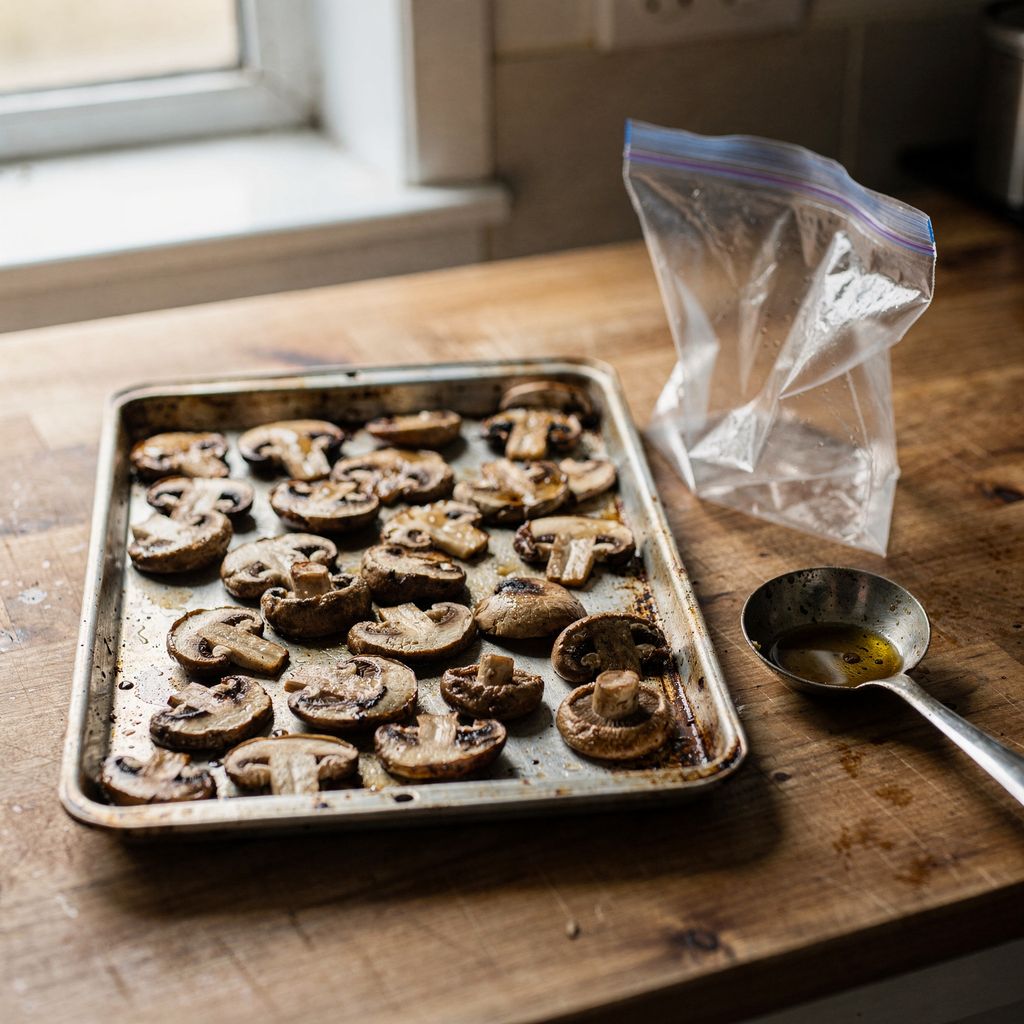
Mushroom sauce - an easy and wonderful autumn treat
Mushroom sauce from frozen mushrooms — a classic where the softened texture doesn't matter at all
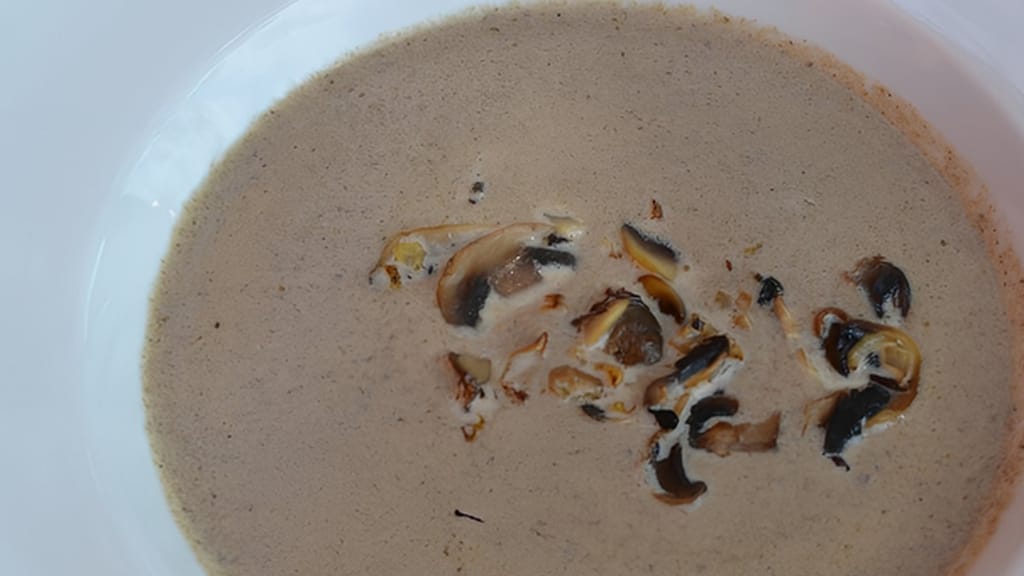
Delicate & fragrant mushroom soup
Smooth, fragrant mushroom soup: tip the frozen mushrooms straight into the boiling stock
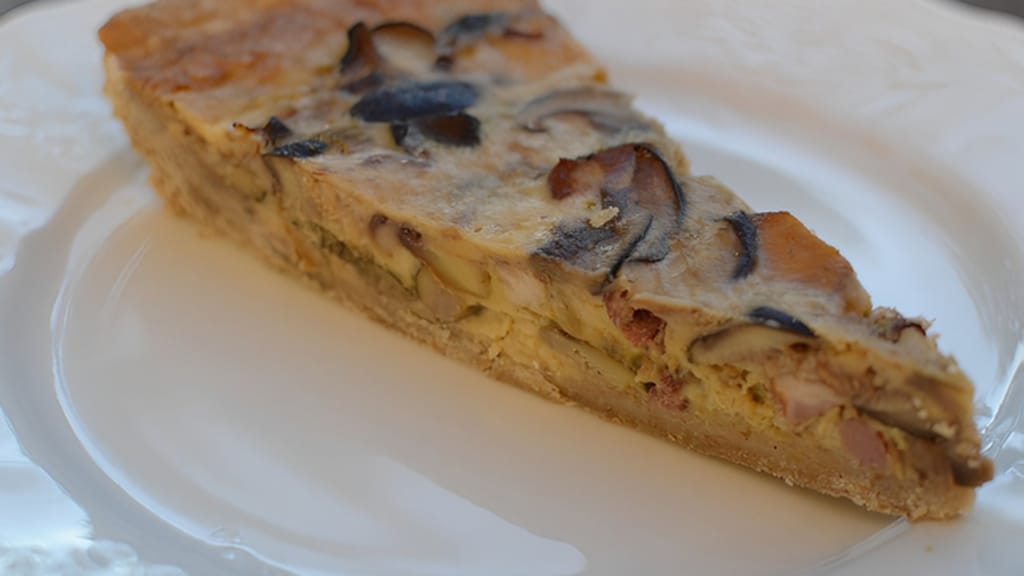
Amazing mushroom quiche
Mushroom quiche made with sautéed frozen mushrooms — the filling is practically made for them
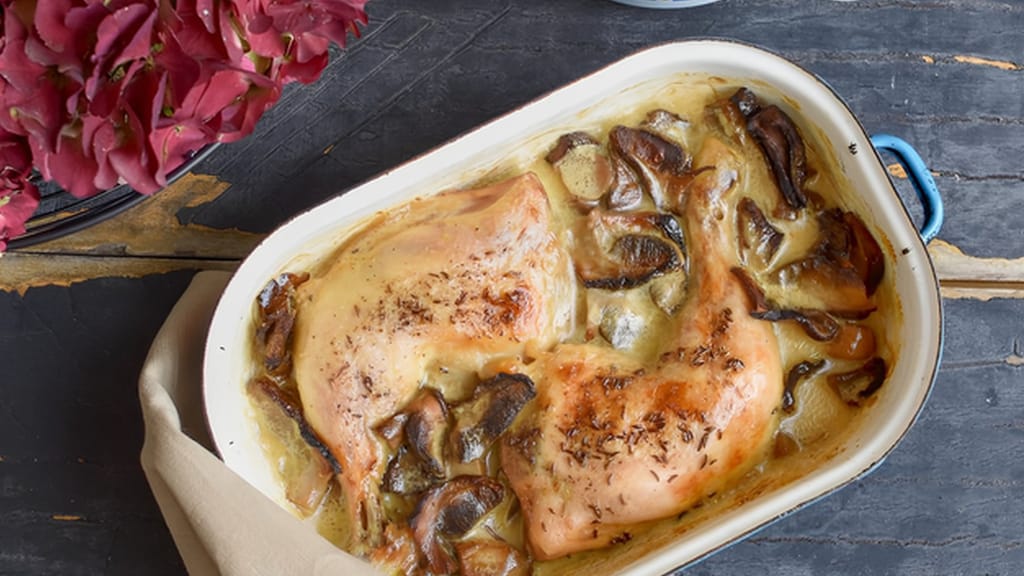
Roasted chicken thighs with fragrant wild mushrooms
Chicken thighs roasted with wild mushrooms: add the frozen mushrooms to the meat in the final third of roasting
Freeze the mushrooms you want to cook as mushrooms; dry the ones you want to turn into flavour. That's the whole distinction in one sentence — which is why it's worth splitting a big haul between the two.
Freezing wins whenever you want the mushrooms to look and taste like actual pieces in the finished dish:
you want to taste distinct pieces of mushroom — fry-ups, stuffing, goulash, quiche;
you've got a lot of watery porcini, scaber stalks or chanterelles that would lose the most from drying;
you need to get through a basket quickly and don't have a dehydrator or a couple of days to spare;
you've got the freezer space. That's the only real limiting factor.
Drying wins when it's about concentrated flavour and a stockpile that doesn't take up space:
you want concentrated flavour for a sauce, soup or stuffing — drying multiplies the aroma rather than losing it;
you're out of freezer space. A kilo of fresh mushrooms shrinks down to a handful in a jar;
you want a stockpile that lasts for years and doesn't depend on the power staying on;
the mushrooms are small and thin, so they dry quickly and evenly.
A practical split that works: dry the firm, young pieces, sauté and freeze the bigger, more watery ones, and cook whatever's borderline that same evening. And keep in mind that once rehydrated, dried mushrooms can stand in anywhere frozen ones would work — just remember the soaking water carries half their flavour, so use it in the dish too.
Yes, but the method's slightly different: sauté button mushrooms and oyster mushrooms rather than blanching them. Cultivated mushrooms have thinner flesh and turn to rubber almost instantly in boiling water, whereas a dry pan browns them beautifully. They'll then keep just as long as wild mushrooms — roughly six to eight months.
You can, but freeze it before you thicken it with cream. Cream and roux tend to split or turn watery after thawing, leaving the sauce grainy. Freeze the mushroom base with the stock and seasoning, then stir in fresh cream once it's reheated — it'll keep for 2 to 3 months this way.
Sliminess almost always means the mushrooms went into the freezer raw or wet. Water on the surface and inside the cells leaks out on thawing and mixes with the broken-down tissue. There's one fix: tip them frozen straight onto a very hot dry pan and let the water evaporate before adding any fat.
Roughly two-thirds less. A kilo of fresh porcini sautéed dry down shrinks to about 300–500g depending on how long you cook off the water — so two or three 150g bags instead of a full litre box. Blanched mushrooms fall somewhere in between, with volume dropping by around half. If your freezer's packed, sauté; if you've got room and you're short on time, blanch.
Freezer burn shows up as dry, whitish-to-grey patches on the surface, often with a layer of frost inside the bag too. It's not a health risk, but the flavour and texture are gone — trim off the affected bits and use the rest in soup or sauce, where it won't be noticeable. It's caused by empty air space in the packaging, into which moisture evaporates from the mushrooms, so next time press all the air out of the bag properly.
One recipe worth heating the oven for, one tip, and one deal from the shop. Nothing else.