Mushroom soup
How to Clean Wild Mushrooms: Dry, With Water, and by Type
Updated Oct 6, 2026
How do you clean mushrooms from the forest? Mostly dry: scrape the stem with a knife, sweep the cap with a soft brush, and do most of the work right there in the woods. Water is fine too, just use it briefly, right before cooking, and skip it on mushrooms you plan to dry. Below is a step-by-step guide to what soaking really does, and how boletes, slippery jacks, chanterelles and parasol mushrooms differ.
The best mushroom cleaning starts right at the tree: cut or scrape off the dirty end of the stem, brush away pine needles and soil, and slice the mushroom lengthways. Put only clean pieces in your basket, and you'll cut your work at home in half.
Cut or twist off the base, then clean it straight away. Otherwise the dirt from the stem base smears over the caps of the other mushrooms in the basket.
Slice lengthways through stem and cap. You'll see at once whether the mushroom is clean and firm inside – leave anything mushy or riddled with holes behind.
Peel slippery boletes right away (more on that below), while the slime is still damp.
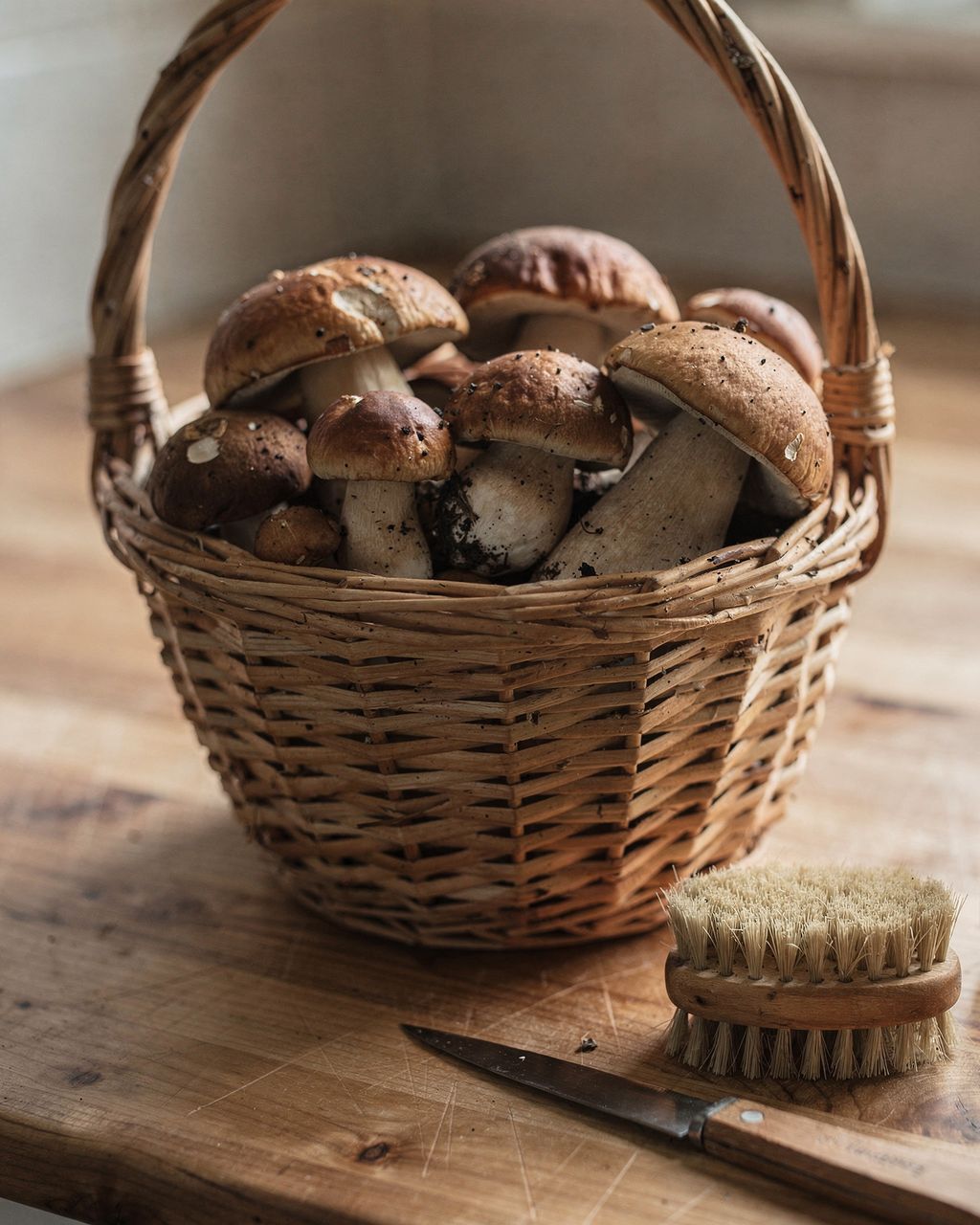
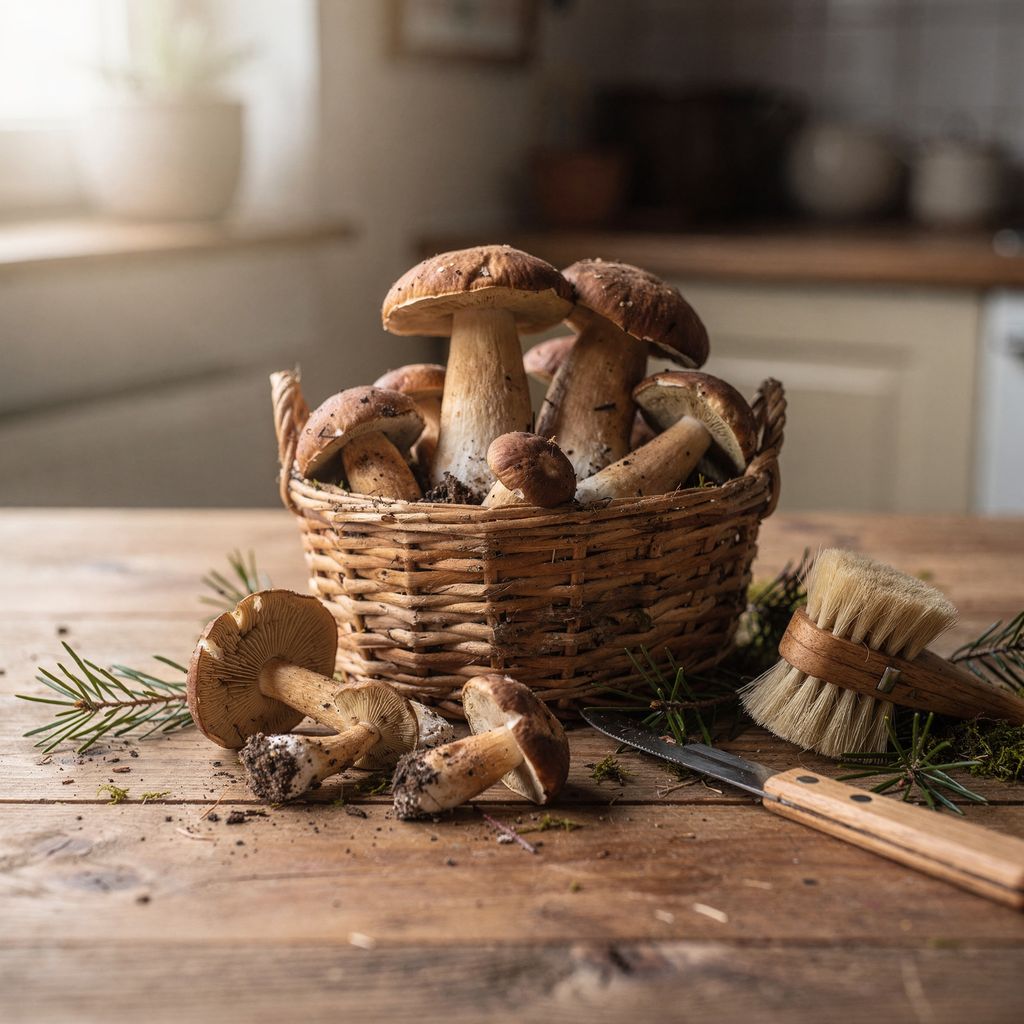
Carry mushrooms in a wicker basket, never a plastic bag. In a wicker basket they can breathe and stay dry; in a bag they'll steam and turn soft within hours.
Caps facing up, dirtiest mushrooms on top – so sand doesn't fall onto the clean ones.
At home you clean mushrooms with a knife and a soft brush, one at a time, and save water for the very end – only if you really need it.
Sort the mushrooms by species and by what you'll use them for. Keep drying mushrooms separate (these aren't washed at all) from cooking mushrooms.
Trim the end of the stem by about 0.5–1 cm (¼–½ in) for a fresh, clean cut.
Scrape the stem with the back or edge of a small knife, working from cap to base, as you would peel a carrot.
Brush the cap – use a soft mushroom brush, a clean toothbrush or a silicone pastry brush. Work in circles, from the centre outward.
Cut away any damaged spots – bruises, slug bites, dark patches.
Wipe off any remaining bits with a damp cloth or dampened paper towel.
Slice and cook straight away. Cleaned mushrooms darken and lose firmness faster than uncleaned ones.
Yes, you can wash mushrooms – as long as it's a quick rinse just before cooking, followed by thorough drying. Washing mushrooms isn't a culinary sin; the old story about mushrooms soaking up water like a sponge is overblown.
Food writer Harold McGee actually measured this in his book The Curious Cook: he soaked 252 g of button mushrooms in water for a full 5 minutes, and together they absorbed only about 6 g of water – roughly 2% of their weight. That amount evaporates in a hot pan within seconds.
The real problem lies elsewhere – a wet surface. Mushrooms that go into the pan damp first steam in their own moisture before they can brown, so instead of golden edges you end up with grey mush. So:
Rinse just before cooking, not the night before. Damp mushrooms turn slimy fast in the fridge.
Give them a brief rinse under running water, never a long soak.
Dry them immediately – spread them on a clean tea towel and press gently, or let them air-dry for 10–15 minutes.
Mushrooms with gills or pores absorb more water than a young, closed-cap button mushroom. Older boletes and open-gilled mushrooms are better off just brushed clean.
Never wash mushrooms meant for drying. Water only extends the drying time and spoils the result.
Boletes and parasol mushrooms should only be cleaned dry, slippery boletes need their skin peeled, and chanterelles are the one exception you briefly rinse in water because of the sand.
Clean boletes dry: scrape the stem with a knife, brush the cap, and remove the pore layer on older specimens. On young, firm boletes with white, dense pores, leave the pore layer intact – it holds its shape well and slices nicely.
On older mushrooms the pore layer turns soft and spongy. During cooking it breaks down into slime and soaks up a lot of liquid, so peel it away with your fingers or a spoon – it comes off easily, almost by itself. Use the cap as normal afterwards. Don't peel the skin off a bolete's cap – it's delicate and carries much of the flavour.
Peel the slimy skin off slippery jacks (Suillus) right in the forest, or as soon as possible once home – dry, while the slime is still damp. Catch the skin with your fingernail or the tip of a knife at the edge of the cap and pull it toward the centre, the way you'd peel a tomato.
Don't wash them beforehand. On a wet cap the skin slips and tears.
Don't let them sit around. Once the slime dries, the skin clings to the flesh and only comes off in bits.
Wipe sticky fingers on a paper towel, not in water.
If you skip peeling, slippery jacks turn slimy both in the pan and in soup.
Chanterelles are the exception where water genuinely helps: fine sand hides in their folds and a brush simply can't get it out. First knock and scrape off what you can dry, then give them a quick rinse in a bowl of cold water.
Put the chanterelles into a large bowl of cold water and gently stir them with your hand.
Lift them out of the water with your hands or a slotted spoon – don't tip the water through a sieve, or the sand that settled at the bottom will land right back on the mushrooms.
If there's a lot of sand at the bottom of the bowl, repeat with fresh water.
Spread them on a tea towel and let them dry before they go into the pan.
With parasol mushrooms, use only the cap and clean it strictly dry. The stem is woody and tough, so twist it off and discard it (or dry it and grind it into mushroom powder). Leave the scales on the cap – just brush off pine needles and soil with a brush or dry pastry brush. The gills are delicate and soak up water like paper, so never wash the cap – especially if you plan to coat it in breadcrumbs and fry it.
Clean and cook mushrooms the same day, or within 24 hours of picking at the latest. Forest mushrooms are still living tissue and spoil quickly – left uncleaned in the basket, they keep ripening and softening.
If you can't get to them right away: clean them dry (don't wash them) and store them in the fridge (2–4°C/36–39°F) in a paper bag or a bowl covered with a tea towel. They'll keep for 1, at most 2 days this way.
Never store them in sealed plastic. They'll steam up and turn slimy.
Split a large haul straight away: some for cooking, the rest for drying at home (dry-cleaned only, unwashed, sliced), or for freezing – that guide covers when to blanch and when to sauté first.
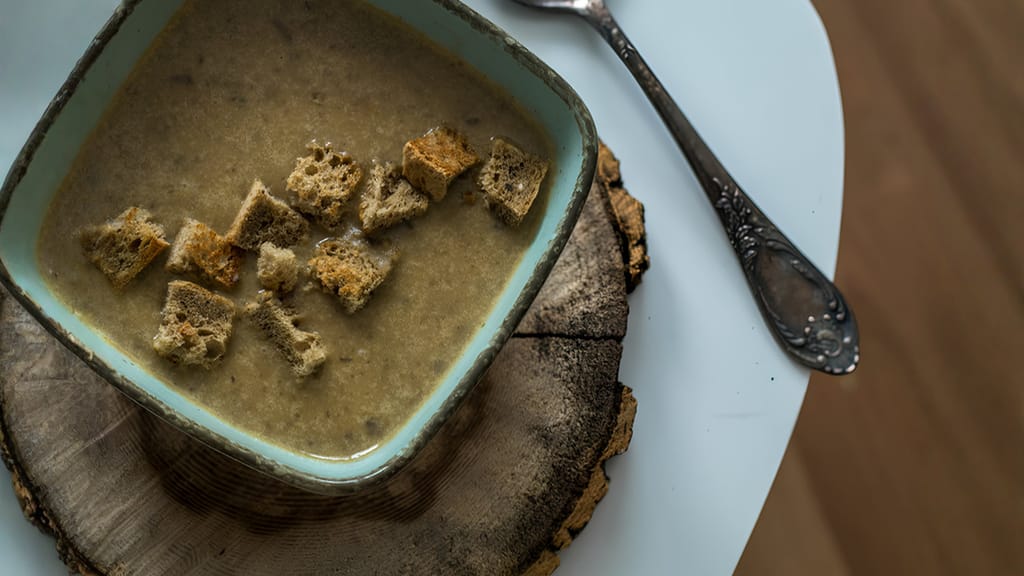
Freshly cleaned forest mushrooms are perfect for mushroom soup, kulajda, pork leg with mushrooms, or pickled mushrooms in vinegar. These are simple classics where nothing overpowers the mushrooms themselves. Make a mushroom soup, cook up a kulajda with mushrooms with dill and a poached egg, or stir them into the sauce for pork leg with mushrooms. If you've picked more than you can eat, cover smaller, firm pieces with the brine from the pickled mushrooms in vinegar recipe.
Mushroom soup
Mushroom soup made with fresh forest mushrooms
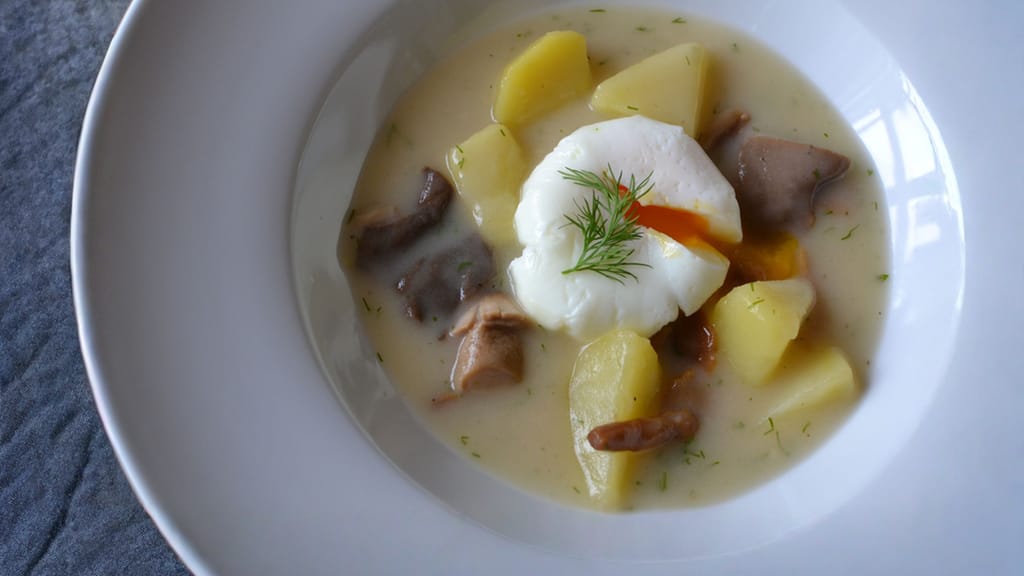
Kulajda – the best creamy mushroom soup
Kulajda with forest mushrooms and dill
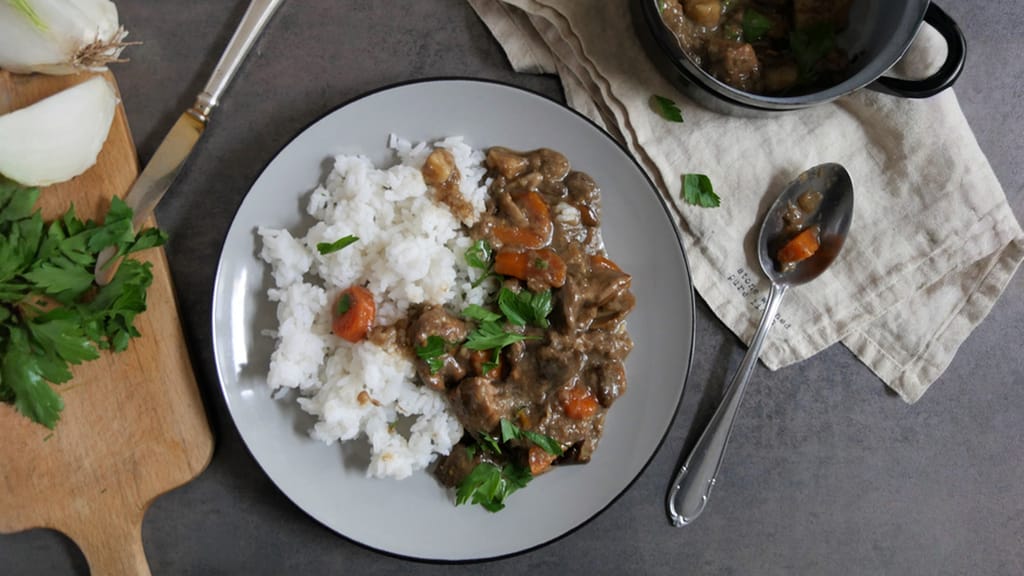
Pork leg with mushrooms
Pork leg with mushrooms in mushroom sauce
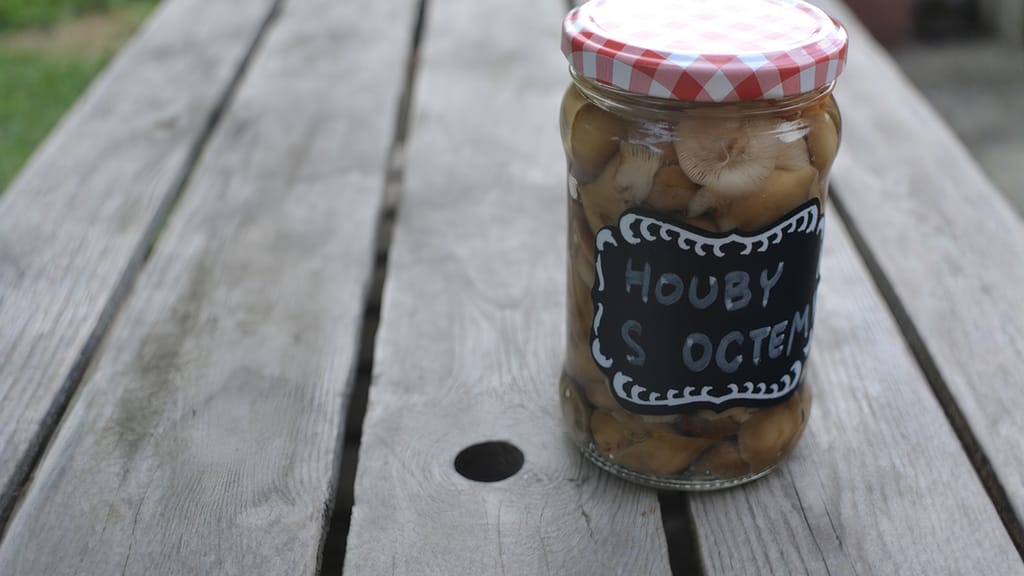
Pickled mushrooms in vinegar
Pickled forest mushrooms in vinegar brine
A clean, soft toothbrush, a dry silicone or bristle pastry brush, or even a dry kitchen cloth will all work. The key is that the tool stays soft and dry – a stiff brush will tear delicate caps and gills.
Store-bought button mushrooms usually just need a wipe with a damp paper towel and a trim of the dried-out stem end. They're grown in clean substrate, so there's no sand or pine needles to worry about. If there's any substrate residue, give them a quick rinse and dry them straight away. There's no need to peel the cap.
Soaking mushrooms in salt water to drive out worms doesn't really work: at best it removes a few larvae, while the mushrooms soak up water they don't need. It's far more reliable to slice the mushroom lengthways, cut out any affected parts, and discard pieces that are badly infested.
Yes, you can use slightly wormy mushrooms if the tunnels are only in the lower part of the stem – just cut that part off and use the rest. If the cap or pore layer is also affected, the flesh tends to be soft and bitter, so throw that mushroom out.
Wild mushrooms are about 90% water, and in an overcrowded pan they release it before they get a chance to brown. Heat the pan properly, fry mushrooms in smaller batches in a single layer, and season with salt only near the end – salt draws water out of them.
One recipe worth heating the oven for, one tip, and one deal from the shop. Nothing else.