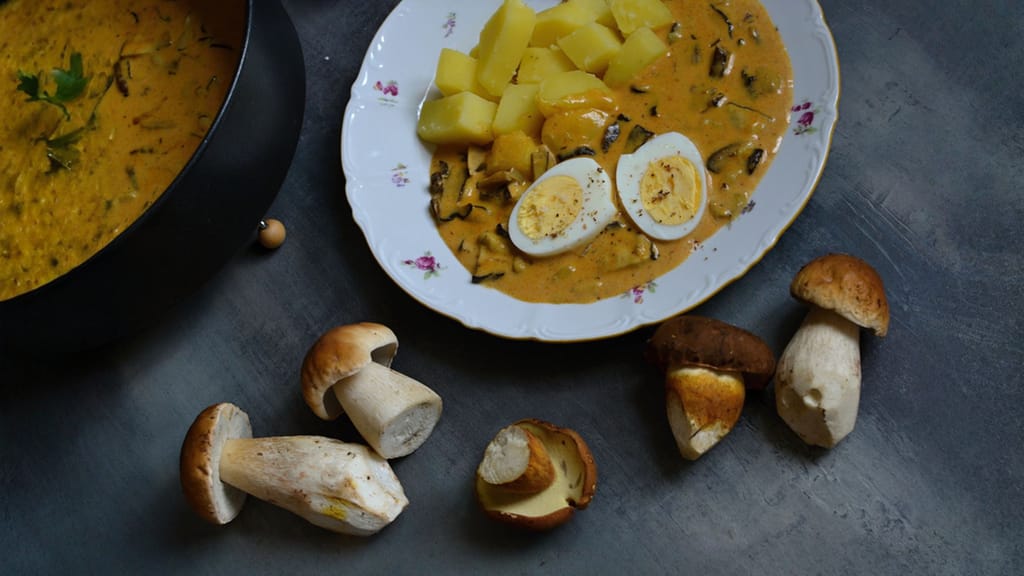
Mushroom sauce - an easy and wonderful autumn treat
Updated Aug 28, 2026
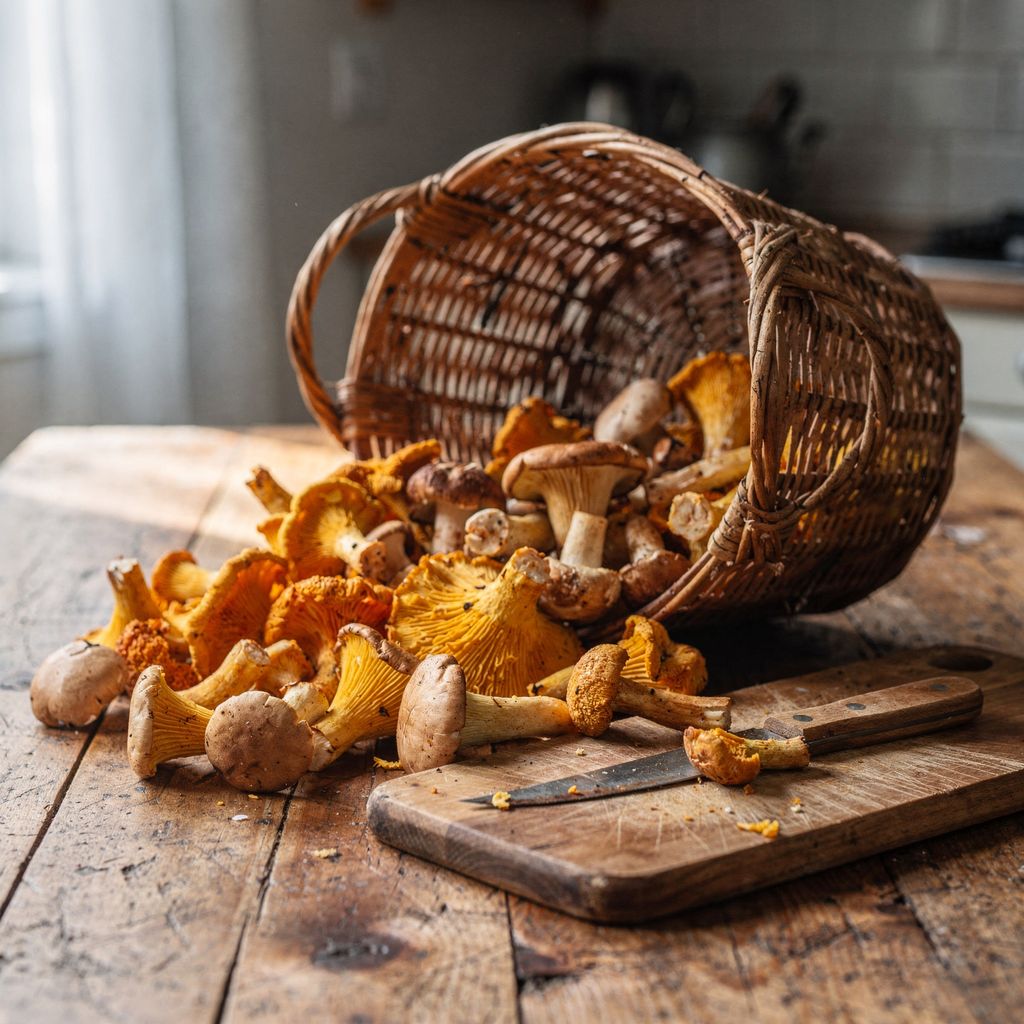
If you've come home with more wild mushrooms than you know what to do with, process them that same evening — fresh mushrooms only keep for about two days in the fridge, and every hour they sit warm in the basket pushes them closer to the bin. The good news is a full basket is entirely doable in one evening, as long as you work in the right order and don't try to do everything at once. This article is your roadmap: what to eat tonight, what to dry, what to freeze, what to pickle, and what to grind into powder — plus exactly how much of each you'll actually end up with from a kilo of fresh mushrooms.
Go from the longest process to the shortest — not from the tastiest to the least tasty:
Tip out the basket onto the table and sort the mushrooms. It takes ten minutes and determines everything that follows.
Get the dehydrator or oven going. Drying runs for 6–12 hours, so it needs to start first — it works away on its own while you handle everything else.
Pickle your mushrooms and process the jars in a water bath. The brine then needs to cool and infuse overnight, so this comes right after starting the dehydrator.
Prep mushrooms for the freezer — sauté or briefly boil them, let them cool completely, then bag and portion.
Cook dinner from whatever's left. Deliberately save the best-looking mushrooms for last: nothing spoils while you're actively working with it.
Make mushroom powder the next day from the dried mushrooms. There's no rush on that one.
The logic is simple — start whatever runs on its own first, then move on to the jobs that need your hands. Start with dinner, and you'll still be pulling mushrooms out of the dehydrator at 1am with no energy left to pickle anything.
Don't sort mushrooms by species — sort by condition and firmness. What matters for processing is the mushroom's state, not whether it's a porcini or a bay bolete.
Young, firm, small, and undamaged → pickling. For pickled mushrooms you want whole ones that hold their shape.
Large but still firm caps and stems → drying, sliced 3–5mm thick.
More delicate pieces, torn during cleaning → tonight's dinner and the freezer. Looks don't matter here.
Slightly wormy, with a few tunnels → cut out the affected part and send the rest to dinner or the freezer. Don't waste a whole mushroom over one tunnel.
Mushy, slimy on the surface, with dark spots or an ammonia smell → bin it. No debate here, and no amount of cooking fixes it.
Clean with a knife and brush, not water. Mushrooms soak up water, and a waterlogged slice takes considerably longer to dry, forms more ice crystals in the freezer, and steams in its own juice in the pan instead of browning. Only use water on mushrooms headed straight into soup or sauce.
From one kilo of fresh mushrooms you'll get roughly 80–100g dried, or 600–700g prepped for the freezer, or about four 350ml jars pickled in vinegar, or a mushroom sauce for four. Mushrooms are roughly 90% water, so any method that removes that water shrinks the weight drastically — worth knowing before you plan out how much of each you're going to make.
Drying: 1kg fresh → 80–100g dried, roughly a 1:10 ratio. Fits in a single 1-litre jar.
Freezer: 1kg fresh → 600–700g after a brief boil, or only around 500g if sautéed dry. Sautéed mushrooms take up noticeably less freezer space.
Vinegar: 1kg fresh → roughly 700g of boiled mushrooms, which works out to about four 350ml jars including the brine.
Powder: 100g dried mushrooms → about 90g of powder. That's genuinely enough to last the whole winter.
A practical split for a 2kg basket that works for most households:
500g for tonight's dinner
800g for drying (yields roughly 70g dried mushrooms)
500g for the freezer
200g of the nicest small ones for pickling
Eat the most delicate mushrooms tonight — the ones torn during cleaning, softer caps, anything that would only get worse by morning. Save storage for the firm ones, not the tastiest ones.
The quickest option is a classic mushroom scramble: finely chopped mushrooms sautéed with onion and topped with beaten eggs, salt, pepper, a pinch of caraway. Ready in ten minutes, and it uses up a surprisingly large pile of mushrooms.
If you've got more time and want to pull maximum flavor out of the mushrooms, mushroom sauce or kulajda (creamy potato and mushroom soup) are the two safest bets. For a bigger gathering, try mushroom quiche; for an ordinary evening, mushroom soup or homemade mushroom burgers work well. If you've brought home a genuinely huge haul from the woods, pork leg roast with mushrooms will use up a whole kilo in one go.
Mushroom sauce - an easy and wonderful autumn treat
Fresh wild mushroom sauce — the fastest way to use up half a basket
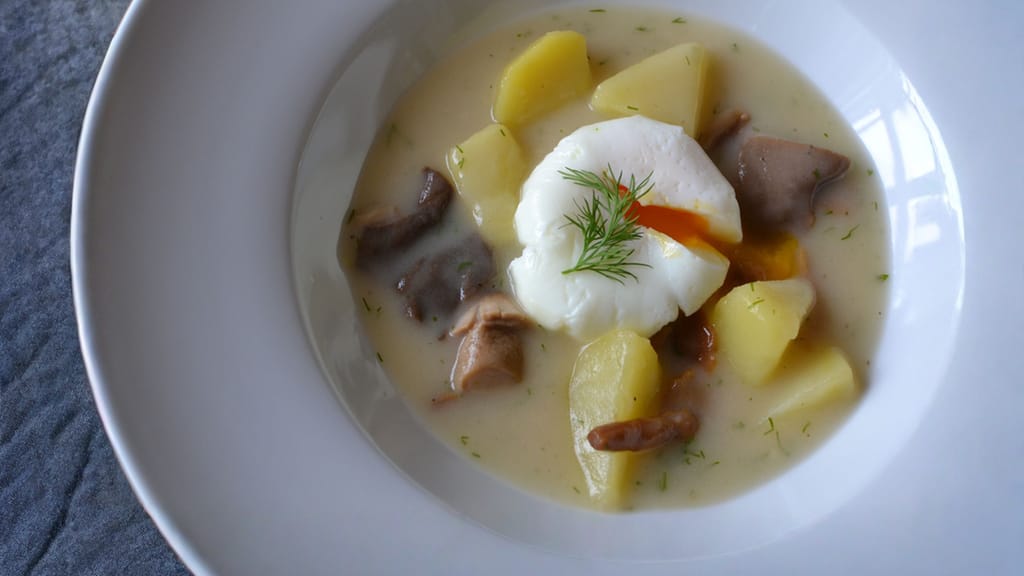
Kulajda – the best creamy mushroom soup
Kulajda with mushrooms: a soup that welcomes even delicate, torn mushrooms
Dry bolete-family mushrooms, chanterelles, morels, and slippery jacks (once you've peeled the cap skin), sliced 3–5mm thick, at 122–140°F (50–60°C), for roughly 6–12 hours — they're done when they snap when bent, not when they just bend.
Worth remembering, even if you're still unboxing the dehydrator:
Slices need to be an even thickness. Uneven slices mean half are done while the rest are still damp — and one damp mushroom in the jar is enough to mold the whole batch.
One layer, pieces not touching. Crowded mushrooms steam instead of drying.
Stay in the 122–140°F (50–60°C) range. Above 158°F (70°C), the surface can seal over while moisture stays trapped inside, and the aroma cooks away. Below that range, drying drags on unnecessarily and the mushrooms have more time to pick up moisture before they actually dry out.
Let them cool before sealing the jar. Warm mushrooms sweat moisture onto the glass, and that's the end of your stash.
Store in glass, in the dark, not in a paper bag in the pantry. They'll keep reliably for a year or more.
Watery, delicate varieties — brittlegills, milkcaps, honey fungus — don't belong in the dehydrator. Once rehydrated, they turn mushy or go rubbery. Send them to the freezer or the pickling jar instead — though honey fungus needs a thorough pre-boil first, see below.
No dehydrator? The oven works too: slices on a wire rack, lowest possible temperature, prop the door open a crack with a wooden spoon so moisture can escape, and allow 4–8 hours, rotating the trays once. Air-drying works by threading mushrooms on string in a draft or near a heat source — it takes two to three days and only works in dry weather.
Never freeze mushrooms raw — once thawed, they turn bitter and mushy. Always cook them first: either boil for 2–5 minutes in salted boiling water and cool in an ice bath, or sauté dry in a pan until the released water has fully evaporated. Honey fungus is the exception: boil it for at least 20 minutes and drain the water — 2–5 minutes is nowhere near enough for this one.
The reason is enzymatic. Raw mushrooms contain enzymes that break down the flesh, and the freezer doesn't stop them instantly — freezing happens gradually over several hours, and the enzymes keep working the whole time. A brief cook switches them off immediately. Ice crystals in raw mushrooms also rupture the cell walls, so what's left after thawing is mush.
You can also blanch in steam, which is gentler and loses less flavor into the water: Penn State Extension recommends 5 minutes for sliced mushrooms and 9 minutes for quartered or whole caps. Cool them in ice water immediately after — otherwise residual heat keeps cooking them and they turn mushy.
The rest is just logistics:
Let them cool completely before bagging. Warm mushrooms in a bag create freezer burn.
Portion into 200–300g bags — one meal's worth. Never refreeze thawed mushrooms.
Flatten the bags so they freeze faster and take up less space.
Use within 6 months. They'll keep longer, but the flavor fades by spring.
Don't thaw before cooking. Toss them frozen straight into a hot pan or into soup — otherwise they'll melt into a puddle.
Only pickle small, firm, whole mushrooms — young porcini, slippery jacks, and chanterelles work best. A properly processed jar keeps for about a year in a dark pantry; once opened, keep it in the fridge and eat within two weeks.
The safe method has two steps, and neither one is optional:
An acidic brine. Don't skimp on vinegar with mushrooms, and don't dilute the brine with water "to make it less sharp." Acidity keeps the pH below 4.6, which stops Clostridium botulinum from growing.
Processing in a boiling water bath. Boil the mushrooms in the brine, pack them into jars leaving 1–1.5cm of headspace, seal, and process the jars for 20 minutes in a boiling water bath (up to 1,000 ft/300m; allow 25 minutes up to 3,000 ft/900m, 30 minutes up to 6,000 ft/1800m).
Acidity alone doesn't replace processing. It stops botulinum toxin, but mold, yeast, and ordinary bacteria are only killed by the heat of the water bath — which also creates a reliable seal. Both the US National Center for Home Food Preservation and Penn State Extension require both steps for pickled mushrooms. The old trick of sealing the jar and flipping it upside down, which still gets passed around, isn't a recognized method and doesn't replace water-bath processing. Exact ratios, spices, and method are in the recipe below.
Pre-boil honey fungus for at least 20 minutes and drain the water, before pickling or freezing. Raw or undercooked honey fungus causes stomach upset — its toxins only break down with a longer boil. It's fine to pickle afterward, just know that the brief boil in the brine alone isn't enough for this variety.
A small detail that affects the look of the finished jar: boil other mushrooms in the brine only briefly, just until they sink to the bottom. Overcooked ones fall apart in the jar and turn into a cloudy sludge within a month.
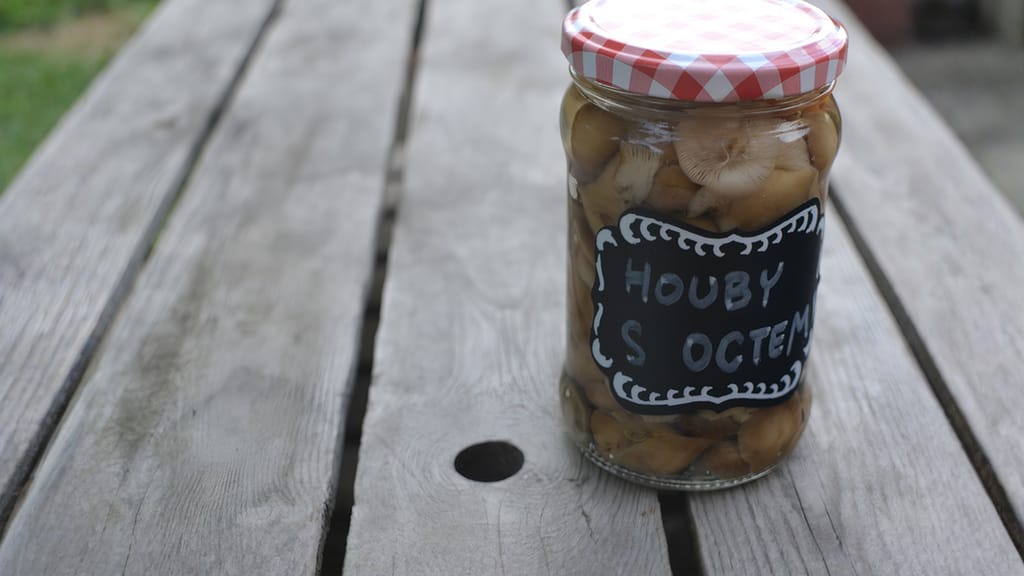
Pickled mushrooms in vinegar
Pickled mushrooms: sweet-and-sour brine ratios and spices
To make mushroom powder, dry your already-dried mushrooms once more in a dry pan with no fat, until they start to rattle, let them cool, then grind them to a fine powder in a coffee or spice grinder.
Why it's worth the five minutes:
It's the most space-efficient way to store them. 100g of dried mushrooms fits in a small jar and lasts the whole winter.
It dissolves completely. Stir it into sauce, stew, risotto, or mashed potatoes for mushroom flavor with no bits to worry about.
It's pure umami. Drying concentrates guanylate in mushrooms — the nucleotide behind their deep, meaty flavor. Half a teaspoon of powder deepens the flavor of dishes that don't even contain mushrooms.
It also works as a dry rub. Mix the powder with salt and rub it onto meat or root vegetables before roasting.
Two things to watch for. The mushrooms must be completely dry — even a trace of moisture turns the powder lumpy, and it will mold within a month. Store the powder in glass, in the dark, not in a clear container on the counter — light strips the aroma within a few months. It keeps for roughly a year.
If you know you won't get through the whole basket today, sauté everything dry in one big batch in a large pan and refrigerate it — that halts spoilage and buys you two to three days to decide what to do with it.
Once sautéed and chilled in a sealed container, you can freeze the mushrooms later, stir them into a sauce, or turn them into duxelles: finely chop the mushrooms and onion, sauté dry, and season with salt and thyme. It's surprisingly compact in a jar and gives you a base for sauces, stuffing, or a spread on toast.
What doesn't work: leaving the basket sitting in the hallway overnight because "there'll be time in the morning." Mushrooms spoil from the top down, starting with the caps, and warmth speeds that up fast. If you truly don't have the energy for anything else, at least tip them out of the basket into a single layer on a tray and put it in the fridge.
No — clean mushrooms dry. Scrape off dirt with a knife and brush away the rest with a soft brush or cloth. Water hurts a mushroom twice over: a waterlogged slice needs hours longer in the dehydrator, and in the freezer it forms extra ice crystals that break down the texture. With slippery jacks, save yourself the hassle by peeling the slimy skin off the cap — most of the grit comes off with it. Chanterelles and similar mushrooms loaded with pine needles and sand can get a quick rinse under running water — just spread them on a tea towel right away; ten minutes of drying is still less hassle than picking out needles with tweezers. A rinse is also fine for any mushrooms going straight into soup, sauce, or a pickling brine.
About 48 hours — and only if unwashed, stored in a paper bag or basket in no more than two layers, at 32–43°F (0–6°C). Firmer varieties like chanterelles hold up reliably for the full two days; delicate boletes and parasol mushrooms may only manage one. A plastic bag is the fastest route to spoiled mushrooms: plastic traps moisture and they steam themselves inside it.
Roughly 10g of dried mushrooms replaces 100g of fresh — about a 1:10 ratio. If a recipe calls for 300g fresh mushrooms, use 30g dried and soak them in lukewarm water for 20–30 minutes. Don't pour out the soaking liquid — it holds most of the flavor — just leave the last bit at the bottom, since sand tends to settle there.
Dry them out again right away — spread them back in the dehydrator or on a baking tray at 122–140°F (50–60°C) for one to two hours, let them cool completely, then transfer to a clean, dry jar. Dampness almost always means you jarred them while still slightly warm, or a few slices weren't fully dried. If you spot white or greenish patches on the mushrooms or the glass, or the jar smells musty, throw out the whole batch — you can't just cut mold off dried mushrooms. For winter stores, it's worth tucking in a silica gel packet or a spoonful of rice wrapped in gauze.
Yes — process sealed jars in a boiling water bath for 20 minutes (up to 1,000 ft/300m; 25 minutes up to 3,000 ft/900m; 30 minutes above that). Acidity in the brine alone isn't enough: it keeps the pH below 4.6, which stops Clostridium botulinum from growing, but mold, yeast, and ordinary bacteria are only killed by the heat of the water bath — which also creates a reliable seal. Both the US National Center for Home Food Preservation and Penn State Extension require both steps for pickled mushrooms. Flipping the jars upside down after sealing is not a substitute for water-bath processing.
No — never refreeze thawed mushrooms. A second freeze-thaw cycle turns them to mush, and bacteria get too much time to multiply between thawing and refreeezing. That's exactly why you should portion mushrooms into 200–300g bags before freezing — enough for one meal. If you've thawed more than you'll eat, turn it into a sauce or soup and freeze the finished dish instead.
One recipe worth heating the oven for, one tip, and one deal from the shop. Nothing else.