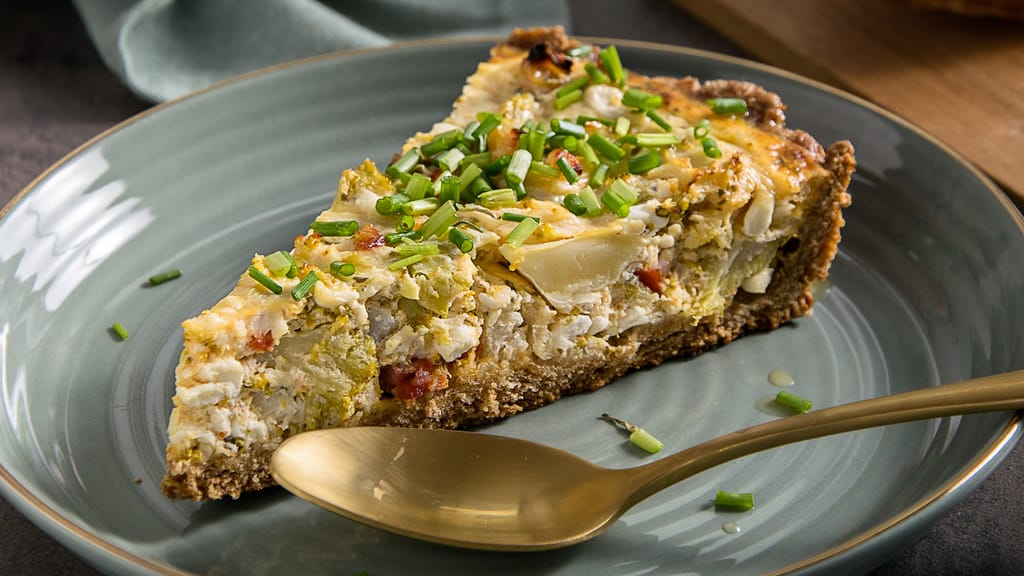
Whole-wheat quiche with broccoli and smoked ham
What to Cook with Broccoli: Lunch Ideas, Chicken, Bakes and Kid-Friendly Dishes
Updated Nov 18, 2026
What can you cook with broccoli? Almost anything for lunch: steamed, it's ready in 4 minutes; roasted at 220°C (425°F), in 20 minutes; stir-fried with chicken, in a quarter of an hour; and baked with cheese or blended into a creamy soup, it will fill up the whole family. Below you'll find the exact time, temperature and serving ideas for each method, plus how to cut broccoli so that even the stalk gets used, and how to keep it bright green instead of gray.
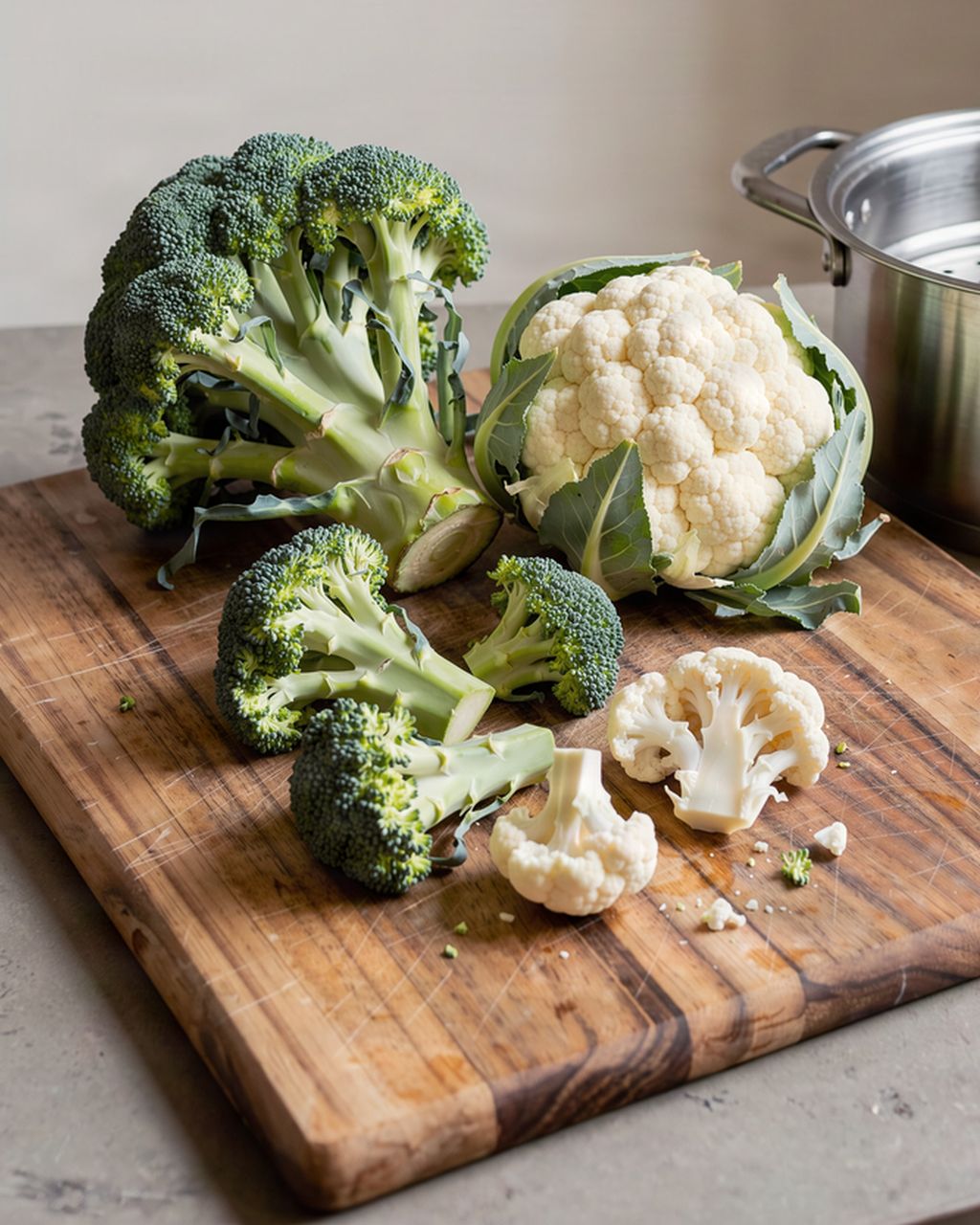
Cut broccoli from the bottom up: first slice the florets off the thick stalk, then peel the stalk and cut it separately. Don't throw the stalk away. It's the sweetest, crunchiest part of the whole head, it just has a tough skin.
Trim off the leaves and the dry bottom end of the stalk (about 1 cm / ½ in).
Separate the florets: run a knife just below the point where the branches spread out. Halve large florets lengthwise through the stem, not across the crown. They crumble less this way and get a flat side that browns beautifully on a baking sheet or in a pan.
Peel the stalk with a vegetable peeler or knife until you reach the pale, juicy flesh. The outer layer is fibrous and would be as chewy as string in the finished dish.
Cut it into slices or cubes about 0.5–1 cm (¼–½ in) thick. They cook as fast as the florets, so you can put them in the pot or on the baking sheet together.
What can you do with the stalk if you don't want to mix it in with the florets? Coarsely grated, it's great in a salad (it tastes like kohlrabi); cut into thin strips, it belongs in a stir-fry; and whole, it's good in soup, because it gives a blended soup body. The broccoli leaves are edible too: sauté them with garlic like spinach.
How to wash broccoli: submerge the head in cold salted water for 5–10 minutes. This floats out tiny bits of dirt and any caterpillar that running water wouldn't rinse away from the dense florets. Then dry it thoroughly. Wet broccoli won't brown in the oven or in a pan, it just steams.
We send seasonal cooking and baking plans and recipes made from everyday ingredients. Unsubscribe in one click.
Use fresh for roasting, pan-cooking and salads; frozen is fine for soup, cream soup, bakes, fritters and patties. Frozen broccoli is blanched before freezing, so it's half-cooked and softer. It won't crisp up in the oven like fresh, but in dishes that get blended or baked anyway, that doesn't matter.
Blanching and freezing cost broccoli some of its vitamin C; how much depends on the method. For soup, cream soup or a bake, frozen is an equal ingredient, not a stopgap. You won't taste the difference in the finished dish.
A few rules for frozen broccoli:
Don't thaw it. Toss it straight into boiling water, soup or a hot pan. Thawed, it releases water and falls apart.
Cook it for less time. In boiling water 2–3 minutes is enough, because it's already par-cooked.
Put it in an oven preheated to 230°C (450°F) on a baking sheet in a single layer. The edges will brown a little, but expect soft rather than crisp broccoli.
You can recognize fresh broccoli by its dark green, tightly closed florets and firm stalk. Yellowing florets mean it has been sitting for a while. It loses sweetness and tastes stronger and more bitter.
Steamed broccoli needs 4–5 minutes, in boiling salted water 3–4 minutes. It's done when a knife slides into the floret stem with slight resistance and the color is bright green. Once it starts turning olive, it's overcooked.
Why it turns gray: with longer cooking, acids are released from the breaking-down cells and turn green chlorophyll into an olive-gray pigment (pheophytin). At the same time, sulfur compounds start to escape from the broccoli, which is the typical "boiled cabbage" smell that gives overcooked broccoli its bad reputation. Only one thing fixes both: a shorter cooking time.
How to keep it green:
Big pot, lots of water. If you drop broccoli into a small pot, the water stops boiling and the cooking drags on.
Cook without a lid. The volatile acids escape with the steam instead of staying in the water.
Lemon and vinegar only at the table. Acid destroys chlorophyll, so add a lemon dressing right before serving, not to the water.
Ice bath. If you're cooking broccoli ahead (for a salad or a bake), plunge it into ice water for a minute after lifting it out. This stops the cooking and keeps the color bright.
Steam is gentler than water: when you boil, vitamin C leaches into the water you then pour away. A short steaming keeps more vitamin C in the broccoli than longer boiling, and the broccoli stays crunchier and greener. No steamer? Put 2 cm (¾ in) of water in a pot, set a metal sieve with the broccoli over it and cover.
What to serve it with: boiled broccoli with melted butter, lemon zest and coarse salt is the quickest side for roast meat, fish or eggs. Try it with a spoonful of brown butter and toasted sliced almonds too: two minutes of work for a dish that tastes like it came from a restaurant.
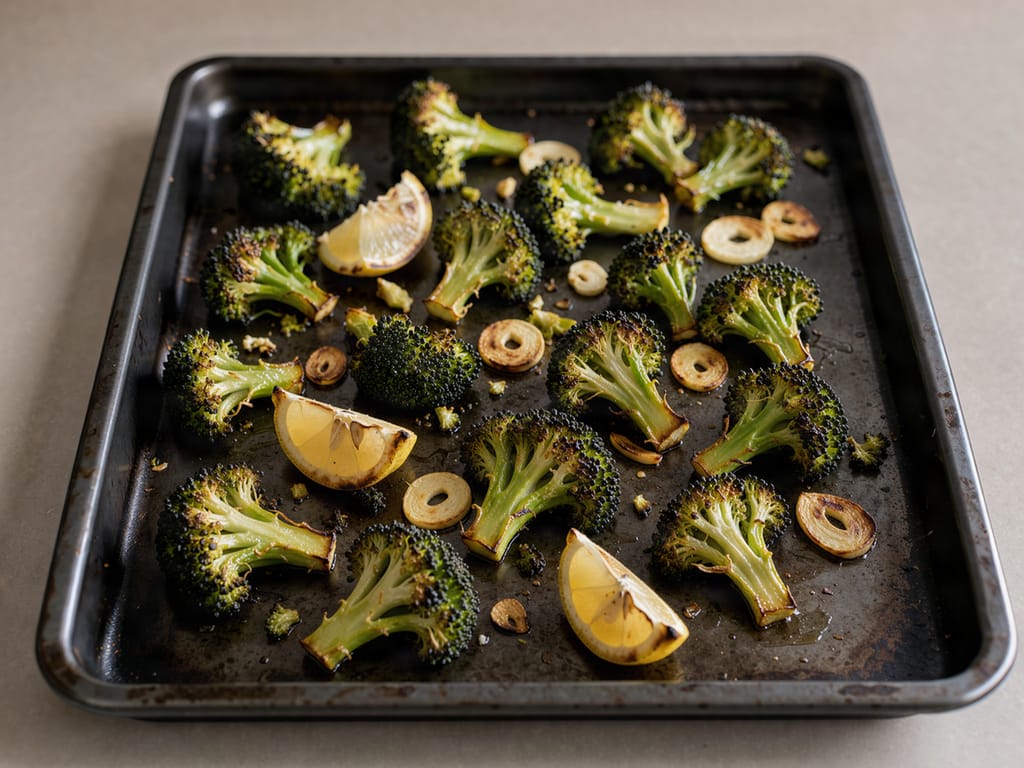
Roast broccoli at 220°C (425°F) for 18–25 minutes, turning it halfway through. It's done when the florets are dark and browned at the edges and the stalks are tender but not mushy. The high heat is the whole point: at 180°C (350°F) broccoli just slowly dries out and browns without crisp edges.
How to make it truly crispy:
Dry broccoli. After washing, dry it with a towel or in a salad spinner. Water on the surface turns to steam, and the broccoli ends up steamed.
Flat side down. Place halved florets cut side down on the baking sheet, which is where they brown best.
One layer, with gaps. A crowded pan means steamed broccoli. Allow a whole baking sheet for one head (roughly 400–500 g / 14–18 oz).
Oil, salt, then heat. Use 2–3 tablespoons of olive oil per head, plus salt and black pepper. Add sliced garlic only after 10 minutes, otherwise it turns bitter.
Acid and cheese at the end. Right out of the oven, squeeze over some lemon and grate on Parmesan, which the warm broccoli will melt.
Roasted broccoli with garlic and lemon is a dinner on its own with bread and a yogurt dip, a side for roast chicken, or the base of a bowl with rice, an egg and seeds. A variation worth trying: mix a teaspoon of smoked paprika into the oil, add a handful of canned chickpeas and roast them together for a warm salad. For how to cook chickpeas from dried, see the article how to cook chickpeas until tender.
Chicken and broccoli stir-fry is ready in 15 minutes: brown the chicken strips separately, stir-fry the broccoli for 3–4 minutes over high heat, add a splash of water, cover for a minute and finally combine everything with the sauce. The whole trick is not to put the meat and vegetables in the pan at the same time. The broccoli would release water and the chicken would simmer instead of sear.
Asian-style chicken with broccoli. Set the browned strips aside, quickly stir-fry the broccoli in the same pan and finish it under a lid, then return the meat and toss with a sauce of soy, garlic, ginger and honey. Serve with rice or noodles and sesame seeds.
Creamy chicken with broccoli. For those who don't want Asian flavors: brown the chicken and broccoli in butter with a little onion, pour in cooking cream and simmer briefly with nutmeg. It goes well with rice, mashed potatoes or pasta.
Pan-seared broccoli as a side. Let briefly blanched, dried broccoli sit in olive oil without stirring until it browns, then finish with garlic, chili flakes and lemon zest. It goes wonderfully with chicken with lemon and oregano.
What keeps chicken breast from drying out is mainly the thickness of the strips and the time in the pan. We cover it in detail in the article what to cook with chicken breast.
The simplest pasta with broccoli is made in one pot: add the broccoli to the pasta for the last 3–4 minutes of cooking, drain, then toss in a pan with garlic, olive oil and Parmesan. You have lunch in 15 minutes and no second pot to wash.
Pasta with broccoli, garlic and chili (Italian-style). Add the pasta and broccoli to a pan with oil in which garlic and chili have lightly turned golden, and stir with a little pasta water until the broccoli partly breaks down into a creamy sauce. Season with Parmesan and lemon zest.
Broccoli pesto. Blend blanched broccoli with toasted almonds or cashews, garlic, Parmesan and olive oil. You get a bright green sauce that clings to spaghetti and works in pasta salad, and it works with frozen broccoli too.
Creamy pasta with broccoli and chicken or ham. Pour cream over browned meat and par-cooked broccoli and let it reduce; if you like cheesy, stir in gorgonzola. Broccoli is also a great green addition to mac and cheese: add the florets to the pasta for the last 3 minutes of cooking, then mix everything with the cheese sauce.
For how much water and salt to use for pasta and how long to cook it so it doesn't stick, see the article how to cook pasta.
A broccoli bake is par-cooked broccoli covered in cream or eggs and sprinkled with cheese, baked at 190–200°C (375–400°F) for 20–30 minutes until golden. Always par-cook the broccoli only briefly (2–3 minutes) and let it drain well. It finishes cooking in the oven, and if it were wet, the sauce would turn watery.
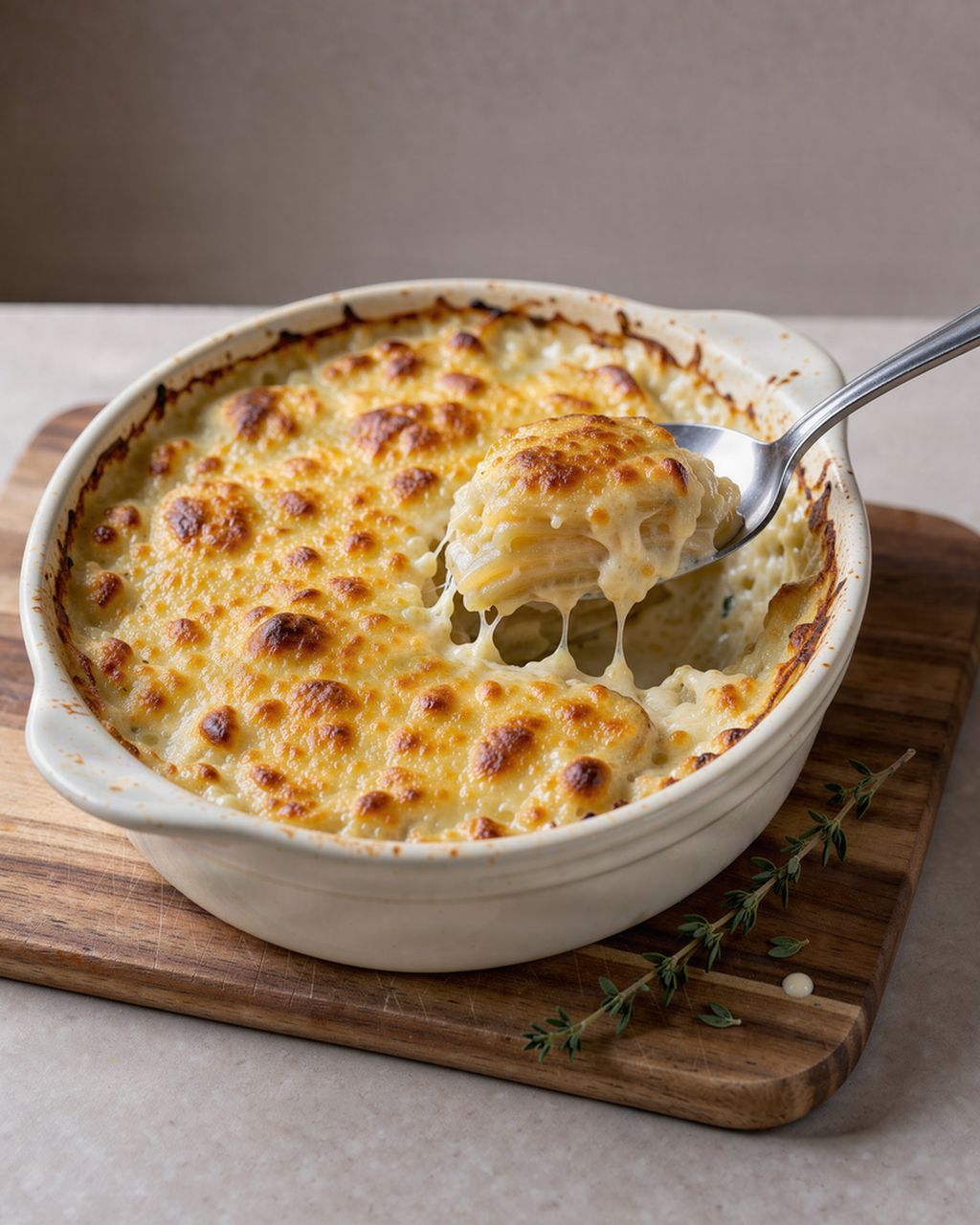
A broccoli and potato bake is a baking dish of layered par-cooked potatoes and blanched broccoli with cheese, covered with cream and eggs and baked until golden. Potatoes need more time than broccoli, so slice them thinly (about 0.5 cm / ¼ in) and par-cook them first. Serve it on its own with a vegetable salad or as a side for roast meat; the version with smoked meat or bacon is a traditional Sunday lunch in one dish.
A broccoli and cheese bake is par-cooked broccoli covered in béchamel or cream with egg, sprinkled with cheese and baked at 200°C (400°F) for 20 minutes. It's a lighter dinner than the potato version. It's done when the cheese turns golden and starts to bubble. Bread or mashed potatoes are all it needs.
If you want baked broccoli in a tender crust, reach for quiche. Whole grain quiche with broccoli and smoked ham is a filling dish that keeps well in a lunchbox the next day, and carrot and broccoli quiche is a meat-free version where the sweetness of carrot pairs beautifully with broccoli.
Whole-wheat quiche with broccoli and smoked ham
Whole Grain Quiche with Broccoli and Smoked Ham
Cream of broccoli is broccoli cooked in stock with a potato and blended until smooth. The potato adds body without flour, and the added stalk adds sweetness. Just watch the time: if you cook the broccoli for more than 15 minutes, the soup turns gray and gets a sulfurous taste, so it goes into the pot only when the potatoes are almost tender. After blending, soften it with cream or a piece of processed cheese.
Three variations of cream of broccoli:
With coconut milk. Coconut milk instead of cream, plus cumin, and toasted pumpkin seeds on top. Full recipe: broccoli cream soup with coconut milk.
With cheese. Stir a handful of grated cheddar or blue cheese into the hot soup. Blue cheese adds a strong, salty depth.
Chunky vegetable soup. Don't blend: dice broccoli, carrot and potatoes, cook them in stock and add small noodles or semolina dumplings. A classic Czech lunch soup.
Serve with croutons toasted in butter, toasted pumpkin seeds or a drop of olive oil. For cream soup, frozen broccoli is perfectly fine, straight from the freezer into the pot.
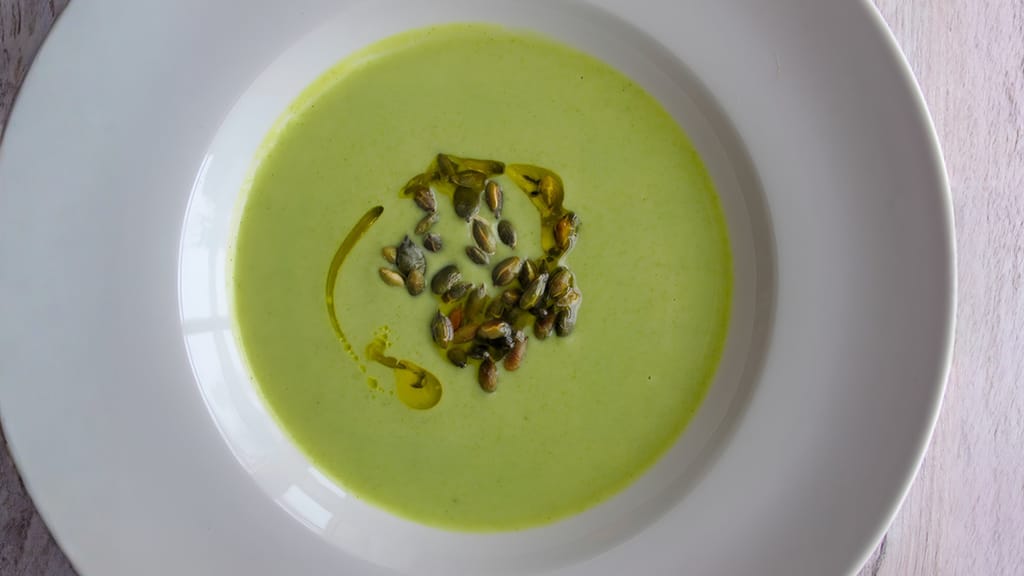
Creamy broccoli soup with coconut milk
Broccoli Cream Soup with Coconut Milk
You can cook or roast broccoli and cauliflower together, though cauliflower needs 1–2 minutes longer: steamed, cauliflower takes 5–6 minutes and broccoli 4–5; in the oven, both take about 20–25 minutes at 220°C (425°F). If you put them in the pot at once, cut the cauliflower into smaller florets and the times even out.
Broccoli and cauliflower bake. Briefly par-cook both vegetables, cover with cheese béchamel and bake until golden. The contrast of white and green looks lovely on the table and the flavors complement each other: cauliflower is mild and slightly sweet, broccoli stronger. You could also take inspiration from cauliflower baked with cashews, mixing in broccoli half and half.
Roasted broccoli and cauliflower. On one baking sheet with oil, salt, caraway or curry powder at 220°C (425°F). Cauliflower wants a little more oil and more time, so put it on the baking sheet 5 minutes earlier. It works as a warm side for meat or in a bowl with rice and yogurt sauce.
Broccoli and cauliflower soup. Blended together, it comes out pale green, creamy and milder than pure broccoli soup. If you want a purely cauliflower one, there's creamy cauliflower soup with cheese.
Broccoli fritters are grated or chopped par-cooked broccoli bound with egg, cheese and flour or breadcrumbs, fried in a pan for 3–4 minutes per side. The key step is squeezing out the water: let the blanched broccoli cool, chop it finely and squeeze it in a kitchen towel. Otherwise the fritters fall apart and soak up oil.
Broccoli and cheese fritters. Combine chopped broccoli with eggs, grated Edam or Parmesan, a little flour and garlic, and fry spoonfuls shaped into small patties until golden. Serve with garlicky yogurt dip, mashed potatoes or a vegetable salad.
Broccoli meat patties. Mix chopped, squeezed-out broccoli into ground chicken or pork and fry or bake like ordinary meat patties. The broccoli keeps the meat juicy, and kids barely notice it. Mashed potatoes and cucumber salad go well with the patties.
Baked fritters on a sheet pan. If you don't want to fry, spread spoonfuls of the mixture on a baking sheet lined with parchment paper, drizzle with oil and bake at 200°C (400°F), turning halfway. The fritters will be dry and crisp at the edges.
Kids most often refuse broccoli because of the bitterness and sulfurous smell of overcooked broccoli, so what helps most is short cooking and dishes where the broccoli is hidden or browned until sweet. Five tried-and-true ways:
Steamed little trees with butter: 4 minutes, no longer. Briefly cooked broccoli is sweeter and less "cabbagey".
Roasted "chips": small florets with oil and Parmesan at 220°C (425°F) for 15–18 minutes, until the edges crisp up.
Fritters and patties: see above; the broccoli is chopped and bound with cheese.
Cream soup: the green color is the only trace; with a little cream and cheese it tastes mild.
Pasta with broccoli pesto: a bright green sauce that kids often take as "green spaghetti".
It also helps to let kids dip the broccoli themselves: serve cooked florets with a yogurt dip or cheese sauce. For the youngest, cook the broccoli until soft enough to mash with a fork and cut it into smaller pieces. Repetition does more than persuasion. A child often needs to taste a new vegetable many times before accepting it, so keep putting it on the plate regularly and in different forms.
Broccoli salad is made from raw, finely chopped broccoli or from broccoli blanched for 1–2 minutes and immediately chilled in ice water so it stays crisp and green. Raw is stronger and tougher, blanched is milder. Both work, depending on the dressing.
American broccoli salad with yogurt. Mix finely chopped raw florets and grated stalk with red onion, toasted sunflower seeds, cranberries and bits of crispy bacon, and toss with a yogurt dressing with a little mayonnaise. Let it sit for 20 minutes; the broccoli softens a little in the dressing. It suits grilled meat or makes a light lunch.
Warm salad with roasted broccoli. Mix roasted broccoli with quinoa or couscous, feta, a handful of arugula and a lemon-olive oil dressing. Add the lemon only to the finished broccoli so it stays green.
Asian broccoli salad. Blanched and chilled broccoli, cucumber, scallions, a dressing of soy sauce, sesame oil, rice vinegar and ginger, topped with sesame seeds and peanuts. It also works very well with chicken strips as a full meal.
Grate leftover stalk coarsely into coleslaw in place of some of the cabbage. The flavor fits and the salad will be crunchier.
Store fresh broccoli in the fridge's vegetable drawer, loosely wrapped in a bag with a few holes or in a kitchen towel, and don't wash it ahead of time, as moisture speeds up spoilage. It's best used within 3–5 days; after that it starts to yellow and turn bitter.
Cooked broccoli keeps in a sealed container in the fridge for 3–4 days. That's the general guideline of the US food safety agency USDA FSIS for leftover cooked foods. Chill it quickly and refrigerate within 2 hours of cooking.
Freezing: blanch broccoli before freezing, otherwise enzymes in the freezer worsen flavor, color and texture. The US National Center for Home Food Preservation recommends cutting florets no wider than about 4 cm (1½ in), blanching them for 3 minutes in boiling water (5 minutes in steam), then chilling them right away in ice water, drying and freezing. It's best to spread them loosely on a baking sheet first, freeze, and then transfer to bags. They won't clump into one lump and you can take exactly as much as you need.
For exact cooking, storing and freezing times for broccoli and cauliflower, step by step, see the separate article broccoli and cauliflower: how long to cook, store and freeze them.
Yes, broccoli can be eaten raw. It's best finely chopped in a salad or as florets for dipping. It's tougher and stronger-tasting than cooked broccoli; if you'd like it milder, just blanch it for 1–2 minutes.
If the broccoli is only just starting to yellow but is still firm and doesn't smell musty, you can cook it. It's just older, more bitter and less sweet. It works best in soup or a bake, where the flavor gets lost. Throw out broccoli that is slimy or moldy.
As a side dish, allow 150–200 g (5–7 oz) of broccoli per person; as the main ingredient of a dish (bake, stir-fry, pasta), 250–300 g (9–10 oz). One medium head weighs 400–500 g (14–18 oz) and serves 2–3 people as a side.
Baby broccoli (bimi) is a cross between broccoli and Chinese broccoli, with long thin stalks and small florets. It's milder and sweeter, doesn't need peeling, and cooks in a pan or the oven in roughly half the time of regular broccoli.
The best substitutes for broccoli are cauliflower, romanesco or baby broccoli (bimi), which have a similar texture and cooking time. In pasta and stir-fries, green beans or zucchini also work; in bakes, try Brussels sprouts.
Reheat cooked broccoli briefly in a pan with a little oil or butter for 2–3 minutes, or in the oven at 200°C (400°F). In the microwave it keeps cooking and softens, so heat it there only briefly and covered.
One recipe worth heating the oven for, one tip, and one deal from the shop. Nothing else.