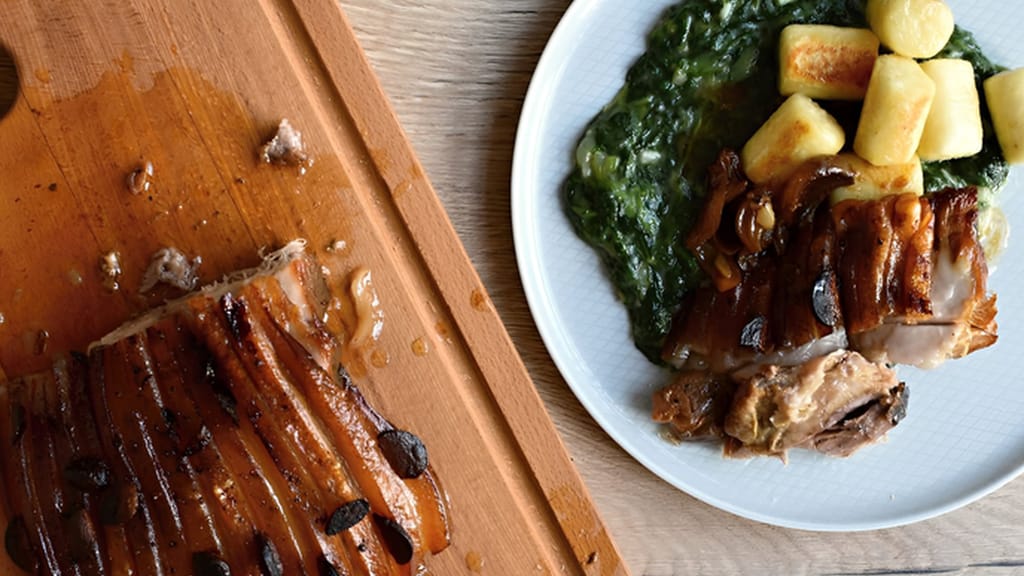
Crispy roast pork belly with homemade potato gnocchi and spinach
What to Cook with Spinach: Fresh, Frozen or Purée, with Eggs, with Pasta, and What to Serve with It
Updated Nov 18, 2026
What can you cook with spinach when you have a bag of fresh leaves in the fridge or frozen cubes in the freezer? Most often it's classic creamed spinach with potatoes and egg, but spinach can do much more: pasta with garlic or cream, lasagna, soup, a savory pie, stuffed puff pastry, fritters, frittata and even a raw baby-leaf salad. Below you'll find the essentials for each dish, what it depends on, links to ready-made recipes and tips on what to serve with spinach. At the end, you'll see how to store and reheat cooked spinach safely.
For creamy dishes reach for purée or chopped frozen spinach, for pasta, pies and fritters use whole-leaf frozen, and for salads or a quick sauté use fresh leaves. It's all the same spinach, just processed differently, and each form behaves differently in the kitchen:
Fresh leaves: the most flavor and texture. Eat young (baby) leaves raw in salads; sauté or blanch larger leaves with stems. The season is mainly spring and autumn.
Whole-leaf frozen spinach: whole blanched leaves frozen in cubes or loose. It holds its shape, so it suits anything where you want to see pieces: pasta, pies, lasagna, fritters.
Chopped frozen: finely chopped, it melts quickly into a sauce. The most convenient choice for classic spinach with potatoes.
Purée: finely ground, almost smooth. Good for cream soup, a gentle first food for babies and smooth, canteen-style spinach.
How much fresh spinach you need: it shrinks so much in the pot that a full bowl of leaves turns into a handful. Count on roughly 200–250 g of fresh leaves per serving as a side or main, so a kilo for four people. For frozen, 150–200 g per serving is enough, because it's already blanched and compressed. For a detailed method for all three forms, so they don't turn watery or gray, see How to Cook Spinach from Fresh Leaves, Frozen or Purée.
We send seasonal cooking and baking plans and recipes made from everyday ingredients. Unsubscribe in one click.
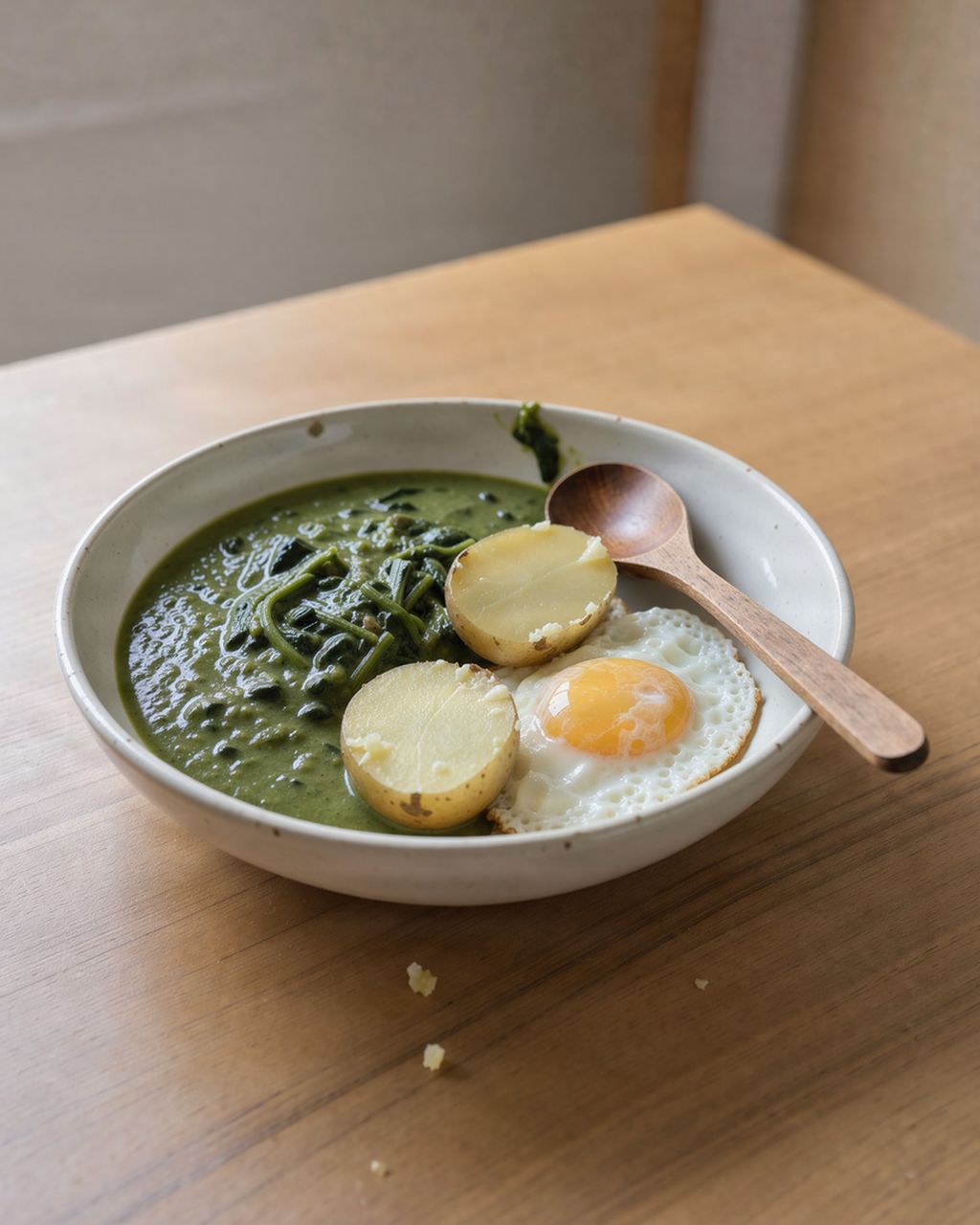
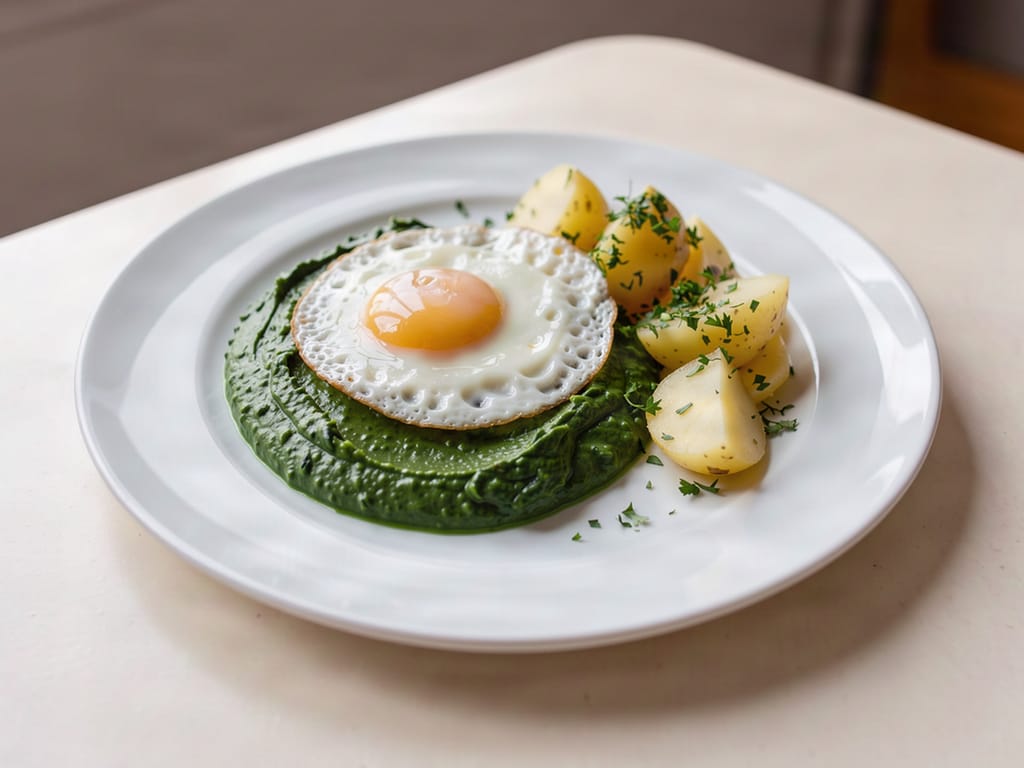
Classic Czech spinach is creamed spinach softened with butter, garlic and milk or cream, lightly thickened and served with boiled potatoes and an egg. Two things decide the result: thaw frozen spinach without a lid so the water evaporates before you add the flour, and add the garlic only at the end, because long cooking makes it bitter.
The three most common mistakes:
Gray spinach: it cooked too long. After adding the cream, just heat it through.
Watery spinach: the frozen spinach didn't release its water. Thaw it without a lid and let the water evaporate.
Bland flavor: missing salt and garlic. Add them at the end and taste; a drop of lemon or a spoonful of sour cream wakes the flavor up.
You'll find the whole method step by step in How to Cook Spinach from Fresh Leaves, Frozen or Purée.
Spinach is most often served with boiled or mashed potatoes, potato or bread dumplings, and eggs. For a heartier lunch, add smoked meat, roast or fish. How to put it together:
Boiled potatoes: cook firm or all-purpose potatoes (waxy to medium-waxy types, Czech types A or B) in salted water for 20–25 minutes from the boil and toss with butter and parsley. The lightest and most common pairing.
Mashed potatoes: with spinach they make a velvety pair, both softened with butter and nutmeg. Try our smooth, creamy mashed potatoes with nutmeg.
Potato dumpling: the typical pairing for smoked meat with spinach. Serve it hot so it soaks up the sauce.
Bread dumpling (houskový knedlík): works mainly with spinach and roast meat; it's softer and soaks up more. Try steamed bread dumplings.
Fried egg (sunny-side up): fry it in butter over medium heat for 2–3 minutes, until the white sets and the yolk stays runny. The yolk then mixes with the spinach into a sauce.
Hard-boiled egg: 9–10 minutes from the boil, then cool in cold water. A halved egg on spinach is a school-canteen classic.
Smoked meat: smoked pork neck or shoulder boiled until tender, served with spinach and potato dumpling.
Roast meat: roast pork or pork belly with spinach is the Sunday version. Slow-roasted pork works as the roast, and the recipe for pork belly with spinach is below.
Fish: mild white fish and salmon both suit spinach. Try smoky salmon with quick spinach or halibut with Italian risotto and spinach.
Meat patties and meatloaf: everyday options that give spinach saltiness and fat. For inspiration: beef patties with beetroot or spring meatloaf with wild garlic and sweet potato purée.
Crispy roast pork belly with homemade potato gnocchi and spinach
Crispy roast pork belly with homemade gnocchi and spinach
Pasta with spinach is ready in a quarter of an hour: while the pasta cooks, you make the sauce in a pan and then combine the two. Three main routes work: garlic with olive oil, cream, or baked lasagna.
Spaghetti with spinach and garlic takes 10 minutes, made with olive oil, garlic and chilli. Only lightly fry the garlic, not to brown, let the spinach wilt in the pan and add a ladle of pasta water: its starch makes a glossy sauce. In autumn, try autumn spaghetti with pumpkin and spinach.
Pasta with spinach and cream is the creamy version, where spinach is simmered with onion and garlic in cream and seasoned with Parmesan or Gorgonzola. The key is to let frozen spinach cook off its water in the pan first, otherwise the sauce will be thin. It suits penne, tagliatelle and potato gnocchi, and chicken, salmon or bacon add protein.
Lasagna with spinach and ricotta is a meatless classic, with layers of pasta sheets alternating with béchamel and a mixture of spinach, ricotta and Parmesan. The spinach must be squeezed out well, and let the finished lasagna rest for 10 minutes before cutting, or it will slide apart. The same filling works in cannelloni, and with mushrooms between the layers you get a heartier version. You'll find more mushroom ideas in what to cook with mushrooms.
Spinach soup is one of the quickest spinach dishes: you can make it from purée or frozen spinach in 20 minutes. Cooked potatoes thicken it without flour, and add the spinach only for the last 2–3 minutes so it stays green. You can serve it as a smooth cream soup, as a main-course soup with a beaten egg stirred in, or with more punch using coconut milk and ginger. Young spring leaves with leek give a delicate cream soup where the spinach flavor shines most. Don't keep the finished soup hot on the stove for long; the reason is in the safety section below.
You can bake three main dishes with spinach: potato and spinach gratin, a savory spinach pie (quiche) and spinach in puff pastry. In all of them the spinach must be as dry as possible, or the base will turn soggy. Squeeze thawed whole-leaf spinach in your fist or through a kitchen towel until it stops dripping, and wilt fresh leaves in a pan beforehand and squeeze them too.
Potato and spinach gratin: layers of potatoes, spinach in cream and cheese. Bake covered first so the potatoes soften, then uncovered until golden.
Savory pie (quiche): blind-bake the shortcrust pastry so the base doesn't go soft, and take the pie out when the center only just wobbles. A ready recipe is right below this paragraph.
Spinach in puff pastry: little triangles with spinach and feta or ricotta. To keep the base from staying raw, see Puff Pastry, Savory and Sweet: How to Fill It So the Base Isn't Raw.
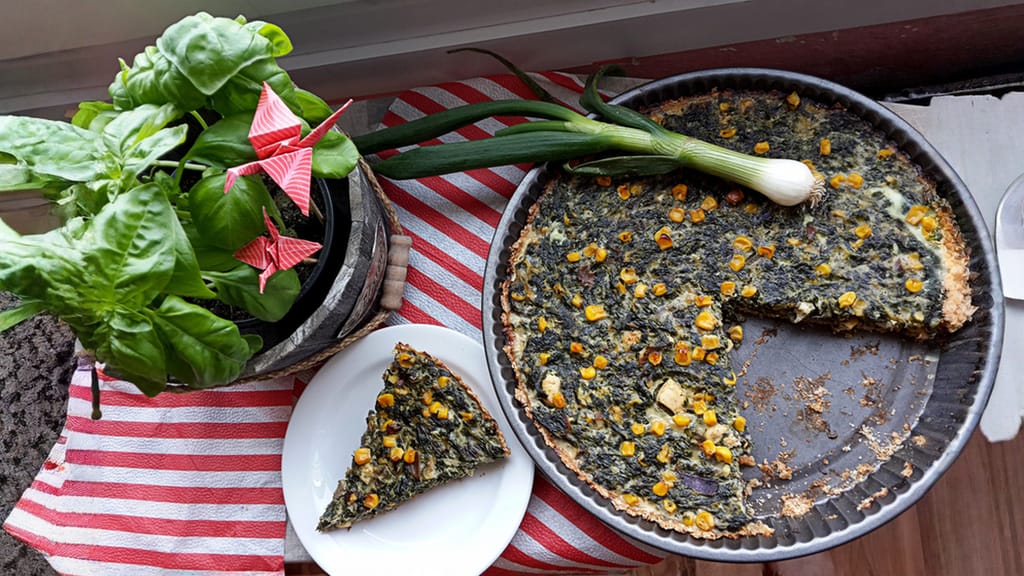
Spinach and chicken quiche
Spinach quiche with chicken
Fritters, omelets and frittata are the best way to use up leftover spinach: the egg holds it together and all you need is a pan. For all of them, the spinach must be squeezed dry, or the fritters fall apart and the egg won't set.
Spinach fritters and pancakes: chopped spinach with egg, flour and cheese, fried by the spoonful. Serve with a yogurt dip; the recipe is below.
Spinach omelet: wilt the leaves briefly in butter before pouring the eggs over. Feta, sun-dried tomatoes or ham are proven additions.
Spinach crêpes: a handful of baby spinach blended into the batter turns it green while the flavor stays mild. Fill them savory, for example with ricotta and ham.
Frittata: the baked sister of the omelet, which sets on the stove and finishes in the oven. It's sliced like a pie and is good cold in a lunchbox too.
Quesadilla: spinach and cheese in a tortilla. An unusual sweet-and-savory version is the quesadilla with apples, spinach and caramelized onion.
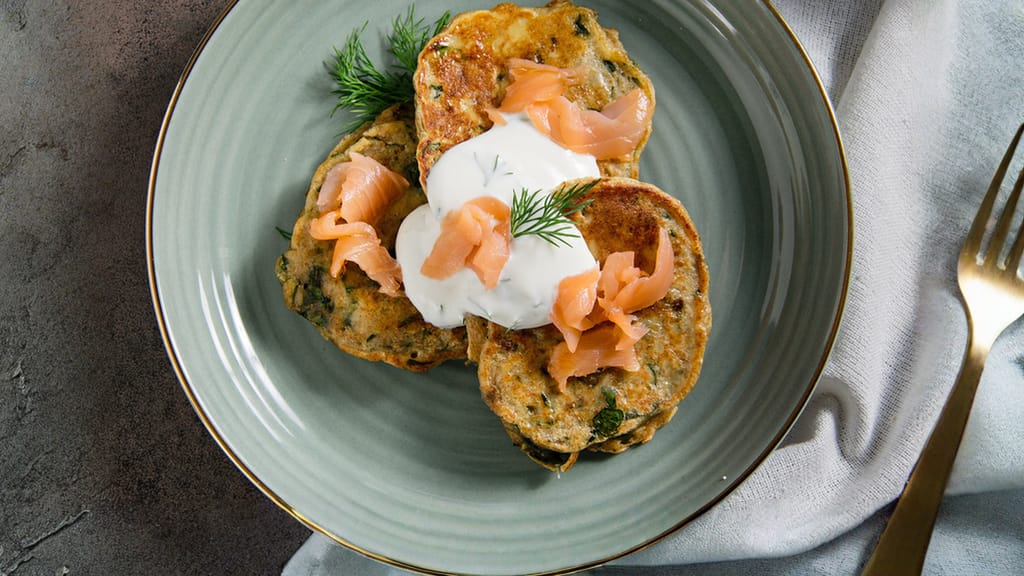
Spinach pancakes with yogurt dip and smoked salmon
Spinach fritters with yogurt dip and smoked salmon
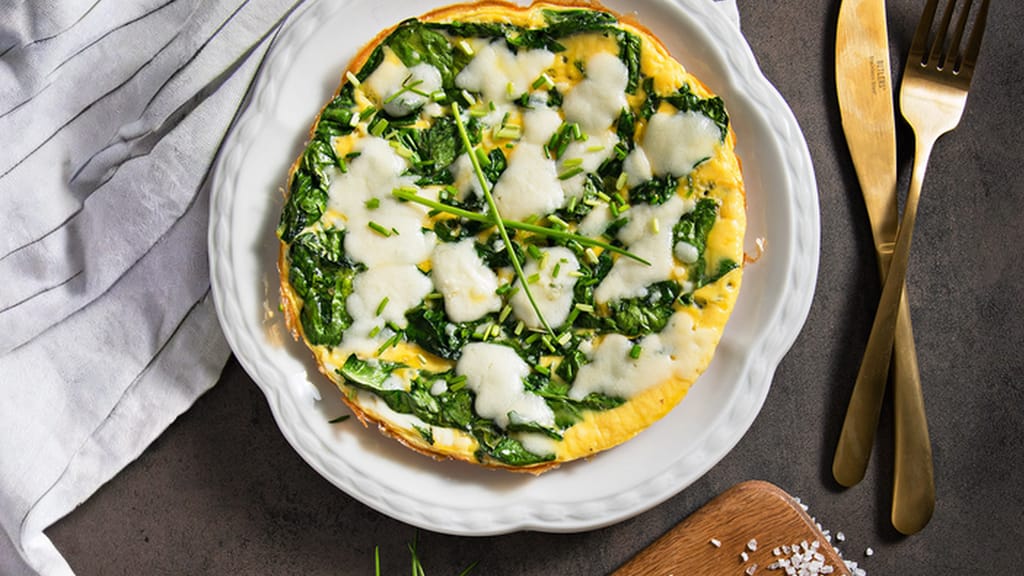
Egg frittata with baby spinach and fresh cheese
Egg frittata with baby spinach and fresh cheese
Baby spinach is young, tender spinach, harvested early, that you eat raw. It has a mild nutty flavor and isn't bitter. For a salad, just rinse the leaves, dry them (wet leaves won't take dressing) and dress right before serving, because they wilt quickly in dressing.
Proven combinations:
With strawberries and goat cheese: toasted almonds and balsamic dressing. A spring classic.
With pear and blue cheese: Gorgonzola or other blue cheese, walnuts and a honey-mustard dressing. More of an autumn one.
With roasted vegetables: leaves as a base under warm squash, beetroot or sweet potatoes, whose heat wilts them slightly. For inspiration: roasted vegetable salad with feta.
With egg and bacon: hard-boiled egg, crispy bacon, croutons and mustard dressing. A hearty lunch.
With chickpeas: roasted chickpeas, tomatoes, cucumber and a lemon-tahini dressing. You'll find more ideas in what to cook with chickpeas.
More fresh spring combinations are in Spring Salads with Eggs, Spinach and Radishes.
Kids accept spinach best when they don't see it as a green mass: hidden in fritters, muffins, a pasta sauce or a creamy soup. A few proven tricks:
Smooth and creamy: purée with cream and mashed potatoes, with no pieces of leaf. Add garlic carefully; one clove is enough for kids.
Fritters and pancakes: green patties straight from the pan are eaten by hand and vanish with a yogurt dip. The recipe is above.
Muffins: stir a handful of chopped, squeezed-out spinach into the batter for vegetable and cheese muffins.
Smoothies: you'll barely notice a handful of baby spinach in a banana or mango smoothie, as sweet fruit overpowers the green taste.
Green pasta: spinach blended with cream cheese into a smooth sauce. The green color is a game for kids, not "vegetables".
Start with small portions and pair spinach with something your child already knows and likes, such as mash, cheese or egg. If your child helps tear the leaves into a bowl or blend the smoothie, they'll eat it much more willingly.
One extra rule applies to small children: they should only get freshly cooked spinach, see the next section. You'll find more vegetables kids accept more easily in what to cook with broccoli and what to cook with zucchini.
You can reheat spinach if you cool it quickly after cooking, store it in the fridge and don't reheat it repeatedly. The issue is nitrates: spinach is among the vegetables with the highest content. According to the German Federal Institute for Risk Assessment (BfR), microorganisms convert nitrates in food into nitrites, and warmth speeds up this conversion. BfR therefore recommends not keeping cooked vegetables, especially spinach, warm for long and cooling leftovers quickly and storing them in the fridge until eaten.
BfR doesn't state the "reheat only once" rule in this form. It comes from the German health magazine Apotheken Umschau: adults should reheat spinach at most once, and only if it wasn't kept warm for long, was cooled quickly and has not been in the fridge for more than a day.
Infants and small children: BfR states that infants in the first months of life are especially sensitive to nitrites, though they usually receive only breast milk or formula. Citing the 2010 EFSA assessment, BfR adds that children with a bacterial infection of the digestive tract should not eat spinach. BfR also states that for infants and children aged 1 to 3 who eat more than one meal a day of spinach high in nitrates, an increased risk of methemoglobinemia cannot be ruled out. Apotheken Umschau recommends not giving spinach to infants before the fifth month of life at all, and not giving reheated spinach to children under three. Talk to your pediatrician about introducing spinach into complementary foods.
Fresh spinach keeps 1–2 days in the fridge, and frozen spinach keeps for months in the freezer at −18°C (0°F); follow the date on the package. To make the leaves last as long as possible:
Fresh leaves: don't wash them ahead. Wrap them dry in a paper towel and put them in a bag or container in the crisper drawer. Moisture is the biggest enemy, as the leaves turn slimy. Apotheken Umschau advises not storing fresh spinach in the fridge for more than two days.
Bagged baby spinach: use it within 1–2 days of opening. Throw away limp, dark or slimy leaves.
Freezing fresh spinach: wash the leaves, blanch for 1–2 minutes in boiling water, chill in ice water, squeeze out and freeze in portions (for example in muffin cups, then transfer to a bag). Blanching preserves color and flavor.
Cooked spinach: cool quickly and refrigerate (see the safety section above). Finished spinach can also be frozen: cooled, in a sealed container; thaw in the fridge and reheat once.
Frozen spinach: following the package directions, you can usually put it straight into the pot without thawing. For pies and fritters, thaw it in the fridge overnight and squeeze it out.
Classic creamed spinach goes with boiled potatoes or a potato dumpling and an egg: fried, hard-boiled or scrambled. If you want meat, add smoked pork, roast chicken, meatloaf or roast pork. Without meat, potatoes with an egg are enough; Parmesan suits spinach pasta and feta suits puff pastry.
That rough, squeaky feeling on your teeth comes from calcium oxalate crystals: spinach is high in oxalic acid, which binds with calcium to form tiny insoluble crystals that you feel as a film. It's harmless. If you're sensitive to the feeling, try spinach raw: intact leaves release less oxalic acid.
Spinach stays green if you cook it briefly and add lemon or another acid only right before serving. Long simmering and an acidic environment turn chlorophyll an olive-gray shade. Fresh leaves need just 1–2 minutes; give frozen spinach only as long as it takes to thaw and heat through. To freeze it, blanch the leaves for a minute and chill them straight away in ice water.
The closest substitute for spinach is Swiss chard, whose leaves are prepared the same way (cook the stems a few minutes longer). In spring, young nettles (blanch them so they don't sting) or wild garlic will work, though wild garlic is stronger and garlicky, so use less. Kale and collard greens work in soups and bakes, but need longer cooking.
Salty, creamy cheeses go best with spinach: feta and goat cheese in salads and puff pastry, ricotta in lasagna and cannelloni, Parmesan in pasta, and Gorgonzola or other blue cheese in a cream sauce. For bakes and quiche, Emmental or Gruyère melt beautifully. Go easy on the salt with cheese, as salty cheeses season the dish themselves.
Make dairy-free spinach with olive oil, garlic and onion. It turns creamy if you thicken it with a mashed boiled potato or a spoonful of oat or coconut cream, or blend it with a little vegetable stock. Nutmeg, lemon zest and a good olive oil at the end add flavor. Spinach made this way contains no dairy products, so it's also lactose-free, and it suits a vegan plate.
Put fresh spinach on the pizza under the cheese or add it after baking; always thaw frozen spinach and squeeze it out thoroughly. Leaves on top without cheese burn to paper in minutes in a hot oven (250°C / 480°F), while under mozzarella they stay juicy. The classic is pizza Fiorentina with spinach and an egg cracked in the middle for the last 4–5 minutes of baking.
One recipe worth heating the oven for, one tip, and one deal from the shop. Nothing else.