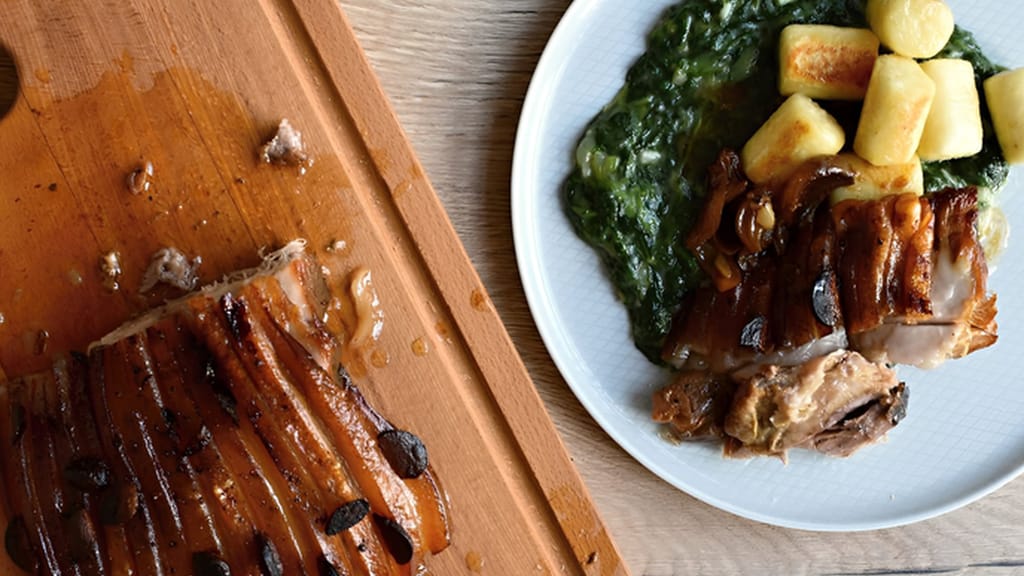
Crispy roast pork belly with homemade potato gnocchi and spinach
How to Cook Spinach: From Fresh Leaves, Frozen or Spinach Purée
Updated Nov 17, 2026
How to make spinach the Czech way: wilt fresh leaves or thaw frozen spinach, cook off the water, blend, combine with a light roux and milk, and add the garlic at the very end. The method is the same for all three starting ingredients, and only the first step differs. Fresh leaves have to be washed and wilted, frozen leaf spinach thawed and chopped, and spinach purée just needs heating through. Below you'll find all three versions, how to thicken spinach, why it turns watery or lumpy, how to blanch and freeze fresh leaves, and when cooked spinach can be reheated.
Czech creamed spinach always comes together in five steps, whatever you start with:
Prepare the greens: wilt fresh leaves, thaw frozen spinach in the pot, and just heat the purée through.
Cook off the water: cook uncovered, stirring, until no green liquid is left pooling at the bottom.
Blend or chop: blend leaf spinach with an immersion blender, coarsely or finely. The purée is already done.
Thicken: make a light roux with butter, whisk it into milk and stir it into the spinach.
Season: salt, pressed garlic at the very end, and a pinch of nutmeg if you like.
For four servings, plan on one package of frozen spinach or purée (around 450 g), or roughly 1 kg (about 2 lb) of fresh leaves. Those shrink to a fraction of their volume once wilted.
Seasonal baking plans, tested recipes and kitchen tricks that save you time. Unsubscribe in one click.
Wash the fresh spinach, wilt it in a pot with just the water clinging to the leaves after washing, squeeze it out, and then thicken it with a roux and milk (method below). This gives the greenest and most fragrant result of all three versions.
Washing: submerge the leaves in a bowl of cold water, swish them around and lift them out by hand. The grit stays at the bottom. Change the water and repeat until the bottom is clean. Do this at least twice, especially with spinach from a market or your own garden.
Stems: with older, large-leaf spinach, pull off the tough stems, since they don't soften and are unpleasant in the finished dish. Baby spinach can be used whole.
Wilting: put the wet leaves in a wide pot, cover and turn them a few times over medium heat. Once they wilt and darken, they're done. Wilting takes just 2–3 minutes, so don't cook them longer or they'll turn gray.
Squeezing: drain them in a sieve and press the water out with a wooden spoon. The more water you remove here, the less you'll have to cook off in the pot and the less flour you'll need.
Then chop the leaves with a knife or blend them, and combine with the roux. Spinach is at its best in spring and then again in autumn. For what else grows at that time, see our overview of spring vegetables from March to June.
Don't thaw frozen spinach beforehand. Put it in the pot frozen and heat it covered over low heat until it melts. Then cook off the liquid uncovered and thicken with a roux and milk (method below).
Producers give similar times on the package. For both leaf spinach and purée, Nowaco recommends simmering for about 10 minutes after thawing, stirring occasionally. For chopped leaf spinach, Bonduelle advises heating it covered with a little water over low heat for about 5 minutes. Go by what your package says, since portions and how finely it's chopped vary.
Frozen leaf spinach is whole or coarsely chopped leaves. After thawing, blend it with an immersion blender, or leave it coarse if you like spinach "with bits."
Cubes and portions thaw faster than one big block. You can break a block up with a wooden spoon as it heats.
Extra water is usually not needed unless the package instructions call for it. Frozen spinach releases plenty on its own, so a spoonful in the bottom of the pot is enough to keep it from sticking.
Spinach purée is spinach that's already been blended smooth, so you only need to thaw it in a pot, cook off the water and thicken it with a roux and milk. It's the fastest route to the classic smooth Czech spinach you know from school canteens, only better.
Less milk: the purée is thinner than leaf spinach, so add the milk gradually, and only once you see how thick it is.
Proper evaporation: let it bubble uncovered for a while and stir right down to the bottom. A smooth mass likes to scorch.
Flavor: purée tends to taste flatter than fresh leaves. More garlic helps, as does an extra bit of butter at the end or a spoonful of cream.
Classic Czech spinach is thickened with a light roux made from butter and all-purpose (plain) flour, whisked into milk. For a package of spinach (around 450 g), use roughly 2 tablespoons of butter, 1–2 tablespoons of all-purpose flour and 100–200 ml of milk.
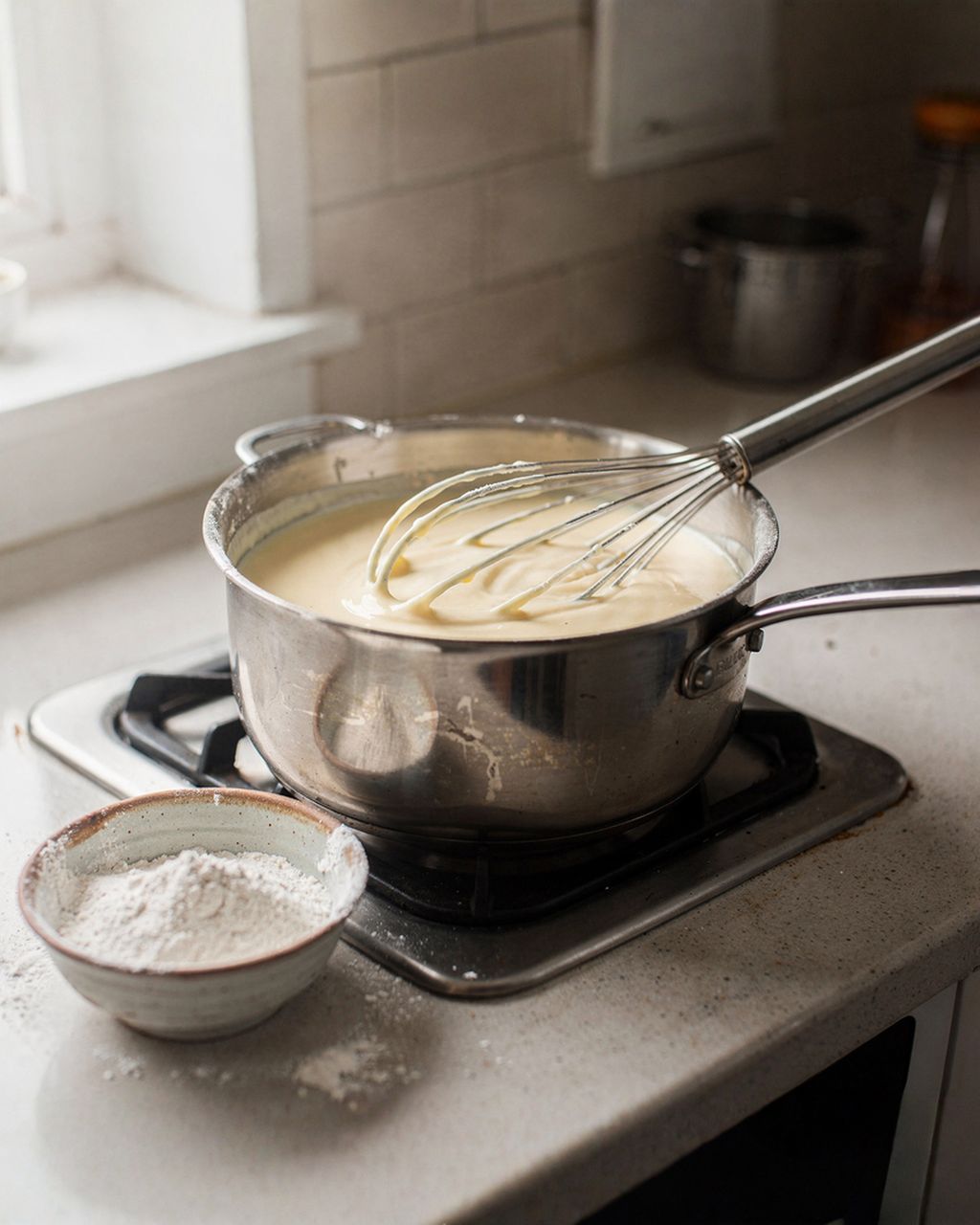
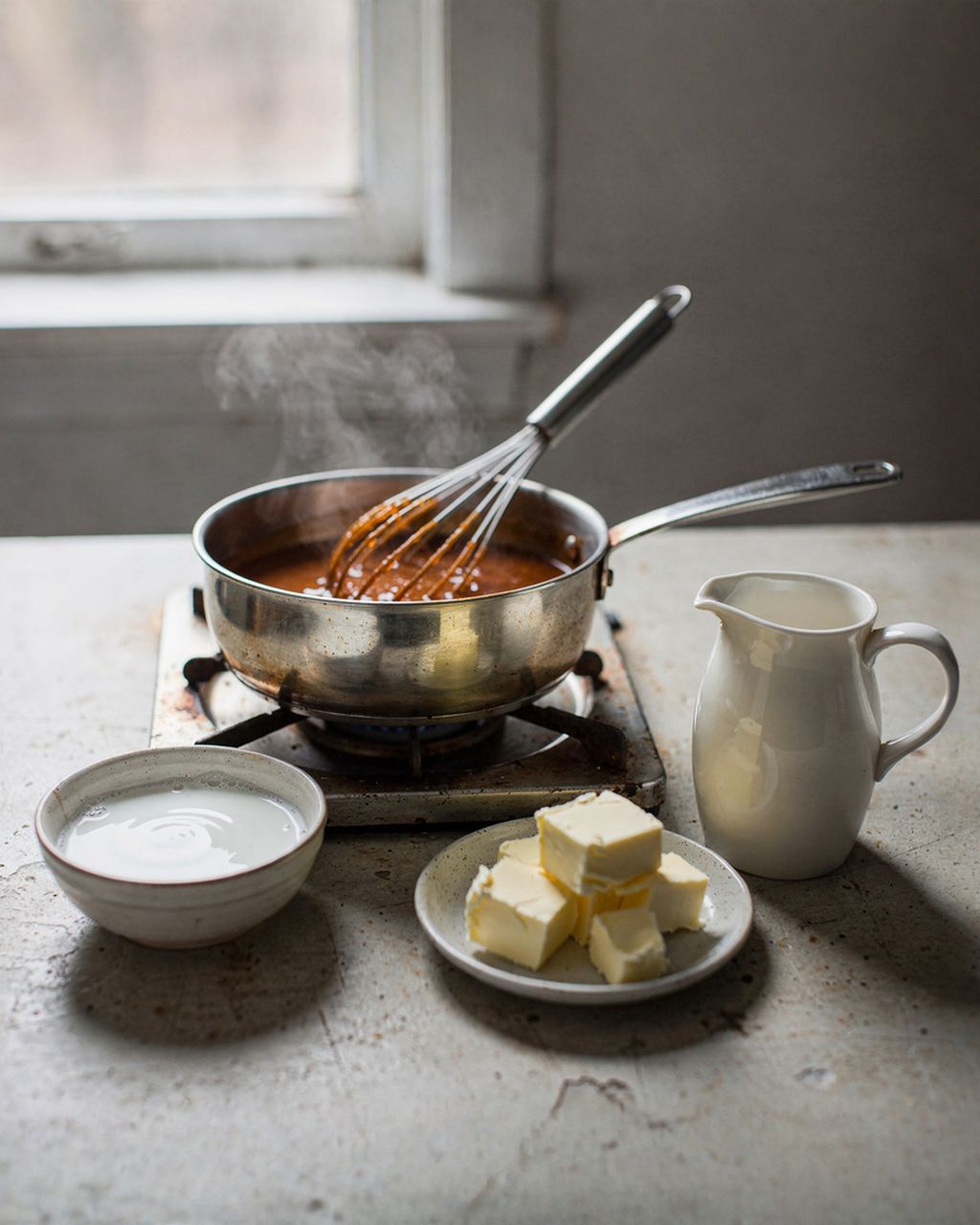
Roux: briefly cook the flour in the butter, just until it stops smelling raw. It should stay pale, because a dark roux would give the spinach a nutty flavor and a brownish tint.
Milk: pour cold milk into the roux and whisk it in right away. Cold liquid into a warm roux is the surest protection against lumps.
Combining: stir the smooth white paste into the cooked-down spinach and simmer for 3–5 minutes, stirring, so the flour cooks through and the spinach thickens.
Garlic: press 2–4 cloves and stir them in right at the end, even off the heat. The flavor stays strong and doesn't turn bitter.
Seasoning: salt, a pinch of nutmeg if you like, and a little butter on the plate.
If you'd rather skip the flour, thicken the spinach with a spoonful of potato starch mixed into cold milk, with cream, or with a few spoonfuls of mashed boiled potatoes. Without a roux, spinach tends to be lighter and smoother.
Almost every spinach problem comes down to one of three causes: water that wasn't cooked off, warm milk added to the roux, or overcooking.
Watery spinach: green liquid runs out of it onto the plate. You didn't cook off the water before adding the roux. Next time, cook the spinach uncovered until nothing pools at the bottom. To fix it now, simmer it a little longer and, if needed, add a teaspoon of starch in milk.
Lumps: the roux and milk were at the same temperature, or you poured the milk in all at once. An immersion blender right in the pot fixes lumps.
Grayish-green color and dull flavor: the spinach cooked too long or under a lid. Just wilt the leaves and, after adding the roux, simmer only 3–5 minutes, until the flour has cooked through.
Scorched bottom: a smooth purée with flour sticks. Stir right down to the bottom and keep the heat low.
Bitter garlic: it went into the pot too early and fried. Add it at the very end.
The best way to freeze fresh leaf or baby spinach is to blanch it briefly, cool it quickly, squeeze it out and pack it in portions. The National Center for Home Food Preservation (NCHFP, a US center for home food preservation) recommends this method for spinach and most leafy greens:
Wash the leaves and remove the tough stems.
Boil them for 2 minutes in boiling water.
Immediately transfer them to ice water for the same length of time, that is 2 minutes.
Let them drain and squeeze the water out.
Pack them into bags or containers, leaving about 1.3 cm (½ inch) of headspace, since the contents expand when frozen. Write the date on them.
Blanching stops the enzymes that would make the spinach lose color and flavor in the freezer. According to NCHFP (as presented by the University of Nebraska–Lincoln), use it up within a year in the freezer. Squeezed-out balls or a flat bag portion easily. Cook it straight from the freezer, still frozen, just like store-bought frozen spinach.
For blanching times for other vegetables and what's not worth freezing, see the article How to Freeze Vegetables: Blanching and Times.
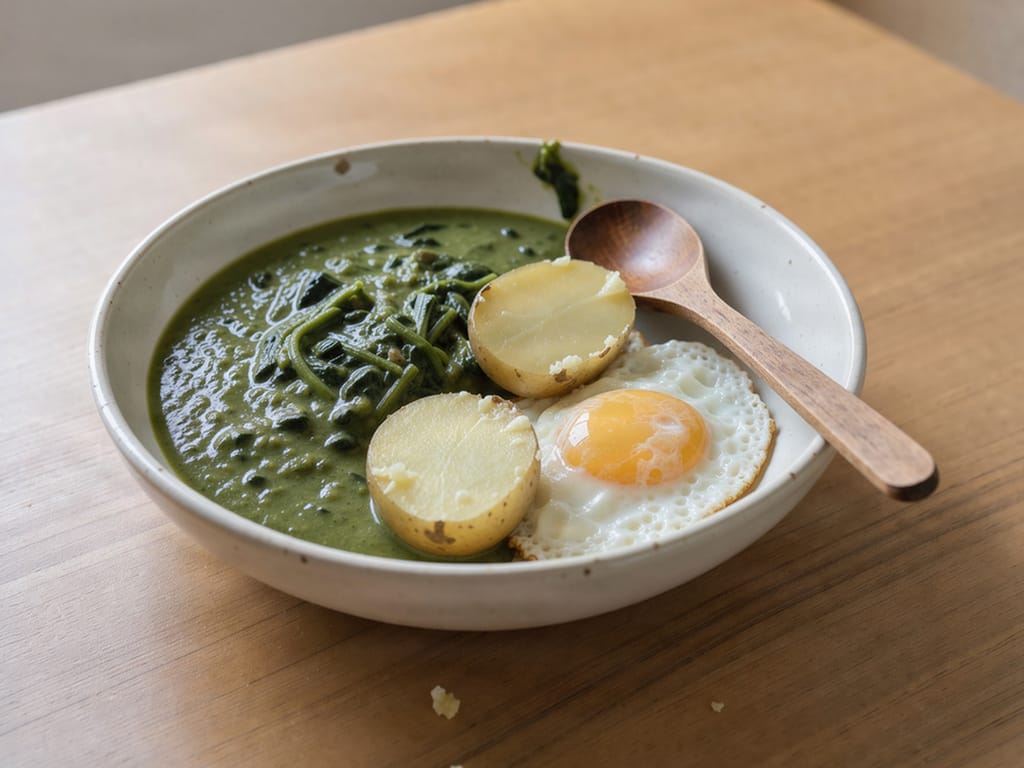
Czech spinach goes with boiled potatoes or potato dumplings and eggs, fried or hard-boiled. It also works with meat and fish:
Crispy roasted pork belly with homemade noky and spinach: a Sunday classic where spinach balances the rich meat.
Salmon with a smoky aroma and quick spinach: a fast version where the spinach is simply wilted.
Instead of a fried egg, try a poached one. How to cook it so it holds its shape is covered in the article Poached Eggs in a Pot and in the Microwave.
The rest of your leaves don't have to end up in the pot. Bake them into an egg frittata with baby spinach and fresh cheese or a spinach quiche with chicken.
Crispy roast pork belly with homemade potato gnocchi and spinach
Roasted pork belly with homemade noky and creamed spinach
You don't need to thaw frozen spinach before cooking. Just put it in the pot frozen. Over low heat with the lid on, it thaws by itself, and producers such as Nowaco say so right on the package. Thawing it on the counter only lengthens the time the spinach sits at room temperature, and you gain nothing from it.
Roughly 1 kg (about 2 lb) of fresh leaves replaces one package of frozen spinach or purée (around 450 g). Fresh leaves are mostly water, and once wilted and squeezed out they shrink to a fraction of their volume. Buy a bit more baby spinach, since it is more delicate and loses even more volume.
You can freeze baby spinach without blanching, but it keeps for a shorter time and is then only good for cooking. The NCHFP recommends blanching leafy greens for 2 minutes before freezing, because this stops the enzymes that make them lose color and flavor in the freezer. Baby spinach frozen raw goes limp once thawed, so it won't work in a salad. Raw leaves are better saved for spring salads with spinach.
Yes, cooked spinach with roux can be frozen. Cool it quickly and freeze it in a shallow container. For soups and stews at −18°C (0°F), USDA FSIS gives a quality period of 2–3 months. After thawing, the dairy may separate a little, so whisk it while reheating. Reheat it only once, until piping hot. Why some sauces split after thawing is explained in the article How to Freeze Soup and Sauce.
One recipe worth heating the oven for, one tip, and one deal from the shop. Nothing else.