How to Freeze Vegetables: Blanching, Times and What Not to Bother Freezing
Broccoli and Cauliflower: How Long to Cook, Store and Freeze Them
Updated Nov 17, 2026
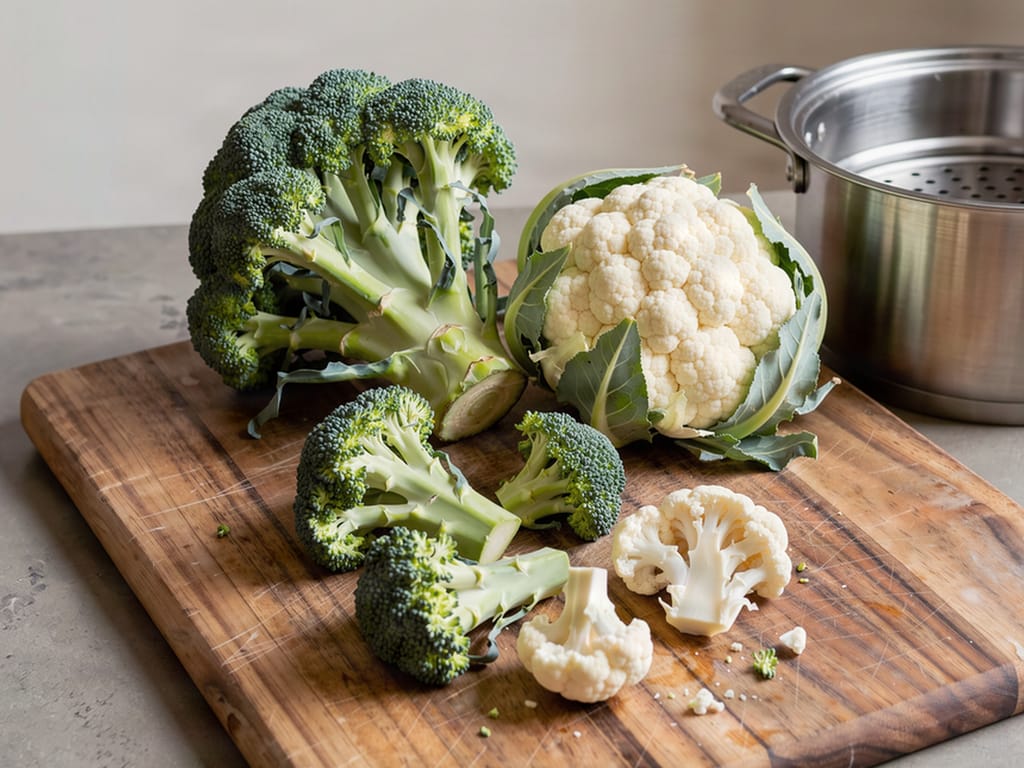
Broccoli and cauliflower cook fast: florets take 3–6 minutes in boiling water or 6–10 minutes steamed (according to University of Maine Cooperative Extension). Raw, they keep 3–5 days in the fridge (USDA FoodKeeper), and they only go in the freezer after blanching for 3 minutes. Below you'll find exact times, how to keep broccoli green and cauliflower firm, how to store them, and what to do with cooked leftovers.
Cook broccoli and cauliflower florets in boiling water for 3–6 minutes, or steam them for 6–10 minutes. These ranges come from University of Maine Cooperative Extension and work well in the kitchen: use the low end for some bite, the high end for soft florets destined for mash or soup.
Broccoli or cauliflower florets in water: 3–6 minutes
Florets steamed: 6–10 minutes
Broccoli stalks (peeled, sliced) in water: 1–2 minutes longer than florets
Broccoli stalks steamed: 8–15 minutes
Whole cauliflower (about 700 g / 1.5 lb) in water: 10–15 minutes
Whole cauliflower steamed: about 20 minutes
Florets in the microwave (about 450 g / 1 lb): 6–8 minutes, depending on the wattage
Time starts from the moment the water returns to a boil. Test with a knife: for some bite, it should slide into the floret stem with slight resistance; for mash and soup, with none. Florets of the same size cook at the same speed, which is half the battle.
If you're cooking them together, cut the cauliflower into slightly smaller florets so both finish at the same time.
Seasonal baking plans, tested recipes and kitchen tricks that save you time. Unsubscribe in one click.
Cook it briefly, and keep the lid off for the first few minutes to keep broccoli bright green, as University of Maine Cooperative Extension advises. A large pot of salted water helps too.
What makes the difference:
Plenty of water. If you tip the florets into a small pot, the water stops boiling and the broccoli stews instead of cooking. In a big pot, the boil comes back quickly.
No lid at the start. Volatile acids from the vegetable escape with the steam instead of falling back into the water and turning the broccoli olive-colored.
Watch the clock, not your eyes. A gray-green color and crumbling tops mean you're too late. It's better to take it out a minute early, since the florets finish cooking in their own heat.
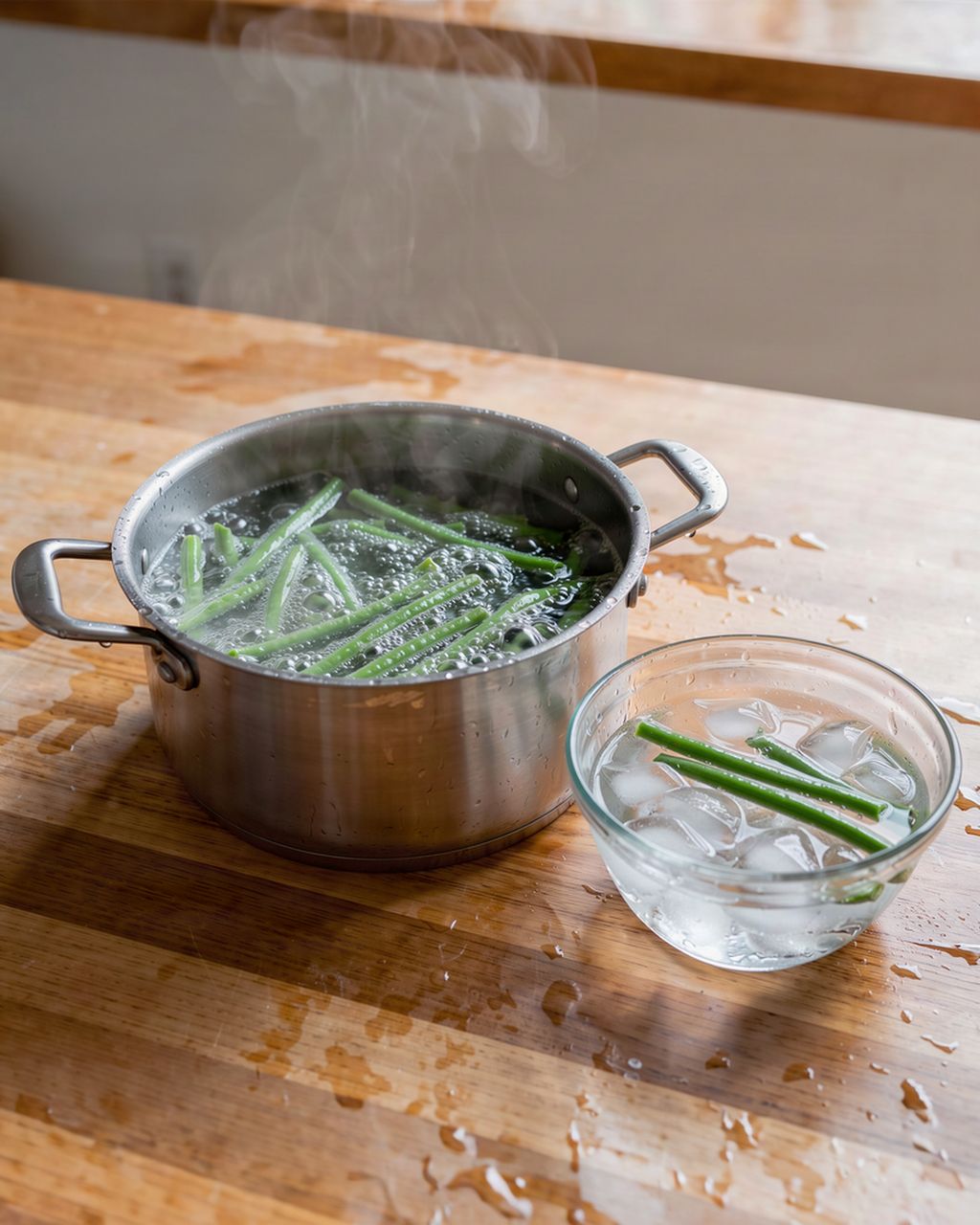
Shock in cold water. If you're not serving the broccoli right away (salad, prepping ahead), move it to ice water after cooking. Cooking stops and the color stays.
Don't throw out the stalk. Peel off the tough skin, slice it into rounds and add it to the water 1–2 minutes before the florets.
If you'd rather have broccoli browned and caramelized than boiled, take a look at oven-roasted vegetables, which is a different technique with different timings.
Cook cauliflower florets for 3–6 minutes, or a whole head for 10–15 minutes (University of Maine Cooperative Extension). Longer won't make it any softer, it will just turn watery and smell of sulfur. Go ahead and salt the water.
That typical "cauliflower" smell comes from sulfur compounds, which are released in greater amounts the longer cabbage, broccoli and cauliflower cook. Cooking briefly with the lid off is therefore also the best defense against smells in your kitchen.
A few more tips:
For a whole head, cut a cross into the core so the center cooks at the same time as the edges.
For mash or soup, feel free to go to the upper end of the range or beyond, since softness is what you want there, as in creamy cauliflower soup with cheese.
For bakes and fritters, cook it for less time and drain it well. Watery cauliflower makes batter soggy and waters down a baking sauce. Try cauliflower fritters the way my mom makes them or cauliflower baked with cashews.
Raw broccoli and cauliflower keep 3–5 days in the fridge according to the USDA FoodKeeper database; University of Maine Cooperative Extension recommends using them within 4 days for best quality. According to USDA FSIS, your fridge should be at 40°F (4°C) or below.
How to store them so those days really last:
Don't wash them ahead of time. Moisture between the florets speeds up spoilage. Rinse them just before cooking.
Loose in a bag, in the vegetable drawer. The bag holds in moisture, but don't tie it tightly, because vegetables breathe.
Whole, not cut. A whole head keeps better than individual florets; cut only as needed.
Keep broccoli away from apples, pears and bananas. Fruit releases ethylene, and broccoli responds by yellowing quickly.
Broccoli is the more sensitive of the two: it shows its age first, as the florets start opening into tiny yellow flowers and lose their firmness. Cauliflower holds up a bit better, though brown spots may appear on the surface over time. You can trim those off if the rest is firm and doesn't smell musty.
Before freezing raw broccoli or cauliflower, blanch it for 3 minutes in boiling water, then chill it right away, dry it and freeze it. This method comes from the US National Center for Home Food Preservation (NCHFP, University of Georgia, supported by the USDA). Blanching stops the enzymes that would otherwise discolor the vegetables in the freezer and spoil their flavor and texture.
The method according to NCHFP:
Cut into florets. Split broccoli lengthwise into pieces no more than 4 cm (1½ in) wide, and cauliflower into pieces of about 2.5 cm (1 in).
Soak for 30 minutes in salted water (about 1 teaspoon of salt per liter). This draws tiny insects out of the florets, which is especially worthwhile with garden vegetables.
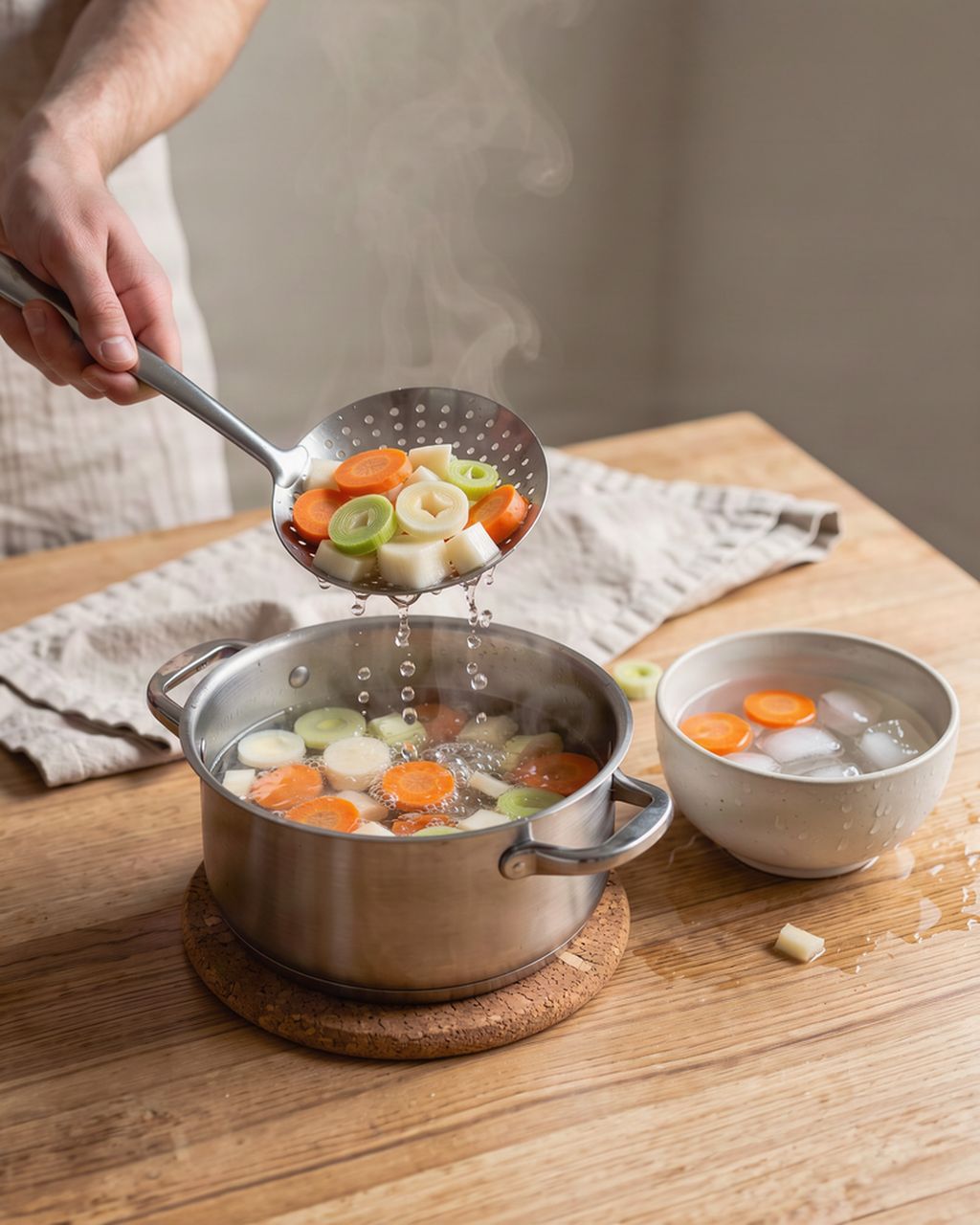
Blanch. Broccoli for 3 minutes in boiling water, or 5 minutes steamed. Cauliflower for 3 minutes in boiling water, with the same amount of salt added (about 1 teaspoon per liter).
Chill right away in ice water for about as long as they were cooked, and drain well. Wet florets freeze together in one block.
Pack and freeze. NCHFP advises packing with no headspace, meaning you press the air out of the bag. You can first freeze the vegetables spread out on a baking sheet, then tip them into a bag, so the florets stay loose.
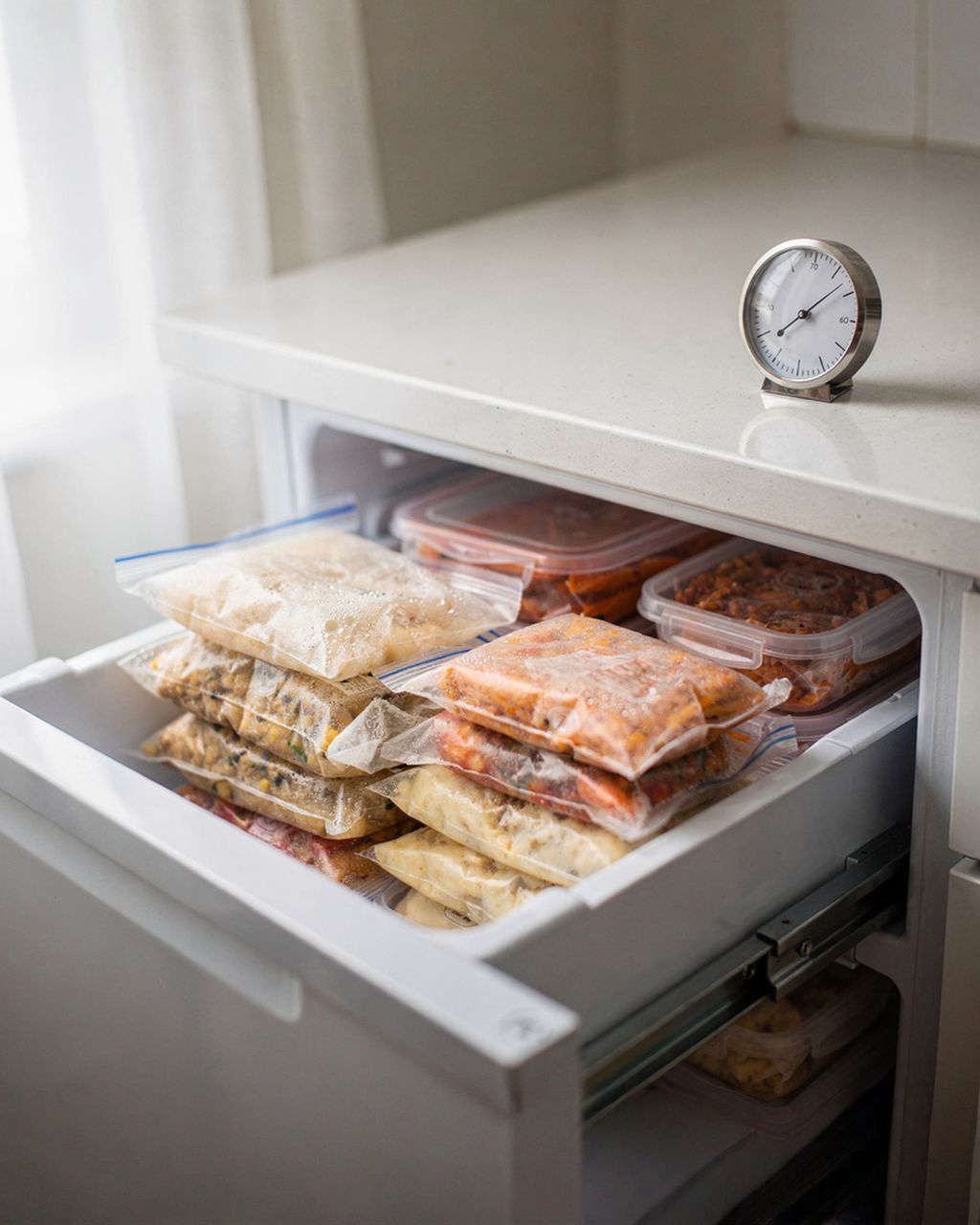
In a freezer at 0°F (−18°C), the temperature recommended by USDA FSIS, blanched broccoli and cauliflower stay at best quality for 10–12 months according to USDA FoodKeeper. They're safe for longer, they just lose flavor. For how to pack and label bags properly, see our article on storing food in the freezer.
Don't thaw frozen broccoli and cauliflower: drop them straight into boiling water or soup. Blanching has already partly cooked them, so they need less time than fresh.
Yes, you can freeze cooked cauliflower and broccoli. Like other leftovers, they keep 3–4 months in the freezer (USDA FSIS). Just expect them to be softer and more watery after thawing, because ice crystals tear the cell walls of the already softened vegetable.
What that means in practice:
They're no longer suitable as a side dish with some bite. Use cooked, frozen florets in soup, mash, sauce, bakes or fritters.
Freeze soup as a whole. A blended broccoli cream soup with coconut milk handles the freezer better than individual florets.
Chill quickly. According to USDA FSIS, put cooked food in the fridge or freezer within 2 hours of cooking; divide it into shallow containers so it cools quickly.
Reheat thoroughly. USDA FSIS recommends reheating leftovers to 165°F (74°C) inside.
A little leftover cooked broccoli from yesterday also makes an ideal pie filling, for example in whole-grain quiche with broccoli and smoked ham or carrot and broccoli quiche.
Cooked cauliflower and broccoli keep 3–4 days in the fridge, like other leftovers, according to USDA FSIS. Refrigerate them (at 40°F/4°C or below) within 2 hours of cooking, in a shallow airtight container, and reheat them thoroughly before eating.
Frozen cauliflower is mostly watery because it gets overcooked: blanching has already half-cooked it, so it needs less time than fresh. Thawing before cooking also makes it watery (the cauliflower releases liquid and turns soft), as does freezing wet florets. So cook it straight from frozen, briefly, and drain it well afterward. For bakes and fritters, pat it dry with a kitchen towel as well.
No. Cooked broccoli and cauliflower shouldn't sit at room temperature for more than 2 hours, or more than 1 hour in heat above 32°C (90°F) (USDA FSIS). Anything left out overnight belongs in the trash, even if it smells fine.
Yes, you can eat broccoli that is only just starting to yellow, as long as it's firm and has no slimy surface, mold or musty smell. Yellowing means aging, not spoilage: the flavor will be stronger and a little bitter, and the texture less crisp. That makes it better suited to soup, mash or a bake than a side dish with some bite. If the broccoli is soft, slimy or smells off, throw it out.
One recipe worth heating the oven for, one tip, and one deal from the shop. Nothing else.