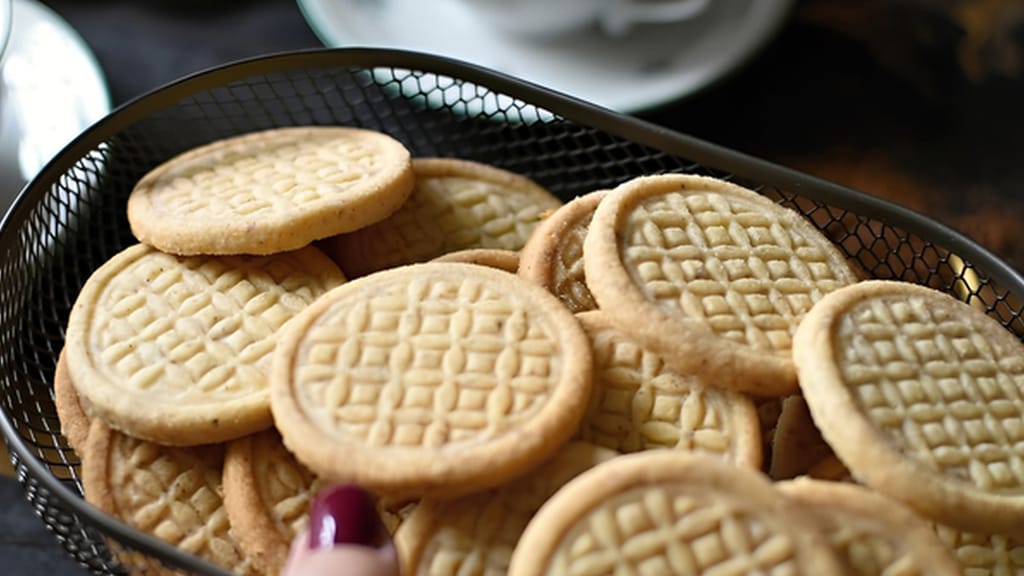
Homemade almond cookies
What to Bake with Almonds: Almond Cookies, Cantuccini, Macarons, Tarts, Sugared Almonds and Almond Milk
Updated Nov 25, 2026
What can you bake with almonds? Almond cookies and cantuccini are the surest bets. For a festive table, try macarons and tarts or cakes with an almond filling or crumble topping. For no-bake treats, make coconut balls and granola bars. And at Christmas you can make sugared almonds in a quarter of an hour, smelling just like a stall at an Advent market. Under each treat you'll find the method, the temperatures and the places where things most often go wrong.
Here is what you can mainly bake with almonds, ordered from the easiest to the most demanding:
almond cookies made with ground almonds or almond flour, cut out or stamped,
cantuccini, Italian twice-baked dry cookies, ideal for a cookie tin or as a gift,
tarts and cakes with almonds: almond filling in a tart, almond crumble topping, ground almonds right in the dough,
macarons made from almond flour, egg whites and sugar syrup, the most demanding of the lot,
no-bake coconut balls and granola bars with almonds,
sugared, caramelized, roasted and salted almonds, made as a technique in a skillet or in the oven,
almond milk from unpeeled almonds, which isn't baked but belongs here.
Before you start, check which form of almonds the recipe calls for. Ground almonds make dough tender and give a strong almond flavor, and they replace part of the flour. Sliced almonds are sprinkled on top or into a crumble, where they toast to golden and crunchy in the oven. Unpeeled almonds with their skins have a fuller, slightly bitter flavor and suit roasting, almond milk, or going whole inside coconut balls. Peeled (blanched) almonds are pale and milder, which is why macarons and light Christmas cookies call for them.
Almonds are among the most versatile ingredients in the whole sweet baking and desserts category: they go with butter, citrus, vanilla, cinnamon, chocolate and fruit. If you're after nuts in general, walnuts, hazelnuts and pecans too, take a look at our roundup of what to bake with nuts.
We send seasonal cooking and baking plans and recipes made from everyday ingredients. Unsubscribe in one click.
Ground almonds are best for cut-out almond cookies, a light flourless almond cake and a moist fruit cake. They are rich in fat, so they soften the dough and keep baked goods from drying out. They also contain no gluten, which is why cookies almost always add wheat or spelt flour to hold their shape.
How ground almonds differ from fine almond flour and when you can swap them is covered in a separate article, almond flour vs. ground almonds. Here are three recipes where ground almonds play the lead role.
Homemade almond cookies with ground almonds: Combine vegetable fat, semi-coarse flour (Czech polohrubá, slightly grittier than all-purpose), 100 g ground almonds, powdered sugar, an egg and salt into a smooth dough and chill it for an hour so the fat firms up and the dough doesn't stick. Roll it out to about 4 mm thick, cut out shapes or stamp them, and bake at 170°C (340°F) with the fan on for 15–20 minutes until golden. They come out of the oven still soft and only crisp up on the rack, so don't bake them longer just because they aren't hard.
Swedish almond cake with ground almonds and almond brittle: The base is just a meringue of five egg whites with powdered sugar and 200 g ground almonds, no flour, baked at 170°C (340°F) for 25–30 minutes. Between two thin layers goes a buttercream of egg yolks cooked in cooking cream with sugar, plus almond brittle, meaning almonds coated in caramel and blitzed finely. Sliced almonds toasted dry in a skillet go on top. Allow about six hours including cooling, though no step is difficult.
Plum and ricotta cake with almonds: Beat ricotta with cane sugar, vanilla sugar and orange zest, add the egg yolks, melted butter and a mixture of all-purpose (plain) flour, 50 g ground almonds and baking powder, and finally fold in the whipped egg whites. Arrange plums marinated in brandy and vanilla sugar on top, sprinkle with sliced almonds and bake at 170°C (340°F) for 40–50 minutes. The center can stay slightly moist and will set in the pan as it cools.
One more tip for all three: before baking, taste one almond or a teaspoon of the ground ones. Fresh ones smell sweet and delicate, while rancid ones have a sharp, oily, bitter taste that no sugar can cover up.
Homemade almond cookies
Homemade almond cookies with ground almonds, for cutters and stamps
Tender almond cookies rely on half almond flour and half whole-grain spelt flour, butter and a single egg yolk, and above all on letting the dough rest overnight. If you want to bake the same day, at least an hour in the fridge will do, but rested dough rolls out better and holds its pattern.
Mix the almond flour with the spelt flour (wheat works too), 70 g powdered sugar and a pinch of salt, add the egg yolk and softened butter, and quickly knead into a cohesive dough. Take it out of the fridge half an hour before baking so it softens, because completely cold dough cracks when rolled. Roll it out to half a centimeter, cut out shapes and bake at 160°C (320°F) for just 5–8 minutes.
Take them out when the edges start to turn golden. The center is still pale and soft and firms up as it cools. The low temperature and short time are no accident: almond flour is high in fat and the dough contains sugar, so it browns fast and the cookies would turn bitter if baked longer. If you have cutters with an embossed pattern, dip each one in flour before cutting and press deeply, because the pattern spreads a little in the oven.
For more cookies, from chocolate cookies to ones for kids, see the article homemade cookies: chocolate chip, almond and cantuccini.
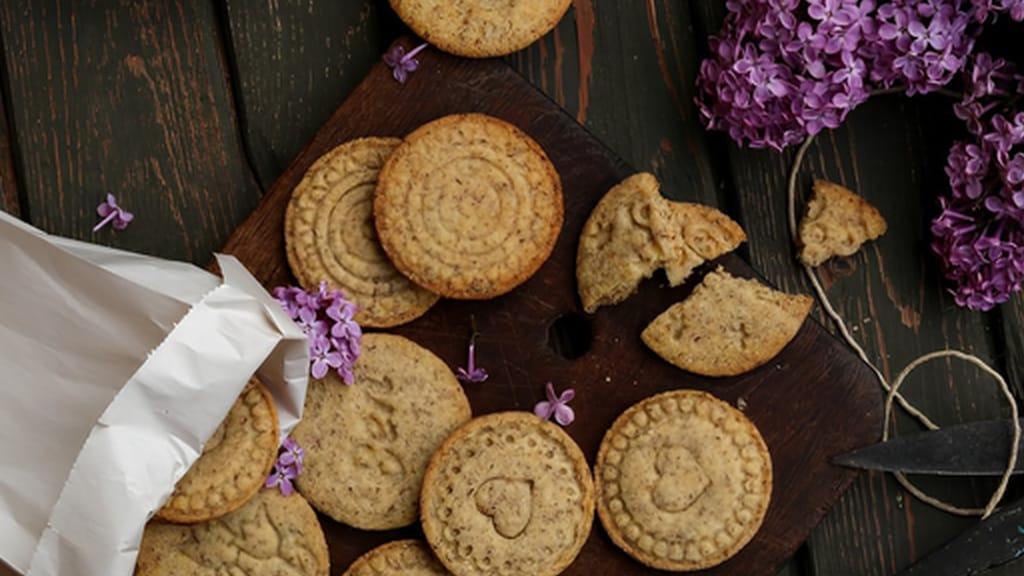
Delicate almond shortbread cookies
Tender almond cookies made with almond and spelt flour
Cantuccini are dry cookies from Tuscany with coarsely chopped almonds, baked twice: first as a log, then sliced. That's why they stay crisp for a long time and make one of the best edible gifts.
In the recipe for cantuccini, Italian almond cookies, you whisk sugar, five eggs, salt and dried lemon zest into a thick, pale foam, then add melted butter, flour, baking powder and 250 g coarsely chopped almonds. Roll the dough into logs about 3 cm in diameter, lightly flatten them with your palm on the baking sheet so the cookies get their typical oval cross-section, brush with beaten egg and bake at 180°C (350°F) for 25–30 minutes until golden. While still hot, slice into pieces about 2 cm wide, lay them cut side up and return them to the oven to dry out.
The slicing is the only critical point. A cooled log crumbles, while a hot one slices cleanly, so have a sharp knife ready and cut with one firm stroke, not sawing. Keep the almonds really coarse: a big piece looks good in the cut and doesn't fall out. In Italy, finished cantuccini are dunked in coffee or dessert wine.
If you enjoy Italian baking further, from ricotta to mascarpone, carry on to ingredients for Italian desserts.
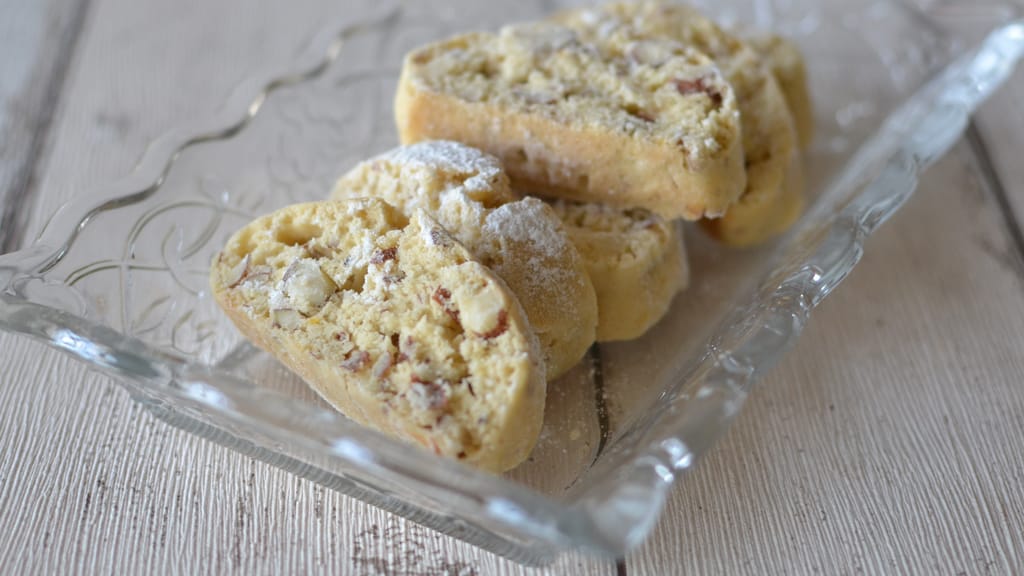
Cantuccini – italian almond biscuits
Cantuccini, Italian twice-baked almond cookies
Macarons are almond shells made from almond flour, powdered sugar and egg whites, sandwiched with a filling. The Italian method, which all three recipes below use, whips the egg whites with hot sugar syrup. The meringue is thick and glossy, and pastry chefs usually consider it more reliable than one whipped with just dry sugar.
Macarons with the Italian method: Separate the egg whites two days ahead and keep them covered in the fridge, then take them out 4 hours before baking to warm up. Briefly pulse the almond flour with powdered sugar, mix in half of the egg whites, whip the rest to stiff peaks and pour in a thin stream of syrup made from granulated sugar and water, watching its temperature with a thermometer. Combine the two mixtures, color with gel coloring if you like, and fold until the batter flows from the spatula in a continuous glossy ribbon. Then pipe circles about 3 cm across, rap the tray on the counter and leave them to dry until the surface no longer sticks to a finger.
Macarons with vanilla and chocolate filling: Here the egg whites rest in the fridge for about five days, the syrup is cooked to exactly 118°C (244°F) and the meringue is whipped until it cools to about 50°C (122°F). Dried shells (an hour or two) bake at 165°C (330°F) for 12–15 minutes and are filled only the next day. The filling is a buttercream of egg whites and sugar whisked over a water bath to 71°C (160°F), into which butter is then whipped; half gets vanilla seeds, the other half a chocolate ganache of cream and dark chocolate.
Salted caramel macarons: The shells use the same method with syrup cooked to 118°C (244°F) and bake at 180°C (350°F) for 12–13 minutes, preferably one tray at a time. The filling is a caramel of granulated sugar melted in 50 g batches, with butter, salt and hot cream, which after cooling is whipped with softened butter for about 8 minutes into a pale cream.
Three things matter more than the recipe:
The batter must be mixed exactly right: undermixed it stays lumpy with a peak, overmixed it spreads on the tray.
The surface must dry to a skin before baking, otherwise the shells crack.
The oven must bake at the temperature it shows. Home ovens are off by a few degrees, and macarons are where you notice it, so a separate oven thermometer is worth it.
The salted caramel recipe leaves the finished macarons in the fridge until the next day. In that time the filling softens the shells slightly from the inside, so they have a delicate shell and a tender center.
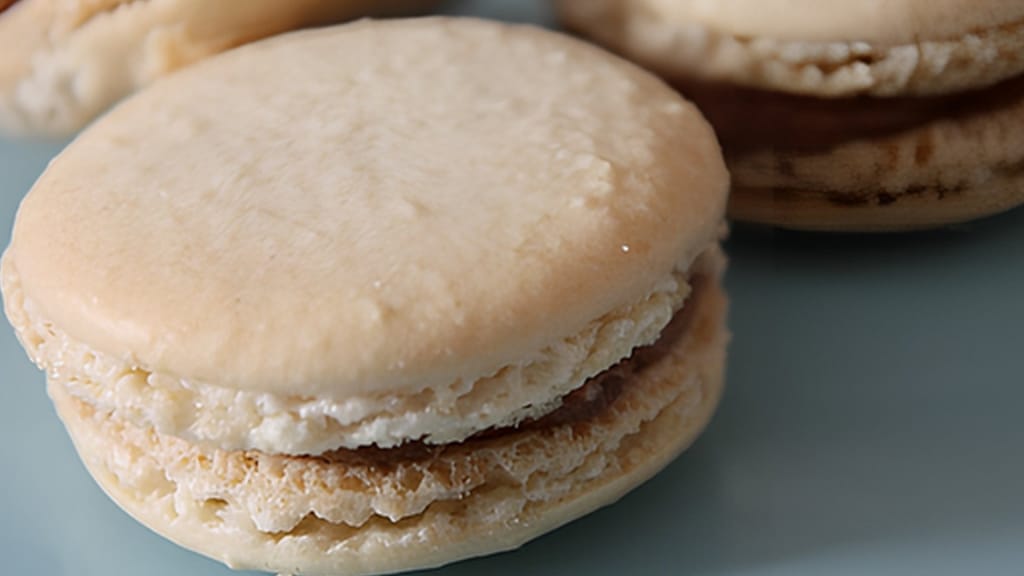
Macarons (italian meringue method)
Macarons made with the Italian method from almond flour and sugar syrup
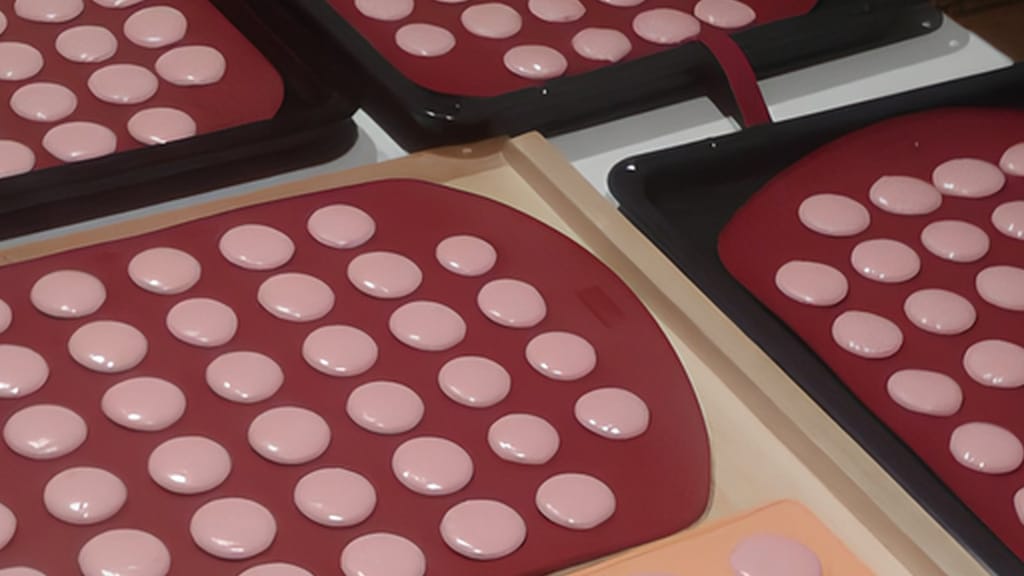
Macarons with vanilla and chocolate cream
Almond macarons with vanilla and chocolate filling
In baking, almonds work in three ways: as a creamy almond filling under fruit, as slices in a buttery crumble, and as ground almonds right in the dough (as in the plum ricotta cake above).
Strawberry tart with white chocolate and almonds: A tender tart shell of all-purpose (plain) flour, powdered sugar, almond flour, butter and eggs is first blind-baked for 15 minutes, then spread with an almond filling of butter whipped with sugar, eggs, almond flour and all-purpose flour, and baked another 15–20 minutes until golden. On the cooled base goes a puree of frozen strawberries set with gelatin, then dots of whipped white chocolate ganache with cream and vanilla, and quarters of fresh strawberries. The ganache needs a long chill, so plan to prepare it a day ahead.
Apricot koláče with quark and almond crumble: A yeast dough of all-purpose flour, milk, egg yolks, butter and lemon zest is divided into 15 balls, left to rise twice, and then a nearly paper-thin well is pressed into the center of each. In goes a quark (tvaroh, a Czech fresh curd cheese) filling with ricotta, apricots, and a layer of crumble made from coarse flour (Czech hrubá), sugar, cold butter, cinnamon and 30 g sliced almonds. They bake at 180°C (350°F) for 15–20 minutes, and the hot edges are brushed with butter and a little amaretto almond liqueur.
Currant tart with almond filling: Shortcrust dough rests in the fridge for two hours, then is rolled into the pan and the bottom is sprinkled with almond flour. The filling is eggs, butter, whipping cream and almond flour whisked smooth, topped with red and black currants. Bake at 180°C (350°F) for 45–50 minutes, until the center is firm when pressed with a finger.
Remember the trick with sliced almonds in crumble: they are thin and toast in the oven before the crumble around them, so they give the cake the aroma of roasted almonds without your toasting them separately.
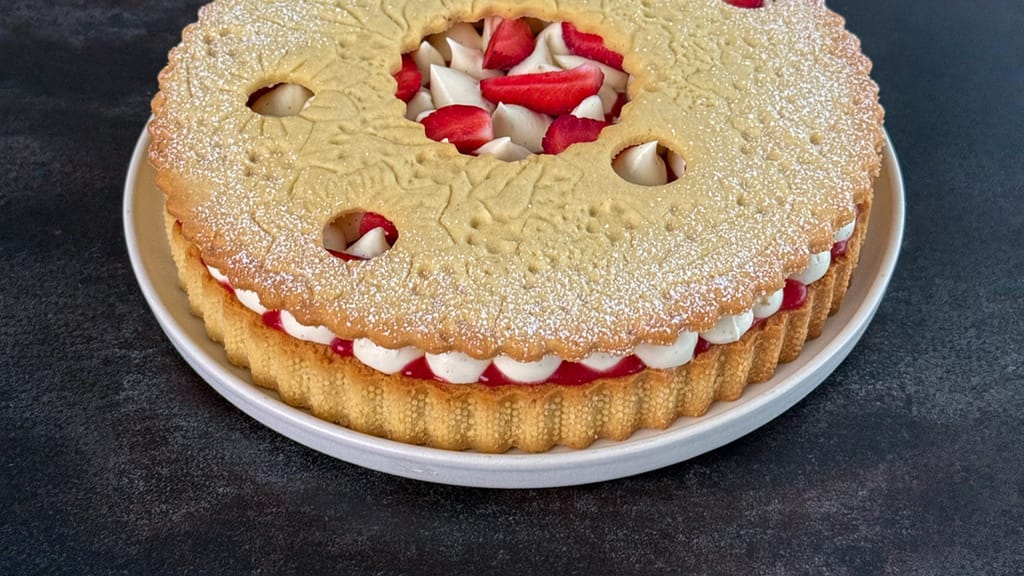
Strawberry tart with white chocolate and almonds
Strawberry tart with white chocolate and almond filling
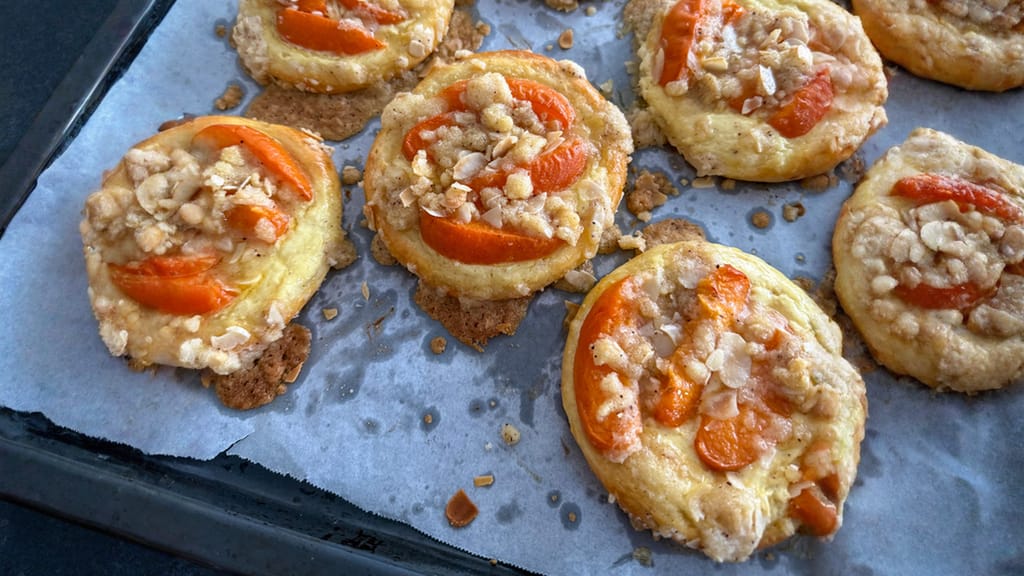
Apricot kolaches with curd cheese filling and almond crumble
Apricot koláče with quark and sliced almond crumble
Without an oven you can mainly make two things with almonds: coconut balls with a whole almond inside, and granola bars made from toasted oats and almonds. Both are handy when the oven is full of Christmas cookies.
Coconut balls with almonds and raspberries: Mix shredded coconut, 80 g ground blanched almonds and a can of sweetened condensed milk into a sticky mixture. Scoop it up by the spoonful, wrap it around a whole unpeeled almond, and roll the ball in crushed freeze-dried raspberries mixed with three tablespoons of ground almonds. Store them in the fridge; a batch makes about fifty. For what else you can do with a can of condensed milk, including a caramel cake filling, see the article condensed milk for caramel.
Homemade granola bars with almonds: Chop the almonds unevenly, since coarse pieces give crunch and crumbs help bind the mixture, and toast them with 300 g rolled oats on a baking sheet at 180°C (350°F) with the fan on for 15 minutes, until they smell like roasted nuts. Meanwhile, warm peanut butter with honey in the oven and blend the dates, combine everything and press firmly into a pan of roughly 23 × 30 cm (9 × 12 in) lined with plastic wrap. After an hour in the fridge, cut into bars; according to the recipe they keep in a sealed tin in the fridge for about a week, and in warmth they soften and turn sticky.
You make sugared almonds in a skillet from three things, almonds, sugar and a little water, in about a quarter of an hour of constant stirring. We don't have a separate recipe for them on Yumsto yet, so here is the method as a technique.
Put almonds in a heavy-bottomed skillet, add roughly half to three quarters of their weight in sugar, and just enough water to dissolve the sugar (for 200 g almonds, say, 120 g sugar and 50 ml water). Add cinnamon or vanilla sugar.
Stir over medium heat. The water evaporates, the syrup thickens, and then suddenly the sugar crystallizes (turns grainy) and the almonds turn white: the sugar coats them in a rough white crust. That's how it should be.
Keep stirring. Some of the sugar starts to dissolve again and caramelize, and the almonds turn golden and glossy while the rest of the crust holds. The longer you go, the more caramel and the less sugar crust, and here you choose whether you want rough sugared almonds like at the markets or glossy caramel almonds.
Tip them onto parchment paper and separate them right away with two forks while they're hot. Once cool they would stick together in one sheet.
The crystallization happens on purpose here. Stirring and the rough surface of the almonds give the sugar seeds on which crystals grow. For a caramel for a cake you don't want it, which is why you don't stir; for sugared almonds it's the whole point. Watch the second phase above all: food sources state that pure sugar starts to caramelize at roughly 160 to 170°C (320–340°F), and from there it's close to burnt, bitter caramel.
If it goes wrong:
The almonds are sticky and the sugar hasn't crystallized: you took the syrup off too early or there was too much water. Keep stirring until the wet shine turns into a matte sandy coating.
The caramel is dark and bitter: the heat was too high. Next time keep it at medium and pull the pan off as soon as the almonds turn golden.
The sugar bakes on only at the bottom: the pan has a thin base and the heat isn't distributed evenly. A heavy base matters more here than the recipe.
The almonds are raw inside: toast them dry in the pan for a few minutes beforehand, before you add the sugar and water.
Caramelized almonds can also be made another way, through a dry caramel. Just drizzle the sugar with water and, without stirring, only swirling the pot, melt it to an amber color, then add the almonds and pour them out onto paper. This is how the almond brittle in the Swedish almond cake above is made: once cool, break it up and blitz it into a topping, or leave it in larger pieces as a crunchy almond sheet.
Roast almonds in the oven at roughly 160–170°C (325–340°F) for 10–15 minutes, in a single layer on a baking sheet, stirring once halfway. You can tell they're done by the aroma and by cutting one: a halved almond should be light golden inside, not white.
The aroma that roasting brings comes from a reaction between sugars and proteins in dry heat, the Maillard reaction. Because almonds keep cooking from the heat of the pan after you take them out, pull them a little early and tip them straight into a cold bowl. Unpeeled ones hold their shape and have a fuller flavor, peeled ones turn golden faster and more evenly, and slices need only a few minutes, so keep an eye on them. In a skillet it's quicker, but you have to stir without a break. The article how to roast, blanch and grind nuts covers it in detail, including peeling and grinding.
Salted almonds: coat unpeeled almonds in a little beaten egg white or oil, salt them and roast as above. The egg white forms a thin crust that the salt clings to even after cooling, while oil gives a more delicate but less clingy coating. You can add chopped rosemary or chili to the salt.
Smoked almonds: real smoked almonds are smoked in a smokehouse, and at home the easiest way to a smoky flavor is smoked paprika. Mix it into the salt and egg white coating and roast like salted almonds, just at the lower end of the temperature range, because paprika scorches easily and turns bitter.
At Christmas, three almond things pay off most: cantuccini and almond cookies for the tin, coconut balls for the cookie platter, and sugared almonds in a bag as a gift. None of it needs decorating, and it all looks good on its own.
How to spread it over one Advent weekend:
On Friday evening, make the dough for the tender almond cookies and leave it in the fridge overnight; if you're also making almond milk, soak the almonds.
On Saturday morning, bake the cantuccini, and in the afternoon cut out the cookies.
On Sunday, roll the coconut balls and make the sugared almonds last, so they go into bags fresh and fragrant.
Put sugared almonds and cantuccini in a dry, tightly sealed tin at room temperature: moisture dissolves the sugar crust and turns cantuccini into soft cookies. Coconut balls belong in the fridge. For a gift, a jar with a lid or a cellophane bag with a ribbon is enough. If you want to go further, coat roasted almonds in chocolate, in thin layers, each of which has to set before the next; you'll find the method in the article chocolate-covered almonds and nuts that shine.
Almonds are among the allergens that the EU food information regulation (No. 1169/2011) names specifically under tree nuts, so always tell guests and gift recipients, or write on the label, that the gift contains almonds.
You make almond milk from 100 g unpeeled almonds and 800 ml water: soak the almonds, drain, blend with fresh water and strain through a cloth bag.
The recipe calls for soaking for about 8 hours, so it's most practical to soak the almonds in the evening and blend in the morning. Pour away the soaking water, cover the almonds with fresh water, add a pinch of salt and blend. Then strain the milk through a cloth bag, squeeze it out well and sweeten it with half a teaspoon of coconut sugar.
Keep it in the fridge and shake it before drinking; sediment at the bottom is normal. The recipe's author drinks it the day it's made or the next.
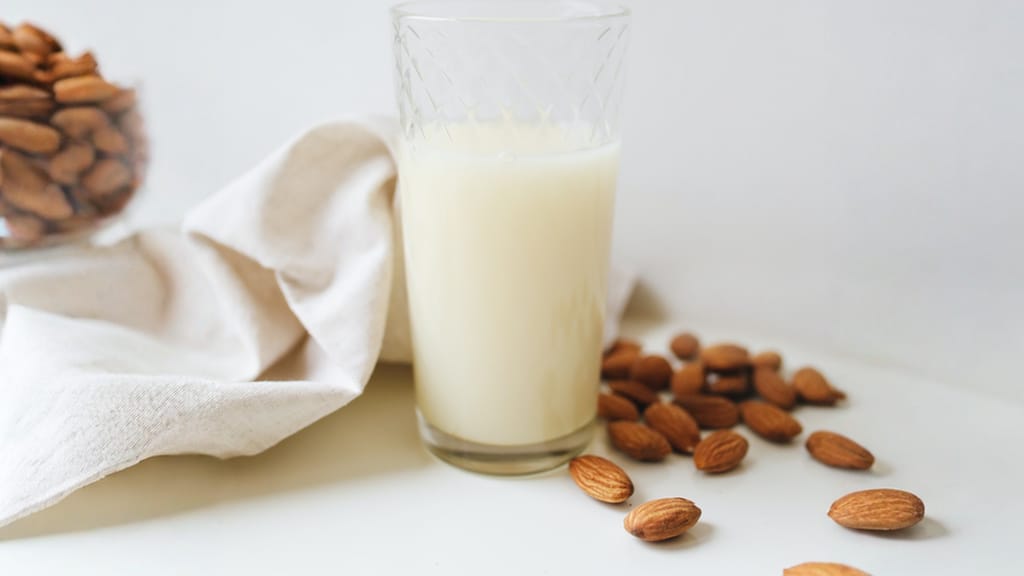
Almond nut milk
Homemade almond milk from unpeeled almonds

One Way
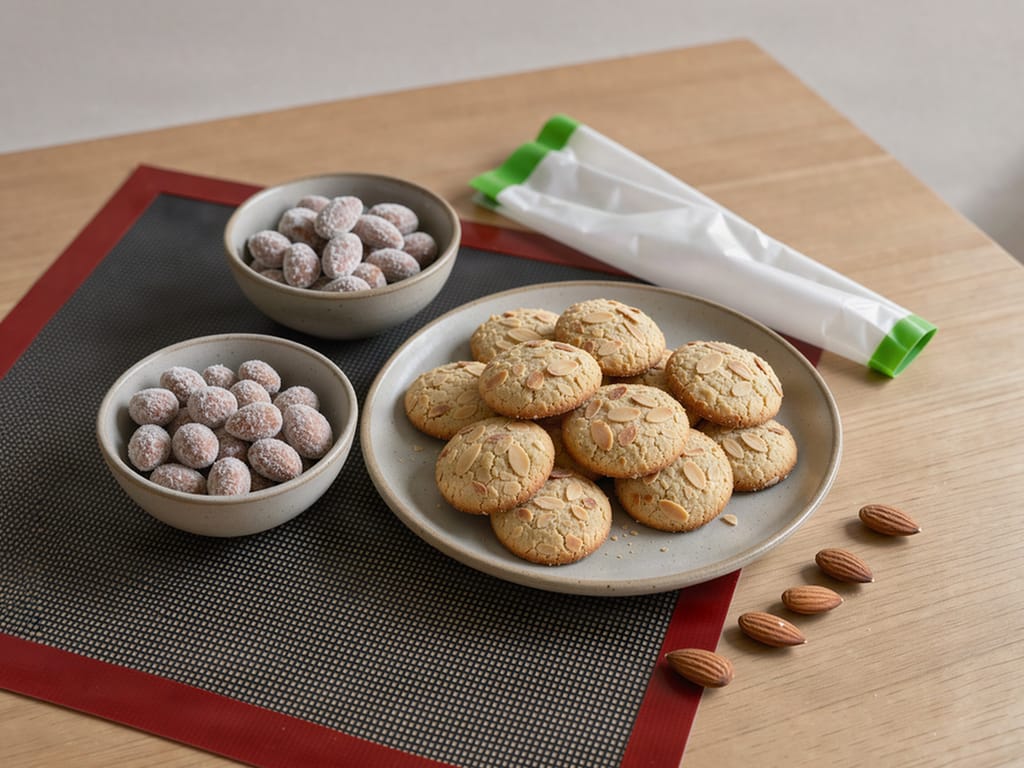
Piping Bags 46x26cm, 100 pcsPour boiling water over the almonds, leave them in it for about a minute, then drain and rinse with cold water. The skins loosen, and each almond slips out when you squeeze it between your fingers. Dry the peeled almonds on a kitchen towel, and if you want to grind or roast them, let them dry out completely, otherwise they clump when ground.
Keep sugared almonds in a dry, tightly sealed tin at room temperature, not in the fridge, where the sugar crust absorbs moisture and turns sticky. Almonds contain fat that goes rancid over time, so make them in smaller batches during Advent and taste one before giving them as a gift.
Yes, macarons work just as well with it, but the shells come out darker and slightly speckled. What matters is that the flour is finely ground and briefly pulsed with the powdered sugar, otherwise the surface of the shells won't be smooth.
For roasted and salted almonds, use the same technique with pumpkin or sunflower seeds, but roast them for a shorter time. For macarons, cantuccini and almond cookies there is no proper substitute, so it's better to bake a different, nut-free recipe. For an allergy sufferer, check the labels of all the ingredients to make sure they don't contain even traces of nuts.
Spread the almonds on a cutting board in a single layer, press down on them with the flat of a large knife blade so they crack, then chop with a rocking motion, with your other hand resting on the tip of the knife. In a food processor, use only short pulses, otherwise the almonds quickly turn into flour or paste.
One recipe worth heating the oven for, one tip, and one deal from the shop. Nothing else.