Dried Egg White
What to Bake with Nuts: Christmas Cookies, Nut Cake, Roll Cake, Strudel, Pecan Pie and Flourless Desserts
Updated Nov 18, 2026
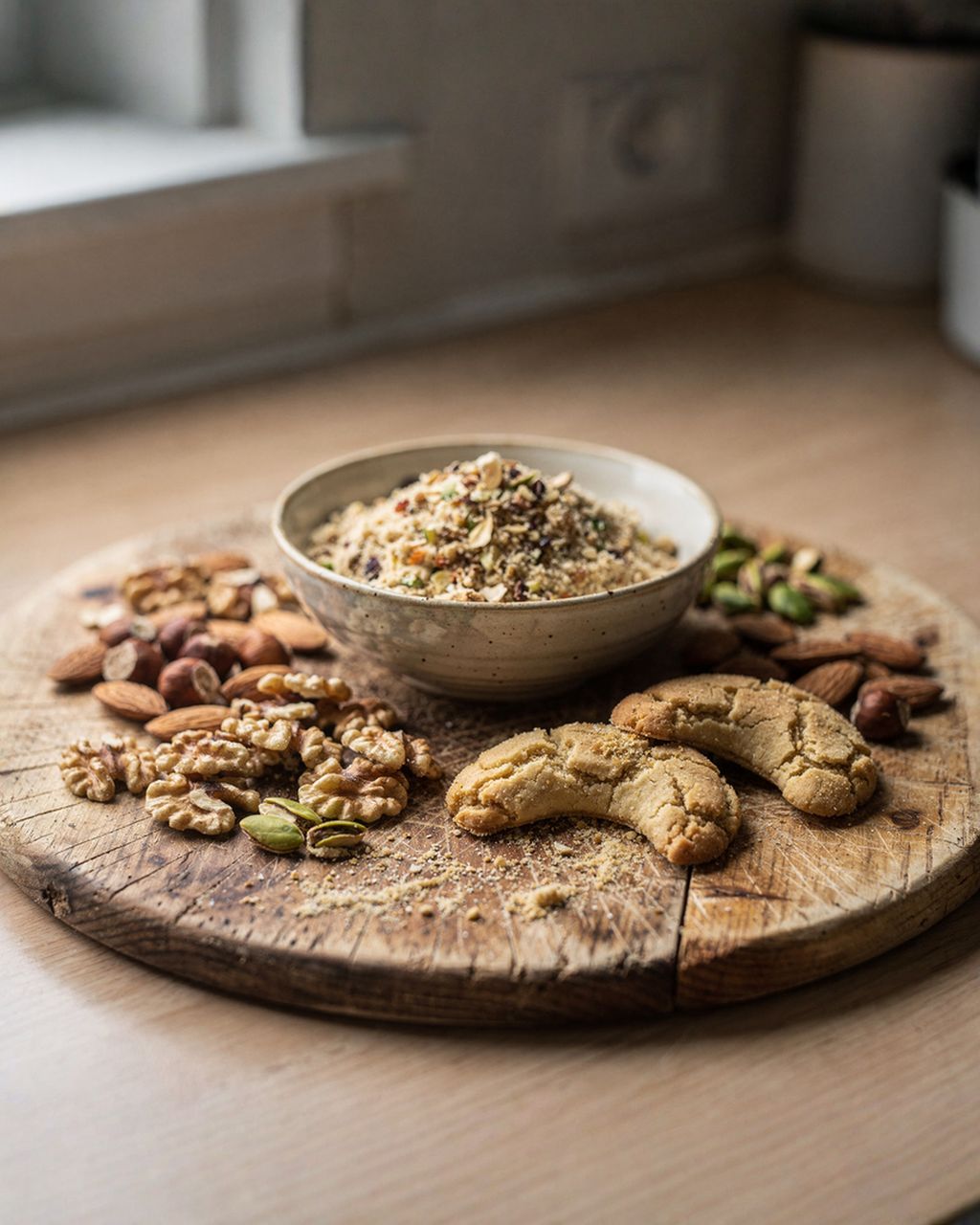
What can you bake with nuts? At Christmas, mostly cookies: vanilla crescents, nut rings with jam, pracny (Czech spiced nut cookies baked in shell-shaped tins) and nut meringues made from egg whites. The rest of the year, think nut cake and nut buchty (Czech filled sweet yeast buns), a nut roll cake and strudel, pecan pie, brownies, cookies and flourless cakes. For each one you'll find the essentials: the key step, the temperature, the time and the mistake to avoid. You'll also learn which nut goes where and how to store nuts so they don't turn rancid before you bake with them.
Walnuts belong in cakes, buchty, roll cakes and pracny, hazelnuts in crescents and cookies, pecans in pecan pie and brownies, almonds in flourless cakes, and cashews in creams and no-bake desserts. Every nut has a different flavor and oil content, and behaves differently in dough:
Walnuts – bold, slightly astringent thanks to their thin brown skin. Ground, they're the base of nut cake, buchta fillings, roll cakes, strudel and classic pracny. They're high in unsaturated fats, so they go rancid faster than any other nut.
Hazelnuts – sweeter and the most fragrant once toasted. They suit vanilla crescents, cut-out cookies, drop cookies and anywhere they meet chocolate.
Pecans – softer and buttery, with a caramel note and none of the bitterness of walnuts. They're best in pecan pie, brownies and cookies, with whole halves as decoration.
Almonds – the most neutral and the driest. They give structure to flourless cakes, cantuccini and delicate linecké (Czech Linzer-style jam cookies).
Cashews – mild, creamy and quiet in flavor. They get lost in baking, but they're great in no-bake desserts, creams and chopped into cookies.
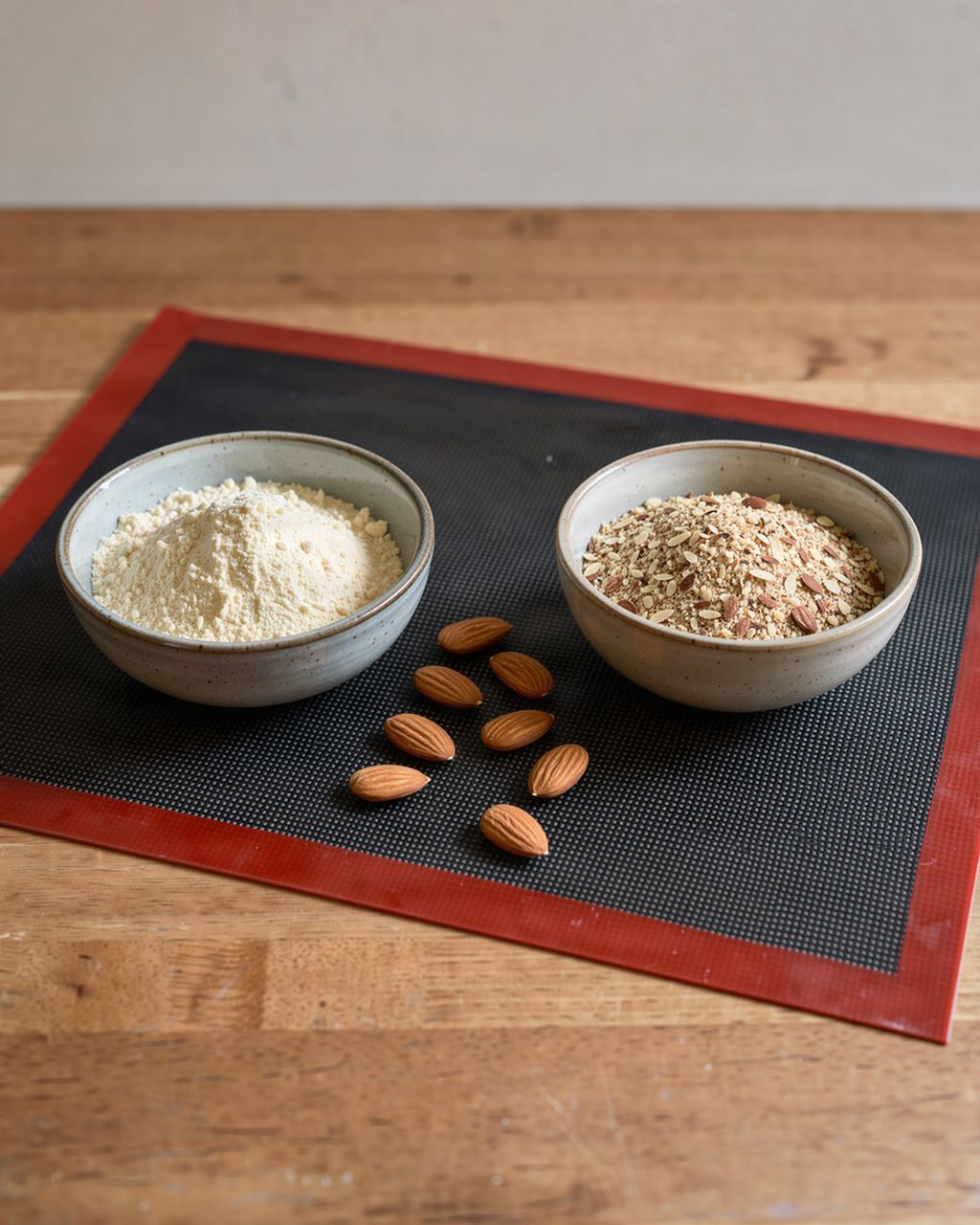
Ground nuts – usually walnuts or hazelnuts. Store-bought is convenient, but freshly ground smells better and isn't dried out.
Walnuts and pecans can be swapped in recipes roughly 1:1 by weight, and so can hazelnuts and almonds. Pecans give a milder, sweeter result, almonds a drier one. For a detailed comparison of flavor, fat and how each nut behaves in dough, see Types of nuts in baking: how they differ and which goes where.
How to soften gingerbread that’s gone hard, when to fill Linzer cookies and how to tell the carp is done. One recipe and one tip a week. Unsubscribe in one click.
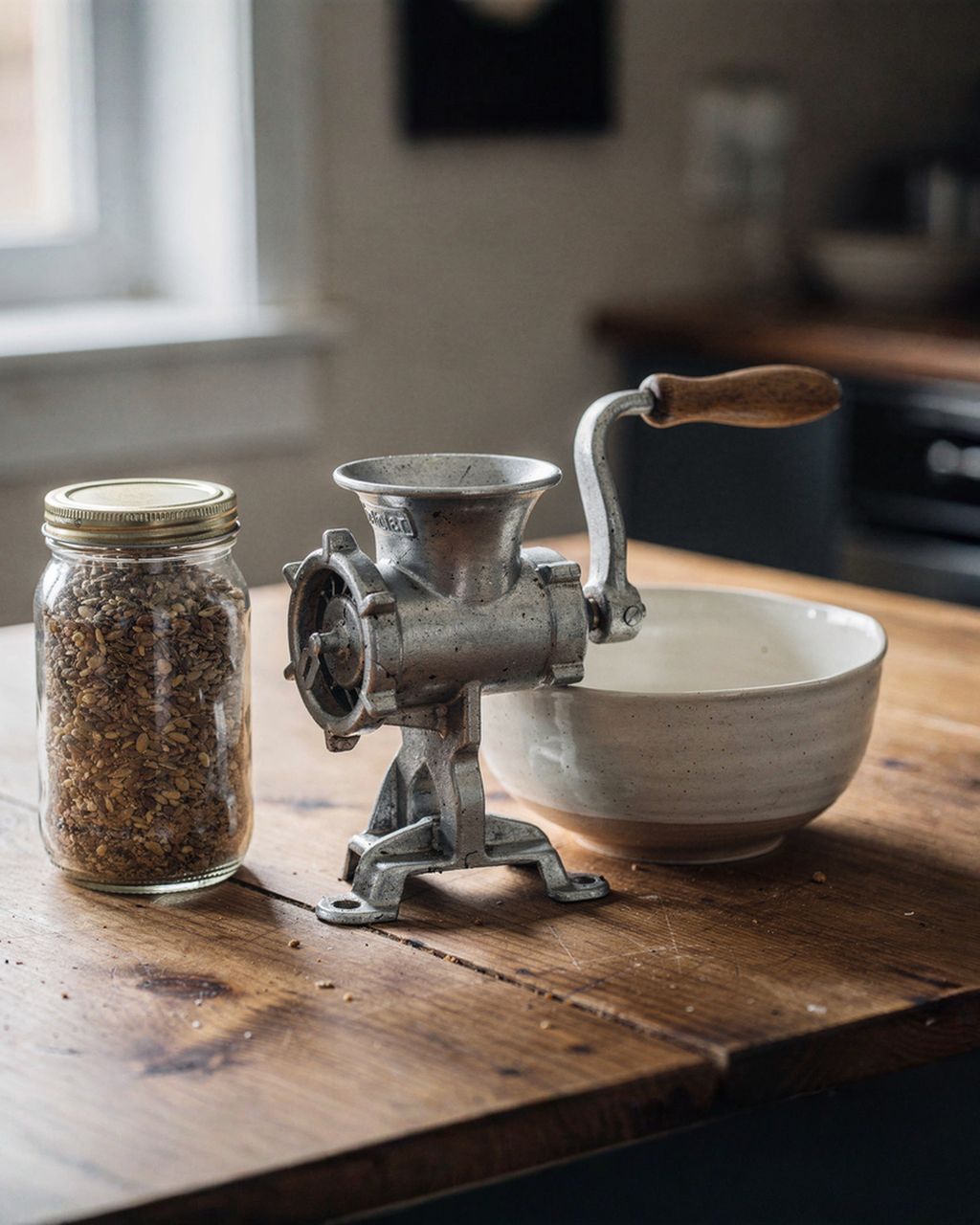
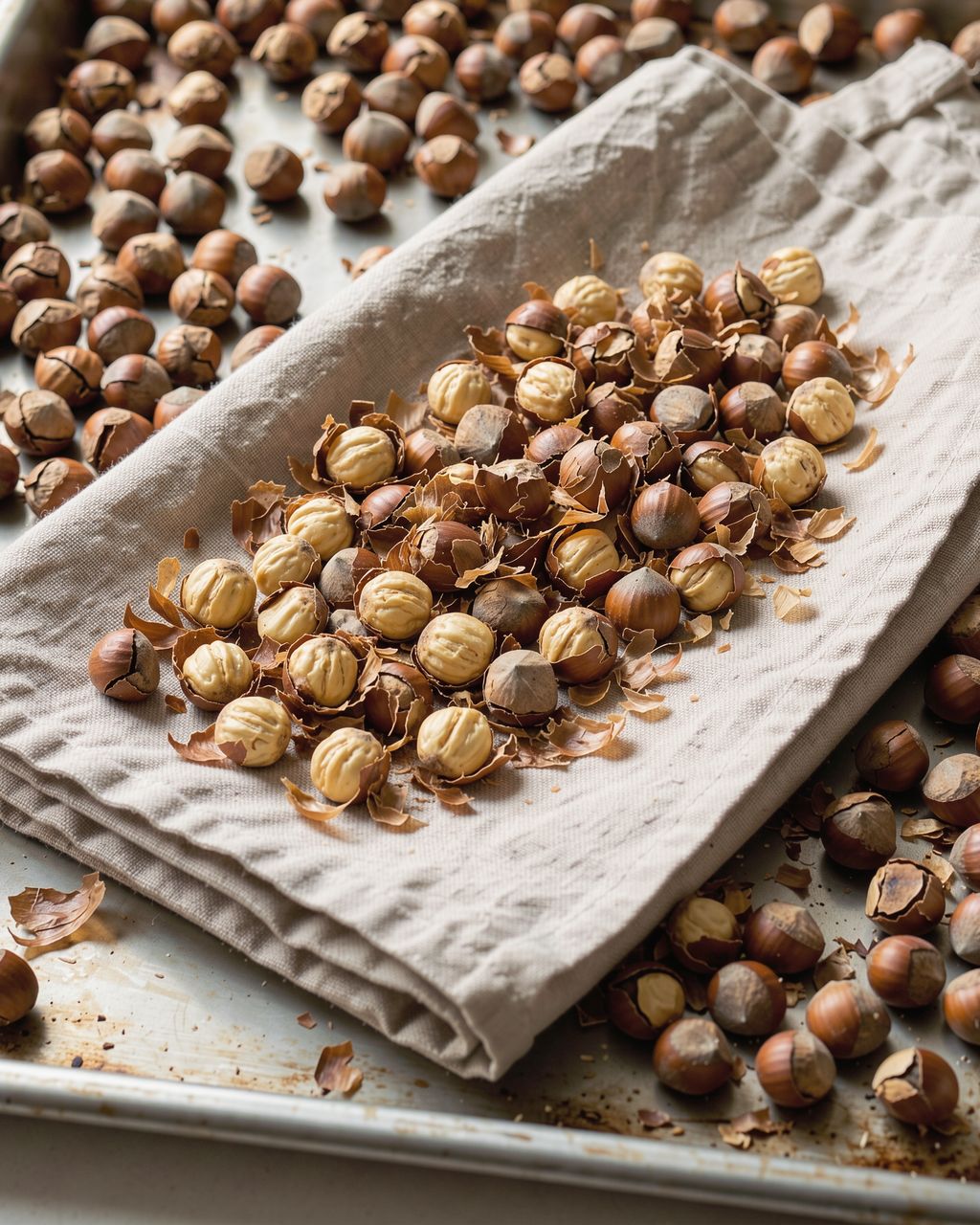
Nuts for baking are worth toasting briefly, hazelnuts should be skinned after toasting, and they should only be ground in pulses so they don't release their oil. Toasting on a dry baking sheet in the oven for about 8–12 minutes at 160–170°C (320–340°F) brings out their flavor, but walnuts and pecans are done sooner than hazelnuts and almonds, so keep an eye on them. Grinding in short pulses with a spoonful of the sugar or flour from the recipe keeps them from turning into an oily paste. The whole process step by step, including rubbing the skins off hazelnuts in a kitchen towel and how to tell they're toasted enough, is in Nuts for baking: how to toast, skin and grind them so they don't release oil. And if you have walnuts in the shell at home, read how to shell walnuts quickly and tell whether they've gone rancid.
The most popular nut Christmas cookies are vanilla crescents, nut rings with jam, pracny and nut meringues made from egg whites. You bake them all at a low to medium temperature, because nuts in dough darken and turn bitter quickly. One rule applies to all of them: nut dough is more tender and richer than ordinary Linzer dough, so chill it in the fridge and handle it more gently.
Vanilla crescents are a tender dough of flour, butter, sugar and ground nuts, shaped by hand and rolled in vanilla sugar while still warm. Bake them at 160–170°C (320–340°F) for about 10–12 minutes, just until the tips turn lightly golden; the bodies should stay pale. Roll them while they're still lukewarm, otherwise the sugar won't stick, and hot ones fall apart. Walnuts or hazelnuts are the classic choice, but try almonds too. What to focus on, and which flour and nuts to use, is covered in Vanilla crescents: which nuts and flour for tender crescents with vanilla flavor, and a tried-and-tested method is in the recipe vanilla crescents – the best Christmas cookies. If you want something less usual, reach for hollow nut crescents or the green version, pistachio crescents.
Nut rings are cut-out cookies made from Linzer dough in which ground walnuts or hazelnuts replace part of the flour, sandwiched in pairs with currant jam. Roll the dough to 2–3 mm, cut out circles and cut a hole in the center of half of them, then bake at 170°C (340°F) for about 8–10 minutes until light golden. Sandwich them only once cool, with hot jam boiled down with a splash of rum, and dust the top rings with powdered sugar beforehand. Nut dough tends to crumble and tear when cut out; why that happens and how to roll it without tearing is explained in Cut-out nut cookies: why the dough crumbles and how to roll it without tearing. A proven base is the recipe nut Linzer cookies with currant jam, from which you can cut rings just as you would hearts.
Pracny are traditional spiced cookies made from ground walnuts, butter, sugar and flour, pressed into small brass or tin molds and baked in them. Spice the dough with cinnamon, ground cloves and a little cocoa, and let it rest overnight in the cold; the nuts soak up moisture in that time and the flavors come together. Press it into ungreased molds in a thin layer (about 3 mm), then bake at 160–170°C (320–340°F) for roughly 12–15 minutes. Turn them out only after they've cooled, by tapping the mold on the table, and roll them in powdered sugar with vanilla. Pracny are best after a week in the tin, when they soften and become fragrant, so they're among the first cookies you bake for Christmas.
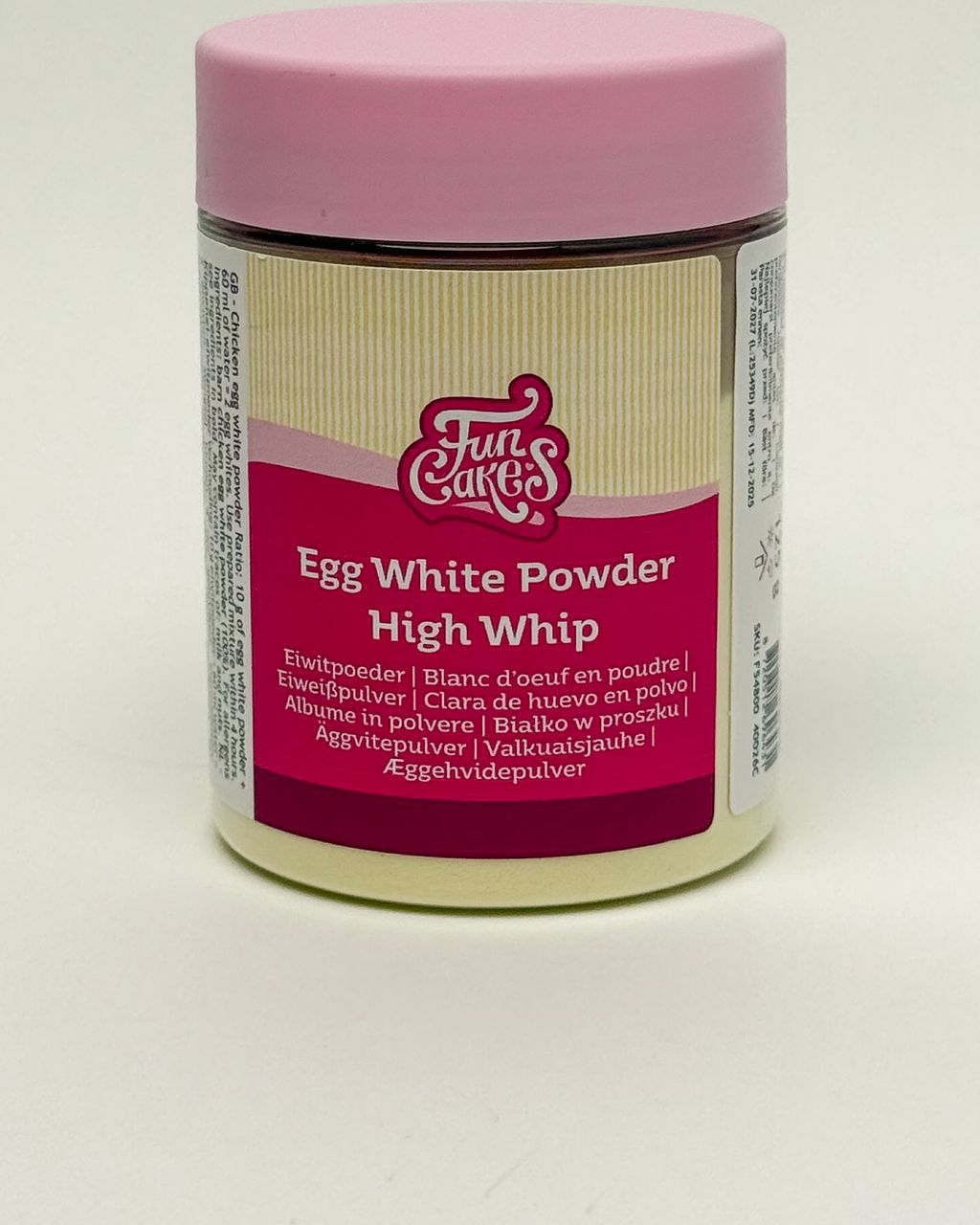
Nut meringues are whipped egg whites and sugar with coarsely ground or chopped nuts folded in at the end, then slowly dried in the oven. Whip the egg whites with sugar to stiff, glossy peaks, fold in toasted hazelnuts or walnuts with a spatula in just a few strokes so the foam doesn't collapse, and dry at 100–120°C (210–250°F) for about 60–90 minutes. When done, the meringues release from the paper on their own; let them cool in the slightly open oven so they don't crack. They're a good way to use up the egg whites left over from crescents and Linzer cookies. The same combination of egg whites and nuts goes into egg white loaf with nuts, which you slice thin once it's completely cool.
With nuts you can bake a cup-measure nut cake, nut bars with meringue and a yeasted nut buchta (Czech filled sweet yeast bun). The cake is a simple cup-measure batter with ground walnuts, the bars are a tender base with jam under a nut meringue, and the buchta is a yeast dough with a juicy nut filling. You bake everything on a single sheet and everything keeps for several days.
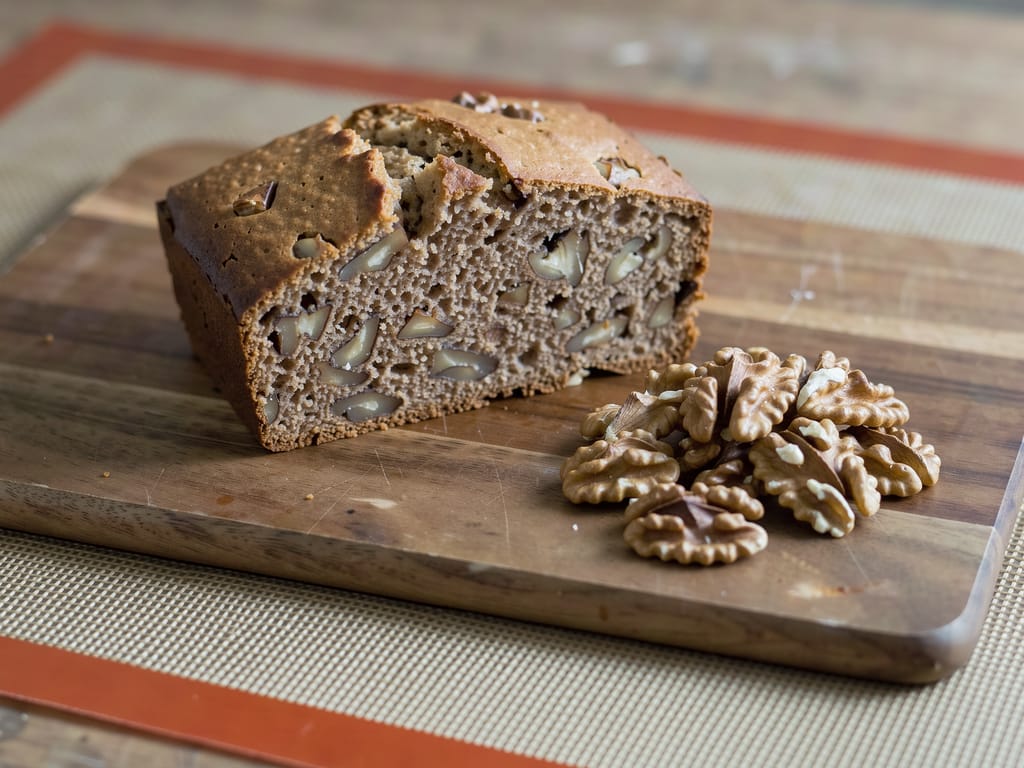
Cup-measure nut cake is the quickest nut bake: eggs, sugar, oil, milk, flour and ground walnuts, all measured with a single cup. Its volume comes from eggs whipped with sugar into a thick, pale foam; then you just briefly fold in the flour and nuts. Bake it on a sheet at 170–180°C (340–350°F) for about 30–35 minutes, until a skewer comes out dry. It goes well with chocolate glaze, currant jam under the glaze, or just whipped cream.
Nut bars with meringue are a pre-baked sheet of tender dough, spread with tart jam and baked under a nut meringue of egg whites. The meringue bakes slowly, at around 160°C (320°F), until it turns golden and the surface crisps. Cut them with a wet knife only once cool, otherwise the meringue tears. The whole magic is the contrast of tart jam and sweet meringue; with plum butter (povidla) they come out noticeably sweeter.
Nut buchta is a yeasted sheet with a nut filling, rolled up or folded over and left to rise a little more. The filling is the key: scald the ground nuts with hot milk and let them swell, because dry nuts would draw moisture out of the dough and the buchta would be crumbly. Bake at 170–175°C (340–350°F) for about 35–40 minutes, then brush with melted butter and let it cool under a kitchen towel.
The most common mistake with all three is old or rancid ingredients: nuts that have sat in the pantry since last year give the cake a bitter, scratchy aftertaste that no glaze can cover. Taste one kernel before you grind them. The second mistake is overbaking; ground nuts in batter darken and turn bitter before you can tell from the color of the surface, so check the cake with a skewer five minutes earlier than the recipe says. If you want nuts at Easter too, bake the traditional nut lamb cake with chocolate glaze.
A nut roll cake is a thin nut sponge rolled up with cream; a nut strudel (závin) is thin stretched or puff pastry with a filling of scalded nuts. The roll cake is a quick dessert for the table, while strudel keeps longer and slices well.
Nut roll cake is built on a thin sponge in which finely ground nuts replace part of the flour. It bakes briefly and hot, at 190–200°C (375–400°F) for only 8–10 minutes; once it darkens, it dries out and cracks when rolled. That's also the most common mistake. Roll it up while still warm, with the paper or in a damp kitchen towel, let it cool, then unroll, spread with cream and roll it up for good. Fill it with whipped cream and mascarpone, coffee cream or buttercream; which cream holds its shape and doesn't leak is described in Cream for Christmas cookies that lasts and holds its shape. Before slicing, leave it in the fridge for at least 2 hours.
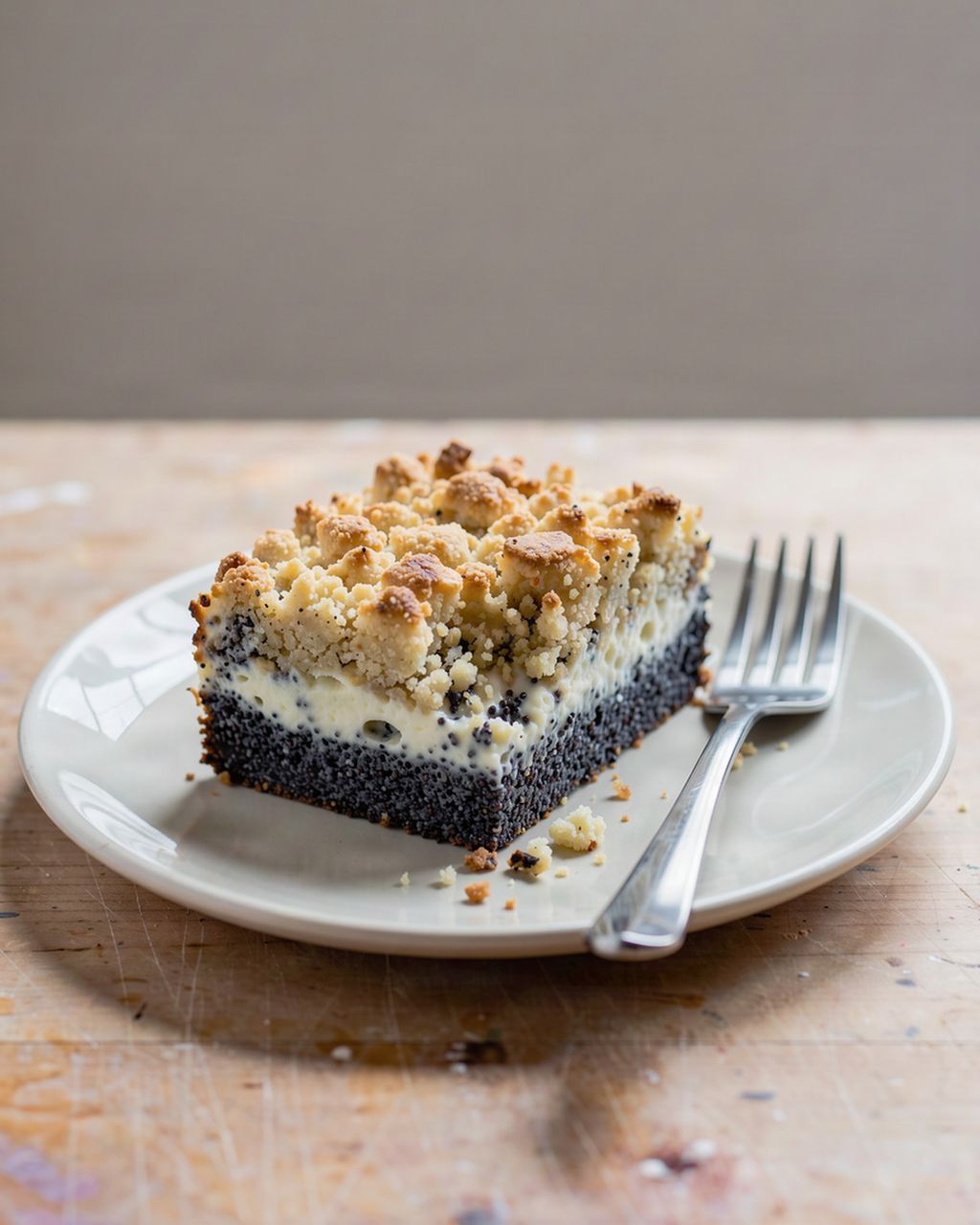
Nut strudel has the same scalded filling as the buchta, just thicker, bound with breadcrumbs and flavored with cinnamon and lemon zest. It has to be spreadable but must not run, or it will break through the dough as it bakes. Bake at 180–190°C (350–375°F) for about 30–35 minutes until golden, and slice it only once it has cooled a little, with a sharp knife. If you dare to try stretched dough, the method is in the recipe apple strudel from homemade stretched dough; for a quick version use apple strudel from puff pastry. Just swap the apples for the nut filling. If you like a poppy seed version of the same type of bake, see how to process poppy seeds and cook a filling from them.
Pecan pie is an American pie with a shortcrust base and a caramel filling of eggs, brown sugar, syrup and butter, topped with pecans. Bake it at 170–175°C (340–350°F) for roughly 45–55 minutes. It's done when the edges are set and the center only jiggles slightly when you shake the pan; it firms up as it cools, so slice it only after 2–3 hours. Serve it lukewarm with whipped cream or vanilla ice cream, which balance its sweetness.
Toast the pecans briefly before baking; they taste nuttier and less like a sweet mass. For smaller portions and a festive table, caramel and pecan tartlets are the same combination of caramel and pecans in a single bite.
Two things most often go wrong with pecan pie. If the filling runs and doesn't set, the pie was taken out too early or cut while hot; if it cracks and is dry, it baked too long or at too high a temperature. Cover the edge of the crust with aluminum foil after 30 minutes so it doesn't burn while the center finishes baking. And choose your syrup by taste: maple gives a pronounced, slightly woody sweetness, while corn (glucose) syrup gives a neutral caramel in which the pecans stand out more.
Nuts in brownies and cookies should be coarsely chopped so they stay crunchy in the dough: walnuts or pecans in brownies, hazelnuts, almonds or cashews in cookies. Toast them and add them at the very end of mixing.
Brownies with nuts are classic chocolate brownies with chopped walnuts or pecans added. Bake them at 175°C (350°F) for 20–25 minutes and take them out when the surface is cracked but a skewer in the center comes out with moist crumbs. They're best cooled, ideally the next day. A gluten-free version, in which beet gives the moistness, is in the recipe gluten-free beet and walnut brownies.
Hazelnut and chocolate cookies are buttery cookies enriched with chopped toasted hazelnuts and chocolate pieces; bake them at 180°C (350°F) for 10–12 minutes. They still look soft on the baking sheet but firm up as they cool; if you bake them until golden, they'll be crunchy instead of chewy. You can add cashews too, just keep in mind that they're mild in flavor and get lost in a strong chocolate dough.
Italian cantuccini – almond cookies are baked twice: first a whole log of dough for about 25 minutes at 180°C (350°F), then the sliced pieces for another 10 minutes so they dry out until crisp. They're served for dipping in coffee or dessert wine. A more delicate route is tender almond cookies, which suit a Christmas platter too.
Without flour you can bake a nut meringue cake, an almond cake and nut meringues, in which ground nuts replace the flour. The nuts provide structure and fat, and the eggs hold everything together, so the result is moist and doesn't crumble.
Flourless nut cake is essentially a sponge in which ground walnuts or hazelnuts replace the flour entirely and whipped egg whites provide the lightness. Whip the yolks with sugar into a thick foam and fold in the whites only at the end, in a few strokes with a spatula. Bake it in a cake pan at 170°C (340°F) for about 40–45 minutes. The most common mistake is turning it out while warm: let it cool in the pan, or it will collapse. Serve a slice with whipped cream or coffee cream, or cut the cake in half and fill it with cream.
Swedish almond cake is a Scandinavian classic with an almond base, cream and sliced almonds; you'll find it in the recipe Swedish almond cake. It's served chilled, with afternoon coffee.
Flourless doesn't yet mean gluten-free: baking powder, chocolate, breadcrumbs or malt syrup may contain it. If you're baking for someone who can't have gluten, check the ingredients of every product.
Store nuts in a cool, dark place in an airtight container, ideally in the fridge or freezer, because their oil goes rancid with heat and light. California Walnuts recommends putting nuts you'll use soon in the fridge and freezing the rest; once a bag is opened, transfer them to a tight container, because nuts absorb odors from the fridge (onions, fish).
How to tell rancid nuts: according to California Walnuts, rancid walnuts smell like paint thinner and belong in the trash. Other signs are darkened, oily-looking kernels and a bitter, sharp aftertaste that won't pass in a cake. Ground nuts go rancid faster than whole ones, so buy them in small packages or grind them just before baking.
You don't need to thaw frozen nuts: add them straight to the dough or put them on the baking sheet for toasting.
Baked nut treats:
Vanilla crescents, rings, pracny – in a tin box in a cool room for 3–4 weeks; pracny keep even longer without a problem. Rings sandwiched with jam soften over time, which is what you want from them.
Nut meringues – separately in a dry tin, never with soft cookies, or they'll absorb moisture and turn rubbery.
Nut cake and buchta – under a cover or wrapped, 3–4 days; they freeze well in portions.
Nut roll cake with cream – in the fridge for 2 days, less with whipped cream.
Pecan pie – because of the egg filling, in the fridge, for up to 3–4 days; warm it before serving or let it sit briefly at room temperature.
Making ahead – you can freeze Linzer and nut dough raw, wrapped in plastic wrap, and baked rings without jam as well.
The closest substitute for walnuts is pecans, 1:1 by weight. They taste similar, just milder and without the bitterness. Hazelnuts or almonds work too, but they give a noticeably different flavor. If you can't use nuts at all, shredded coconut, rolled oats or sunflower seeds can help; our article on nut-free Christmas cookies covers the ratios.
Yes, you can use store-bought ground nuts in cookies, but they tend to be drier and less fragrant than freshly ground ones. Smell and taste them before using, because ground nuts go rancid faster than whole ones. If they're very fine and dry, add an extra spoonful of butter to the dough so it doesn't crumble.
From 1 kg of walnuts in the shell you get roughly 400–500 g of kernels, depending on the variety and how ripe the nuts are. For a sheet of cup-measure nut cake (about 100–120 g of kernels), count on roughly 200–300 g of unshelled nuts; for a nut buchta (250 g of kernels), about half a kilo to 600 g.
Nut cake most often turns bitter because of rancid nuts whose oil has oxidized, and next because of overbaking, when the ground nuts in the batter darken. Some of the astringency also comes from the brown skin of walnuts; if it bothers you, swap them for pecans, or blanch the nuts briefly and rub the skin off.
Botanically, peanuts are not a nut but a legume, and under EU allergen labeling they are listed separately from tree nuts. In baking you can use them instead of nuts, but they bring a strong peanut flavor. If you're baking for someone with an allergy, find out exactly what they're allergic to first.
One recipe worth heating the oven for, one tip, and one deal from the shop. Nothing else.