Beef cheeks in red wine with vegetables
Slow Cooker Recipes: Beef Cheeks, Pork Ragù, Rabbit, Duck and Bolognese, Plus How Long on LOW and HIGH
Slow cooker recipes all rest on one principle: tough, well-marbled meat rich in collagen, a little liquid and 4 to 9 hours of gentle heat that turns sinew into gelatin and the sauce into something you can eat with a spoon. A slow cooker has two settings, LOW and HIGH, and choosing the right cut of meat matters more than choosing a recipe. Below you'll find what to cook in it, how long on which setting, how much liquid to add, what never to put in it, and eight tested recipes from Yumsto. Only two of them are written specifically for a slow cooker. For the others, we'll tell you honestly where the original is braised or roasted and how to convert it for a slow cooker.
A slow cooker is made for braised meats, ragùs, meat sauces and soups. These turn out best in it:
beef cheeks in red wine
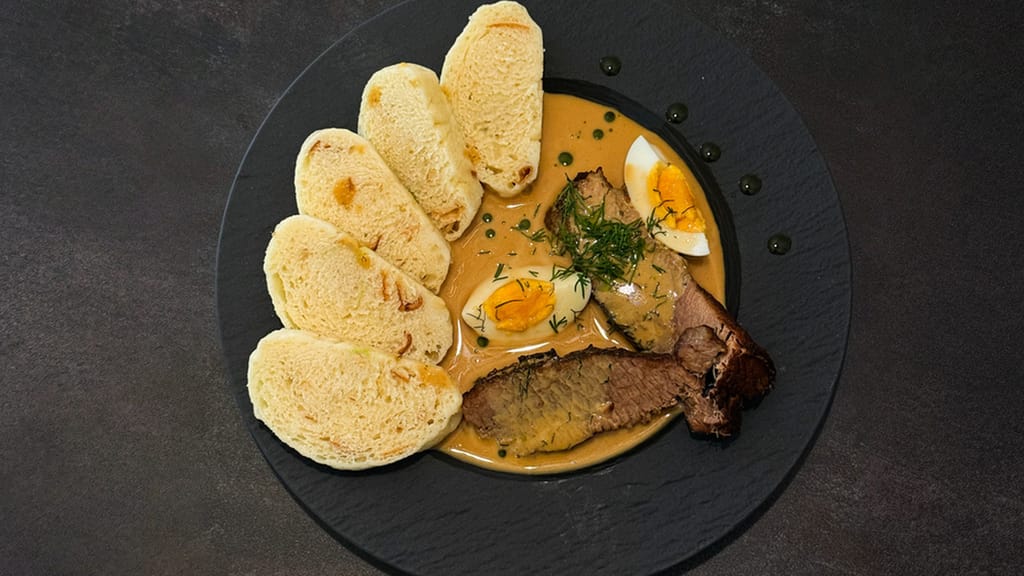
dill sauce with beef shoulder
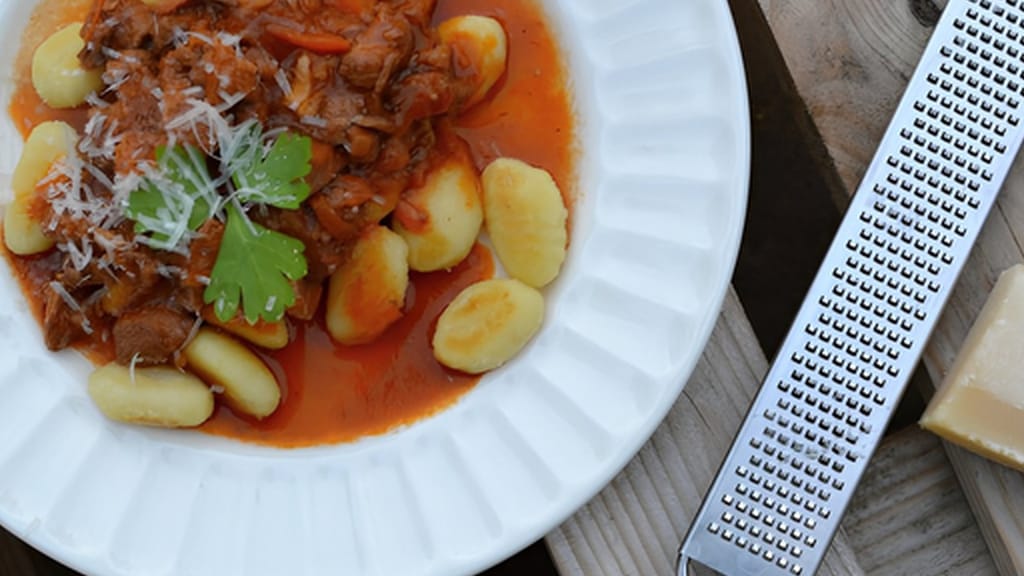
pork ragù with tomatoes and herbs
pork shoulder with red cabbage
Bolognese sauce made with ground meat
rabbit in cream sauce
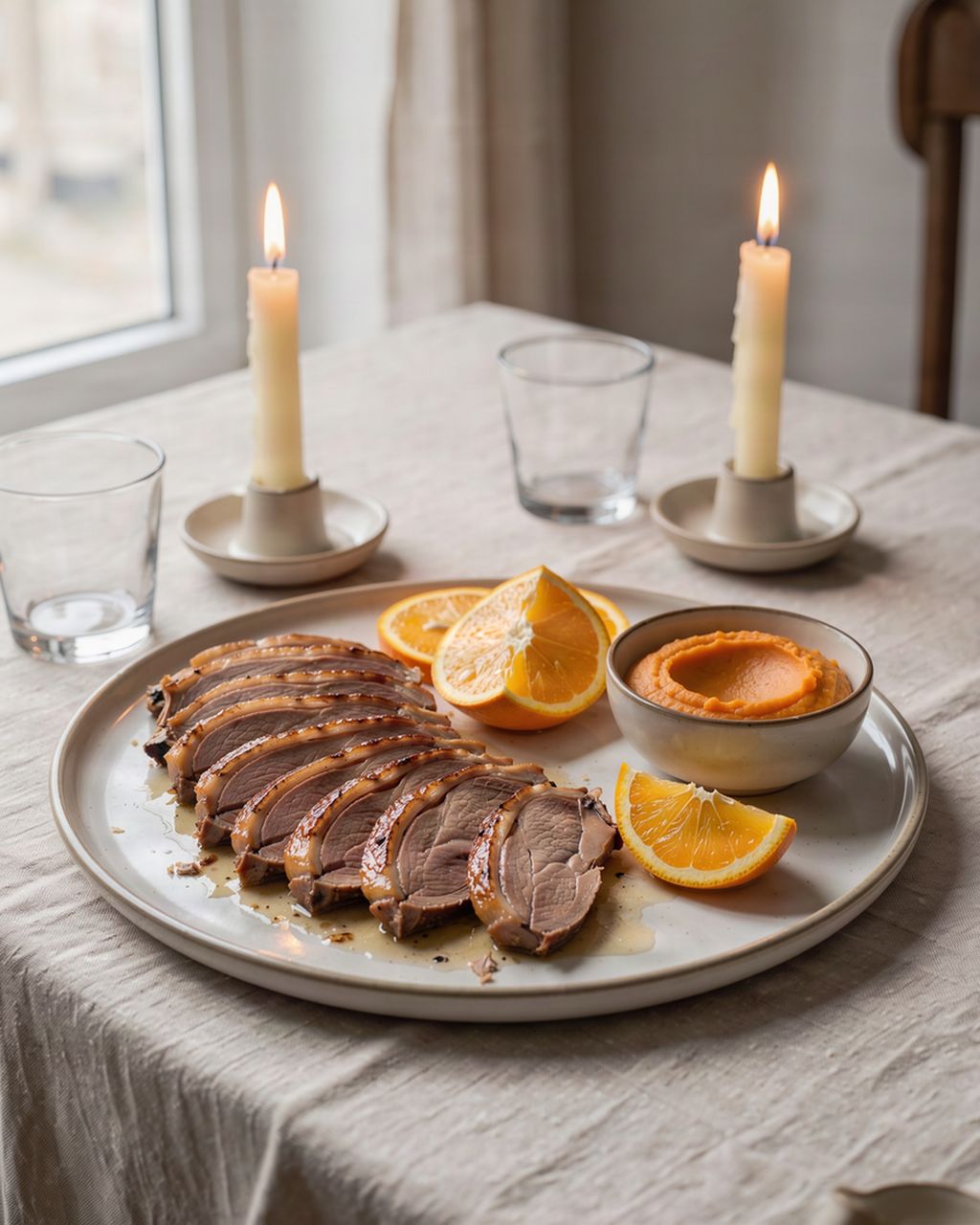
duck breasts with oranges
turkey thighs in dark beer
What they have in common is that these are cuts that turn tough in a pan within ten minutes, but after six hours of gentle heat become so tender they fall apart under a fork. Cheeks, shoulder and rabbit legs are full of connective tissue, and it's exactly this that turns into gelatin during long cooking, giving the sauce its gloss and body. Lean breasts, tenderloin or fillets, on the other hand, tend to dry out and turn stringy in a slow cooker. When you're craving something hearty and don't want to stand over the stove, a slow cooker is exactly the right tool: fill it in the morning, eat in the evening.
One recipe and one tip every Thursday until the end of the year. Unsubscribe in one click.
For the holidays: the morning of December 24, carp roasting times by size and December 31, New Year’s Eve canapés.
Tough cuts of beef and pork need roughly 7–9 hours on LOW or 4–5 hours on HIGH. The usual rule from slow cooker manuals is that one hour on HIGH equals about two hours on LOW. Both settings end up at a similar temperature; HIGH just gets there faster. Approximate times:
beef cheeks, beef shoulder, shin: LOW 8–9 h, HIGH 4–5 h
pork shoulder and neck in pieces: LOW 7–9 h, HIGH 4–5 h
bone-in rabbit and chicken thighs: LOW 5–7 h, HIGH 2.5–3.5 h
ground meat sauce: LOW 6–8 h, HIGH 3–4 h
soups made with root vegetables and precooked legumes: LOW 6–8 h, HIGH 3–4 h
Treat the numbers as a guide, not a stopwatch. Every cooker heats a little differently, and the size of the pieces matters a lot. According to the US Department of Agriculture's Food Safety and Inspection Service (USDA FSIS), a slow cooker generally cooks between 170 and 280°F, or roughly 77 to 138°C. You can tell meat is done when a fork slides in without resistance and the fibers can be separated with a spoon. Measure poultry with a thermometer at the thickest point: the duck breast recipe below calls for at least 74°C (165°F).
When should you choose which setting? LOW is for cooking during the day or overnight, when you're not around, and for tough beef, which benefits most from the longer time. HIGH suits you when you start at noon and want to eat in the evening, and it suits poultry. USDA FSIS also advises, where possible, leaving the cooker on the highest setting for the first hour so the contents heat through quickly, then switching to a lower one.
Use roughly a third less liquid in a slow cooker than you would in a stovetop pot, because almost nothing evaporates under the tight lid. Meat and vegetables also release their own juices, so after six hours you have more liquid in the pot than you poured in. USDA FSIS recommends covering the food with liquid, such as broth or water, and that's a good measure too: just enough to submerge the ingredients, no more. Whatever is left over, reduce on the stove at the end.
Five things decide the result: brown the meat, boil off the wine, put vegetables on the bottom, fill the pot between half and two-thirds full, and don't lift the lid.
Brown the meat first. A slow cooker doesn't brown, so the crust, the browned bits and the depth of flavor have to come from the pan. Brown in smaller batches so the meat really sears instead of stewing in its own juices.
Boil off the wine first. In an open pot on the stove, a few minutes of hard boiling cooks off the sharp raw taste of the wine and some of the alcohol. In a closed slow cooker almost nothing evaporates, and the sauce then tastes raw and sour.
Put the vegetables on the bottom. Root vegetables cook more slowly than meat, so they belong on the bottom and along the sides, where the heat is strongest, with the meat on top. USDA FSIS advises the same.
Fill the pot between half and two-thirds full. A pot that's too empty overcooks and dries out the food, while an overfilled one may not heat through quickly enough.
Don't lift the lid. Every opening lets out heat and steam and stretches the cooking time. USDA FSIS advises removing the lid only to stir or to check whether the food is done.
Add cream, butter, fresh herbs and cheese at the end. Over eight hours the cream would curdle and the herbs would turn bitter.
For beef in a slow cooker, the best cuts are cheeks, shoulder and shin. All three have plenty of collagen, which softens over the long hours and naturally thickens the sauce. Don't put svíčková (beef tenderloin) or sirloin in a slow cooker; they're too good for it. You'll find more beef ideas in the article what to cook with beef.
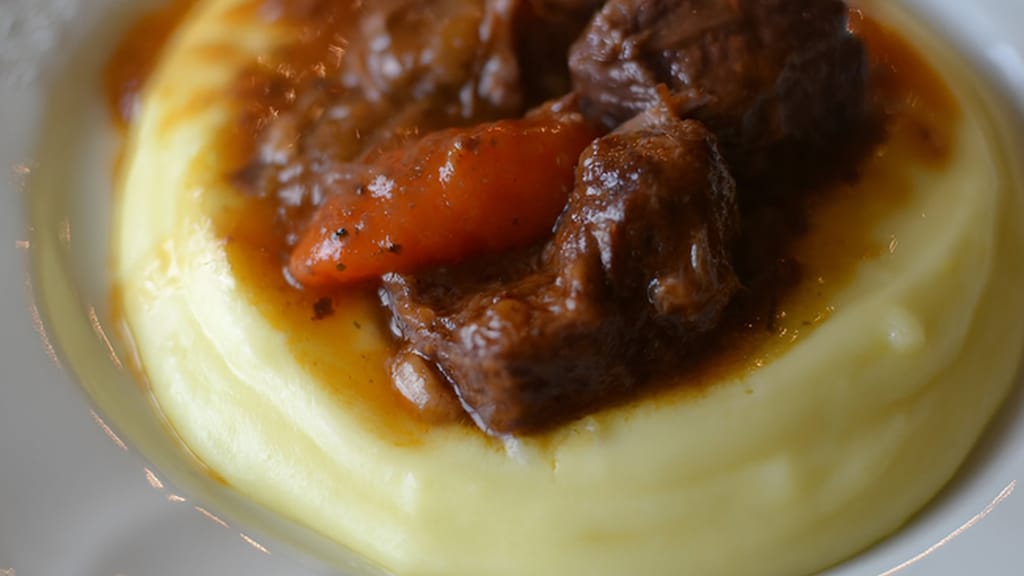
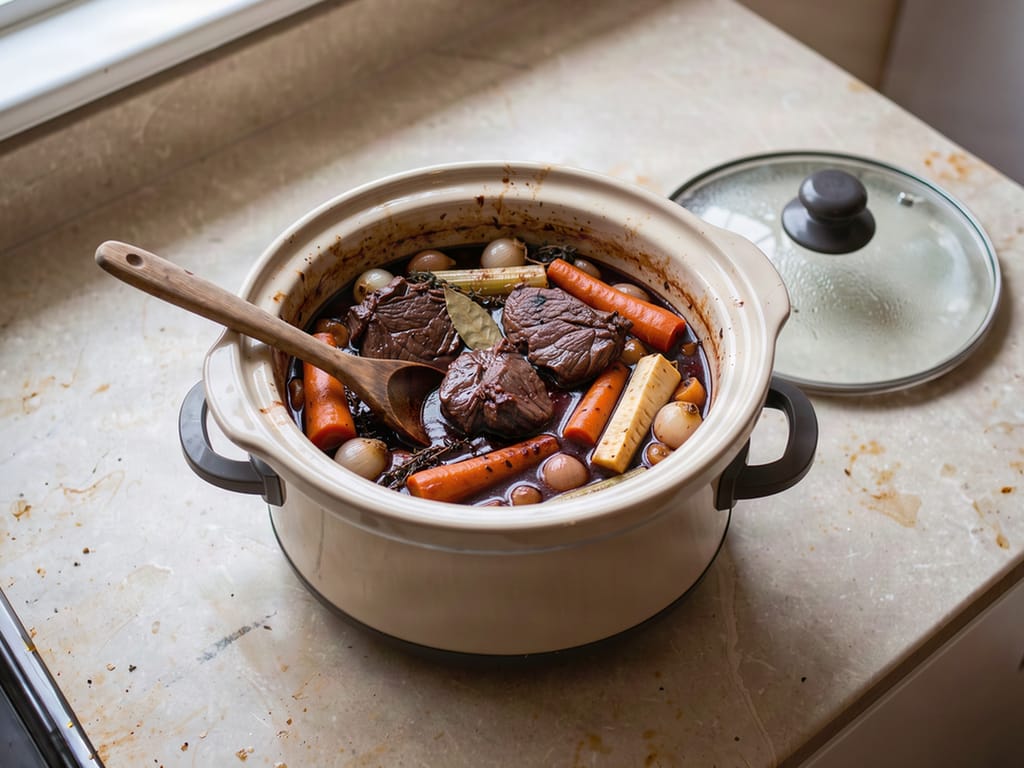
Beef cheeks in a slow cooker need 8–9 hours on LOW or 4–5 hours on HIGH, and you should boil off the wine in a pan first. Beef cheeks in red wine with vegetables is written for a stovetop pot in the original: cheeks braised in red wine with root vegetables.
Converting it for a slow cooker:
Brown the cheeks in a pan and let the wine boil hard in it for a few minutes.
Transfer everything to the cooker and add just enough broth to cover the cheeks.
Reduce the sauce at the end in a saucepan on the stove; it wouldn't thicken in the slow cooker.
Beef cheeks in red wine with vegetables
Beef cheeks in red wine with vegetables: a recipe that's easy to convert for the slow cooker
Braise beef shoulder for dill sauce in a slow cooker for 8–9 hours on LOW or 4–5 hours on HIGH, then finish the sauce on the stove. In the original, dill sauce with slow-roasted beef is roasted covered in the oven.
Converting it for a slow cooker:
Brown the shoulder and vegetables in a pan as the recipe says, then transfer them to the cooker with the broth and spices.
Do everything from straining onward, meaning the dill, cream and seasoning, in a saucepan on the stove. Cream doesn't belong in a slow cooker for a whole day.
For pork in a slow cooker, reach for shoulder, neck or belly. They have enough fat and connective tissue to stay juicy even after eight hours. Lean leg and tenderloin dry out in it.
Pork ragù made from shoulder is ready in a slow cooker in 7–8 hours on LOW or 4–5 hours on HIGH. In the original, pork ragù slowly braised with red wine is simmered in a cast-iron pot on the stove and served with gnocchi and Parmesan.
Converting it for a slow cooker:
Do the browning and boiling off the wine on the stove.
Transfer everything to the cooker with the broth and tomatoes right away; you don't need to wait an hour for them.
Add the herbs for the last 15 minutes and the Parmesan at the table.
Cook marinated pork shoulder, cut into two or three large pieces, in a slow cooker for 8–9 hours on LOW, at the longer end of the 7–9 hour range because large pieces take longer to heat through. In the original, slow-roasted pork with red cabbage is roasted overnight in the oven at a low temperature.
Converting it for a slow cooker:
Put the onion with thyme on the bottom and the shoulder on top, and add a little water or broth.
Smaller pieces heat through faster and more evenly than one large one.
Make the cabbage on the stove according to the recipe; it's done in a quarter of an hour.
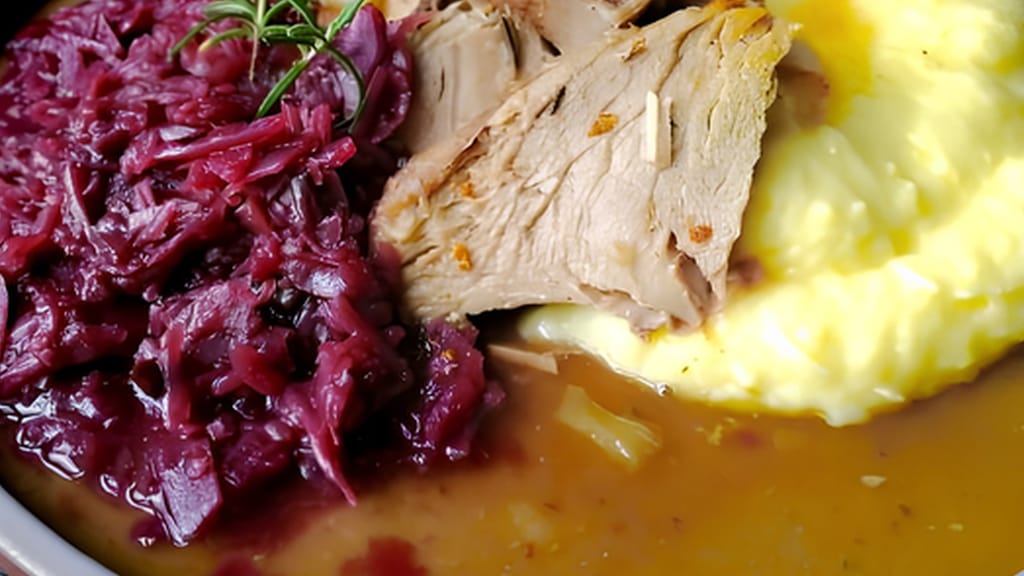
Slow-roasted pork with red cabbage
Slow-roasted pork with red cabbage: pork shoulder that falls apart under a fork
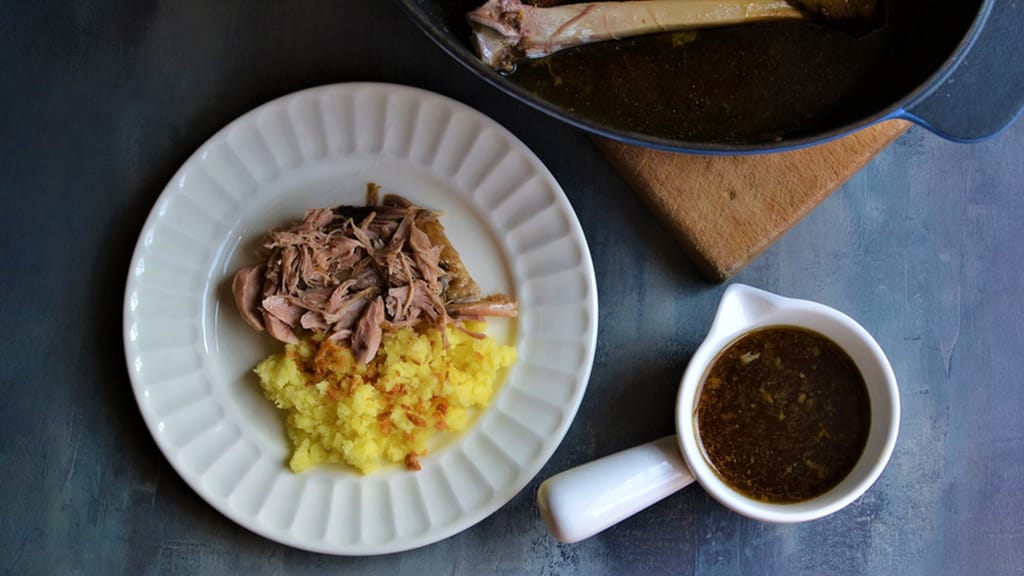
Pork neck in a slow cooker needs 7–8 hours on LOW, after which it pulls apart into shreds. Cut it into large pieces, brown it well and lay it on a bed of onion. We don't yet have a recipe on Yumsto specifically for slow cooker pork neck.
Bolognese sauce cooks in a slow cooker in 6–8 hours on LOW or 3–4 hours on HIGH, and you should never put raw ground meat in it. In the original, sugo bolognese, slow-cooked Bolognese sauce is simmered in a pot on the stove and served with spaghetti and Parmesan.
Converting it for a slow cooker:
Crumble the meat and brown it in a pan until it has changed color all the way through, otherwise it will clump into a gray lump in the cooker. Boil off the wine in the pan as well.
Add about a third less water than the recipe calls for, because nothing evaporates.
If the sauce is thin at the end, let it cook for the last hour with the lid slightly ajar.
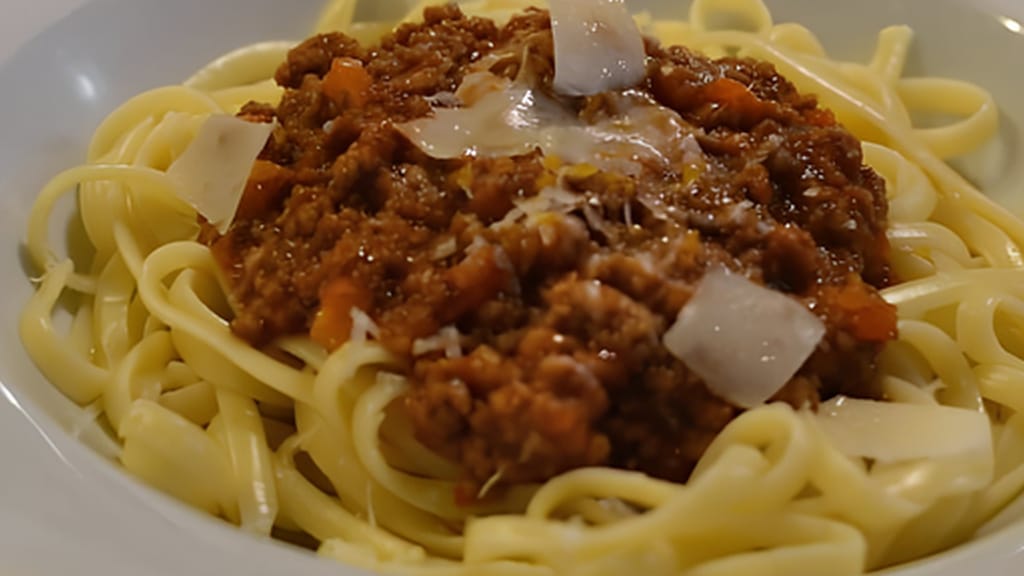
Sugo bolognese: slow-cooked bolognese sauce
Sugo bolognese: slow-cooked Bolognese sauce made with ground pork
Rabbit in a slow cooker cooks for 7 hours on LOW, on a bed of root vegetables. Rabbit in cream sauce from the slow cooker is one of the two recipes in this article written specifically for a slow cooker. The recipe suggests starting the cooker in the evening and having the meat ready in the morning; the sauce is then finished in a saucepan on the stove and blended until smooth.
Why it works: rabbit is lean and easily dries out in the oven. On a bed of vegetables it cooks in steam and its own juices, and the bacon adds fat that it lacks itself. You'll find other ways to prepare it in the article rabbit: recipes in cream sauce, roasted and from the slow cooker.
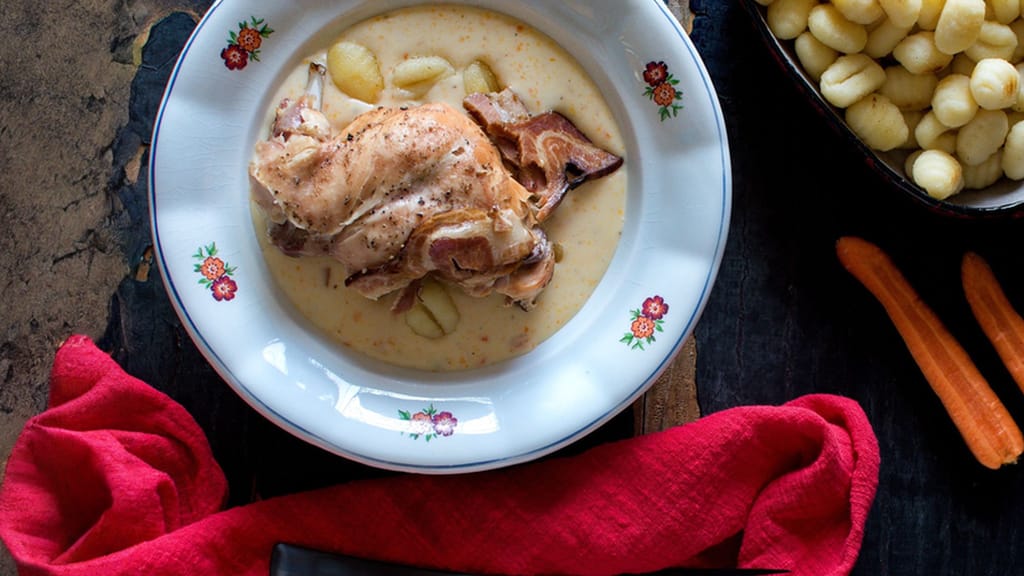
Slow cooker rabbit in creamy sauce
Rabbit in cream sauce from the slow cooker: 7 hours on LOW, sauce blended until smooth
Duck breasts in a slow cooker only need 1 hour on HIGH and then 1.5 hours on LOW, until they reach at least 74°C (165°F) at the thickest point. Duck breasts with oranges from the slow cooker is the second recipe written specifically for a slow cooker: the breasts marinate overnight in orange liqueur and are seared skin side down right in the cooker's removable insert on the stovetop.
Skin from a slow cooker is never crisp, which is why the recipe finishes it in a dry, hot pan at the end. Notice how short the time is here: duck breasts aren't a tough cut, so 2.5 hours is enough and more would dry them out.
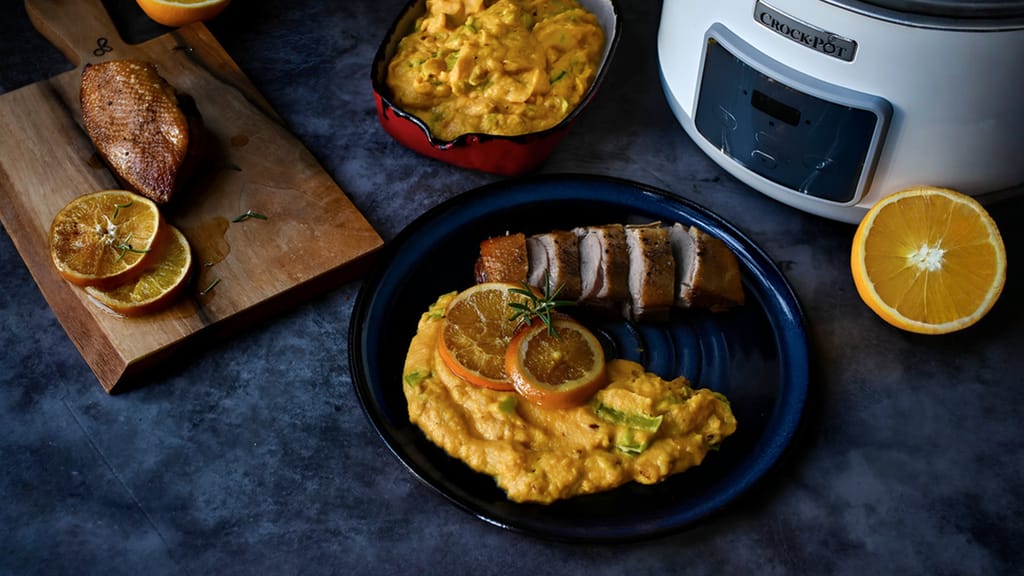
Slow cooker duck breast with orange
Duck breasts with oranges from the slow cooker, with sweet potato purée and leek
For chicken in a slow cooker, take bone-in thighs, not breasts. Thighs hold up for 5–7 hours on LOW or 2.5–3.5 hours on HIGH and stay juicy, while breasts are dry and stringy in that time. Brown the skin in a pan beforehand, since it can't crisp in the cooker, or simply remove it. As with all poultry, go by the thermometer: the meat must reach at least 74°C (165°F) at the thickest point. Don't put a whole chicken in a slow cooker; USDA FSIS advises cutting food into pieces so it cooks through evenly. We don't yet have a recipe on Yumsto specifically for slow cooker chicken thighs.
Cook turkey thighs in beer in a slow cooker for 6–7 hours on LOW, until they reach at least 74°C (165°F) near the bone, and give them a golden surface at the end under the broiler. In the original, turkey thighs slow-roasted in beer are roasted covered in the oven in dark beer with onion and herbs.
Converting it for a slow cooker:
Put the onion with herbs on the bottom and the thighs on top.
Pour in just enough beer to cover the thighs.
At the end, put them under the oven broiler for a few minutes; the surface won't turn golden in the cooker.
Bone broth and thick soups work best in a slow cooker: goulash soup, root vegetable soup or legume soups. Bone and vegetable broth is its best discipline, because over 8–10 hours on LOW it draws more flavor from the bones than you could manage on the stove, and nothing evaporates. Roast the bones in the oven first so the broth has color. For vegetable soups, add root vegetables, potatoes and onion right away, and delicate things like spinach, peas or noodles only for the last 20–30 minutes. Add cream and milk to the finished soup, because over a whole day in the cooker they would curdle.
Cook goulash soup made with shin cut into small cubes for 7–8 hours on LOW. Add the potatoes right at the start; they partly cook down and thicken the soup. We don't yet have a recipe on Yumsto specifically for slow cooker goulash soup.
Without meat, a slow cooker works best for legumes, pumpkin or squash, and root vegetables. Red lentils soften to a cream without you watching them, and precooked chickpeas soak up the flavor of the sauce they cook in.
Red lentil curry: 4–6 hours on LOW; fry the spices in a pan first.
Pumpkin or squash with precooked chickpeas: 4–5 hours on LOW; cut the pumpkin into large cubes, and at the edges it will fall apart and thicken the sauce by itself.
We don't yet have recipes on Yumsto for lentil curry or pumpkin with chickpeas written specifically for a slow cooker. In general, cut vegetables into larger pieces than for a stovetop pot; small ones would fall apart over that many hours.
It's a good idea to soak and precook dried legumes beforehand. For beans this applies without exception, and we cover it in detail in the article how to cook beans until tender.
Never put frozen meat in a slow cooker, and never reheat leftovers in it. Both have the same reason: the pot heats up slowly, and the food would spend too long at a temperature where bacteria multiply. A summary based on USDA FSIS guidance:
Always thaw meat or poultry first, ideally overnight in the fridge. A frozen piece in the cooker doesn't thaw fast enough.
Fill the pot at least halfway and at most two-thirds full.
Don't reheat leftovers in the slow cooker. Heat them on the stove until steaming and hot all the way through, and only then put them in a preheated cooker on the keep-warm setting.
Put leftovers into shallow covered containers and into the fridge within 2 hours of finishing at the latest. Don't leave them to cool in the pot on the counter.
If the power goes out while you're not home, throw the food away, even if it looks done. If you are home, finish cooking it another way.
Don't rinse raw meat before putting it in; just pat it dry with a paper towel. Water would spread bacteria around the kitchen.
A slow cooker does essentially the same thing as a covered roasting pan in a 90–140°C (195–285°F) oven, it just takes up less space and you can walk away from it. So you can cook most of the recipes above in the oven too, and vice versa: we describe how to do it overnight in the oven in the article roasting meat overnight in the oven. A pressure cooker is the opposite: it tenderizes the same cheek in an hour, but the flavors don't have time to come together as much. We show how a specific dish behaves in all three in the article goulash in a pressure cooker, slow cooker and oven. And if you want to save on dishes, you'll find inspiration in the roundup of one-pot meals.
Yes, a slow cooker is built for unattended cooking, during the day or overnight. Put only thawed meat in it, fill it between half and two-thirds full, and set it on a firm, dry surface away from walls and curtains. If it doesn't switch to a keep-warm setting when the program ends, don't leave the finished food to cool in the pot. Move it to the fridge within 2 hours of finishing.
The easiest way is to pour the sauce into a saucepan at the end and simmer it uncovered on the stove until it thickens. Other options: blend some of the cooked vegetables into it, stir in a teaspoon of starch mixed with cold water and simmer briefly, or pour it into a butter-and-flour roux, as the rabbit in cream sauce recipe does. The sauce won't thicken in the slow cooker itself, because almost nothing evaporates in it.
Choose the size by how much you usually cook, because the pot should be between half and two-thirds full. For two or three people a smaller pot of about 3 liters is enough; for a family and cooking in batches, 5 to 6 liters is more comfortable. An oval shape suits legs and larger cuts of meat, while a round one suits soups and sauces.
Brown the meat and vegetables in a pan, boil off the wine, use about a third less liquid than in a stovetop pot, and multiply the stovetop braising time by roughly two to three for the LOW setting. Leave cream, herbs and thickening until the end. This works for most recipes for braised meat, ragù and thick soups.
Most often because the cut is too lean or it cooked too long. Chicken breast, pork leg or beef tenderloin have little collagen to turn into gelatin, so over long hours they just lose their juices and the fibers toughen. Choose cheeks, shoulder, neck or bone-in thighs, and with poultry stick to shorter times and a thermometer.
Potatoes yes, rice and pasta better not. Put potatoes cut into larger pieces on the bottom, where the heat is strongest, and they'll hold up all day. Rice and pasta turn to mush over that many hours, so cook them separately and combine them with the dish on the plate.