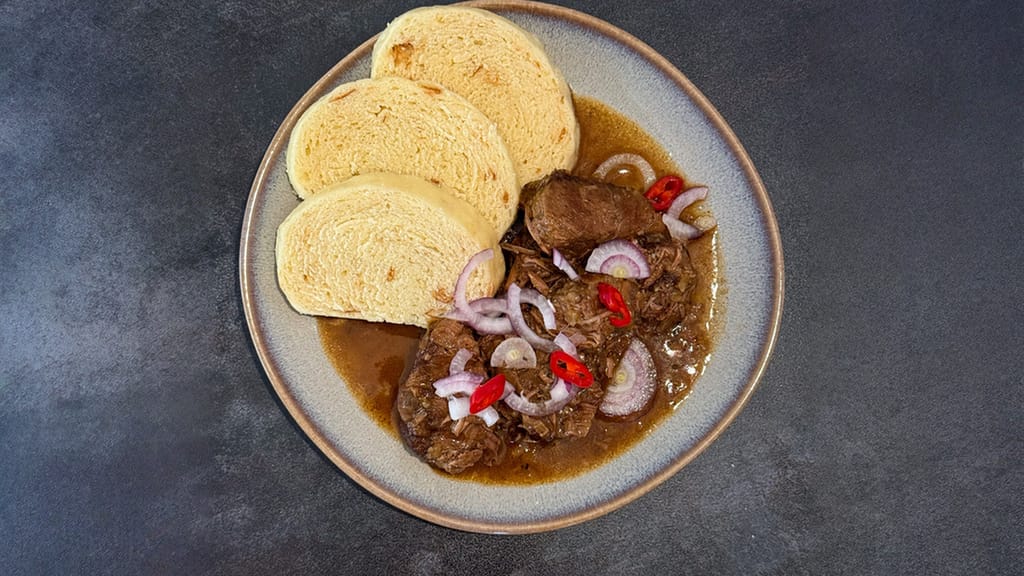
Classic czech beef goulash with chilli and bread dumplings
One-Pot Meals: Goulash, Dhal, Curry and Ragù for Winter Evenings
Updated Nov 20, 2026
One-pot meals are goulashes, dhals, curries, ragùs and bean or lentil stews in which the meat or vegetables, spices and sauce all cook in a single pot. The flavor builds layer by layer, gentle heat does most of the work for you, and there's hardly any washing up. They're ideal for winter evenings: one batch gives you two dinners, and goulash or ragù often tastes even better the next day. Below you'll find a basic method that works for all of them, nine tried-and-tested recipes from Yumsto, quick, vegetable and meat-free ideas, and how to cool and reheat a big pot safely.
A one-pot meal is a dish in which the base, the main ingredient and the sauce all cook in a single vessel, and the liquid the meat or legumes cook in becomes the sauce. The most common types are:
goulashes and braised meats: beef, pork or vegetable,
curries and dhals made with coconut milk or tomatoes,
ragùs braised with wine and stock,
bean and lentil pots: beans, lentils, chickpeas.
Why it tastes so good: everything that browns on the bottom of the pot stays in the dish. Browned bits of meat and onion leave a brown film on the bottom that dissolves into the sauce once you add liquid, and a large part of the flavor is right there. Long, gentle braising then breaks down the connective tissue in cuts such as shin or shoulder, so the meat turns tender and the sauce thickens on its own. Legumes release starch and thicken the sauce without flour.
And the practical side: one pot to wash, most of the time is hands-off, and one batch gives you dinner for two days. You only need to stir the pot now and then, and you can do anything else in the meantime.
Recipe of the week, one tip that saves you time and one deal from the shop. Unsubscribe in one click.
The next issue goes out on Thursday, November 26.
Almost every one-pot meal rests on the same six steps: brown, sauté, spice, deglaze, braise, season. Once you understand them, you can make goulash, curry or ragù without a recipe.
Brown the main ingredient. Pat the meat dry with a paper towel, salt it and brown it in batches in hot fat so it sears and takes on color. If you pile too much into the pot at once, it releases juices and starts to boil instead of browning.
Sauté the aromatic base. Add onion to the pan drippings, plus garlic, ginger or carrot if you like. The onion sets the color and sweetness: for goulash it's cooked until golden, for dhal it's enough for it to turn translucent.
Spice in the fat. Briefly warm ground spices such as paprika, turmeric, caraway or garam masala in the fat until fragrant. Ground paprika only tolerates a moment of this before it turns bitter, so add liquid right away.
Deglaze and loosen the bottom. Stock, wine, tomatoes or water dissolve the browned film on the bottom. Scrape it off with a wooden spoon: that's flavor, not burnt food.
Braise gently with the lid on. The surface should only lazily bubble, not boil. A hard boil dries out the meat, while gentle heat tenderizes it.
Season at the end. Add salt, acid (lime, vinegar, wine) and fresh herbs only at the end, when you know how much liquid has evaporated.
The most common mistakes that make a pot turn out bland:
Too much liquid right at the start. The sauce ends up thin and watery. Add just enough liquid to cover the meat; you can always top it up.
Spices in a cold pot. Without fat and heat they don't release their aroma and taste dusty.
Stirring the meat while it browns. Leave it alone until it releases from the bottom by itself, and only then turn it.
All the vegetables at once. Hard carrots and root vegetables go in at the start; zucchini, broccoli or green leek go in near the end.
Salting only at the beginning. During braising the liquid evaporates and the saltiness concentrates, so leave the final salting to the end.
You can make one-pot meals in four types of vessel: a cast-iron pot, a stainless steel pot, a slow cooker and a pressure cooker. Each suits something different:
Cast-iron pot, plain or enameled: best for long braises such as goulash (about three hours) or ragù (just under four hours). The thick base holds heat, the meat browns properly and the sauce doesn't scorch. If it has a cast-iron lid and sturdy handles, you can also move it into the oven after adding the liquid.
Stainless steel pot: for dhal (47 minutes), legumes and thinner stews. With a thick multi-layer base it can handle goulash too; with a thin base, keep the heat lower and stir more often, or the sauce will scorch on the bottom.
Slow cooker: for goulash and ragù on days when you're not home. Brown the meat and onions in a skillet first, use less liquid than on the stovetop, and expect braising to take much longer than on the stove.
Pressure cooker: the fastest route to tender shin and cooked legumes, cutting braising time to a fraction. Brown the meat with the lid off, then seal the pot and cook for the time given in your pressure cooker's manual. Add green vegetables and herbs only after opening.
For quick curries, such as the 27-minute chicken curry, a deep skillet or wok is enough. Choose the size of the vessel to suit your batch: in an overfilled pot the meat won't brown and the sauce boils over, while in one that's too big the liquid evaporates faster than the meat softens.
Whatever you cook in, the method from the previous section applies unchanged: brown, sauté, spice, deglaze, braise, season. The only thing that changes is how quickly the pot responds to the flame. Cast iron heats slowly and holds heat for a long time, so turn the heat down earlier than seems necessary. Thin stainless steel reacts immediately, and if you walk away from the stove it scorches faster.
For winter evenings, the best choices are long-braised dishes with a thick sauce: beef goulash, pork ragù with red wine, beef braised in coconut milk and lentil dhal. All four are worth making in a larger batch and reheating the next day.
Classic beef goulash with chili and bread dumpling is built on shin from beef forequarter, plenty of onion, paprika and about three hours of gentle simmering, which the pot does almost entirely for you. It's ideal for winter because you can make a big batch, and it tastes even better the next day. Over that time the shin turns tender and gives the sauce body, where lean meat would dry out. Key tip: stir the paprika in over low heat and add the stock right away, or it will turn bitter. The dumpling is made separately.
Classic czech beef goulash with chilli and bread dumplings
Beef goulash in one pot: shin, onion, paprika and three hours of braising
Slow-braised pork ragù with red wine is the Italian-leaning cousin of goulash: pork shoulder, bacon, root vegetables, red wine and tomatoes. The recipe takes just under four hours, and the pot works on its own for most of them, so it's an ideal weekend winter batch. Key tip: let the wine boil hard until the sharp, sour smell disappears from the steam, and only then add the stock.
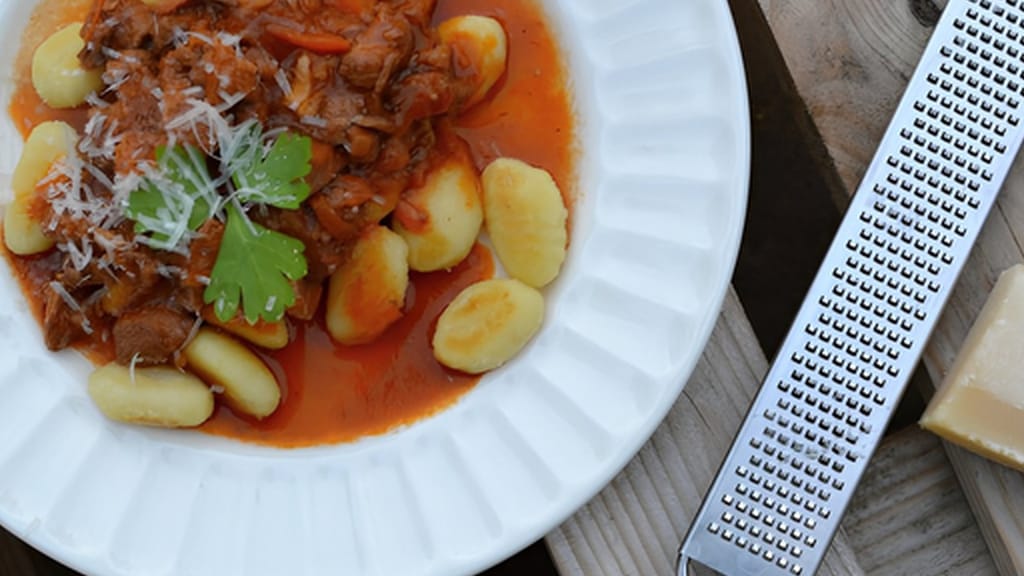
Slow-braised pork ragù with red wine
Pork ragù in one pot: shoulder, bacon, red wine and tomatoes
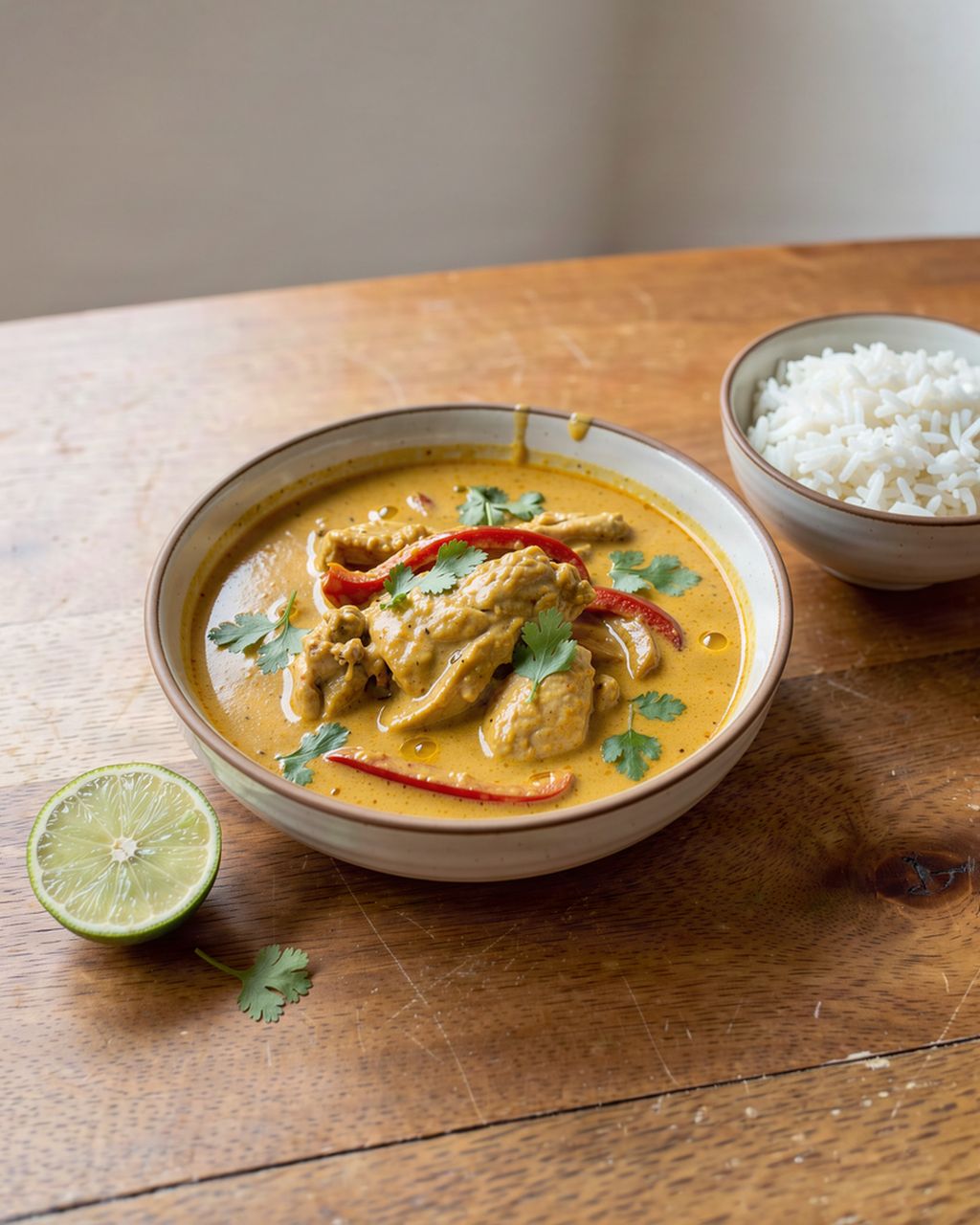
Beef braised in coconut milk is ready in about an hour and a half and needs just ten ingredients, including shin, ginger, garlic, leek and coconut milk. It warms you up just like goulash, only with a milder, slightly sweet sauce, and it's served with jasmine rice. Key tip: sprinkle the browned meat with cornstarch; it thickens the sauce on its own during braising and you don't add anything else.
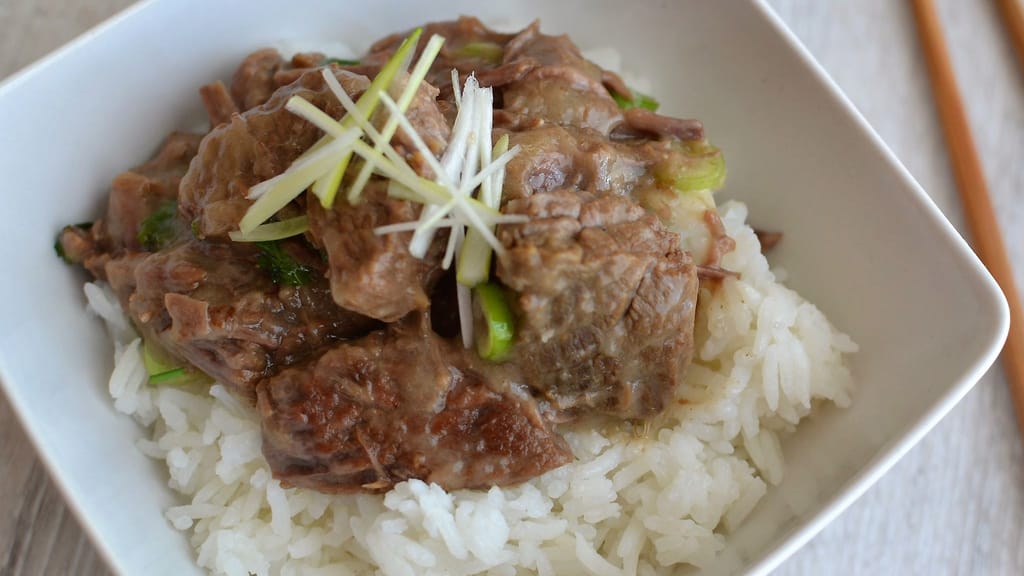
Beef chunks braised in coconut milk
Beef in coconut milk in one pot: shin, ginger and leek in an hour and a half
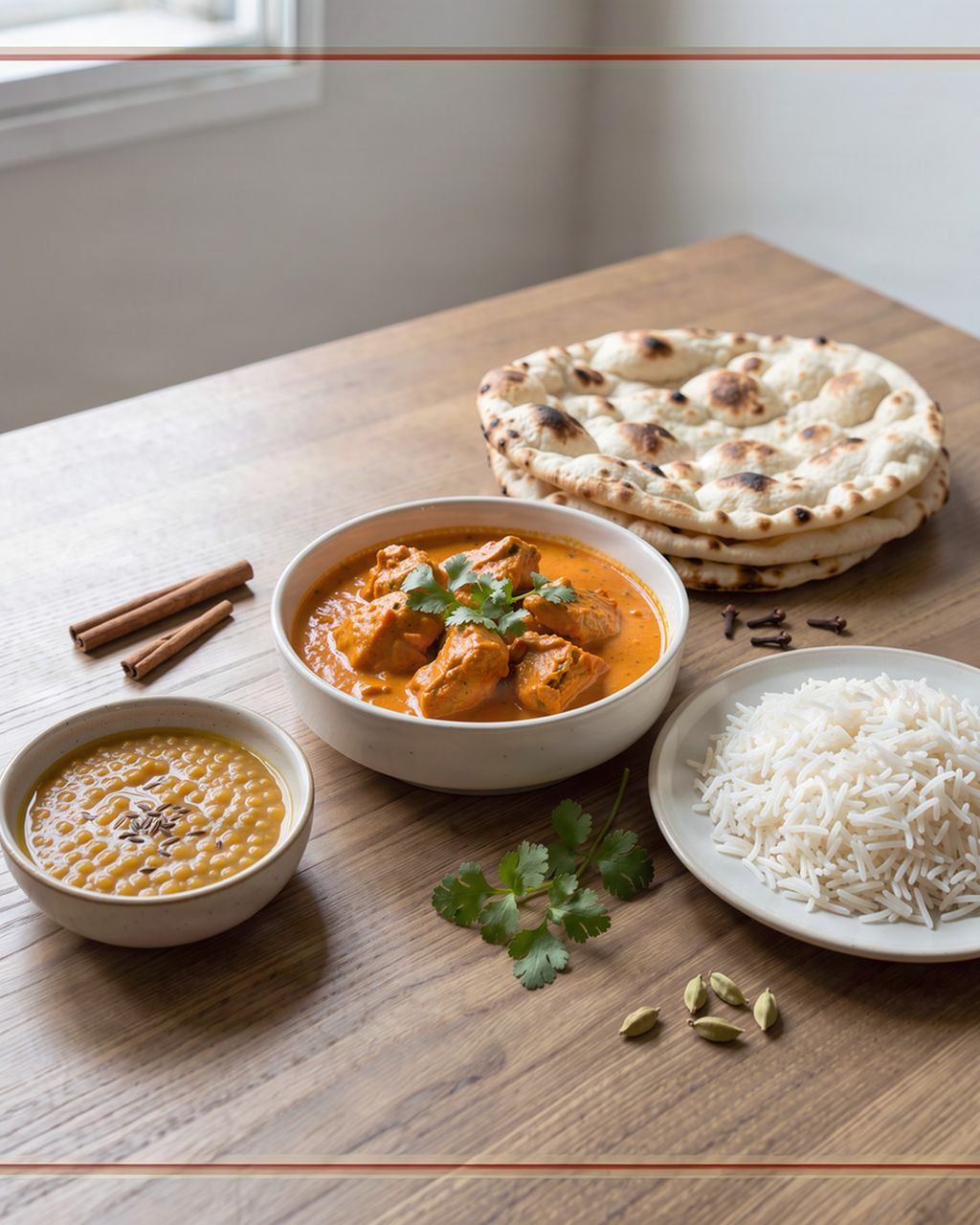
Lentil dhal with coconut milk is a creamy pot ready in 47 minutes, made with red lentils, diced tomatoes, coconut milk and spices: turmeric, cumin and garam masala. It's filling, cheap and warms you up even on the coldest evening. Key tip: rinse the lentils until the water runs clear, which washes away some of the substances that would foam in the pot; the red lentils then break down into a smooth cream by themselves, even without a blender.
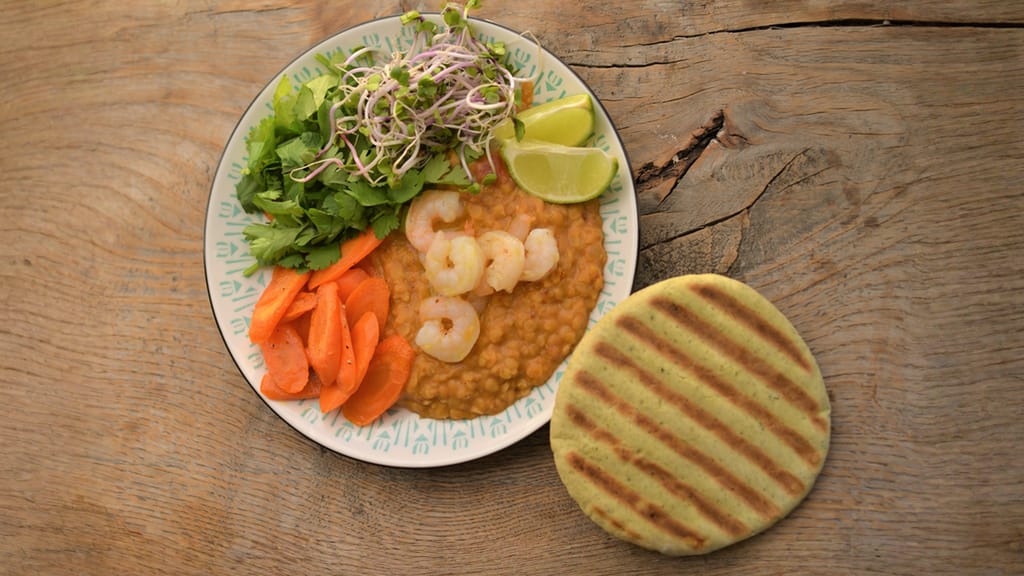
Lentil dhal with coconut milk
Lentil dhal in one pot: red lentils, tomatoes and coconut milk in 47 minutes
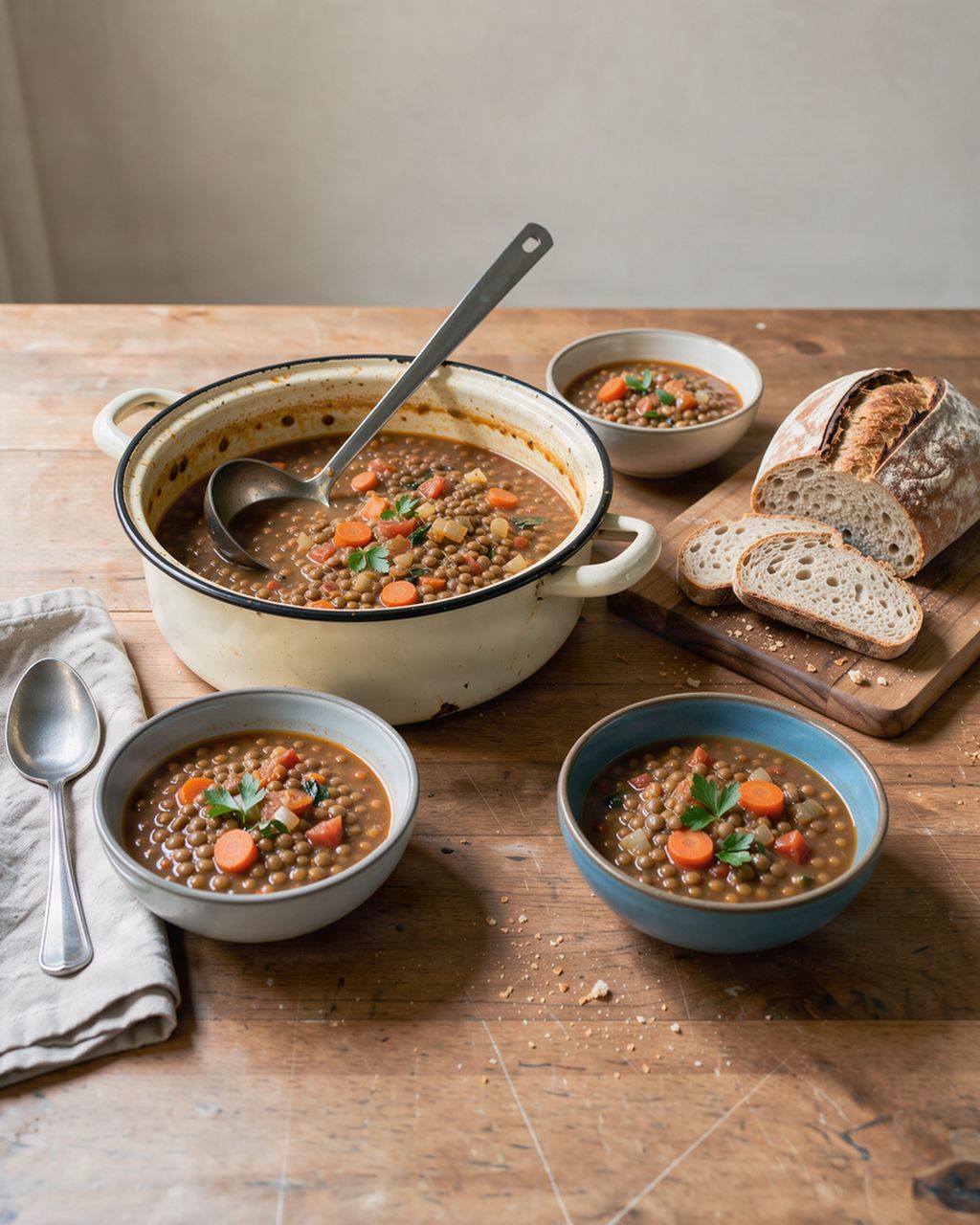
The simplest one-pot meals are built on legumes: beans with bacon in tomato sauce, and sour lentils (čočka nakyselo) with a fried egg. Both have eight ingredients, and the only step you mustn't forget is soaking the legumes overnight. The active work then takes just a few minutes.
Beans with bacon in tomato sauce are built on white beans, bacon, onion, carrot and diced tomatoes, and are served with fresh bread. The bacon acts as both fat and seasoning here, so salt and pepper are all you need. Key tip: cook the beans until tender before adding the tomatoes; the acidic environment slows their softening, and undercooked beans would stay tough in the sauce.
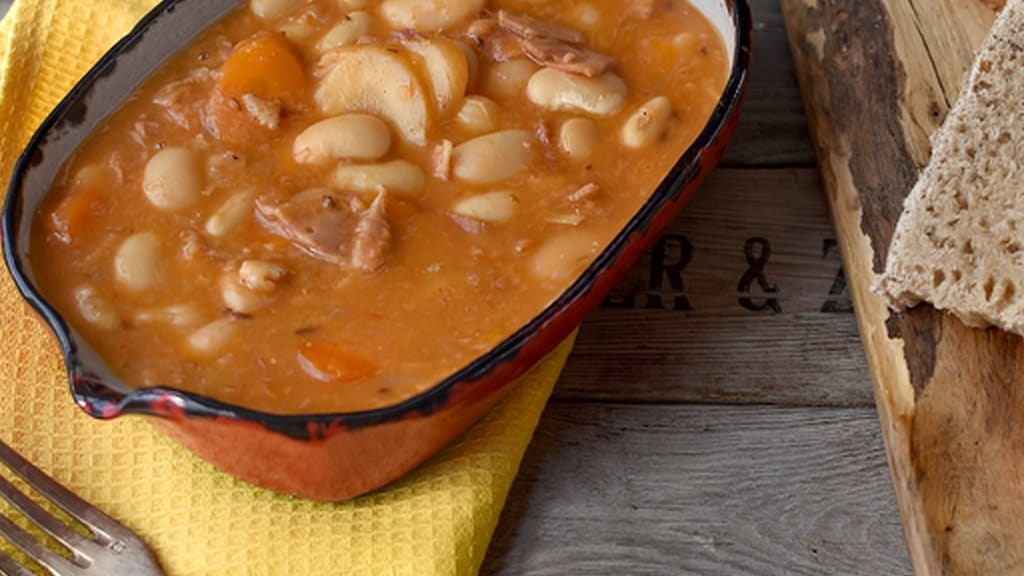
Bacon and bean stew in tomato sauce
Beans with bacon in one pot: white beans, carrot and tomato sauce
Čočka nakyselo with a fried egg is a Czech classic made from brown lentils, sour cream and vinegar, topped with crispy fried onion and a fried egg. It's cheap, filling and made for a winter evening. Key tip: add the vinegar bit by bit and taste as you go; you can always add more, but you can't take it out.
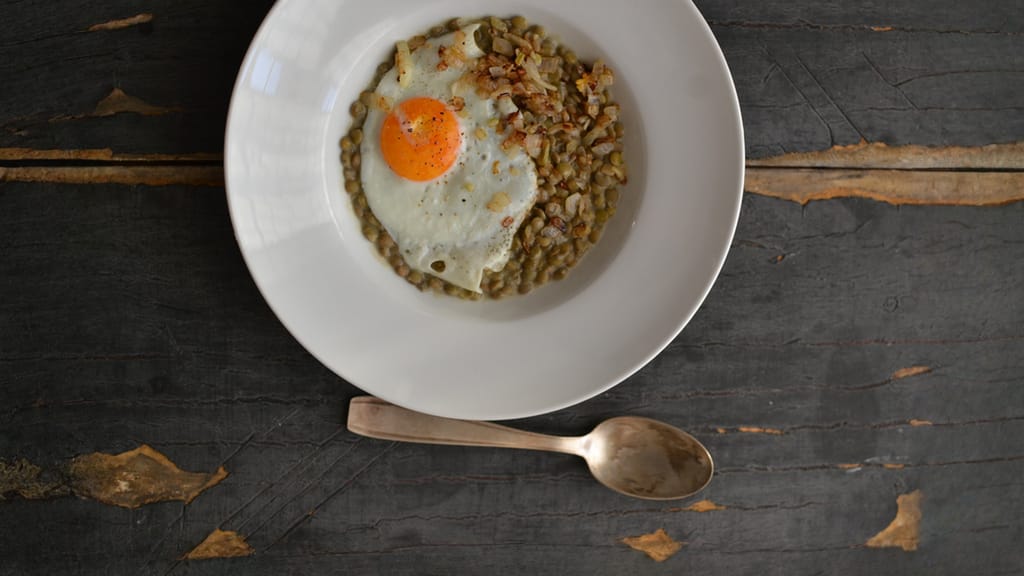
Sour lentils with a fried egg
Čočka nakyselo in one pot: brown lentils, sour cream and a fried egg
You build a quick one-pot meal on ingredients that soften within half an hour: chicken breast, red lentils, zucchini, sweet potatoes. The fastest recipes in this article are:
chicken curry with coconut milk: 27 minutes,
sweet potato curry with red lentils: 43 minutes,
zucchini goulash: 46 minutes,
lentil dhal with coconut milk: 47 minutes.
If you really only have a quarter of an hour for dinner and it doesn't have to be one pot, have a look at what to cook for dinner, where dishes are sorted by minutes.
Chicken curry with coconut milk is ready in 27 minutes in one deep skillet or wok: chicken breast, coconut milk, ginger, lemongrass and vegetables, served with rice. It suits an ordinary winter evening when you want something warming and don't have much time. Key tip: fish sauce also salts the curry, so add it in stages and taste as you go.
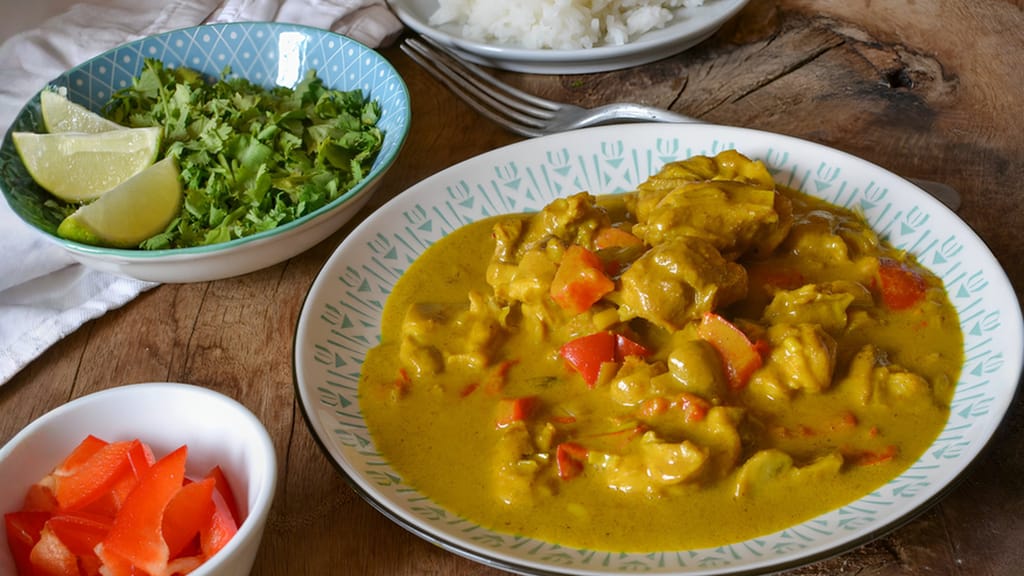
Chicken curry with coconut milk
Chicken curry in one pot with coconut milk and lemongrass in 27 minutes
Vegetable one-pot meals work best when the vegetables get the same care as meat: properly sautéed onion, spices warmed in fat, and careful timing so nothing overcooks. Two tried-and-tested recipes: zucchini goulash and sweet potato curry with red lentils.
Zucchini goulash is a goulash ready in 46 minutes, made from zucchini, onion, garlic, goulash spice mix and tomato passata, with no meat at all. It tastes surprisingly meaty because the onion is cooked until it almost browns, which gives it sweetness and color. Key tip: scoop out the soft, seedy center of the zucchini with a spoon, or it will cook down to mush and the goulash turns watery.
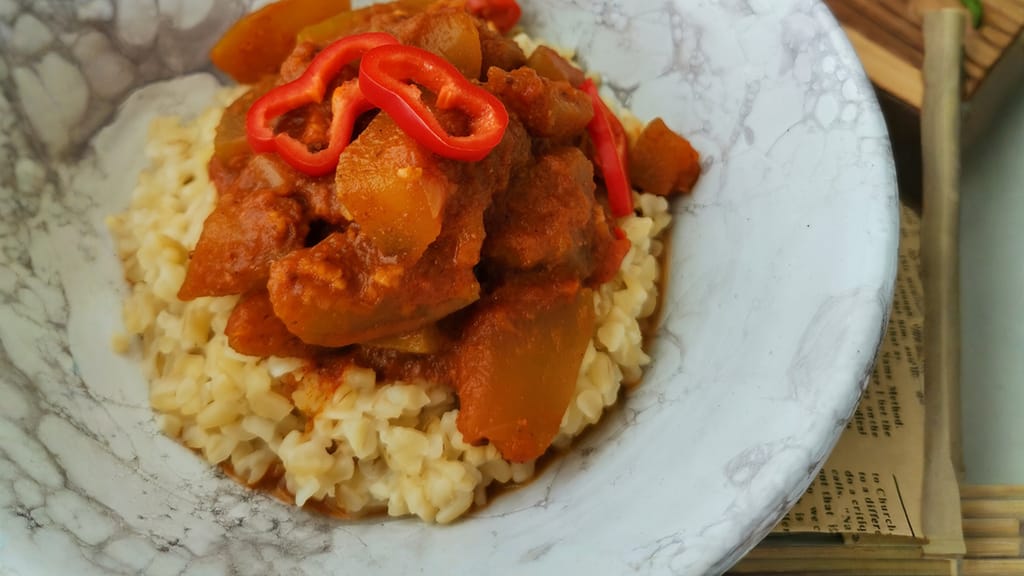
Zucchini goulash
Zucchini goulash in one pot: zucchini, onion, goulash spice mix and passata in 46 minutes
Sweet potato curry with red lentils combines sweet potatoes, carrot, red lentils and broccoli with curry paste in one thick pot in 43 minutes. The lentils give it body even without meat, so it stands up as a full winter dinner. Key tip: cut the sweet potatoes and carrot into similar-sized pieces so they soften at the same time, and don't skip the lime juice at the end; it balances the sweetness of the sweet potatoes.
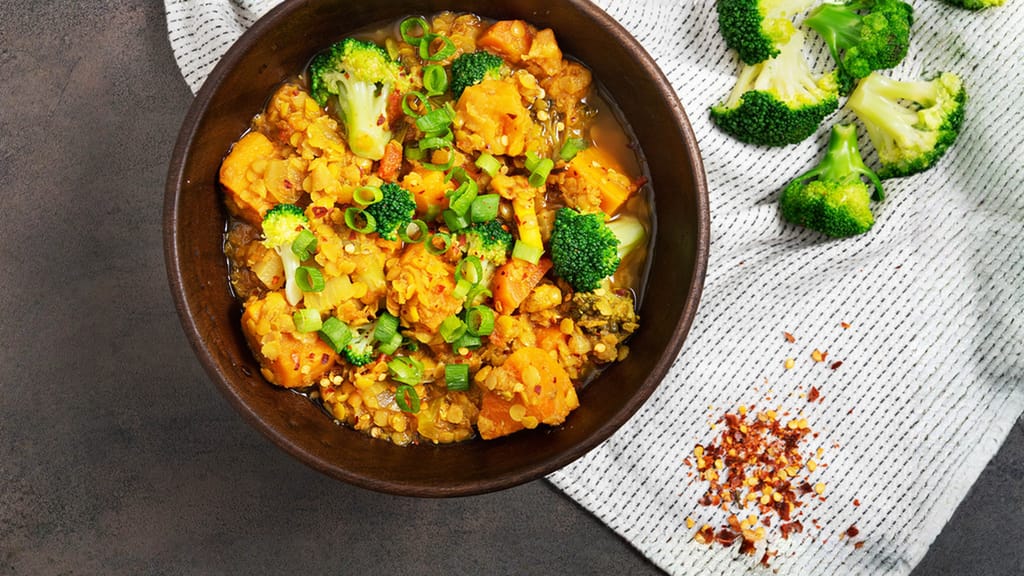
Sweet potato curry with red lentils
Sweet potato curry in one pot with red lentils and broccoli in 43 minutes
The easiest way to build a meat-free one-pot meal is on legumes or on vegetables with a thick sauce. Three of the recipes in this article are meat-free:
zucchini goulash: vegan, just vegetables, olive oil, spices and passata,
sweet potato curry with red lentils: vegan (with a vegan curry paste),
čočka nakyselo with a fried egg: vegetarian, with eggs and sour cream.
To keep a meat-free pot from tasting bland, you need to replace what browned meat would otherwise provide: depth of flavor. Cook the onion longer and darker, always warm the spices in fat, let tomato purée or passata simmer for a while so it loses its raw acidity, and finish with lime or vinegar. Legumes thicken the sauce themselves, so you usually don't need a roux.
Put a cooked one-pot meal in the fridge within 2 hours of finishing cooking, eat it within 3–4 days and reheat it until it's hot and steaming all the way through. The 2-hour window and 3–4 days in the fridge come from the US food safety agency USDA FSIS; the UK's Food Standards Agency stresses that leftovers should be reheated until they're piping hot all the way through.
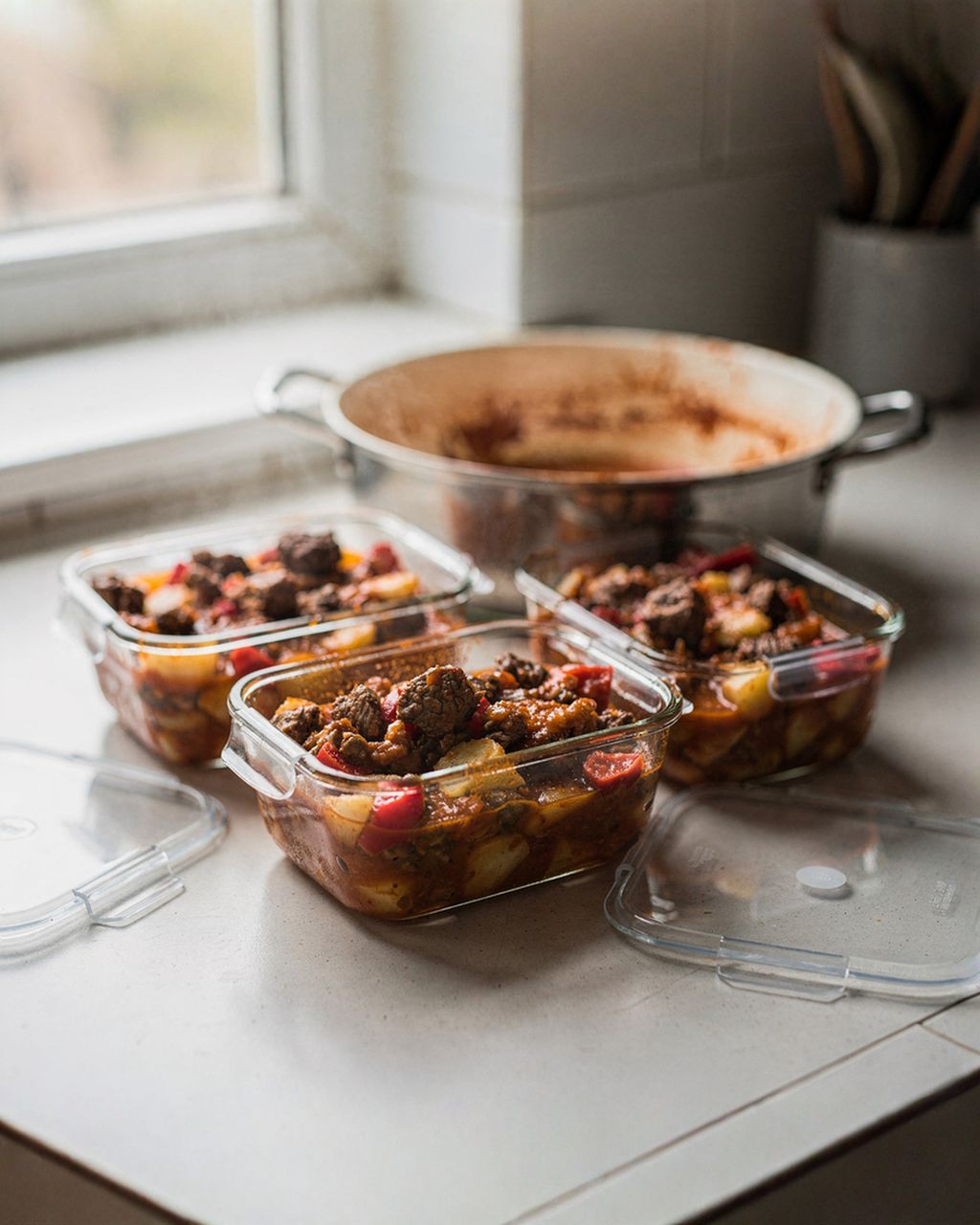
A big pot is tricky, though. A full pot of goulash cools slowly, which is why the USDA advises dividing large amounts of food into smaller containers so it cools quickly. In practice:
Don't leave the pot on the stove overnight, where it cools most slowly.
Divide the food among several shallow containers so it has a large surface and cools fast.
Put the containers in the fridge as soon as possible so you make it within two hours, and don't stack them tightly against each other.
Reheat only the portion you'll eat, and stir it during reheating so it heats through in the middle too. For reheated leftovers, the USDA gives 74°C (165°F) inside.
Goulash, ragù and dhal often taste stronger the next day because the spices and sauce have time to come together. That's why it pays to cook a larger batch. For how to stretch one batch over two days without overspending, see the article on budget meals.
Cool a one-pot meal made ahead quickly, put it in the fridge or freezer within 2 hours, eat it from the fridge within 3–4 days, and keep it in the freezer for several months. Goulash, ragù, curry and dhal are best for batch cooking, because the meat and legumes are tucked into the sauce. A method that works:
Cook a bigger batch and decide right away how many portions you'll eat within 3–4 days and how many will go in the freezer.
Take the pot off the heat and divide the food into shallow containers straight away so it cools as fast as possible.
Don't fill the freezer containers to the brim; food expands as it freezes.
Label each container with the name and date so you know what to eat first.
Freeze portions as soon as they've cooled, not after several days in the fridge.
Thaw in the fridge and reheat until the food is hot and steaming all the way through.
What not to freeze: make sides such as dumplings or rice fresh to go with the thawed dish, fry the egg for čočka nakyselo just before serving, and add fresh herbs only to the reheated portion. Zucchini and other soft vegetables turn softer after thawing than meat or legumes, so zucchini goulash is best eaten fresh. If the sauce is thicker after thawing, thin it with a spoonful of water or stock while reheating.
Frozen goulash or ragù is the best insurance for an evening when you don't feel like cooking: move it from the freezer to the fridge in the morning and by evening you only need to reheat it.
Spiced pots call for a side that soaks up the sauce without overpowering the flavor. Based on the recipes in this article:
rice: with the chicken curry and the zucchini goulash, jasmine rice with the beef in coconut milk,
bulgur: with the zucchini goulash,
fresh bread: with the beans and bacon,
naan: with dhal, for example skillet naan bread without yeast,
bread dumplings (houskový knedlík): with the classic goulash,
grated Parmesan on top: with the pork ragù.
Cook the side separately and store it separately. Rice stored overnight directly in the sauce soaks up the liquid, turns mushy and the sauce becomes a paste. Cool cooked rice and refrigerate it as soon as possible, eat it by the next day and reheat it only once, until it's hot all the way through. If the pot seems too thick after reheating, thin it with a spoonful of water or stock.
Yes, goulash, ragù, curry and dhal all freeze well; the US agency USDA says frozen leftovers keep their best quality for 3 to 4 months. Freeze them in smaller, flat portions as soon as they've cooled, not after several days in the fridge. Thaw in the fridge, then reheat until the food is hot all the way through. Meat and legumes hold their texture well, while zucchini turns softer after thawing.
One-pot meals are neither healthy nor unhealthy in themselves; it depends on what you put in the pot and how much you eat. You can influence the ratio of vegetables and legumes to meat, the amount of fat for browning, and the side dish. If you have specific nutritional needs or follow a particular diet, talk to a nutrition specialist; this article doesn't give nutritional advice.
The best choice is a heavy pot with a thick base, typically cast iron or enameled cast iron, with a tight-fitting lid. A thick base spreads heat evenly, so meat browns properly and long braising doesn't scorch. A thin stainless steel pot can handle legumes and quick curries, but for a three-hour goulash you'll need to watch it more often. For quick curries, a deep skillet or wok is enough.
Yes, long-braised dishes like goulash or ragù suit a slow cooker. Brown the meat and onions in a skillet first, though, because a slow cooker doesn't brown, and without it the flavor lacks depth. Use less liquid than in a regular pot, since almost nothing evaporates under the lid. Add green vegetables and fresh herbs only near the end.
The simplest way is to let it simmer uncovered for 10 to 15 minutes so the water evaporates. A spoonful of potato starch or cornstarch mixed with cold water thickens faster: stir it in and simmer briefly. In legume dishes, it's enough to mash some of the lentils or beans right in the pot. Don't sprinkle dry flour into the finished dish, as it will clump.
It's better to reheat only the portion you'll eat and leave the rest in the fridge. A whole pot that is repeatedly reheated and re-chilled spends more time in the temperature range where bacteria thrive, and the meat and vegetables also break down more each time. Reheat rice only once.
One recipe worth heating the oven for, one tip, and one deal from the shop. Nothing else.