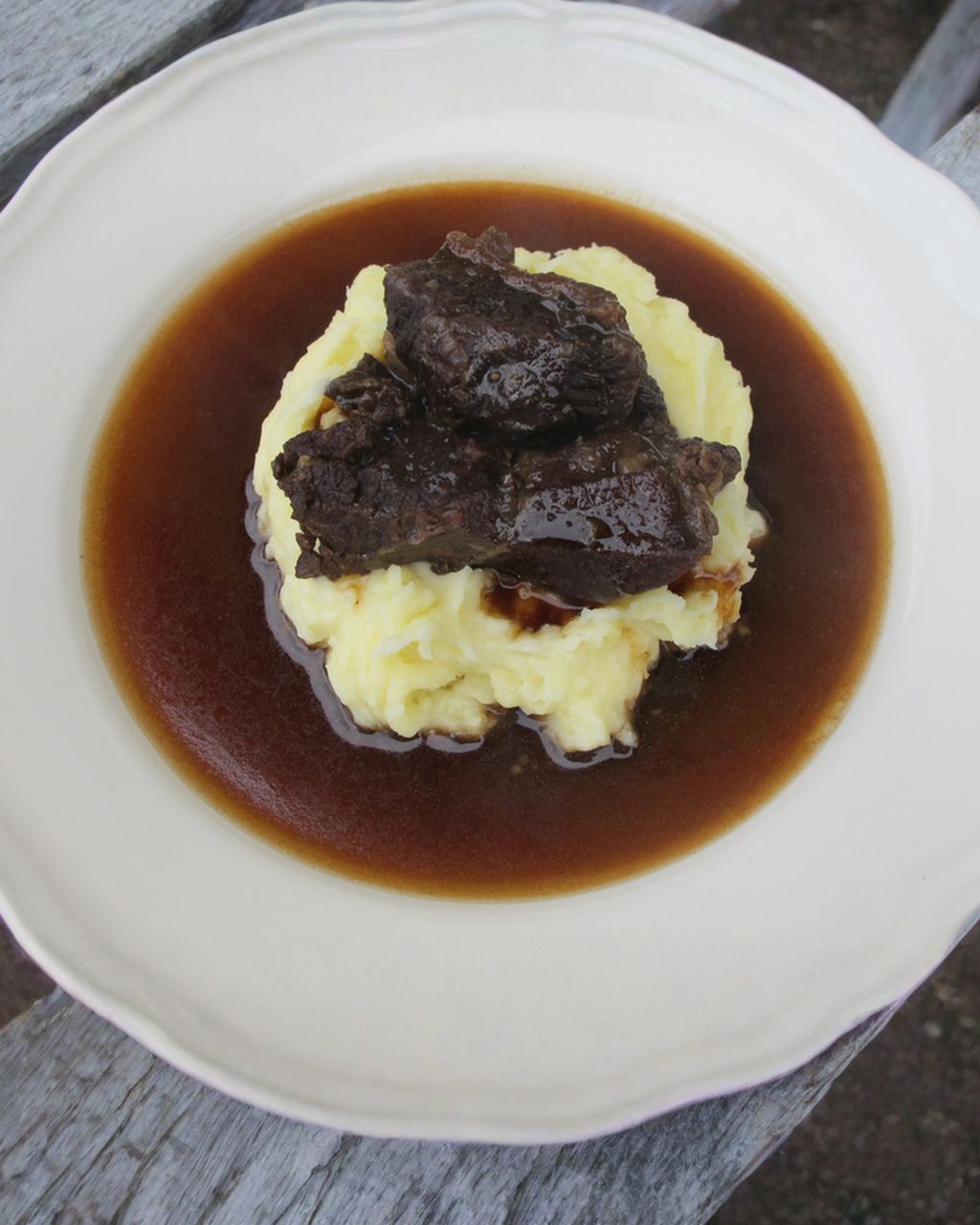
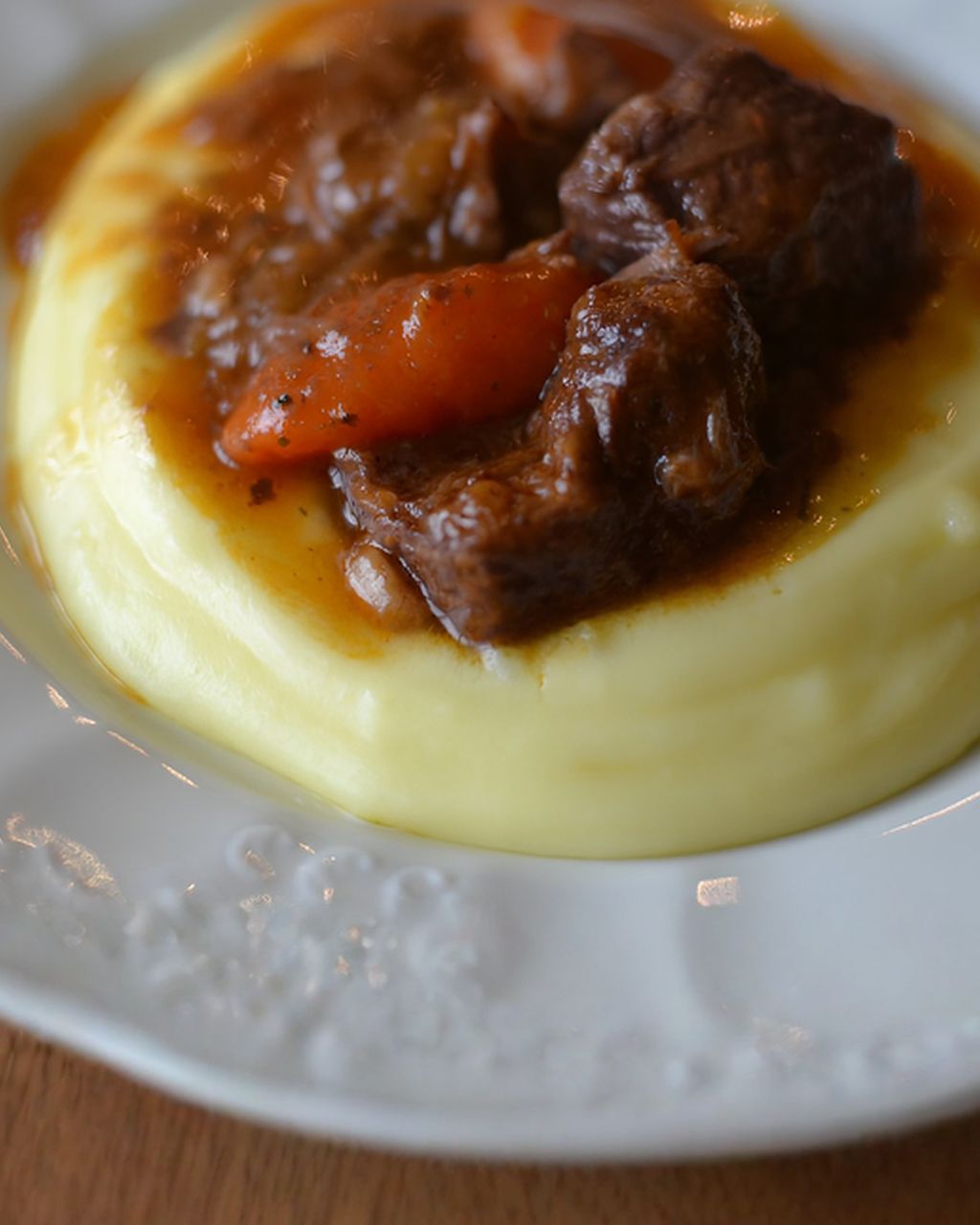
- Season
- Year-round, usually to order from a butcher.
- Price
- Medium
Calories and nutrition per 100 g
- 196 kcal
- 19.2 g protein
- 13.3 g fat
- 0 g carbs
Beef Cheeks
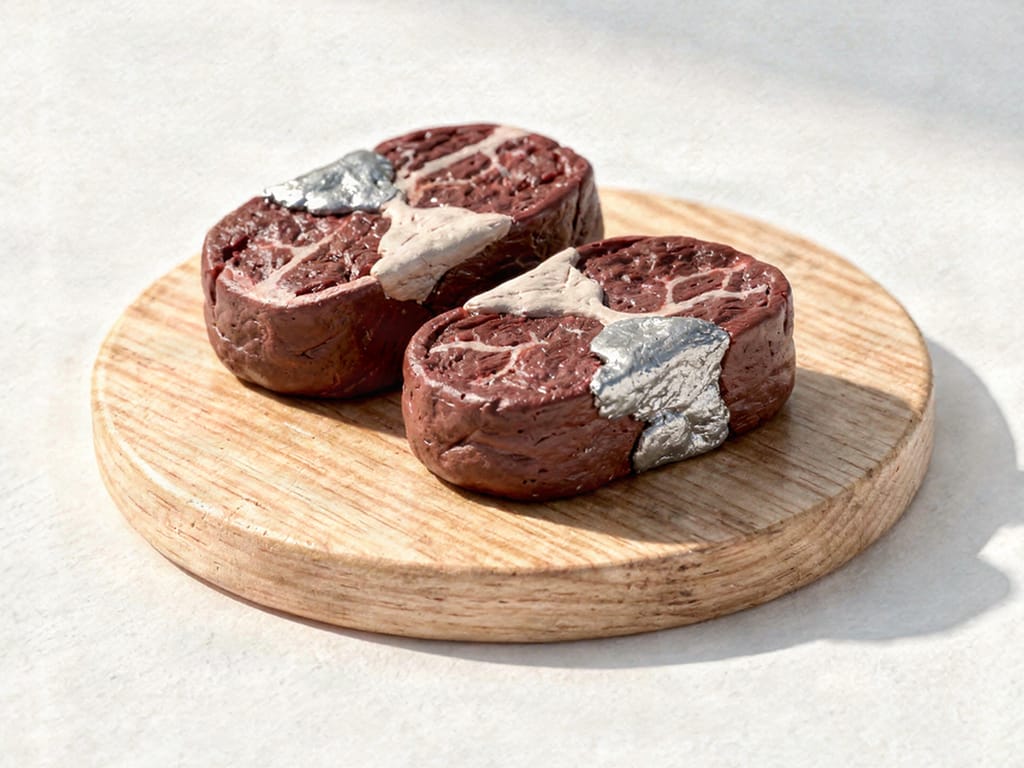
Beef cheeks are the chewing muscles of cattle from the outer side of the cheekbones: lean meat with a high share of connective tissue. They are braised under a lid for about 3–4 hours, most often in wine or beer, until they fall apart under a fork.
Do not leave raw cheeks at room temperature, and thaw frozen ones in the fridge, not on the counter.
Keep raw cheeks at 0–4 °C in the coldest part of the fridge, wrapped so the juices cannot drip onto other food. Whole cheeks keep 3–5 days, diced meat 1–2 days, vacuum-packed cheeks until the use-by date and 3–5 days after opening. Cool braised cheeks in their sauce within 2 hours and eat them within 3 days.
Raw cheeks keep good quality for 4–12 months at −18 °C. Freeze braised cheeks with their sauce for 2–3 months. Thaw in the fridge and reheat gently in the sauce until piping hot all the way through.
Choose dark red, firm cheeks with a clean smell, without a sticky surface or grey patches. The butcher can trim off the thick membranes and excess fat. Cheeks shrink a lot during braising, so buy with that in mind. Vacuum-packed cheeks look darker when opened and turn red again in the air within minutes.
Beef shin or neck: both are rich in connective tissue, braise the same way and fall apart nicely. Shin takes about as long, neck is usually done sooner.
Pork cheeks: the method is the same, but they soften sooner, in about 2 hours.
Pat the cheeks dry with kitchen paper, trim off thick membranes and excess fat, and season with salt and pepper. Leave them whole or cut them into smaller pieces. Brown them on all sides in hot fat, in batches so they sear rather than steam. Searing gives the sauce flavour and colour, but it does not "seal in" the juices.
Freeze leftover braising sauce as the base for another sauce. Shred leftover cheeks with a fork and warm them in the sauce with pasta.
Roughly what one measure weighs, scooped the way you normally would in the kitchen.
Brown the cheeks, soften onion or root vegetables, add wine, beer or stock and braise under a lid at a gentle simmer for about 3–4 hours. In the oven, braise them in a lidded pot at about 150 °C. In a pressure cooker they are tender after 50–60 minutes under pressure. They are done when a fork slides in without resistance; start testing at about two and a half hours. Finally, reduce the sauce uncovered until it thickens.
The Czech Meat Processors Association describes them as the hardest-working muscle of all: lean, but with a high share of connective tissue. That is why they are not roasted or grilled but braised for a long time. According to the association, their fine muscle fibres and fine collagen give braised cheeks their delicate flavour and tenderness. Cheeks come from the head, so they are not part of the forequarter, but they are cooked much like neck or shin, only for longer. Shops rarely stock them, so you usually have to order them from a butcher in advance.
Full beef flavour. After long braising the cheeks are so tender they fall apart under a fork, with a velvety, almost jelly-like texture. The braising liquid reduces into a thick, glossy sauce.
Seasonal baking plans, tested recipes and kitchen tricks that save you time. Unsubscribe in one click.
2 min read
Cheeks are the chewing muscles on the outer side of the cattle's cheekbones. The Czech Meat Processors Association calls them the hardest-working muscle of all: lean, but full of connective tissue. Raw they are tough; after long braising the connective tissue melts into gelatine and the meat becomes meltingly tender.
The same cut from the pig is pork cheeks, which are smaller and braise in less time.
On the hob under a lid at a gentle simmer, allow about 3–4 hours; in a pressure cooker, 50–60 minutes under pressure. The liquid should only tremble, a rolling boil dries the meat out. Times for other braising cuts are in our article beef forequarter: how to choose and cook it.
If the cheeks are still tough after three hours, they are not overcooked but underdone: put them back in the sauce and keep braising until a fork slides in. Why this happens is explained in our article why is your goulash tough.
The classic is braising in dry red wine with carrot, parsley root and celeriac, as in the recipe beef cheeks in red wine with vegetables. Reduce the sauce at the end and finish it with a knob of cold butter.
For a beer version with onion, cloves and allspice, follow the recipe beef cheeks with dark beer. Mashed potatoes or parsnip purée go well with both.
Braised meat is cooked through long before it turns tender, so with cheeks tenderness matters, not the core temperature. The NHS advises pregnant women not to eat raw or undercooked meat because of toxoplasmosis; braised cheeks are cooked all the way through. Reheat leftovers until the centre reaches at least 70 °C for 2 minutes.
Raw whole cheeks keep 3–5 days in the fridge, braised cheeks in sauce up to 3 days. Detailed times are in our article how long beef lasts in the fridge.