Rabbit in cream sauce
Rabbit Recipes: Creamy, Roasted with Garlic and Slow Cooker
Updated Nov 20, 2026
Rabbit turns out best when you cook it low and slow, covered, with a little liquid. That holds whether you braise it in cream, roast it in the oven with garlic and shallots, or leave it overnight in a slow cooker. Rabbit meat has no fat layer or marbling to protect it, so dry heat dries it out in no time. Below you'll find nine tested recipes from Yumsto, with what sets each one apart, plus answers to the questions people ask most about rabbit: how to make a cream sauce like svíčková (Czech beef in a root-vegetable cream sauce), whether it works without vegetables, in a pressure cooker, for kids, and how to tell when the meat is done.
There are five reliable ways to cook rabbit, and each gives a different result:
Creamy rabbit: braised with root vegetables, the sauce strained and finished with cream. About 2 hours 40 minutes.
Roast rabbit with garlic and shallots: in a covered roasting pan, with whole cloves and halved shallots. Around 1.5–2.5 hours.
Oven-baked rabbit with vegetables: carrots, leek or fennel roast right alongside the meat, and the pan juices become the sauce.
Slow cooker rabbit: 7 hours on low, until the meat falls off the bone.
Pressure cooker rabbit: the fastest braise, but the cream goes in only after you open the pot.
One thing connects all of these: rabbit needs moisture and moderate heat. A lidded roasting pan, a pot lid, a splash of water or stock and basting with the pan juices are not pointless rituals. They decide whether the meat is juicy or stringy and dry. High heat only makes sense at the end, for a few minutes without the lid, to brown the surface.
The most reliable flavors are garlic, shallot, thyme, bay leaf, bacon and cream. Creamy versions go well with dumplings, gnocchi or pasta, and roast versions with mashed potatoes, roast potatoes or pearl barley.
For roasting in a pan and for cream sauces, buy a whole rabbit, since it's cheaper. If you want only the meatiest, most evenly cooked meat, go straight for the legs. A whole farm-raised rabbit gives you the saddle plus the front and hind legs, and the pieces are then braised in the sauce. To braise it in pieces, cut it into five parts: two front legs, two hind legs and the saddle. The creamy rabbit recipe below does exactly that.
Rabbit legs are the meatiest cut and suit both the oven and the pot. The slow cooker and fennel recipes below use them, braising the legs in liquid under a lid.
The saddle is the most delicate and the quickest to cook, but it also dries out most easily. When you roast a whole rabbit, baste it with the pan juices and keep a close eye on the saddle. The front legs have more small bones and less meat, so they're best in a sauce, where they add flavor.
According to the US agency USDA FSIS, store raw rabbit in the fridge at up to about 4°C (40°F) and use it within two days, or freeze it. Don't rinse it before cooking: water only splashes bacteria around the counter, as USDA and several recipes below point out. Just pat it dry with a paper towel. Dry meat also holds seasoning better and browns better. Why rabbit turns tough and how to keep it tender is covered in detail in our article how to cook tender lamb and rabbit.
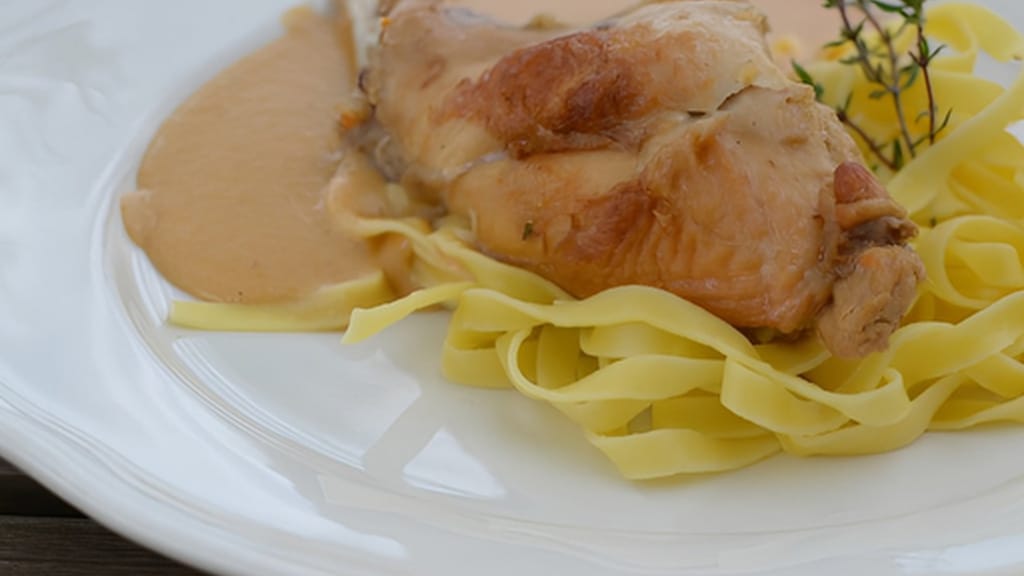
Creamy rabbit is rabbit braised with root vegetables, with a sauce thickened with a roux, strained and finished with cream. The Creamy Rabbit recipe takes about 2 hours 40 minutes and serves four.
Cut the rabbit into pieces, pat dry, then season with salt and pepper and brown on all sides in olive oil in a large pot. Dry meat browns quickly rather than steaming.
Dice the carrot, parsley root and celeriac and fry them hard in the same fat for about five minutes. Add the onion after them; it browns faster and would turn bitter otherwise.
Sprinkle the vegetables with sugar and let it caramelize lightly. Pour in half a liter (about 2 cups) of chicken stock, return the meat, add thyme and braise under a lid until tender, about an hour or longer.
Make a light roux with butter. Take out the tender meat, stir the roux well into the vegetables and liquid, and simmer for about 15 minutes.
Press everything through a fine sieve, simmer for five minutes, pour in 200 ml (about ¾ cup) of whipping cream and just warm it through. A hard boil could curdle the sauce.
Season with warmed vinegar and sugar to your preferred sweet-and-sour balance, and return the meat to the sauce.
Two details decide the result. Caramelizing the sugar gives the sauce depth and color. Straining turns a coarse vegetable mixture into a smooth, velvety sauce. The recipe serves the rabbit with pasta, but gnocchi or dumplings work too. You can find out how to make bread dumplings in our article on dumplings.
Rabbit in cream sauce
Creamy rabbit with root vegetables, a roux and a sweet-and-sour finish
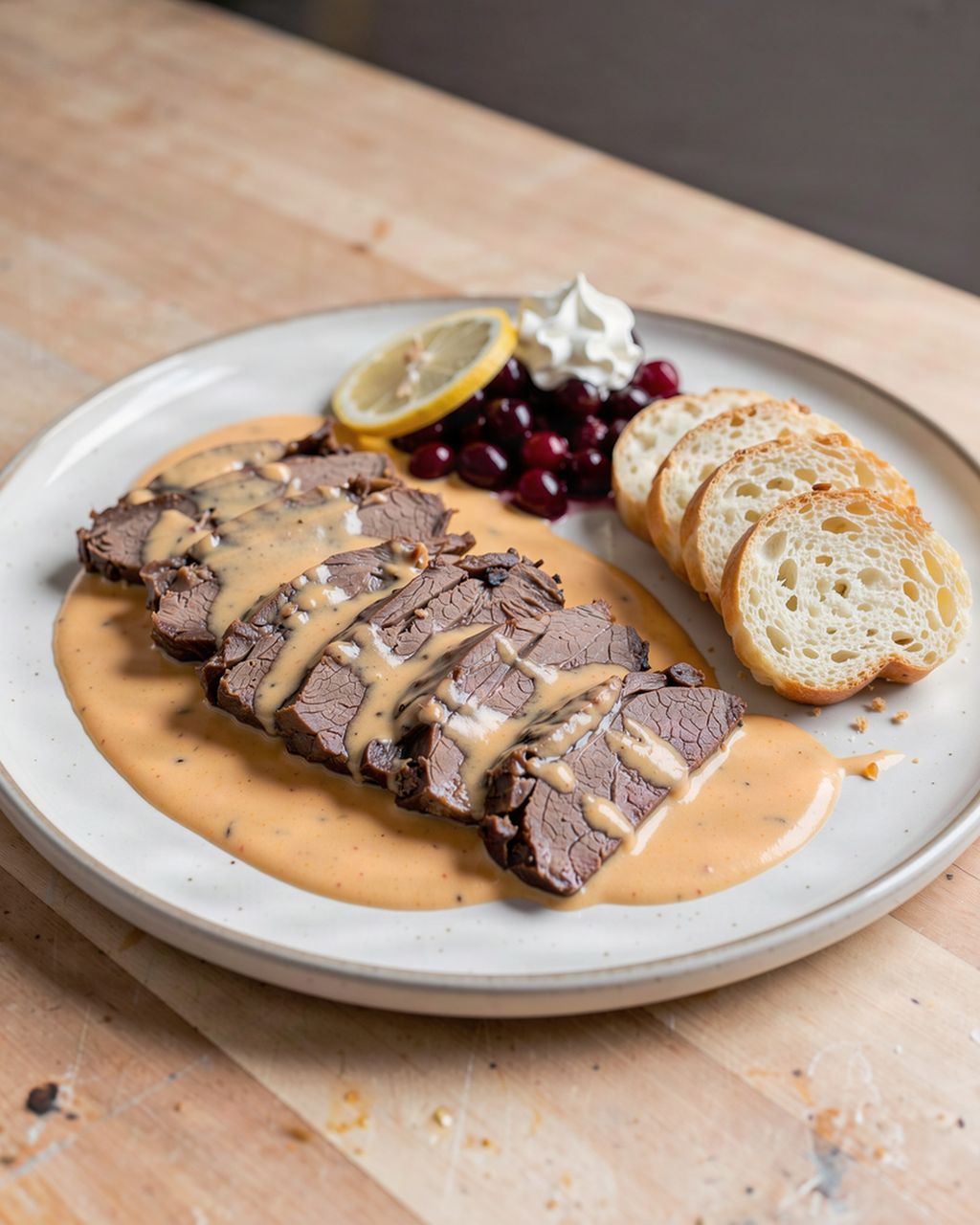
Creamy rabbit comes very close to svíčková (Czech beef in a root-vegetable cream sauce), because both sauces rest on the same base: root vegetables (carrot, parsley root, celeriac), caramelized sugar, straining, and a sweet-and-sour finish of vinegar and sugar. The creamy rabbit recipe above is built exactly this way, except that the meat is braised in a pot rather than roasted.
The difference is intensity. Classic svíčková usually gets more spice and a sharper tang, and is served with a dumpling, cranberries and whipped cream. To make the rabbit taste more like svíčková:
add a bay leaf and a few allspice berries to the thyme while braising, and fish them out before straining,
don't skimp on the celeriac, which gives the sauce its typical sweetish aroma,
season with vinegar and sugar a little at a time and taste as you go; the tang should be noticeable but shouldn't sting,
serve with bread dumplings so there's something to soak up the sauce.
Rabbit is more delicate than beef, so go easy on the spices. The sauce shouldn't overpower the meat.
Creamy oven-baked rabbit is roasted covered until tender, and the cream goes in only for the last 15–20 minutes. It mixes with the pan juices into a sauce with no roux. This is simpler than braising: there's nothing to strain. Two recipes do it in slightly different ways.
Rabbit Roasted with Vegetables is the most straightforward: a whole rabbit sits on a bed of carrots, leek and onion with garlic and a bay leaf, roasts covered for about an hour and a half, then gets 200 ml (about ¾ cup) of cream for 15 minutes at 180°C (350°F), and finally five minutes uncovered. The sauce stays rustic, with the vegetables in whole pieces. About 2 hours 20 minutes in all.
Roast Rabbit with Whole-Grain Mustard and Pumpkin Purée is bolder. It uses wild rabbit, browns it first in the roasting pan, then roasts it with parsnip and garlic at 160°C (325°F) for 45 minutes to a little over an hour, adding the cream for the last 20 minutes (the rabbit is rubbed with mustard right at the start). The difference comes at the end: the contents of the pan are blended into a smooth sauce. It's served with pumpkin gnocchi, and you'll find the method in the recipe for homemade pumpkin gnocchi with chanterelle sauce.
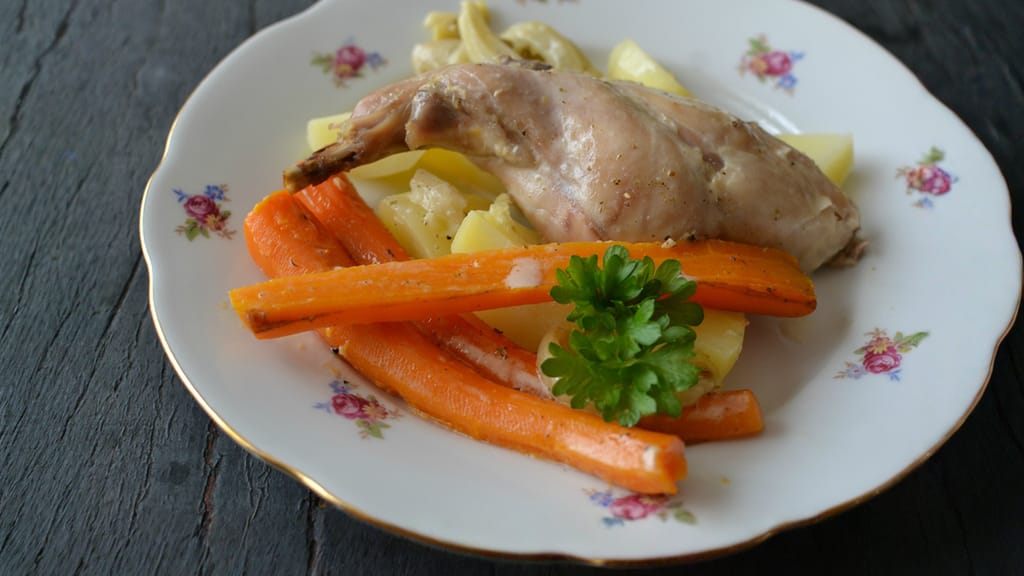
Roast rabbit with vegetables
Rabbit roasted with vegetables and cream: carrots, leek and onion under a lid
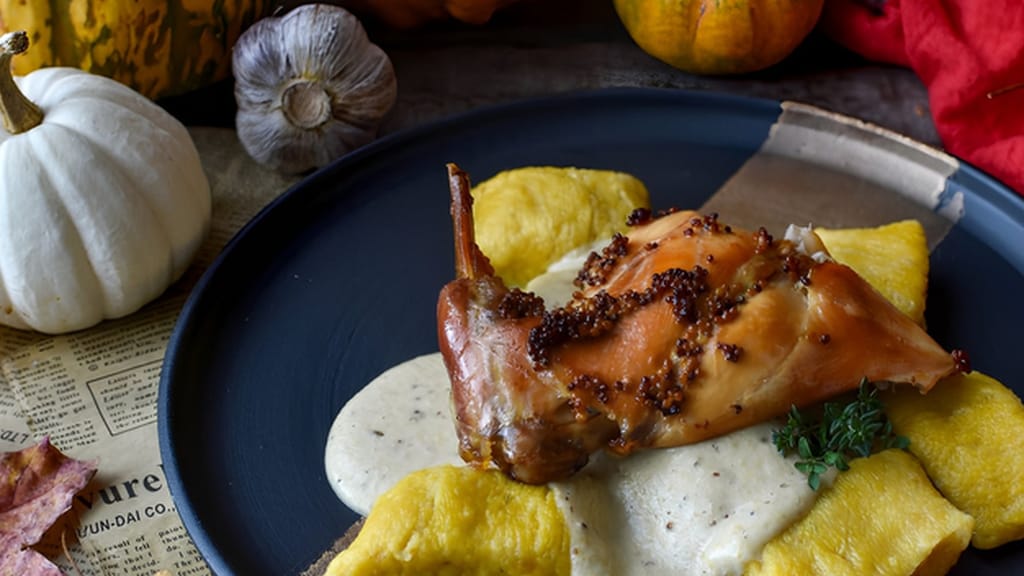
Roast rabbit with wholegrain mustard and pumpkin purée
Roast wild rabbit with mustard and a blended cream sauce
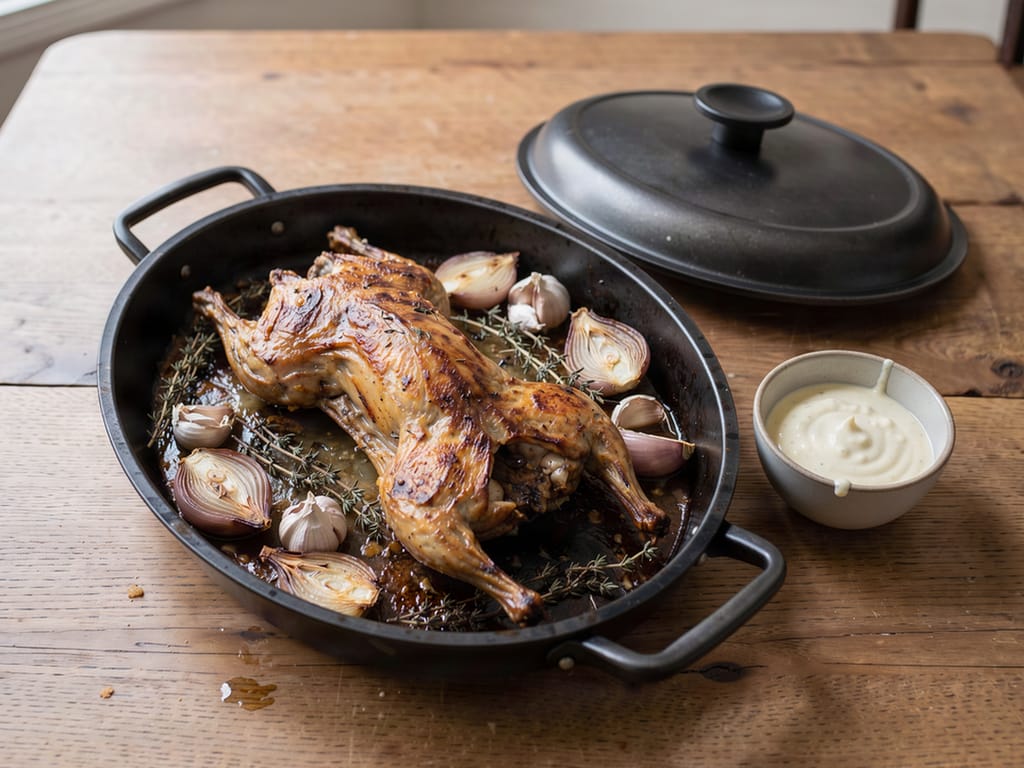
You can make creamy rabbit without root vegetables too. The sauce then gets its flavor from shallots, garlic and thyme roasted right in the pan, with cream added at the end. The sauce comes out lighter and coarser than a strained one, but it's ready sooner.
With Rabbit Roasted with Shallots and Garlic, it goes like this: the meat, surrounded by lengthwise-halved shallots and unpeeled garlic cloves, is moistened with water and roasted covered at 170°C (340°F) for about an hour, then cream is added to the pan juices. The recipe serves it with fried mushrooms and potato gnocchi. You can have it all done in about 1 hour 45 minutes.
If you want a completely bare version without shallots or mushrooms, stick to the same logic: meat with water added, covered, thyme, and cream stirred into the pan juices at the end. Without a roux the sauce will be thinner. To thicken it, take out the meat and simmer the sauce for a while on the stovetop so it reduces.
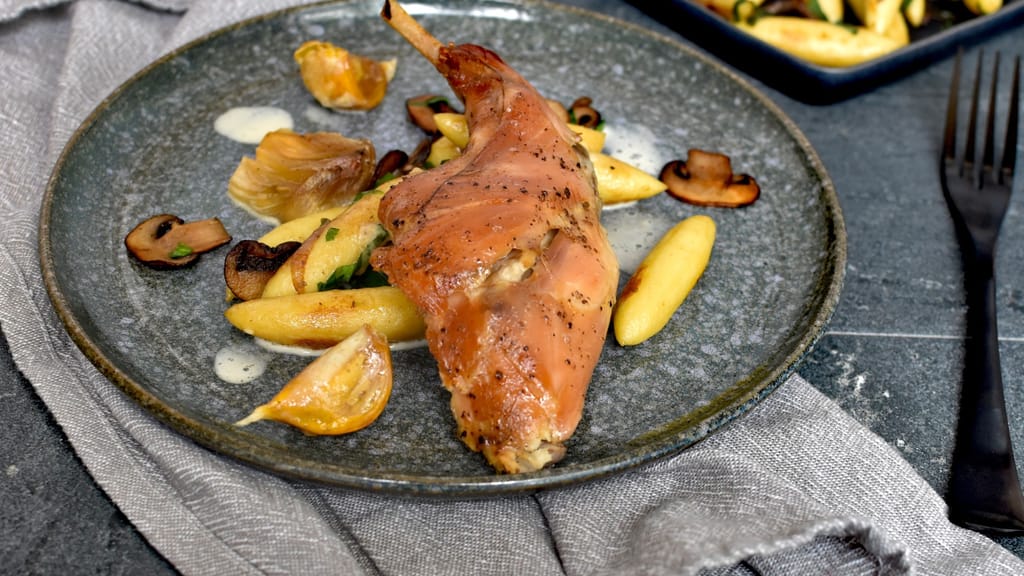
Roast rabbit with shallots and garlic
Rabbit roasted with shallots and garlic in cream, no root vegetables
Creamy rabbit in a pressure cooker works. But under pressure you only braise the meat with the vegetables; the cream goes in after you open the pot. Cooked under pressure, it could curdle or scorch on the bottom. We don't yet have a recipe designed for the pressure cooker on Yumsto, so here is the principle.
Pat the rabbit pieces dry, season with salt and pepper, and brown them in oil until golden in the open pressure cooker. Add diced root vegetables and onion, sauté briefly, and pour in stock so the pot holds at least as much liquid as the manufacturer's instructions require. Without it, the pot won't come to pressure. Cook under pressure according to the manufacturer's recommendation for rabbit or poultry, let the pressure drop and open the pot.
Then carry on as with classic creamy rabbit: take out the meat, stir a roux into the vegetables and liquid, simmer, strain, soften with cream and season with vinegar and sugar. Check the finished meat with a thermometer, even if the cooker says it's done. You'll find the temperature below, in the section on how to tell when rabbit is done.
Rabbit in a slow cooker braises for 7 hours on low in its own juices. The meat then falls off the bone, and the sauce is finished by blending everything left in the pot. It's the most convenient method: switch it on in the evening and it's ready in the morning.
Slow Cooker Rabbit in Cream Sauce uses four skinless legs resting on a bed of root vegetables, so they don't touch the hot bottom and braise in steam. Don't lift the lid during cooking; every time you open it, the cooker cools down and the cooking drags on. The sauce is made at the end by blending the contents of the pot with a cream base until smooth.
Serve with potato gnocchi; the recipe also suggests dumplings, pasta or rice. One thing the recipe warns about: if your cooker doesn't switch to keep-warm by itself when it finishes, finish the sauce right away, or cool the contents within 2 hours and refrigerate. And always put thawed meat in the slow cooker; frozen meat would heat up too slowly. USDA FSIS says the same. For more ideas for long one-pot braises, see our article on one-pot meals.
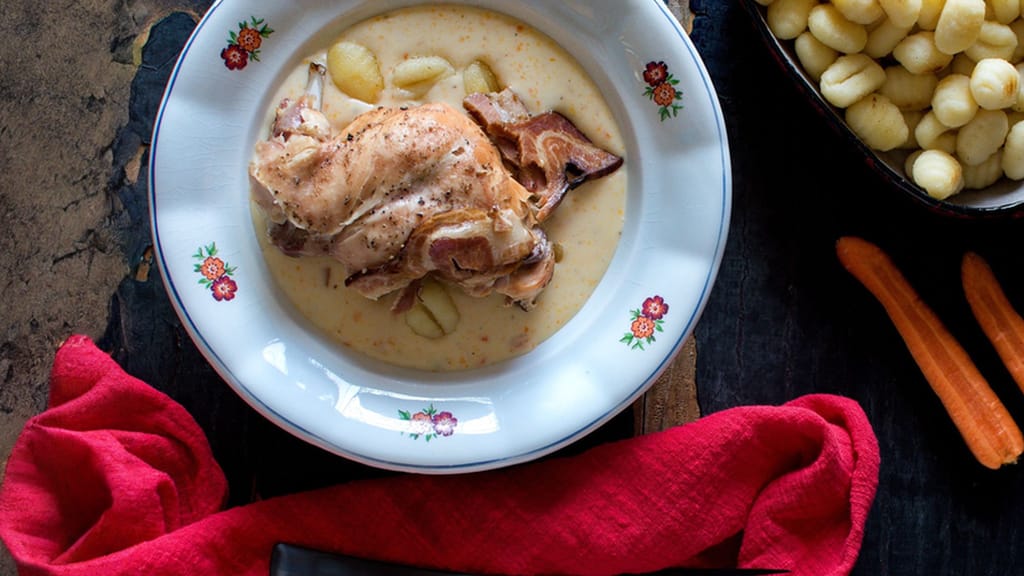
Slow cooker rabbit in creamy sauce
Slow cooker rabbit in cream sauce: legs with bacon, 7 hours on low
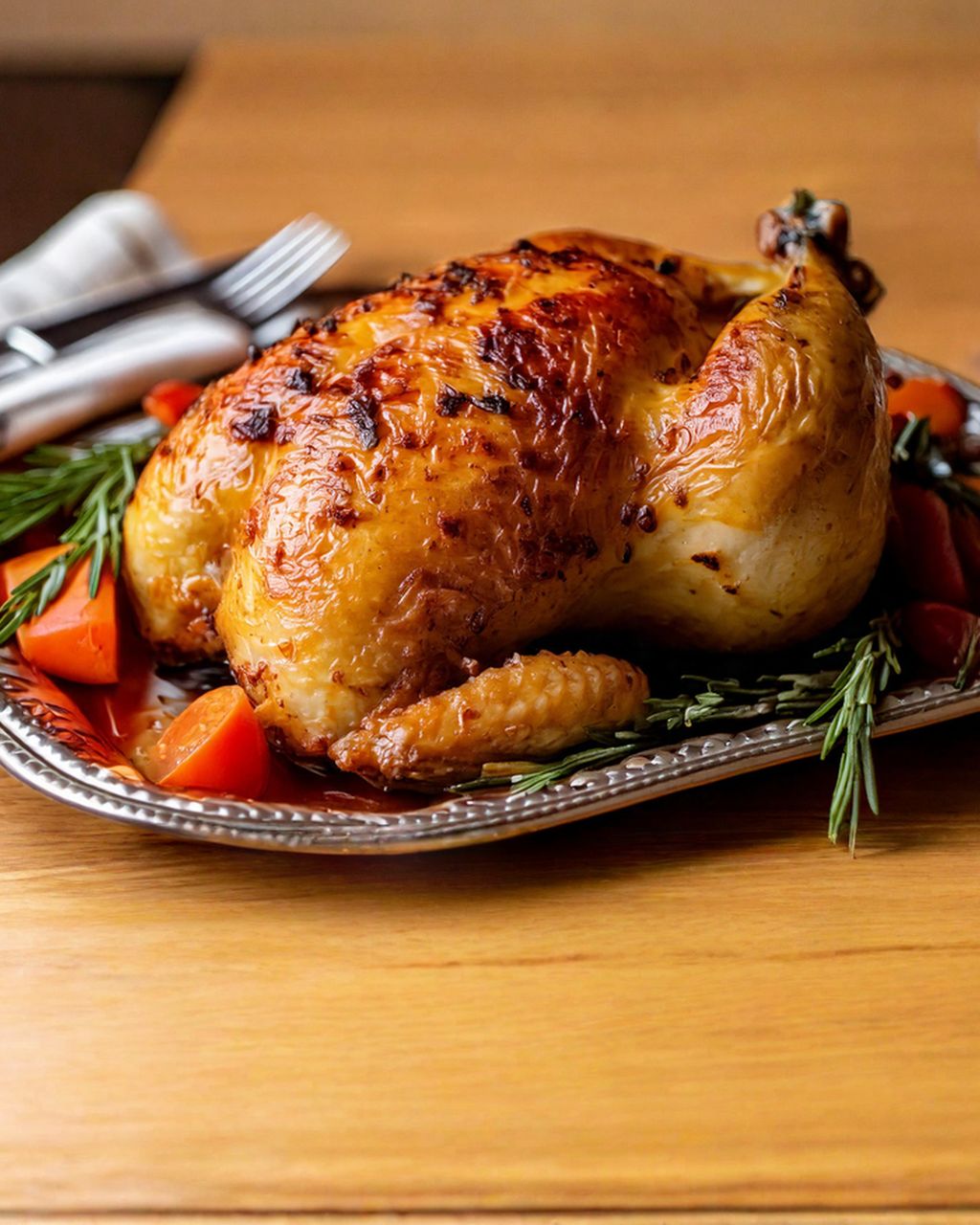
Roast rabbit with garlic turns out best when you put the garlic in the pan whole, as heads or unpeeled cloves. In its skin it won't burn, caramelizes in an hour in the oven, and can be squeezed out onto the plate like a spread. Chopped garlic would turn bitter on the bottom of the pan.
Shallots are the ideal partner. They're milder and sweeter than ordinary onions, and the halves don't fall apart in the pan; they just soften and soak up the juices. Halve them lengthwise so they hold their shape.
Rabbit Roasted with Garlic and Green Asparagus is the spring version of this method. The rabbit, with butter, thyme and two whole heads of garlic, roasts covered at a low 150°C (300°F) until tender, and only at the end uncovered at 200°C (400°F) until crisp. What sets it apart is the side: pearl barley with shallot, asparagus and cream from the pan, with the asparagus tips in the roasting pan for just a few minutes. About 2.5 hours in all.
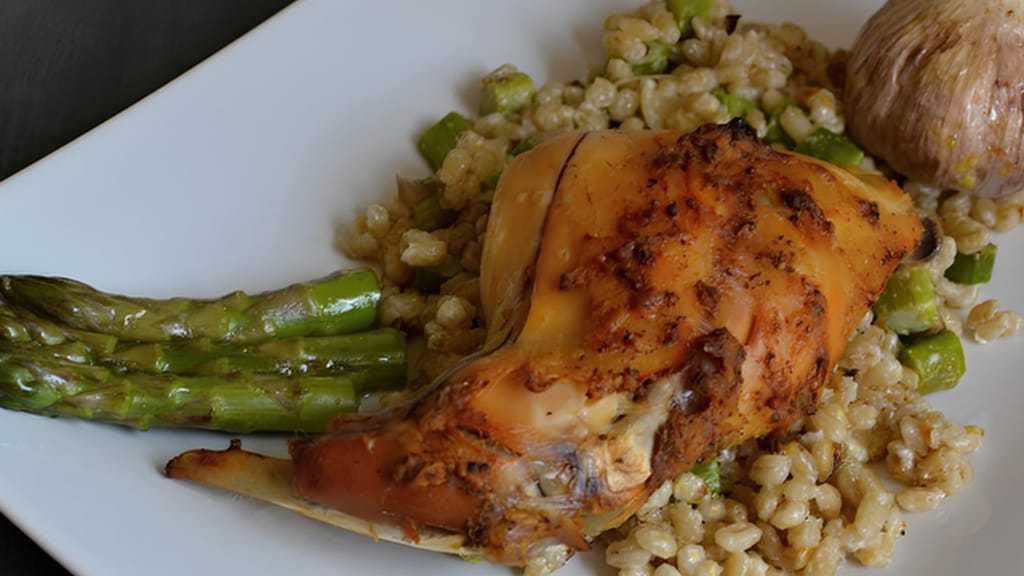
Roast rabbit with garlic and green asparagus
Rabbit roasted with garlic and green asparagus, with creamy pearl barley
The simplest rabbit recipe has six ingredients: rabbit, salt, pepper, bacon, garlic and shallot. The oven does the rest. It's Rabbit with Shallots and Roasted Garlic, and it takes about 1 hour 35 minutes from start to finish.
What sets it apart from the other roast versions is the bacon: the rabbit is larded with it or topped with it, moistened with water and roasted under a lid with halved garlic and shallots, first about half an hour at full heat, then at 170°C (340°F) until tender. The recipe suggests mashed potatoes with it.
Why it works even without cream and spices: the bacon supplies salt, fat and smokiness and keeps the meat from drying out, the shallot adds sweetness and the garlic adds depth. The pan juices that form are a ready-made sauce. Just spoon them over the meat and the mash.
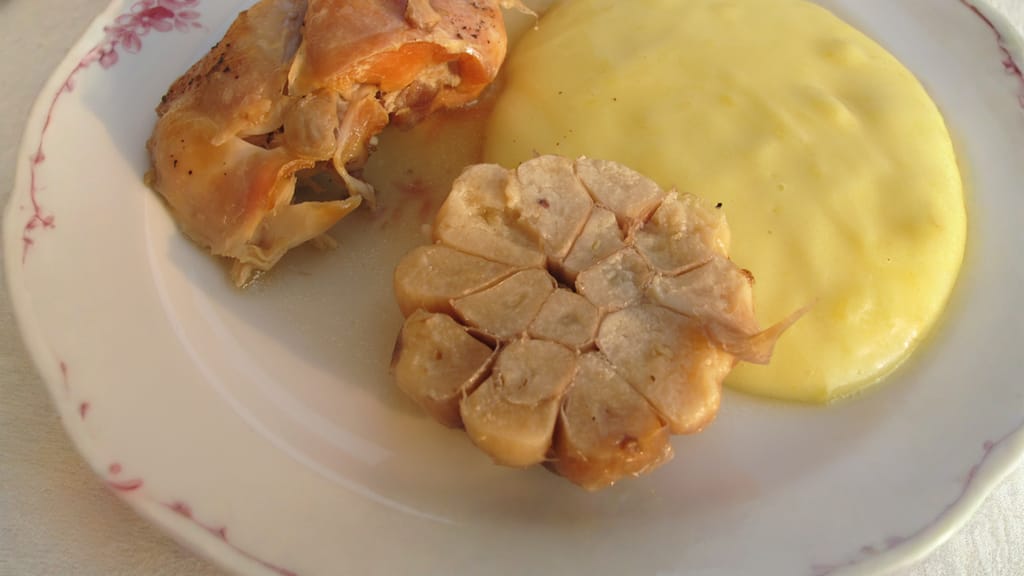
Rabbit with shallots and roasted garlic
Easy roast rabbit with bacon, shallots and roasted garlic
Oven-baked rabbit with vegetables roasts slowly under a lid, and you make a side that soaks up the pan juices: crispy smashed potatoes, or buttery vegetables with späetzle. Two recipes show two directions: a Mediterranean one with fennel and no cream, and a buttery one with späetzle.
Rabbit Roasted with Fennel and Smashed Potatoes is made in a cast-iron pot: legs seasoned with smoked paprika are browned, braised with red onion and fennel until tender, and bok choy is briefly warmed through at the end. The side is boiled potatoes smashed flat and baked crisp at 200°C (400°F). About 2 hours.
Roast Rabbit with Buttery Vegetables and Späetzle is a slow Sunday roast: 10 minutes at 200°C (400°F), then a long time at 150°C (300°F) under a lid, turned after an hour and a half. With it come buttery vegetables (corn, green beans, peas and spinach) and späetzle browned in a dry pan. Count on just under four hours, though for most of that you're only waiting.
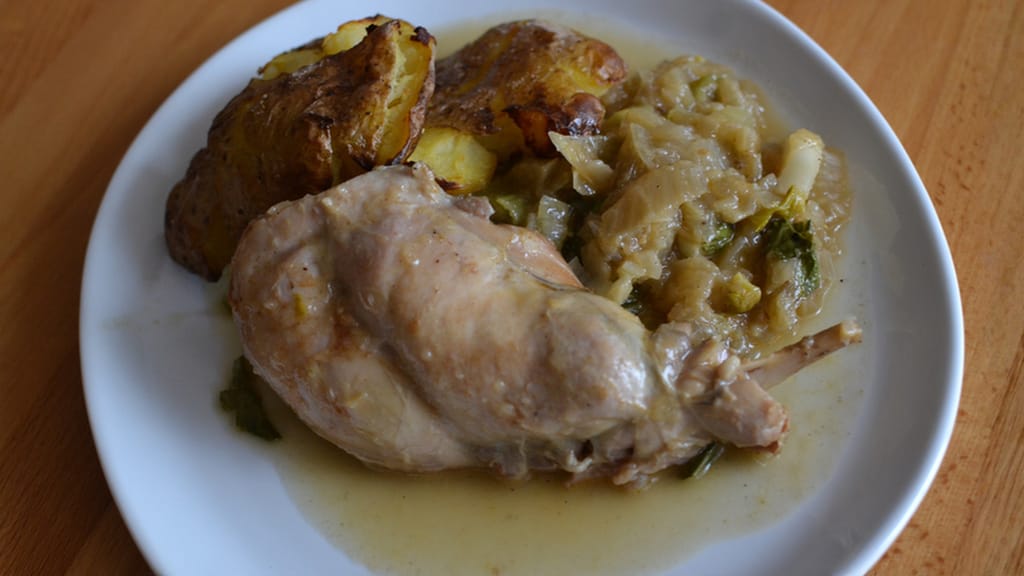
Roasted rabbit with fennel and smashed potatoes
Rabbit legs with fennel and smoked paprika, with crispy smashed potatoes
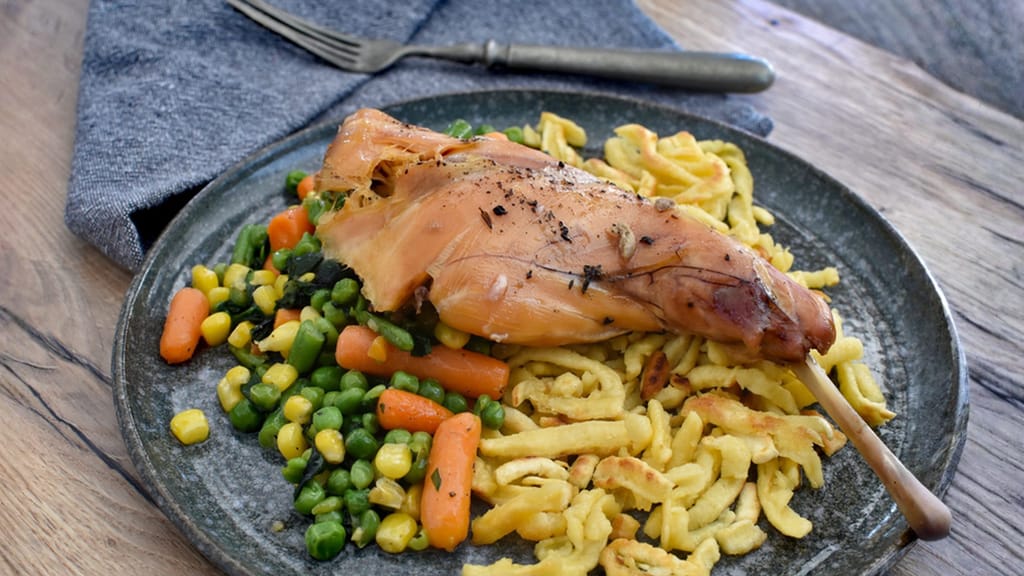
Roast rabbit with buttery vegetables and spätzle
Slow-roasted rabbit with buttery vegetables and pan-browned späetzle
Rabbit for kids should above all be tender, mildly seasoned and boneless on the plate. The biggest risk with rabbit isn't flavor but the tiny bones, especially in the front legs and the saddle.
Choose the legs. They have the most meat and the fewest small bones. You can pick the meat off in the kitchen and put only clean pieces on the plate.
Long-braised versions work best. The slow cooker legs or the rabbit roasted with vegetables fall apart under a fork, and the cream sauce is gentle.
Season carefully. Leave the sharper versions, such as those with mustard or smoked paprika, for the adults, or set aside the kids' portion before adding strong spices.
Blend the sauce. A smooth sauce without bits of vegetable goes down more easily with picky eaters. The strained sauce from creamy rabbit or the blended one from the slow cooker are just that.
Pick a familiar side. Gnocchi, pasta or mashed potatoes are a safe bet with kids.
Before serving, run your fingers through the meat once more. A bone from the saddle can easily hide in the sauce.
Rabbit is done when it reaches at least 71°C (160°F) inside at the thickest point. This minimum temperature is given by the US agency USDA FSIS for rabbit meat, both farmed and wild. Measure with an instant-read probe thermometer in the thickest part of the hind leg, without touching the bone, which conducts heat and reads higher than the meat.
71°C (160°F) is the safety threshold, not the tenderness threshold. Braised and slow-roasted rabbit usually becomes tender only after a longer time. The connective tissue in the legs dissolves gradually, so even after the meat reaches that temperature, let it keep braising. You can tell when:
the meat pulls easily off the bone and a fork slides into the leg without resistance,
the juices running from the meat are clear, not pink (but only a thermometer decides safety; according to USDA, neither the color of the meat nor of the juices shows it reliably),
the saddle is firm but not hard and stringy. If it's crumbling into dry threads, you've roasted it too long without a lid.
Home ovens often deviate from the set temperature by several degrees up or down. For slow roasting at 150–170°C (300–340°F), that can easily mean a half-hour difference in time. If your recipes regularly turn out differently than promised, check your oven with an oven thermometer. It won't measure the meat, but you'll know how many degrees your oven really has.
Recipe of the week, one tip that saves you time and one deal from the shop. Unsubscribe in one click.
The next issue goes out on Thursday, November 26.
Put cooked rabbit in the fridge within two hours of finishing and use it within 3–4 days. That is the USDA FSIS recommendation, which also says cooked rabbit keeps its best quality in the freezer for 4–6 months. FSIS recommends reheating leftovers to 74°C (165°F) inside.
Creamy rabbit often tastes better the next day, once the sauce has settled. Reheat it slowly over gentle heat, stirring. A hard boil could curdle the cream sauce.
If the sauce thickens in the fridge, thin it with a spoonful of water or stock.
Reheat roast rabbit in a roasting pan under a lid with a little pan juice or water so it doesn't dry out.
Sauce-based versions freeze best. Freeze the meat right in the sauce, which protects it from drying out. Thaw in the fridge.
You don't need to soak farm-raised rabbit in milk. It has a mild flavor, and covered roasting and basting matter far more for juiciness. Soaking is traditionally used for wild rabbit, to soften its stronger flavor. If you do it, leave the meat in milk in the fridge overnight and pat it dry before cooking.
One farm-raised rabbit of about 1 kg (2.2 lb) serves four. That is the amount the roast rabbit recipes on Yumsto are written for. If you're cooking legs, count one leg per person, as they are meatier than the saddle and front legs.
You can use sour cream, but stir it in at the very end, once the sauce is off the heat, because it curdles easily when boiled. First mix it in a bowl with a few spoonfuls of warm sauce, then stir it into the pot. The sauce will taste slightly tangy, so use less vinegar.
Roast rabbit is most often dry because it was cooked uncovered, at too high a heat, or without any liquid. Rabbit has no protective fat layer, so it needs a lidded roasting pan, a little water or stock, and regular basting with the pan juices. Save high heat without the lid for the last few minutes, just to brown it.
Wild rabbit is usually smaller, darker and stronger in flavor, so it suits bold flavors such as mustard, thyme or garlic, while a cream sauce softens its taste. For safety, the same minimum temperature applies as for farm-raised rabbit, 71°C (160°F) inside, which USDA FSIS gives for both wild and farmed rabbit. Cooking time varies with size, so go by a thermometer and the tenderness of the meat.
One recipe worth heating the oven for, one tip, and one deal from the shop. Nothing else.