- Season
- Year-round; farmed rabbit has no season.
- Price
- Medium
Calories and nutrition
per 100 g
136 kcal
Calories
20 g
Protein
0 g
Carbs
5.6 g
Fat
Skinless Rabbit Leg
A skinless rabbit leg is the hind leg of a farmed rabbit, skinned and usually bone-in, with lean, pale meat. It is best braised or roasted covered until the meat comes off the bone, and always cooked through so it is not pink.
per 100 g
136 kcal
Calories
20 g
Protein
0 g
Carbs
5.6 g
Fat
Put rabbit in the fridge as soon as you get home. Do not leave it out for more than an hour before cooking.
Keep raw legs wrapped or in a closed container on the bottom shelf of the fridge at 0–4 °C. Use pre-packed legs by the use-by date and loose ones from the butcher within 1–2 days. Refrigerate cooked rabbit within 2 hours and eat it within 3 days.
Tightly wrapped or vacuum-sealed, they can be frozen for several months. Thaw them slowly in the fridge; a portion of about 0.5 kg takes roughly 12–24 hours. Do not refreeze thawed meat.
Choose legs that are pale pink with firm, moist flesh. Avoid any that look greyish, smell off or sit in a lot of liquid in the pack. Fresh rabbit smells clean, never sour or of ammonia. Check the use-by date on the pack.
Bone-in chicken thighs. They have a similar texture and are cooked in a similar way, but they are usually done sooner, so check for tenderness.
Pheasant or guinea fowl legs are similarly lean. Turkey thighs work for braising but give a denser result.
Do not rinse the legs; water only spreads bacteria around the kitchen. Pat them dry with paper towels, or they will not brown well. Lean meat benefits from a marinade, such as olive oil with herbs or white wine; leave it in the fridge for at least a few hours, ideally overnight. Brown the legs in oil until golden before braising. Wash your hands, board and knife after handling raw meat.
Save the bones and trimmings for a stock with vegetables and herbs. Use it for braising the next rabbit, in sauces and in soups.
Roughly what one piece weighs.
180 g
1 piece
Rabbit leg is lean, so it needs moist, slow heat. On the hob, brown it, add vegetables, pour in stock or white wine and braise covered over low heat for 1–1.5 hours, until the meat comes off the bone. In the oven, roast it covered at about 150 °C for roughly 1.5–2 hours, basting as it cooks; in a slow cooker, allow about 7 hours on low. Always cook it through so it reaches at least 70 °C at the bone for 2 minutes and is not pink.
The domestic rabbit was bred from the wild European rabbit (Oryctolagus cuniculus) and is farmed for meat. The leg is the meatiest part of the rabbit. Czech decree 69/2016 Coll. on meat and meat products requires a whole rabbit carcass to be sold skinned and gutted, so skinless is how rabbit is normally sold in Czechia.
Rabbit meat is pale, fine-grained and very lean. It is paler and milder than hare and dries out quickly at high heat, so it suits moist, slow cooking.
2 min read
A rabbit leg is the hind leg of the rabbit, the meatiest part of the animal. These legs come from farmed rabbit, like domestic rabbit. Hunted rabbit is listed as wild rabbit and is cooked like game.
Czech decree 69/2016 Coll. requires a whole rabbit carcass to be sold skinned and gutted, so rabbit is normally sold without its skin in Czechia. Our ingredients also include rabbit leg with skin; it is cooked the same way.
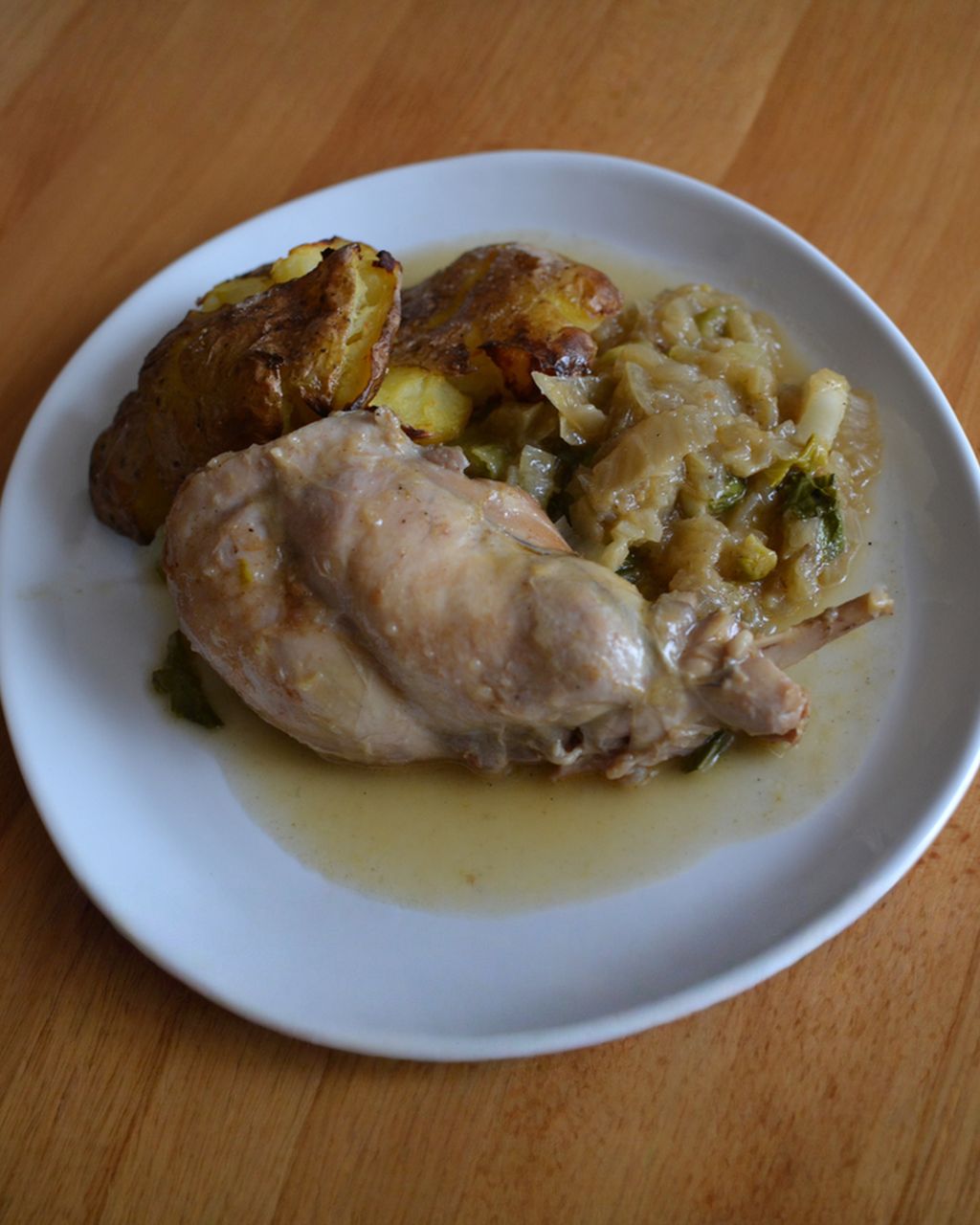
Pat the legs dry, season with salt and brown them in oil until golden. Then add carrot, celeriac and onion, pour in stock or white wine, cover and braise over low heat for 1–1.5 hours, until the meat comes off the bone. White wine, thyme and a spoonful of mustard are classic with rabbit. That is how roasted rabbit with fennel and smashed potatoes is made, with the legs braised for about an hour and a half.
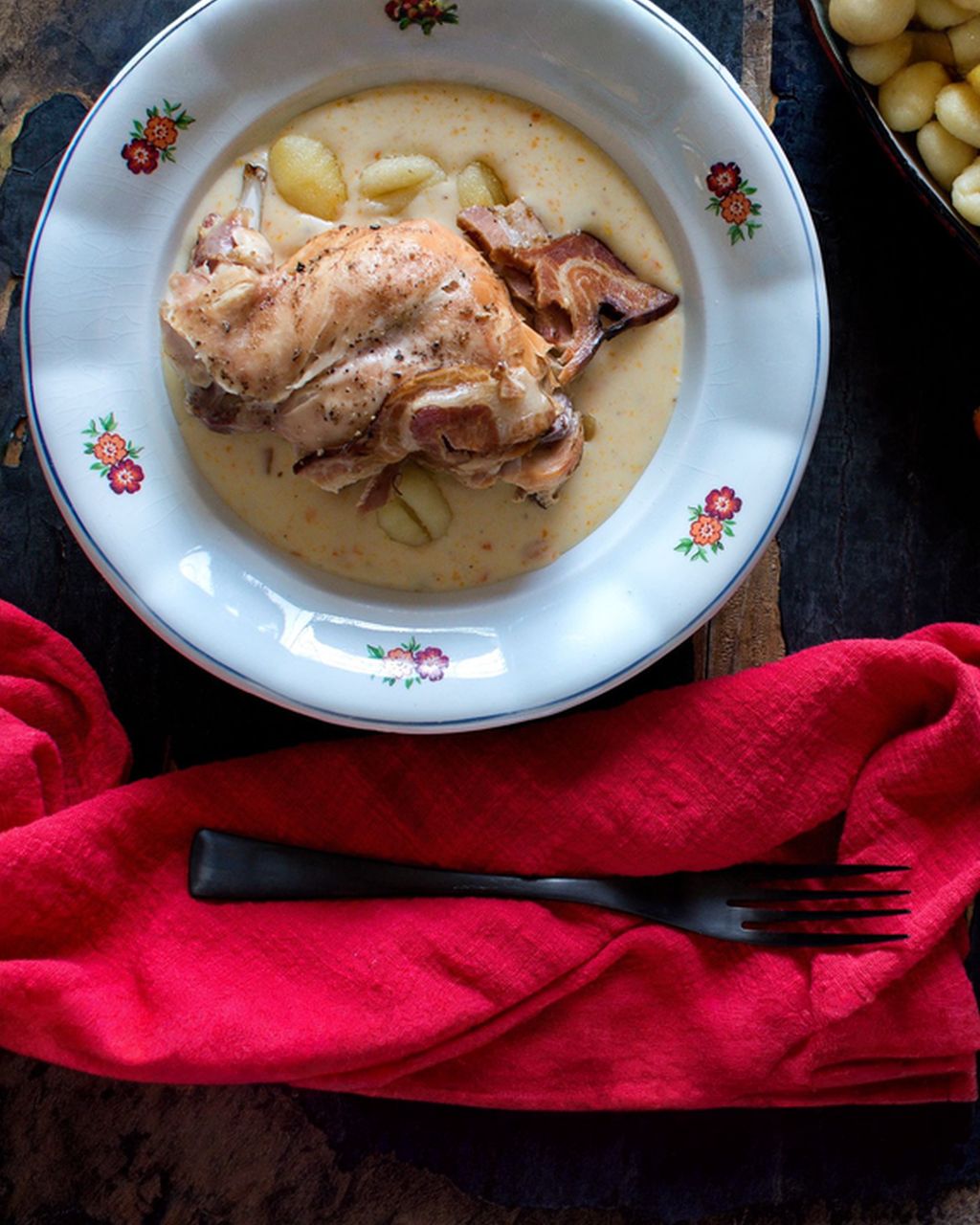
In a slow cooker, lay the legs on root vegetables, put bacon on top and cook for 7 hours on low, until the meat falls off the bone by itself. Then blend the juices and vegetables into a sauce, as in slow cooker rabbit in creamy sauce.
Marinate the legs in olive oil and herbs for at least an hour first. Roast them covered at about 150 °C for roughly 1.5–2 hours, basting as they cook so they don't dry out. Uncover them for the last few minutes so the surface turns golden. Bacon or a few spoonfuls of butter on top protect the lean meat from drying out. For more tips, see lamb and rabbit: how to cook them tender.
Never serve rabbit pink. Cook it until it reaches at least 70 °C at the bone for 2 minutes; our rabbit article gives 70–74 °C at the centre. Use a probe thermometer in the thickest part next to the bone. It is done when the meat comes away from the bone easily and the juices at the bone run clear, with no pink tinge.
Pregnancy: the UK NHS lists raw and undercooked meat among the foods to avoid in pregnancy because it carries a small risk of toxoplasmosis. Cook rabbit leg through so that no part is pink.
Use pre-packed raw legs by the use-by date and loose ones from the butcher within 1–2 days. You can freeze them for several months; thaw them in the fridge and do not refreeze them once thawed.
Refrigerate cooked rabbit within 2 hours and eat it within 3 days. When reheating, heat it until the centre reaches at least 70 °C for 2 minutes.