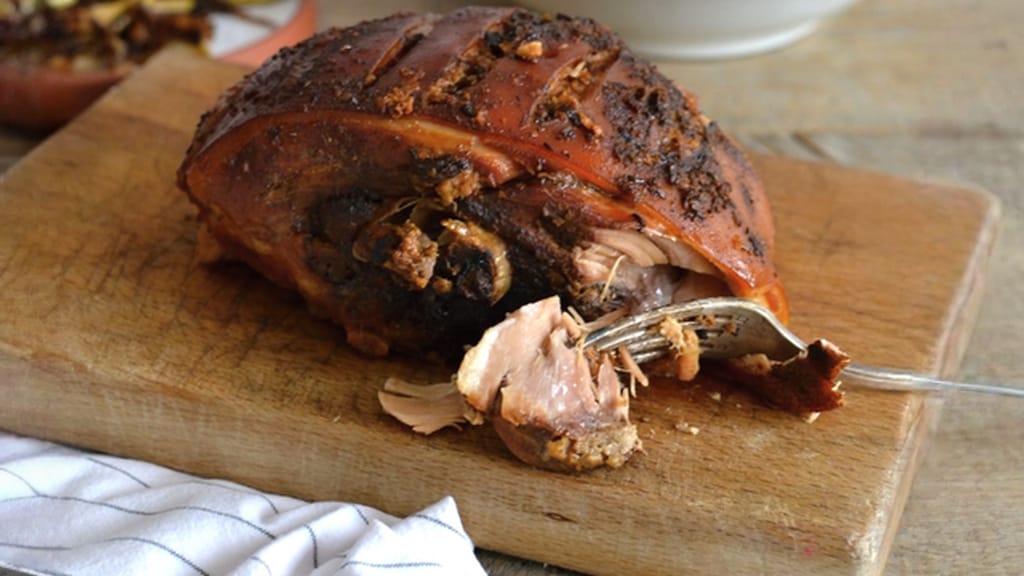
Extra slow-roasted pork shoulder with apples and onions
Overnight Roast Meat: What Temperature for Pulled Pork, Svíčková and Duck
Updated Nov 17, 2026
Overnight roasting is done at 110–120°C (230–250°F), but the US food safety agency USDA/FSIS does not recommend oven-roasting below 163°C (325°F). If you try it anyway, start the meat at 160–170°C (320–340°F) and only turn the heat down once an instant-read thermometer shows more than 60°C (140°F) inside. Otherwise the meat would spend too long in the danger zone of 4–60°C (40–140°F), where bacteria multiply fastest. You tell when the meat is done by its internal temperature, not by the clock: pulled meat is ready at around 95°C (203°F), while duck and goose need at least 74°C (165°F) in the thickest part. Below you'll find temperatures and times for pork shoulder, "mock" svíčková, duck and goose, a slow cooker option, and how to freeze pulled meat.
Meat is roasted overnight at 110–120°C (230–250°F), but only after a start at 160–170°C (320–340°F). During the start, keep the meat covered with a lid or in a lidded roasting pan, and turn the oven down only once the center is above 60°C (140°F). Hours are just an estimate. The meat is done when an instant-read thermometer shows the target temperature inside.
Pulled pork (shoulder): overnight at 110–120°C (230–250°F), center 90–96°C (194–205°F) (ThermoWorks, a thermometer maker, recommends aiming for 95°C/203°F). At 107°C (225°F), allow roughly 3–4.5 hours per kilogram (American BBQ guides give 1.5–2 hours per pound).
Mock svíčková (beef shoulder): overnight at 110–120°C (230–250°F), center around 95°C (203°F). The same principle as pulled pork: the meat should fall apart.
Beef tenderloin (real svíčková, the lean cut under the spine): don't roast it overnight. It's lean and long roasting dries it out. According to USDA, a whole cut is safe from 63°C (145°F) inside plus 3 minutes of rest.
Duck and goose: overnight at 110–120°C (230–250°F), with a short blast of full heat at the end for the skin. The center of the thickest part of the thigh and breast should reach at least 74°C (165°F) (USDA/FSIS).
Low heat gives the collagen in connective tissue time to melt into gelatin. That's why tough cuts like shoulder or shin turn into juicy strands, whereas at high heat the muscles would tighten and the meat would dry out before the connective tissue gives way.
Seasonal baking plans, tested recipes and kitchen tricks that save you time. Unsubscribe in one click.
For overnight roasting, start the meat at 160–170°C (320–340°F), because at 110°C (230°F) a large cut heats through so slowly that the center stays in the danger zone of 4–60°C (40–140°F) for a long time (USDA/FSIS). The agency therefore doesn't recommend oven-roasting meat below 163°C (325°F) at all. So slow overnight roasting is done at your own risk. A reasonable compromise looks like this:
Start: preheat the oven to 160–170°C (320–340°F), put the meat in a lidded roasting pan and leave it there until an instant-read thermometer shows more than 60°C (140°F) in the center.
Night: only now turn the oven down to 110–120°C (230–250°F). Leave the probe in the meat if you have one.
Finish: take the meat out by its internal temperature, not by the alarm clock.
If the center is still below 60°C (140°F) after several hours, don't wait. Put the oven back to 160°C (320°F) and check the temperature again. The number on the dial doesn't matter. What counts is what the thermometer inside the meat shows.
Make pulled pork from pork shoulder (bone-in or boneless) overnight at 110–120°C (230–250°F), until the center reaches 90–96°C (194–205°F) and a fork goes into the meat with almost no resistance. ThermoWorks advises setting the probe alarm to 95°C (203°F) and then confirming tenderness by poking the meat. Temperature is only half the test; the other half is how the meat gives way.
Prep: salt and season the shoulder in the evening or a day ahead and keep it in the fridge. The salt has time to penetrate.
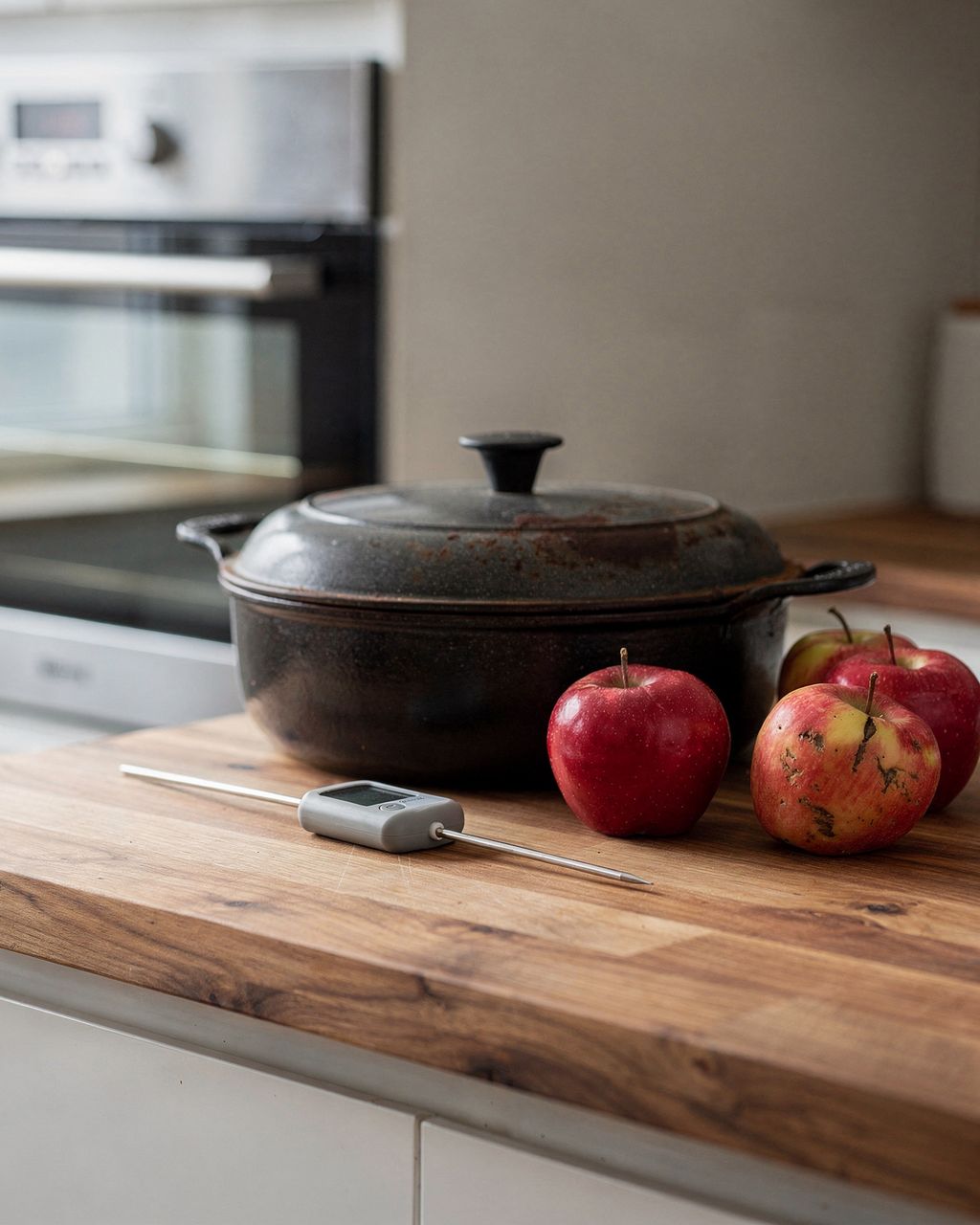
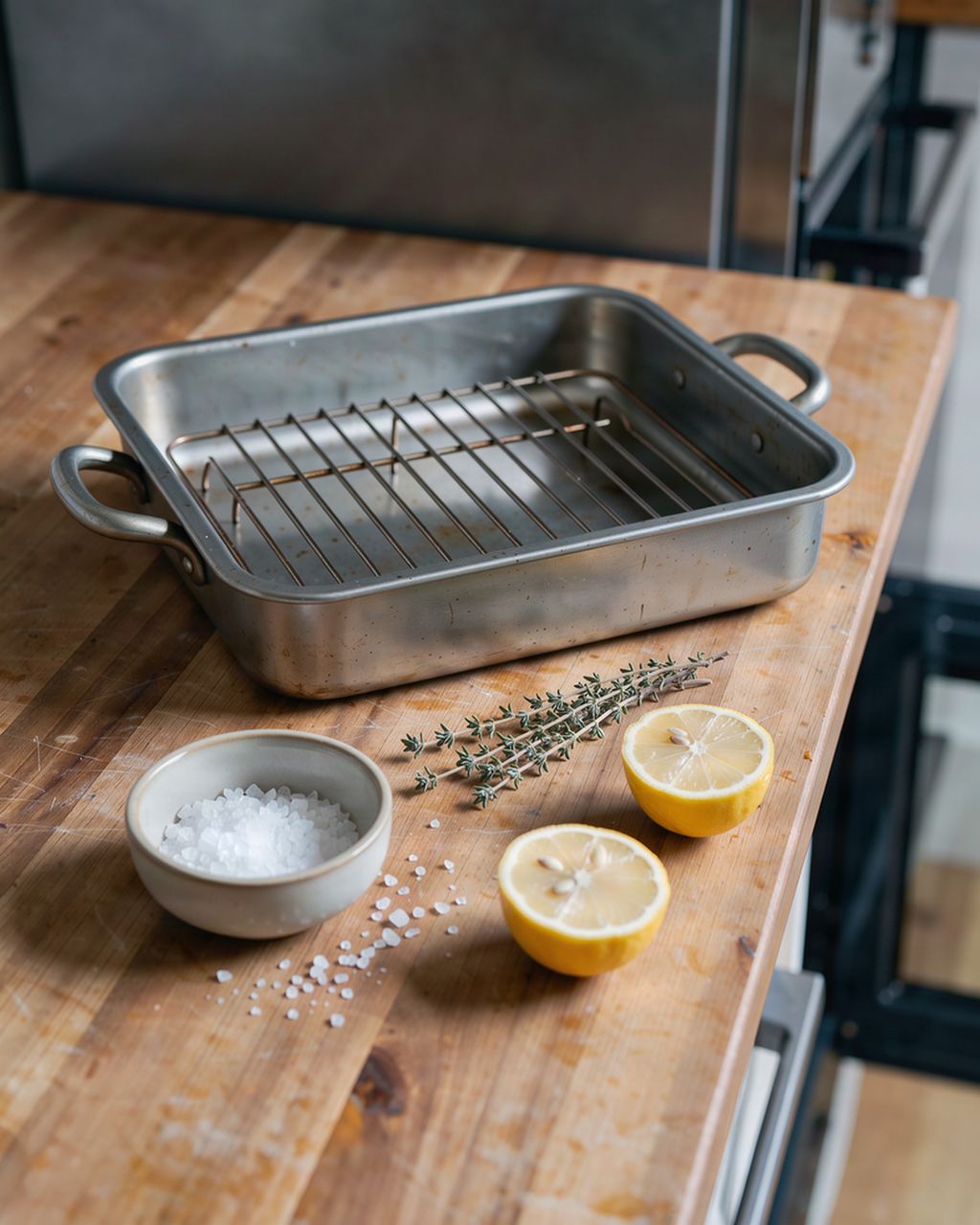
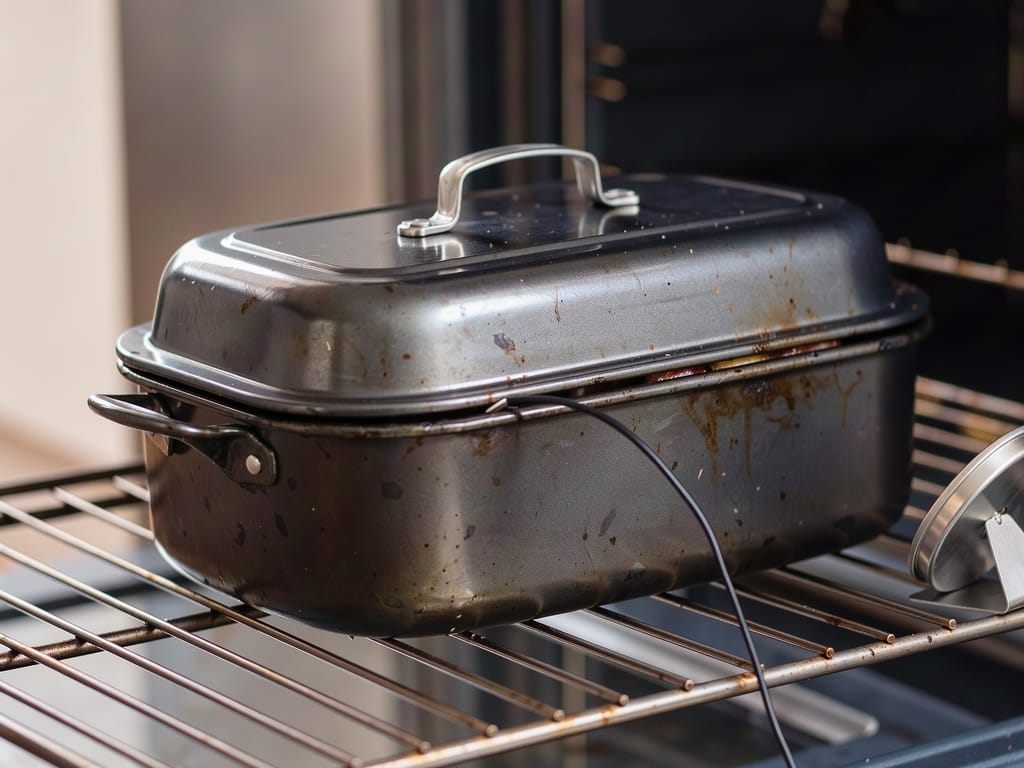
Pan: a cast-iron pot or roasting pan with a tight lid and a little liquid on the bottom (stock, apple cider, onions). You'll find roasting pans and other tools in the baking pans and bakeware category.
The stall: around 65–75°C (150–165°F) the internal temperature can stall for hours, because water is evaporating from the meat. This is normal. Don't turn the heat up, just wait.
Rest: leave the finished shoulder to rest under the lid for at least an hour, so it settles and shreds more easily. Only then pull it apart with two forks and mix it with the pan juices.
If you don't have all night, American BBQ guides give roughly 6–8 hours at 135°C (275°F) for an average shoulder. The target inside stays the same. You'll find a complete slow-roasting method for shoulder in the recipe very slow-roasted suckling pig shoulder with apples and onions.
Extra slow-roasted pork shoulder with apples and onions
Very slow-roasted suckling pig shoulder with apples and onions
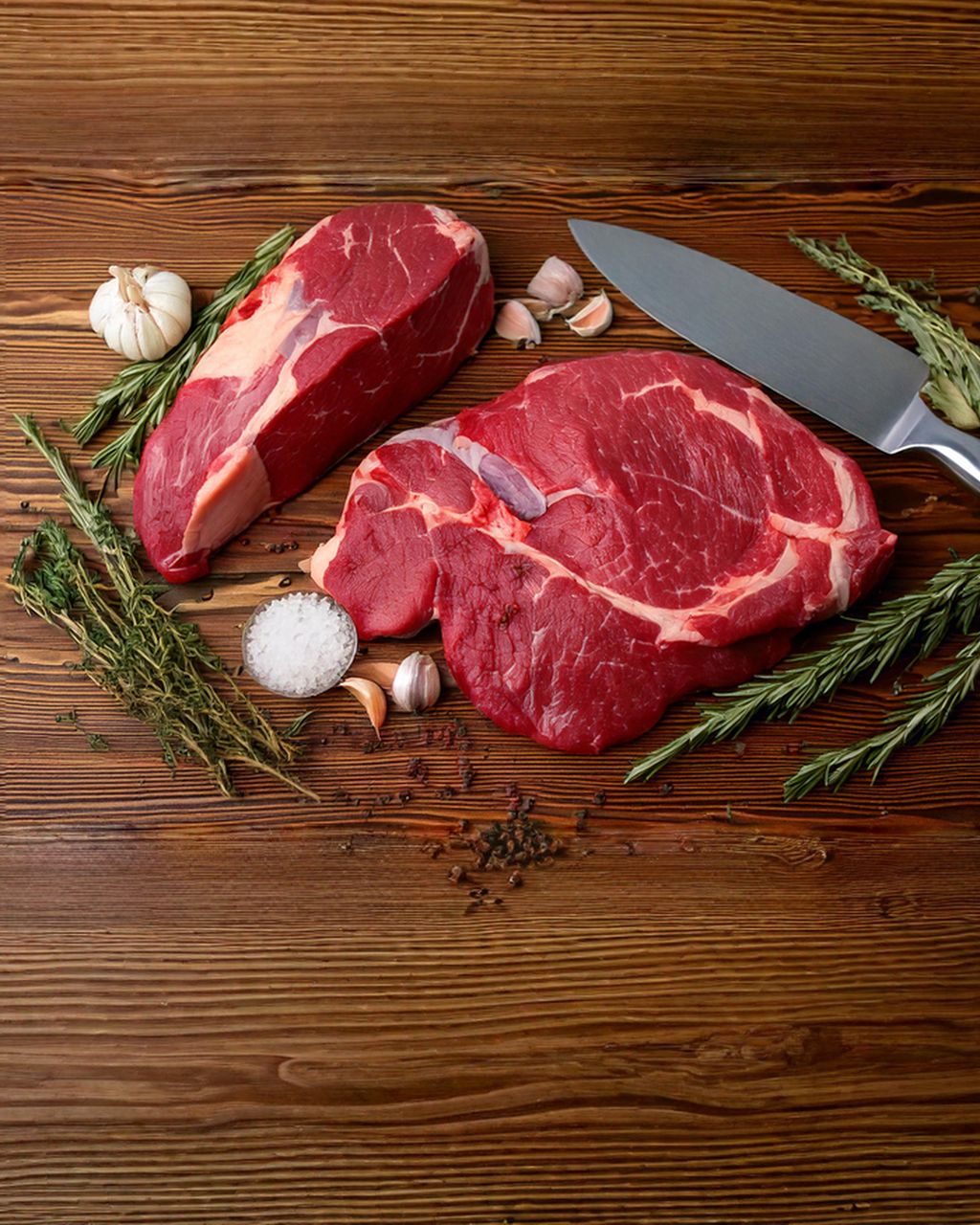
For svíčková (Czech beef in a root-vegetable cream sauce) roasted overnight, take beef shoulder, not beef tenderloin: roast the shoulder at 110–120°C (230–250°F) until the center reaches around 95°C (203°F). This dish is called mock svíčková, because instead of expensive beef tenderloin (real svíčková) it uses a cheaper, tougher cut. ThermoWorks gives the same internal target for tough beef cuts such as brisket. Don't roast the tenderloin itself overnight. It doesn't have enough connective tissue to melt, and long roasting would dry it out.
Mock svíčková from shoulder: cover the shoulder with root vegetables (carrot, parsley root, celeriac, onion) and a little stock, and roast it like pulled pork: a start at 160–170°C (320–340°F), then low overnight. In the morning, take the meat out, blend the vegetables with the pan juices into a sauce, and slice or pull the meat.
Svíčková in cream sauce from real beef tenderloin: roast the meat the classic way according to the recipe, for a shorter time at a higher temperature, and make sure it reaches at least 63°C (145°F) inside and rests for 3 minutes (USDA). A proven method for the whole dish is in the recipe perfect homemade svíčková for Sunday lunch.
Slow-roasted beef also suits other sauces, for example in the recipe dill sauce with slow-roasted beef. If your svíčková sauce turns out too sharp, the article why svíčková is sour and how to balance the sauce will help.
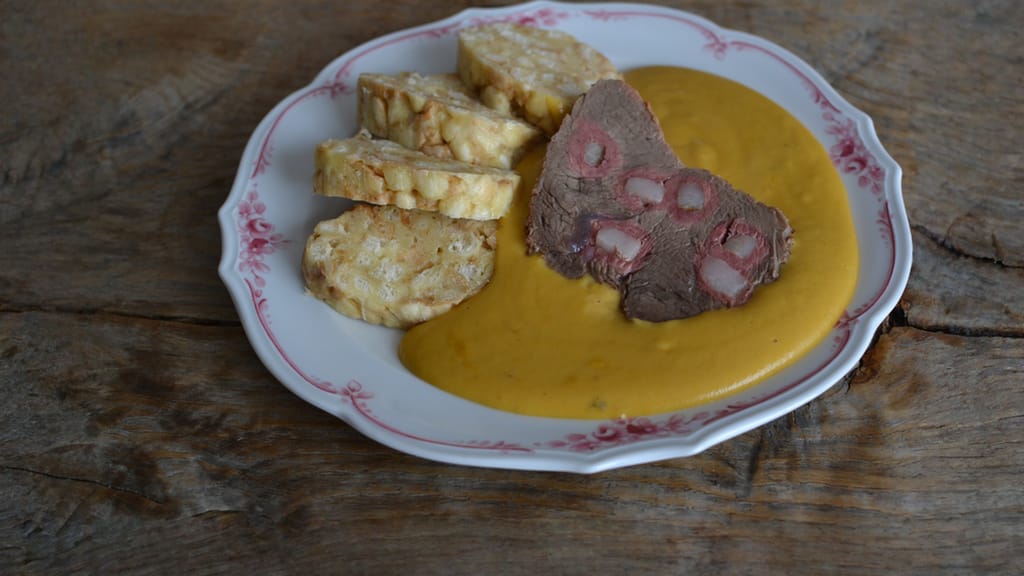
Beef sirloin in cream sauce (svíčková)
Perfect homemade svíčková in cream sauce for Sunday lunch
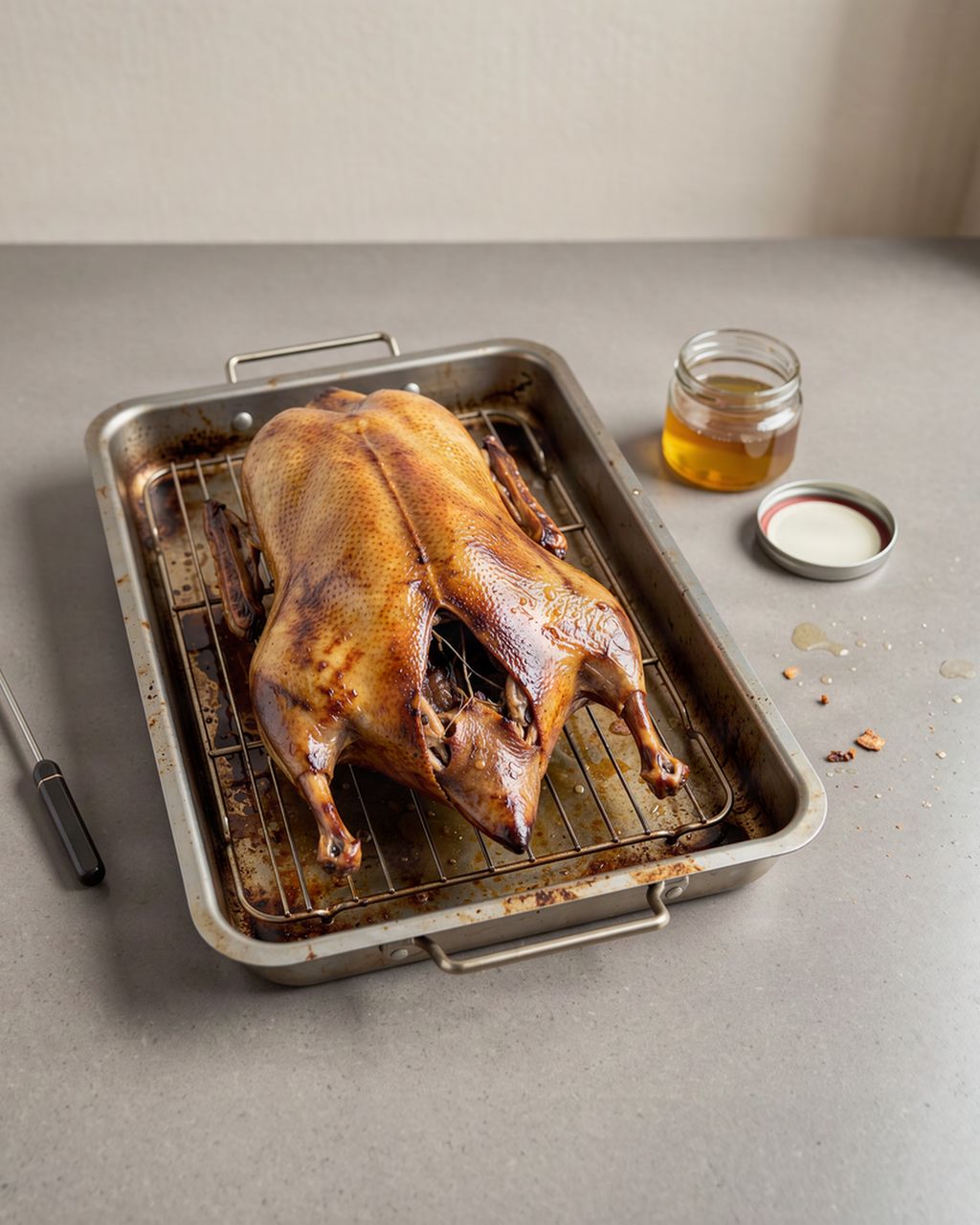
Roast duck and goose overnight at 110–120°C (230–250°F) after a start at 160–170°C (320–340°F); they're done at 74°C (165°F) in the thickest part of the thigh and breast (USDA/FSIS). At the end, turn the oven up to maximum and watch the skin until it crisps. At a low temperature the fat renders slowly, but the skin stays soft.
Measure correctly: insert the probe into the thickest part of the thigh and breast, without touching the bone. USDA notes that duck and goose can still be slightly pink inside at 74°C (165°F). With dark poultry that's normal.
Rendered fat: pour it off once or twice during the night. It's great for potatoes and in cabbage.
Legs: they're done only when the meat near the bone gives way. The safe temperature is just the minimum; tender meat needs more time.
For classic roasting at higher temperatures with standard times by weight, see the articles how long to roast a duck and at what temperature and how long to roast a goose and how to tell it's done. The recipe slow-roasted duck with honey suits slow roasting. For goose, try goose breast on apples with potato lokše.
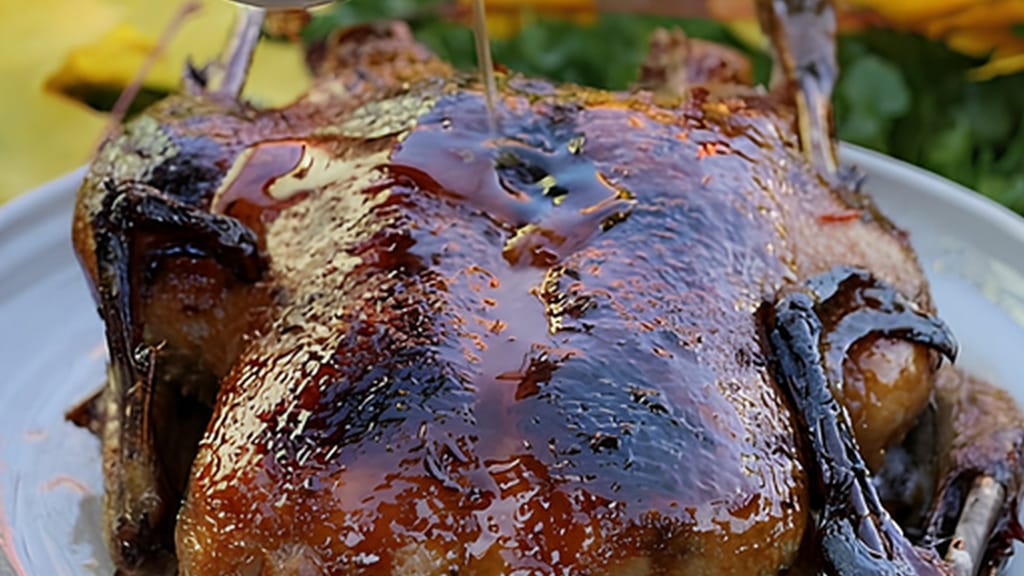
Slow-roasted honey duck
Slow-roasted honey duck, juicy and crispy
For overnight roasting, the oven must hold its temperature within a few degrees, because at 110°C (230°F) an error of 20°C makes a huge difference. If the oven is set to 110°C (230°F) but actually heats to 90°C (194°F), the meat will heat through much more slowly and the center will spend longer in the danger zone. At 200°C (400°F) the same error means just a few extra minutes of roasting. The oven dial measures the air at the sensor, not where the roasting pan sits.
An oven thermometer shows you what temperature your oven really reaches. Stand it on the rack next to the roasting pan, for example the Patisse oven thermometer, and adjust the dial accordingly.
An instant-read thermometer (ideally with a probe on a cable) measures the center of the meat. It's the only reading you use to decide whether the meat is safe and done.
Why ovens get it wrong and how to check them is covered in the article oven thermometer: how to find out the real oven temperature.
A slow cooker is a safer choice for overnight cooking than an oven turned down to the minimum. According to USDA/FSIS it cooks at 77–138°C (170–280°F) and should reach a safe temperature as soon as possible, which is why USDA advises running it on High for the first hour and then switching to Low.
Thawed meat only. According to USDA, frozen meat doesn't belong in a slow cooker; it would stay in the danger zone too long.
Fill it from half to two-thirds full and don't lift the lid. Every opening cools the pot.
Power cut: if you're not home and the power goes out, USDA advises throwing the food out, even if it looks cooked.
Crust: the pot won't brown the meat. Finish shoulder or duck briefly in a hot oven before serving.
For inspiration, see the recipes slow cooker duck breast with oranges and slow cooker rabbit in cream sauce.
Pulled meat freezes well. In the freezer at −18°C (0°F) it keeps its quality for 2–6 months according to USDA, and in the fridge it lasts 3–4 days. Put it in the fridge within 2 hours of cooking at the latest (USDA); don't leave it at room temperature all morning.
Cooling: spread the meat in shallow containers so it cools quickly. A big pot full of hot meat takes hours to cool in the fridge.
Freezing with juices: cover the portions with a little of the pan juices, press the air out of the bag and lay the bag flat. The meat won't dry out and will thaw faster.
Thawing: in the fridge, not on the counter. FSA recommends eating thawed leftovers within 24 hours.
Reheat only once: according to FSA, until steaming hot all the way through, meaning at least 75°C (167°F) for 30 seconds or 70°C (158°F) for 2 minutes inside.
How long raw and cooked pork keeps is covered in the article pork in the fridge: how long it keeps. Leftovers suit burgers, gnocchi or beans, for example in the recipes pulled duck burger, potato gnocchi with pulled duck and pulled smoked meat with beans and tomatoes.
At about 107–110°C (225–230°F), allow roughly 3–4.5 hours for a 1 kg shoulder and 9–13 hours for a 3 kg one, plus at least an hour of resting. This is based on American BBQ guides (1.5–2 hours per pound), but the real time depends on the shape of the cut, the bone and how accurate your oven is. What matters is an internal temperature of around 95°C (203°F), not the hours.
Yes, you can roast meat overnight in convection mode too, but always in a covered roasting pan. Circulating air quickly dries out the surface of uncovered meat. Check the real oven temperature with a thermometer on the rack and adjust the dial accordingly.
Don't refreeze thawed pulled meat; eat it within 24 hours (FSA). You can reheat it only once, until steaming hot all the way through. So freeze pulled meat in smaller portions right away, so you only thaw as much as you'll eat.
Put beef shoulder with vegetables and stock in a slow cooker, on High for the first hour and then on Low, as USDA advises. It's done when it falls apart and the center reaches around 95°C (203°F). In the morning, blend the vegetables with the pan juices into a sauce, just as you would from a roasting pan.
Follow the oven manufacturer's instructions: if it doesn't allow unattended use, don't leave the oven on overnight. In that case, reach for a slow cooker. Even then, don't count on noticing a power cut: if the power goes off while you're away, USDA says to throw the food out.
One recipe worth heating the oven for, one tip, and one deal from the shop. Nothing else.