At a glance
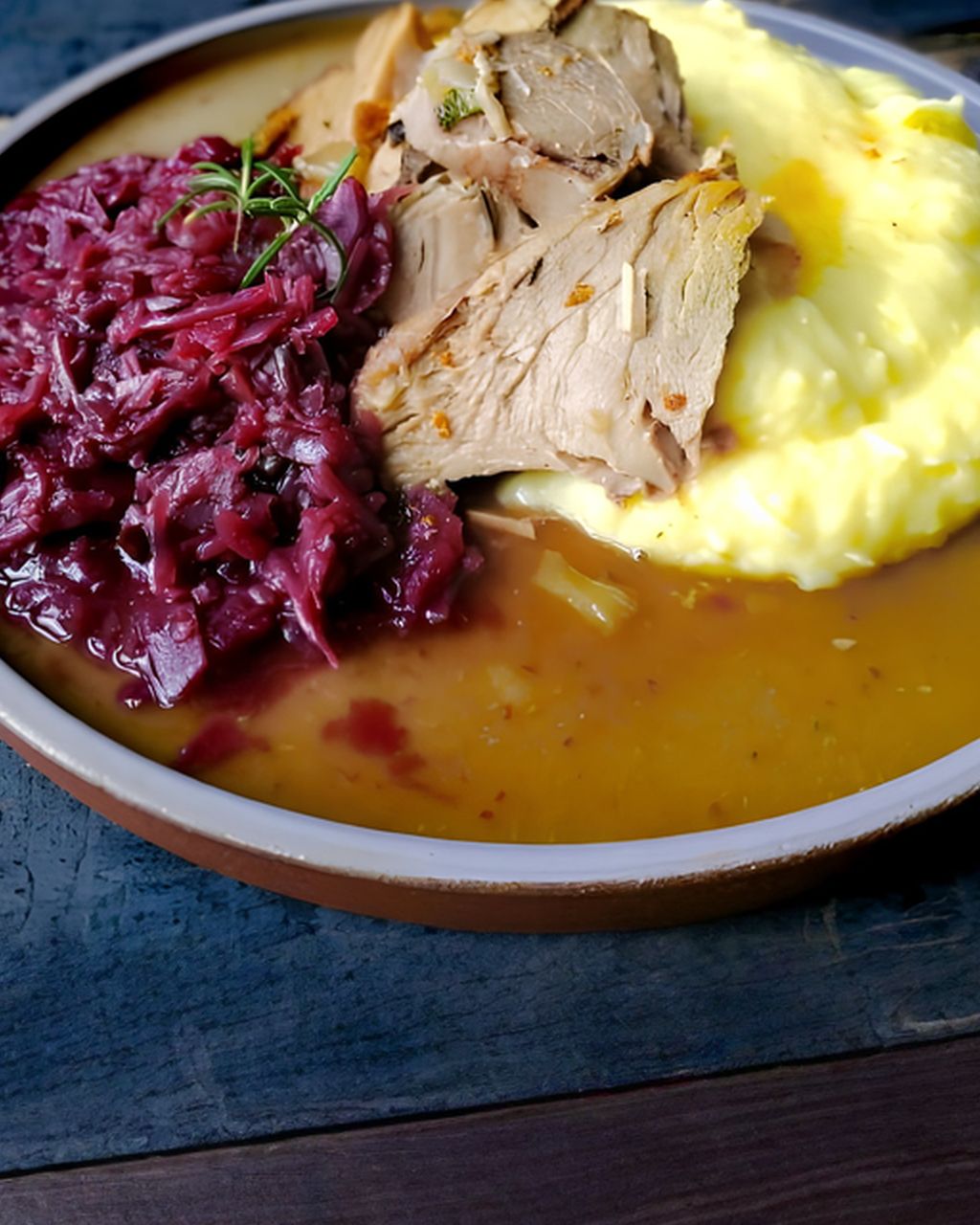
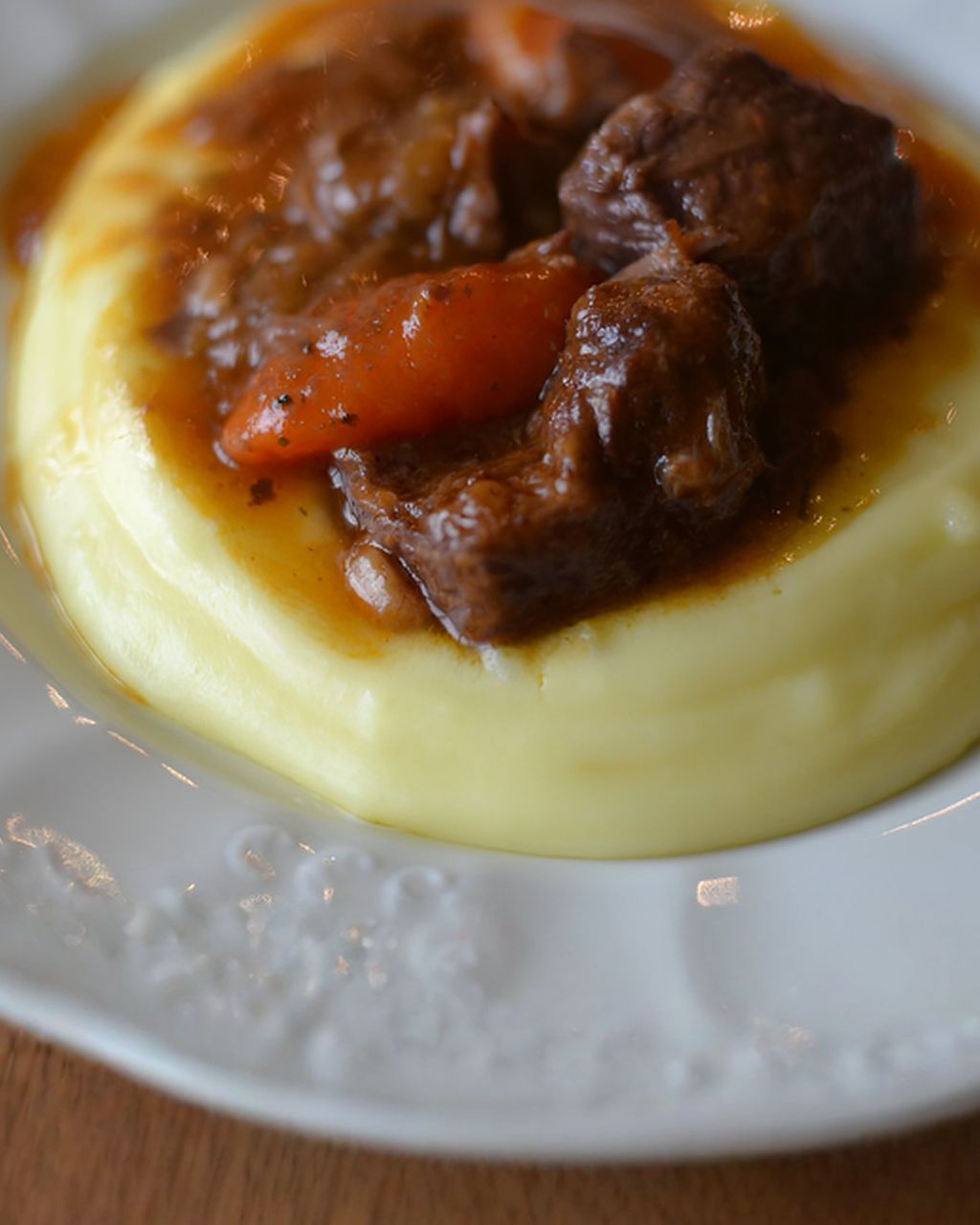
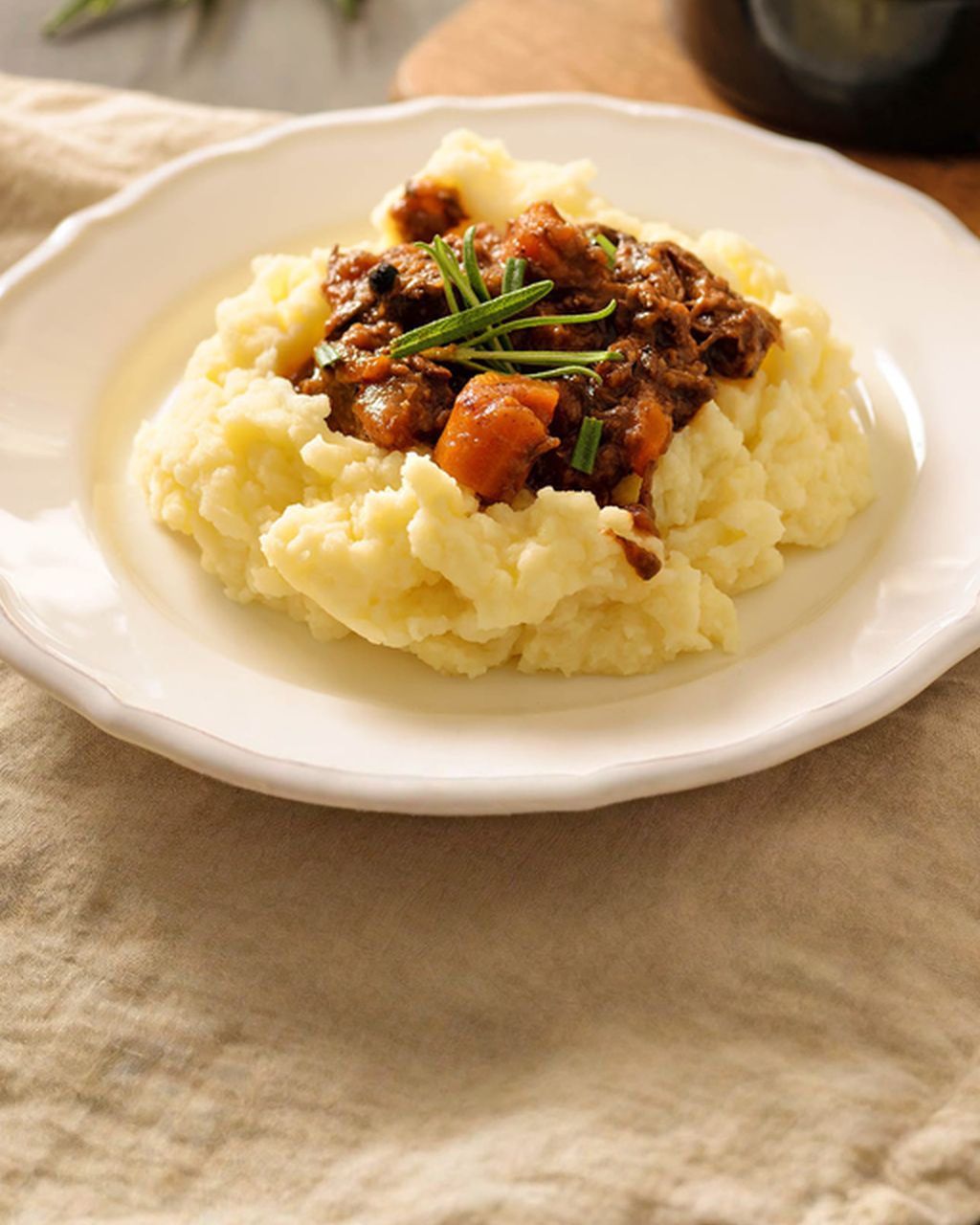
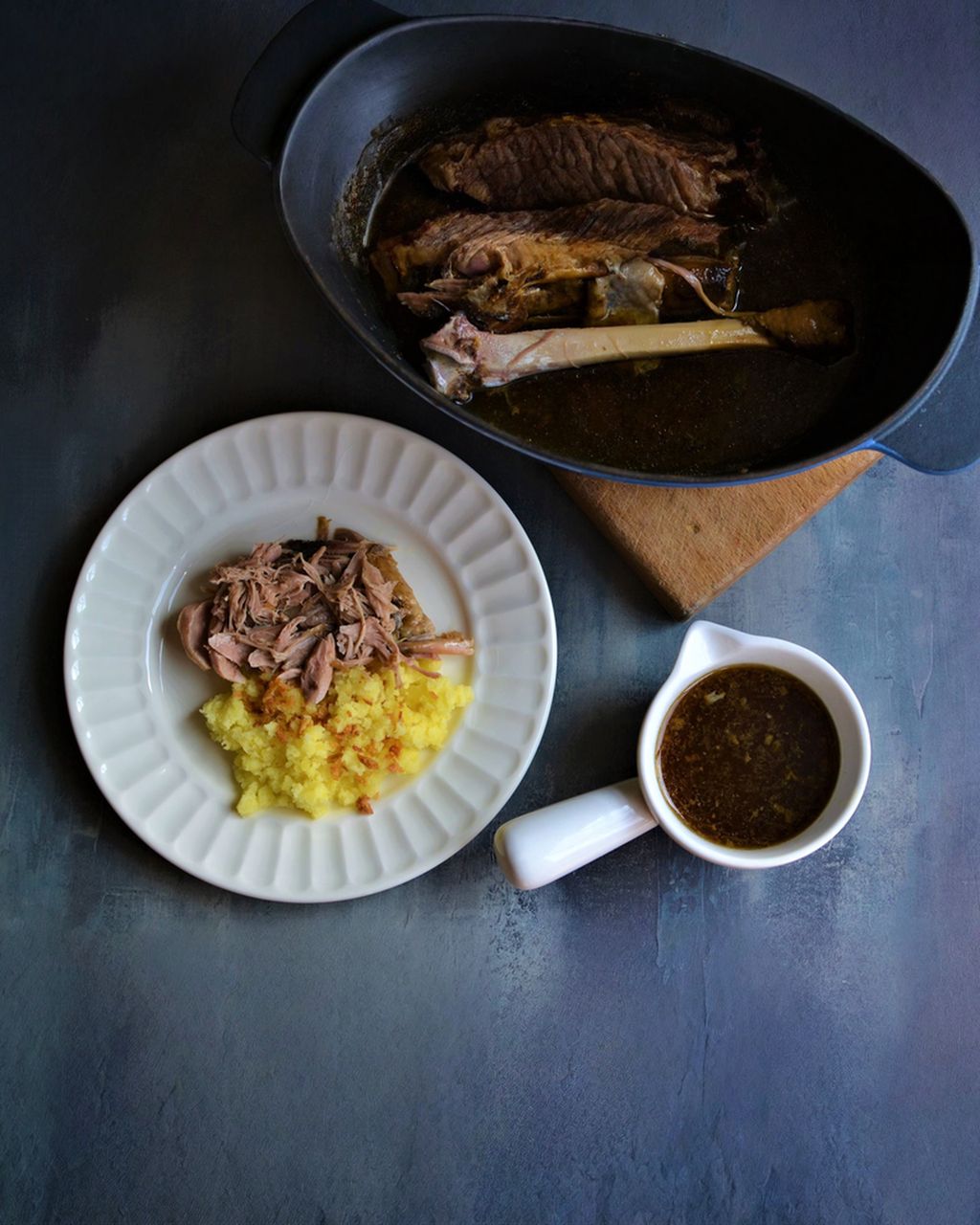
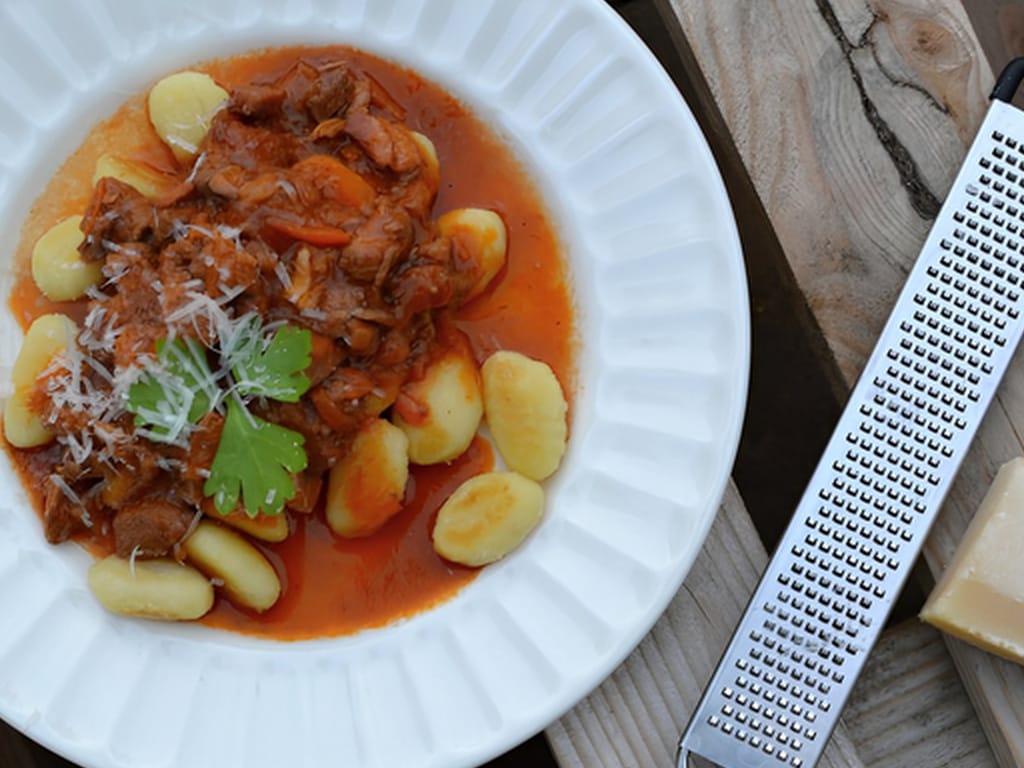
You're looking at a slow-braised pork ragù that requires some patience—it takes nearly four hours to cook, though most of that time is hands-off simmering. The key steps involve searing cubed pork, building flavor with bacon and aromatics, then letting everything braise gently with red wine and stock until the meat falls apart. A cast-iron pot is your best friend here, and the most tricky part is knowing when the wine has cooked off enough (you'll smell it transition from sour to pleasant) before adding stock and settling in for the long simmer.
1/9
Sear the meat
Cut the meat into small cubes, as evenly sized as possible. Place it in a bowl, season with salt and pepper and mix well. Get your cast-iron pot as hot as it will go, add a knob of lard and sear the meat on all sides over high heat.
For this step
0/42/9
Bacon, onion and garlic
Meanwhile, in a separate pan, fry diced bacon together with roughly chopped onion. Towards the end of cooking, add crushed and chopped garlic. Keep frying until the bacon is lightly crisp and the onion is golden brown.
For this step
0/33/9
Add everything to the pot
Tip the contents of the pan into the cast-iron pot with the meat, along with coarsely grated carrot and parsley root. Stir together, turn the heat up to full and pour in the wine.
For this step
0/3
Want a recipe like this every Thursday?
One recipe worth heating the oven for, and one tip that saves you time. Nothing else.