The best christmas cookies? vanilla crescents, of course!
Vanilla Sugar vs. Vanillin Sugar: What's the Difference and When You Can Taste It in Cookies
Updated Oct 17, 2026
Vanilla sugar gets its flavor from real vanilla, either from the pod or from extract. Vanillin sugar gets it only from vanillin or ethyl vanillin made from sources other than vanilla. In baked dough you can barely tell the difference. In sugar that never goes in the oven and stays on top, such as on vanilla crescent cookies or in whipped cream, you notice it right away. Below you'll find how to read the label, when a cheaper packet is perfectly fine, and how to make real vanilla sugar from a pod.
Vanilla sugar contains real vanilla, while vanillin sugar contains just one of its aroma compounds, made from sources other than vanilla. That's the whole difference, and everything else follows from it:
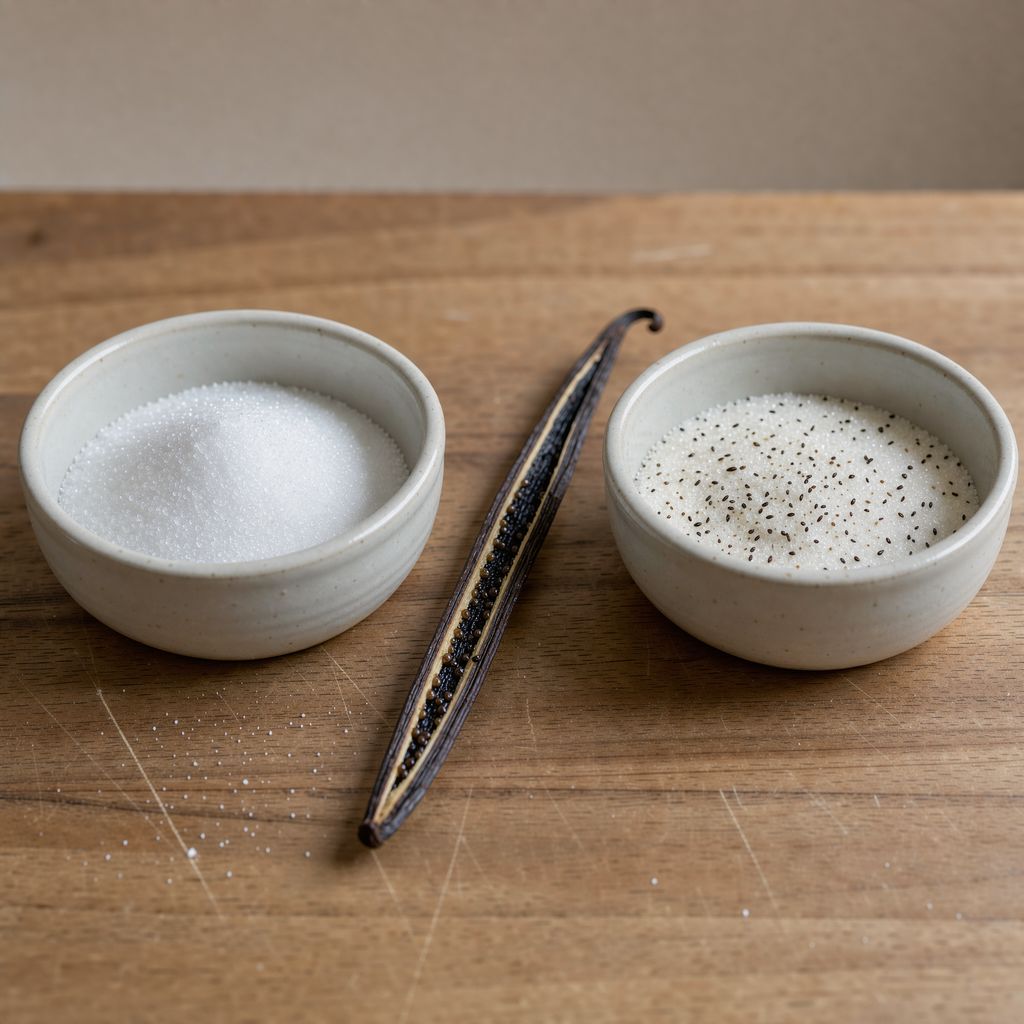
Vanilla sugar = sugar + ground vanilla pod, vanilla extract or natural vanilla flavoring. You'll often see tiny black specks in it.
Vanillin sugar = sugar + vanillin and/or ethyl vanillin. Pure white, with no specks.
Aroma: besides vanillin, real vanilla carries hundreds of other aroma compounds (woody, creamy, floral and caramel notes). Vanillin is just the single most prominent one, so it smells flatter, sweeter and more "candy-shop."
Strength: ethyl vanillin is roughly three times stronger than vanillin, which is why even a small packet of vanillin sugar smells intense.
Price: vanillin sugar is considerably cheaper.
Vanillin isn't fake in itself. It's the main aroma molecule of vanilla, but today it's made from petrochemical raw materials (guaiacol), from lignin in wood, or by fermentation. What it lacks is the depth that makes you reach for real vanilla.
Whether a vanilla sugar contains real vanilla is something you can tell from the ingredients list on the back of the packet, not from the name on the front. In the Czech Republic, no rule sets how much vanilla vanilla sugar has to contain. The consumer organization dTest pointed this out in its 2023 test of vanilla and vanillin sugars (opens in a new tab), where the amount of aroma compounds varied up to forty-fold between products. So read the ingredients:
"ground vanilla pod," "vanilla seeds," "vanilla extract" – real vanilla. This is what you want.
"natural vanilla flavoring" – under the EU flavoring regulation (1334/2008), at least 95% of such a flavoring must come directly from vanilla. That's fine too.
"natural flavoring" (without the word vanilla) – the aroma compound is natural in origin but doesn't have to come from vanilla. It's often vanillin from fermentation.
"flavoring," "vanillin," "ethyl vanillin" – that's vanillin sugar, whatever the packaging says.
Watch the packet size, too. Recipes say "1 vanilla sugar," but depending on the brand, packets are usually 8 g or 20 g. With a family recipe handed down from your grandmother, it's worth finding out which packet she had in mind.
One more thing from the dTest results: more expensive doesn't automatically mean more fragrant. The vanillin sugars generally contained far more aroma compounds than the vanilla ones, and only 3 of 11 vanilla sugars met the German standard, which calls for about 0.5 g of vanilla per 8 g packet. A weak vanilla sugar can therefore smell less than a good vanillin one.
You'll notice the difference between vanilla and vanillin sugar wherever the sugar doesn't go through the oven and stays on top. In baked dough, much of it is lost. There's a simple rule of thumb:
You can tell: coating sugar for crescent cookies and balls, whipped cream, no-bake creams such as Bavarian cream, homemade pudding flavored at the end, and sprinkling over fruit.
You can barely tell: dough baked at 160–180 °C (320–355 °F), so Linzer dough, creamed-butter batters, Bundt cakes and yeast doughs.
The reason lies in how aroma compounds behave in heat. The delicate, volatile notes of real vanilla largely evaporate during baking, and the butter, nuts and browned crust end up dominating. Vanillin is more stable and holds up better in the oven. On the surface and when cold, it's the other way around: your tongue and nose get the vanilla directly, nothing masks it, and the one-dimensional character of vanillin (the sharpness, in the case of ethyl vanillin) is obvious right away.
Real vanilla pays off most when coating vanilla crescent cookies, because this sugar is the first thing you taste. The cookies are rolled in sugar while still warm, so the sugar clings to them and melts slightly. The warmth releases its aroma, but it isn't hot enough to evaporate it.
For coating one baking sheet of crescents, count on roughly 150–200 g of powdered sugar (about 1¼–1¾ cups).
The quick way: scrape the seeds of 1 pod into the sugar, rub them in with your fingers so they don't clump, and sift the sugar.
If you have crystal vanilla sugar made from a pod at home, grind it to a powder and mix it with the powdered sugar.
Let the cookies rest in the coating sugar in a tin for a few days. The vanilla will keep seeping into them during that time.
You'll find a tried-and-tested method in the recipe for classic vanilla crescent cookies. And if yours break while you're coating them, the article why vanilla crescents break when rolled in sugar will help.
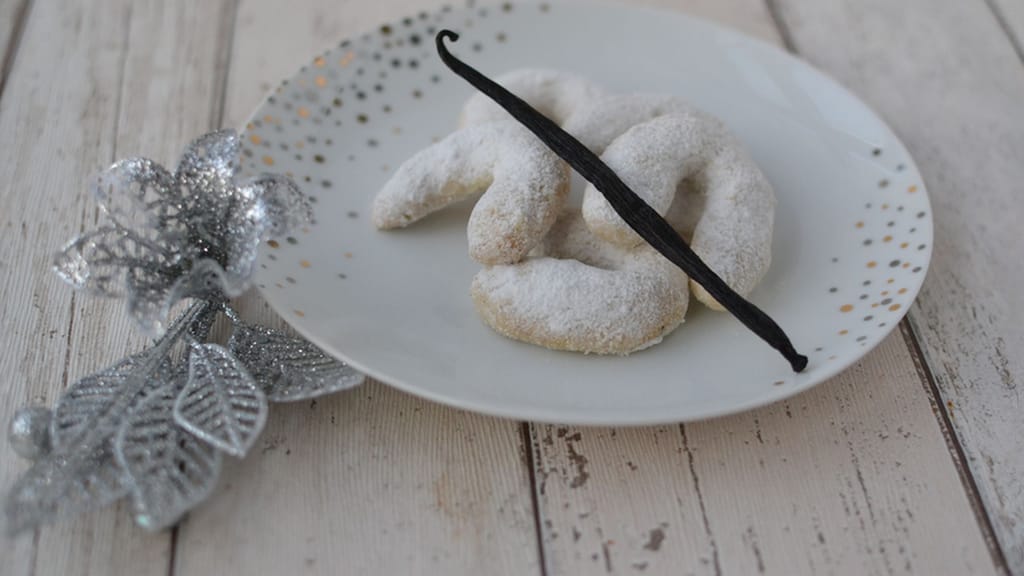
The best christmas cookies? vanilla crescents, of course!
Classic vanilla crescent cookies coated in sugar with real vanilla
For dough that bakes for 10 minutes or more at 160–180 °C (320–355 °F), vanillin sugar is perfectly fine. In tender Linzer cookies, soft honey gingerbread or grandma's cottage cheese Bundt cake, you can use the cheaper packet and save your vanilla for coatings and creams. If you do want real vanilla in the dough, add it to the fat: mix the seeds into softened butter. Fat binds aroma compounds, and more of them survive the oven than in dry sugar.
The exception is delicate butter doughs built directly around vanilla, such as vanilla sablés or butter cookies. There, real vanilla in a larger amount still comes through a little, but the difference is much smaller than with coating sugar. Classic Linzer cookies with jam belong to the group where vanillin sugar is enough.
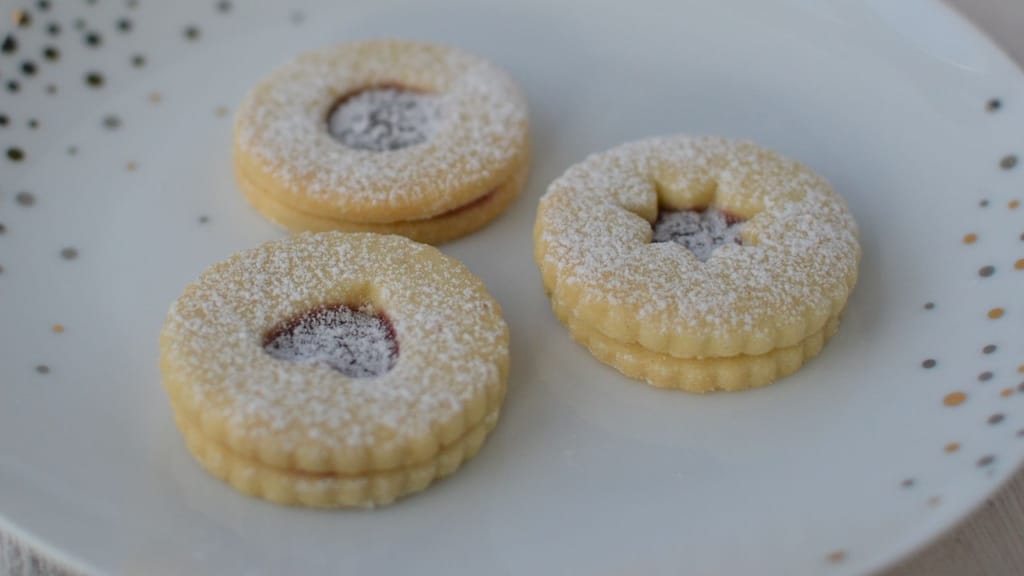
Classic christmas cookies: delicate linzer cookies
Tender Linzer cookies, where vanillin sugar is perfectly fine
You can make real vanilla sugar in two ways. Either seal a pod in sugar for about 2 weeks, or rub the seeds straight into the sugar. They differ in how quickly you need the sugar and what you'll use it for:
Sugar with a pod sealed in a jar (slow): 1 pod per 500 g of sugar (about 2½ cups). Slit it lengthwise, bury it in the sugar in a screw-top jar and leave it for about 2 weeks, shaking now and then. The sugar stays white and smells subtly of vanilla. It suits coffee, fruit and dough. You can keep adding the scraped pods left over from creams, too.
Sugar with rubbed-in seeds and ground pod (quick): rub the seeds from 1 pod into 100–200 g of sugar (about ½–1 cup), then dry the empty pod and grind it in. It's ready right away, smells intense and is speckled. This is the right sugar for coating crescent cookies.
You'll find a detailed step-by-step method, including homemade extract, in the article Homemade vanilla extract and vanilla sugar: how to make them.
It pays to choose your vanilla pods for sugar according to what you want the sugar for. You'll find the whole range under vanilla at Yumst:
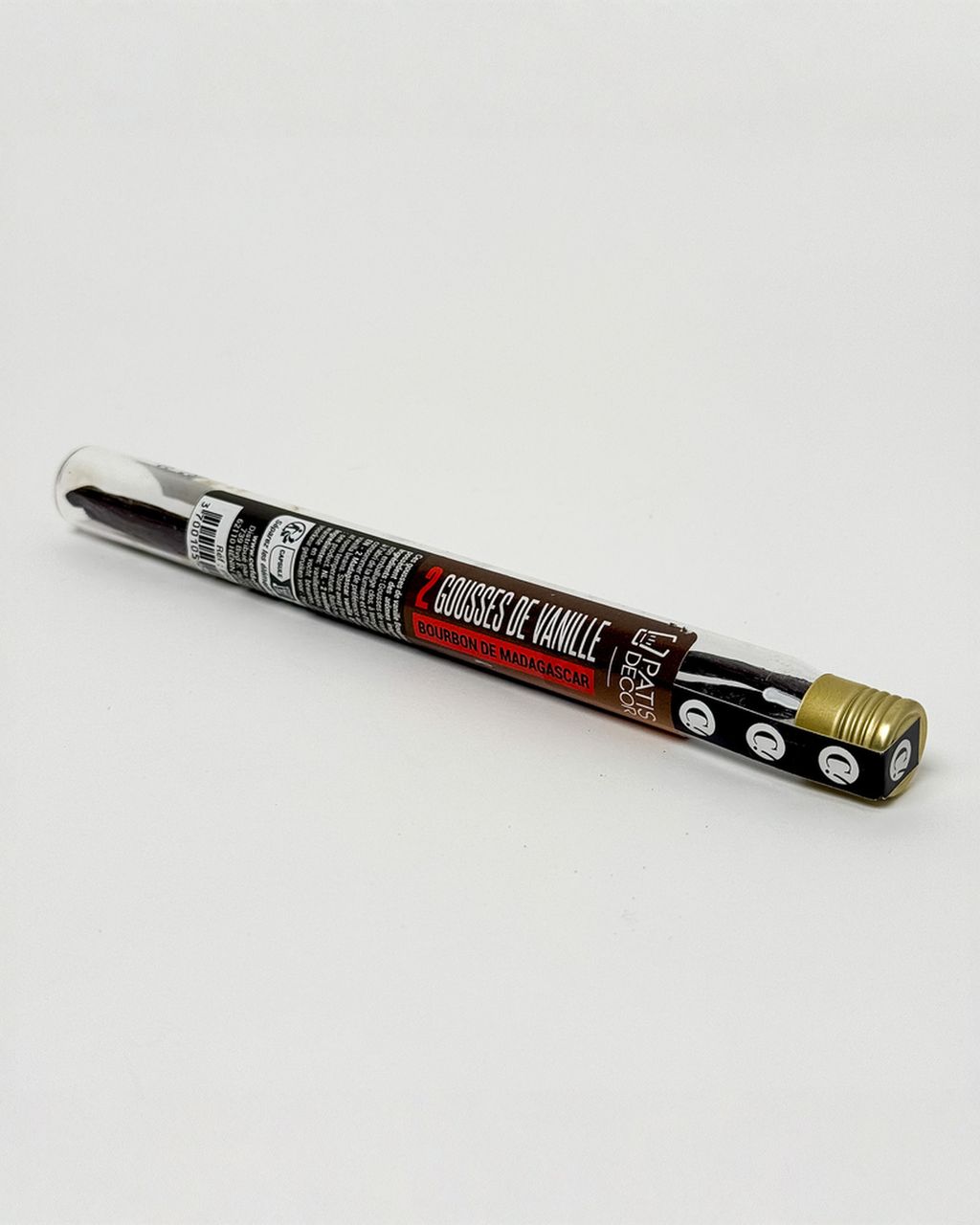
Madagascar Bourbon vanilla pods – classic creamy, sweet vanilla. It's the flavor you associate with vanilla crescents and the surest choice for coating sugar.
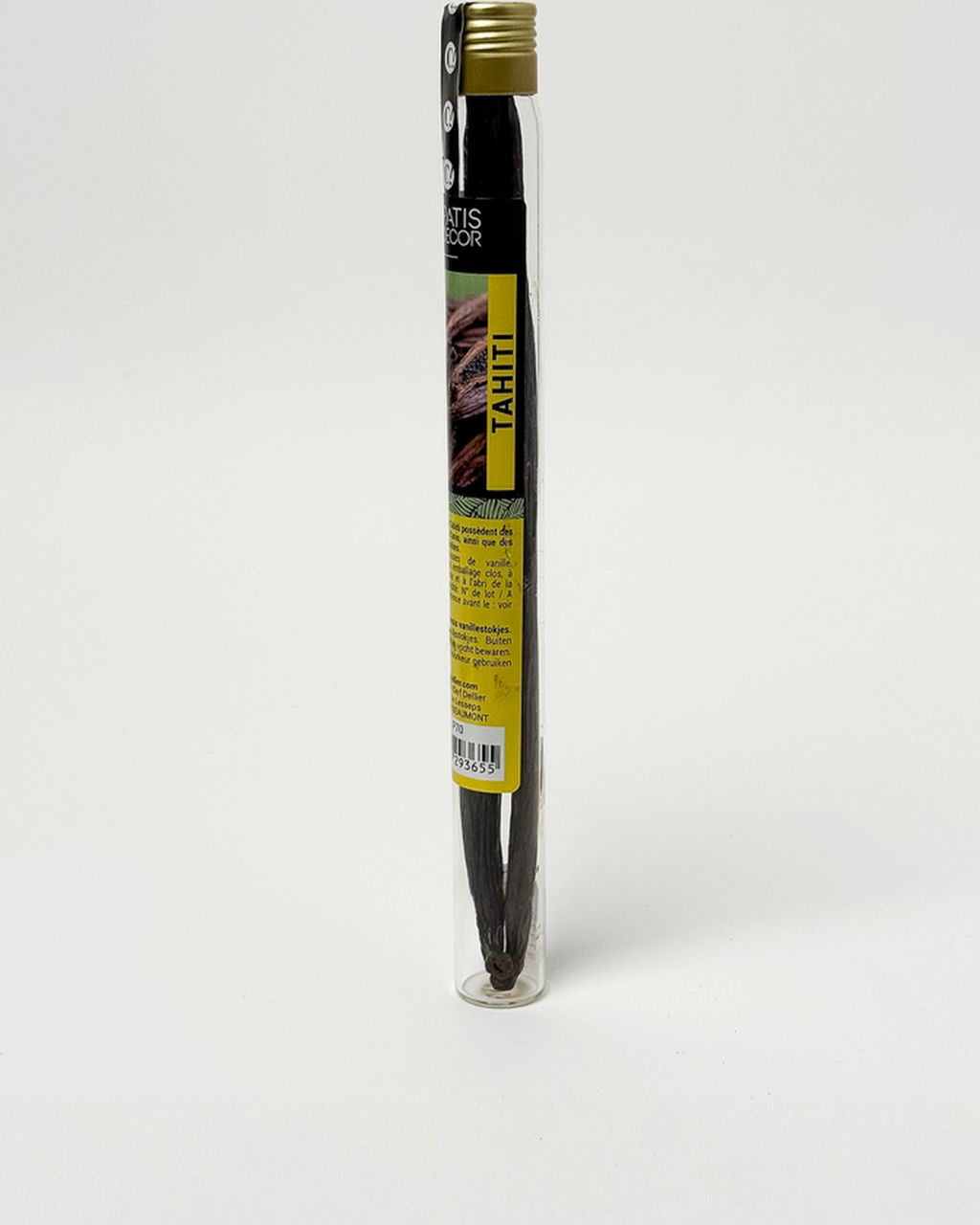
Tahiti vanilla pods – floral, fruity, with lower vanillin content. It shines most when cold: in sugar for fruit, in whipped cream and in creams. In the oven it loses some of its aroma.
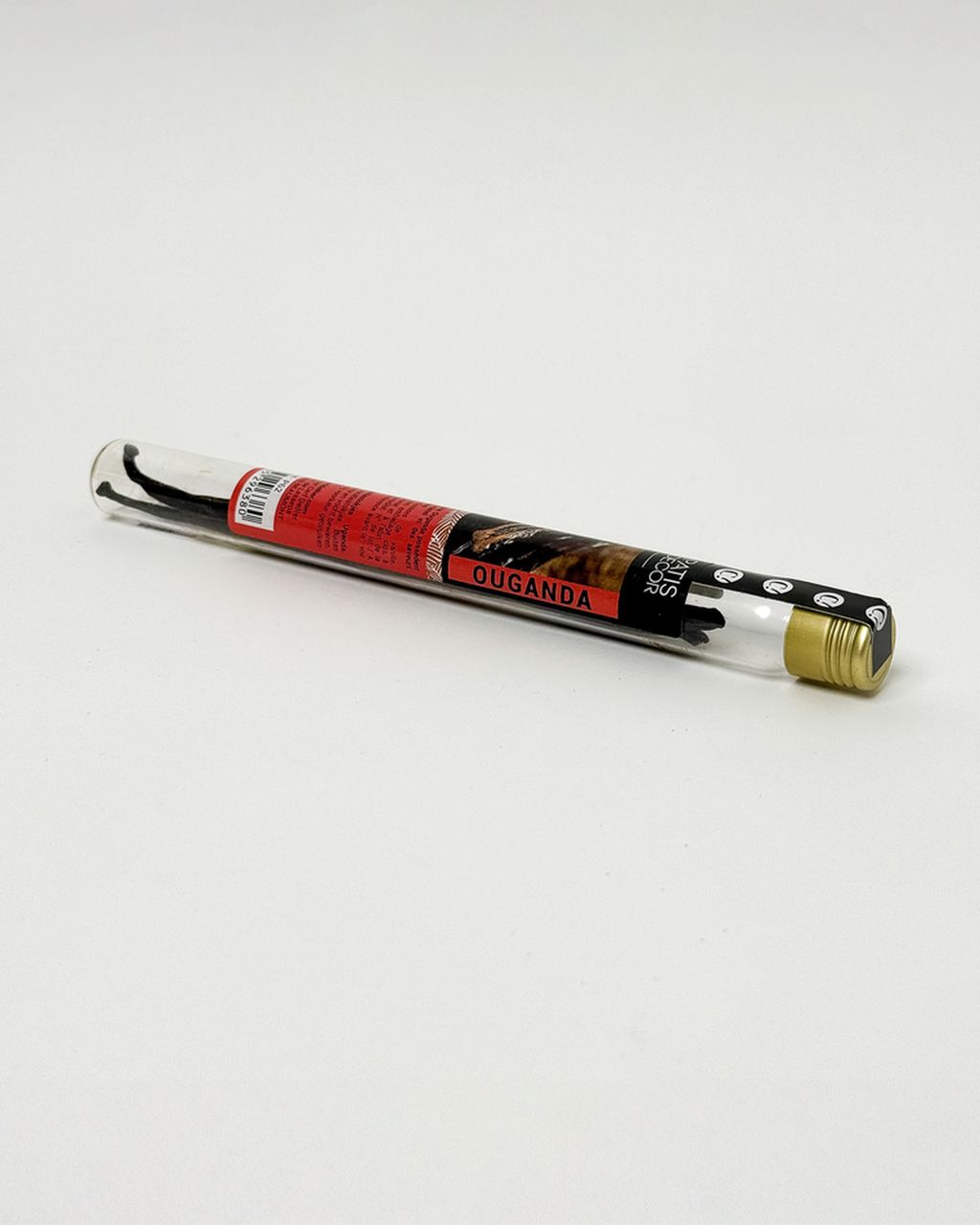
Uganda vanilla pods – bold, earthier, with high vanillin content. A good fit where the vanilla has to get through baking too.
If you don't have a pod at hand, the article what to substitute for a vanilla pod will help, and how much vanilla pod to use in cookies, creams and Christmas braided bread shows how much to add.
No. In the amounts used in cookies, vanillin is not considered harmful according to available assessments. Vanillin and ethyl vanillin are approved flavoring substances in the EU, and the international expert committee JECFA has set an acceptable daily intake with a wide margin above what you'd eat in a few cookies. The difference between vanillin and vanilla is about flavor, not safety.
Only if you'll use it up within a few months and the ingredients list real vanilla. Aroma compounds fade over time, especially in an opened pack, so a kilo of vanilla sugar in a paper bag will lose its scent before you finish baking with it. Transfer a large pack to a tightly sealed jar. It's often cheaper to make your own at home from sugar and one pod per 500 g (about 1 lb).
Homemade vanilla sugar keeps for a year in a sealed jar in a dry, dark place. Its aroma does fade with time, though. With sugar that has a pod stored in the jar, you can keep topping up the sugar and replace the pod when it stops smelling of vanilla. Sugar with rubbed-in seeds and ground pod is most fragrant for the first two to three months.
Yes. A scraped or simmered vanilla pod is ideal for vanilla sugar, as long as you dry it well first. Rinse it, then leave it to dry out completely in the open air or in the oven after you've turned it off following baking, and then bury it in the sugar. A damp pod would go moldy in the sugar. It will smell weaker than a whole pod, so count on two to three pods per 500 g (about 1 lb) of sugar.
Use roughly the same weight of vanilla sugar as vanillin sugar, or up to half as much again with weaker store-bought kinds. Vanillin sugar with ethyl vanillin smells stronger, so store-bought vanilla sugar can come through more faintly in dough. Homemade sugar with rubbed-in seeds and ground pod, on the other hand, is quite intense, so you can swap it for vanillin sugar at the same weight, one to one.
One recipe worth heating the oven for, one tip, and one deal from the shop. Nothing else.