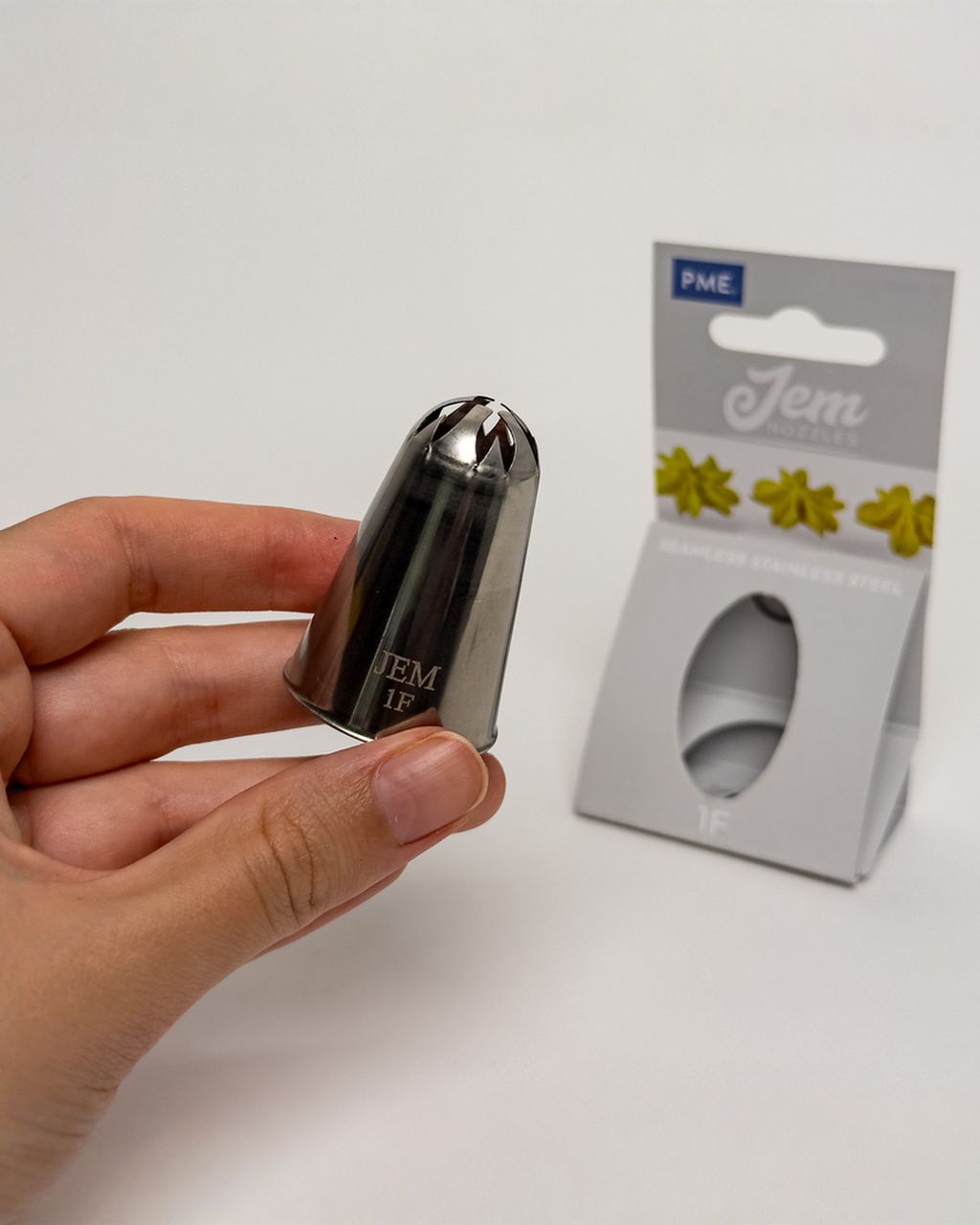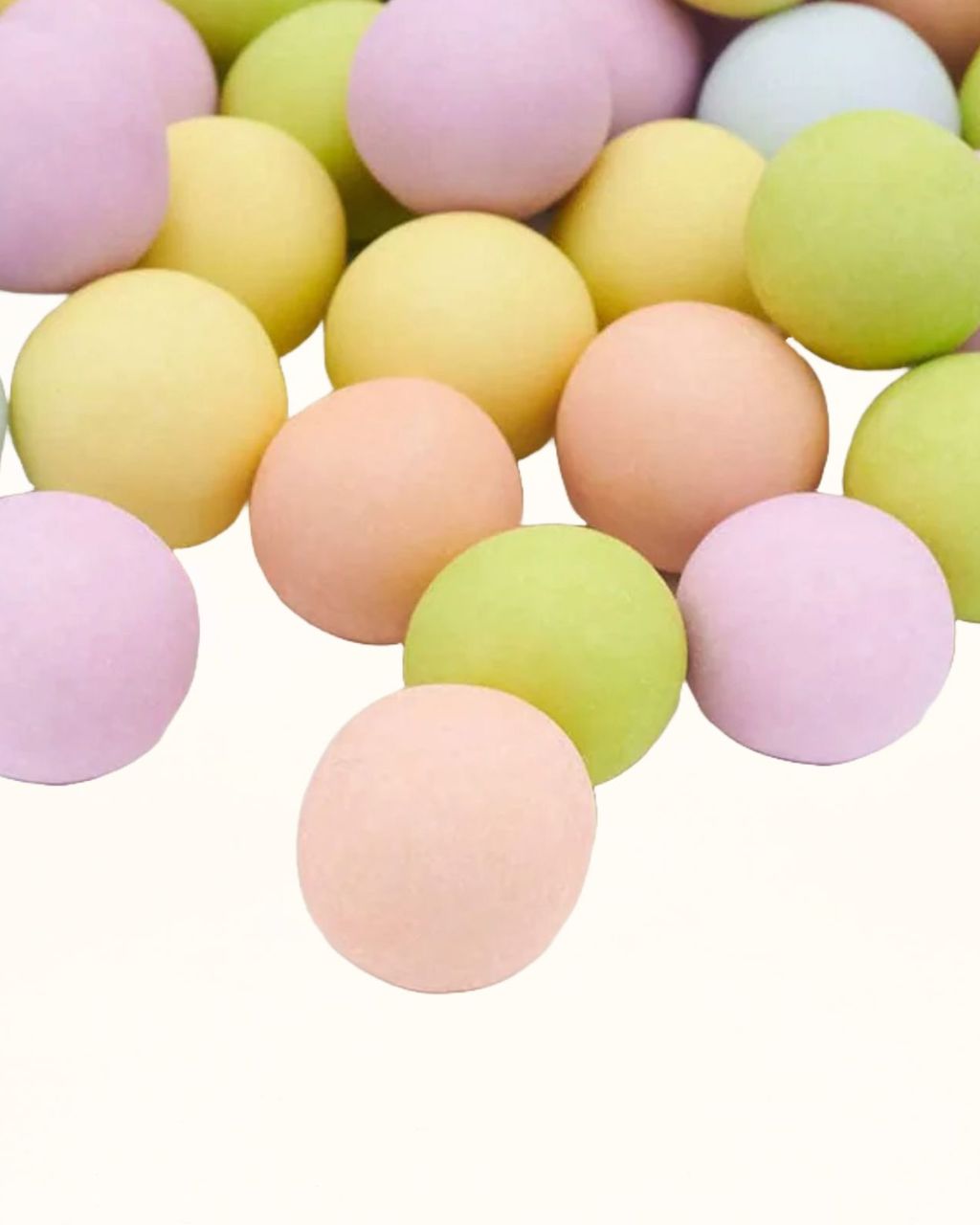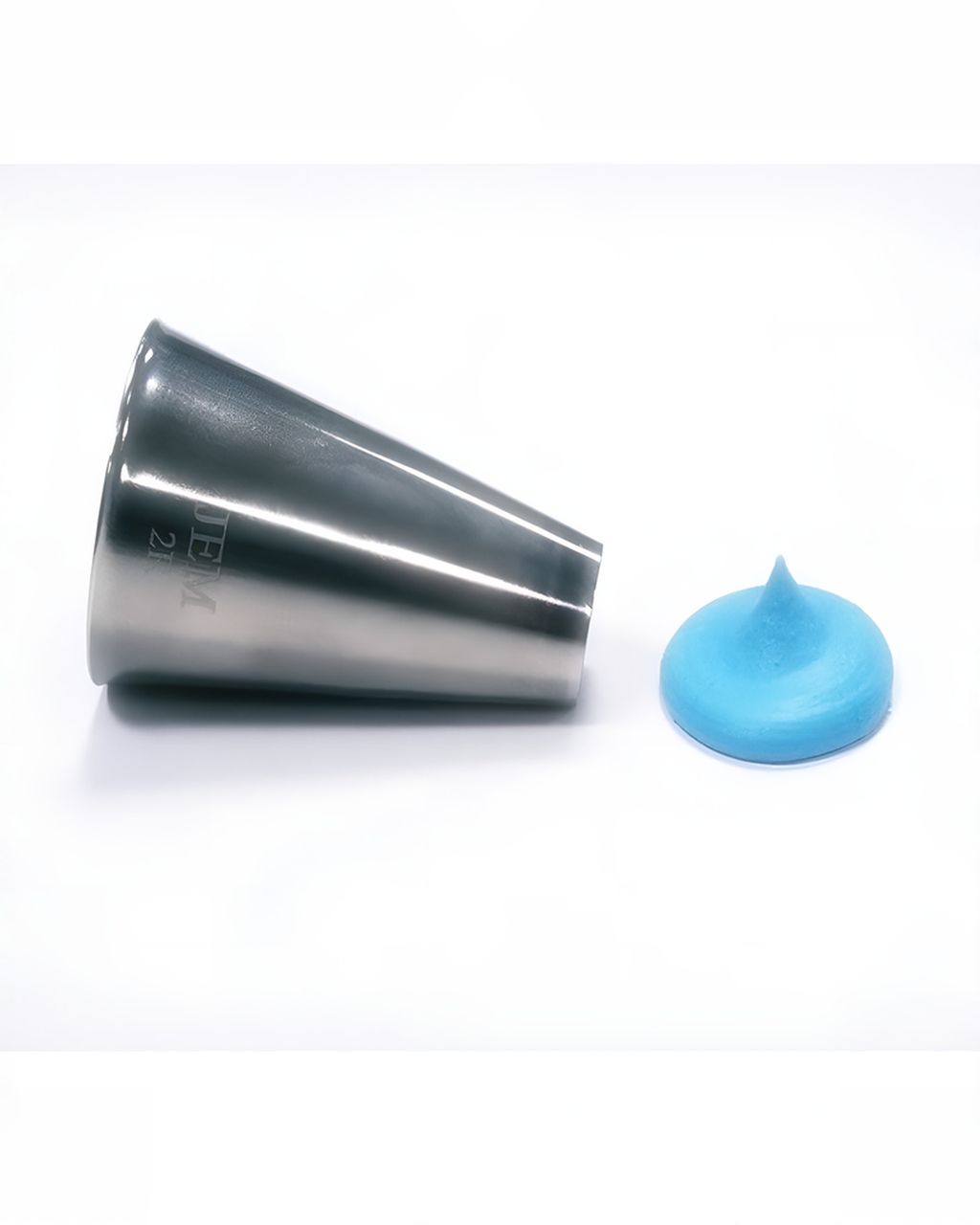
JEM Piping Tip – Savoy Round #2R (Medium)
Number Cake: How to Cut the Shape from a Template and Decorate with Cream and Flowers
Updated Oct 15, 2026
A number cake is two layers of cake or dough cut into the shape of a number using a paper template, with dollops of cream piped between them and on top, then finished with flowers, fruit or sprinkles. You don't need a number-shaped pan: a printed template, a sharp knife and a round piping tip are enough. You can make a letter or an initial the same way. Here's the whole process, from template to the very last flower bud.
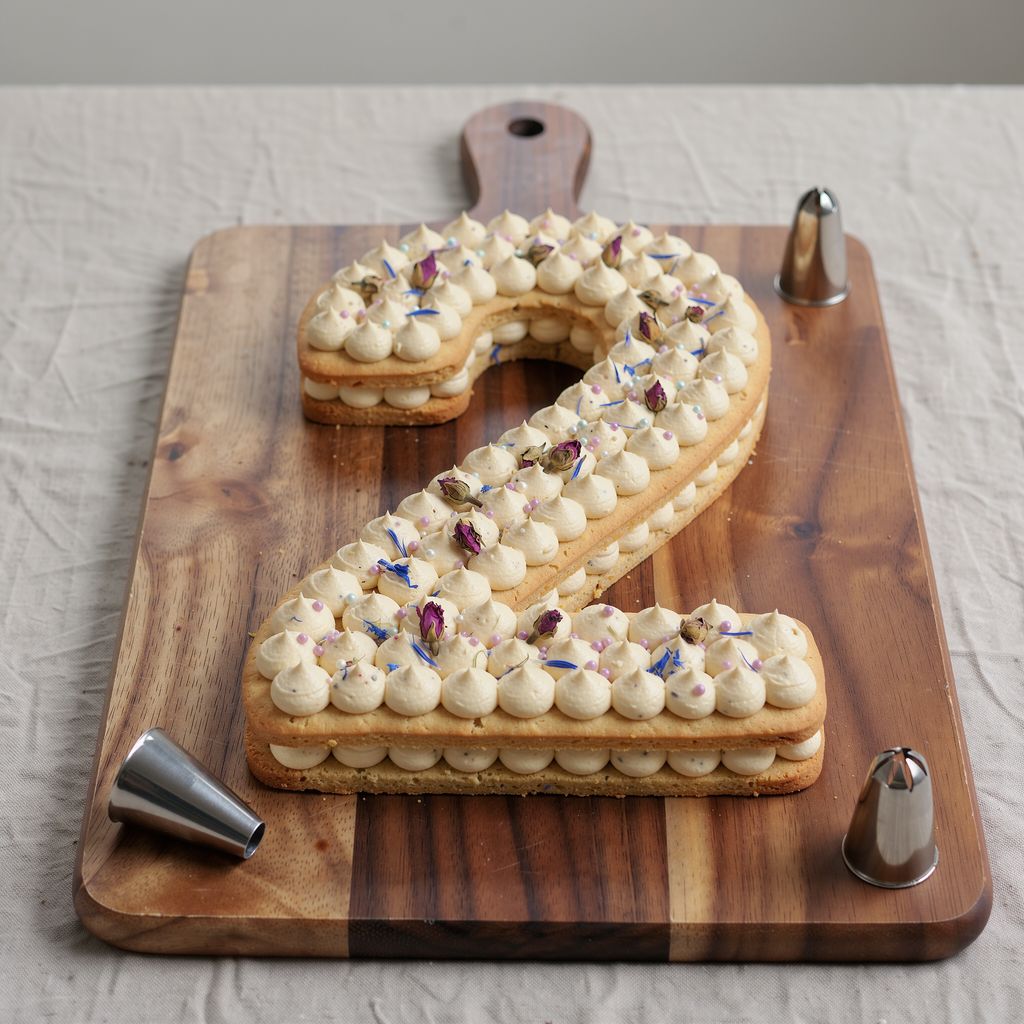
A number cake is a cake shaped like a number or letter, made from two (occasionally three) thin layers of baked dough with dollops of piped cream sandwiched between them. A second layer of dollops goes on top, along with the decorations: flowers, fruit or sprinkles.
It differs from a classic layer cake in three ways:
It isn't baked in a pan. The shape comes from cutting around a paper template.
The cream is piped, not spread. Dollops from a round tip make up both the filling and the main decoration, so the cream has to hold its shape.
It's flat. The whole cake is usually only 5–7 cm (2–2¾ in) tall, it slices easily and looks best when you view it from above.
Seasonal baking plans, tested recipes and kitchen tricks that save you time. Unsubscribe in one click.
Shortcrust (cookie-style) dough rolled out to 4–5 mm (about ¼ in) is the most reliable choice for a number cake, because it holds its shape, cuts cleanly and supports the dollops of cream. Sponge works too, it just takes more effort.
Shortcrust dough (sablé, cookie dough): sharp edges, the number doesn't warp, and you can move each layer in one piece. In the fridge, the moisture from the cream softens it within 6–12 hours to a pleasantly tender texture that isn't rubbery. It's the surest choice for a first attempt.
Sponge or butter cake: more delicate and moist, but it crumbles. Bake it on a baking sheet in a layer 2–3 cm (about 1 in) thick, let it cool, put it in the freezer for 30–40 minutes, and only then cut it with the template. A fluffy génoise sponge works well.
Chocolate base: if you want a chocolate base, bake a simple chocolate cake on a baking sheet instead of in a cake pan, and cut the number out of it just like a sponge. The dark base also contrasts nicely with the light dollops of cream.
For one number about 30 cm (12 in) tall, allow roughly 600 g (1 lb 5 oz) of shortcrust dough for both layers. Gather the scraps, chill and roll them out again so nothing goes to waste.
Make the template from ordinary paper: print the number in a bold sans-serif font so it's 25–35 cm (10–14 in) tall and its strokes are at least 6–7 cm (2½–2¾ in) wide. Narrower strokes won't fit two rows of dollops, and the number breaks when you move it.
In a word processor, type the number in a large bold font (such as Arial Black) and stretch it across two A4 sheets, or print it straight onto A3.
Tape the sheets together and cut the number out with scissors.
Check the narrowest spot (on 1, 4 and 7 it's usually at the joins). If it's under 6 cm (2⅓ in), widen the template there by hand.
Lightly round off sharp inner corners, because the dough would otherwise crack in them.
The same goes for letters, but watch the openings. On A, B, D, O, P or R, the inner hole must be at least 4 cm (1½ in) wide, or it will melt shut during baking. Serif fonts with thin flourishes aren't suitable. For a two-digit number (18, 30, 50), make two separate templates and set both numbers side by side on one large board.
You can also make the template from baking parchment. It's see-through, so you can see the dough through it and save space more easily.
Roll the dough out directly on baking parchment, chill it, lay the template on top and cut straight down with a sharp knife, never dragging it. Chilled dough doesn't tear, and the edges stay straight.
Roll the dough out between two sheets of baking parchment to 4–5 mm (about ¼ in). Both layers must be the same thickness, otherwise they won't bake in the same time.
Put the sheet of dough, paper and all, in the fridge for 20–30 minutes until firm.
Lay the template on top, press it down lightly (or tape its corners to the paper) and trace around it with the tip of a small knife.
Remove the excess dough around it and slide the number, paper and all, onto a baking sheet. Don't fold or move it any other way, or the number will warp.
Chill for another 15 minutes, then bake. At 170 °C (340 °F), cookie dough 4–5 mm thick usually bakes in 12–16 minutes, until the edges are light golden.
As soon as it comes out of the oven, lay the template on again and trim off any edges that have spread. Warm dough cuts cleanly; once cooled, it breaks.
Cut the second layer using the same template in the same orientation so the two fit together exactly. Let the layers cool on the baking sheet. While warm they're soft and will snap when lifted.
For a number cake you need a cream whose dollops hold for several hours at room temperature: most often mascarpone whipped with cream, or alternatively buttercream or whipped ganache. Plain whipped cream without a stabiliser sags within an hour.
Mascarpone + cream: the classic for a number cake. As a guide, 250 g mascarpone, 200–250 ml heavy (whipping) cream (33% fat or more) and 50–80 g icing (powdered) sugar. Keep everything cold from the fridge and whip only to stiff peaks, because overwhipped cream curdles. To firm it up with white chocolate, see the article mascarpone and white chocolate cake cream.
Buttercream: the firmest and best at withstanding heat, for example at a garden party. It is heavier and sweeter, though.
Whipped ganache: the chocolate option, with the most pronounced flavour. It needs to chill for 6–8 hours before whipping.
Whipped cream: only stabilised; you'll find the method in the article stable whipped cream frosting for cakes.
For one number around 30 cm (12 in), allow 500–700 g (1 lb 2 oz–1 lb 9 oz) of cream for the two layers of dollops. If you want coloured cream, read how to mix cream colours. Pastel shades suit a number cake best, because they make the flowers stand out.
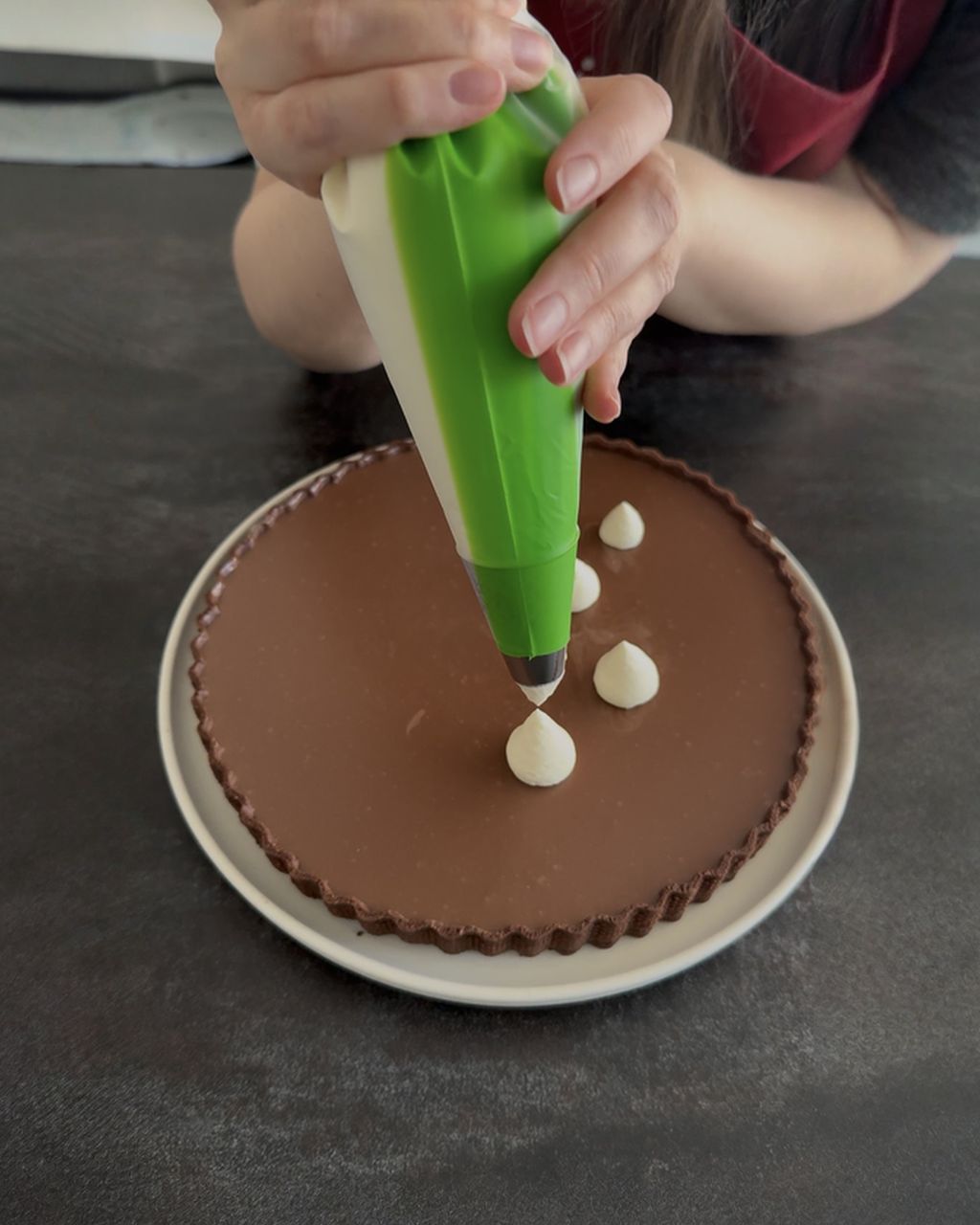
Pipe the dollops with a large round tip held straight above: keep it about 1 cm (½ in) above the dough, squeeze until the dollop is 2–3 cm (about 1 in) wide, then release the pressure and lift the tip straight up. Place the dollops snugly next to each other right up to the edge, so a continuous layer of cream shows from the side.
Here's what you need and how the options differ:
A large round tip, such as the JEM Savoy round 2R, makes smooth, rounded dollops, typical of a number cake. It's the best tip for this job.
A drop flower tip, such as the JEM Drop Flower 1F, pipes a whole little flower in a single squeeze. It suits the top layer, where you alternate round dollops with little flowers for more texture.
An open star tip makes rosettes instead of dollops. The result is fancier, but less clean.
A piping bag with no tip and the end snipped off works in a pinch too. The dollops aren't as even, though, and the opening tears under pressure.
Choose a bigger piping bag. A 36 cm (14 in) bag holds almost the whole batch of cream, so you don't need to refill it halfway through. A smaller 30 cm (12 in) bag is easier to hold in a small hand, but you'll have to refill it twice. Fill it no more than two-thirds full and twist the top so the cream doesn't push out.
You'll find tips, piping bags and other tools in cake decorating tools. For a fancier version with a star tip, see the article cream rosettes all over a cake.
Place the bottom layer directly on the board you'll serve the cake on, cover it with dollops, carefully lay the second layer on top and pipe the second layer of dollops. Then leave the cake in the fridge for at least 2 hours so the cream sets.
Choose the board in advance. A finished number cake can't be moved, as it would crack at the narrowest point. For a number 30 cm (12 in) tall, you need a board or tray of roughly 35 × 25 cm (14 × 10 in).
Put a dab of cream on the board so the bottom layer doesn't slide.
Lay the top layer in sections. Slide your palm or a large spatula under it, line it up with the bottom layer and press gently until the dollops flatten slightly.
Shortcrust dough needs time. Leave an assembled cake with a shortcrust base in the fridge for ideally 6–12 hours. The dough absorbs moisture from the cream and softens enough to cut with a fork. A sponge base needs just 2–3 hours.
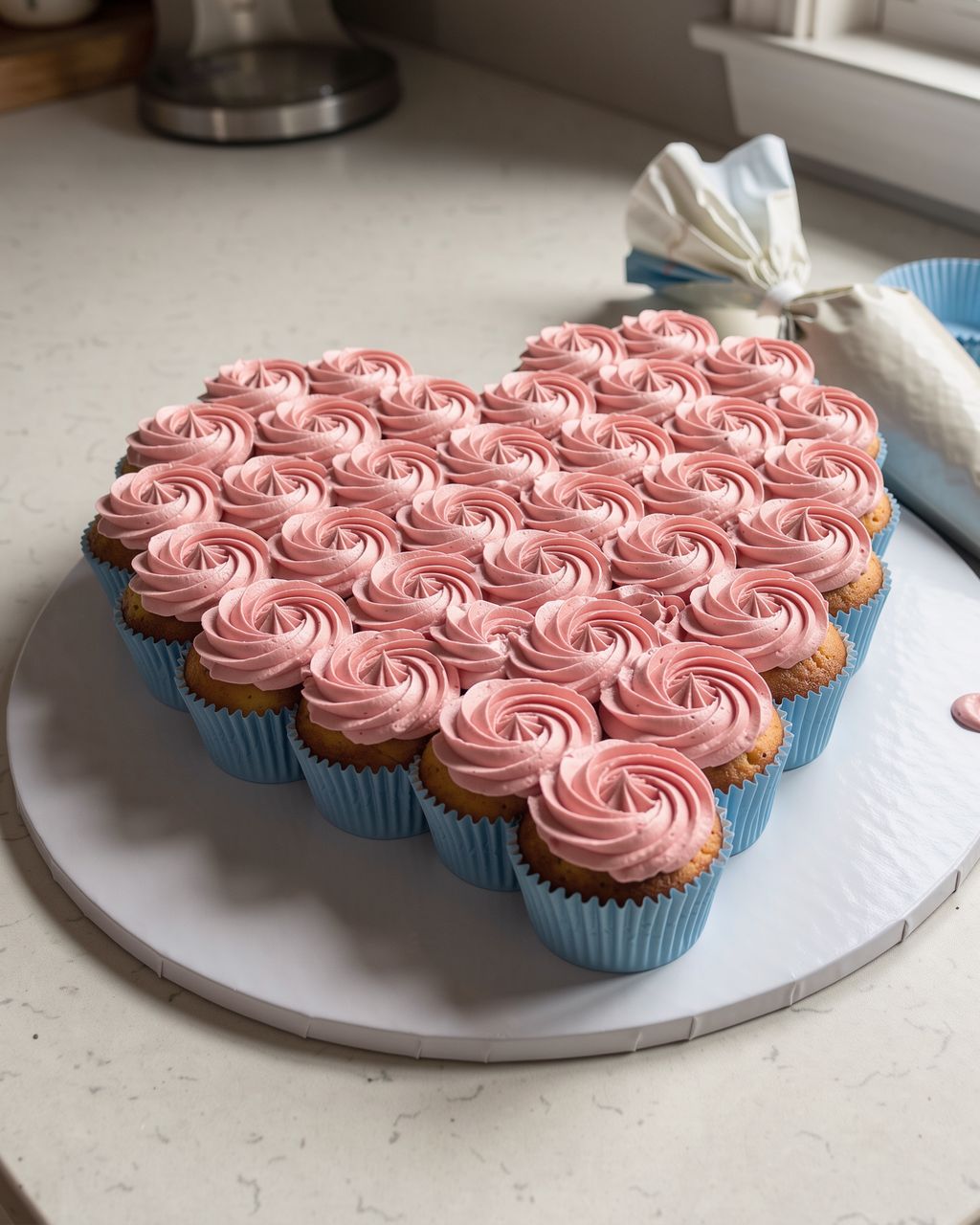
If you don't want to bake large layers, you can build the same number shape from cupcakes. You'll find the method in the article cupcake pull-apart cake.
Concentrate the decoration in two or three clusters, most often at the curves and ends of the number, and leave plain dollops of cream between them. If you decorate the whole surface evenly, the number gets lost and the cake becomes just a colourful blotch.
What works on a number cake:
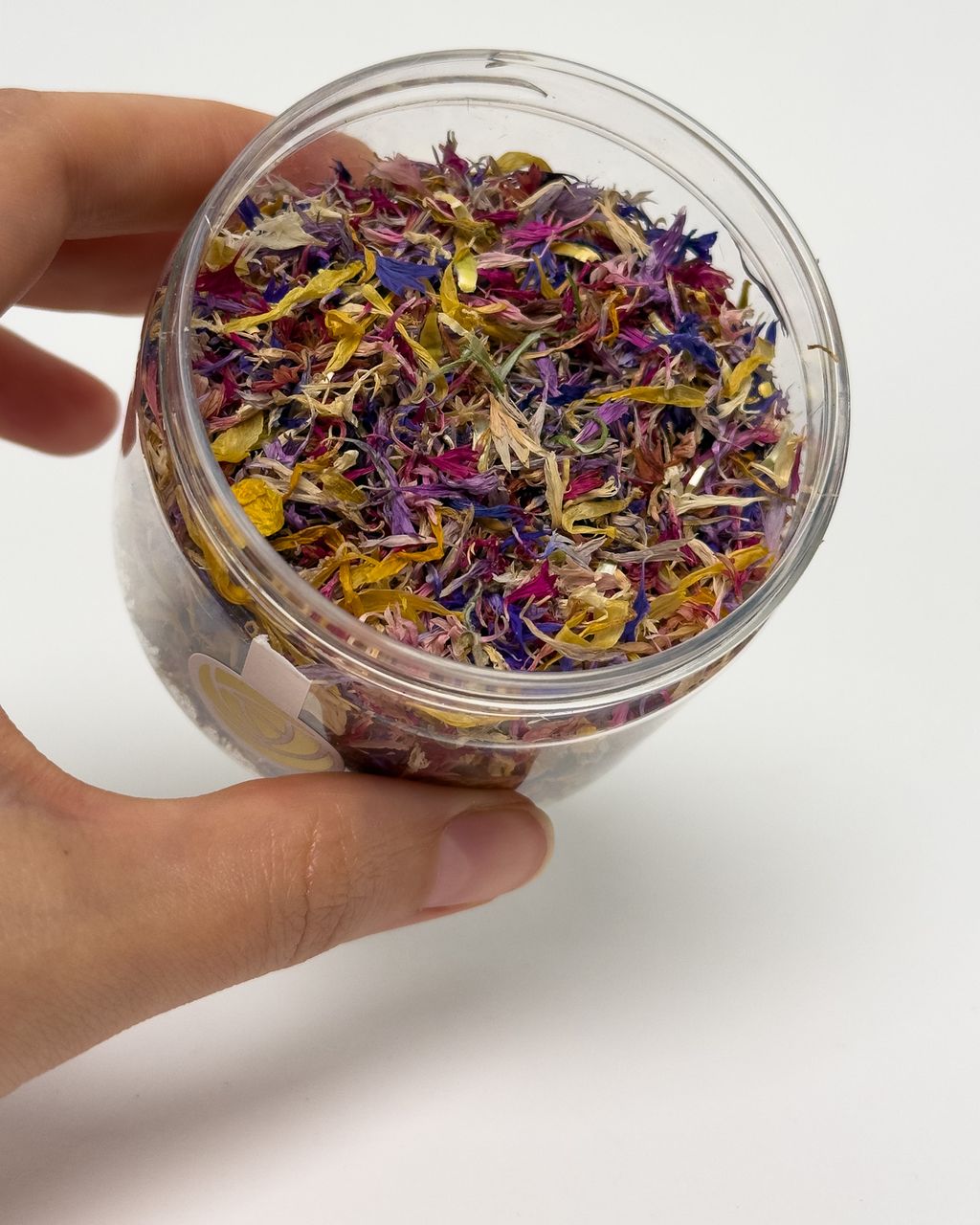
Dried edible flowers add colour without water and don't release juice. Cornflower petals or whole pansies from Rosie Rose can simply be scattered or placed one by one. The moisture from the cream will eventually make them wrinkle, though, so add them on the day of serving, ideally 1–3 hours ahead.
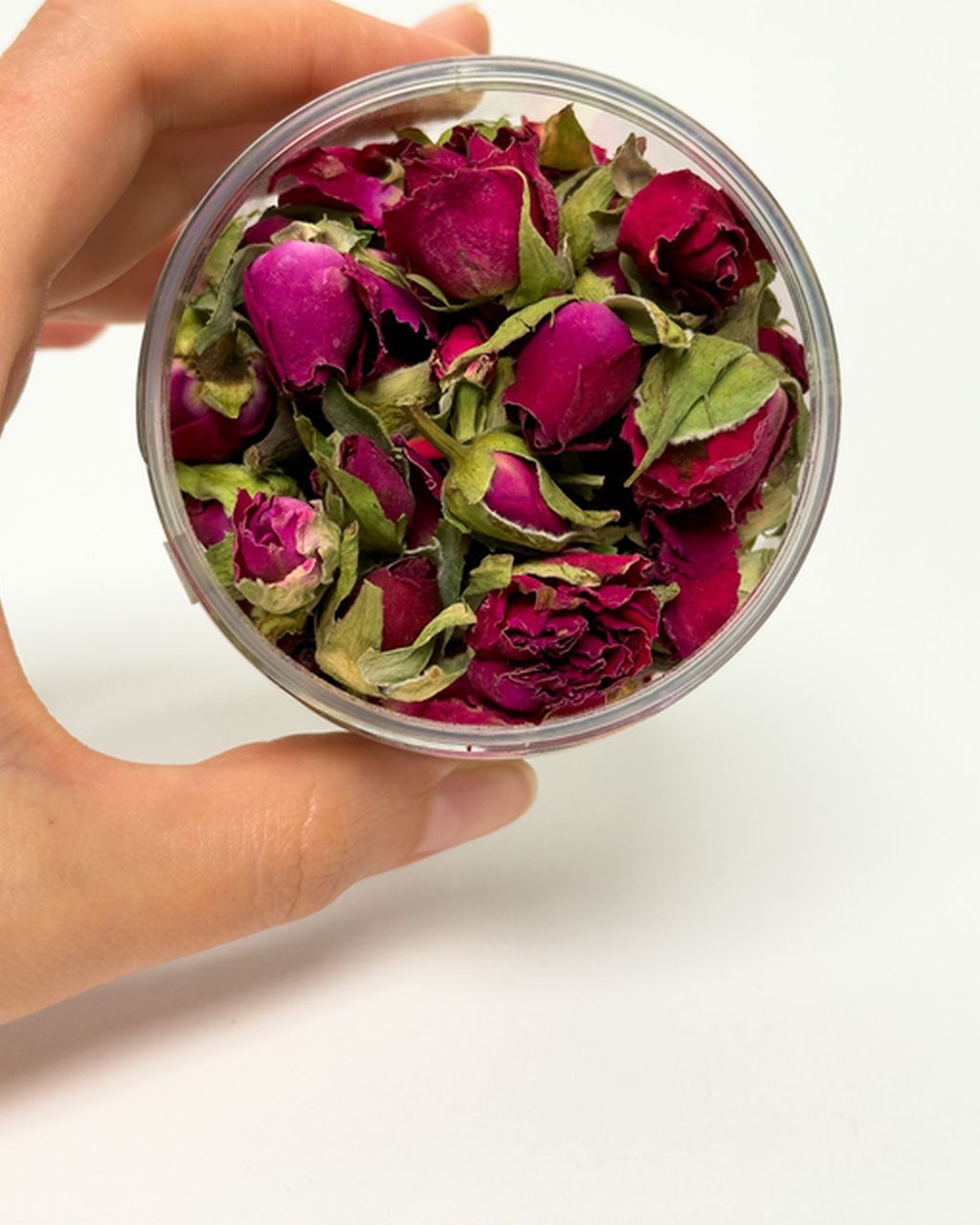
Dried rosebuds are larger and more striking, and work well as the centrepiece of a cluster. Tuck them between the dollops with the tips pointing up. If you want the rose to come through in the cream too, you'll find the method in the article rose cream and ganache made with dried roses.
Fresh edible flowers (pansies, violets, cornflowers) are beautiful, but only from a garden with no sprays or from a supplier selling them for eating. Flowers from a florist are often treated. Sugared edible flowers last longer.
Fruit: berries, figs, strawberry slices. Pat them dry, or the cream around them will run. Place them just before serving.
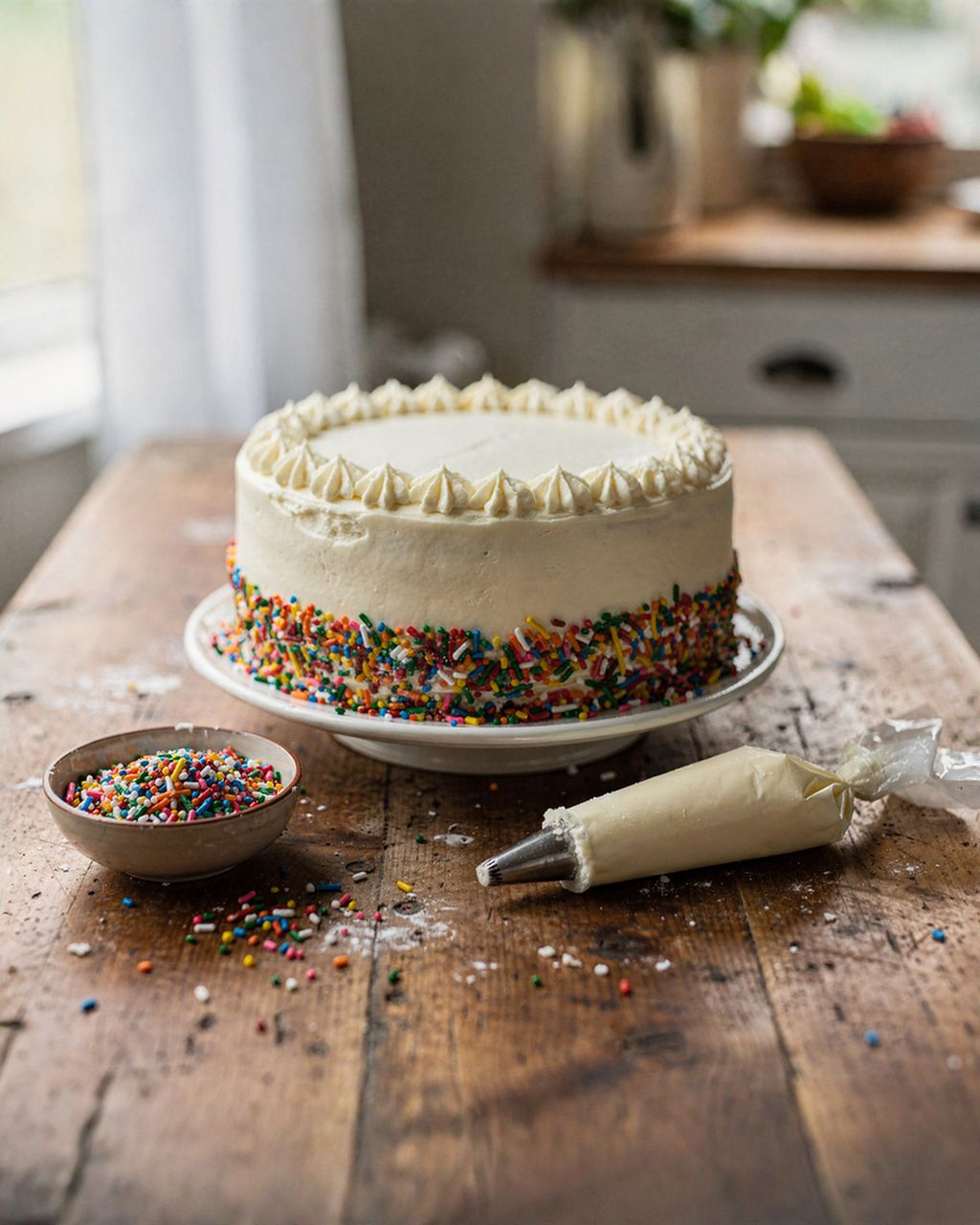
Sugar sprinkles: use pearls and balls as a fine filler between the dollops. Add them last, or the colours will bleed into the cream.
Chocolate shavings add texture. Just keep them in the same colour scheme as the rest of the decoration.
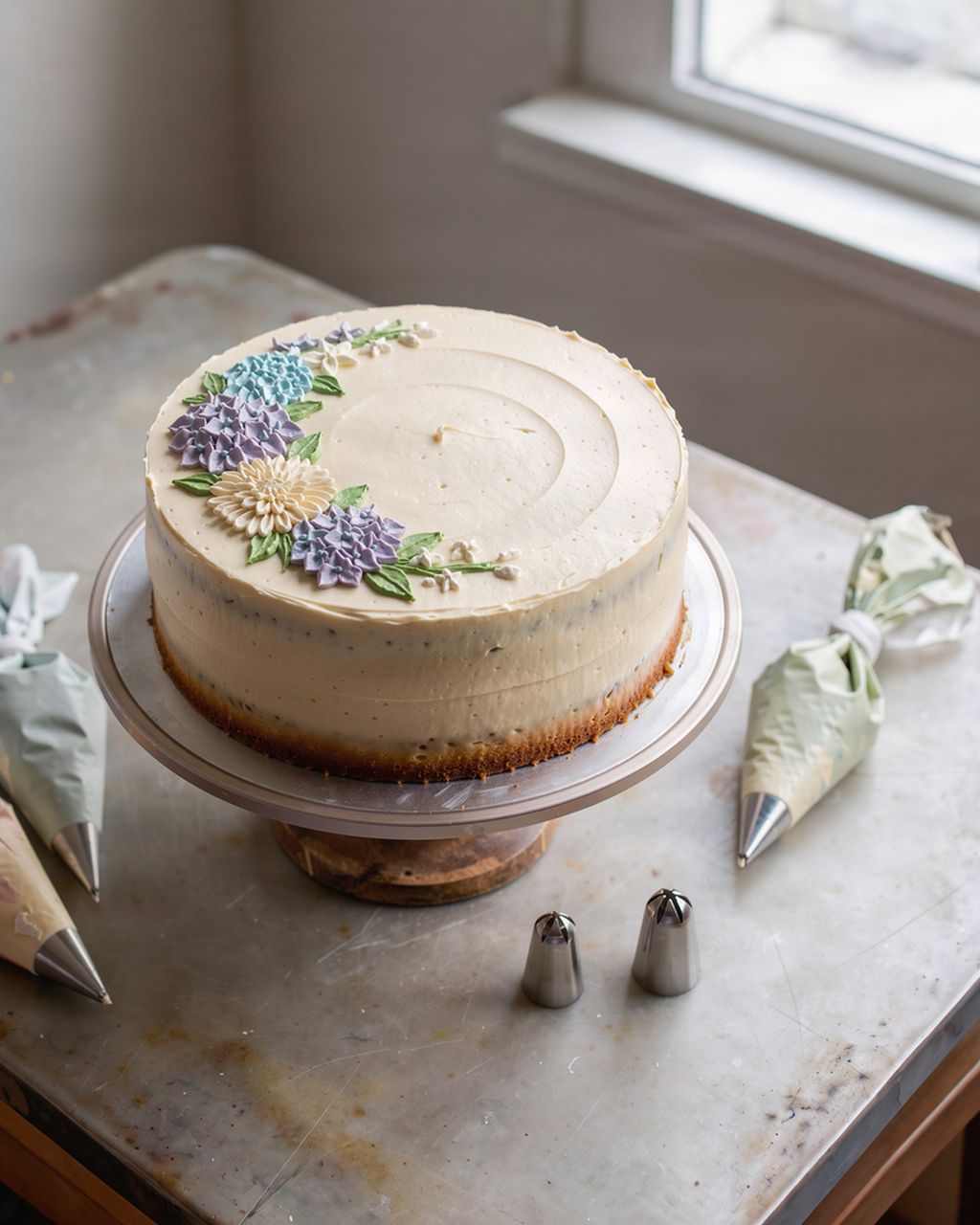
Limit the colours to two or three, for example pink, white and gold, or blue, yellow and white. A number cake with pastel cream and one striking shade of flowers looks best in photos. If you'd rather pipe cream flowers than use dried ones, take a look at cream flowers for cakes.
A single number about 30 cm (12 in) tall serves roughly 10–14 people. A two-digit number made of two numbers of the same size will therefore feed 20–28. The slices are smaller than with a classic cake, because a number cake is low.
Bake the shortcrust layers 2–3 days ahead and store them in an airtight box at room temperature. Assemble the cake with the cream the evening before the party and leave it in the fridge overnight. Add flowers, fruit and sprinkles on the day of serving, ideally 1–3 hours ahead.
Transport the number cake only on the sturdy board it was assembled on, and straight from the fridge. Place the board on a flat surface in the car, such as the boot (trunk) on a non-slip mat, and never on your lap. Finish any fruit decoration once you arrive.
Slice a number cake with a sharp knife, cutting straight down into pieces 4–5 cm (about 1½–2 in) wide along the stroke of the number. If the shortcrust hasn't softened completely yet, a knife dipped in hot water and dried beforehand will help.
For a single number 30 cm (12 in) tall, a board or tray of about 35 × 25 cm (14 × 10 in) is enough. For a two-digit number, allow 45–50 cm (18–20 in) in width. Measure the board before you print the template, and size the number to fit it.
One recipe worth heating the oven for, one tip, and one deal from the shop. Nothing else.